Alaska Revocable Transfer on Death Deed
About this form
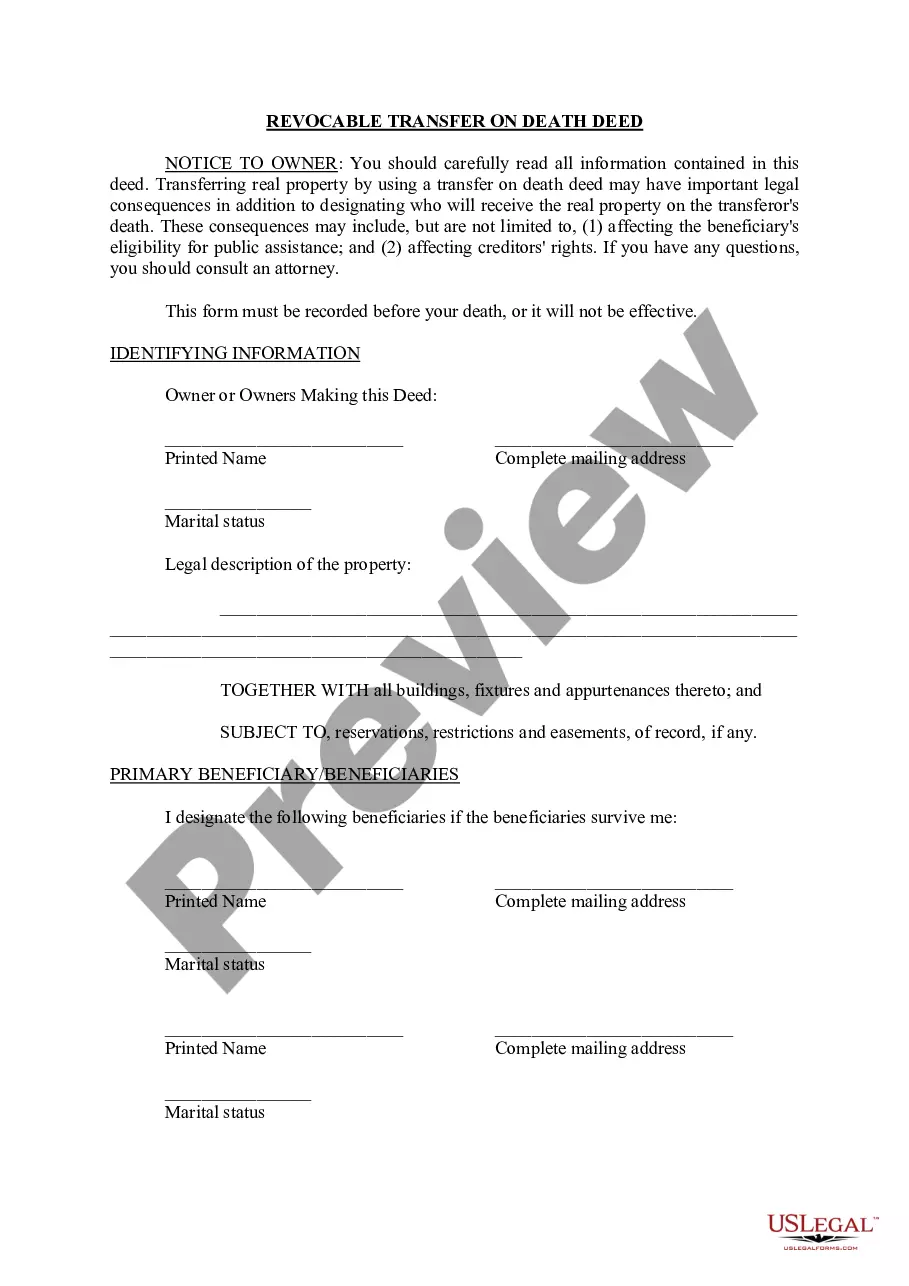
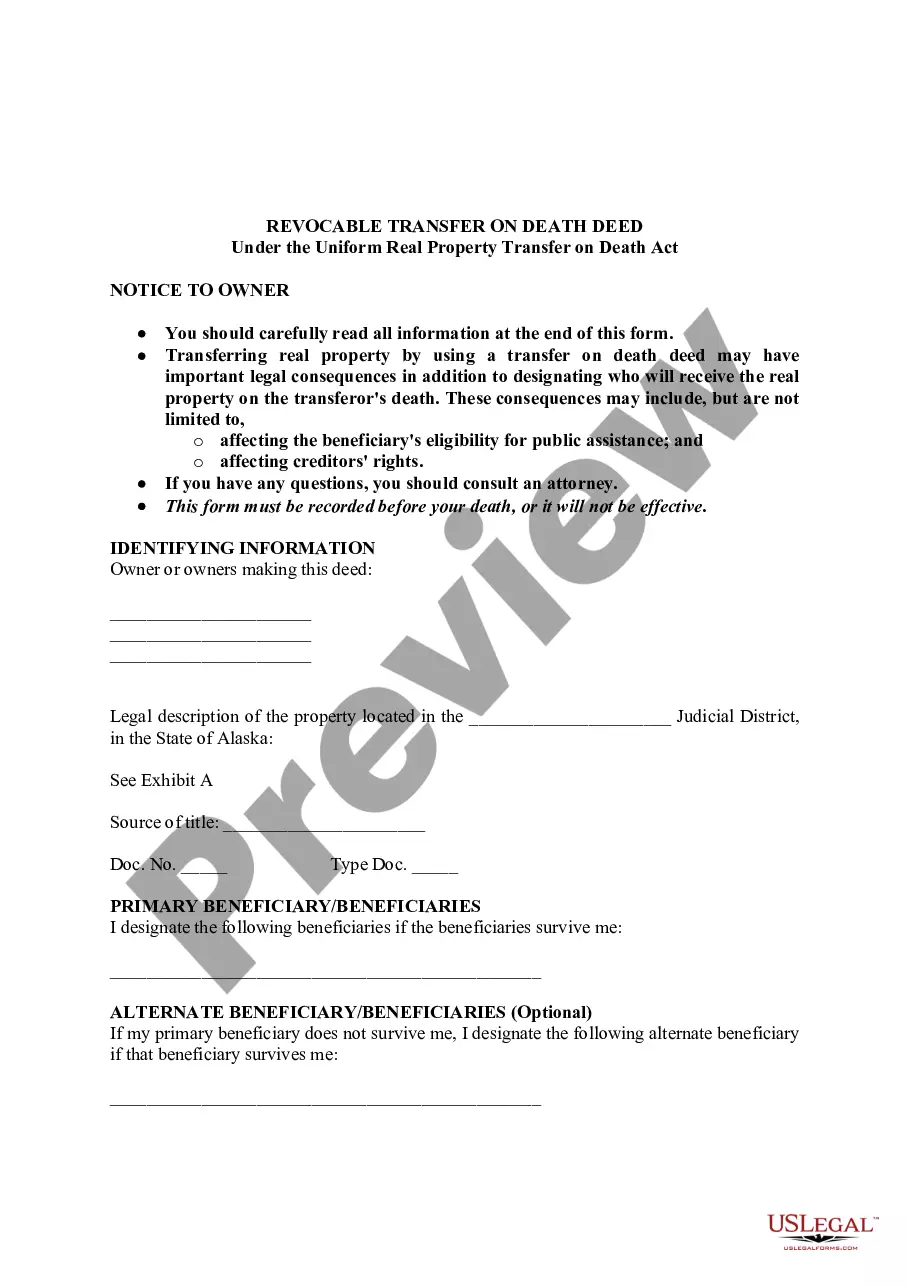
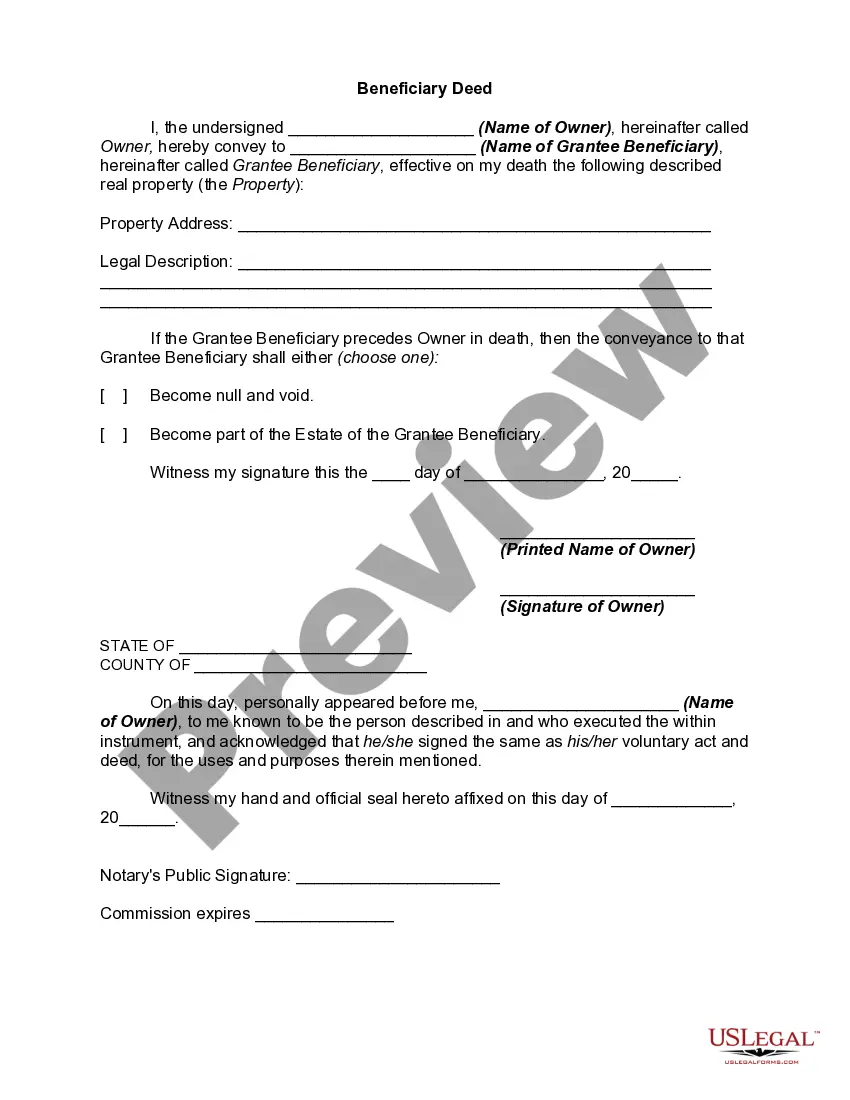
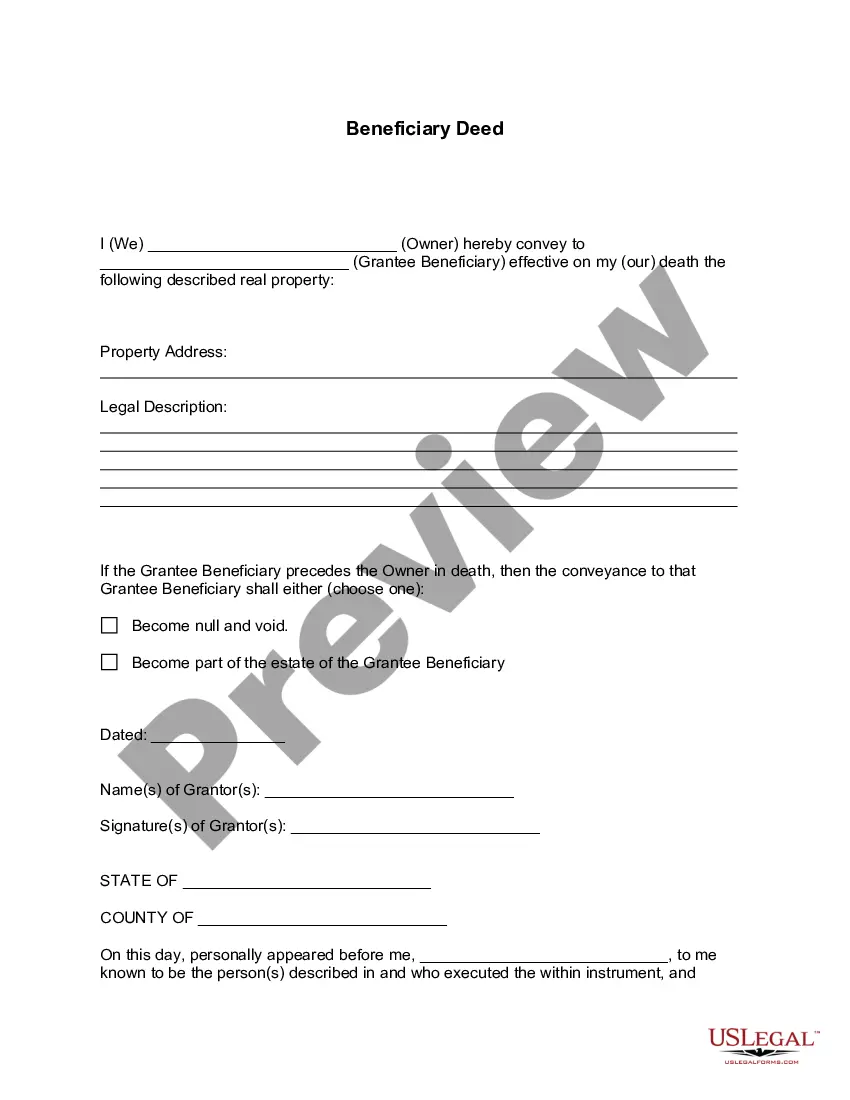
The Revocable Transfer on Death Deed is a legal document that allows property owners to designate beneficiaries who will inherit their property without undergoing the probate process upon their death. This deed enables the owner to retain full control over the property during their lifetime and can be revoked at any time until their passing. Unlike a traditional will, this deed specifically streamlines the transfer of real estate, making it an advantageous option for many individuals looking to simplify the inheritance process.
Key parts of this document
- Owner Information: Details of the property owner(s) executing the deed.
- Legal Description of Property: Precise information about the property being transferred.
- Beneficiary Designation: Names and addresses of individuals who will inherit the property.
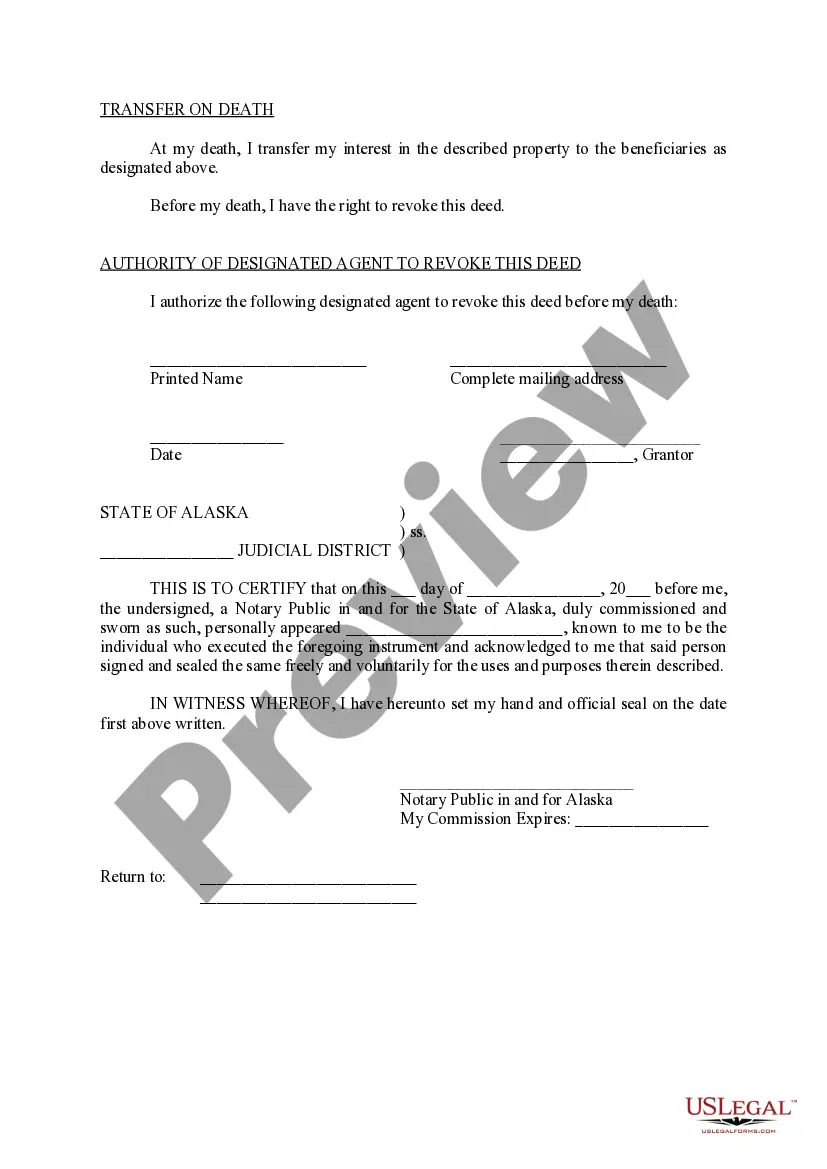
- Transfer Statement: Indicates the transfer of interest in the property upon the owner's death.
- Revocation Authority: Option for the owner to designate an agent who can revoke the deed before the owner's death.
- Notary Section: Certification by a notary public to validate the execution of the deed.
When to use this document
This form is particularly useful when a property owner wishes to transfer ownership to specific beneficiaries while avoiding probate. It's ideal for individuals planning their estate who want to ensure a smooth and efficient transition of property to loved ones. Common scenarios include transferring family homes, investment properties, or vacation homes.
Who can use this document
- Property owners who wish to designate beneficiaries for their real estate.
- Individuals looking to avoid probate for their property transfers.
- People managing their estate planning with the help of an attorney or on their own.
- Anyone uncertain about their property's future and who they want to inherit it.
Completing this form step by step
- Fill in your name and address in the owner information section.
- Provide the legal description of the property you wish to transfer.
- List the beneficiaries' names and addresses in the designated section.
- Sign the deed in the presence of a notary public to validate the document.
- Consider designating an agent who can revoke the deed if necessary.
Notarization guidance
Yes, this form must be notarized to be legally valid. This ensures that the identities of the signatories are verified, and their signatures are acknowledged. Our platform offers integrated online notarization services, allowing you to complete the notarization process conveniently through secure video calls.
Get your form ready online
Our built-in tools help you complete, sign, share, and store your documents in one place.
Make edits, fill in missing information, and update formatting in US Legal Forms—just like you would in MS Word.
Download a copy, print it, send it by email, or mail it via USPS—whatever works best for your next step.
Sign and collect signatures with our SignNow integration. Send to multiple recipients, set reminders, and more. Go Premium to unlock E-Sign.
If this form requires notarization, complete it online through a secure video call—no need to meet a notary in person or wait for an appointment.
We protect your documents and personal data by following strict security and privacy standards.

Make edits, fill in missing information, and update formatting in US Legal Forms—just like you would in MS Word.

Download a copy, print it, send it by email, or mail it via USPS—whatever works best for your next step.

Sign and collect signatures with our SignNow integration. Send to multiple recipients, set reminders, and more. Go Premium to unlock E-Sign.

If this form requires notarization, complete it online through a secure video call—no need to meet a notary in person or wait for an appointment.

We protect your documents and personal data by following strict security and privacy standards.
Common mistakes
- Not providing a complete and accurate legal description of the property.
- Failing to have the deed notarized, leading to invalidation.
- Not updating the deed if circumstances change, such as a new beneficiary.
- Ignoring state-specific requirements that may affect the deed's validity.
Advantages of online completion
- Convenience: Easily fill out and download the form from home.
- Editability: Modify the form as needed before finalizing your decisions.
- Reliability: Access legally vetted templates drafted by licensed attorneys.
- Time-saving: Complete the deed quickly to ensure timely estate planning.
Key takeaways
- The Revocable Transfer on Death Deed allows for easy transfer of property without probate.
- This form can be revoked at any time while the owner is alive.
- Proper completion and notarization are essential for the deed's validity.
- Consulting with an attorney can provide clarity on your rights and obligations.
Looking for another form?




Form popularity
FAQ
Receiving an inheritance can be an unexpected windfall. In fact, transfer on death accounts are exposed to all the same income and capital gains taxes when the account owner is alive, as well as estate and inheritance taxes upon the owner's death.
A transfer on death deed allows you to retain full ownership during your lifetime and conveys your full interest to the Grantee upon your death.Ultimately, the decision between a life estate and transfer on death deed is dependent on why you want to transfer the property.
When someone dies and their property transfers to their beneficiaries, the federal government impose an estate tax on the value of all that property. Since the transfer on death account is not a trust, it does not help you avoid or minimize estate taxes.
A revocable TOD deed does not avoid the owner's creditors. Creditors may seek collection against the designated beneficiaries as to secured and unsecured obligations of the original owner.
If you'd like to avoid having your property going through the probate process, it's a good idea to look into a transfer on death deed. A transfer on death deed allows you to select a beneficiary who will receive your property, but only when you've passed away.
A TOD designation supersedes a will. For bank accounts, you can set up a similar account known as payable-on-death, sometimes referred to as a Totten trust. Your beneficiaries can't touch the account while you're alive, and you're free to change beneficiaries or close the accounts at any time.
If you'd like to avoid having your property going through the probate process, it's a good idea to look into a transfer on death deed. A transfer on death deed allows you to select a beneficiary who will receive your property, but only when you've passed away.
Transferring control Because TOD accounts are still part of the decedent's estate (although not the probate estate that the Last Will establishes), they may be subject to income, estate and/or inheritance tax. TOD accounts are also not out of reach for the decedent's creditors or other relatives.