Alaska Revocable Transfer on Death Deed
What this document covers
The Revocable Transfer on Death Deed is a legal document that allows an individual to transfer ownership of real estate to a designated beneficiary upon the owner's death. Unlike a traditional will, this deed enables the transfer to occur automatically without the need for probate. It provides the original owner with the flexibility to revoke the transfer at any time before their death, making it a versatile tool for estate planning.
What’s included in this form
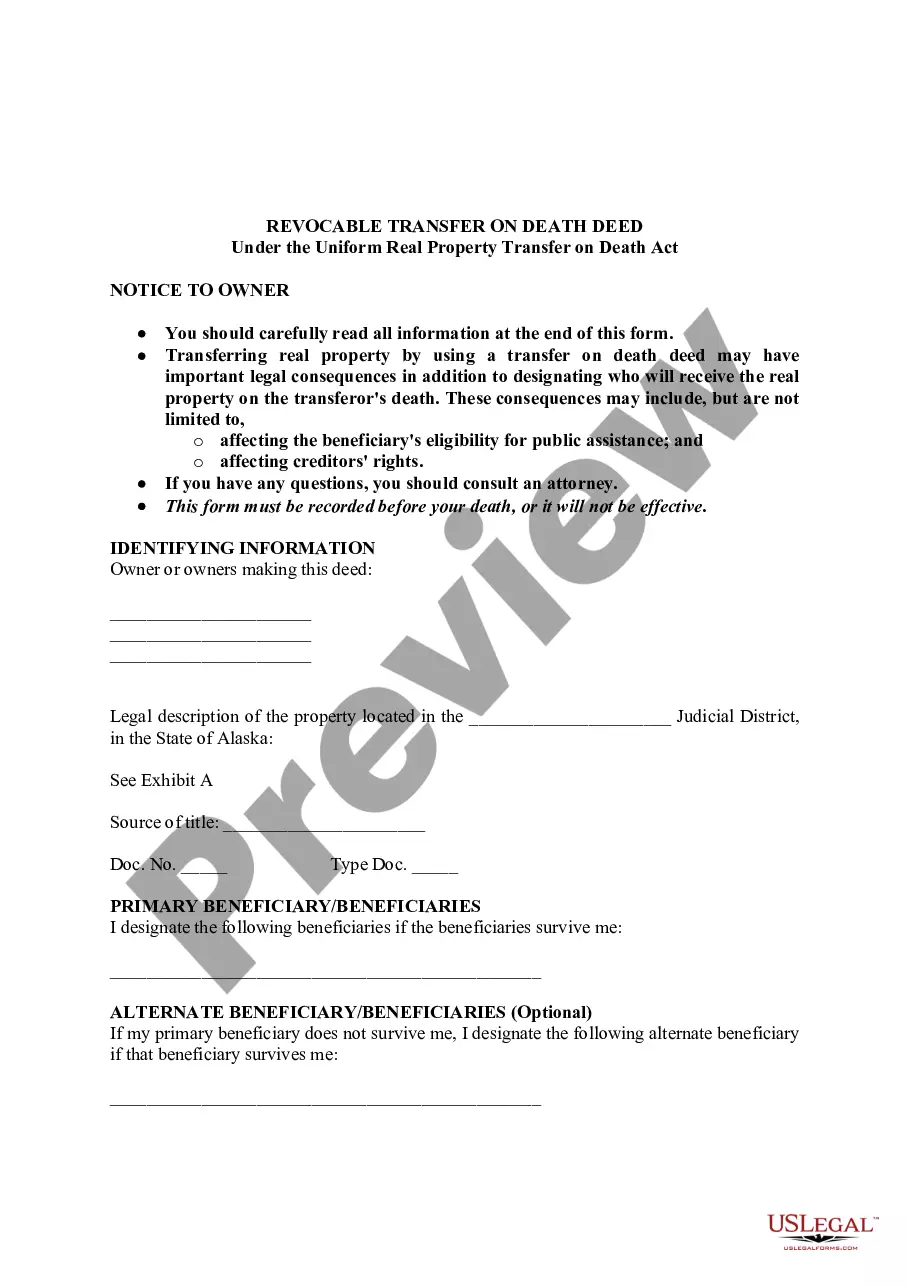
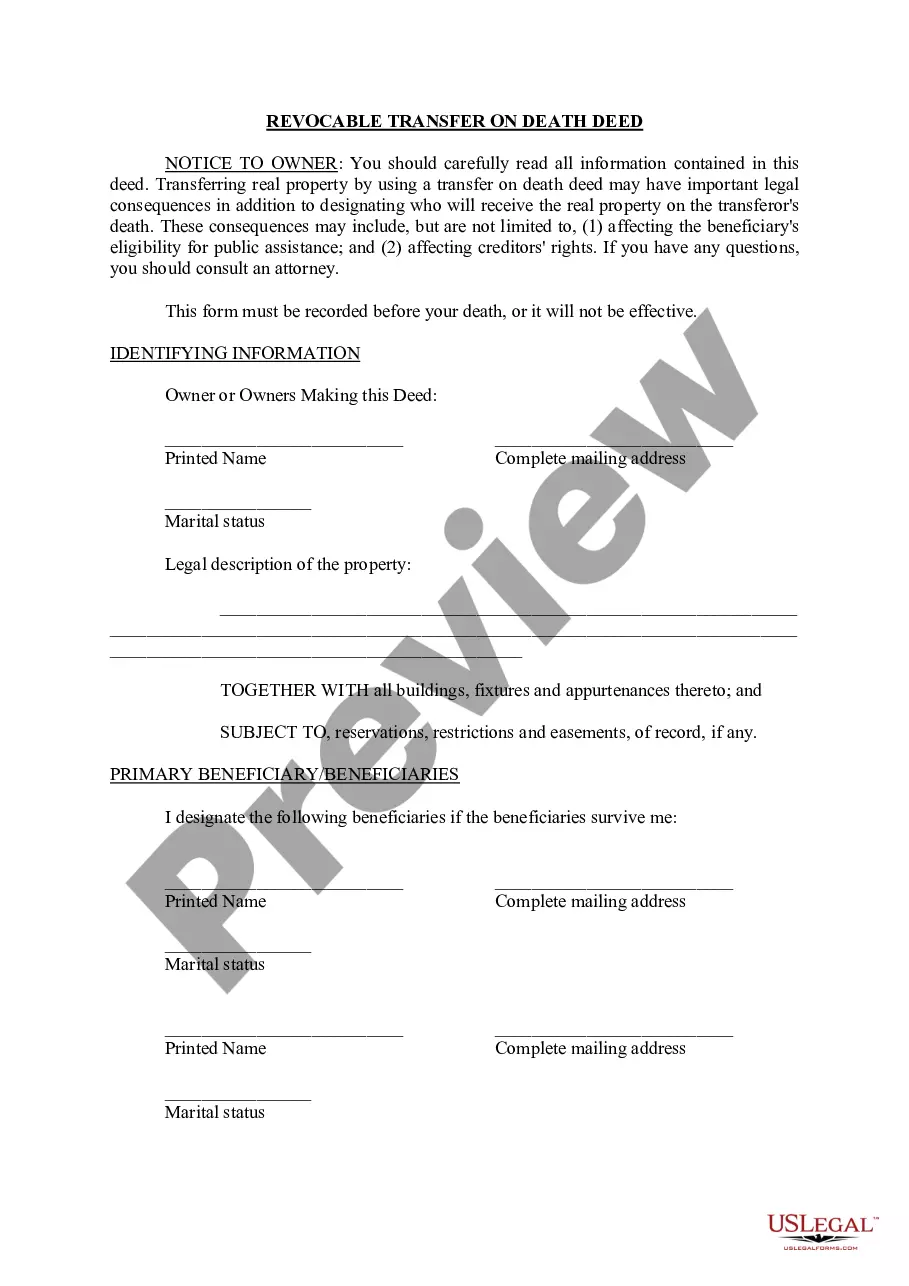
- Identifying information about the property owner and the property itself.
- Designation of primary and alternate beneficiaries who will receive the property upon the owner's death.
- Authority for a designated agent to revoke the deed before the owner's death.
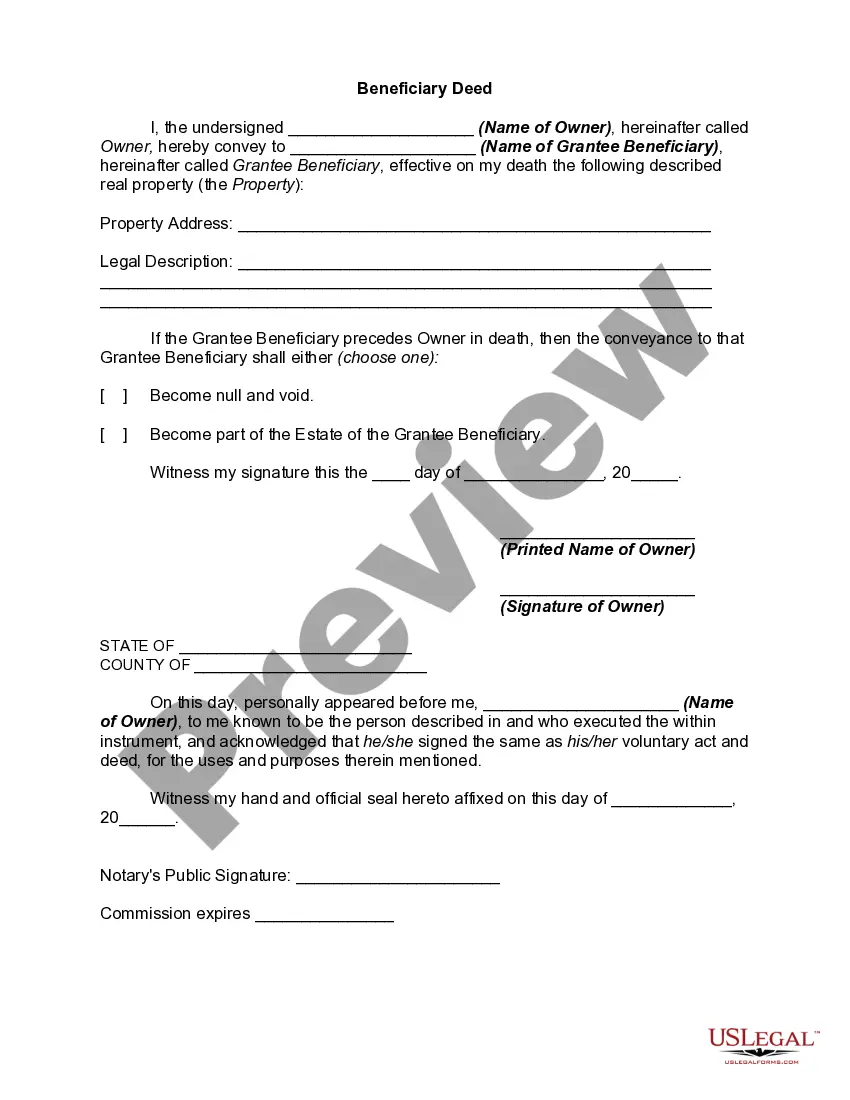
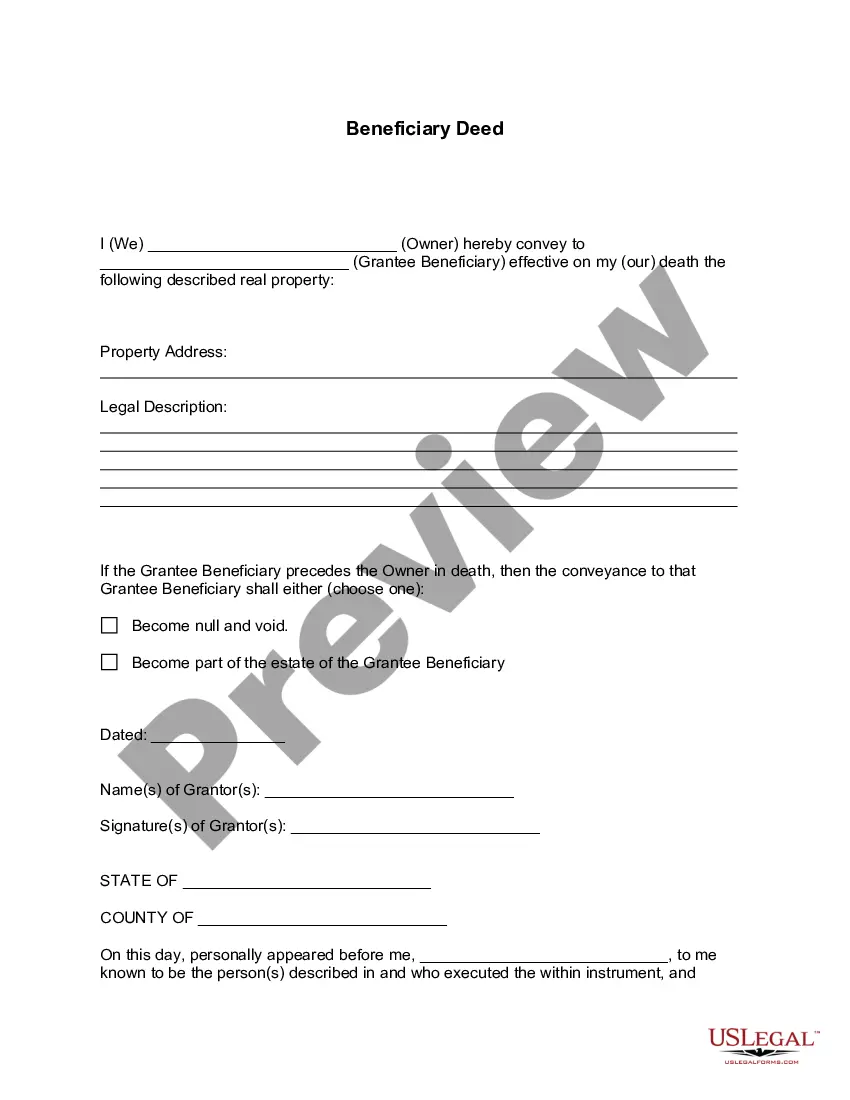
- Signature section for the owner(s) to validate the deed.
- Acknowledgment section for notarization, confirming the identity of the signing owner(s).

Common use cases
This form is typically used by individuals who wish to ensure that their property passes automatically to a beneficiary upon their death, avoiding the probate process. It is particularly useful for those looking to simplify estate transfer or who wish to provide for loved ones without going through lengthy legal proceedings.
Intended users of this form
- Property owners who want to designate a specific beneficiary for their real estate.
- Individuals interested in avoiding probate for their property transfers.
- Those who may wish to alter their beneficiary designations in the future.
- Anyone looking to manage the future distribution of their assets effectively.
Steps to complete this form
- Identify yourself as the owner of the property by entering your name and contact information.
- Specify the legal description of the property to ensure clarity about what is being transferred.
- Designate the primary beneficiary or beneficiaries who will inherit the property upon your death.
- If desired, designate an alternate beneficiary for scenarios where the primary beneficiary does not survive you.
- Sign the deed to validate it, ensuring you have it notarized as required.
Notarization requirements for this form
Yes, this form must be notarized to be legally valid. It is crucial to have a notary public witness your signature to ensure the authenticity of the deed. US Legal Forms offers integrated online notarization services for your convenience, ensuring a seamless process.
Get your form ready online
Our built-in tools help you complete, sign, share, and store your documents in one place.
Make edits, fill in missing information, and update formatting in US Legal Forms—just like you would in MS Word.
Download a copy, print it, send it by email, or mail it via USPS—whatever works best for your next step.
Sign and collect signatures with our SignNow integration. Send to multiple recipients, set reminders, and more. Go Premium to unlock E-Sign.
If this form requires notarization, complete it online through a secure video call—no need to meet a notary in person or wait for an appointment.
We protect your documents and personal data by following strict security and privacy standards.

Make edits, fill in missing information, and update formatting in US Legal Forms—just like you would in MS Word.

Download a copy, print it, send it by email, or mail it via USPS—whatever works best for your next step.

Sign and collect signatures with our SignNow integration. Send to multiple recipients, set reminders, and more. Go Premium to unlock E-Sign.

If this form requires notarization, complete it online through a secure video call—no need to meet a notary in person or wait for an appointment.

We protect your documents and personal data by following strict security and privacy standards.
Typical mistakes to avoid
- Failing to properly notarize the deed, which may render it invalid.
- Not recording the deed with the appropriate local authority, leading to issues in transferring ownership.
- Leaving out legal descriptions of property, which can cause confusion during transfer.
Advantages of online completion
- Convenient access to customizable templates that reflect current legal standards.
- Easy to download and fill out at your own pace, allowing you to ensure all details are correct.
- Guidance provided throughout the process aids in making informed decisions.
Quick recap
- The Revocable Transfer on Death Deed allows property to pass directly to a beneficiary upon the ownerâs death.
- You retain the right to revoke or change the deed at any point before your death.
- Proper notarization and recording of the deed are essential for its validity.
Looking for another form?
Form popularity
FAQ
Transferring control Because TOD accounts are still part of the decedent's estate (although not the probate estate that the Last Will establishes), they may be subject to income, estate and/or inheritance tax. TOD accounts are also not out of reach for the decedent's creditors or other relatives.
A TOD designation supersedes a will. For bank accounts, you can set up a similar account known as payable-on-death, sometimes referred to as a Totten trust. Your beneficiaries can't touch the account while you're alive, and you're free to change beneficiaries or close the accounts at any time.
The transfer on death designation lets beneficiaries receive assets at the time of the person's death without going through probate.With TOD registration, the named beneficiaries have no access to or control over a person's assets as long as the person is alive.
The two types of life estates are the conventional and the legal life estate. the grantee, the life tenant. Following the termination of the estate, rights pass to a remainderman or revert to the previous owner.
A TOD designation supersedes a will. For bank accounts, you can set up a similar account known as payable-on-death, sometimes referred to as a Totten trust. Your beneficiaries can't touch the account while you're alive, and you're free to change beneficiaries or close the accounts at any time.
Receiving an inheritance can be an unexpected windfall. In fact, transfer on death accounts are exposed to all the same income and capital gains taxes when the account owner is alive, as well as estate and inheritance taxes upon the owner's death.
Because transfer-on-death beneficiary deeds do not become effective until you pass away, someone can challenge the validity of the deed after you die.Or, beneficiaries and family members can sue each other to take the property entirely. In this case, a court proceeding may be required to resolve the issue.
A transfer on death deed allows you to retain full ownership during your lifetime and conveys your full interest to the Grantee upon your death.Ultimately, the decision between a life estate and transfer on death deed is dependent on why you want to transfer the property.
Transfer-on-death (TOD) arrangements may be used to pass certain assets to designated beneficiaries. A beneficiary form states who will directly inherit the asset at your death.TOD arrangements require minimal paperwork to establish.