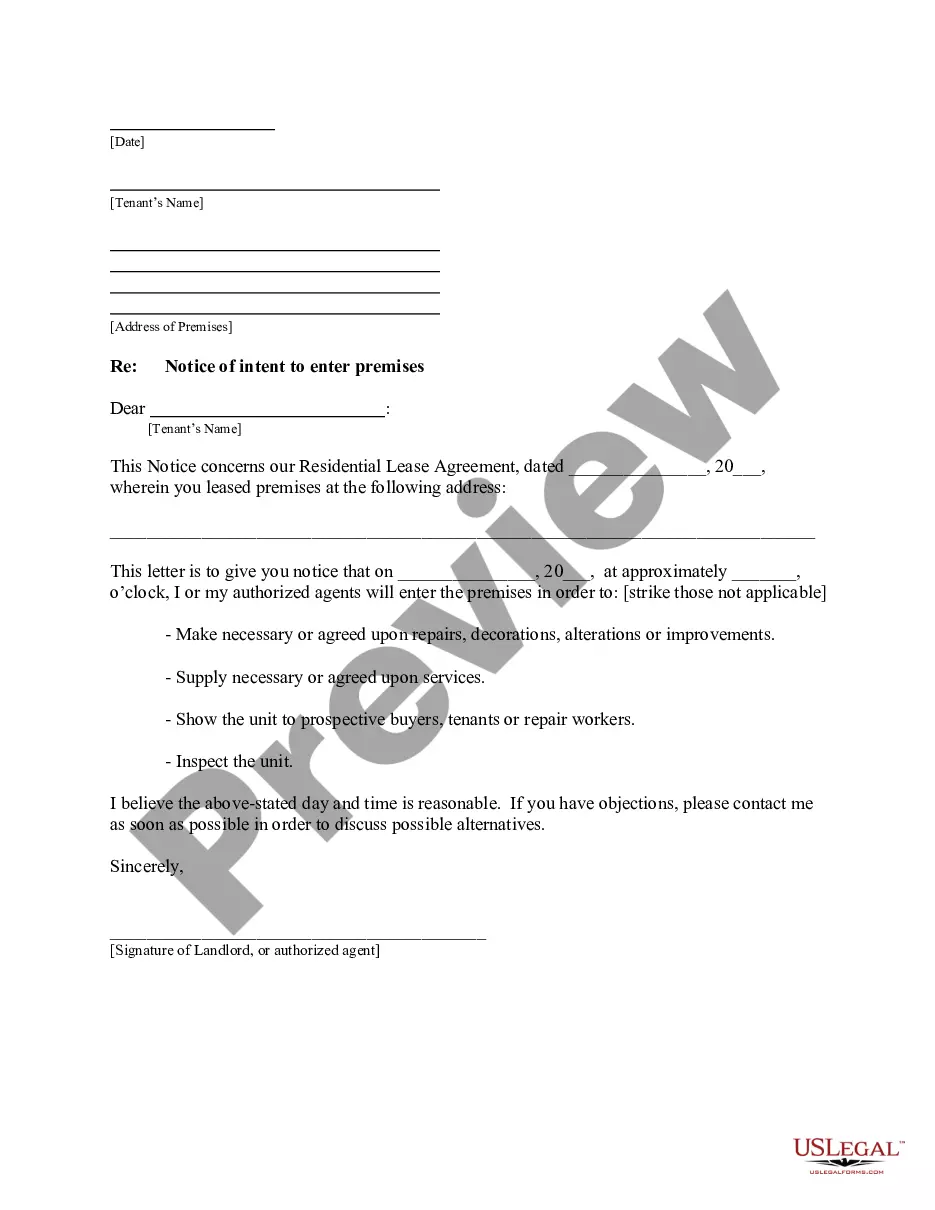
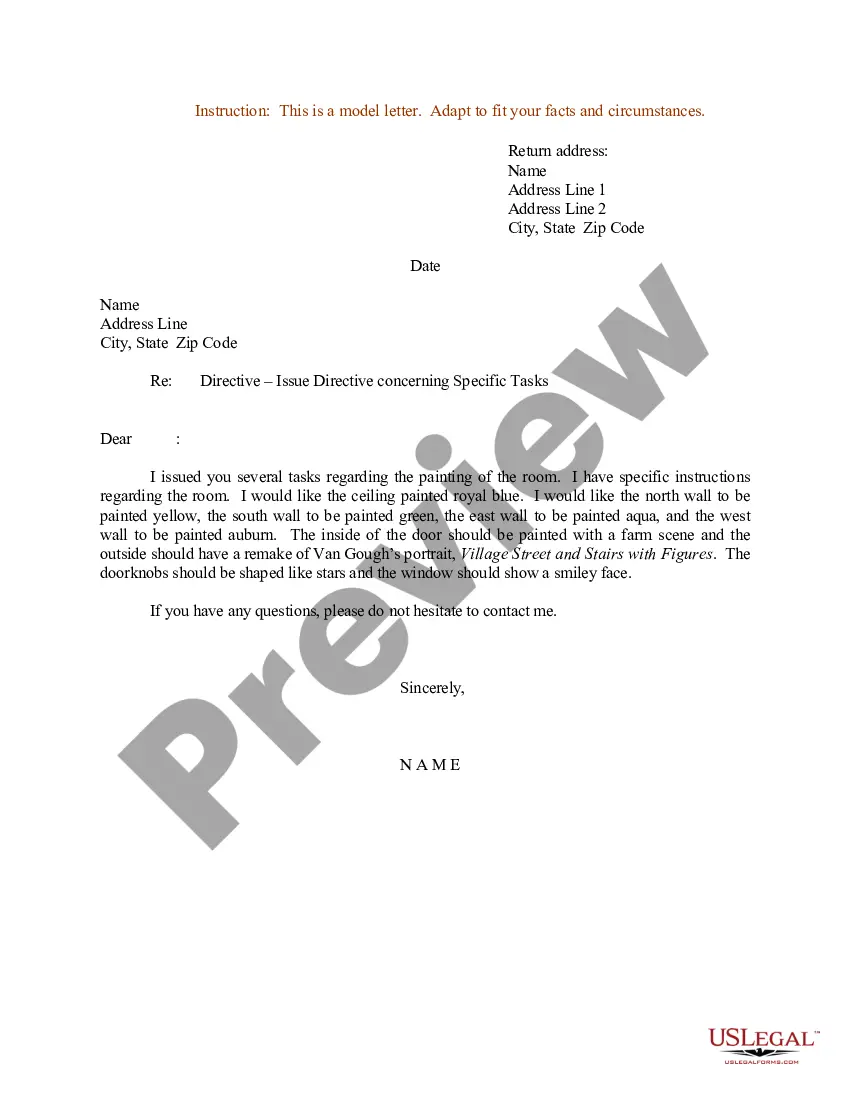
This is a letter from Landlord to Tenant providing notice to Tenant that Landlord or an agent(s) of Landlord will be entering the leased premises for the reasons outlined in the letter.
Alaska Letter from Landlord to Tenant about time of intent to enter premises
Category:
State:
Alaska
Control #:
AK-1021LT
Format:
Word;
Rich Text
Instant download
Description
Free preview
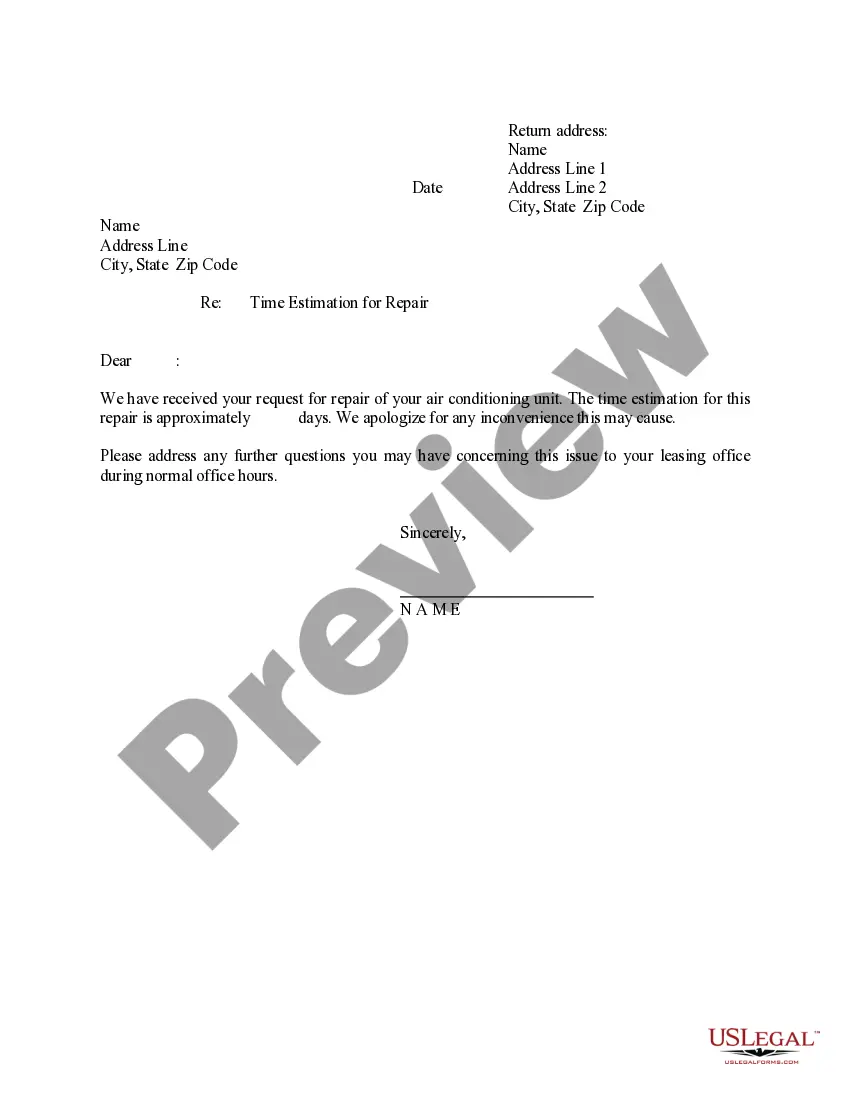
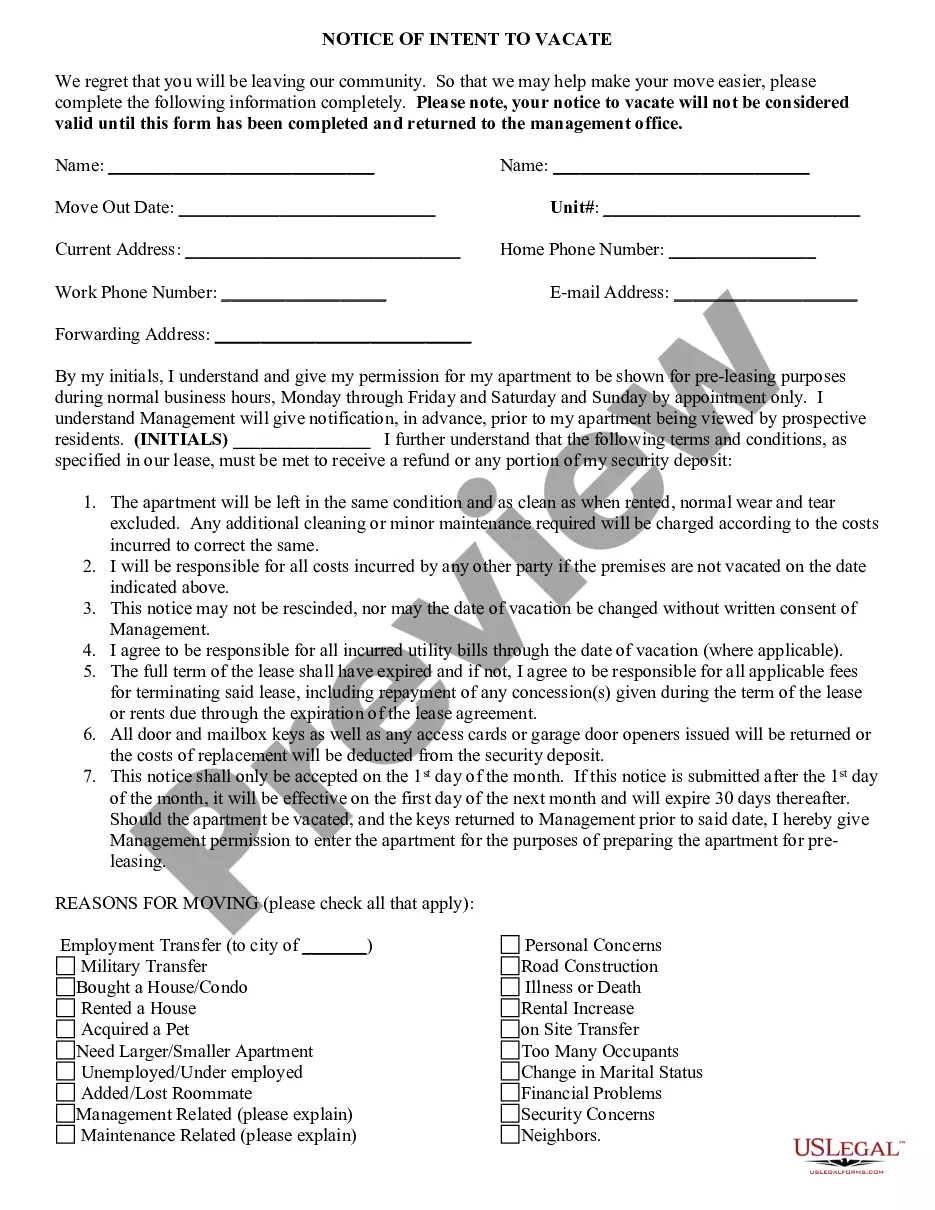
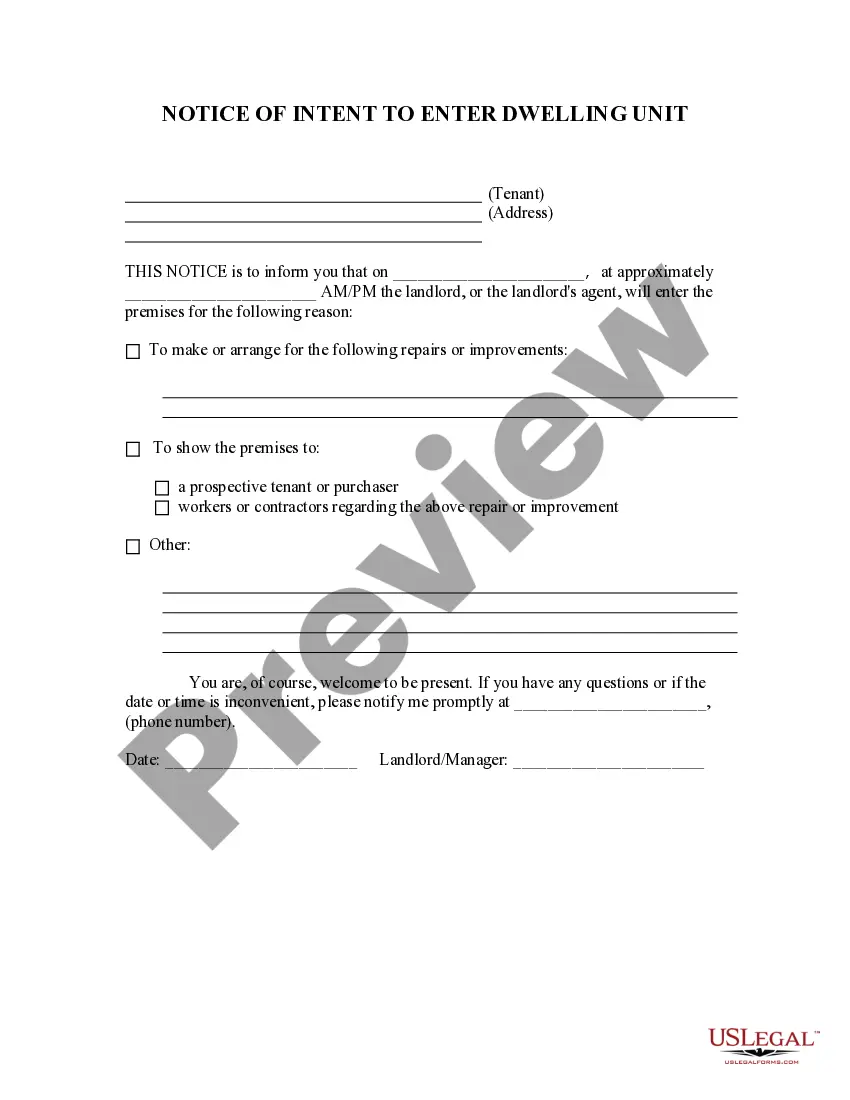
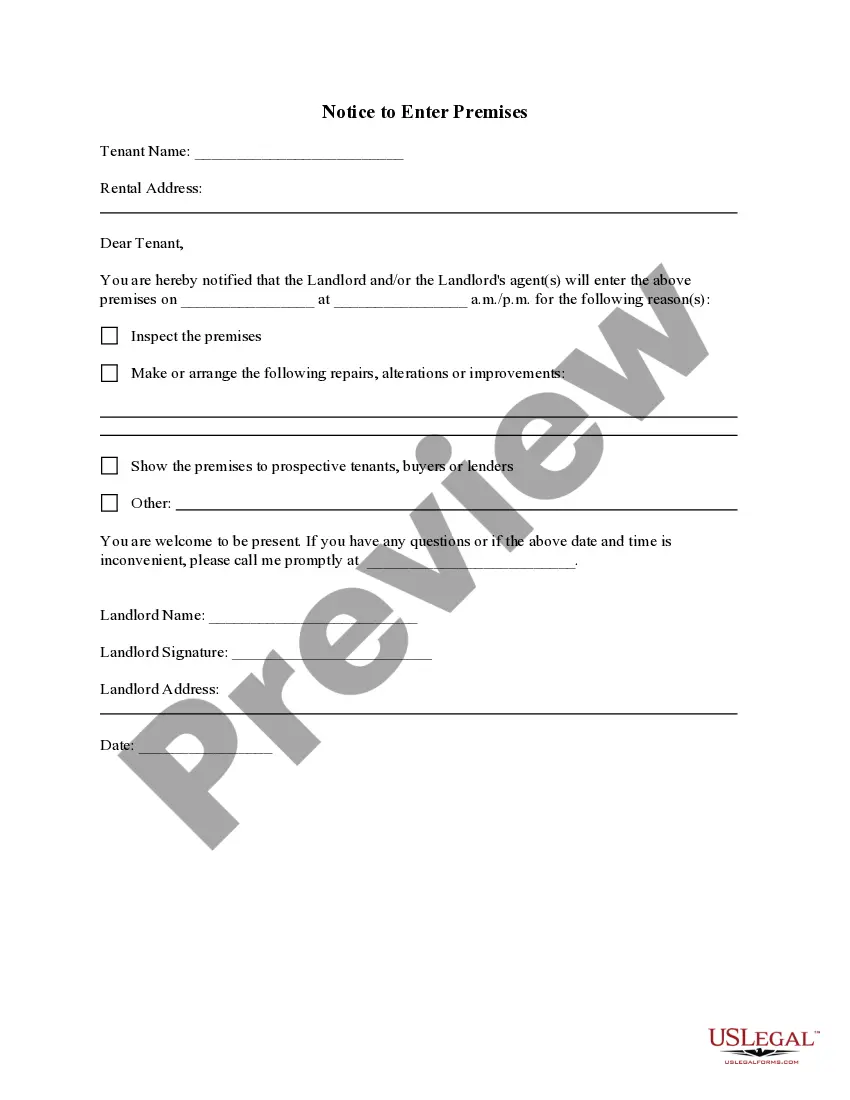


How to fill out Alaska Letter From Landlord To Tenant About Time Of Intent To Enter Premises?
Using Alaska Letter from Landlord to Tenant regarding notice of intent to access premises forms developed by skilled attorneys helps you avoid complications when completing paperwork.
Simply download the document from our site, complete it, and have a legal expert review it. Doing this will save you significantly more time and money than asking an attorney to draft a document from scratch to meet your requirements.
If you already possess a US Legal Forms subscription, just Log In to your account and return to the form page. Locate the Download button next to the template you're reviewing. After downloading a template, your saved samples will be found in the My documents section.
Choose a file type and download your document. After completing all the aforementioned steps, you'll be able to fill out, print, and sign the Alaska Letter from Landlord to Tenant regarding notice of intent to access premises example. Make sure to verify all entered details for accuracy before sending it or mailing it. Reduce the time spent on document completion with US Legal Forms!
- If you lack a subscription, that's okay. Simply adhere to the steps outlined below to register for an account online, obtain, and complete your Alaska Letter from Landlord to Tenant concerning notice of intent to access premises template.
- Double-check that you are downloading the correct state-specific form.
- Utilize the Preview option and read the details (if applicable) to determine if you need this particular template; if so, click Buy Now.
- Search for another template using the Search field if necessary.
- Select a subscription that suits your requirements.
- Commence using your credit card or PayPal.
Form popularity
FAQ
What is a Notice to Enter? A Notice to Enter is a formal letter a property manager or landlord gives to the tenant of a rental property to inform the tenant of the landlord or property manager's intent to enter the residence on a given date at a specific time.
In all states, a landlord can enter the property in an emergency without notice or permission.Even if your landlord gives you notice, he or she must have a good reason to enter the property. In most cases, your landlord can enter your home: In an emergency.
If you're an assured tenant or a protected tenant Your landlord will have to give you notice if they want you to leave. They have to give the reasons why they want to evict you - for example, if you have rent arrears or you've damaged the property. Your landlord will have to go to court and get a court order.
Apply to the Tribunal for orders: to stop the landlord/agent entering the premises. (Apply within 3 months after you become aware of the landlord's/agent's breach.) report trespass to the police. complain to NSW Fair Trading.
Quiet enjoyment You are paying rent to the landlord for exclusive use as the property as your home and as such you have the right to decide who enters it and when. If a landlord enters your home without permission they are, technically, trespassing, unless they have a court order to allow them otherwise.
Put cameras everywhere (Nest Cam is a good brand), make sure you put signs "Premises secured by video surveillance" and you will be good to go. While it won't prevent the landlord from entering, it will prevent the landlord from doing anything funky, and who knows, with time even stop.
The big take-away is that in most circumstances a landlord cannot enter a property without agreement from the tenant. And If the landlord ignores the law and enters the property without permission, the tenant may be able to claim damages or gain an injunction to prevent the landlord doing it again.
If your landlord enters your home without permission You have the right to live in your home without being disturbed unreasonably.If your landlord keeps turning up unannounced, or enters your home without notice or permission it could be harassment.
Can a landlord keep turning up unannounced? A. Landlords have a statutory right of entry to the rental property for inspection and repairs. If essential maintenance is needed, the landlord can gain entry as and when required.