Wyoming Living Trust for Husband and Wife with One Child
About this form
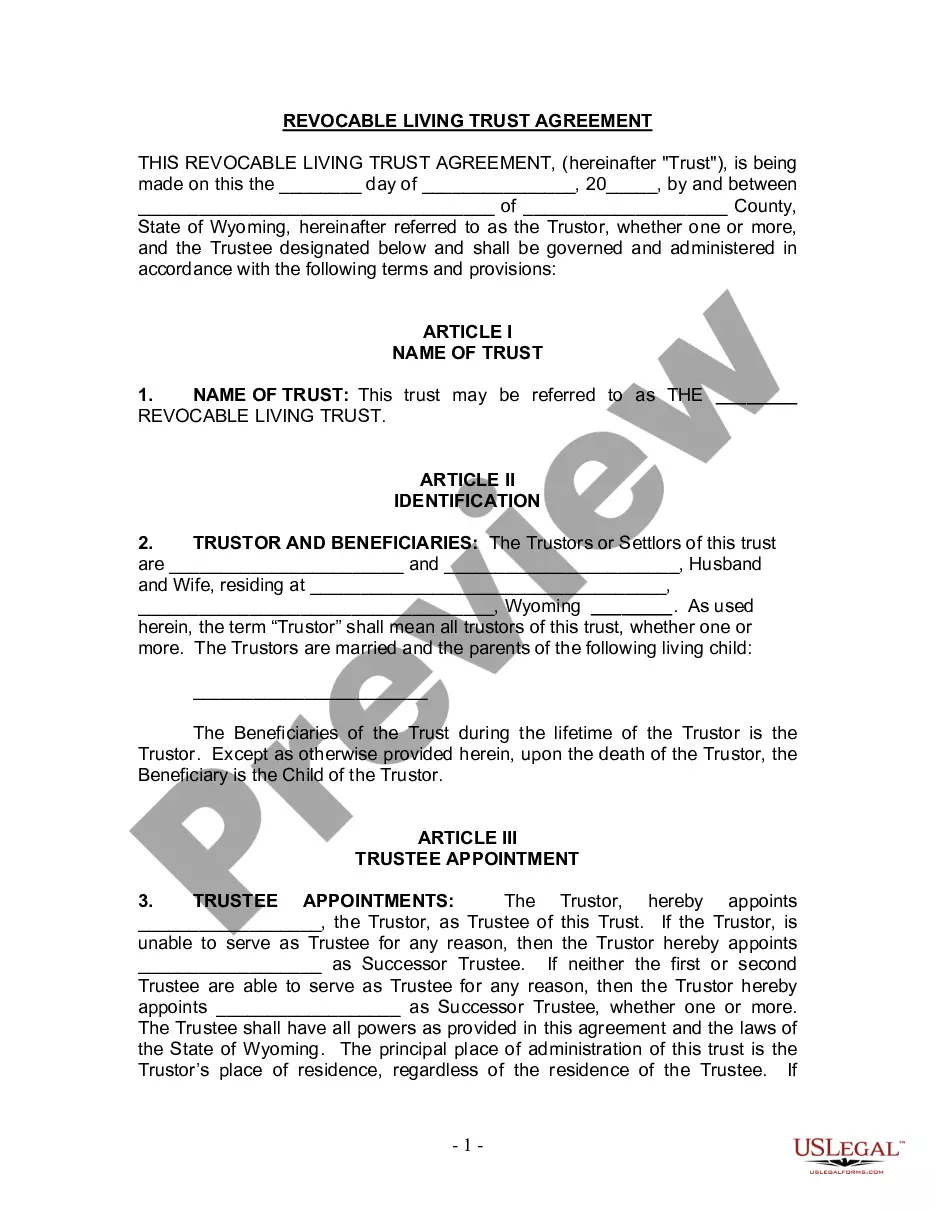
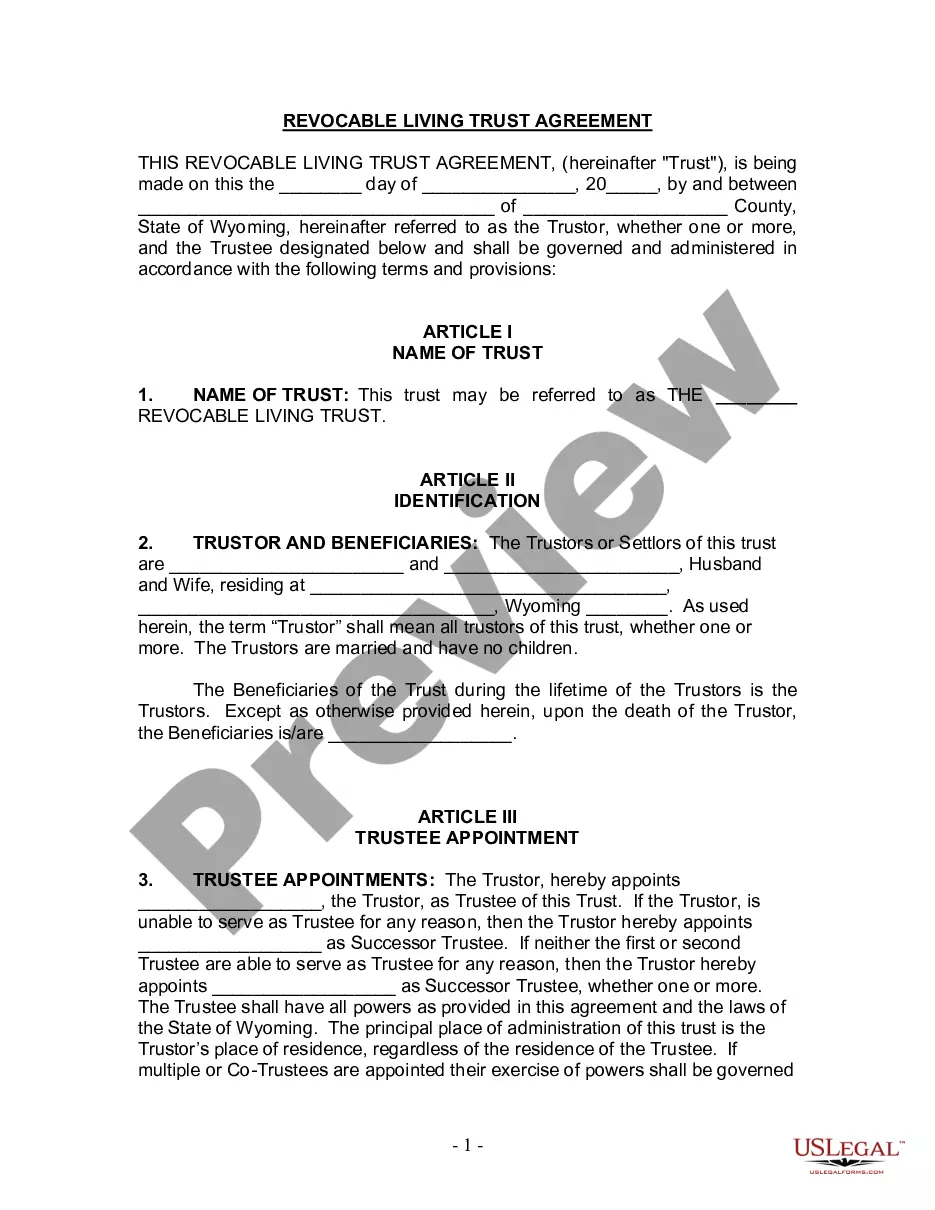
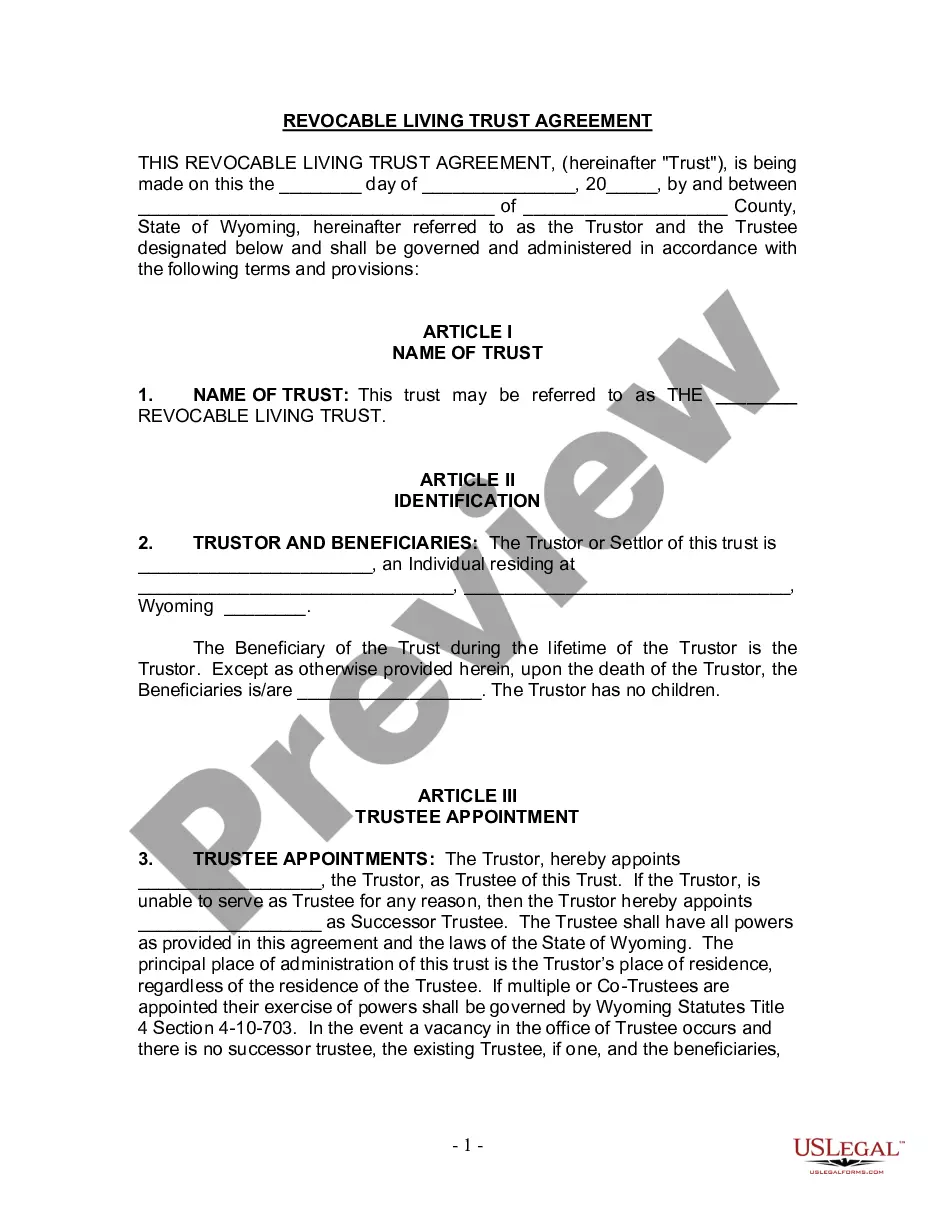
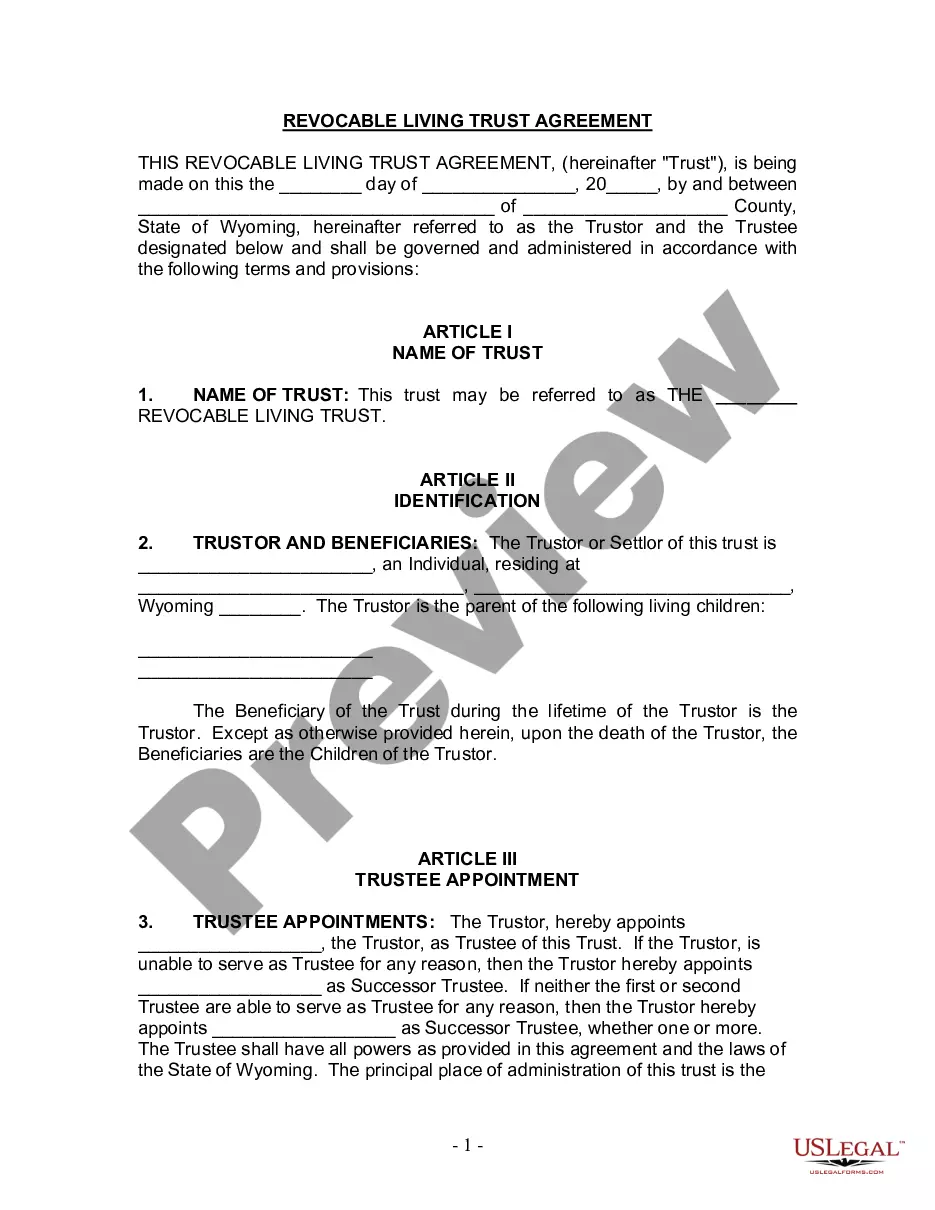
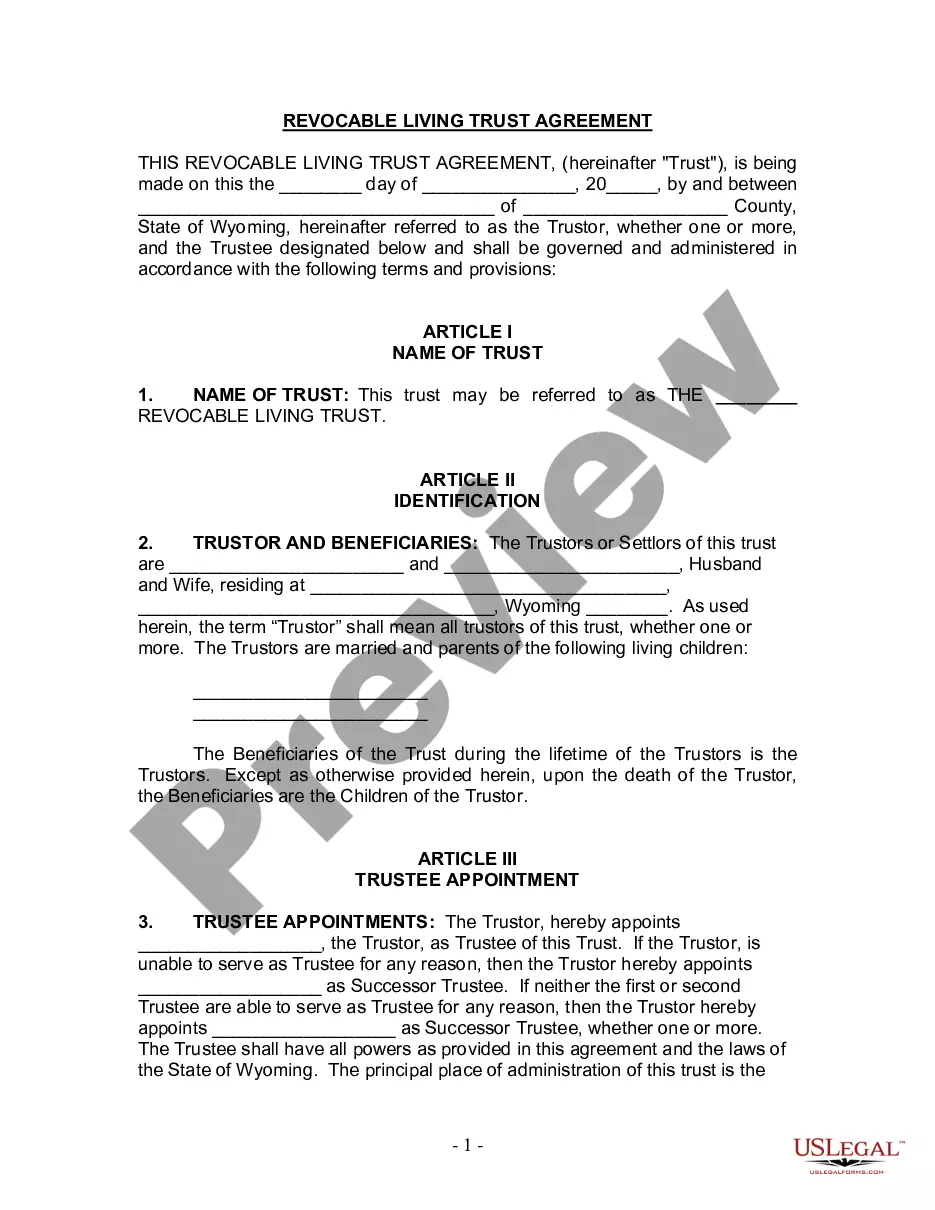
This Living Trust for Husband and Wife with One Child is a legally binding document prepared for couples with a single child. It establishes a revocable living trust that allows the couple to manage their assets during their lifetime. Unlike a will, this trust enables assets to bypass probate upon death, streamlining the transfer of property to beneficiaries. This form differs from other estate planning documents by providing a more flexible means to control asset distribution while being able to modify the trust terms as needed.
Key components of this form
- Identification of Trustors and Trustees: Names and addresses of the husband, wife, and trustee(s).
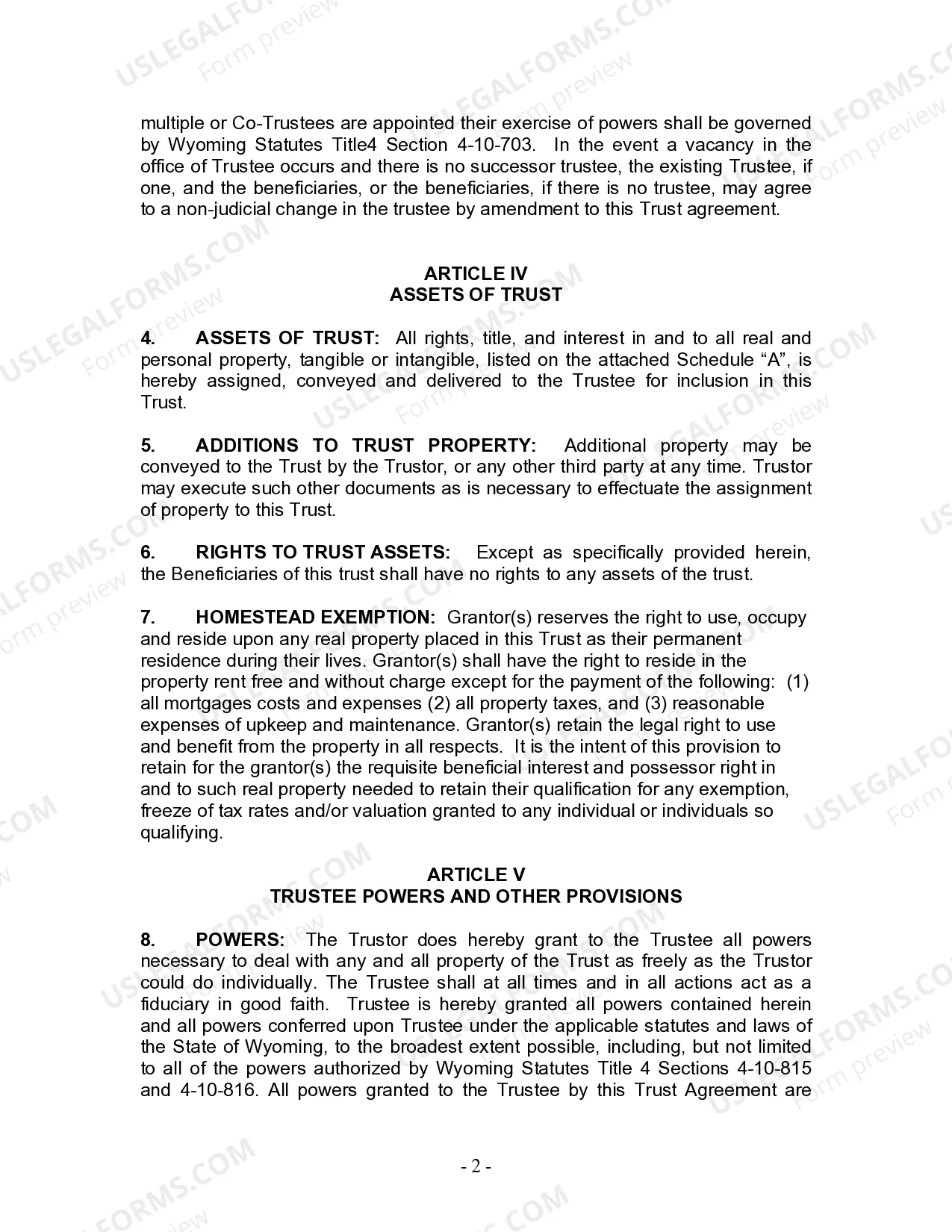
- Trust Asset Details: Specifications for all real and personal property included in the trust.
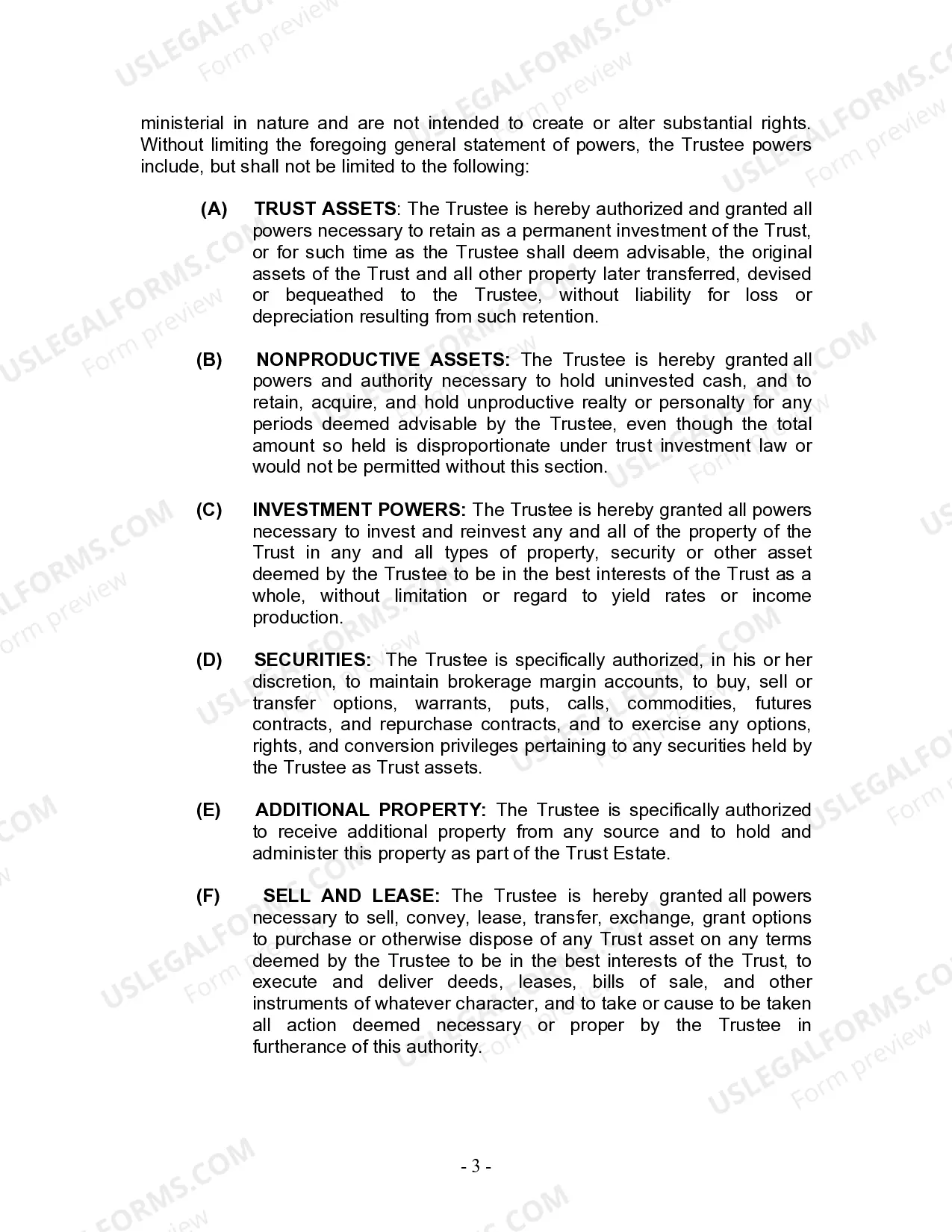
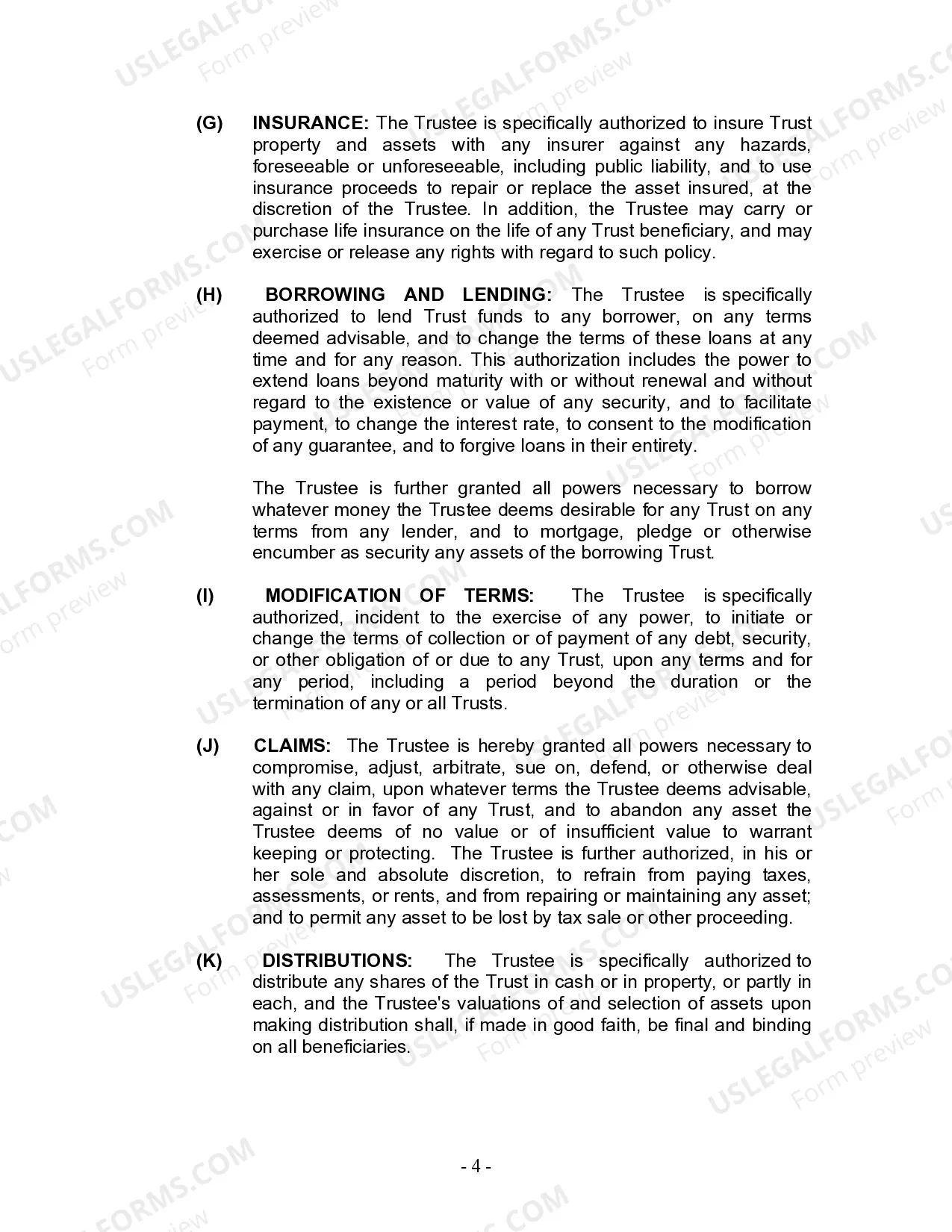
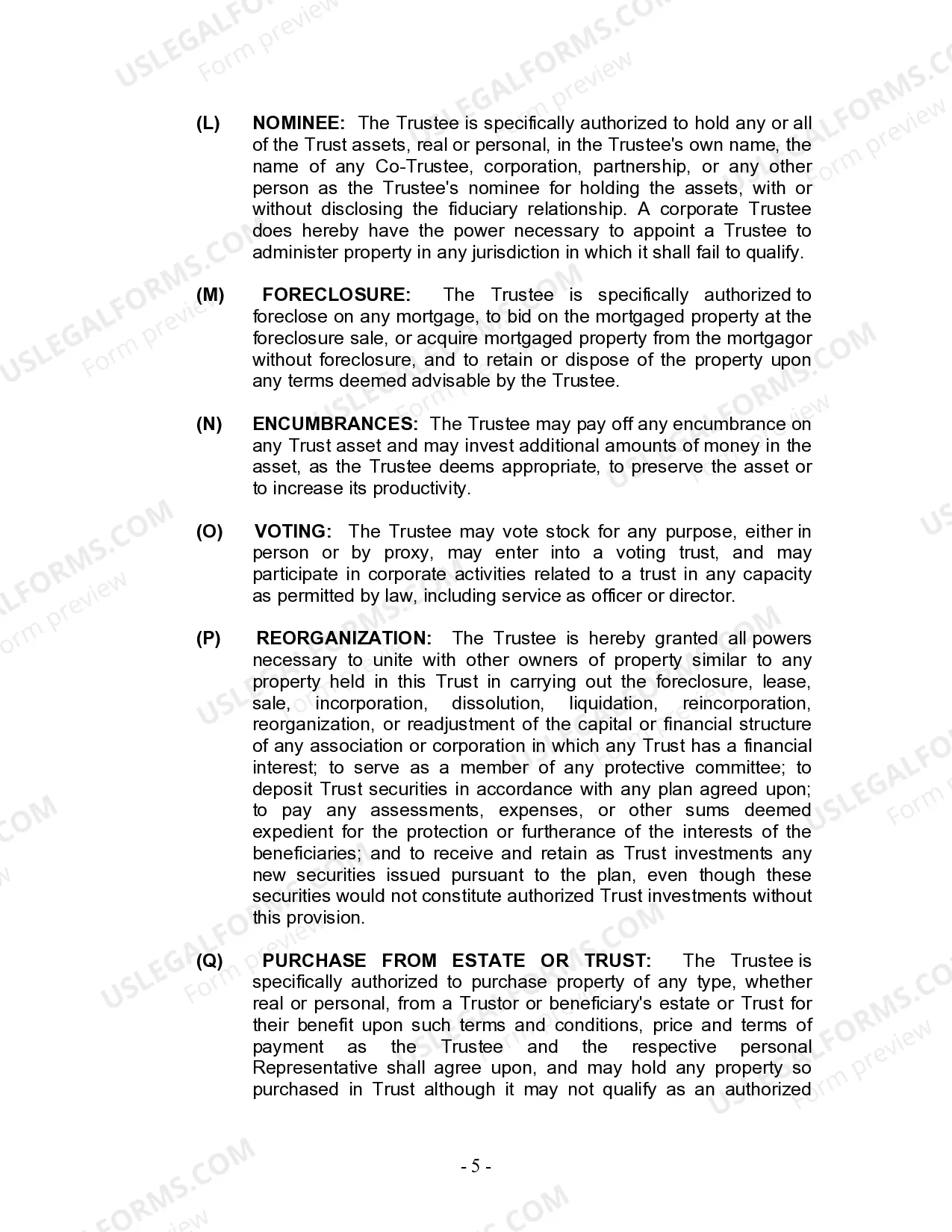
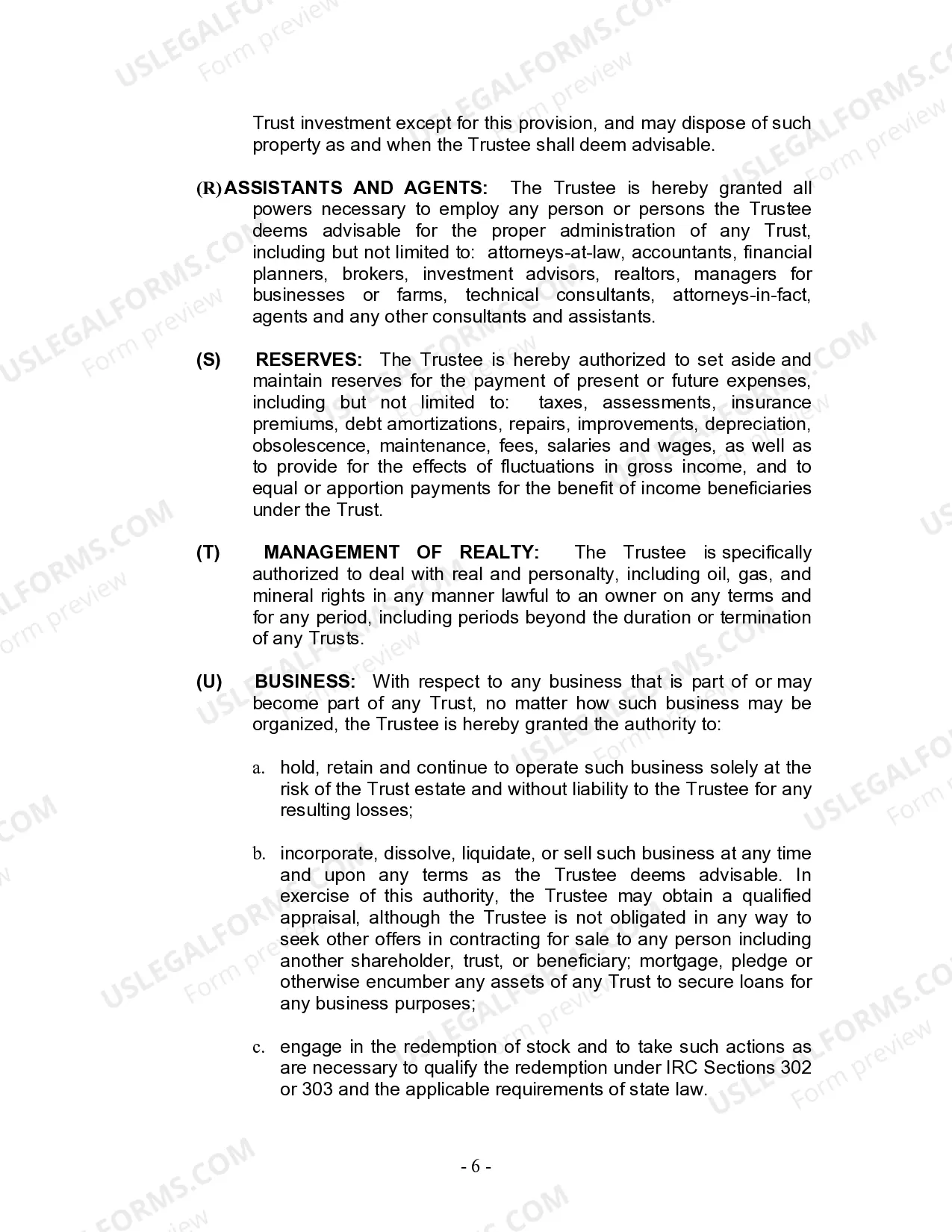
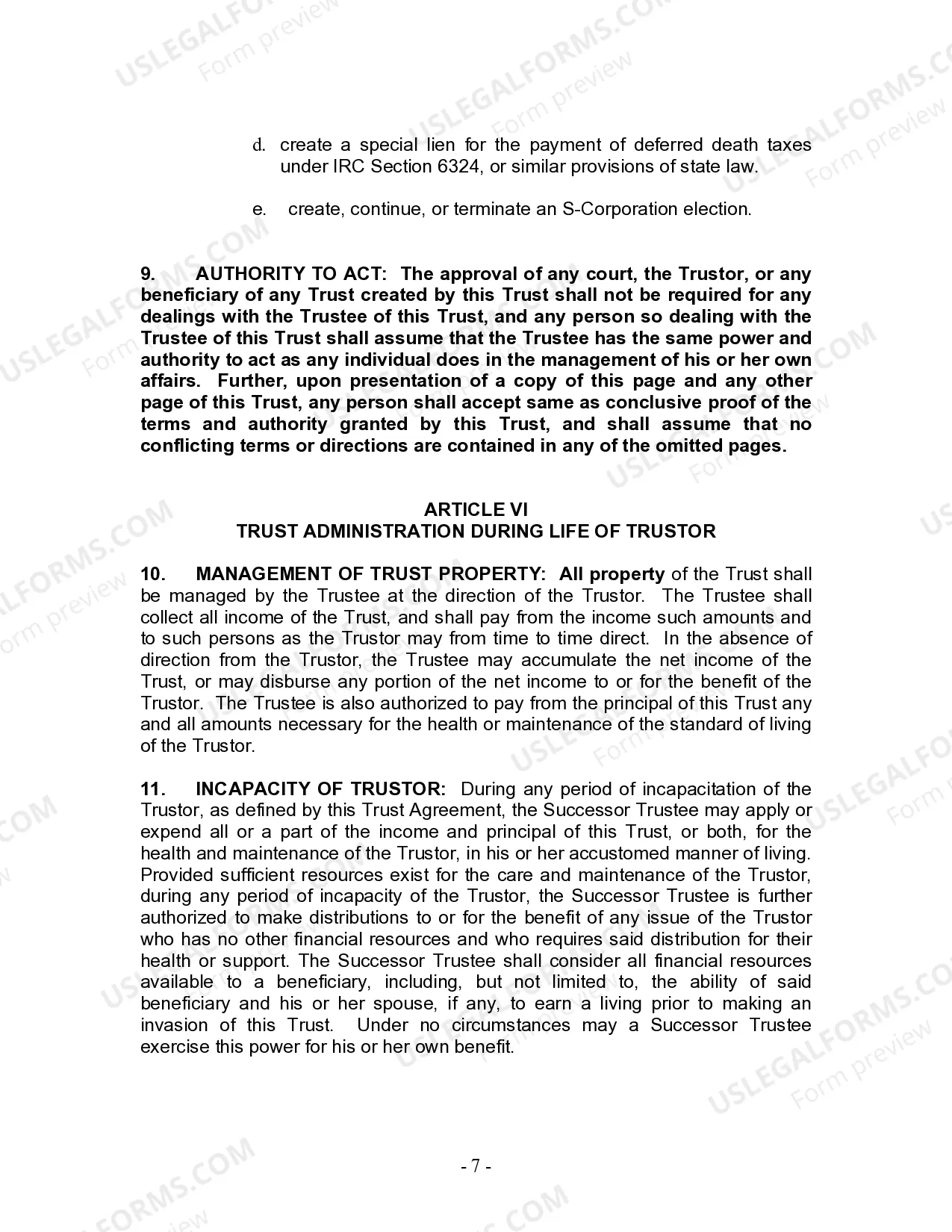
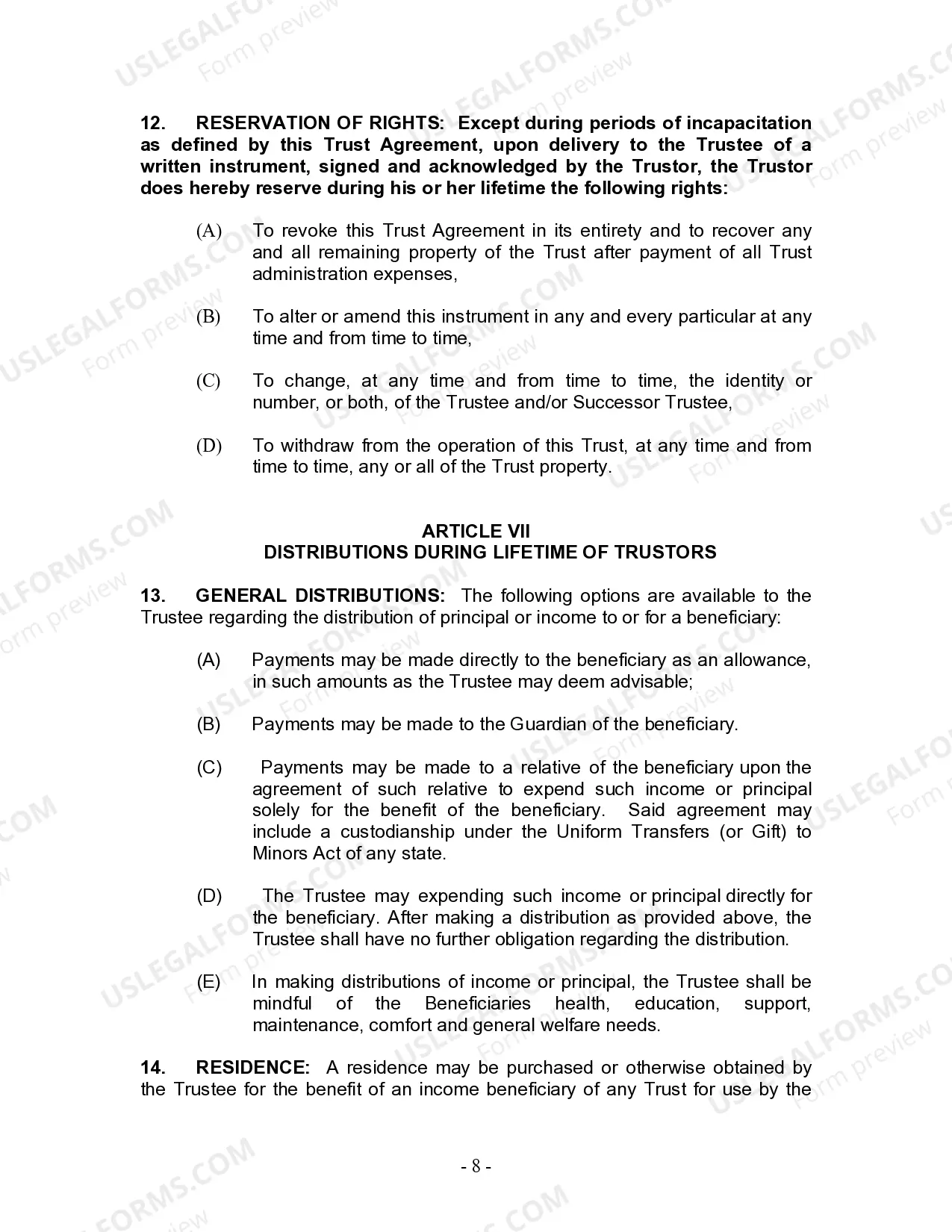
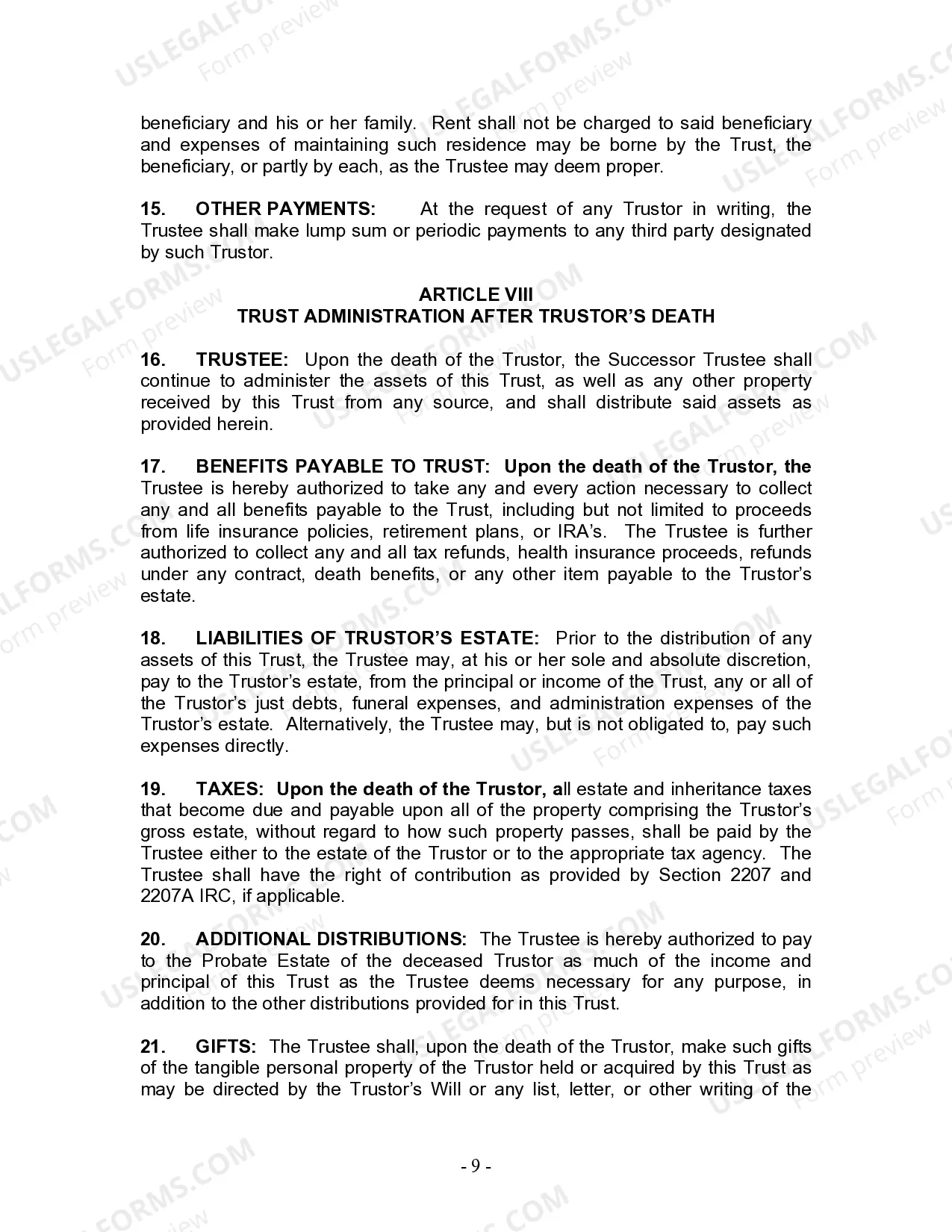
- Rights and Powers of Trustees: Authority granted to the trustee over the management of trust assets.
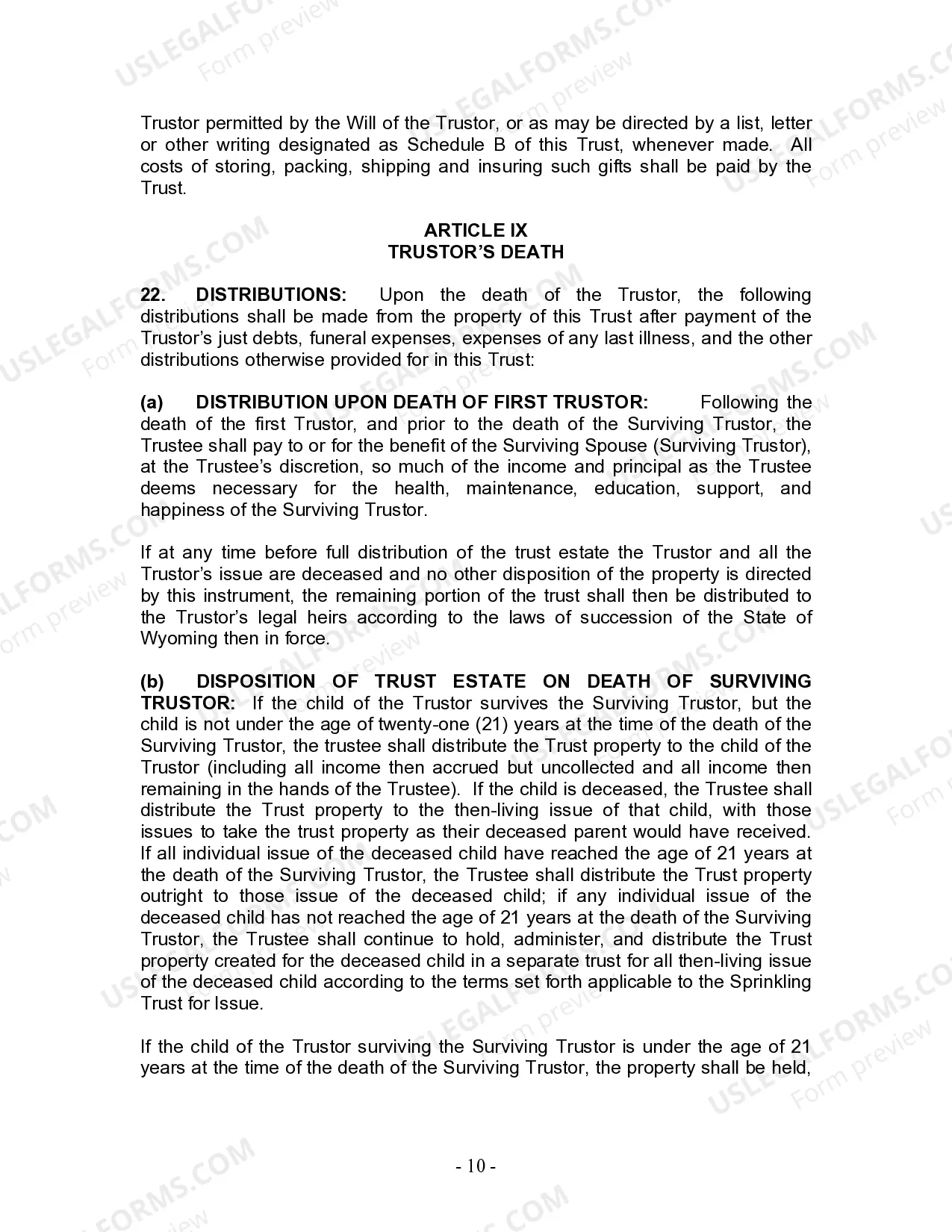
- Distribution Provisions: Guidelines on how assets will be distributed upon the death of the trustors.
- Successor Trustee Appointments: Designation of backup trustees in case the primary trustee cannot serve.

Situations where this form applies
This living trust form is beneficial for couples looking to manage and distribute their assets effectively while ensuring that their only child is provided for after their passing. It is particularly useful in scenarios where the couple wishes to avoid the lengthy probate process, maintain control over their assets, and ensure financial stability for their child.
Who can use this document
- Husbands and wives with a single child seeking to establish an estate plan.
- Couples who want flexibility in managing their assets during their lifetime.
- Parents concerned about the efficient transfer of wealth to their child after their death.
Instructions for completing this form
- Identify the Trustors: Fill in the names and addresses of the husband and wife.
- Designate the Trustee: Appoint a trustee who will manage the trust assets.
- List the Assets: Specify all real and personal property to be included in the trust.
- Complete Distribution Instructions: Provide guidelines for distributing assets upon the death of the Trustors.
- Sign and Notarize: Ensure all signatures are dated and notarized as required for validity.
Does this document require notarization?
Yes, this form must be notarized to be legally valid. US Legal Formsâ integrated online notarization service offers 24/7 availability through secure video calls, ensuring convenience without the need to travel.
Get your form ready online
Our built-in tools help you complete, sign, share, and store your documents in one place.
Make edits, fill in missing information, and update formatting in US Legal Forms—just like you would in MS Word.
Download a copy, print it, send it by email, or mail it via USPS—whatever works best for your next step.
Sign and collect signatures with our SignNow integration. Send to multiple recipients, set reminders, and more. Go Premium to unlock E-Sign.
If this form requires notarization, complete it online through a secure video call—no need to meet a notary in person or wait for an appointment.
We protect your documents and personal data by following strict security and privacy standards.

Make edits, fill in missing information, and update formatting in US Legal Forms—just like you would in MS Word.

Download a copy, print it, send it by email, or mail it via USPS—whatever works best for your next step.

Sign and collect signatures with our SignNow integration. Send to multiple recipients, set reminders, and more. Go Premium to unlock E-Sign.

If this form requires notarization, complete it online through a secure video call—no need to meet a notary in person or wait for an appointment.

We protect your documents and personal data by following strict security and privacy standards.
Common mistakes to avoid
- Failing to include all assets: Make sure all property is listed to avoid confusion later.
- Not appointing a successor trustee: Always have a backup trustee to manage the trust if necessary.
- Inaccurate beneficiary details: Double-check that all beneficiary information is correct and current.
Advantages of online completion
- Convenience: Download and complete the form at your own pace, without visiting a lawyer.
- Cost-effective: Online access helps eliminate the need for costly legal consultations.
- Accessibility: Easily modify and retain a digital copy for future updates or changes.
Looking for another form?
Form popularity
FAQ
If marital property is placed in an irrevocable trust, that trust cannot be changed and the assets in it cannot be removed and divided in the divorce. The trust assets remain in the trust until after the death of the grantor, when they are distributed to the beneficiaries in accordance with the trust's terms.
Some Trusts Protect Assets from Divorce. In California, trusts established before marriage are considered separate property. Other trusts including domestic or foreign asset protection trusts, revocable trusts and irrevocable trusts also protect assets in the event of divorce.
Current beneficiaries have the right to distributions as set forth in the trust document. Right to information. Current and remainder beneficiaries have the right to be provided enough information about the trust and its administration to know how to enforce their rights. Right to an accounting.
Generally, trusts are considered the separate property of the beneficiary spouse and the assets in a trust are not subject to equitable distribution unless they contain marital property.Putting marital assets into a trust does not make those assets separate property.
Under California law, a marriage automatically invalidates any pre-existing will or trust as to the new spouse's inheritance rights, unless the documents provide for a new spouse, or clearly indicate a new spouse will receive nothing.
Aside from being used as an estate planning tool, trusts can be used for asset protection in divorce.If a spouse established a trust prior to the marriage, the assets placed in that trust are typically considered separate property as long as the funds are not combined with marital funds at any point.
Q: Can a person have more than one trust? A: Yes, it is not that uncommon for a person to be the beneficiary of multiple trusts. However, caution should be used. Trusts come in many shapes and sizes and can serve multiple purposes and can be established by you or by someone else for your benefit.
The process of funding your living trust by transferring your assets to the trustee is an important part of what helps your loved ones avoid probate court in the event of your death or incapacity. Qualified retirement accounts such as 401(k)s, 403(b)s, IRAs, and annuities, should not be put in a living trust.
Houses and other real estate (even if they're mortgaged) stock, bond, and other security accounts held by brokerages (but think about naming a TOD beneficiary instead) small business interests (stock in a closely held corporation, partnership interests, or limited liability company shares)