Wyoming Living Trust for Individual Who is Single, Divorced or Widow or Widower with No Children
About this form
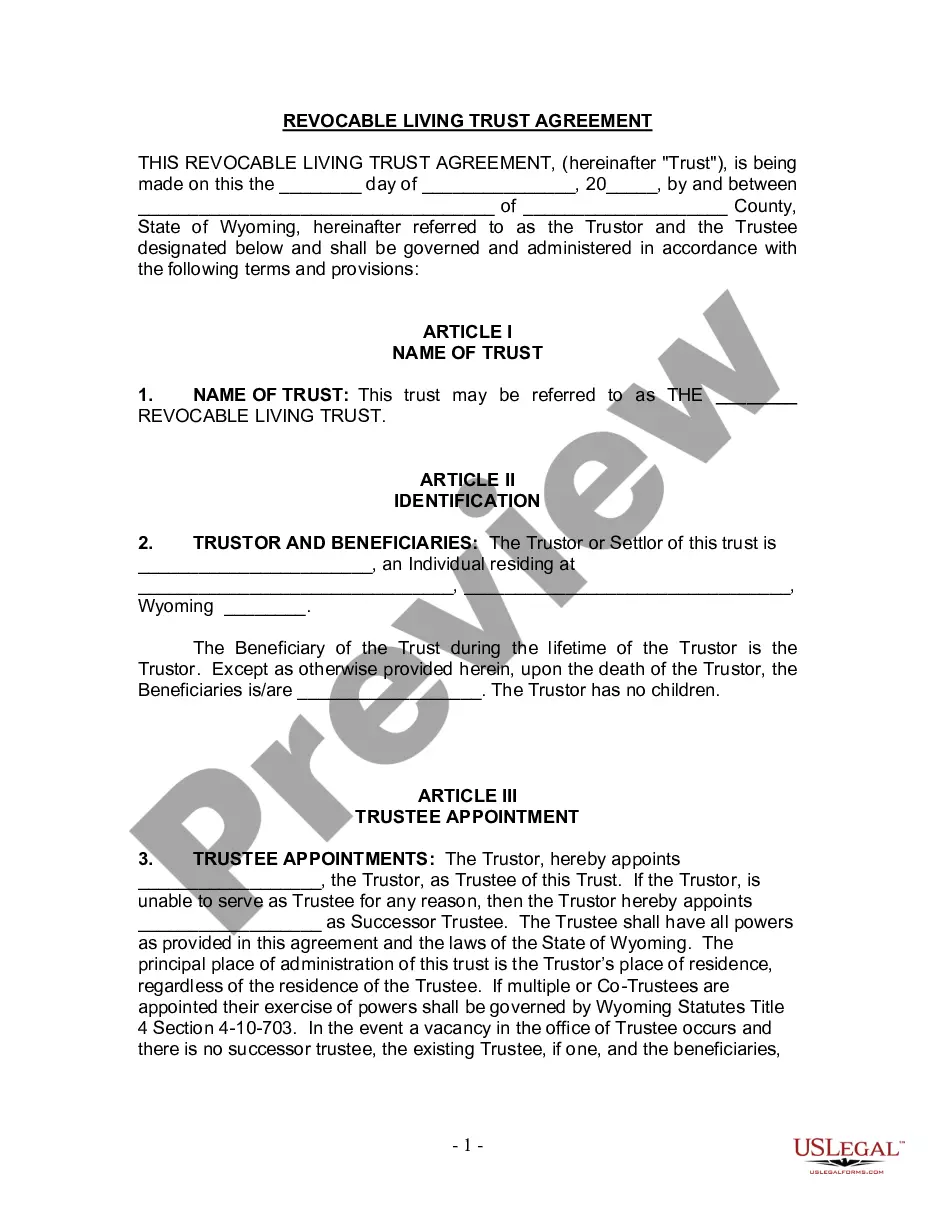
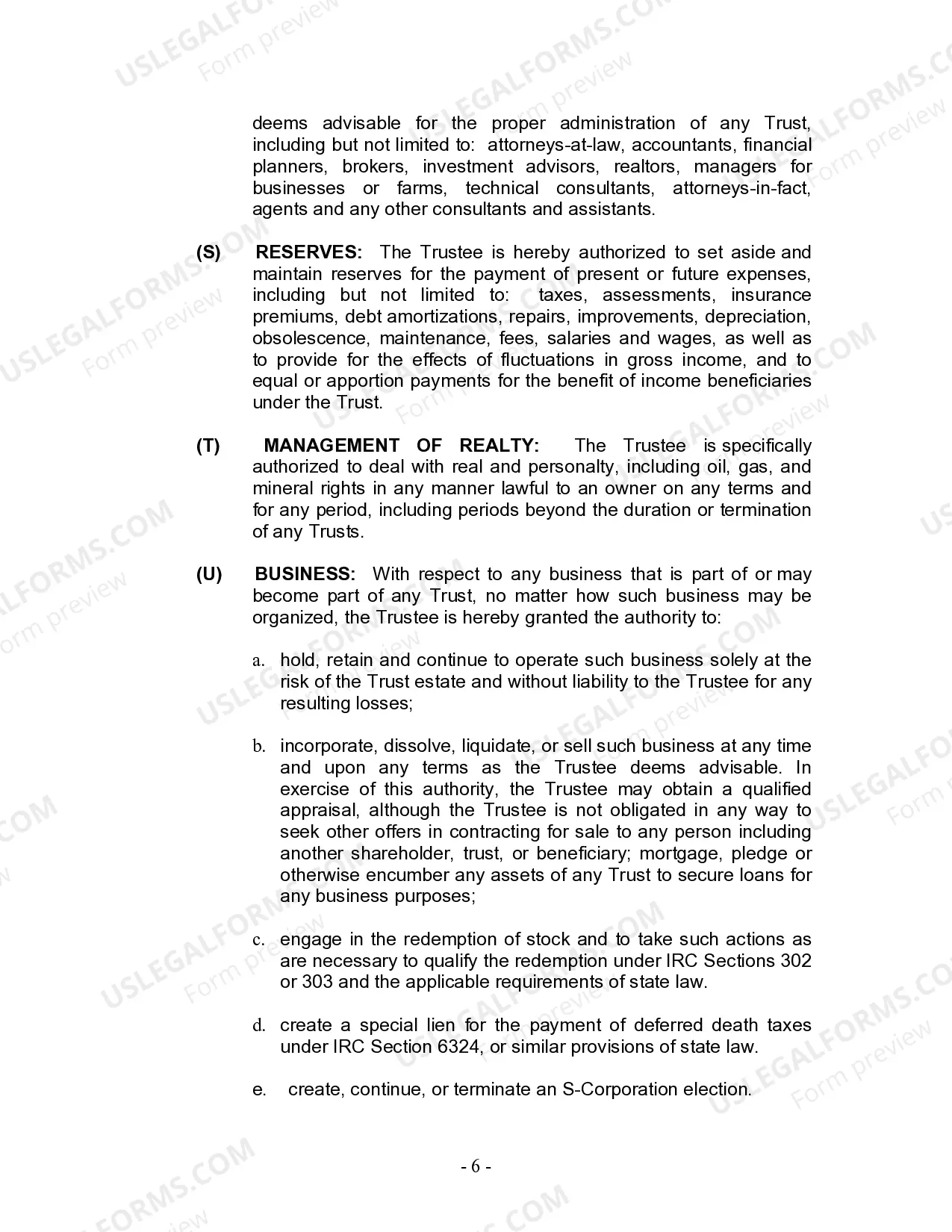
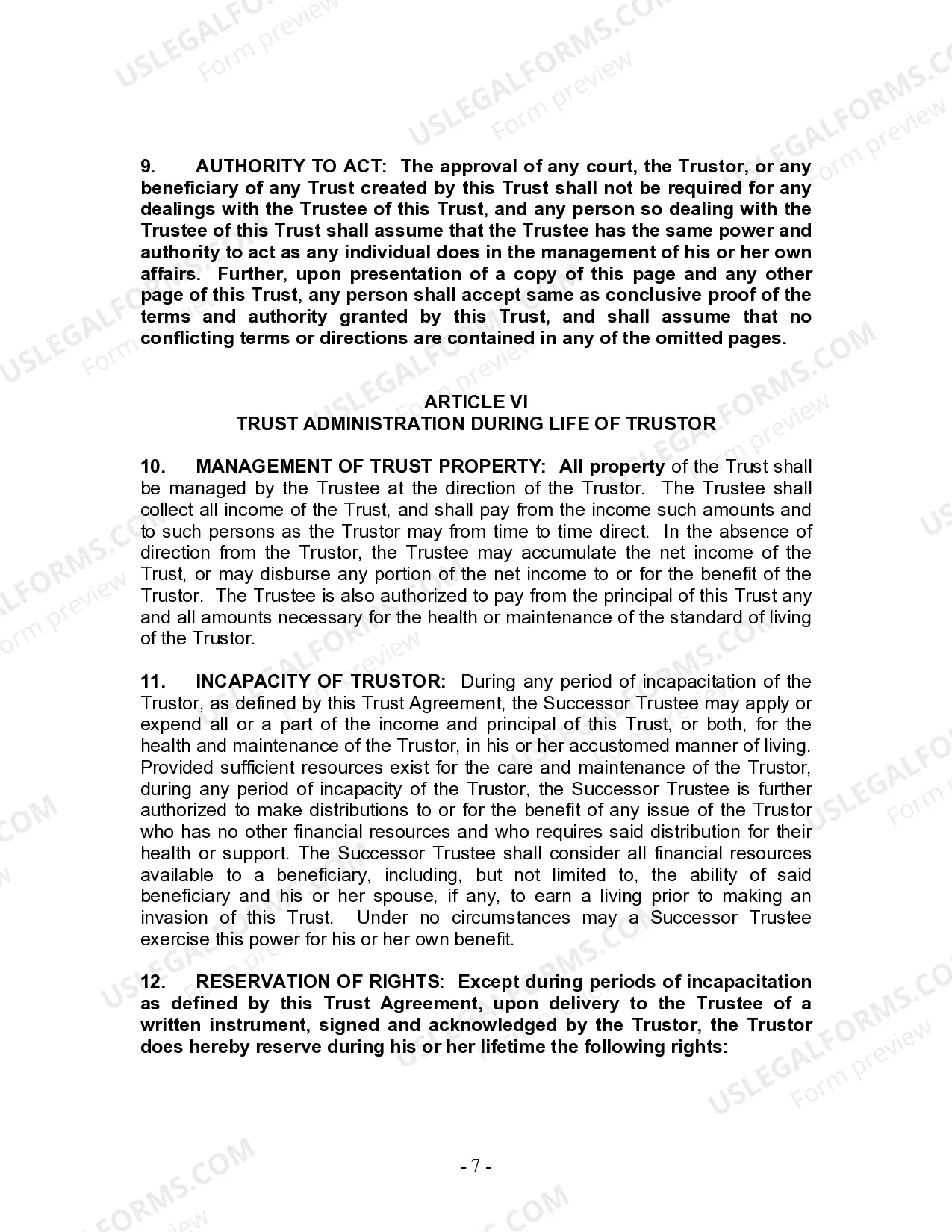
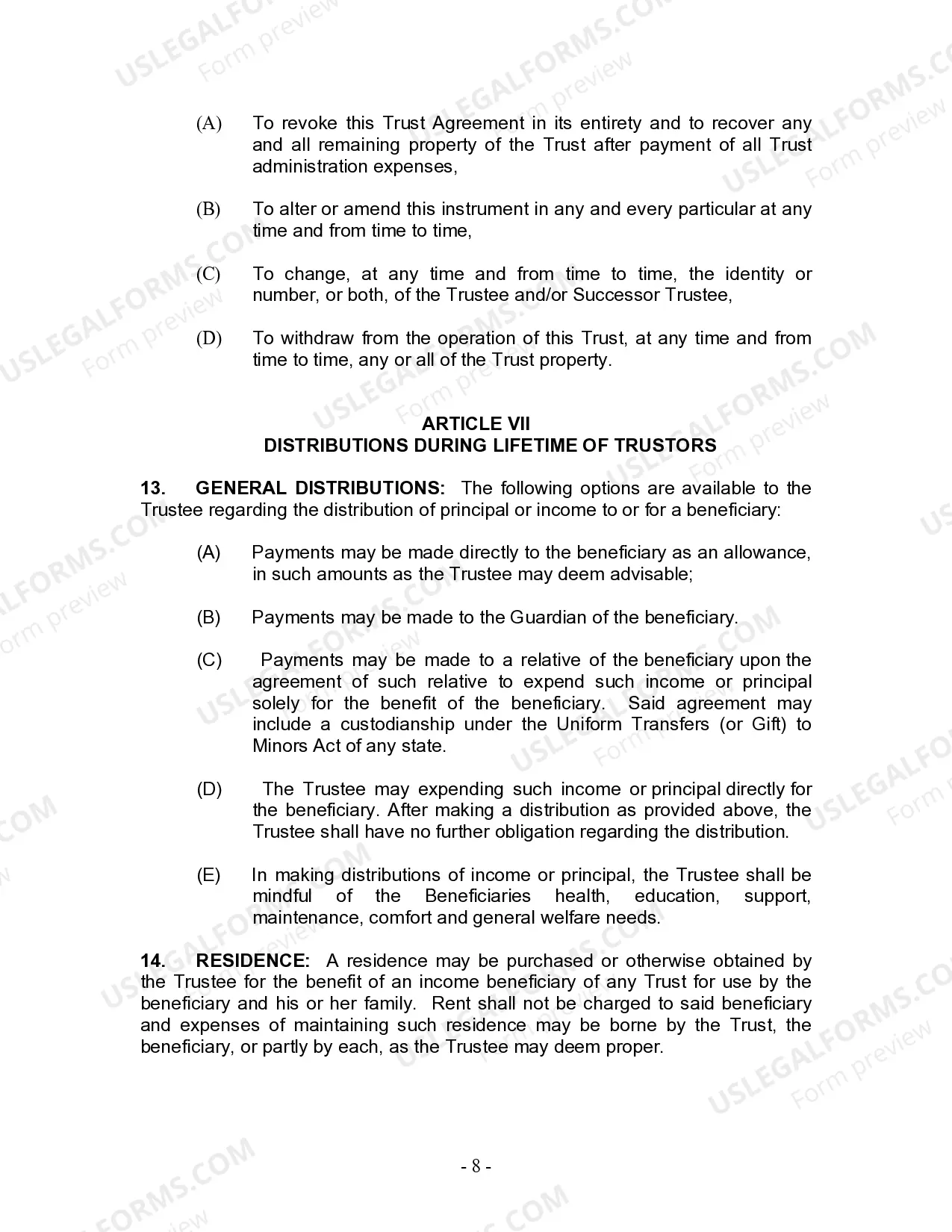
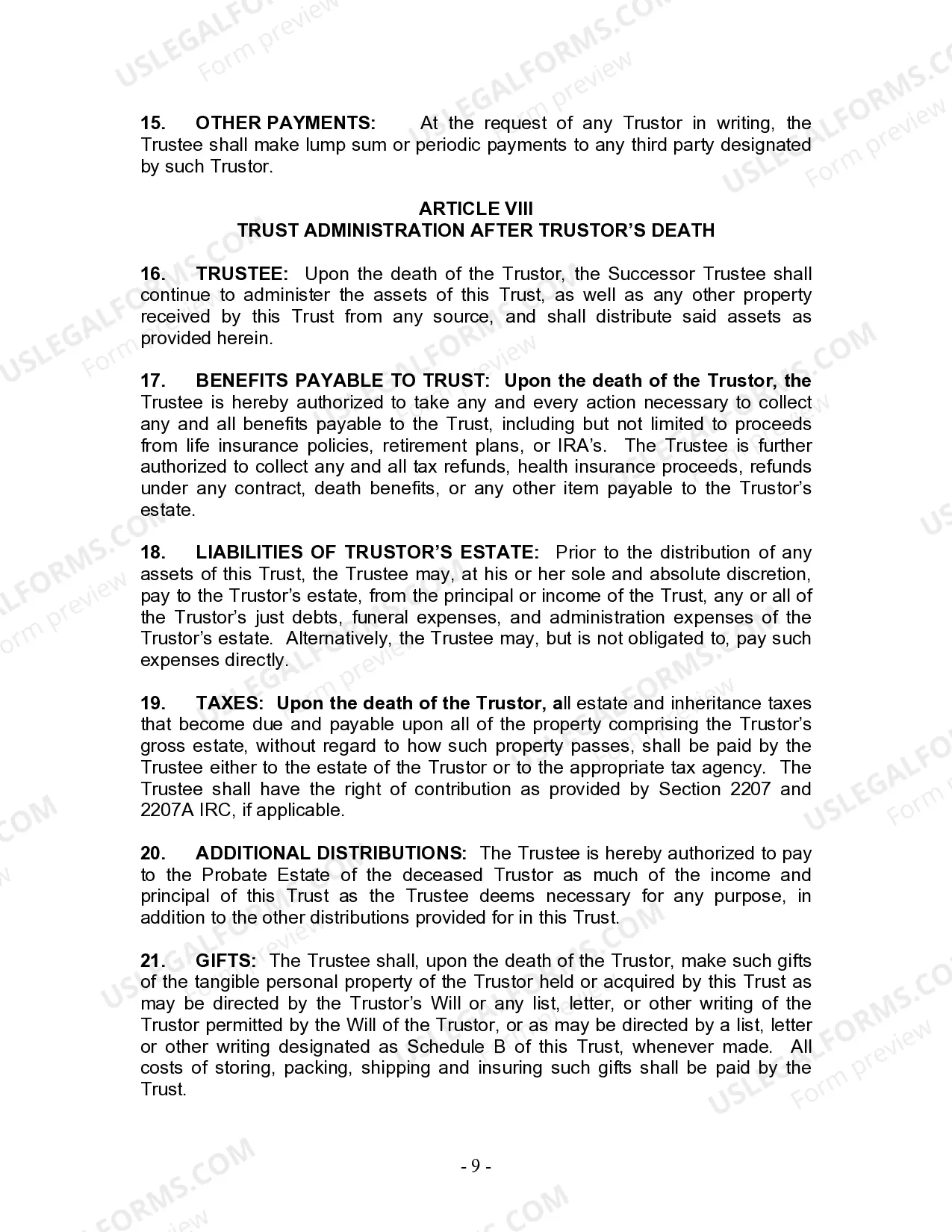
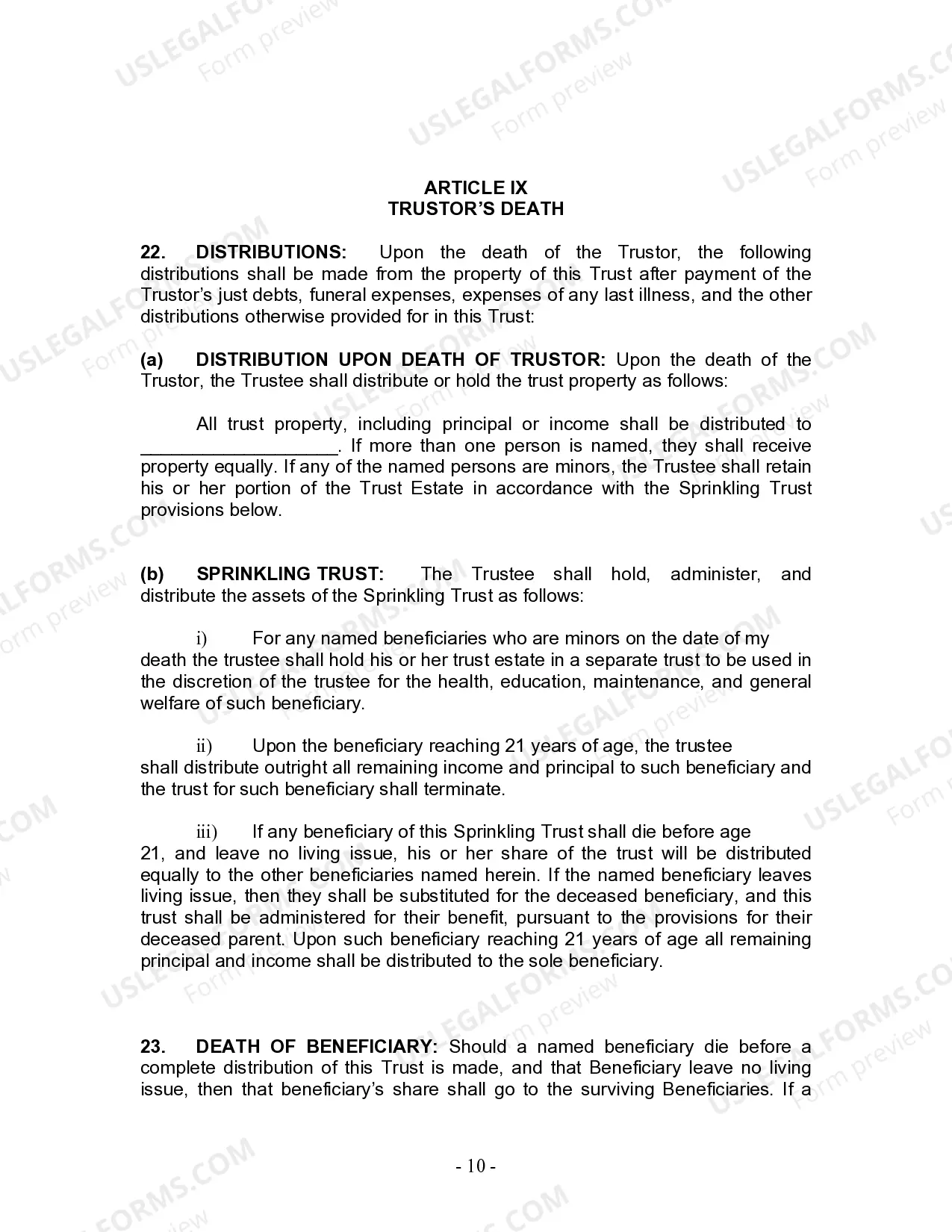
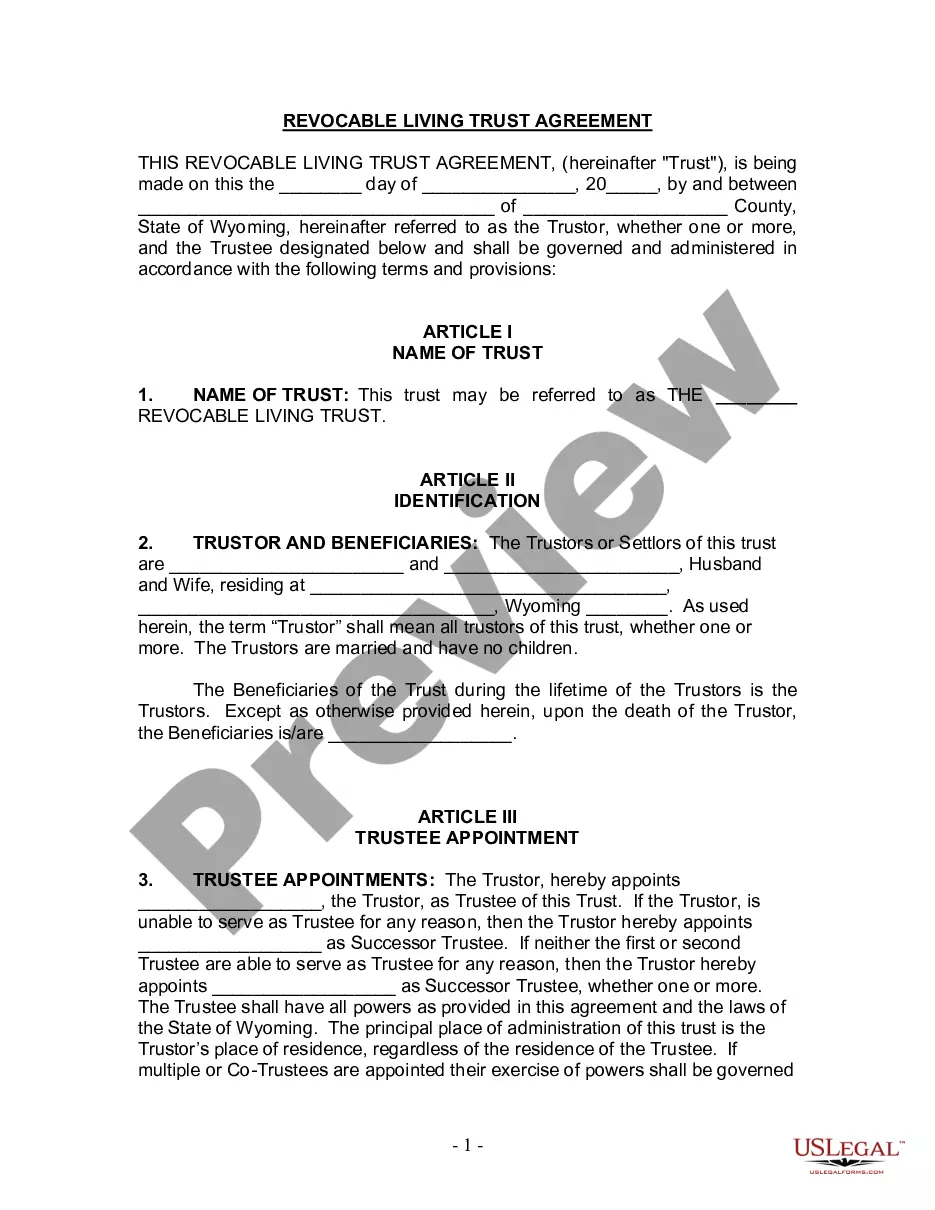
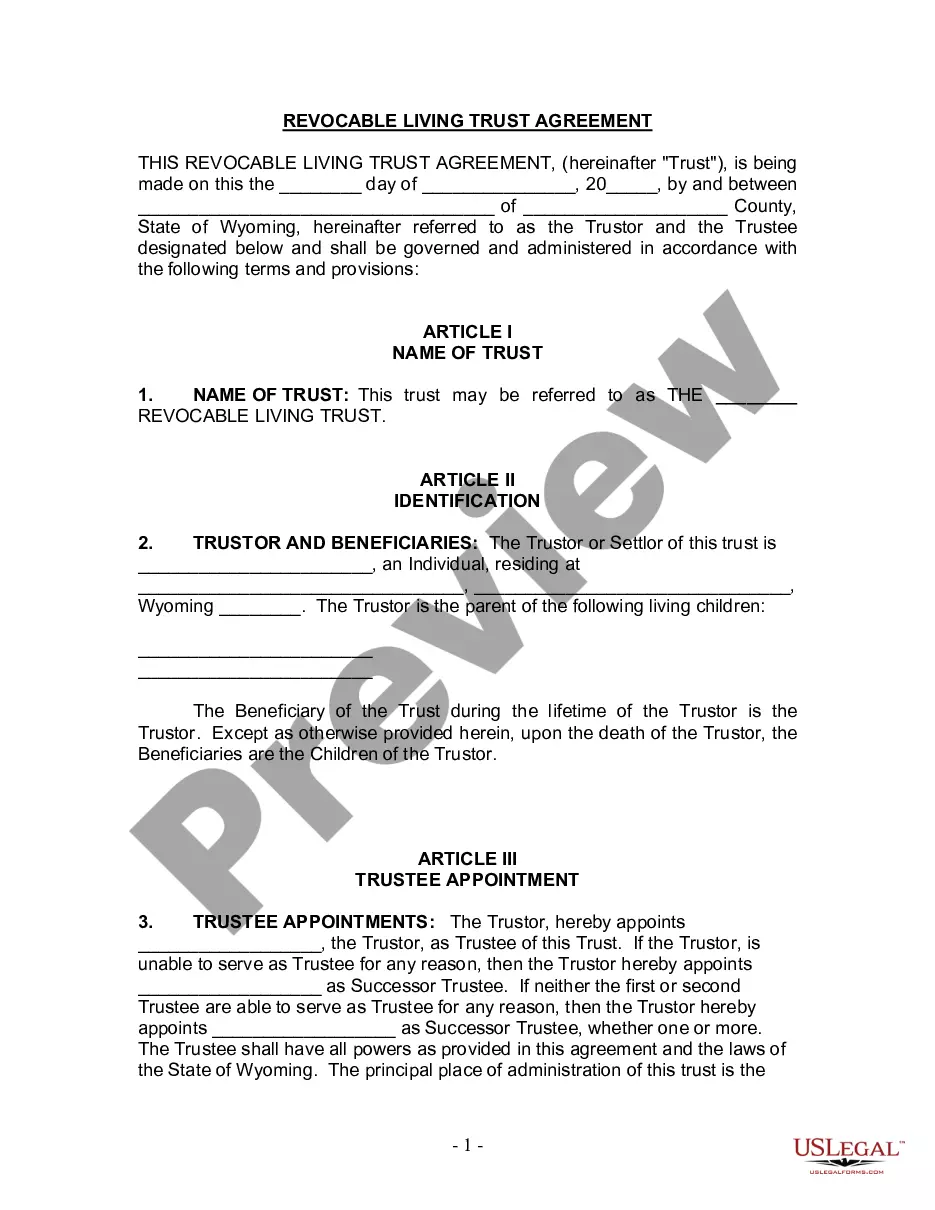
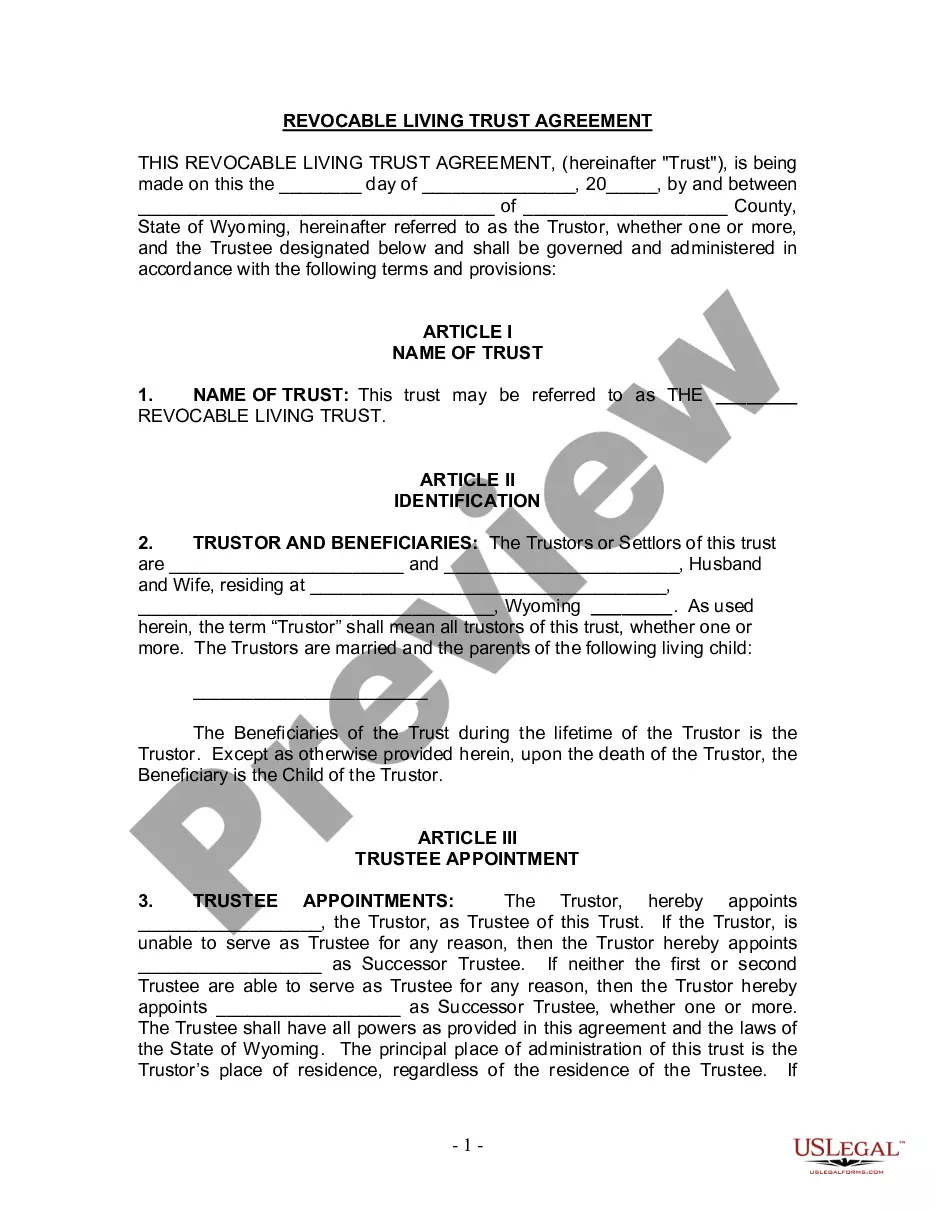
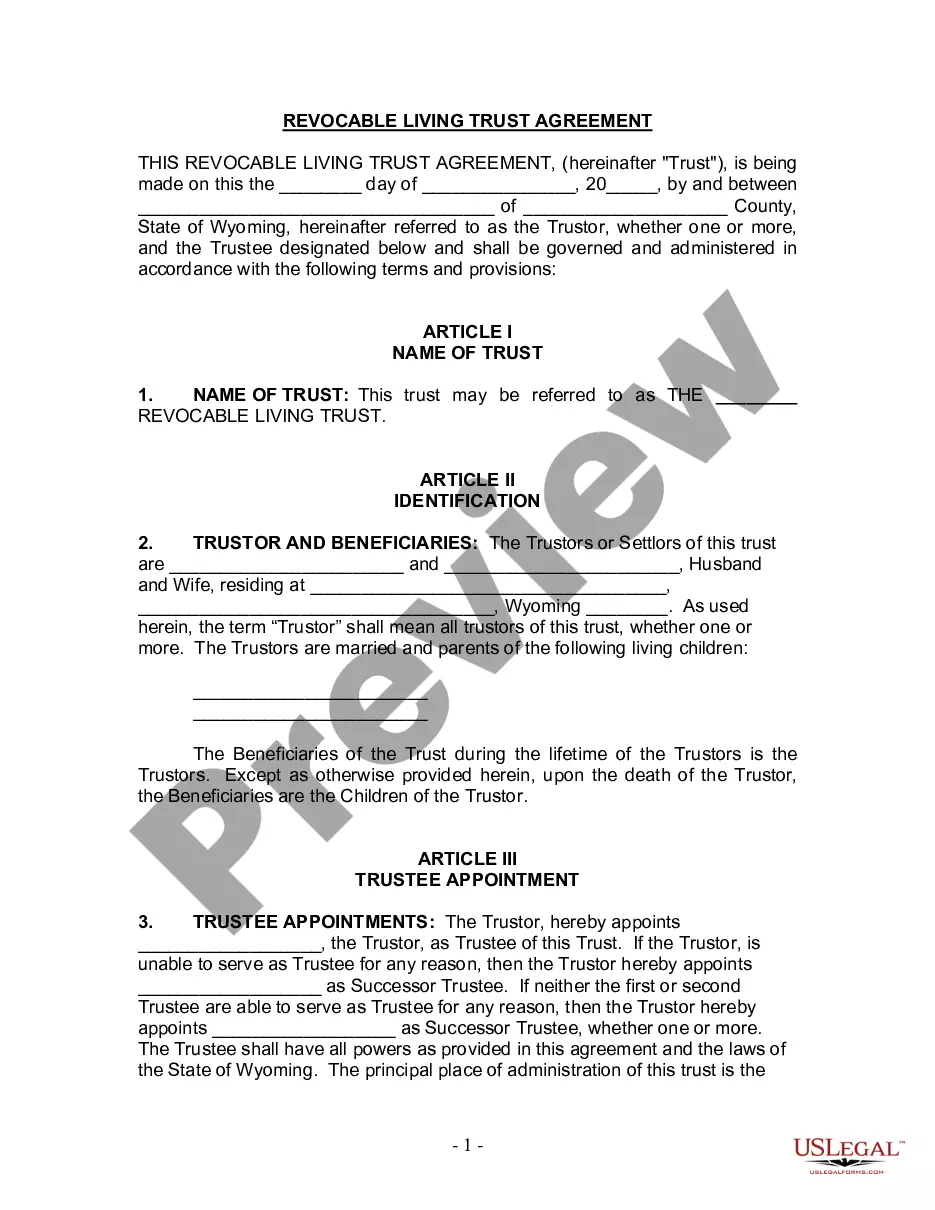
This Living Trust for Individual Who is Single, Divorced or Widow or Widower with No Children is a legal document designed to help individuals manage their assets during their lifetime and dictate how those assets should be distributed upon their death. This living trust differs from a will as it avoids the probate process, allowing for a smoother transfer of assets to the designated beneficiaries. With this trust, the individual can maintain full control over their assets while also providing a clear plan for their distribution, ensuring that their wishes are honored after they pass away.
Key components of this form
- Identification of the Trustor and Trustee.
- Details regarding the assets included in the trust.
- Powers granted to the Trustee for asset management.
- Provisions for the distribution of assets after the Trustor's death.
- Rights reserved by the Trustor during their lifetime.
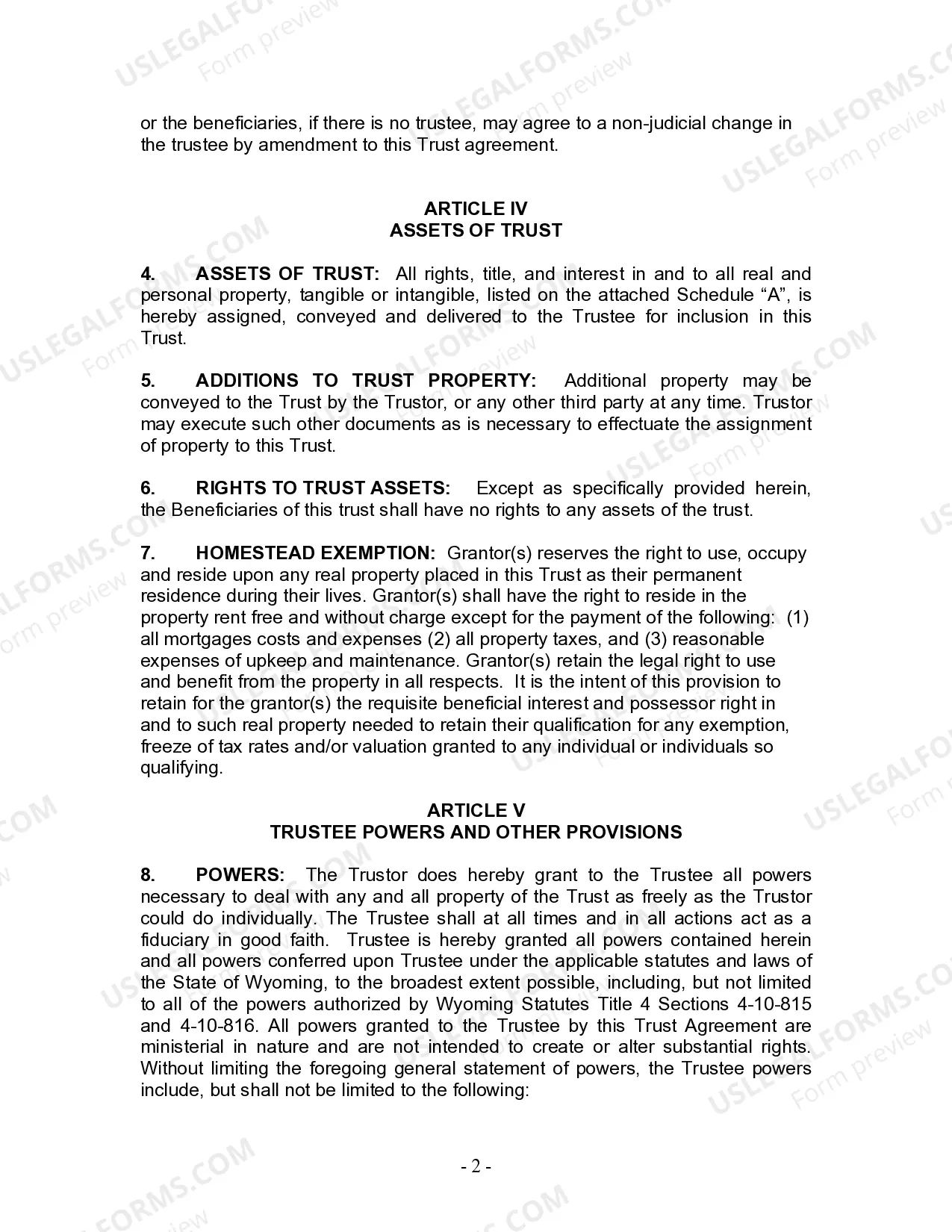
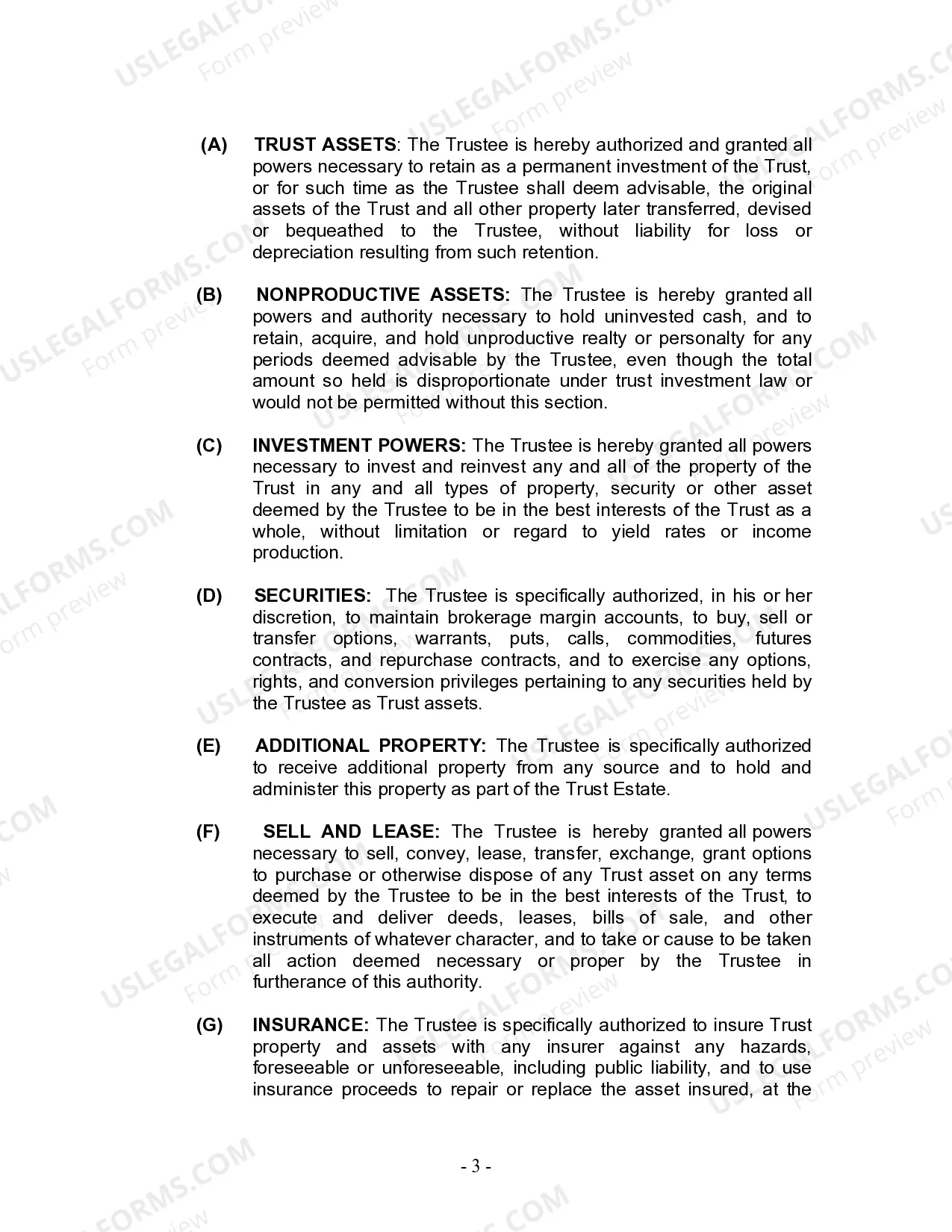
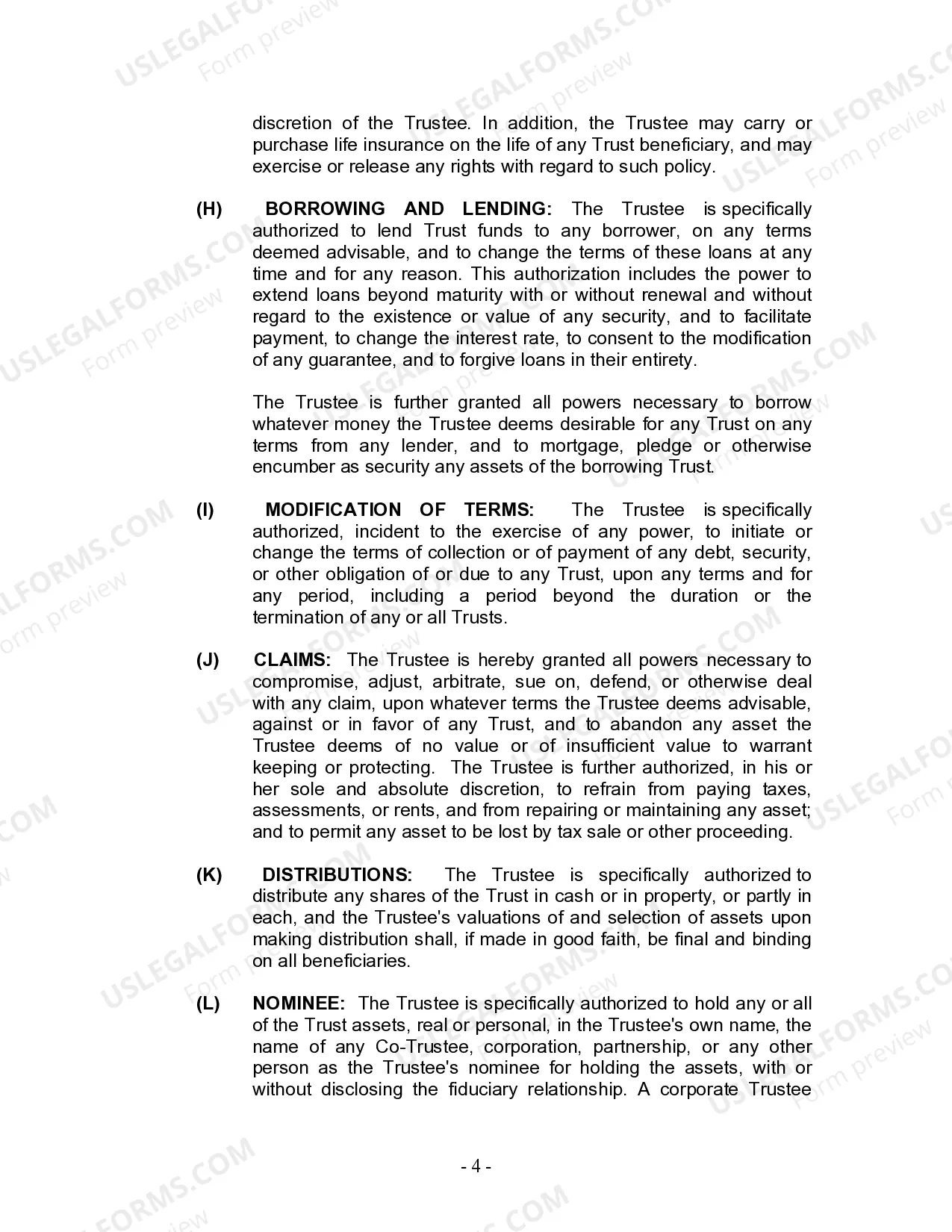
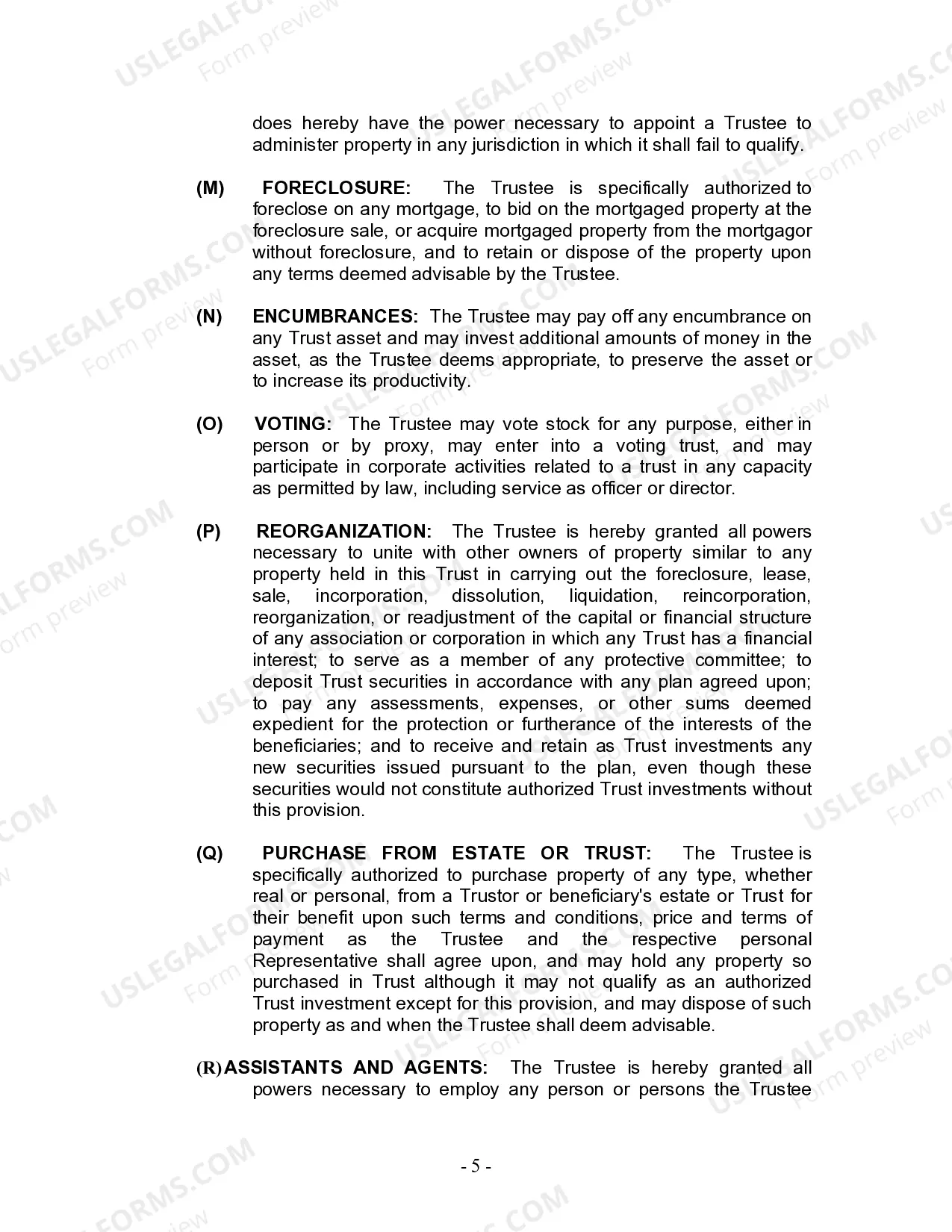

When to use this document
This form is essential when an individual who is single, divorced, or widowed, and has no children, wishes to create a living trust to manage their assets. It is particularly useful in scenarios where the individual wants to avoid probate, reduce estate taxes, or manage their property efficiently during their lifetime. If you are looking to ensure that your assets are distributed according to your wishes after your death, this living trust is a practical and effective legal solution.
Who should use this form
This form is suitable for:
- Individuals who are single, divorced, or widowed.
- Those without children and wish to plan for the distribution of their estate.
- Anyone looking to avoid the complexities of probate after their death.
- Individuals wanting to maintain complete control over their assets during their lifetime.
Completing this form step by step
- Identify the Trustor (yourself) and list the Trustee who will manage the trust.
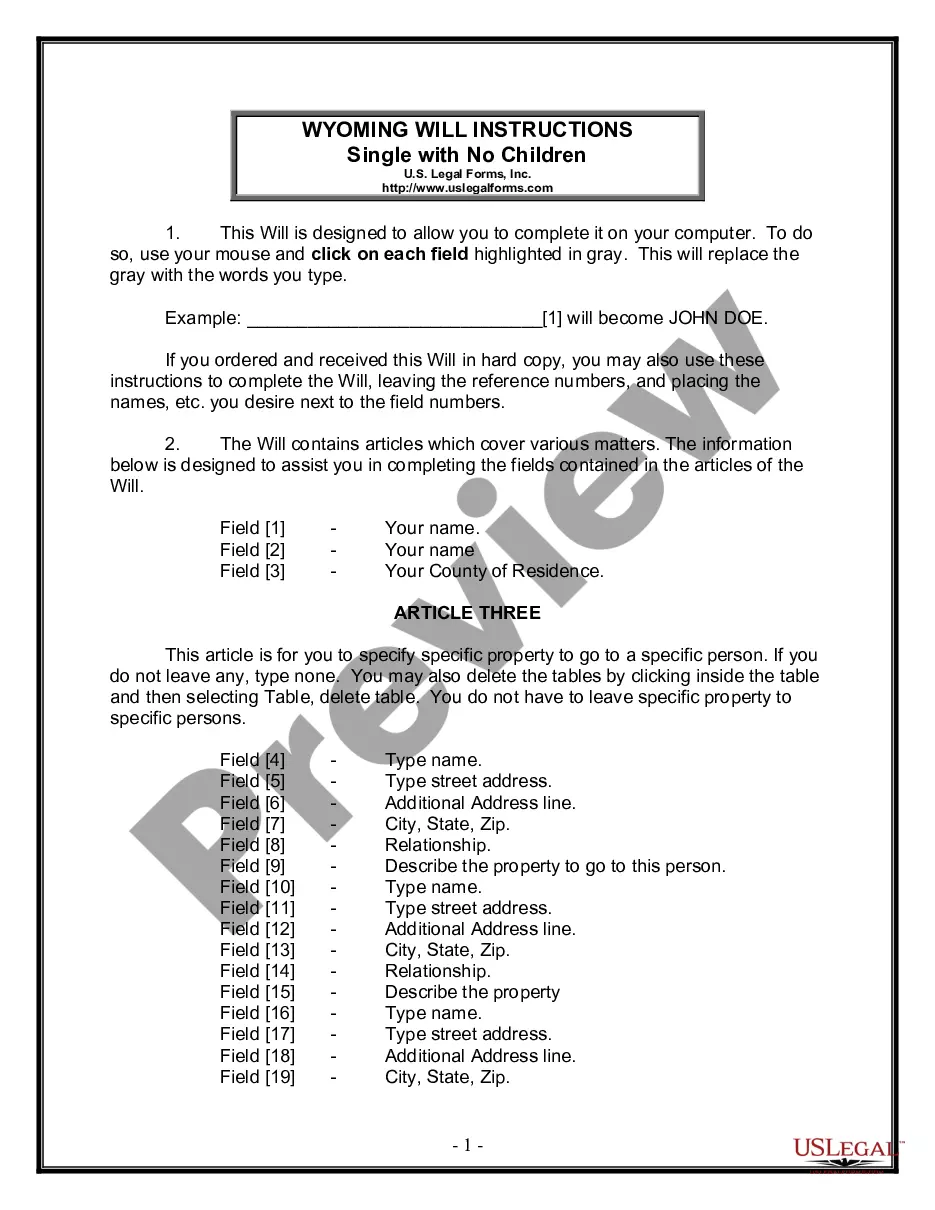
- Clearly describe the assets being placed into the trust in Schedule A.
- Specify any additional property you may wish to add to the trust in the future.
- Identify the beneficiaries who will receive the assets upon your death.
- Sign the document in the presence of a notary public, if required.
Notarization guidance
To make this form legally binding, it must be notarized. Our online notarization service, powered by Notarize, lets you verify and sign documents remotely through an encrypted video session.
Get your form ready online
Our built-in tools help you complete, sign, share, and store your documents in one place.
Make edits, fill in missing information, and update formatting in US Legal Forms—just like you would in MS Word.
Download a copy, print it, send it by email, or mail it via USPS—whatever works best for your next step.
Sign and collect signatures with our SignNow integration. Send to multiple recipients, set reminders, and more. Go Premium to unlock E-Sign.
If this form requires notarization, complete it online through a secure video call—no need to meet a notary in person or wait for an appointment.
We protect your documents and personal data by following strict security and privacy standards.
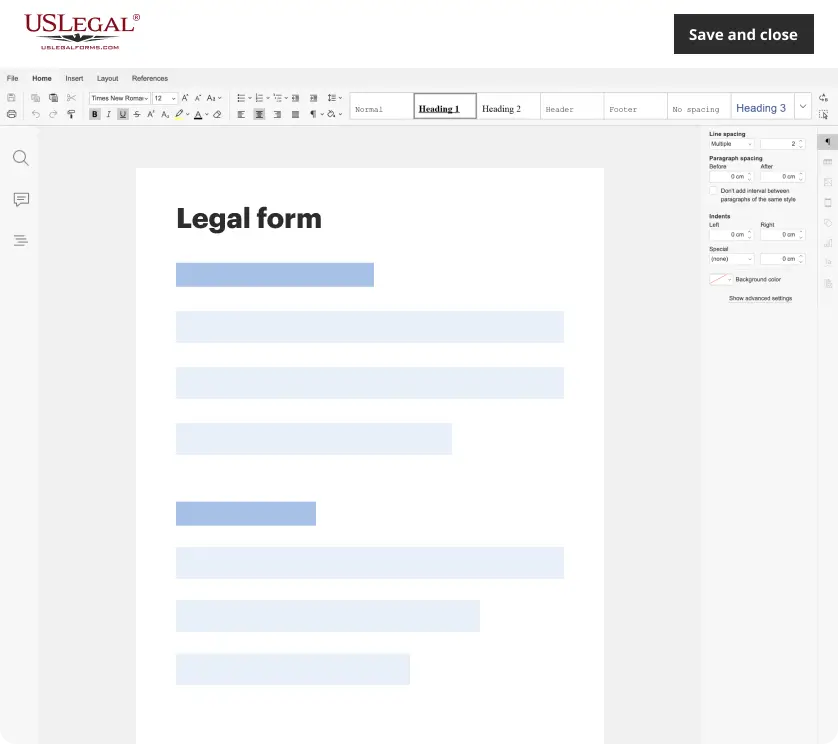
Make edits, fill in missing information, and update formatting in US Legal Forms—just like you would in MS Word.
Download a copy, print it, send it by email, or mail it via USPS—whatever works best for your next step.
Sign and collect signatures with our SignNow integration. Send to multiple recipients, set reminders, and more. Go Premium to unlock E-Sign.

If this form requires notarization, complete it online through a secure video call—no need to meet a notary in person or wait for an appointment.
We protect your documents and personal data by following strict security and privacy standards.
Common mistakes to avoid
- Failing to list all assets intended for the trust.
- Not reviewing state-specific laws that may affect the trust.
- Neglecting to update the trust after major life changes, such as relocation or acquiring new assets.
- Not properly signing or notarizing the document if required.
Advantages of online completion
- Convenient access to customized legal forms tailored to your needs.
- Editable templates that allow you to input your specific information easily.
- Reliable and compliant with legal standards in your state, providing peace of mind.
- Quick download and print options for immediate use.
Summary of main points
- A living trust is a powerful estate planning tool that simplifies asset management and distribution.
- This form is designed specifically for individuals who are single, divorced, or widowed with no children.
- Proper completion and notarization are crucial for the trust to be legally enforceable.
- Utilizing an online service can streamline the process and provide useful guidance.
Looking for another form?
Form popularity
FAQ
Anyone who is single and has assets titled in their sole name should consider a Revocable Living Trust. The two main reasons are to keep you and your assets out of a court-supervised guardianship and to allow your beneficiaries to avoid the costs and hassles of probate.
Choose whether to make an individual or shared trust. Decide what property to include in the trust. Choose a successor trustee. Decide who will be the trust's beneficiaries who will get the trust property. Create the trust document. Sign the document in front of a notary public.
The average cost for an attorney to create your trust ranges from $1,000 to $1,500 for an individual and $1,200 to $1,500 for a couple. Legal fees vary by location, so your costs could be much higher or slightly lower.
Funding a Trust Is Expensive... This is the major drawback to using a revocable living trust for many people, but it's not worth the time, money, and effort to create one if the trust isn't fully funded.
No, you don't need a lawyer to set up a trust, but it might be a good idea to seek legal advice to ensure the trust is set up correctly and that you have considered all long-term financial and estate planning aspects of the trust.Some living trusts are revocable, which means the trust can be changed at any time.
Using a revocable living trust instead of a will means assets owned by your trust will bypass probate and flow to your heirs as you've outlined in the trust documents. A trust lets investors have control over their assets long after they pass away.
Legally your Trust now owns all of your assets, but you manage all of the assets as the Trustee. This is the essential step that allows you to avoid Probate Court because there is nothing for the courts to control when you die or become incapacitated.
Paperwork. Setting up a living trust isn't difficult or expensive, but it requires some paperwork. Record Keeping. After a revocable living trust is created, little day-to-day record keeping is required. Transfer Taxes. Difficulty Refinancing Trust Property. No Cutoff of Creditors' Claims.
When it comes to protecting your loved ones, having both a will and a trust is essential. The difference between a will and a trust is when they kick into action. A will lays out your wishes for after you die. A living revocable trust becomes effective immediately.