Wyoming Guaranty or Guarantee of Payment of Rent
What this document covers
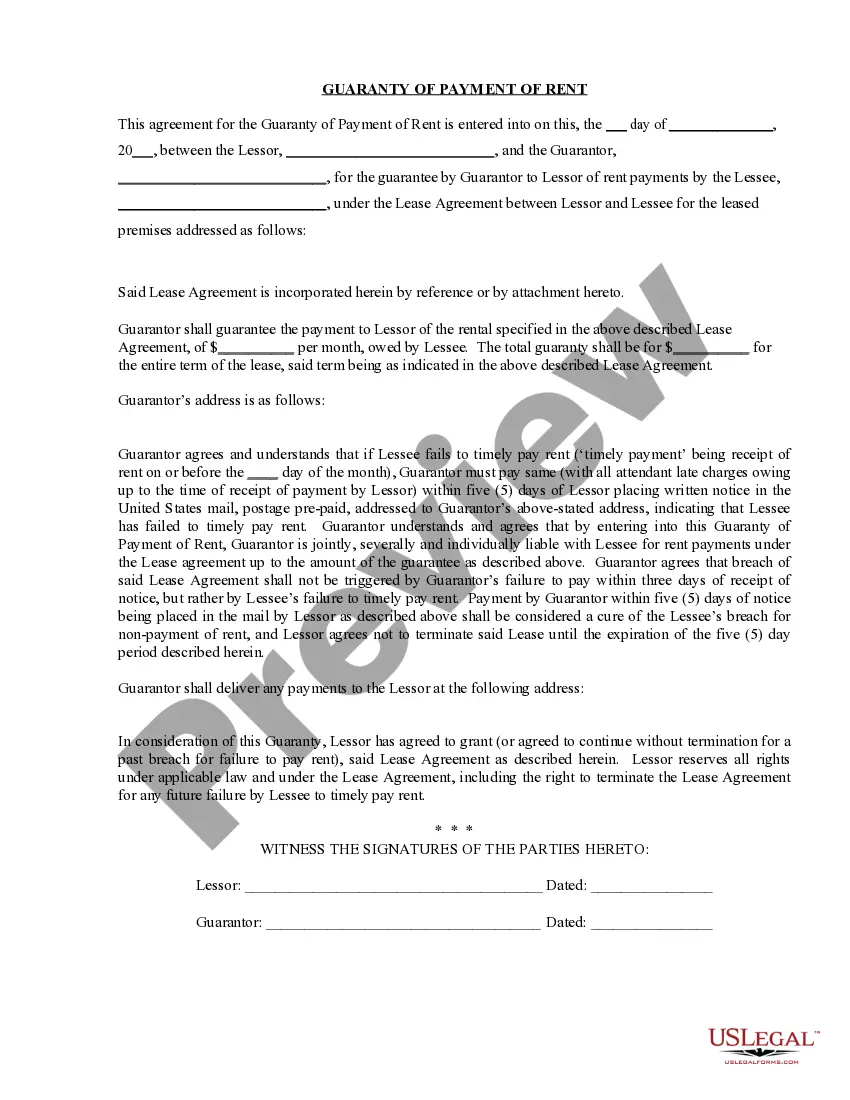
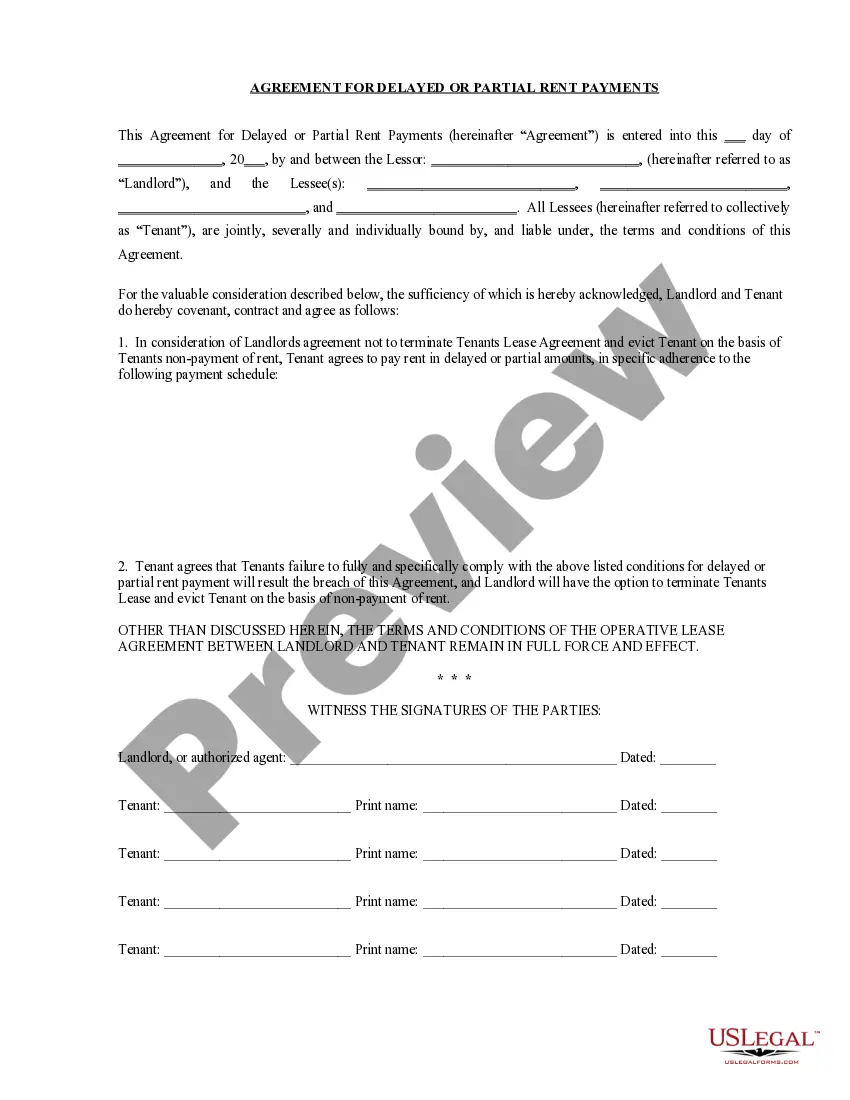
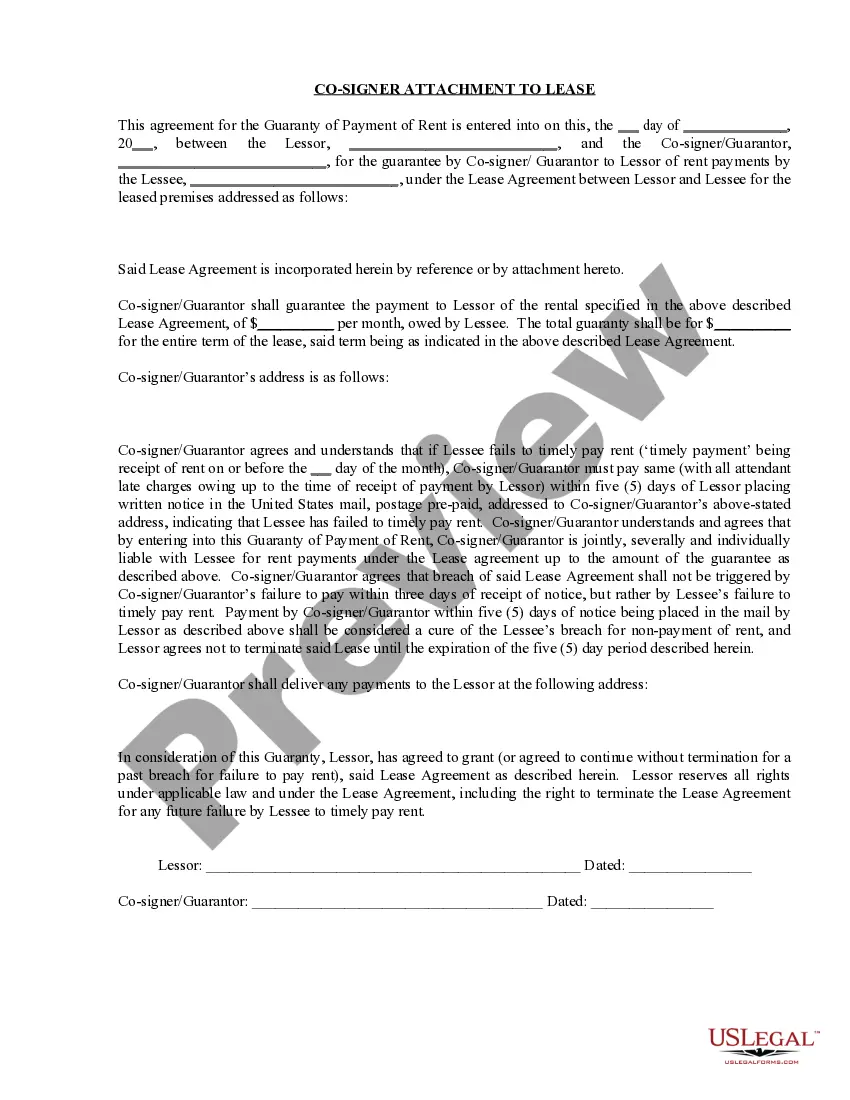
This Guaranty or Guarantee of Payment of Rent is a legal agreement between a tenant's guarantor and the landlord. It ensures that the guarantor will pay the rent if the tenant is unable to do so. This form outlines the obligations of the guarantor, the conditions that trigger the payment, and other key details. Unlike general rental agreements, this guaranty focuses specifically on the financial responsibility assumed by the guarantor in relation to rent payments.
Main sections of this form
- The name and address of the guarantor.
- The name and address of the tenant.
- The name and address of the landlord.
- The details outlining when the guarantor must pay the rent.
- Signature lines for both the landlord and guarantor.
- The date of the agreement.
When to use this document
This form is advisable when a landlord requires a financial guarantee from a second party (the guarantor) to secure a lease agreement. Use it if the tenant may struggle to pay rent due to lack of credit history or financial issues. It is also recommended in situations where a landlord wants additional security to reduce the risk of non-payment.
Who should use this form
This form is intended for:
- Landlords who want to ensure they can collect rent if the tenant defaults.
- Guarantors who agree to take on the financial responsibility for a tenant's rent payments.
- Tennants with limited credit who require a guarantor to secure a lease.
How to complete this form
- Identify the parties involved: enter the names and addresses of the guarantor, tenant, and landlord.
- Specify the terms of the payment agreement: indicate the conditions under which the guarantor will pay the rent.
- Include signature lines for both the guarantor and landlord to confirm their agreement.
- Enter the date of the agreement to establish the timeline for the obligations.
Notarization requirements for this form
Notarization is not commonly needed for this form. However, certain documents or local rules may make it necessary. Our notarization service, powered by Notarize, allows you to finalize it securely online anytime, day or night.
Get your form ready online
Our built-in tools help you complete, sign, share, and store your documents in one place.
Make edits, fill in missing information, and update formatting in US Legal Forms—just like you would in MS Word.
Download a copy, print it, send it by email, or mail it via USPS—whatever works best for your next step.
Sign and collect signatures with our SignNow integration. Send to multiple recipients, set reminders, and more. Go Premium to unlock E-Sign.
If this form requires notarization, complete it online through a secure video call—no need to meet a notary in person or wait for an appointment.
We protect your documents and personal data by following strict security and privacy standards.

Make edits, fill in missing information, and update formatting in US Legal Forms—just like you would in MS Word.

Download a copy, print it, send it by email, or mail it via USPS—whatever works best for your next step.

Sign and collect signatures with our SignNow integration. Send to multiple recipients, set reminders, and more. Go Premium to unlock E-Sign.

If this form requires notarization, complete it online through a secure video call—no need to meet a notary in person or wait for an appointment.

We protect your documents and personal data by following strict security and privacy standards.
Common mistakes to avoid
- Failing to include the full names and addresses of all parties.
- Not clearly outlining the payment conditions for the guarantor.
- Leaving out the date of the agreement.
- Not having the guarantor's signature, making the contract unenforceable.
Why use this form online
- Convenient and easy to download from anywhere.
- Editable fields allow for customization to specific situations.
- Reliable templates drafted by licensed attorneys ensure legal compliance.
- Access to legal help and guidance if needed during completion.
Quick recap
- The Guaranty or Guarantee of Payment of Rent is essential for securing rent payments when tenants may struggle financially.
- Ensure all parties' information is accurately filled out to avoid issues.
- Clarify the terms of responsibility to prevent misunderstandings.
Looking for another form?
Form popularity
FAQ
The most common type of limited guaranty is the 12-month rolling guaranty. This means, after a certain amount of time has passed during the lease term, the business owners' liability is limited to 12-months of rent payments vs. the entire amount of the lease obligation.
When The Lease Is Up When having a guarantor on the lease, the best way to be able to have him removed as soon as possible is to set a good payment record with the landlord.
It's very common for a guarantee to last as long as the tenancy lasts. So, if the tenant remains in the property for four years, you will continue to be responsible for any arrears or damages during that entire period. Most tenancies will run for a fixed term and will then continue on a month-by-month basis.
A guaranty of lease is a covenant by the guarantor to be responsible for the obligations of the tenant.In these examples, a selective landlord would not enter into the lease without the tenant offering a creditworthy guarantor.
Wyoming is a landlord-friendly state, that doesn't mess around when it comes to late rent. Landlords have the right to enter a tenant's apartment without notice if the tenant is more than three days late on the rent, and landlords can terminate a lease after three days of nonpayment of rent.
Indiana. Indiana laws allow landlords to hold on to security deposits for 45 days to give them time to determine any damages caused by tenants. Colorado. Colorado is one of few states that allow landlords to access the rental property without an advance notice requirement. Georgia.
While a co-signer is responsible for the rent at the moment it is due, a guarantor only has to pay once the person on the agreement fails to do so. A guarantor won't have any right to live in the apartment "because you are only going to be liable for anything if the tenant stops paying," says Cohen.
Entry Allowed with Notice for Maintenance and Repairs (non-emergency): Yes. In general, tenants are prohibited from unreasonably denying access to the rental unit or refusing a landlord entry (Wyo. Stat. § 1-21-1205).