Oregon Foreign Judgment Enrollment
About this form
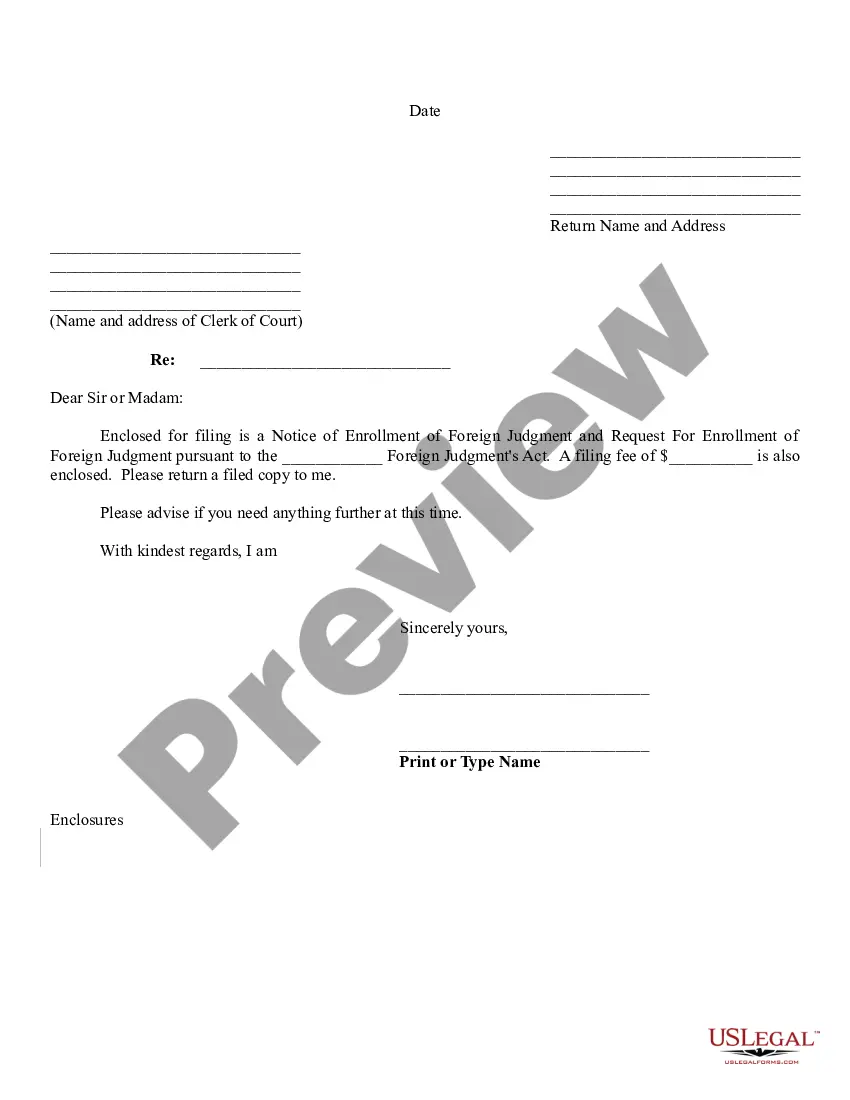
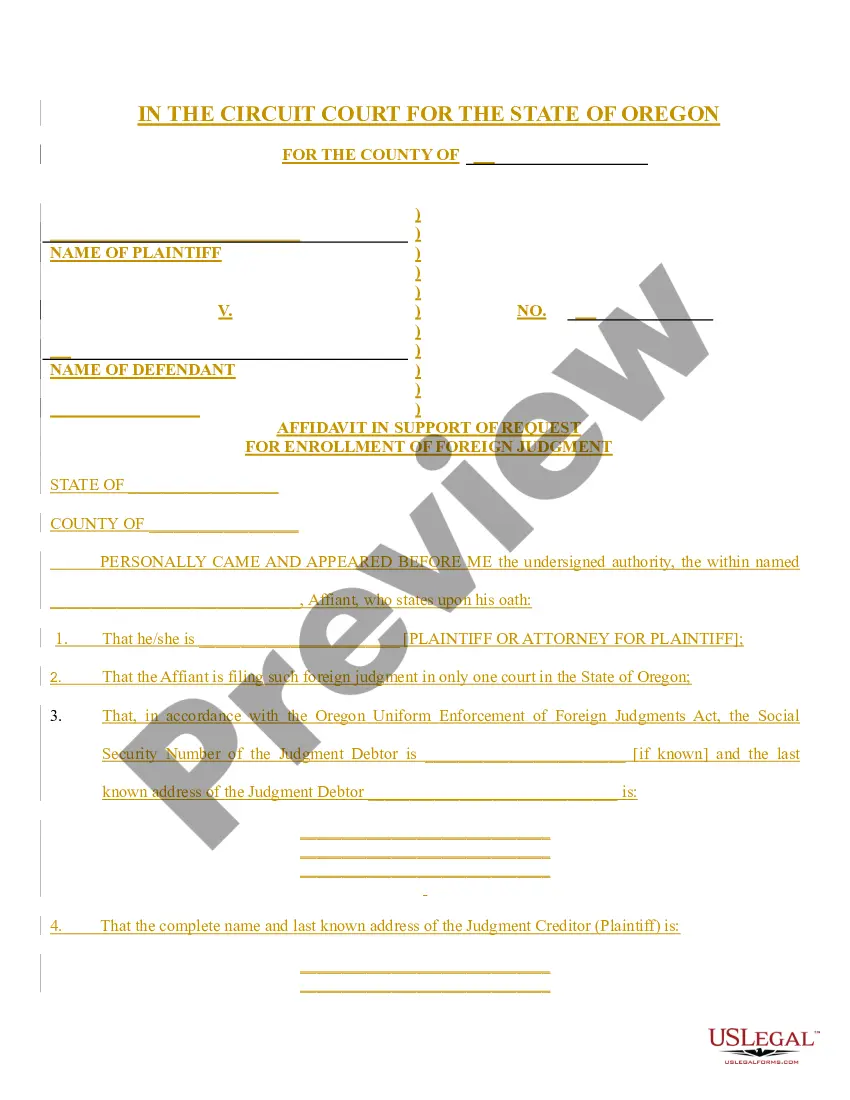
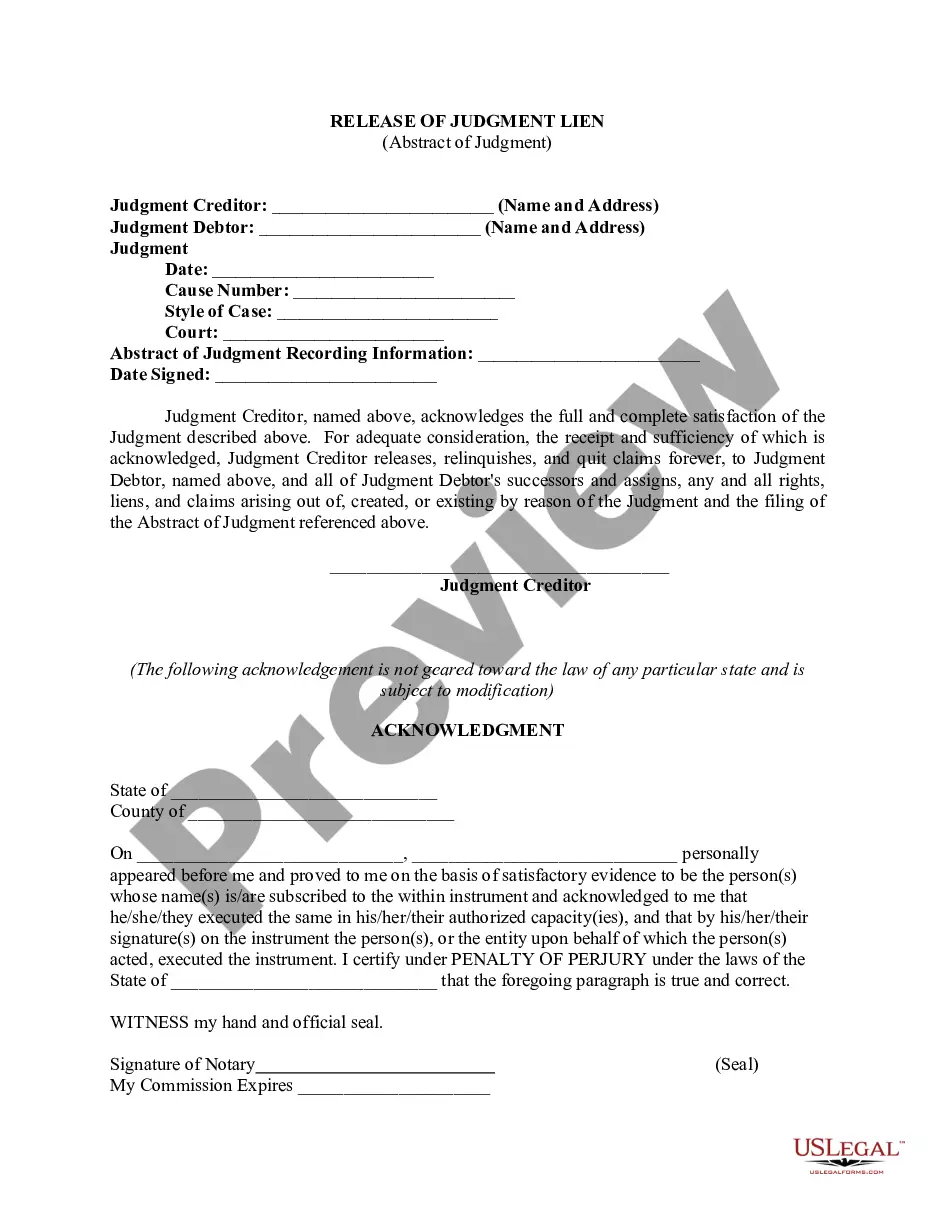
The Oregon Foreign Judgment Enrollment form package allows you to enroll a judgment issued by a court from another state into Oregon. This process helps a judgment creditor enforce the judgment locally and establishes a judgment lien against the properties of the judgment debtor. It is essential for ensuring that judgments from other jurisdictions hold legal weight in Oregon.
Main sections of this form
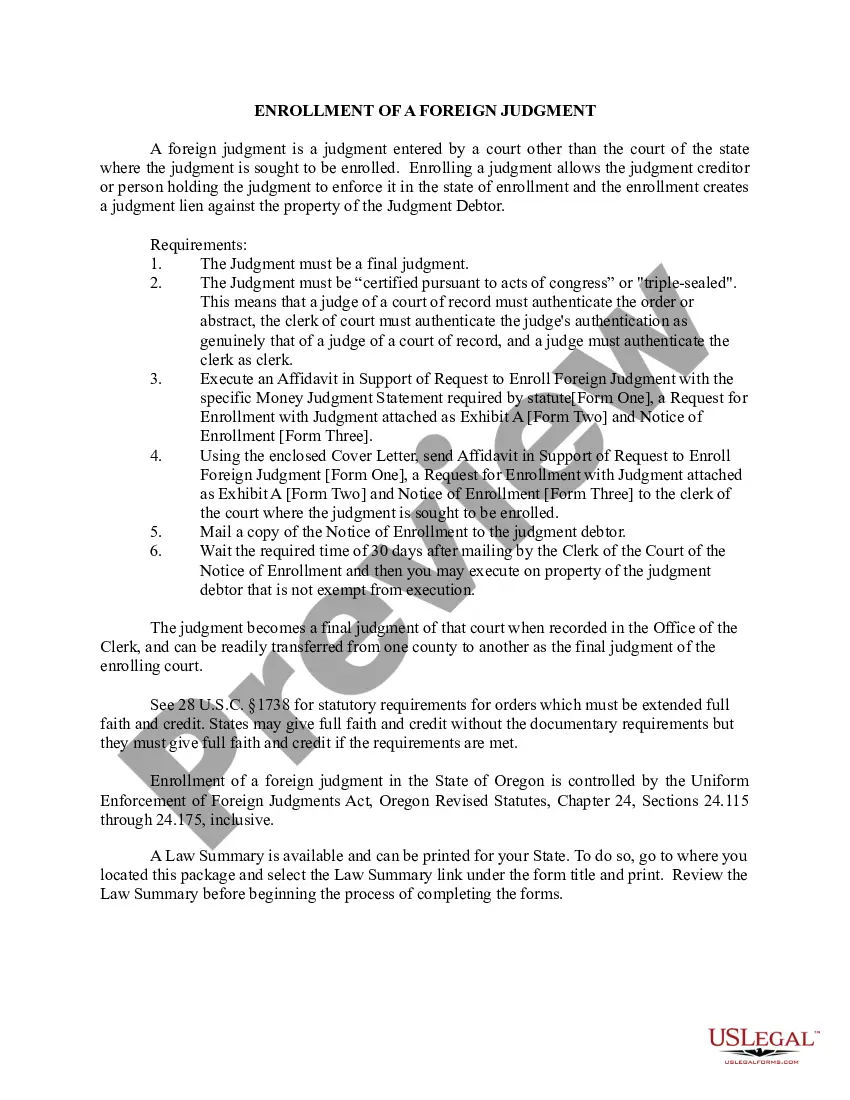
- Instructions: Clear guidance on the enrollment process.
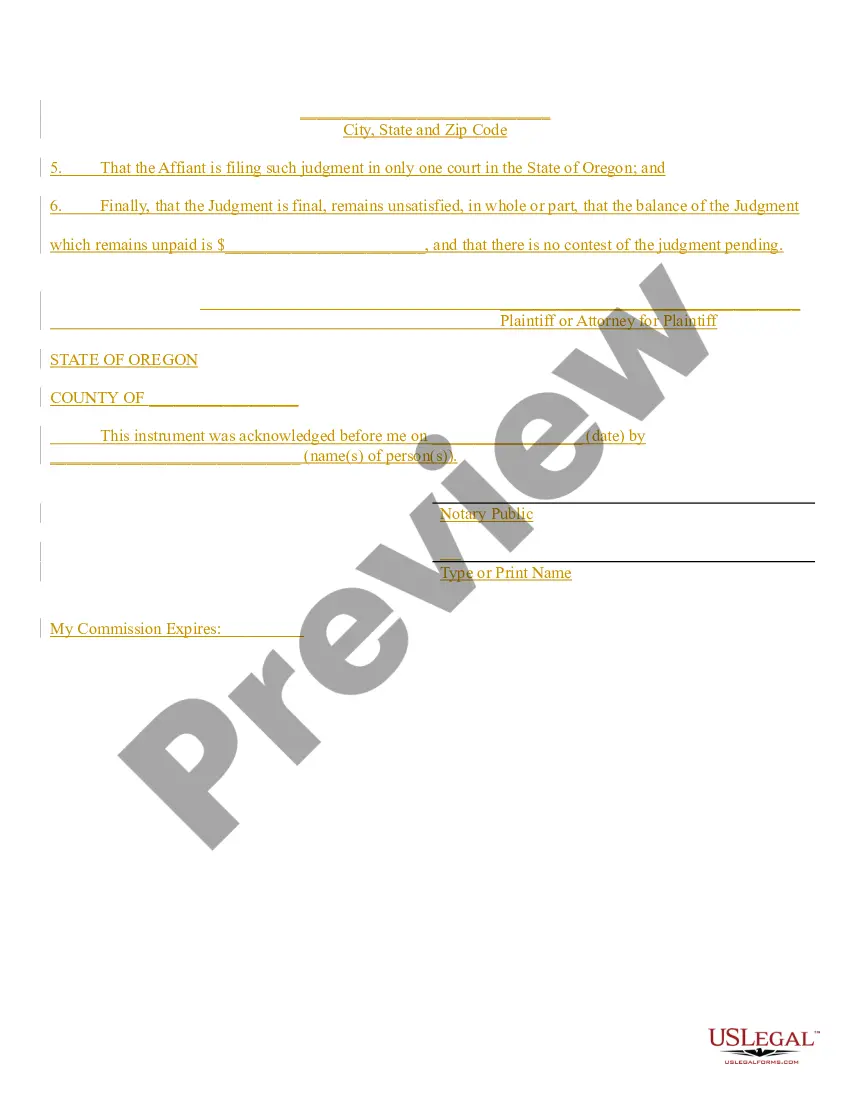
- Affidavit in Support of Request: A sworn statement confirming the details of the foreign judgment.
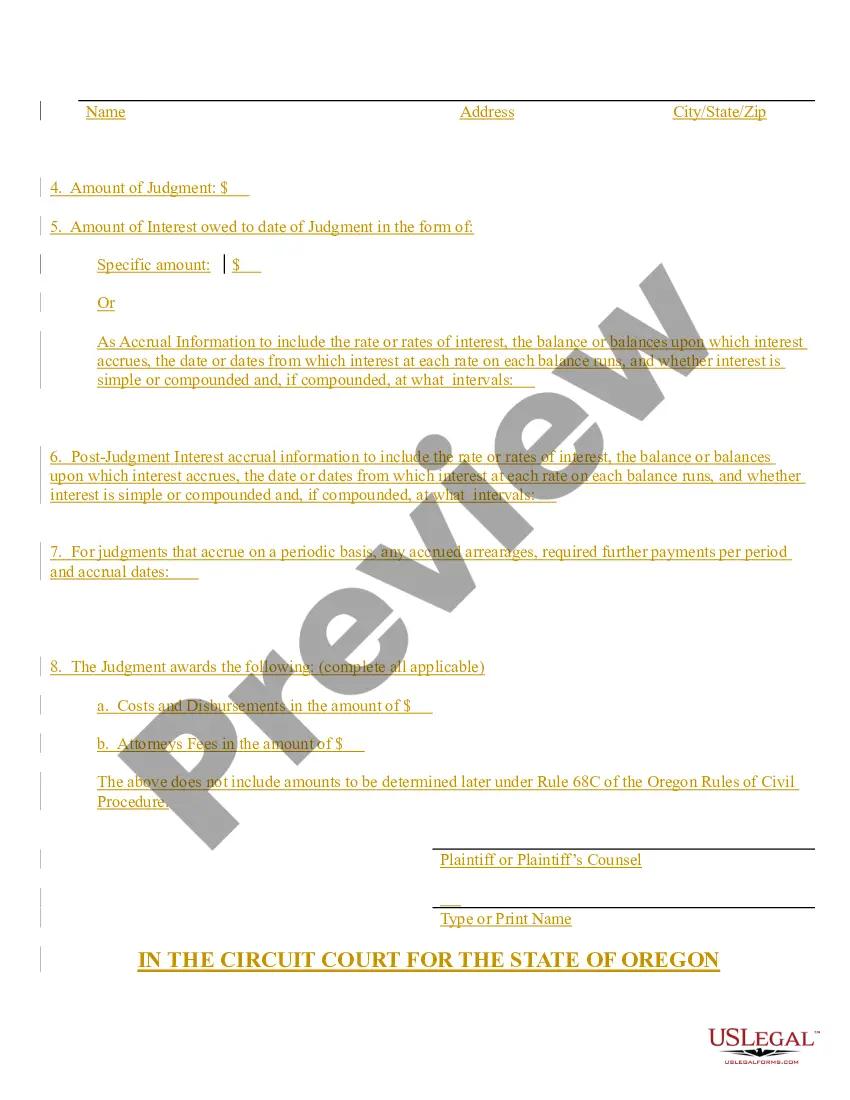
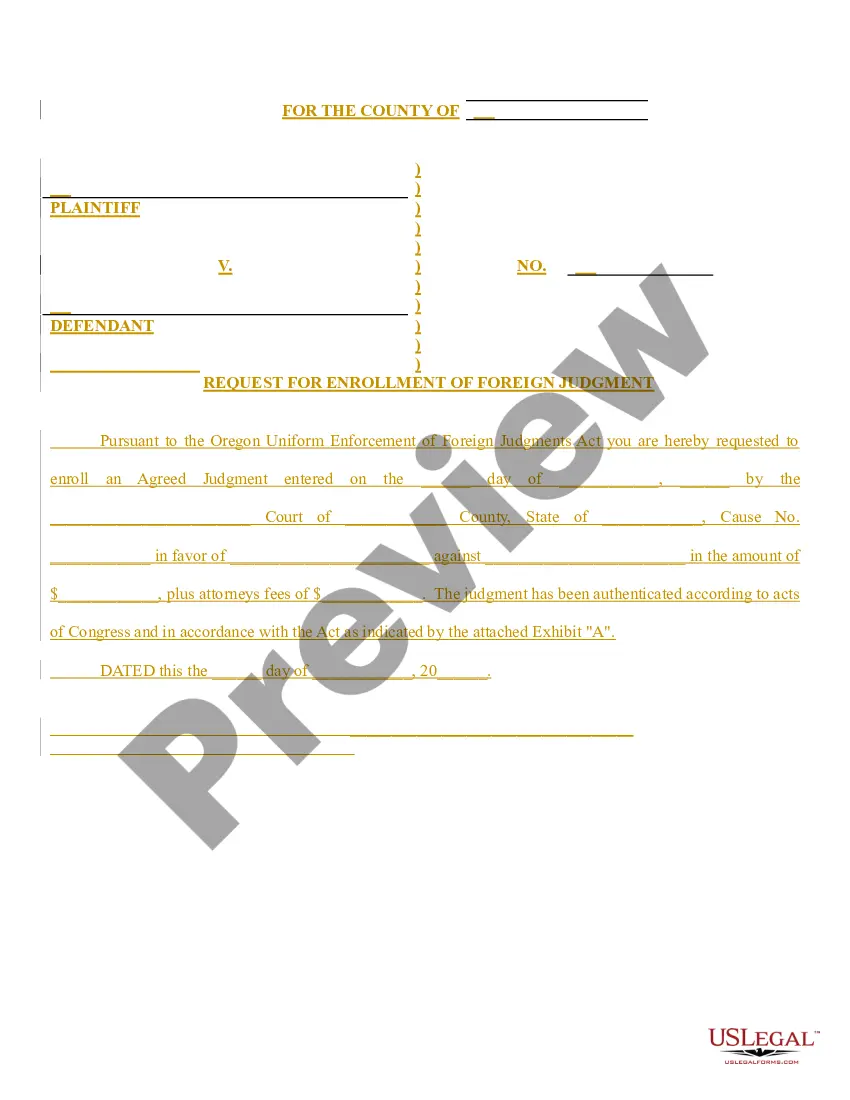
- Request for Enrollment: The formal application to enroll the foreign judgment in Oregon.
- Notice of Enrollment: A document that informs the judgment debtor of the enrollment.
- Law Summary: A printed summary of relevant Oregon laws concerning foreign judgment enrollment.



When this form is needed
This form should be used when you have a final judgment from a court in another state and need to enforce it in Oregon. This situation typically arises when you seek to collect a debt or fulfill a legal obligation that was mandated by the original court's ruling.
Who can use this document
- Judgment creditors who hold a final judgment from another state.
- Attorneys representing clients in collecting debts from judgments entered in a different jurisdiction.
- Individuals or entities seeking to establish a judgment lien against a debtorâs property in Oregon.
Instructions for completing this form
- Gather all necessary information about the original judgment, including case number, court, and date of judgment.
- Complete the Affidavit in Support of Request, providing required details about the judgment debtor and creditor.
- Fill out the Request for Enrollment, attaching the original judgment as an exhibit.
- Ensure that all forms are signed and include any necessary filing fees.
- Submit the completed forms to the clerk of the court in Oregon and mail copies to the judgment debtor.
Is notarization required?
Yes, this form must be notarized to be legally valid. The affidavit and other documents included in the enrollment package may require notarization to ensure authenticity and compliance with legal standards. US Legal Forms offers integrated online notarization services that are available 24/7, allowing you to complete the notarization process securely and efficiently.
Get your form ready online
Our built-in tools help you complete, sign, share, and store your documents in one place.
Make edits, fill in missing information, and update formatting in US Legal Forms—just like you would in MS Word.
Download a copy, print it, send it by email, or mail it via USPS—whatever works best for your next step.
Sign and collect signatures with our SignNow integration. Send to multiple recipients, set reminders, and more. Go Premium to unlock E-Sign.
If this form requires notarization, complete it online through a secure video call—no need to meet a notary in person or wait for an appointment.
We protect your documents and personal data by following strict security and privacy standards.

Make edits, fill in missing information, and update formatting in US Legal Forms—just like you would in MS Word.

Download a copy, print it, send it by email, or mail it via USPS—whatever works best for your next step.

Sign and collect signatures with our SignNow integration. Send to multiple recipients, set reminders, and more. Go Premium to unlock E-Sign.

If this form requires notarization, complete it online through a secure video call—no need to meet a notary in person or wait for an appointment.

We protect your documents and personal data by following strict security and privacy standards.
Common mistakes
- Failing to certify the foreign judgment according to the necessary legal standards.
- Omitting required information in the Affidavit or other forms.
- Not mailing the Notice of Enrollment to the judgment debtor.
- Submitting the enrollment request to multiple courts, which could lead to complications.
Advantages of online completion
- Convenience: Download and fill out the forms at your own pace from anywhere.
- Editability: Easily revise information before finalizing your submission.
- Reliability: Access up-to-date legal forms crafted by licensed attorneys, ensuring compliance with Oregon law.
Looking for another form?

Form popularity
FAQ
Oregon judgments expire after 10 years from the date of entry by a court, unless a creditor (i.e., you or your attorney) files a certificate within that 10 year time period to have enforcement of the judgment extended for another 10 years.
Canadian courts start from the general proposition that neither foreign nor domestic judgments will be enforced if obtained by fraud.85 In Beals, the Supreme Court identified two types of fraud that provide a defence to enforcement: fraud going to jurisdiction and fraud going to the merits.
Judgments and Enforcement: A judgment rendered by the court of the State of Oregon is enforceable for a period of ten (10) years. (ORS 12.070.) Such enforcement period may be extended if action is taken to renew the judgment prior to the expiration of the ten (10) years.
The "recognition" of a foreign judgment occurs when the court of one country or jurisdiction accepts a judicial decision made by the courts of another "foreign" country or jurisdiction, and issues a judgment in substantially identical terms without rehearing the substance of the original lawsuit.
The process requires registering a certified copy of the foreign judgment with the clerk of the court in the jurisdiction where you want to enforce the judgment. You will also need to file an affidavit attesting to certain facts, as specified in the court's procedural rules.
Finding out if a judgment has been renewed has been made easy by access to online court records in every state. Check the court records to find out if a judgment has been renewed. If your creditor has renewed the judgment he will do so at the court where the judgment was first issued.
Hence, a decree passed by a superior court of a foreign country cannot be enforced in India if it contravenes an earlier conclusive judgment passed by a competent court in a suit between the same parties, as it is enforced as a domestic decree.
A foreign judgment cannot be enforced in the US before being recognised by a US court. The 1962 and 2005 Model Acts deal with the recognition of judgments.
Generally, U.S. judgments cannot be enforced in a foreign country without first being recognized by a court in that foreign country.It can generally be said that non-default judgments not involving tort claims or punitive damages are more likely to be enforced.