Wyoming Letter from Tenant to Landlord with Demand that landlord repair plumbing problem
About this form
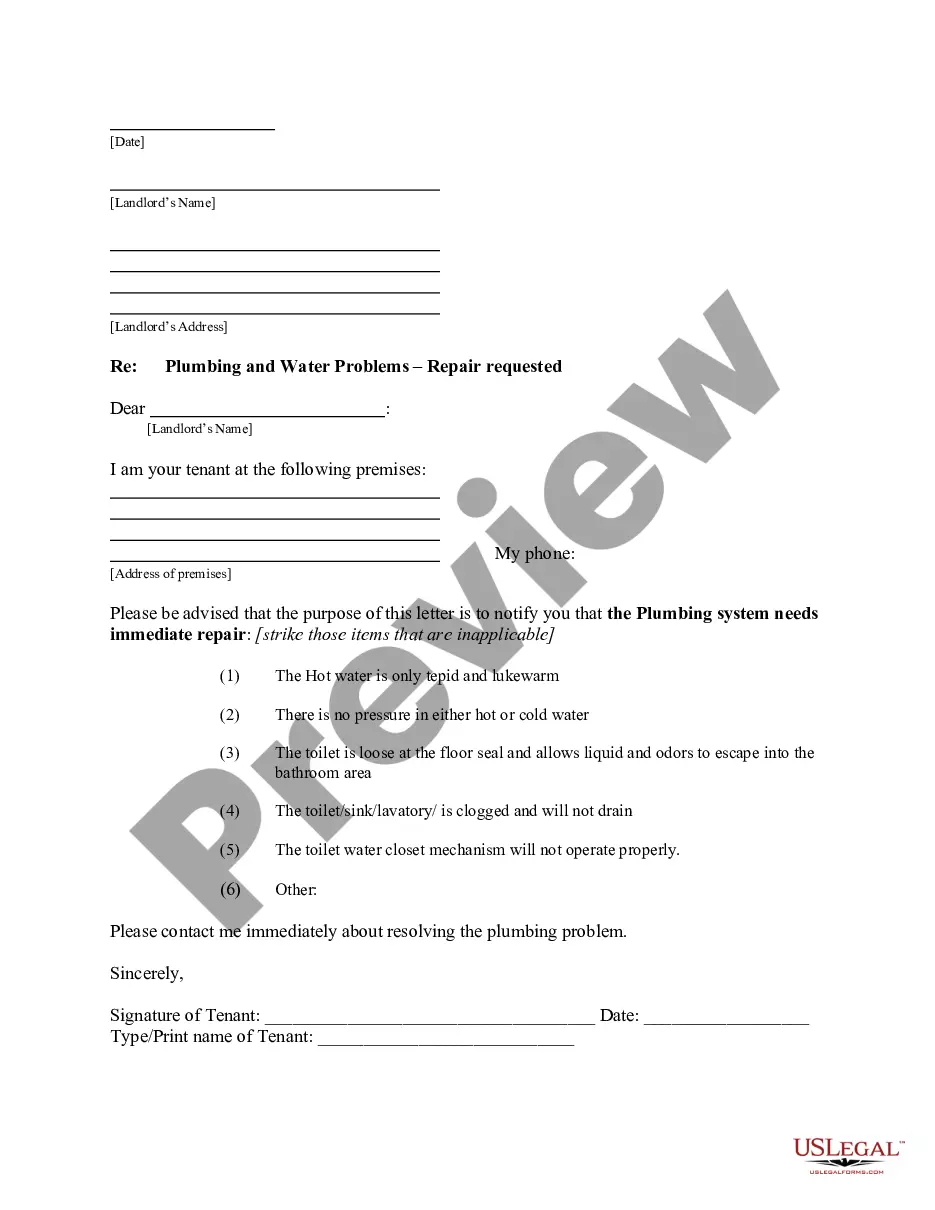
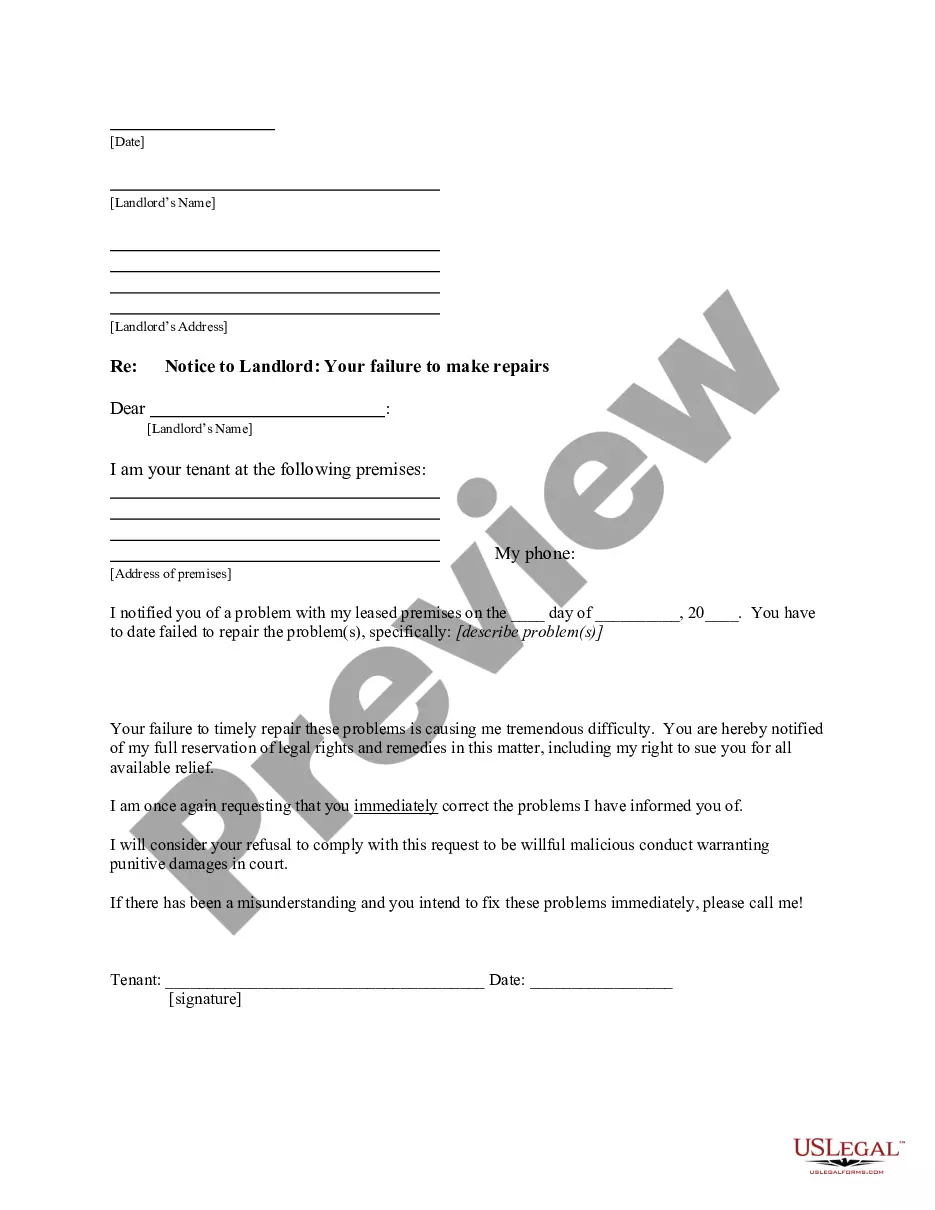
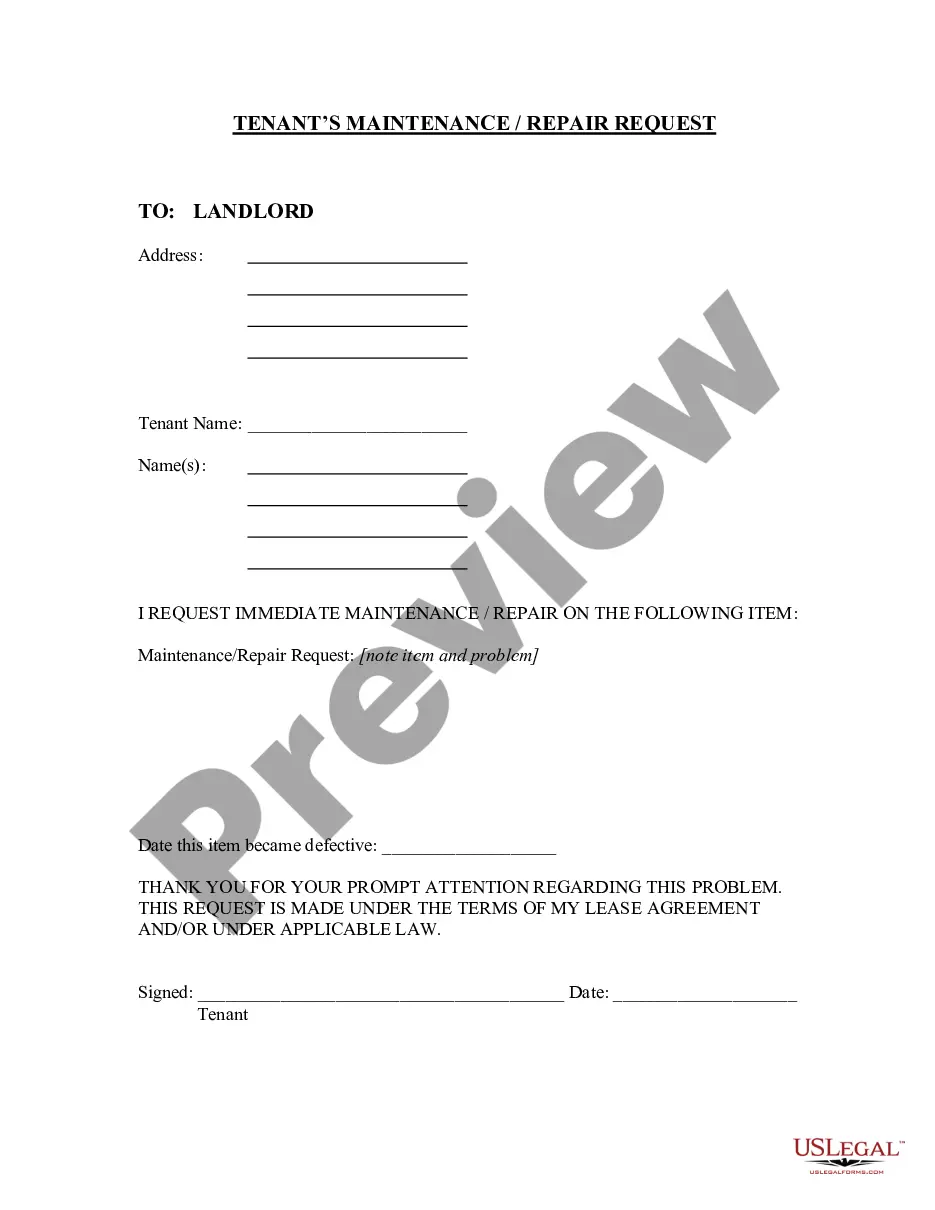
This letter from tenant to landlord with demand that landlord repair plumbing problem is a formal communication used by tenants to report plumbing issues and request immediate repairs. This form serves to notify the landlord of their legal obligation to maintain the premises in good repair, ensuring tenants have safe and functioning facilities. Unlike general complaint letters, this form specifically addresses plumbing problems and establishes a deadline for repairs, making it a critical tool for tenants facing such issues.
Main sections of this form
- Tenant's name and contact information
- Landlord's name and contact information
- Description of the plumbing issues, such as low water pressure and clogs
- Statement of the landlord's breach of duty
- Demand for repairs to be completed within ten days
When to use this form
This form should be used when a tenant encounters significant plumbing problems in their rental unit, such as tepid hot water, lack of water pressure, or plumbing fixtures that are not functioning properly. If previous verbal or informal requests for repairs have been ignored, this letter formalizes the request and provides the landlord with a clear timeline for addressing the issues. Using this form ensures the tenant's rights are protected while emphasizing the landlord's responsibilities.
Who this form is for
- Tenants experiencing plumbing problems in their rental unit
- Those who have previously requested repairs without resolution
- Residents in need of a formal record of their request for repairs
Completing this form step by step
- Identify and enter the names and contact information of both the tenant and the landlord.
- Clearly describe the plumbing issues encountered in the rental unit.
- State that the landlord has a duty to maintain the property and has breached this duty.
- Specify that repairs must be completed within ten days of sending the letter.
- Sign and date the letter before sending it to the landlord.
Does this form need to be notarized?
This form usually doesn’t need to be notarized. However, local laws or specific transactions may require it. Our online notarization service, powered by Notarize, lets you complete it remotely through a secure video session, available 24/7.
Get your form ready online
Our built-in tools help you complete, sign, share, and store your documents in one place.
Make edits, fill in missing information, and update formatting in US Legal Forms—just like you would in MS Word.
Download a copy, print it, send it by email, or mail it via USPS—whatever works best for your next step.
Sign and collect signatures with our SignNow integration. Send to multiple recipients, set reminders, and more. Go Premium to unlock E-Sign.
If this form requires notarization, complete it online through a secure video call—no need to meet a notary in person or wait for an appointment.
We protect your documents and personal data by following strict security and privacy standards.

Make edits, fill in missing information, and update formatting in US Legal Forms—just like you would in MS Word.

Download a copy, print it, send it by email, or mail it via USPS—whatever works best for your next step.

Sign and collect signatures with our SignNow integration. Send to multiple recipients, set reminders, and more. Go Premium to unlock E-Sign.

If this form requires notarization, complete it online through a secure video call—no need to meet a notary in person or wait for an appointment.

We protect your documents and personal data by following strict security and privacy standards.
Avoid these common issues
- Failing to provide a clear description of the plumbing issues.
- Not including the deadline for repairs, which can weaken the demand.
- Sending the letter without a signature, which is necessary for validation.
Advantages of online completion
- Convenience: Quickly download and fill out the form at your convenience.
- Editability: Make changes easily before finalizing the document.
- Reliability: Ensure the form meets legal standards and is drafted by licensed attorneys.
Key takeaways
- Use this letter to formally demand necessary plumbing repairs from your landlord.
- Clearly outline the issues and provide a timeline for resolution.
- Understand your rights as a tenant regarding property maintenance.
Looking for another form?
Form popularity
FAQ
A slumlord (or slum landlord) is a slang term for a landlord, generally an absentee landlord with more than one property, who attempts to maximize profit by minimizing spending on property maintenance, often in deteriorating neighborhoods, and to tenants that they can intimidate.
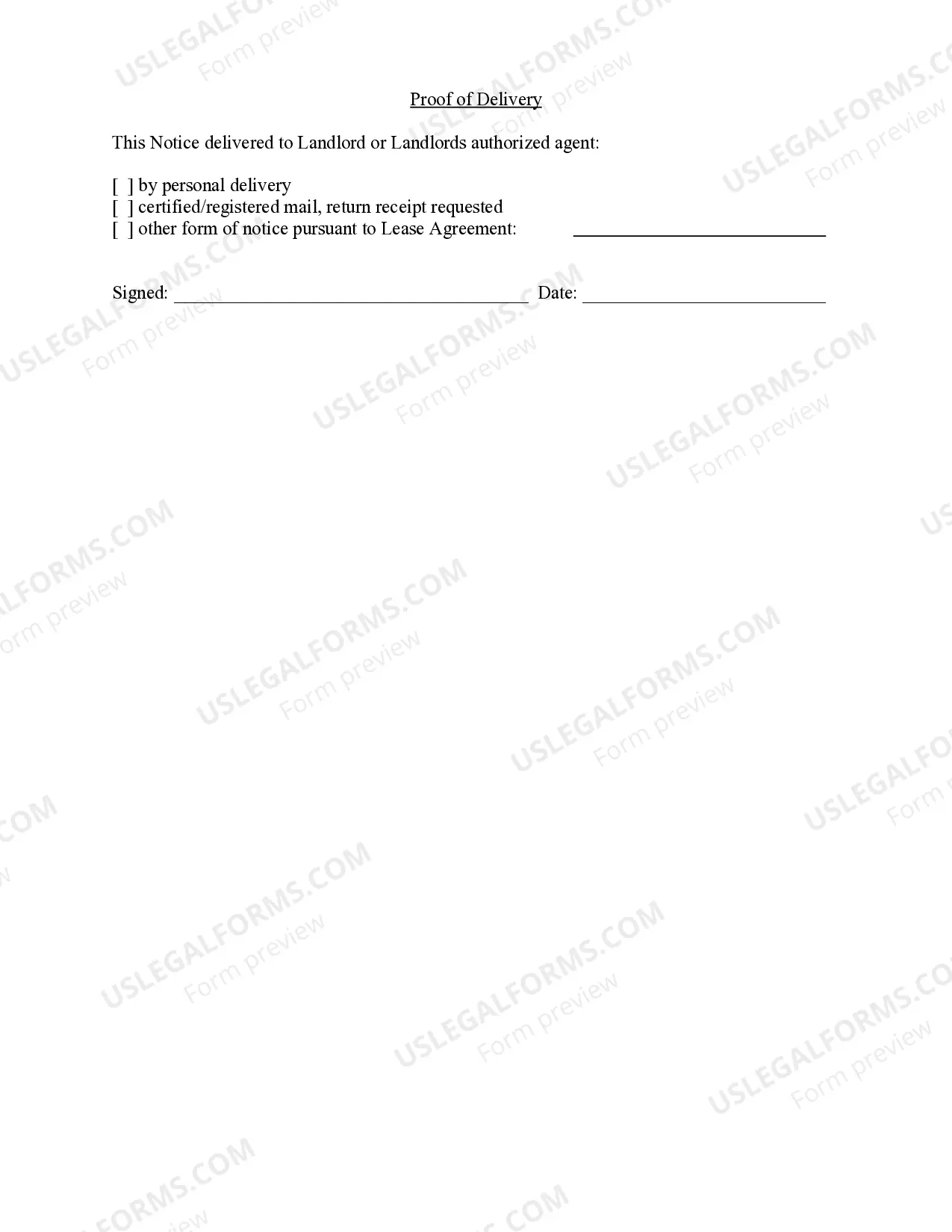
Make sure the repair is actually your landlord's responsibility. Document the problem thoroughly. Ask your landlord in writing to make the repair. Send your landlord a letter with return receipt requested. Wait for your landlord to respond.
Your landlord is always responsible for repairs to: the property's structure and exterior. basins, sinks, baths and other sanitary fittings including pipes and drains. heating and hot water.
Property Needs to Meet Local Health and Building Codes. Visible Mold. Pests. Changing Locks. Heat, Electric, Hot and Cold Water. Structural Integrity and Weather Protected. Regularly Discarding Trash. Damage Caused by the Tenant or Their Guests.
So when is your landlord responsible for repairs? When you rent, your landlord is responsible for maintaining the functional aspects of your home such as plumbing, electricity, and heating. Landlords must also generally take action when flooding, a clogged pipe, pest infestation, or other problems occur.
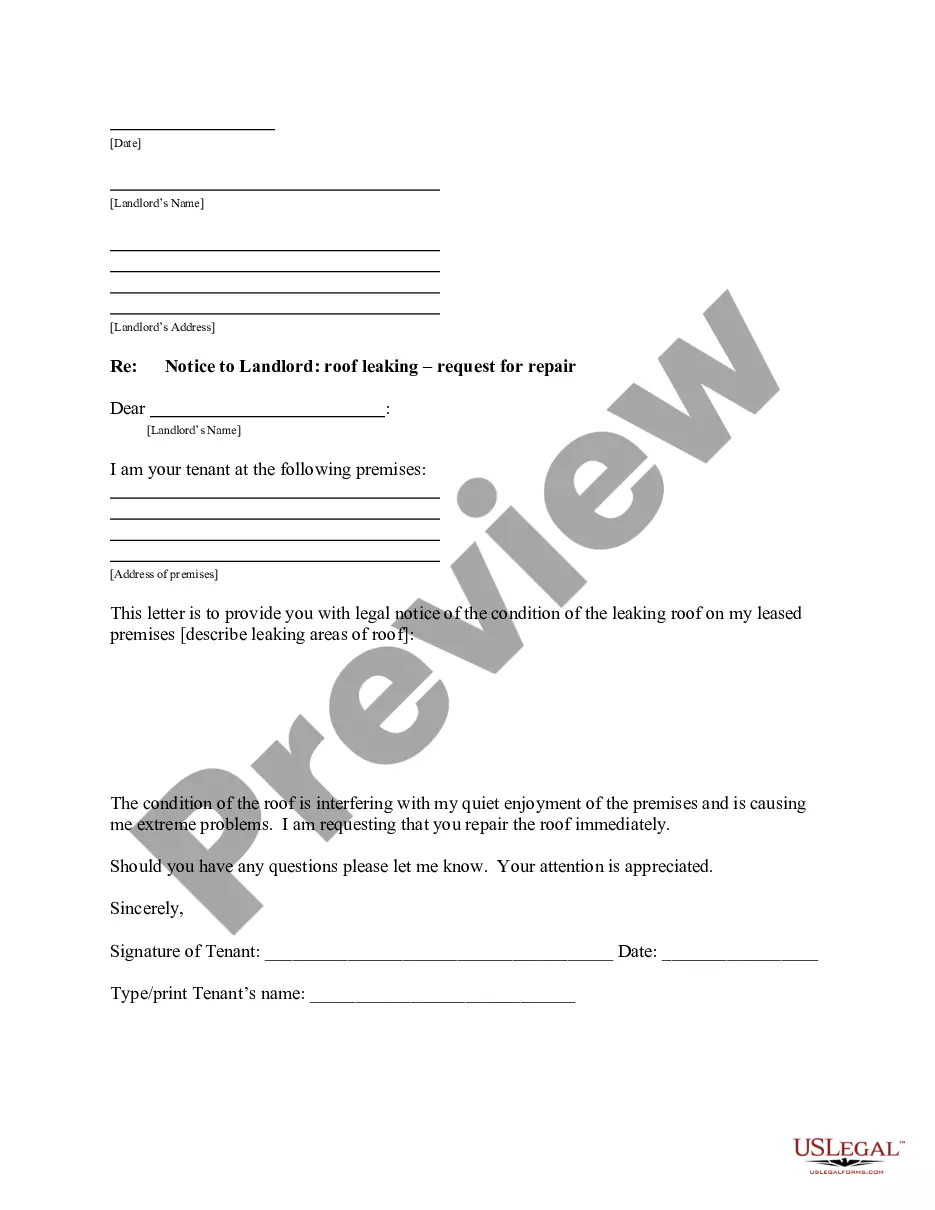
A burst water service or a serious water service leak. A blocked or broken toilet. A serious roof leak. A gas leak. A dangerous electrical fault. Flooding or serious flood damage. Serious storm or fire damage.
When you rent, your landlord is responsible for maintaining the functional aspects of your home such as plumbing, electricity, and heating. Landlords must also generally take action when flooding, a clogged pipe, pest infestation, or other problems occur.