Wyoming Warranty Deed from Husband and Wife to a Trust
About this form
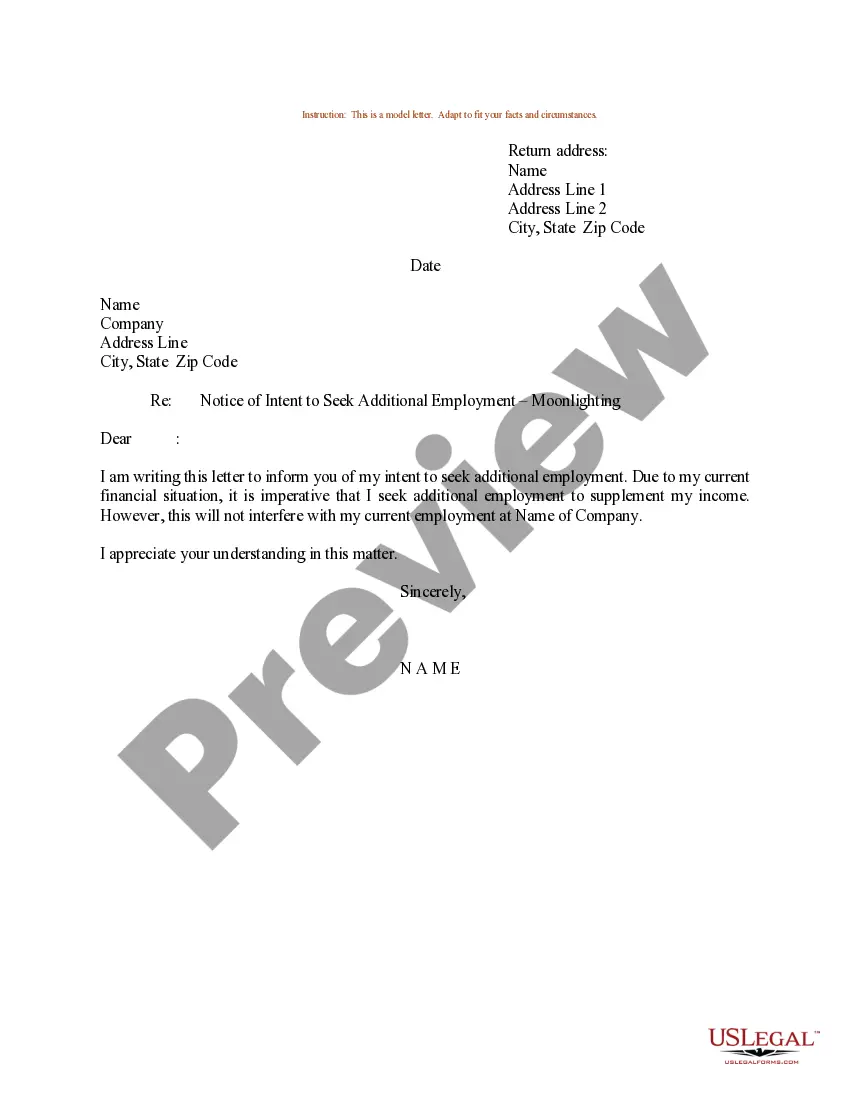
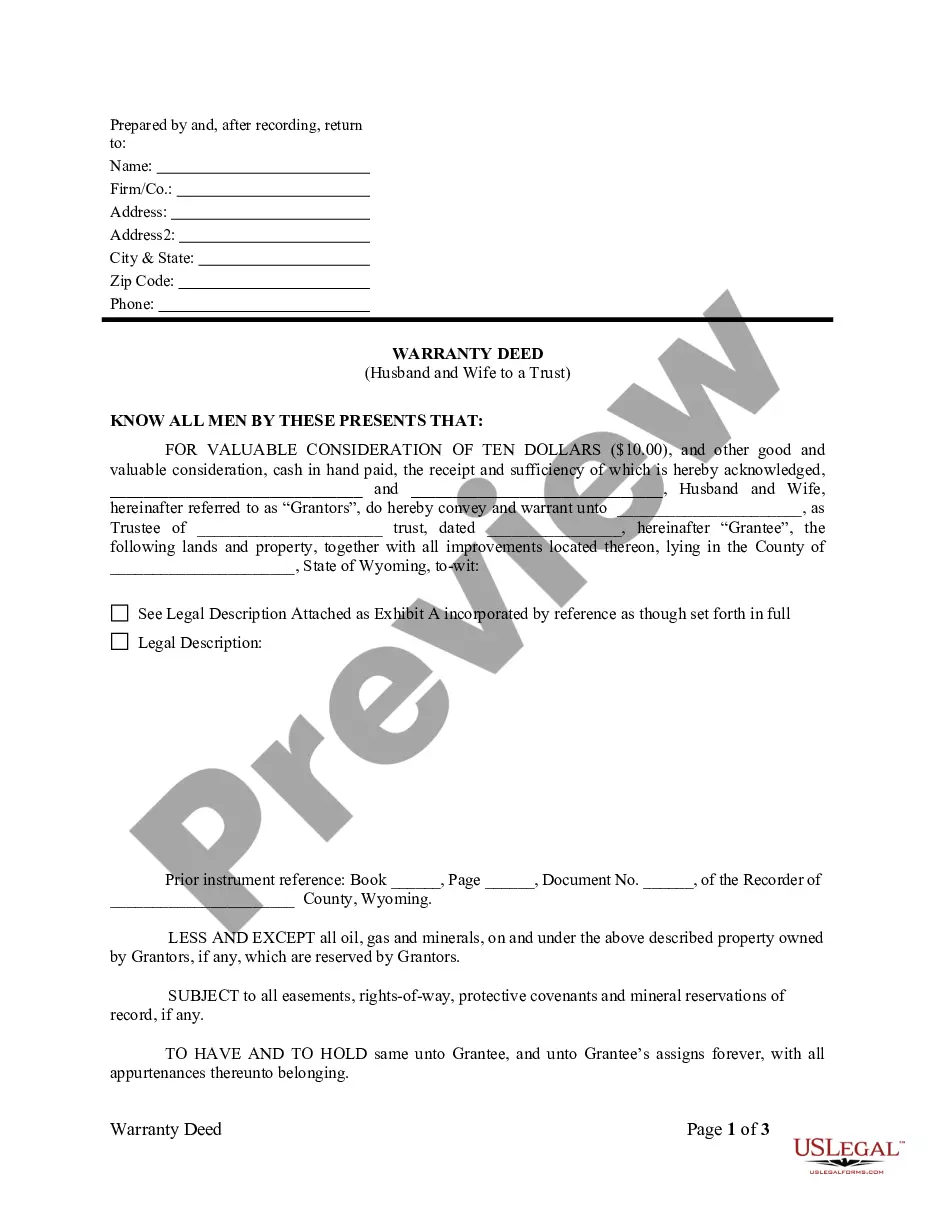
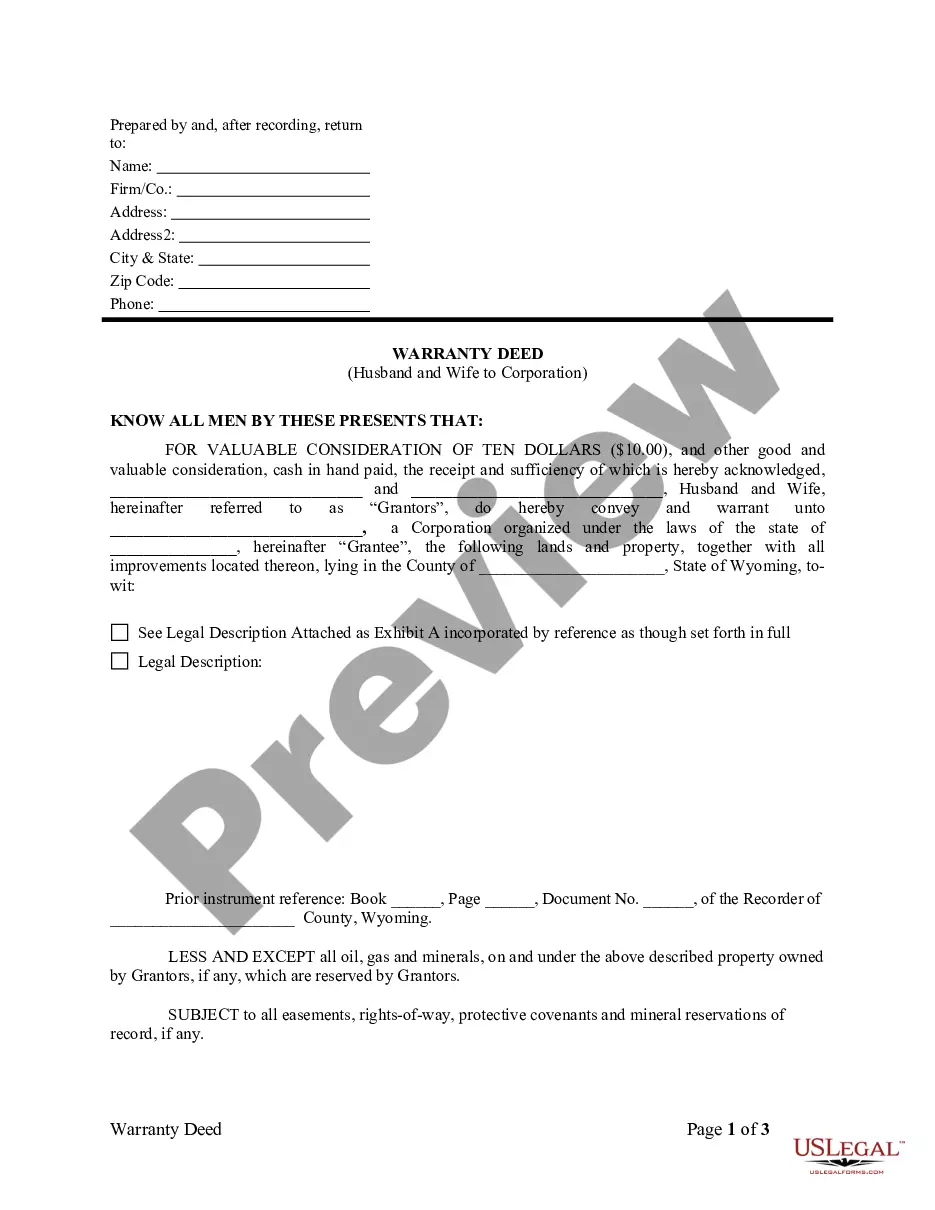
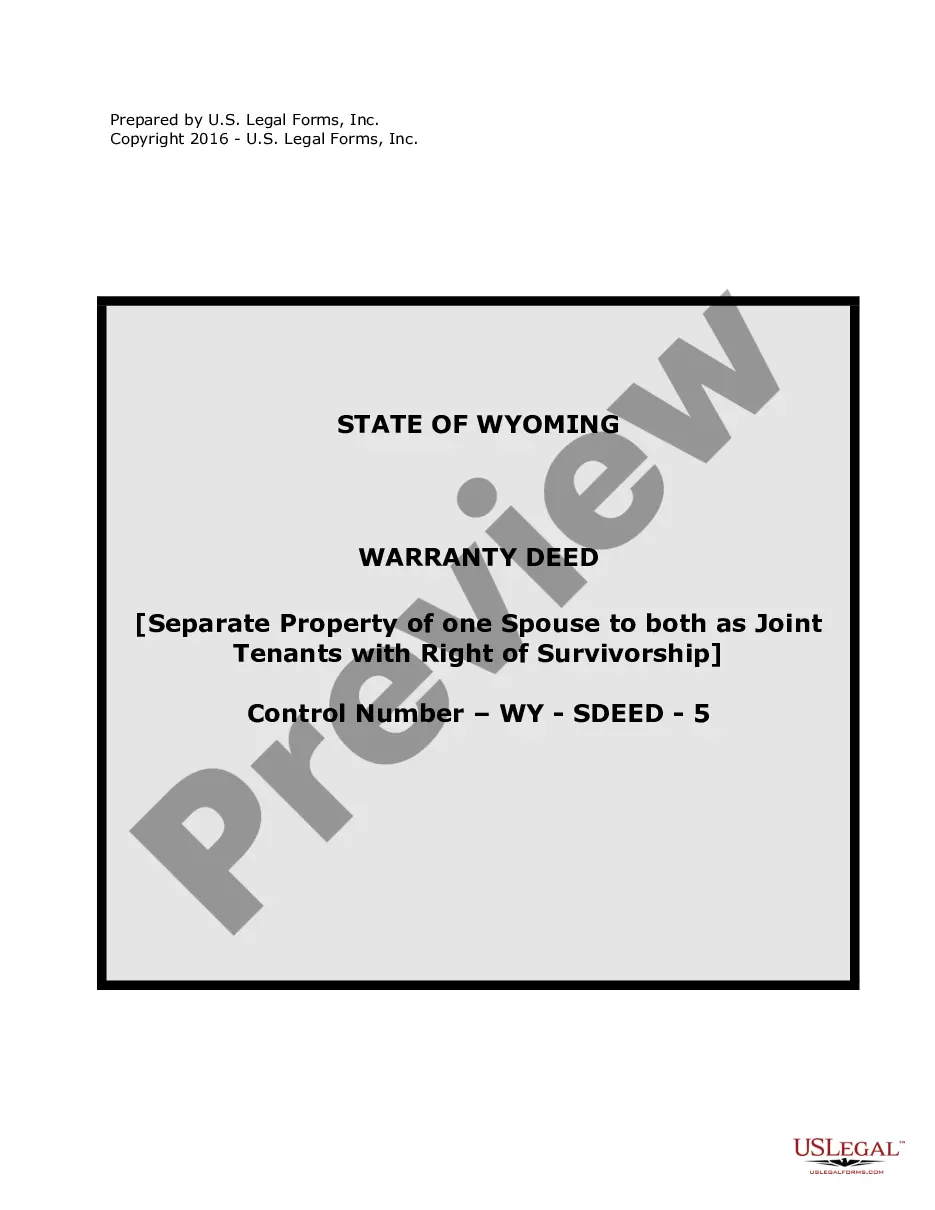
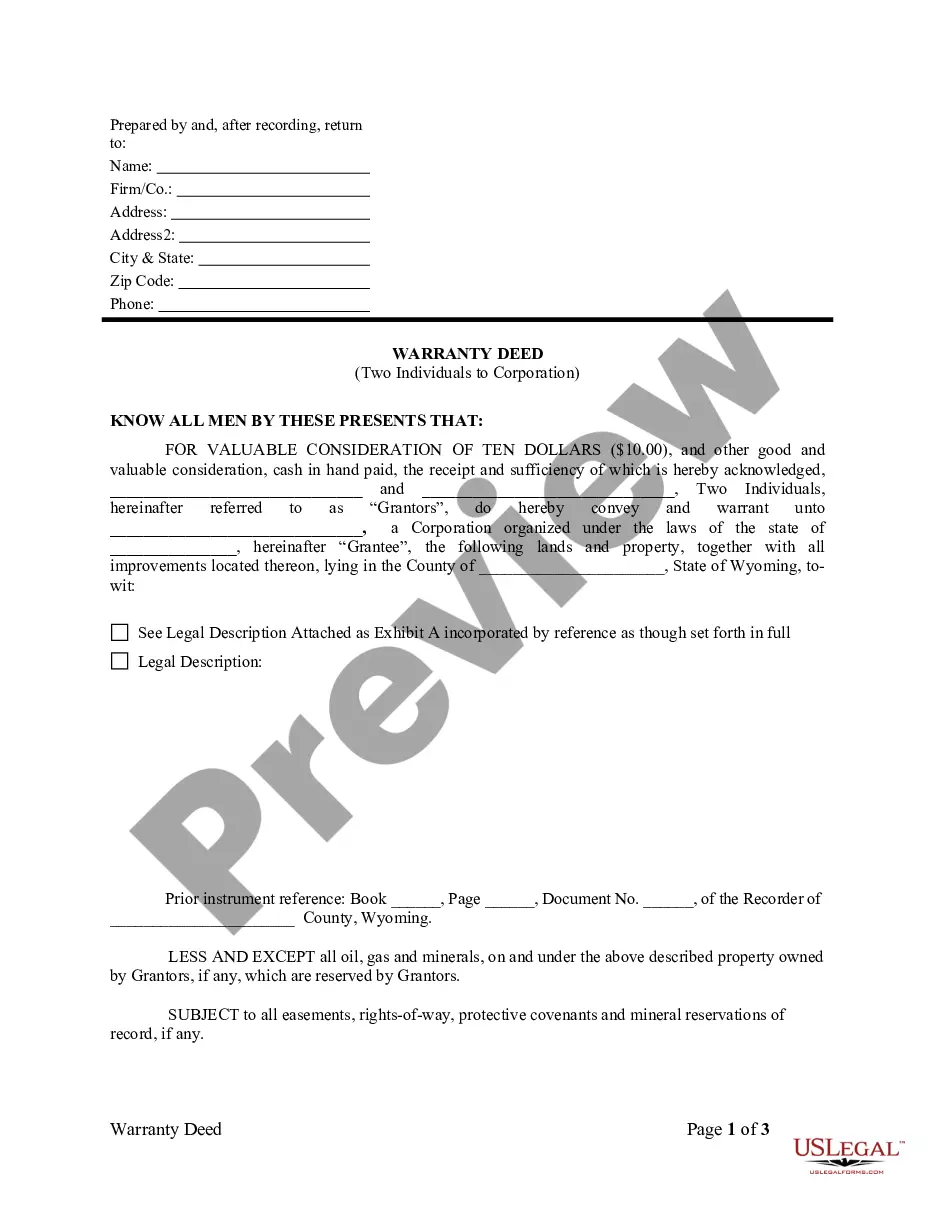
A Warranty Deed from Husband and Wife to a Trust is a legal document used to transfer property ownership from a married couple (the Grantors) to a trust (the Grantee). This deed not only conveys the property but also warrants that the Grantors own the property free of encumbrances, ensuring the trust receives clear title. It is distinct from other deed types as it includes specific language about the reservation of minerals and easements.
Key parts of this document
- Grantors and Grantee: Identifies the husband and wife as Grantors and the trust as Grantee.
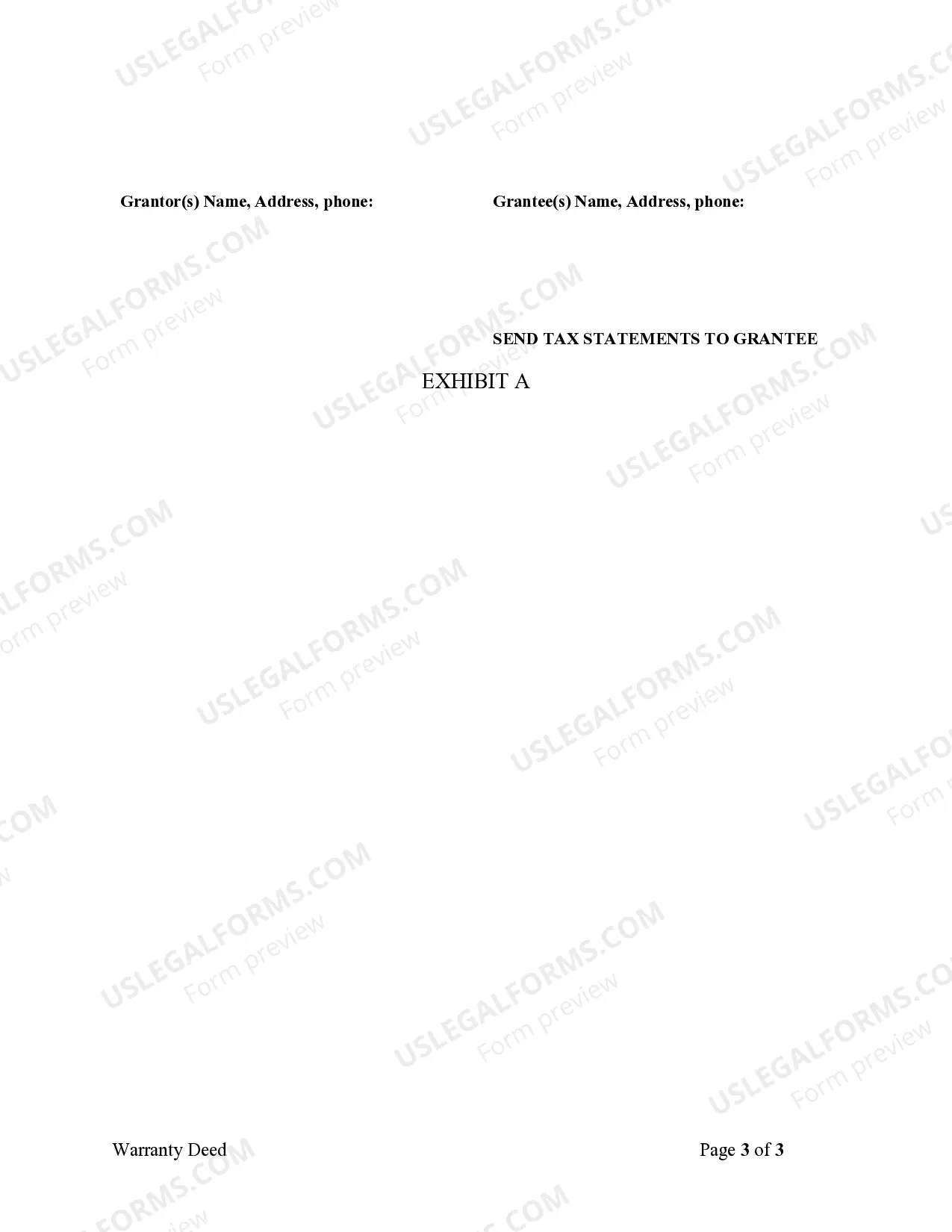
- Property Description: Clearly describes the property being transferred.
- Reservation Clause: States that any oil, gas, and mineral rights are reserved by the Grantors.
- Title Warranty: Provides a guarantee that the Grantors hold clear title to the property, free from claims.
- Easements and Covenants: Mentions any existing easements or protective covenants that may affect the property.

When this form is needed
This form is needed when a married couple wishes to transfer real estate into a trust. This can be part of estate planning to manage assets before and after death, protect against probate, or ensure that beneficiaries can access the property as intended. It is particularly useful when the couple wishes to reserve rights to minerals and manage the property through a trustee.
Who needs this form
This form is intended for:
- Married couples who own property together.
- Individuals looking to place their property into a trust for estate planning.
- Trustees managing a trust that will receive property assets from Grantors.
How to prepare this document
To complete this form, follow these steps:
- Identify the Grantors as the husband and wife.
- Specify the full legal description of the property being transferred.
- Clearly mention the name of the trust as the Grantee.
- Include any reservations for oil, gas, and mineral rights as needed.
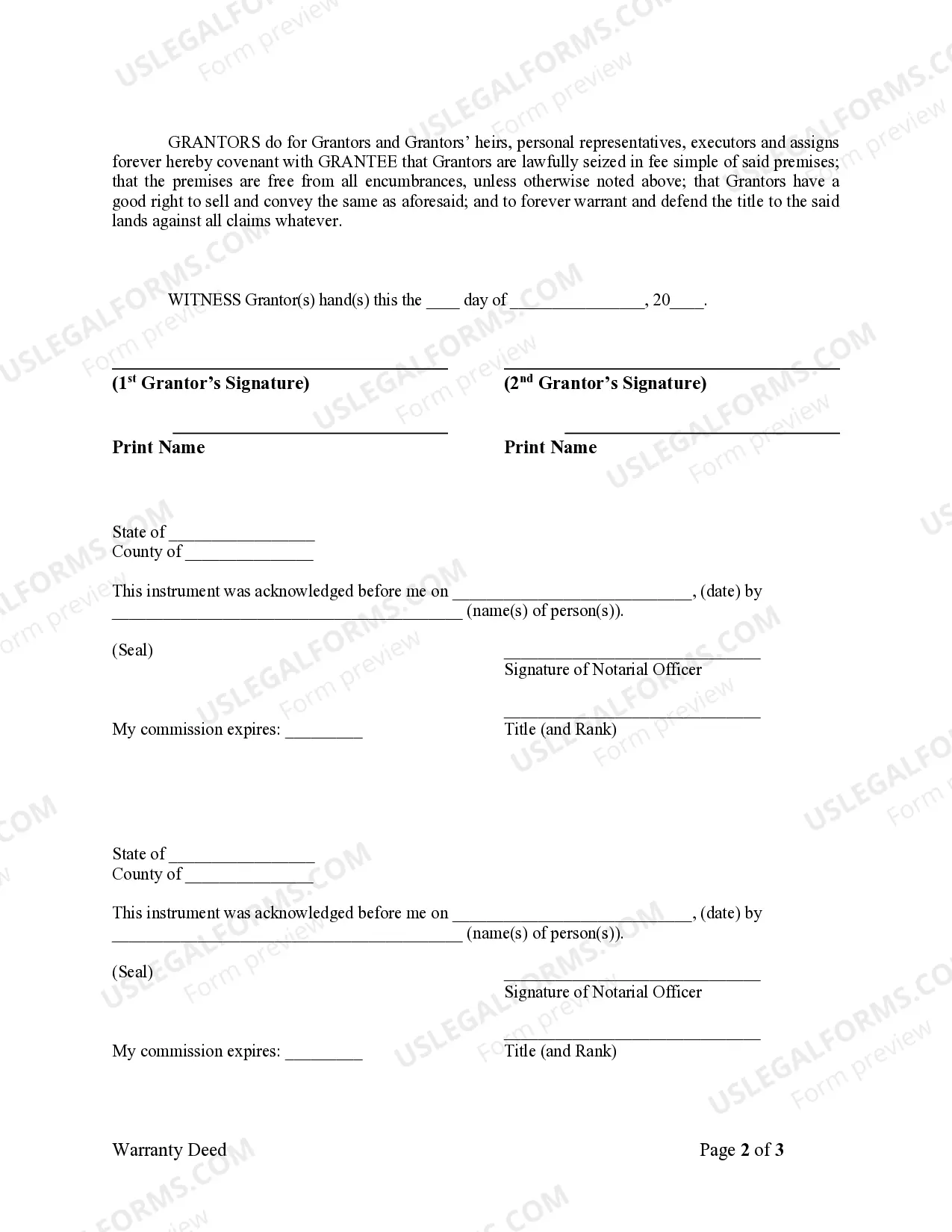
- Sign and date the document as required, ensuring compliance with state laws.
Does this form need to be notarized?
This form does not typically require notarization unless specified by local law. However, having it notarized is advisable to add an additional layer of authenticity to the transaction.
Get your form ready online
Our built-in tools help you complete, sign, share, and store your documents in one place.
Make edits, fill in missing information, and update formatting in US Legal Forms—just like you would in MS Word.
Download a copy, print it, send it by email, or mail it via USPS—whatever works best for your next step.
Sign and collect signatures with our SignNow integration. Send to multiple recipients, set reminders, and more. Go Premium to unlock E-Sign.
If this form requires notarization, complete it online through a secure video call—no need to meet a notary in person or wait for an appointment.
We protect your documents and personal data by following strict security and privacy standards.

Make edits, fill in missing information, and update formatting in US Legal Forms—just like you would in MS Word.

Download a copy, print it, send it by email, or mail it via USPS—whatever works best for your next step.

Sign and collect signatures with our SignNow integration. Send to multiple recipients, set reminders, and more. Go Premium to unlock E-Sign.

If this form requires notarization, complete it online through a secure video call—no need to meet a notary in person or wait for an appointment.

We protect your documents and personal data by following strict security and privacy standards.
Avoid these common issues
- Failing to include a proper legal description of the property.
- Not specifying the correct name of the trust as Grantee.
- Omitting the reservation clause for minerals, if applicable.
- Not having all parties sign the document.
- Overlooking local laws that may require additional clauses.
Benefits of completing this form online
- Convenience of downloading and completing the form at your own pace.
- Editability allows you to customize the document as needed.
- Reliability through forms drafted by licensed attorneys, ensuring legal compliance.
Looking for another form?

Form popularity
FAQ
Adding someone to your house deed requires the filing of a legal form known as a quitclaim deed. When executed and notarized, the quitclaim deed legally overrides the current deed to your home. By filing the quitclaim deed, you can add someone to the title of your home, in effect transferring a share of ownership.
In the context of a California mortgage transaction, a trust deed also transfer ownership. Only this time, the title is being placed in the hands of a third-party trustee, who holds the property on behalf of the lender and the homeowner-borrower until the mortgage is paid.
Locate the deed that's in trust. Use the proper deed. Check with your title insurance company and lender. Prepare a new deed. Sign in the presence of a notary. Record the deed in the county clerk's office.
It's often easier to qualify for a joint mortgage, because both spouses can contribute income and assets to the application. However, if one spouse can qualify for a mortgage based on his own income and credit, the mortgage does not need to be in both spouses' names unless you live in a community property state.
A In order to make your partner a joint owner you will need to add his name at the Land Registry, for which there is a fee of £280 (assuming you transfer half the house to him). You won't, however, have to pay capital gains tax, as gifts between civil partners (and spouses) are tax free.
If you've recently married and already own a home or other real estate, you may want to add your new spouse to the deed for your property so the two of you own it jointly. To add a spouse to a deed, all you have to do is literally fill out, sign and record a new deed in your county recorder's office.
In California, all property bought during the marriage with income that was earned during the marriage is deemed "community property." The law implies that both spouses own this property equally, regardless of which name is on the title deed.
In California, all property bought during the marriage with income that was earned during the marriage is deemed "community property." The law implies that both spouses own this property equally, regardless of which name is on the title deed.
If you live in a common-law state, you can keep your spouse's name off the title the document that says who owns the property.You can put your spouse on the title without putting them on the mortgage; this would mean that they share ownership of the home but aren't legally responsible for making mortgage payments.