West Virginia Notice of Mechanic's Lien - Supplier to Contractor or Subcontractor - Corporation
About this form
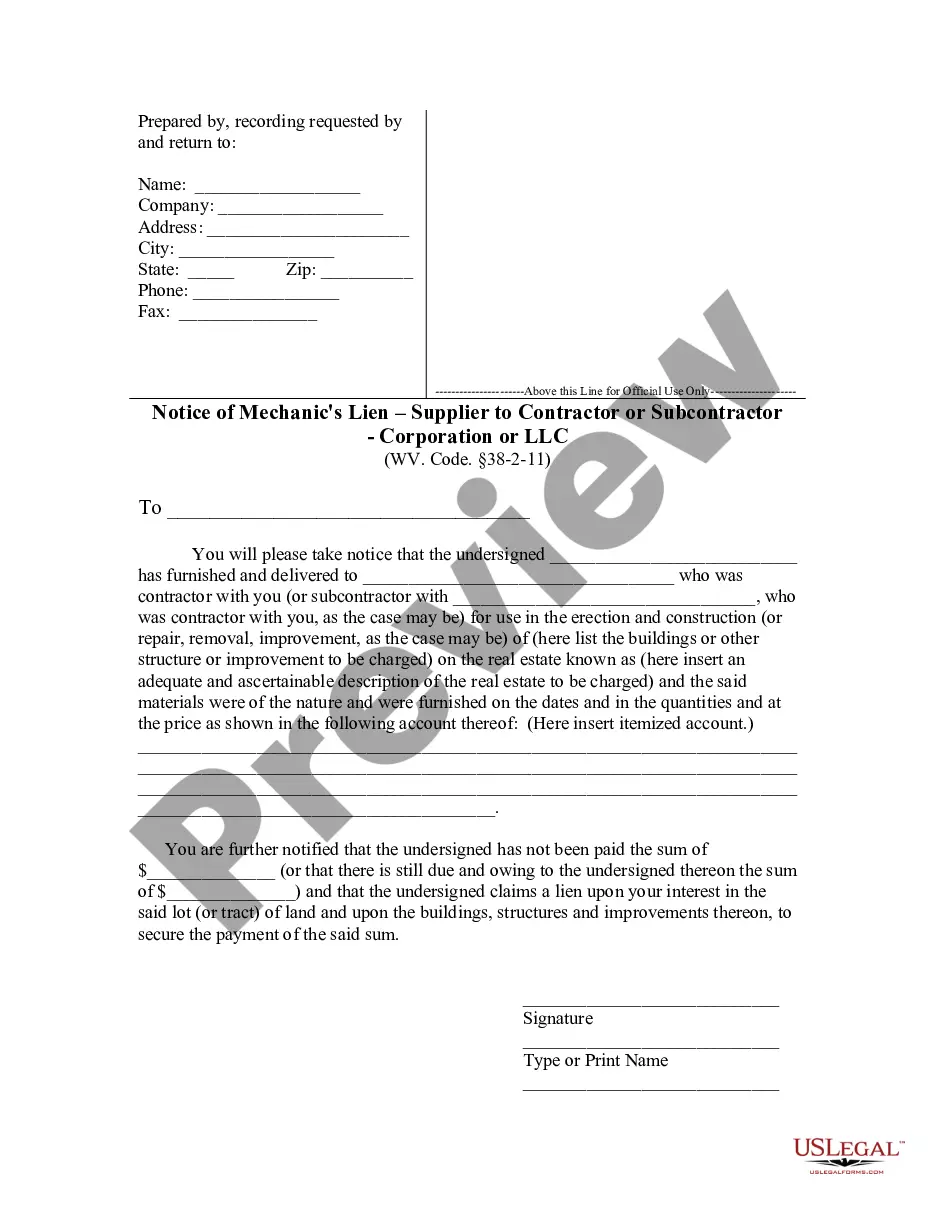
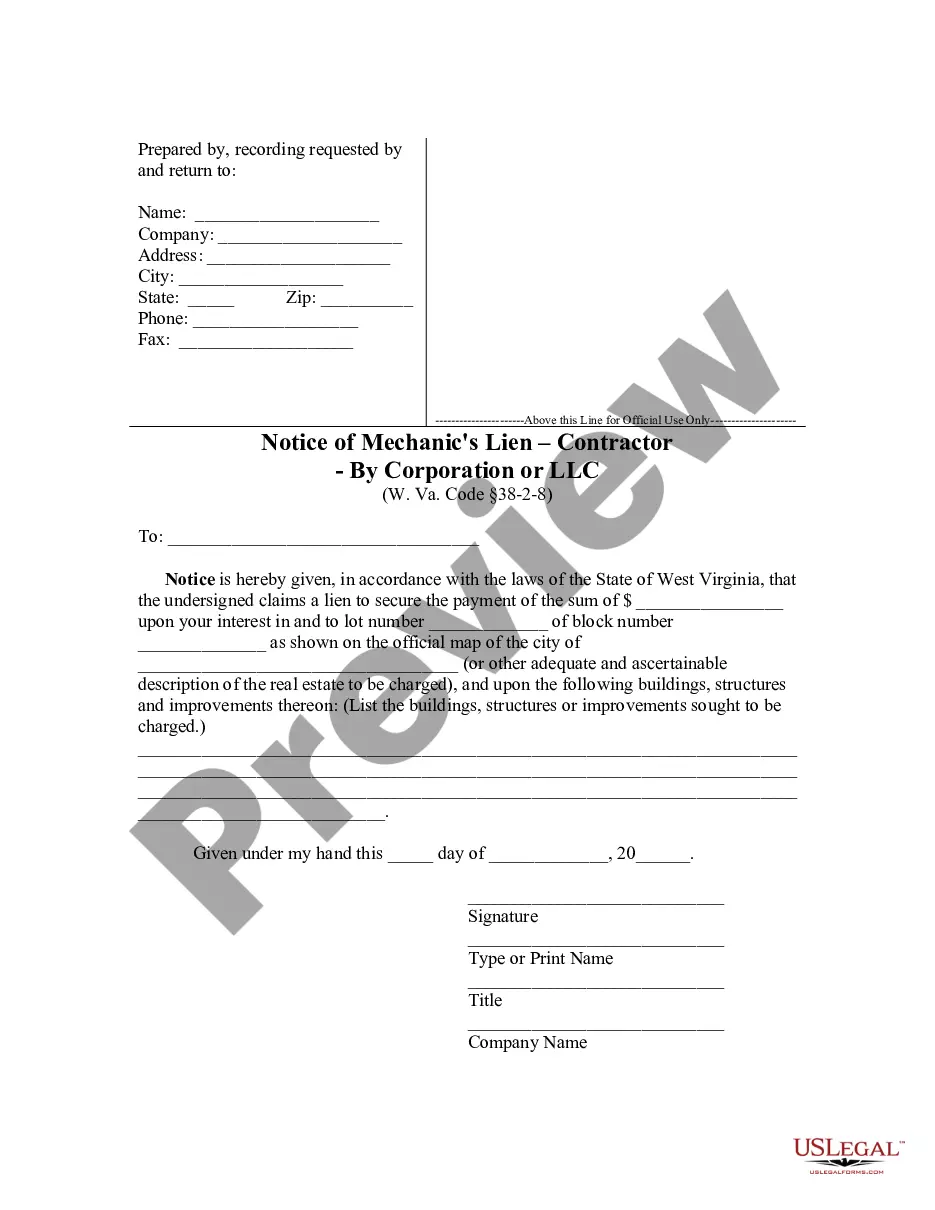
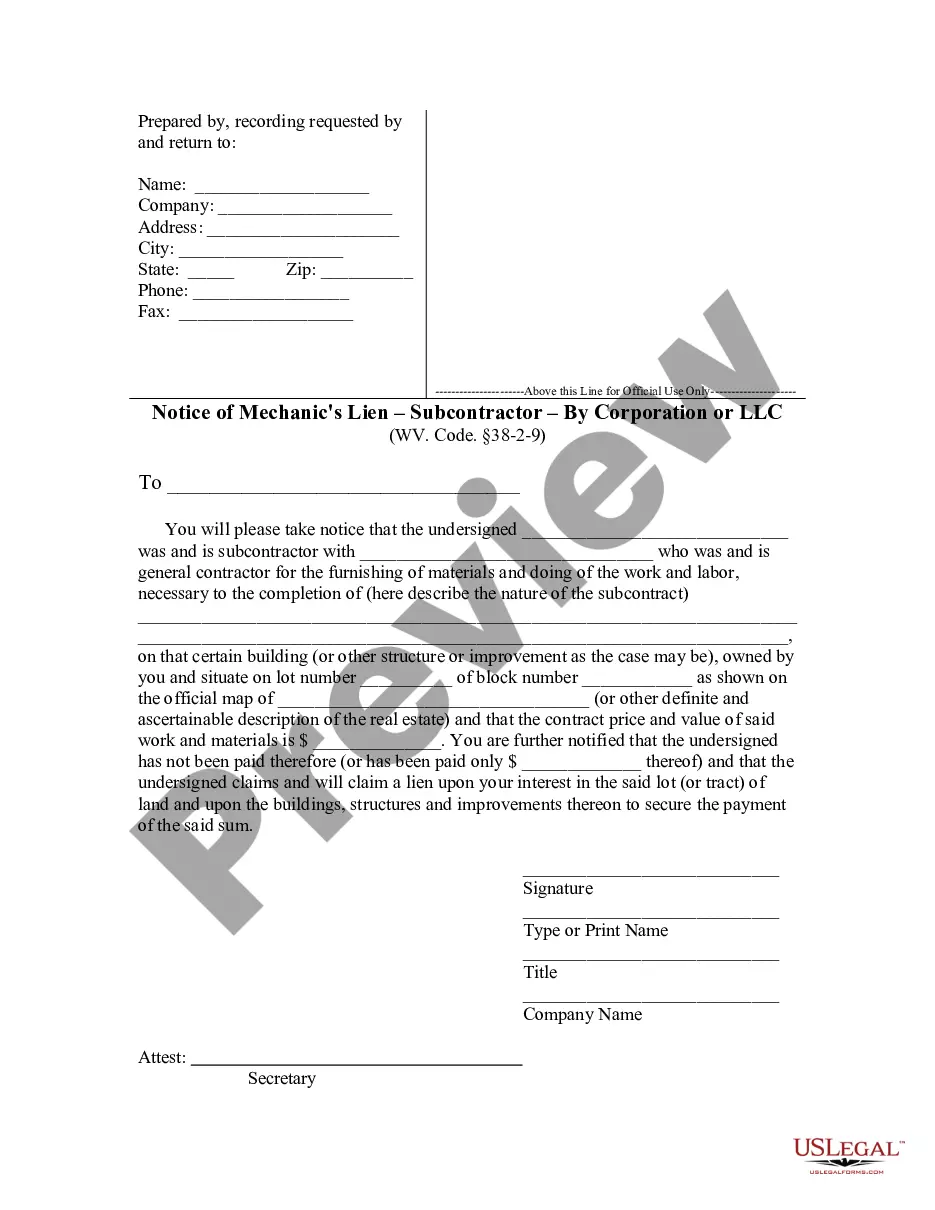
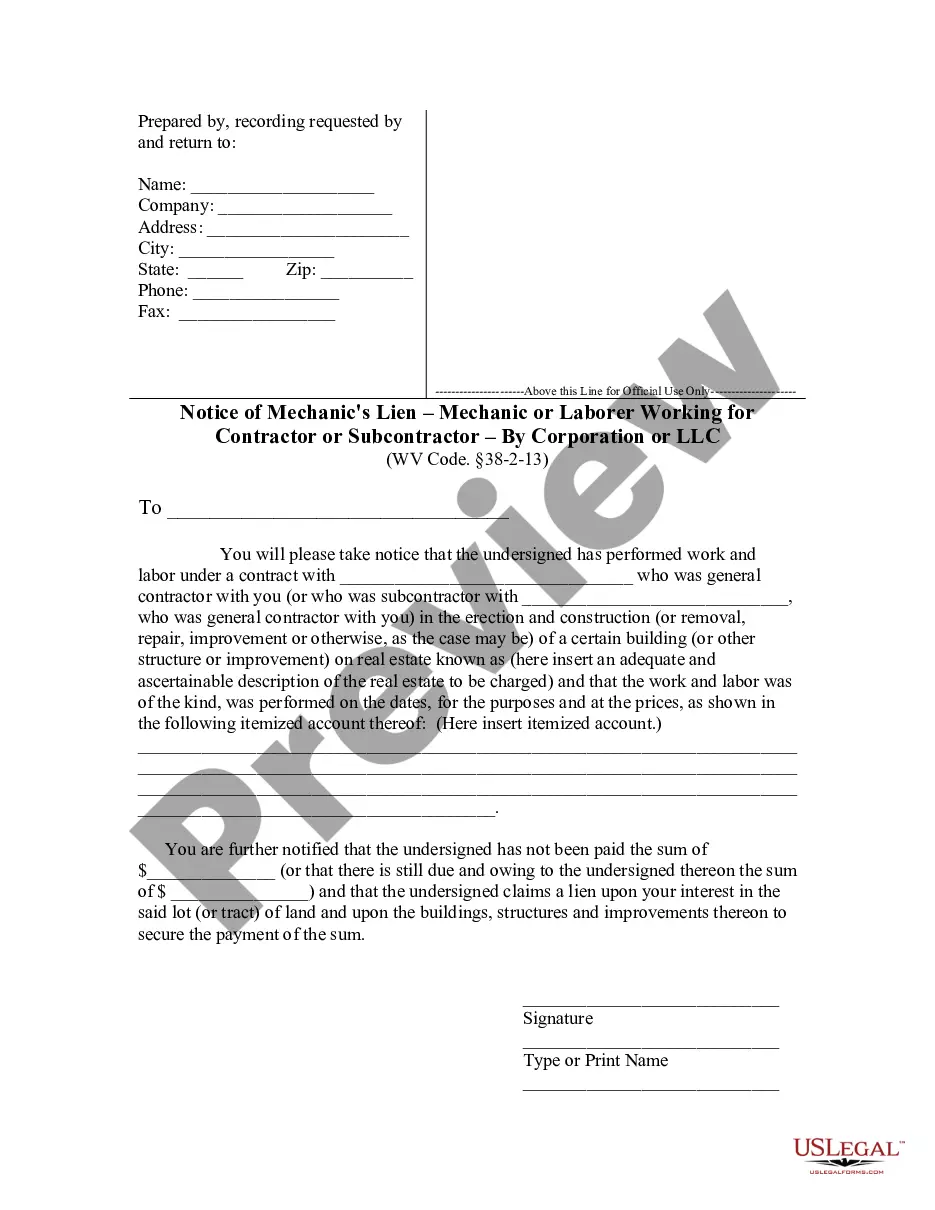
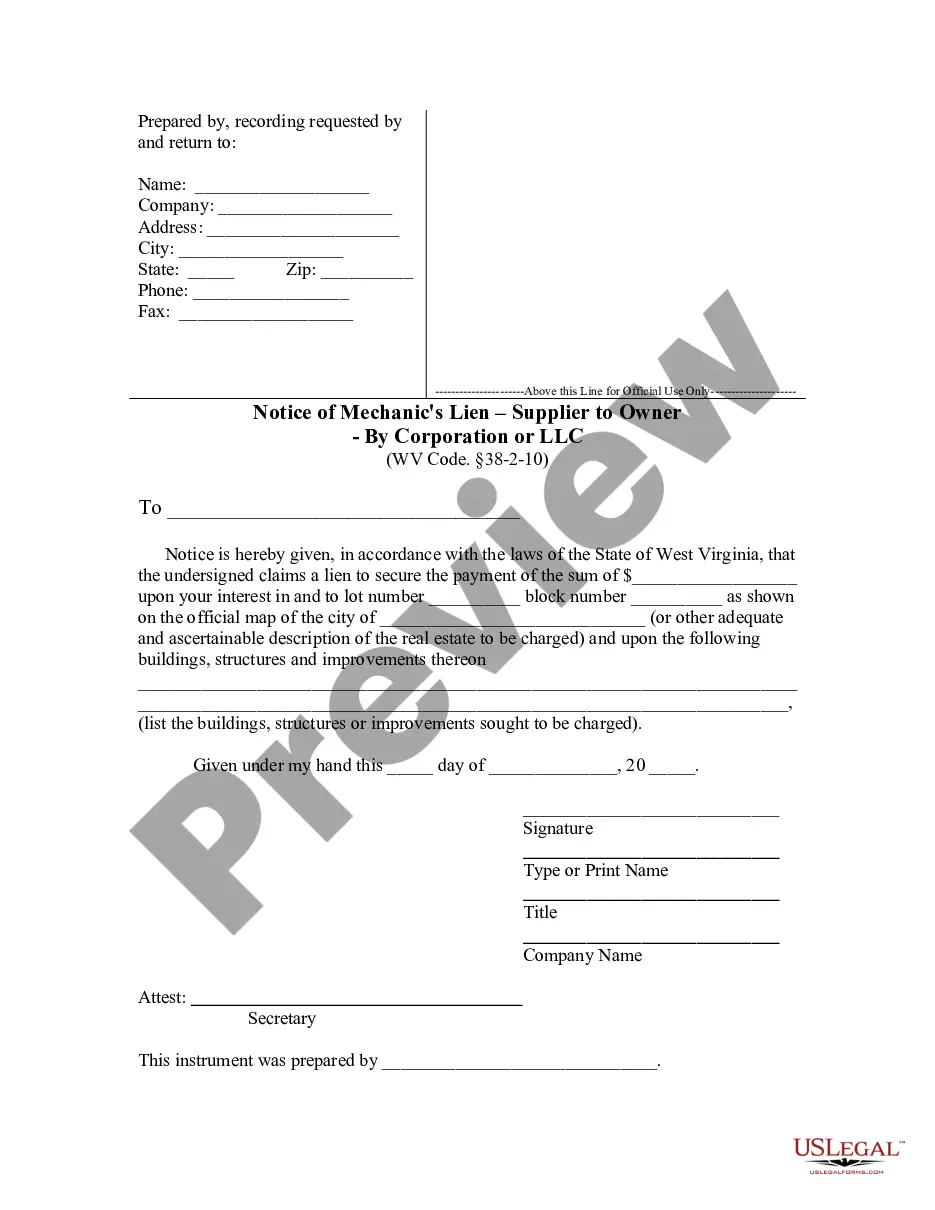
The Notice of Mechanic's Lien - Supplier to Contractor or Subcontractor is a legal document that allows a supplier to notify the property owner of their intent to place a mechanic's lien on a property due to unpaid debts from materials or services provided. This form is essential when a supplier has not received payment for work done or materials supplied in connection with the construction or improvement of a property, offering protection by establishing a claim against the property until the debt is settled. Unlike other forms related to mechanic's liens, this version is specifically tailored for suppliers dealing with contractors or subcontractors acting on behalf of corporations.
Key parts of this document
- Identification fields for the supplier and property owner.
- Details regarding the contractor or subcontractor involved.
- Description of the materials or services provided.
- Itemized account of the unpaid amount.
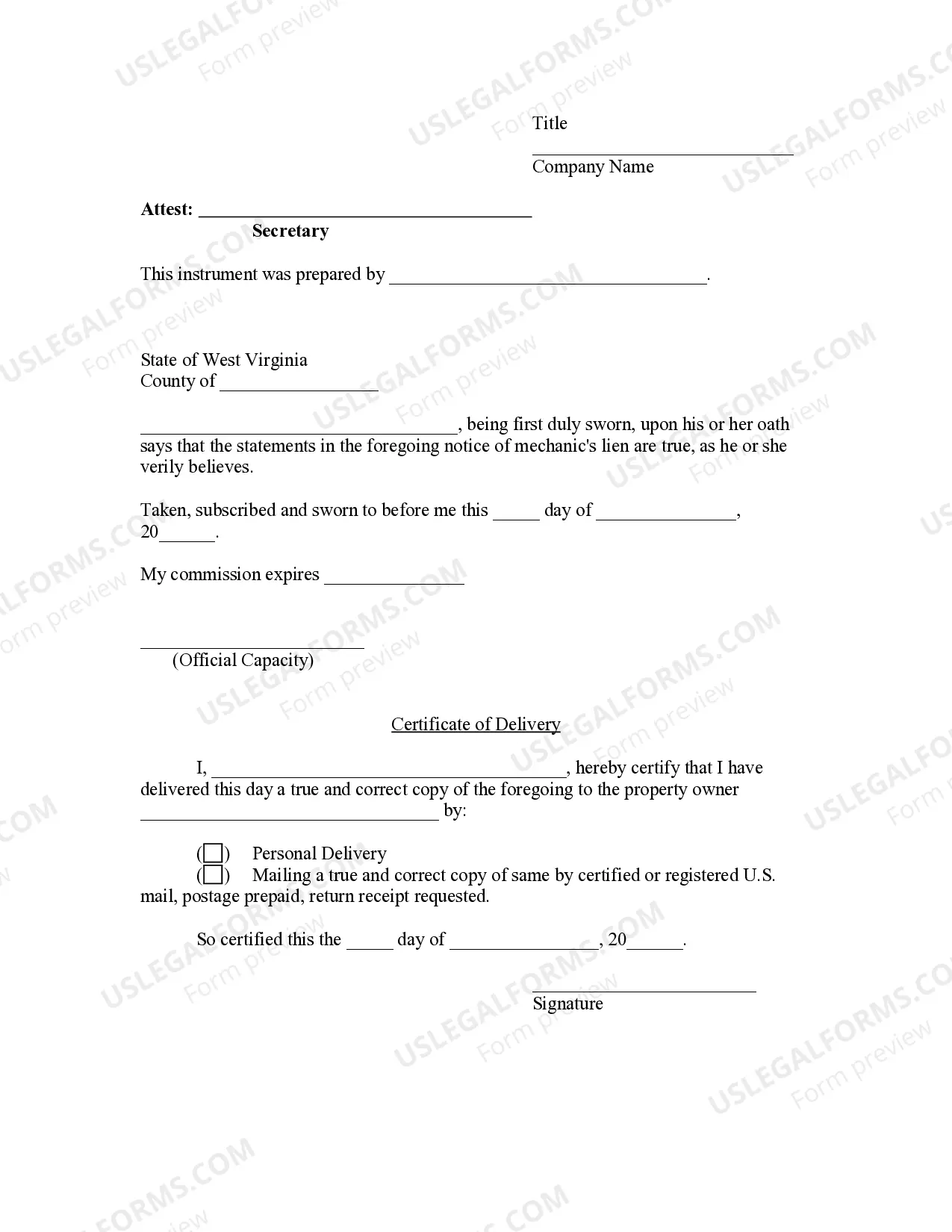
- Signature section for the supplier and notarization requirements.
When to use this form
This form should be used in situations where a supplier has provided materials or services for a construction project and has not been compensated. Situations can include suppliers who have not received payment for building materials, equipment rentals, or other construction-related services. It serves as a formal notice to the property owner of the financial claim against their property.
Intended users of this form
- Suppliers of construction materials.
- Contractors who are not receiving payments from general contractors.
- Corporations involved in construction projects representing subcontractors.
Steps to complete this form
- Identify the supplier and provide their contact information at the top of the form.
- Fill in the details of the contractor or subcontractor associated with the project.
- Clearly describe the materials or services provided and the property associated with the lien.
- List the total amount due for the materials or services provided.
- Sign and date the document before a notary public as required.
Notarization guidance
Yes, this form must be notarized to be legally valid. Notarization ensures that the form is properly executed and can strengthen the enforceability of the lien. US Legal Forms offers integrated online notarization, providing secure video calls with notaries, ensuring accessibility and convenience for users.
Get your form ready online
Our built-in tools help you complete, sign, share, and store your documents in one place.
Make edits, fill in missing information, and update formatting in US Legal Forms—just like you would in MS Word.
Download a copy, print it, send it by email, or mail it via USPS—whatever works best for your next step.
Sign and collect signatures with our SignNow integration. Send to multiple recipients, set reminders, and more. Go Premium to unlock E-Sign.
If this form requires notarization, complete it online through a secure video call—no need to meet a notary in person or wait for an appointment.
We protect your documents and personal data by following strict security and privacy standards.

Make edits, fill in missing information, and update formatting in US Legal Forms—just like you would in MS Word.

Download a copy, print it, send it by email, or mail it via USPS—whatever works best for your next step.

Sign and collect signatures with our SignNow integration. Send to multiple recipients, set reminders, and more. Go Premium to unlock E-Sign.

If this form requires notarization, complete it online through a secure video call—no need to meet a notary in person or wait for an appointment.

We protect your documents and personal data by following strict security and privacy standards.
Mistakes to watch out for
- Failing to provide a complete description of materials or services.
- Leaving out the itemized account of dues.
- Not notarizing the form where required.
- Omitting signatures or necessary identifying information.
Benefits of completing this form online
- Convenient access to legal forms from anywhere at any time.
- Editable templates that allow for customization based on specific needs.
- Reliable formats that meet legal requirements for mechanic's liens.
What to keep in mind
- This form is used by suppliers to assert a lien on a property for unpaid materials or services.
- Accurate and complete information is essential to enforce the lien.
- Notarization of the form is required in West Virginia.
- Consult local regulations to ensure compliance with specific filing procedures.
Looking for another form?
Form popularity
FAQ
Legally, an unpaid contractor, subcontractor or supplier can file a lien (sometimes called a mechanic's lien) that could eventually force the sale of your home in place of compensation.Conversely, if the contractor who worked on your project does not pay for materials, a supplier could place a lien on your property.
A contractor's lien (often known as a mechanic's lien, or a construction lien) is a claim made by contractors or subcontractors who have performed work on a property, and have not yet been paid.After all, contractors would rather work out a deal than go through the hassle of filing a lien against your property.
What Is a Mechanics' (Construction) Lien? When a contractor files a mechanics' (construction) lien on your home, the lien makes your home into what's called security for an outstanding debt, which the contractor claims is due and unpaid for services or materials.
The simplest way to prevent liens and ensure that subcontractors and suppliers are paid is to pay with joint checks. This is when both parties endorse the check. Compare the contractor's materials or labor bill to the schedule of payments in your contract and the Preliminary Notices.
Posting a Bond Asselta says to expect to pay 110 percent of the lien amount. Submit the bond to the court. The lien will then transfer to the bond and clear the property's title. Wait for the contractor claimant to foreclose on the lien in the allotted period to dispute the lien in court.
Legally, an unpaid contractor, subcontractor or supplier can file a lien (sometimes called a mechanic's lien) that could eventually force the sale of your home in place of compensation.Conversely, if the contractor who worked on your project does not pay for materials, a supplier could place a lien on your property.
The simplest way to prevent liens and ensure that subcontractors and suppliers are paid is to pay with joint checks. This is when both parties endorse the check. Compare the contractor's materials or labor bill to the schedule of payments in your contract and the Preliminary Notices.
A lien is essentially a claim for repayment of a debt. In the construction context, a lien is of considerable importance because it offers considerable power to a subcontractor to seek payment from an owner through the property itself for a debt owed to the subcontractor by a general contractor or other third party.