Washington Quitclaim Deed for Husband and Wife to Living Trust
What is this form?
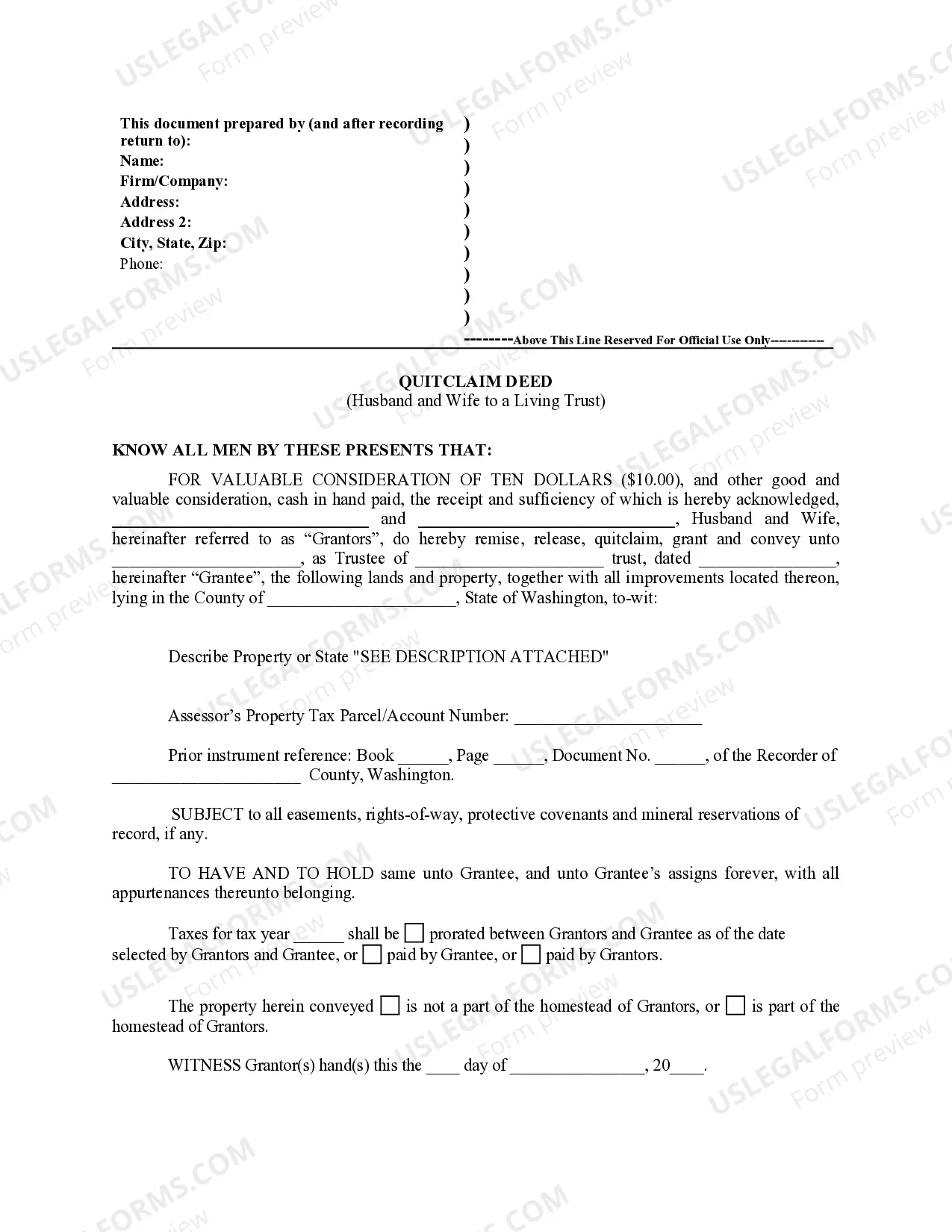
The Quitclaim Deed for Husband and Wife to Living Trust is a legal document used to transfer property ownership from a married couple to a living trust. This form allows the grantors (the husband and wife) to relinquish any claims they have to the property in favor of the trust, which can help in estate planning and asset management. Unlike warranty deeds, quitclaim deeds do not guarantee that the title is free of claims or encumbrances, making them a straightforward option for property transfers between family members or into trusts.
Key components of this form
- Name and description of the property being transferred.
- Names of the grantors (husband and wife) and the grantee (the living trust).
- Disclosure regarding any outstanding claims or encumbrances on the property.
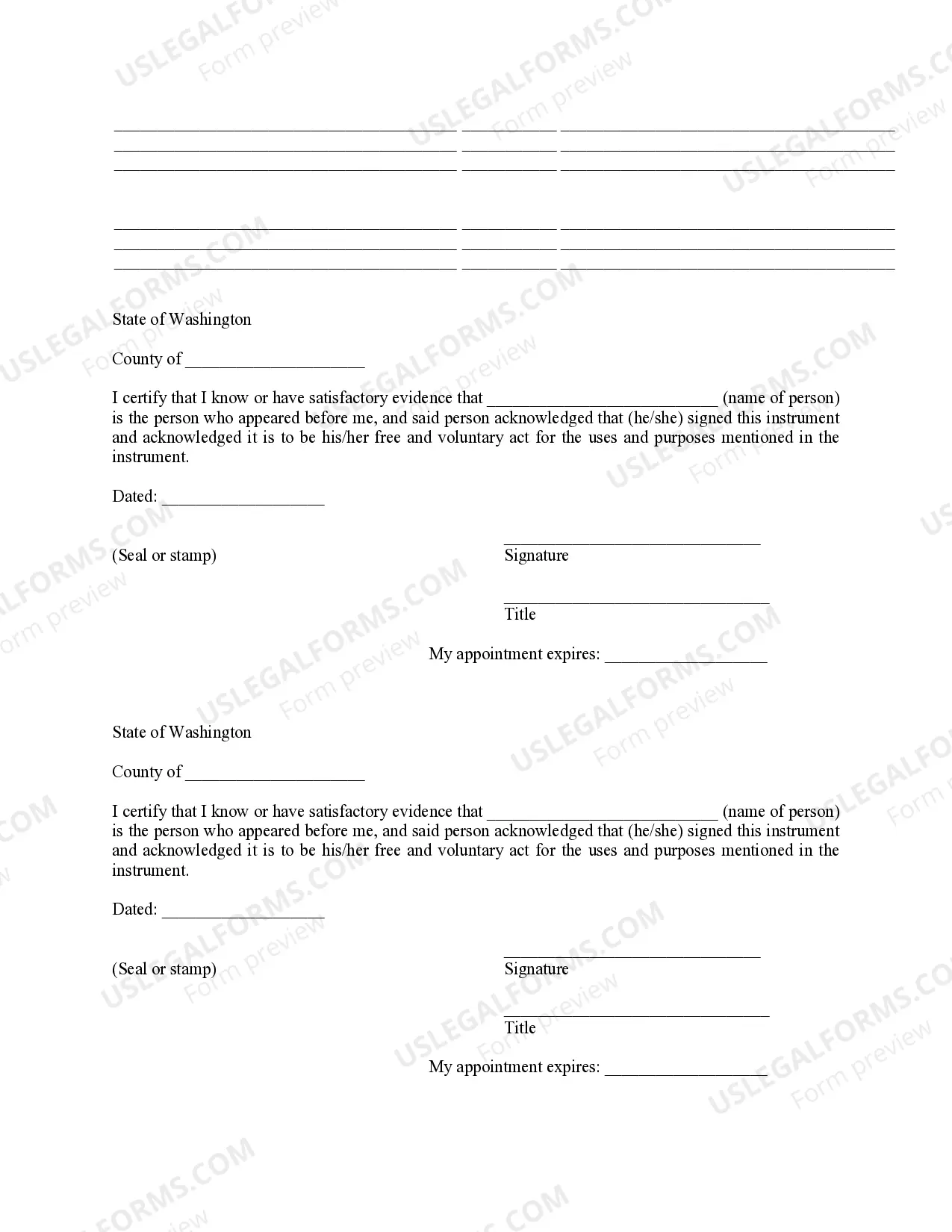
- Notarization section to authenticate the signature of the grantors.
- Provisions regarding the proration of property taxes.



Common use cases
This quitclaim deed is typically used when a husband and wife want to transfer ownership of their property to a living trust. This may occur during estate planning to simplify the distribution of assets upon death or to provide better management of the property. It can also be used when consolidating property under a trust for tax or legal advantages.
Who should use this form
- Married couples looking to transfer their jointly-owned property into a living trust.
- Individuals involved in estate planning processes.
- Anyone wanting to avoid probate by placing property within a trust.
Steps to complete this form
- Identify the parties involved by entering the names of the husband and wife as grantors, along with the name of the living trust as grantee.
- Clearly describe the property being transferred, including legal descriptions and parcel numbers if applicable.
- Indicate whether the property is part of the grantors' homestead or not.
- Specify how property taxes for the year will be handled between both parties.
- Have both grantors sign the form in the designated areas and ensure notarization is completed.
Notarization guidance
This form must be notarized to be legally valid. US Legal Forms provides secure online notarization powered by Notarize, allowing you to complete the process through a verified video call.
Get your form ready online
Our built-in tools help you complete, sign, share, and store your documents in one place.
Make edits, fill in missing information, and update formatting in US Legal Forms—just like you would in MS Word.
Download a copy, print it, send it by email, or mail it via USPS—whatever works best for your next step.
Sign and collect signatures with our SignNow integration. Send to multiple recipients, set reminders, and more. Go Premium to unlock E-Sign.
If this form requires notarization, complete it online through a secure video call—no need to meet a notary in person or wait for an appointment.
We protect your documents and personal data by following strict security and privacy standards.

Make edits, fill in missing information, and update formatting in US Legal Forms—just like you would in MS Word.

Download a copy, print it, send it by email, or mail it via USPS—whatever works best for your next step.

Sign and collect signatures with our SignNow integration. Send to multiple recipients, set reminders, and more. Go Premium to unlock E-Sign.

If this form requires notarization, complete it online through a secure video call—no need to meet a notary in person or wait for an appointment.

We protect your documents and personal data by following strict security and privacy standards.
Common mistakes
- Failing to include a complete property description, which can lead to unenforceability.
- Notary signatures missing, which may invalidate the deed.
- Omitting information regarding property tax proration.
- Incorrectly indicating the status of the property as a homestead.
Why use this form online
- Convenient access to legal forms from anywhere, at any time.
- Editable fields allow users to enter their information easily and accurately.
- Templates are drafted by licensed attorneys to ensure legal compliance.
- Instant downloads save time and expedite the property transfer process.
Looking for another form?





Form popularity
FAQ
It is also crucial that a spouse know about the loan, even if he or she is not on the mortgage. In general, the spouse must sign a deed of trust, the Truth in Lending and Right to Cancel documents. By signing these documents, they are simply acknowledging the existence of the mortgage.
The drawback, quite simply, is that quitclaim deeds offer the grantee/recipient no protection or guarantees whatsoever about the property or their ownership of it. Maybe the grantor did not own the property at all, or maybe they only had partial ownership.
The Washington quit claim deed form gives the new owner whatever interest the current owner has in the property when the deed is signed and delivered. It makes no promises about whether the current owner has clear title to the property.
Determine the Current Title and Vesting to Your Property. Prepare a Deed. Be Aware of Your Lender and Title Insurance. Prepare a Preliminary Change of Ownership Report. Execute Your Deed. Record Your Deed. Wait for the Deed to be Returned. Keep the Property in the Trust.
If you sign a quitclaim deed to release yourself from ownership of the property or a claim to the title, then that doesn't mean you are no longer held accountable for the mortgage payment.Otherwise, you may be held responsible for unpaid payments despite no longer having a claim to the title.
Yes, a quit claim deed supercedes the trust. The only thing that can be done is to file a suit in court challenging the deed as the product of fraud and undue influence. A court action like that will cost thousands of dollars, but might be worth it if the house was owned free and clear.
In order to transfer ownership of the marital home pursuant to a divorce, one spouse is going to need to sign a quitclaim deed, interspousal transfer deed, or a grant deed, in order to convey the title to the property.
In states like California and Florida, the spouses may use a quitclaim deed to transfer the property without warranting title. Other stateslike Texasrecognize a similar type of deed called a deed without warranty.
A person who signs a quitclaim deed to transfer property they do not own results in no title at all being transferred since there is no actual ownership interest. The quitclaim deed only transfers the type of title you own.