Washington Letter from Landlord to Tenant about Intent to increase rent and effective date of rental increase
Understanding this form
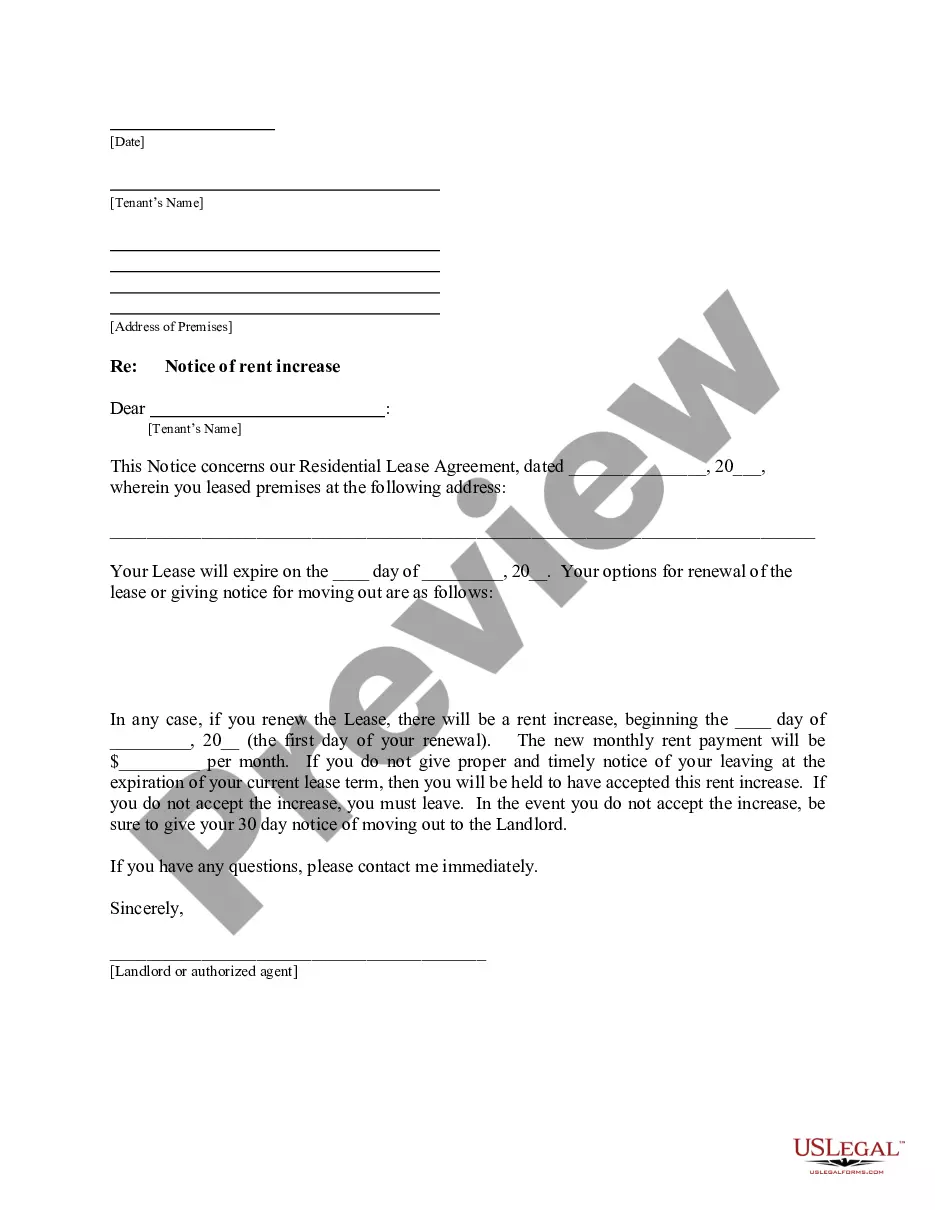
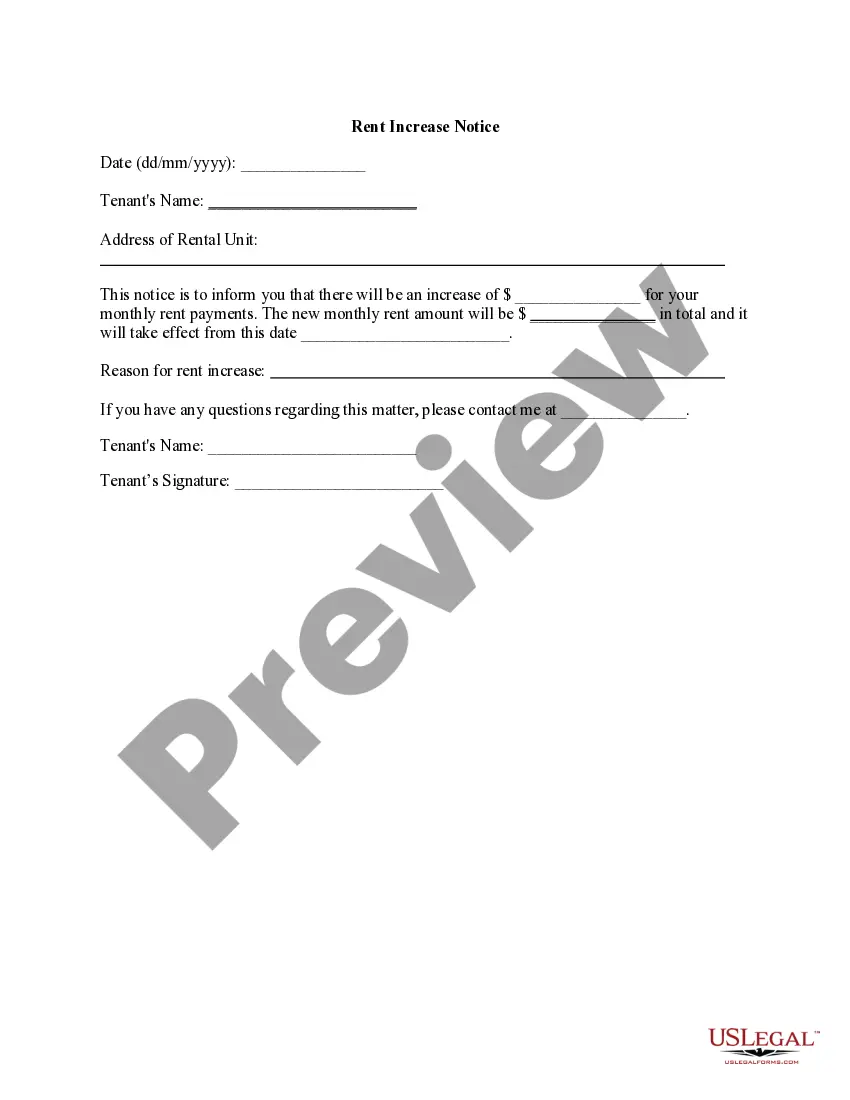
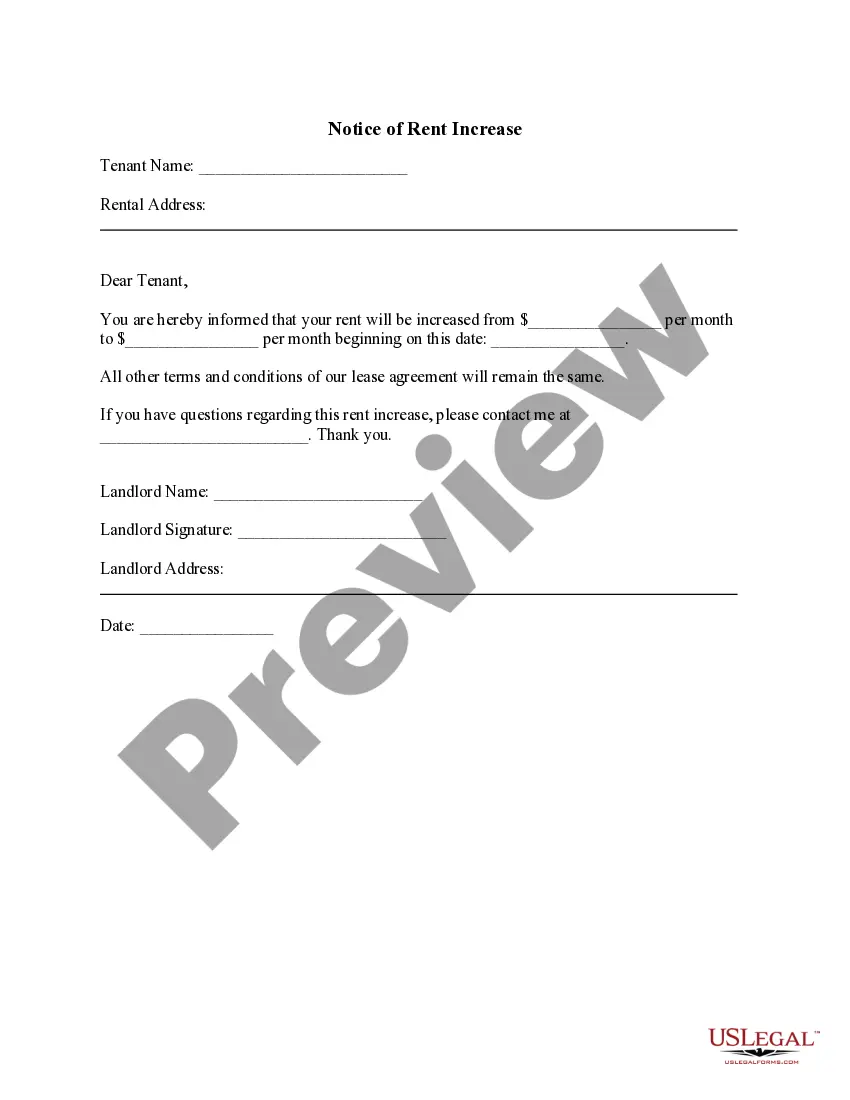
This form, titled "Letter from Landlord to Tenant about Intent to Increase Rent and Effective Date of Rental Increase," serves as a notification from a landlord to a tenant regarding an upcoming rent increase after the lease agreement expires. It provides the tenant with options to either renew the lease at the new rent or vacate the premises. Unlike other forms of rental agreements, this letter specifically outlines the intent to increase rent and is used when the lease term is ending.
Key components of this form
- Date of the letter.
- Identification of the residential lease agreement.
- Address of the leased premises.
- Expiration date of the current lease.
- Options for the tenant regarding the lease renewal or moving out.
- Landlordâs contact information for questions.
When this form is needed
This form should be used when a landlord intends to inform a tenant about a rent increase at the end of an existing lease term. It is applicable in situations where the landlord needs to notify the tenant well in advance of the expiration of the lease, particularly if specific state laws dictate notice periods for rent increases.
Who can use this document
This form is intended for:
- Landlords seeking to increase rent after a lease term.
- Property managers overseeing rental properties.
- Real estate agents representing landlords.
Completing this form step by step
- Enter the date of the letter.
- Specify the lease agreement date and address of the rented property.
- Indicate the expiration date of the current lease.
- Clearly present the tenant's options regarding lease renewal or moving out.
- Include your contact details as the landlord or authorized agent.
Notarization requirements for this form
This form does not typically require notarization unless specified by local law. It is important to review local requirements to ensure compliance with any specific regulations.
Get your form ready online
Our built-in tools help you complete, sign, share, and store your documents in one place.
Make edits, fill in missing information, and update formatting in US Legal Forms—just like you would in MS Word.
Download a copy, print it, send it by email, or mail it via USPS—whatever works best for your next step.
Sign and collect signatures with our SignNow integration. Send to multiple recipients, set reminders, and more. Go Premium to unlock E-Sign.
If this form requires notarization, complete it online through a secure video call—no need to meet a notary in person or wait for an appointment.
We protect your documents and personal data by following strict security and privacy standards.

Make edits, fill in missing information, and update formatting in US Legal Forms—just like you would in MS Word.

Download a copy, print it, send it by email, or mail it via USPS—whatever works best for your next step.

Sign and collect signatures with our SignNow integration. Send to multiple recipients, set reminders, and more. Go Premium to unlock E-Sign.

If this form requires notarization, complete it online through a secure video call—no need to meet a notary in person or wait for an appointment.

We protect your documents and personal data by following strict security and privacy standards.
Mistakes to watch out for
- Failing to provide the correct notice period required by state law.
- Omitting key details such as the property address or expiration date.
- Not including contact information for clarification.
Why complete this form online
- Convenience of instant download and printing.
- Editability to customize the letter as per specific needs.
- Access to legally vetted templates drafted by licensed attorneys.
Looking for another form?
Form popularity
FAQ
The Washington Letter From Landlord To Tenant About Intent To Increase Rent And Effective Date Of Rental Increase is a notice sent when a current lease ends to inform the tenant that rent will increase and how it will take effect. It explains the two options—renew at the new rent or move out—and lists the letter’s date, lease identification, address, expiration date, and landlord contact.
This form is designed to clearly explain a rent increase by announcing the new amount and the effective date, and by giving the tenant two clear options: renew the lease at the higher rent or vacate when the current lease expires. It also provides the required identification, property address, expiration date, and landlord contact for questions.
It provides a ready-to-fill, formal letter format tailored for notice purposes. The template includes the date, identification of the residential lease, the leased property address, the current lease expiration, and the two renewal or moving-out options, plus the landlord’s contact information for questions.
Include the date of the letter, identification of the residential lease, property address, current lease expiration date, and the two options for the tenant: renew at the new rent or move out. The form emphasizes clearly stating the rent increase and its effective date and provides a method to contact the landlord with questions.
For this form, the best letter is the Washington Letter From Landlord To Tenant About Intent To Increase Rent And Effective Date Of Rental Increase, a purpose-built notice for end-of-lease increases that states intent, shows the effective date, and presents renewal or moving-out options with the landlord’s contact.
This form is tailored to Washington state use and specifically addresses rent increases at the end of a current lease term. It centers on documenting the landlord’s intent to increase, the rent’s effective date, and the tenant’s renewal or moving-out options, plus includes the lease reference, property address, and landlord contact information.