Washington Warranty Deed Releasing Life Estate
About this form
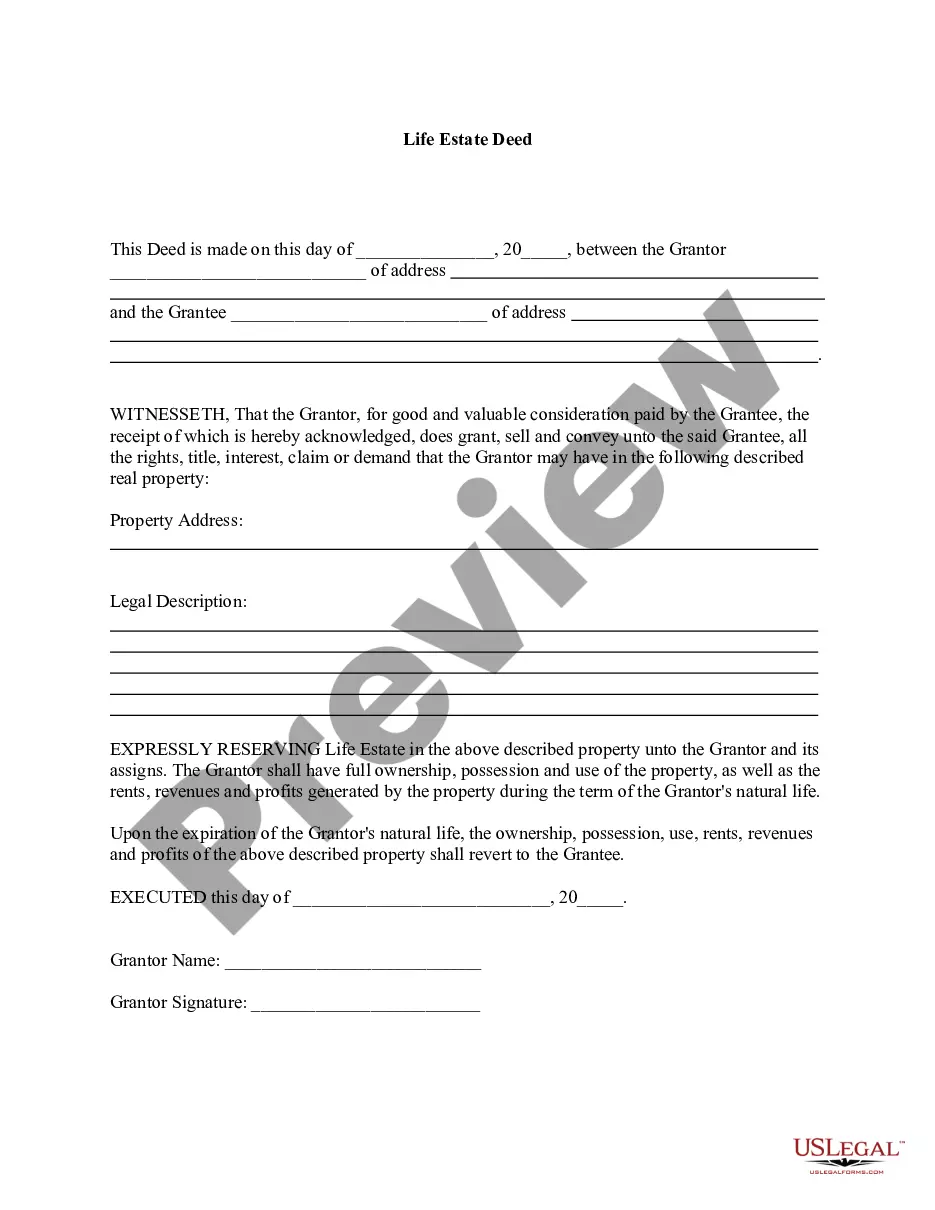
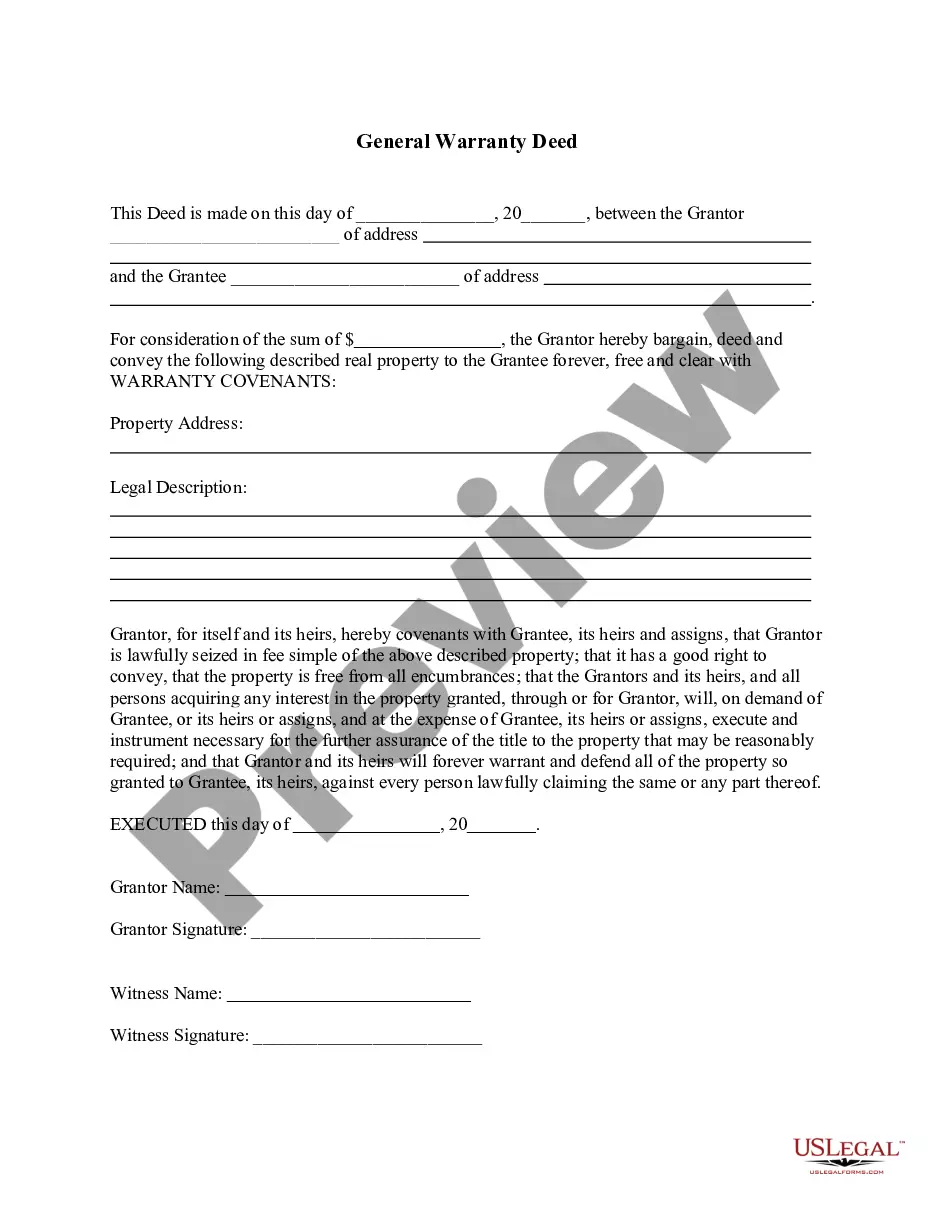
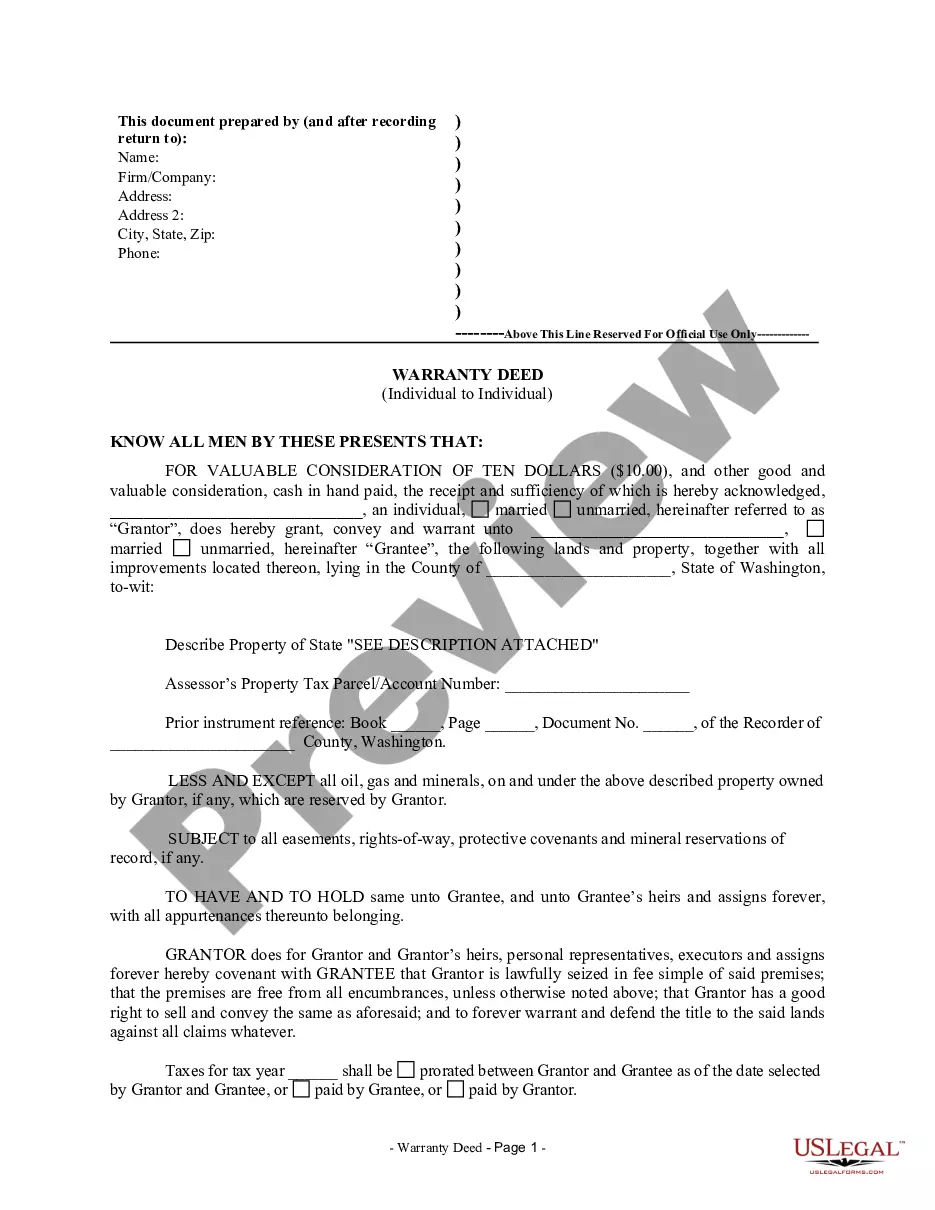
The Warranty Deed Releasing Life Estate is a legal document used to transfer property ownership from one individual (the Grantor) to another individual (the Grantee). In this deed, the Grantor conveys their life estate interest in a property, allowing the Grantee to assume full rights and responsibilities associated with the property. This form is essential for ensuring that the life estate is properly terminated, distinguishing it from other forms of deeds that may not address life estates specifically.
Main sections of this form
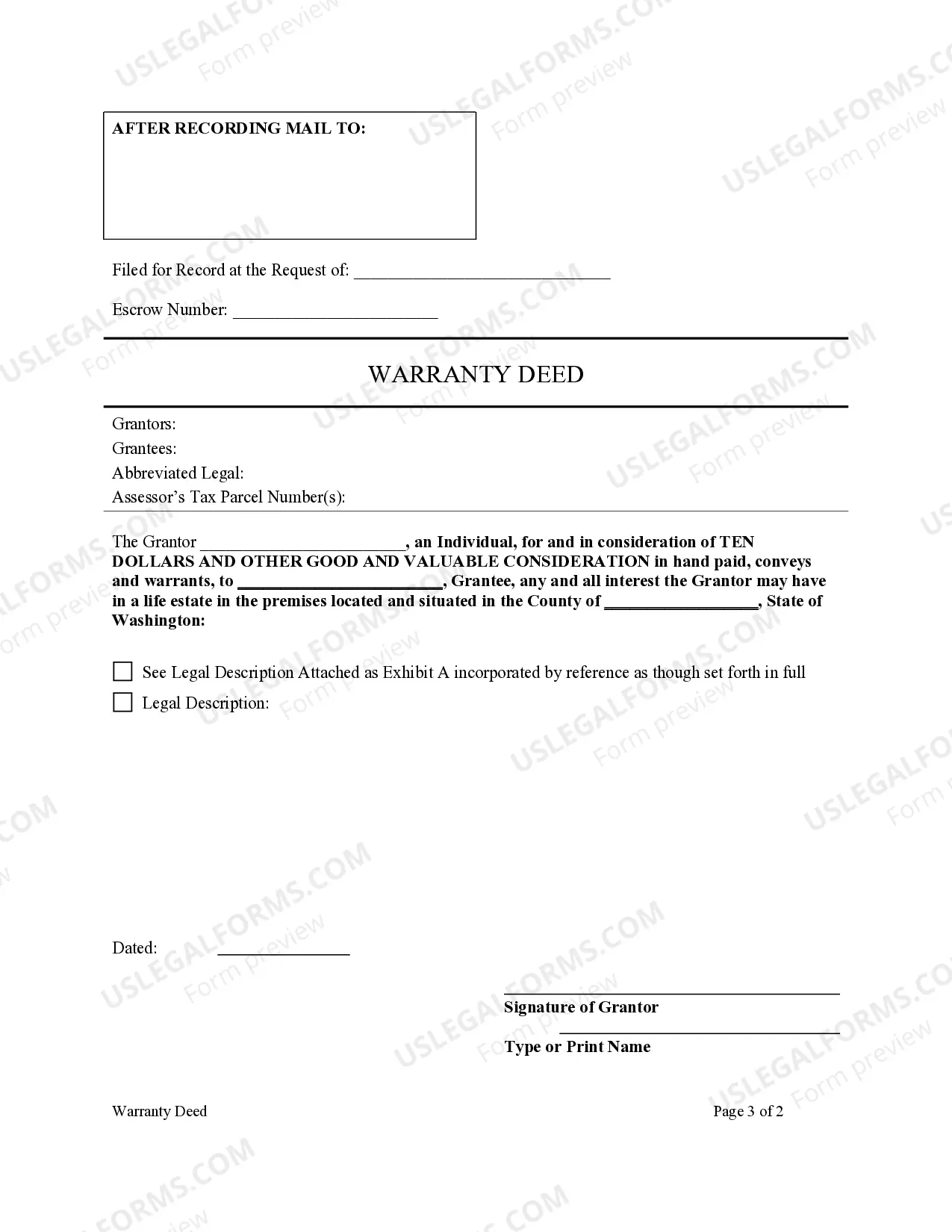
- Parties involved: Identifies the Grantor and Grantee of the deed.
- Property description: Details the property being transferred with a legal description.
- Life estate clause: States the release of the Grantor's life estate to the Grantee.
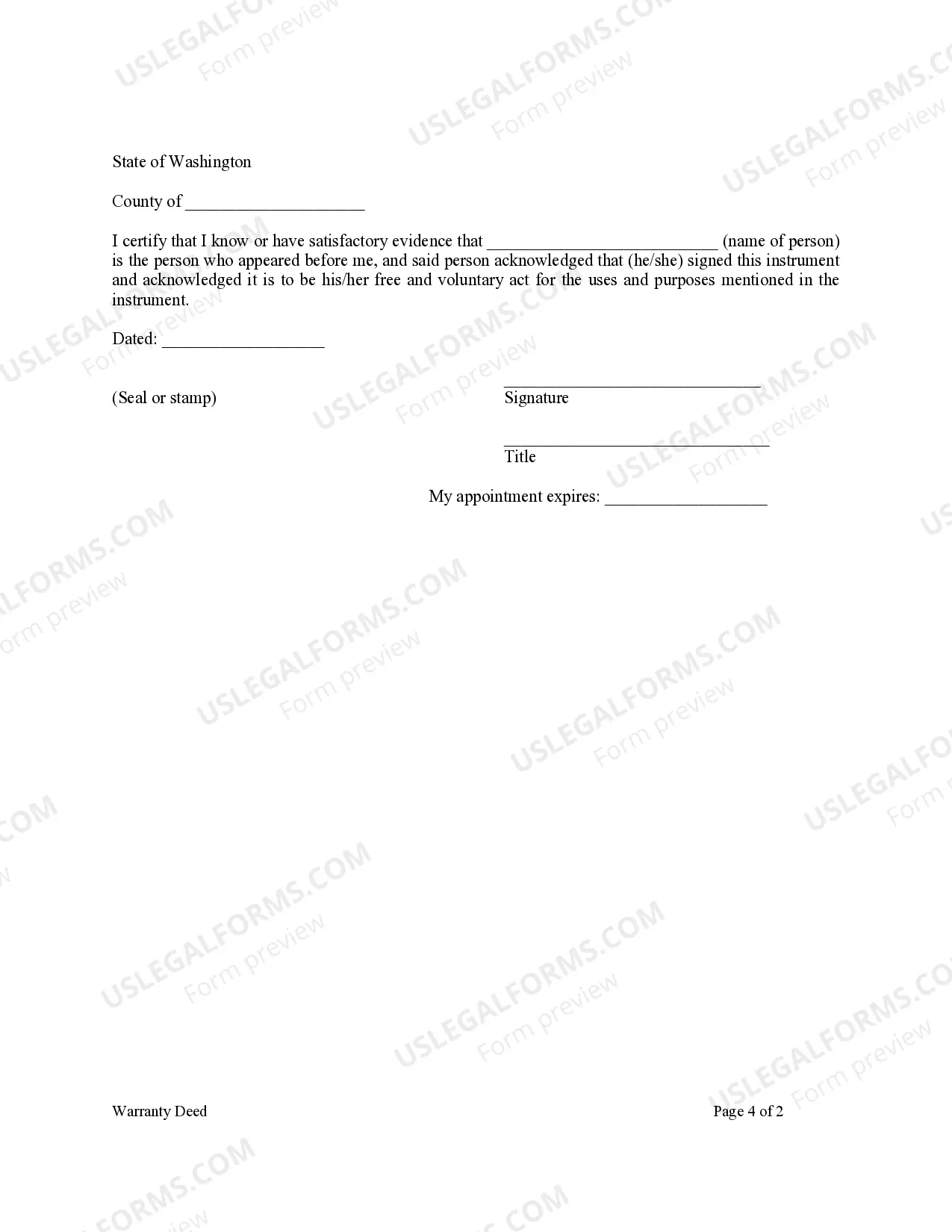
- Notarization section: Provides a space for a notary public to validate the deed.
- Date field: Specifies the date the deed is executed.



When to use this form
This form should be used when an individual who holds a life estate wishes to transfer their interest in the property to another individual. Common scenarios include the Grantor wanting to gift their property to a family member, or to finalize ownership arrangements after the Grantor's death. It ensures that the property is legally recognized as being fully owned by the Grantee without ongoing claims from the Grantor.
Who needs this form
Eligibility to use this form includes:
- Individuals holding a life estate seeking to transfer ownership.
- Family members or heirs looking to finalize property transfers.
- Anyone involved in estate planning or property management where life estates are applicable.
Completing this form step by step
- Identify the Grantor: Enter the full name of the individual transferring the life estate.
- Enter the Grantee's information: Provide the full name of the individual receiving the life estate.
- Specify the property: Include the legal description of the property being transferred.
- Include the effective date: Write the date the deed is being executed.
- Seek notarization: Have the document signed in the presence of a notary public for validation.
Does this form need to be notarized?
Notarization is required for this form to take effect. Our online notarization service, powered by Notarize, lets you verify and sign documents remotely through an encrypted video session, available 24/7.
Get your form ready online
Our built-in tools help you complete, sign, share, and store your documents in one place.
Make edits, fill in missing information, and update formatting in US Legal Forms—just like you would in MS Word.
Download a copy, print it, send it by email, or mail it via USPS—whatever works best for your next step.
Sign and collect signatures with our SignNow integration. Send to multiple recipients, set reminders, and more. Go Premium to unlock E-Sign.
If this form requires notarization, complete it online through a secure video call—no need to meet a notary in person or wait for an appointment.
We protect your documents and personal data by following strict security and privacy standards.
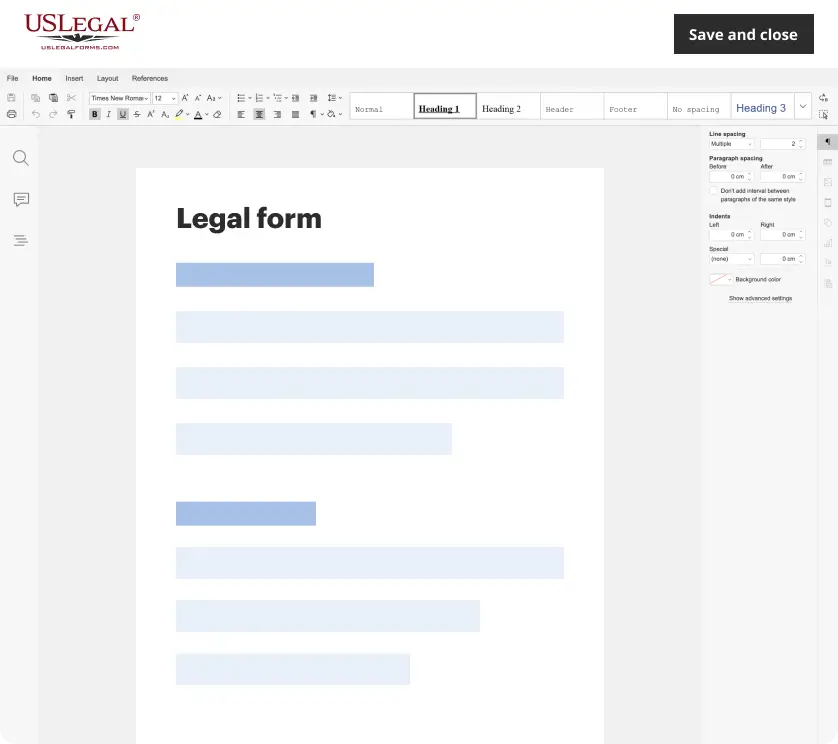
Make edits, fill in missing information, and update formatting in US Legal Forms—just like you would in MS Word.
Download a copy, print it, send it by email, or mail it via USPS—whatever works best for your next step.
Sign and collect signatures with our SignNow integration. Send to multiple recipients, set reminders, and more. Go Premium to unlock E-Sign.

If this form requires notarization, complete it online through a secure video call—no need to meet a notary in person or wait for an appointment.
We protect your documents and personal data by following strict security and privacy standards.
Common mistakes
- Failing to include the full legal description of the property.
- Not having the deed notarized, leading to potential legal issues.
- Leaving out necessary signatures from either the Grantor or Grantee.
- Confusing life estate terms with other property rights.
Why complete this form online
- Convenience: Complete and download the form from the comfort of your home.
- Editability: Easily fill out the document using your computer.
- Reliability: Forms are drafted to comply with state laws, ensuring legal validity.
Looking for another form?
Form popularity
FAQ
This life estate deed is a document that transfers ownership of real property, while reserving access and use of the property for the duration of the grantor's life. It allows the original owner (grantor) to remain on the premises with full access to and benefits from the property.
In order to make the Warranty Deed legally binding, the Seller needs to sign it front of a notary public. Then signed and notarized deed must be filed at the city or county office for recording property documents. Before filing with this office all previously billed property taxes must be paid in full.
The date the deed was made; The name of the party granting the life estate and their address; The name of the grantee and their address; The address and a legal description of the property that is subject to the life estate;
The Washington transfer-on-death deed form allows property to be automatically transferred to a new owner when the current owner dies, without the need to go through probate. It also gives the current owner retained control over the property, including the right to change his or her mind about the transfer.
Typically, the lender will provide you with a copy of the deed of trust after the closing. The original warranty deeds are often mailed to the grantee after they are recorded. These are your original copies and should be kept in a safe place, such as a fireproof lockbox or a safe deposit box at a financial institution.
A life estate deed permits the property owner to have full use of their property until their death, at which point the ownership of the property is automatically transferred to the beneficiary.
A person owns property in a life estate only throughout their lifetime. Beneficiaries cannot sell property in a life estate before the beneficiary's death. One benefit of a life estate is that property can pass when the life tenant dies without being part of the tenant's estate.
Example of creation of a life estate: I grant to my mother, Molly McCree, the right to live in and/or receive rents from my real property, until her death, or I give my daughter, Sadie Hawkins, my real property, subject to a life estate to my mother, Molly McCree. This means a woman's mother, Molly, gets to live in
With a life estate deed, the remainderman's ownership interest vests when the deed is signed and delivered (or recorded in the public record). Accordingly, the children's ownership interest in the property vested upon their father signing the deed and recording it in the public records, or the year 2000.