Vermont Bylaws for Corporation
Overview of this form
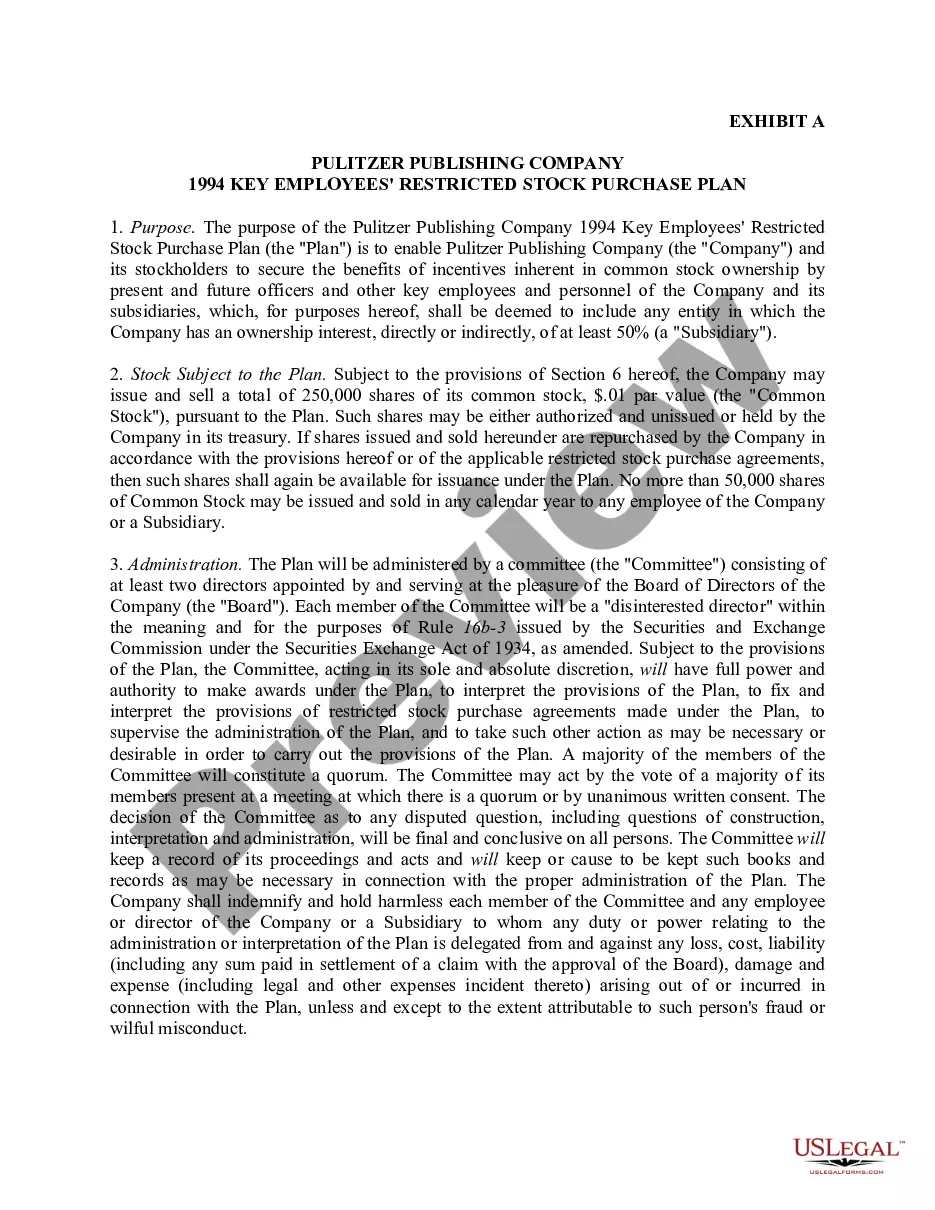
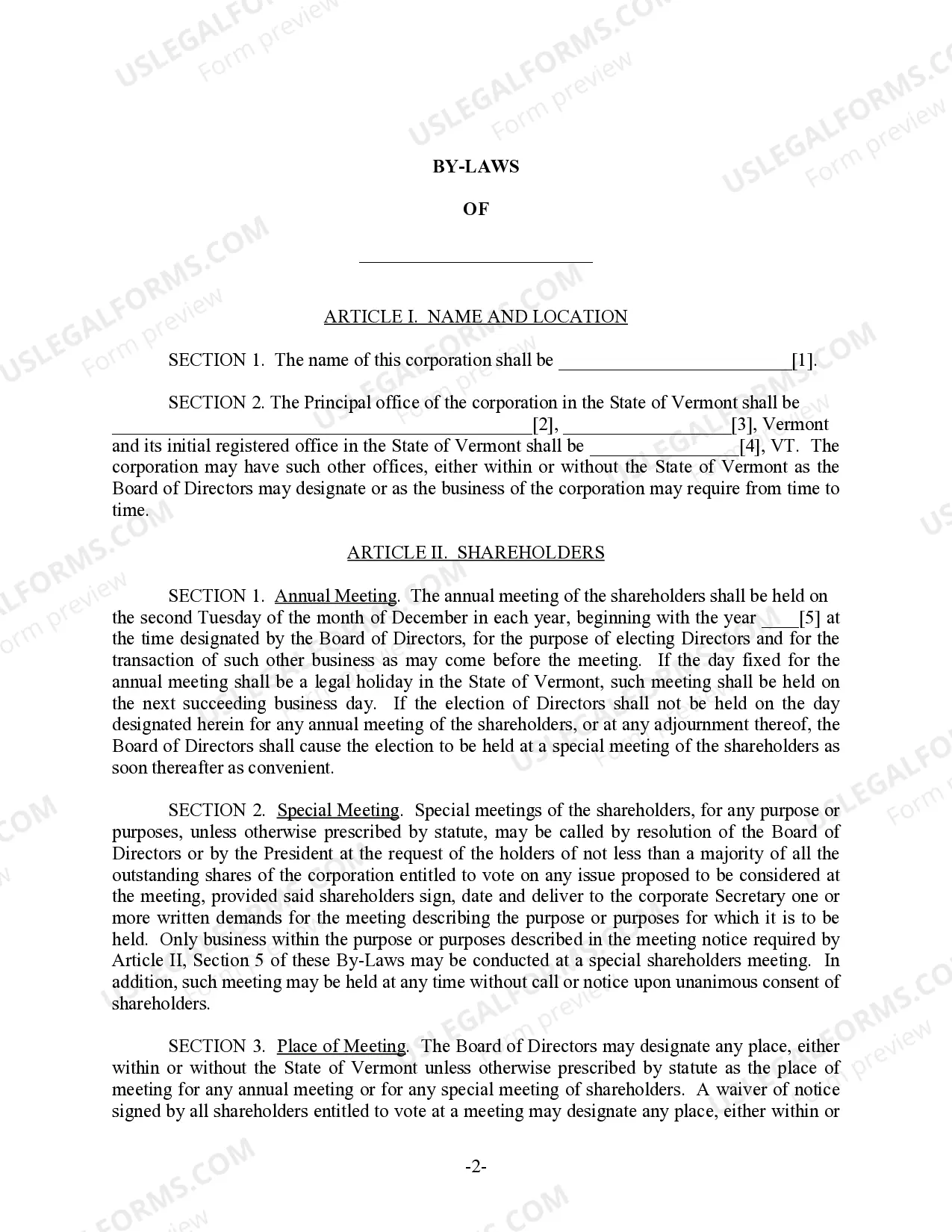
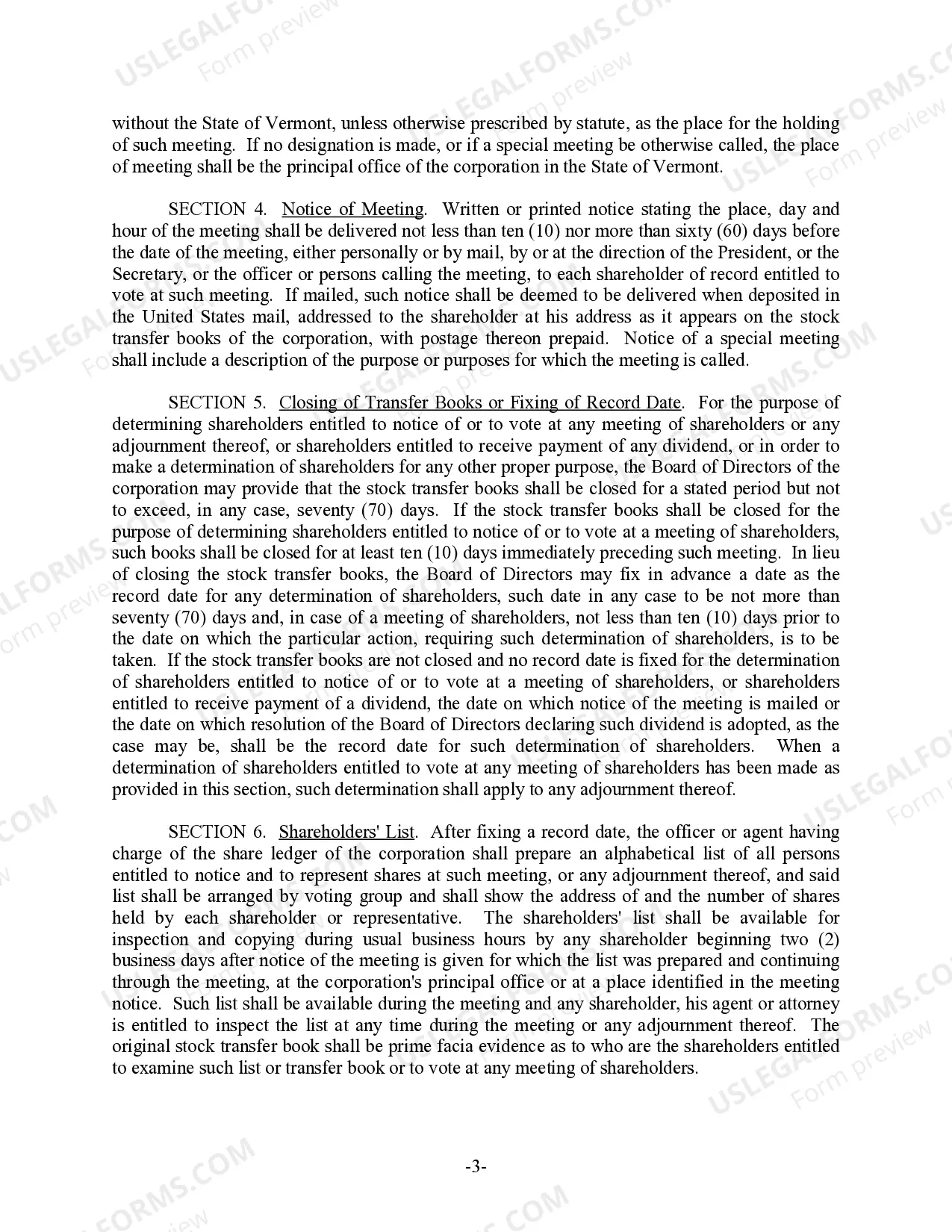
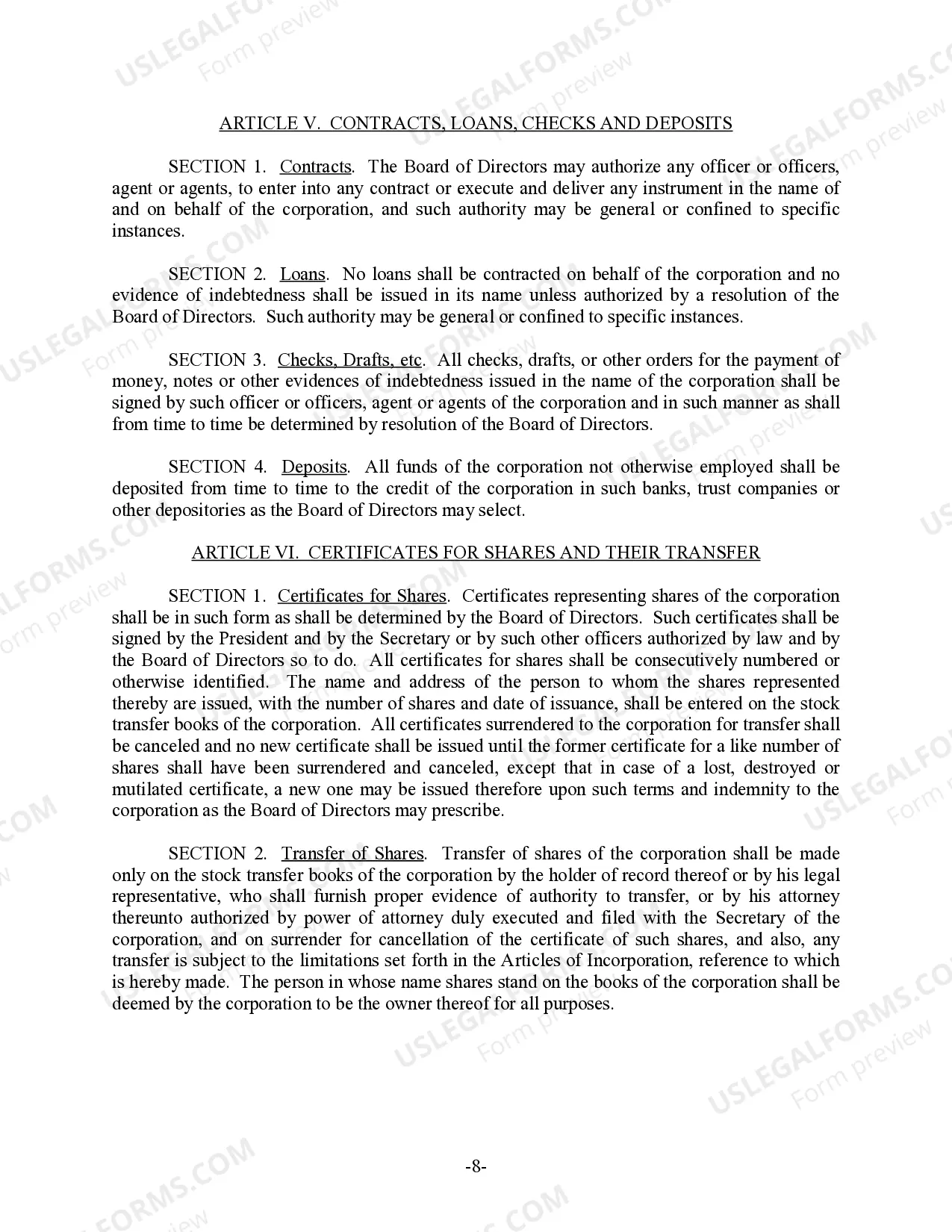
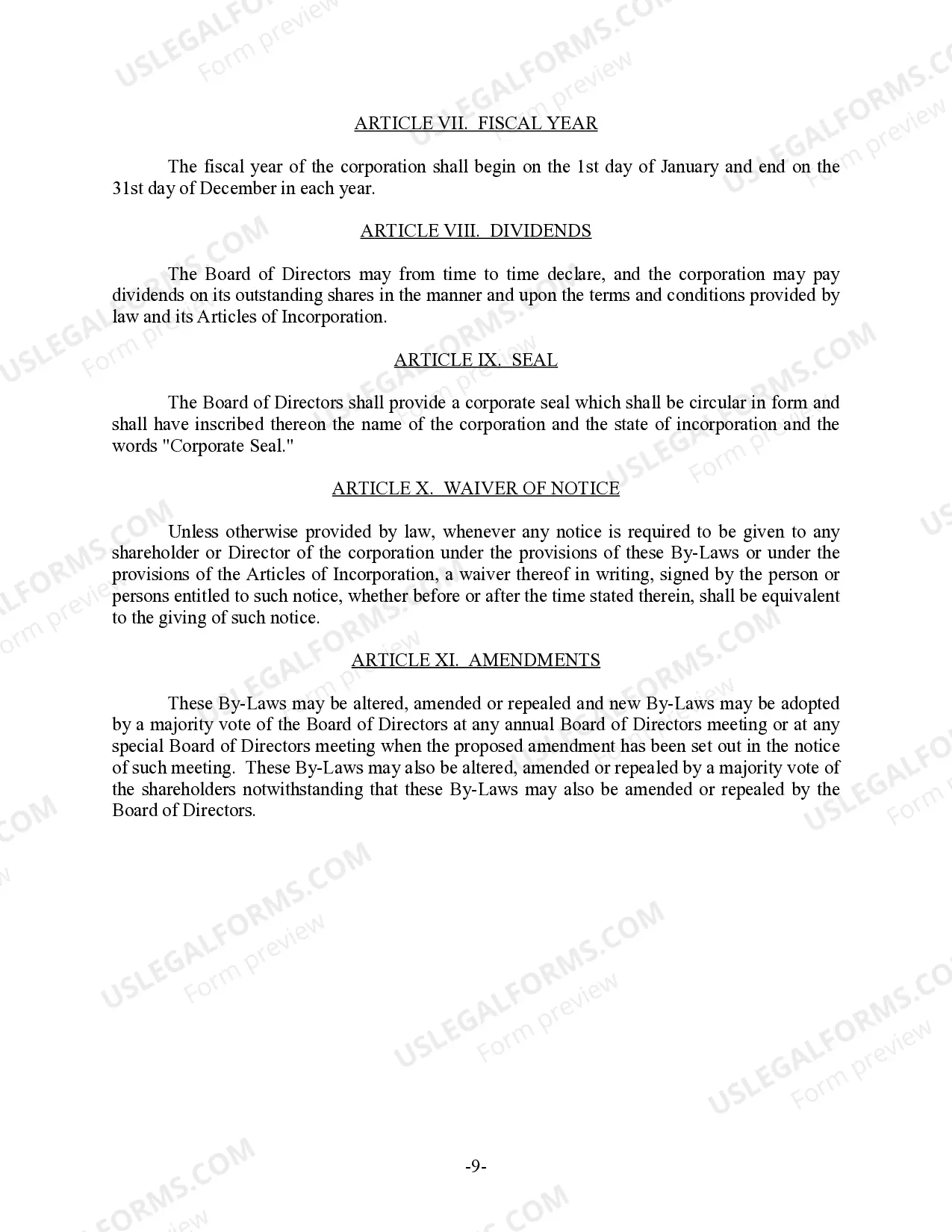
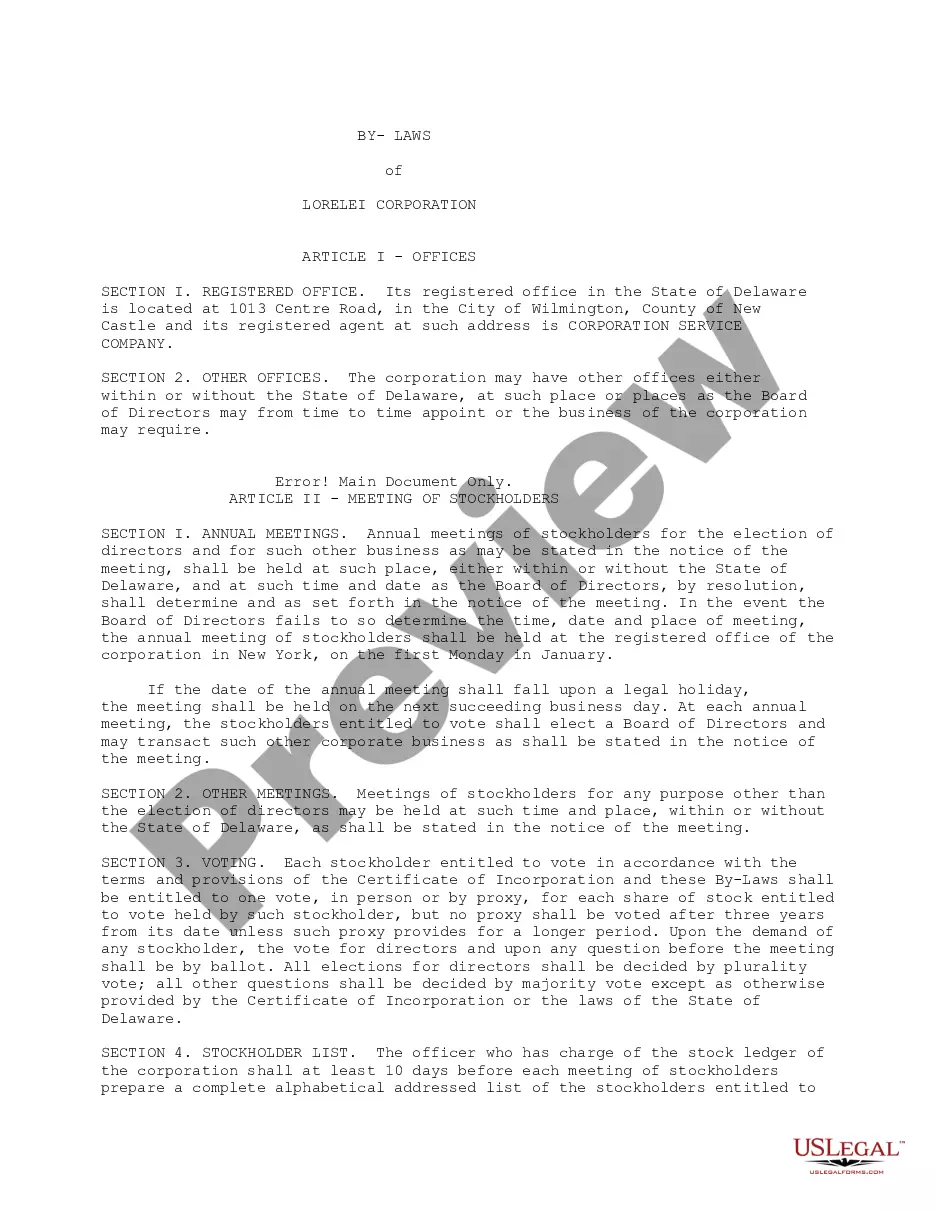
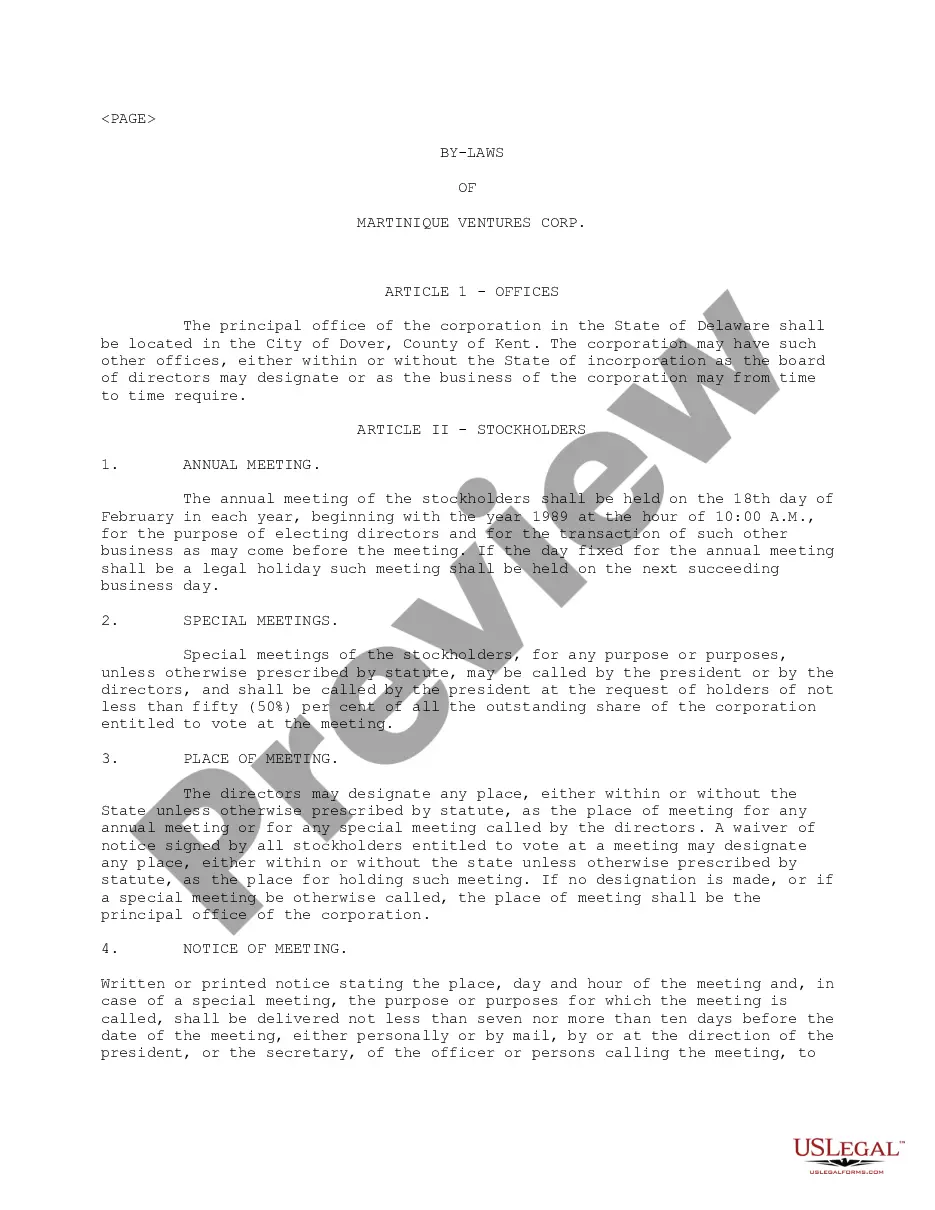
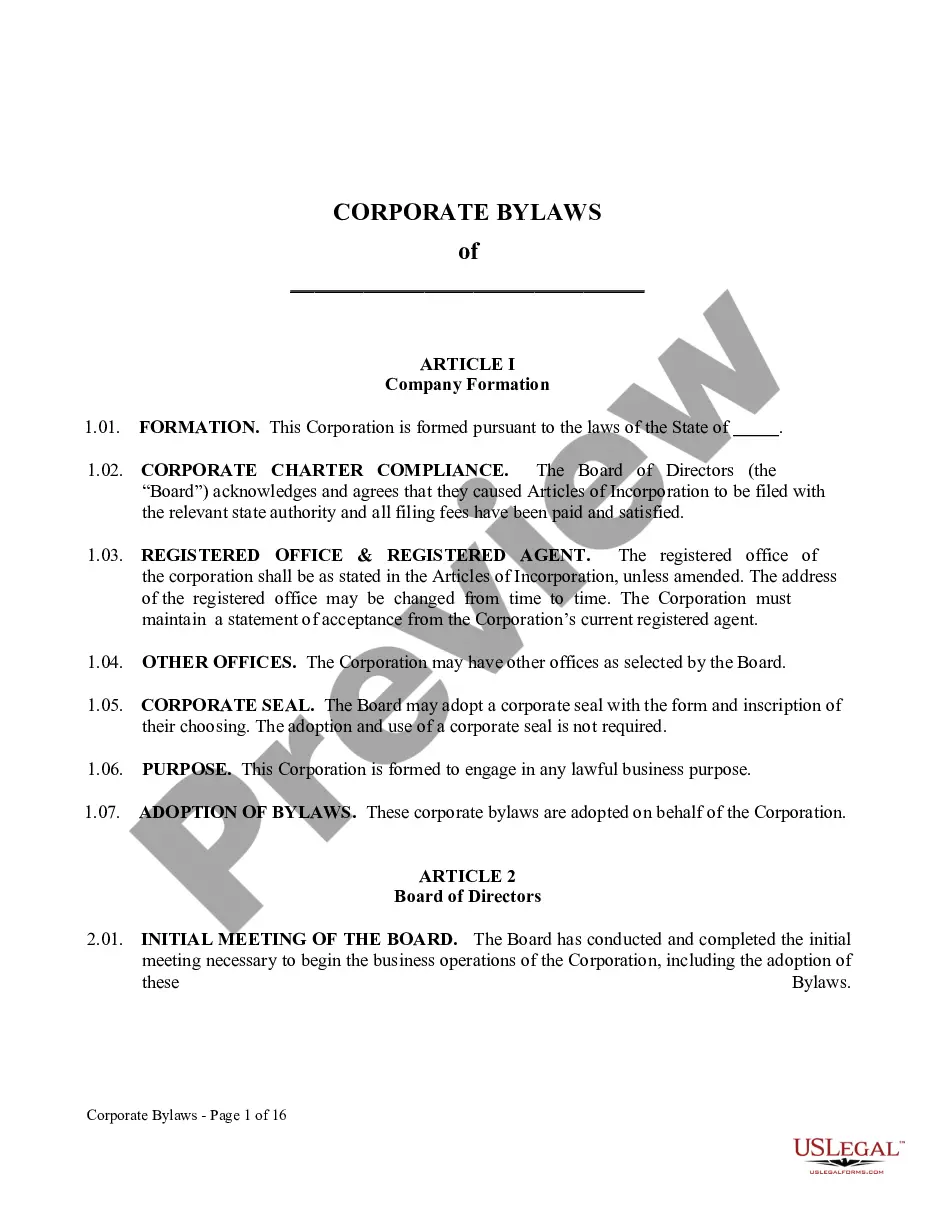
The Vermont Bylaws for Corporation is a legal document that outlines the operational framework and governance structure of a corporation in Vermont. This form establishes rules regarding shareholder meetings, the duties of officers and directors, and the management of corporate affairs. Unlike other organizational forms, the bylaws are specific to the corporation's internal operations, ensuring compliance with state laws while providing flexibility for management practices.
Key components of this form
- Name and location of the corporation
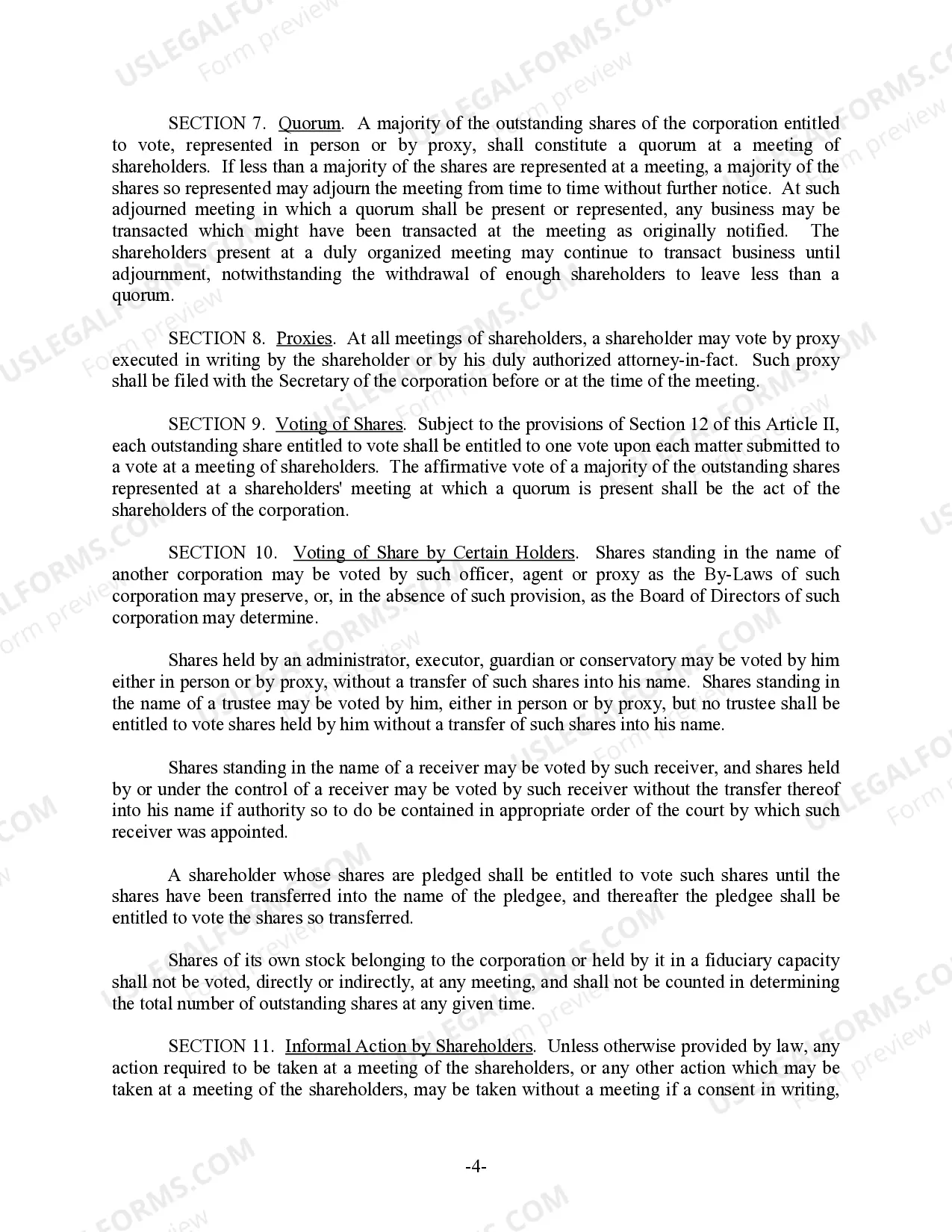
- Annual meeting schedule and special meeting procedures
- Quorum requirements for meetings
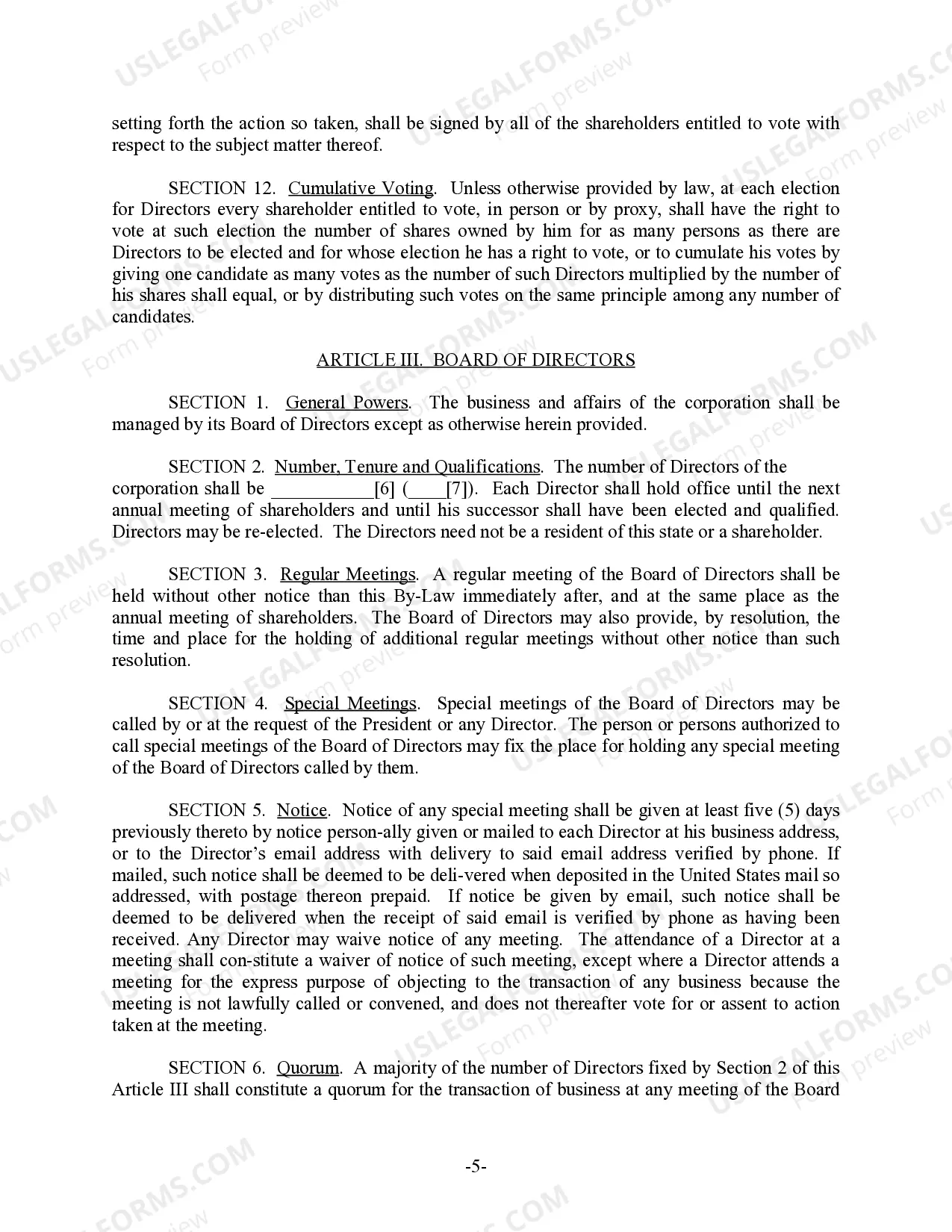
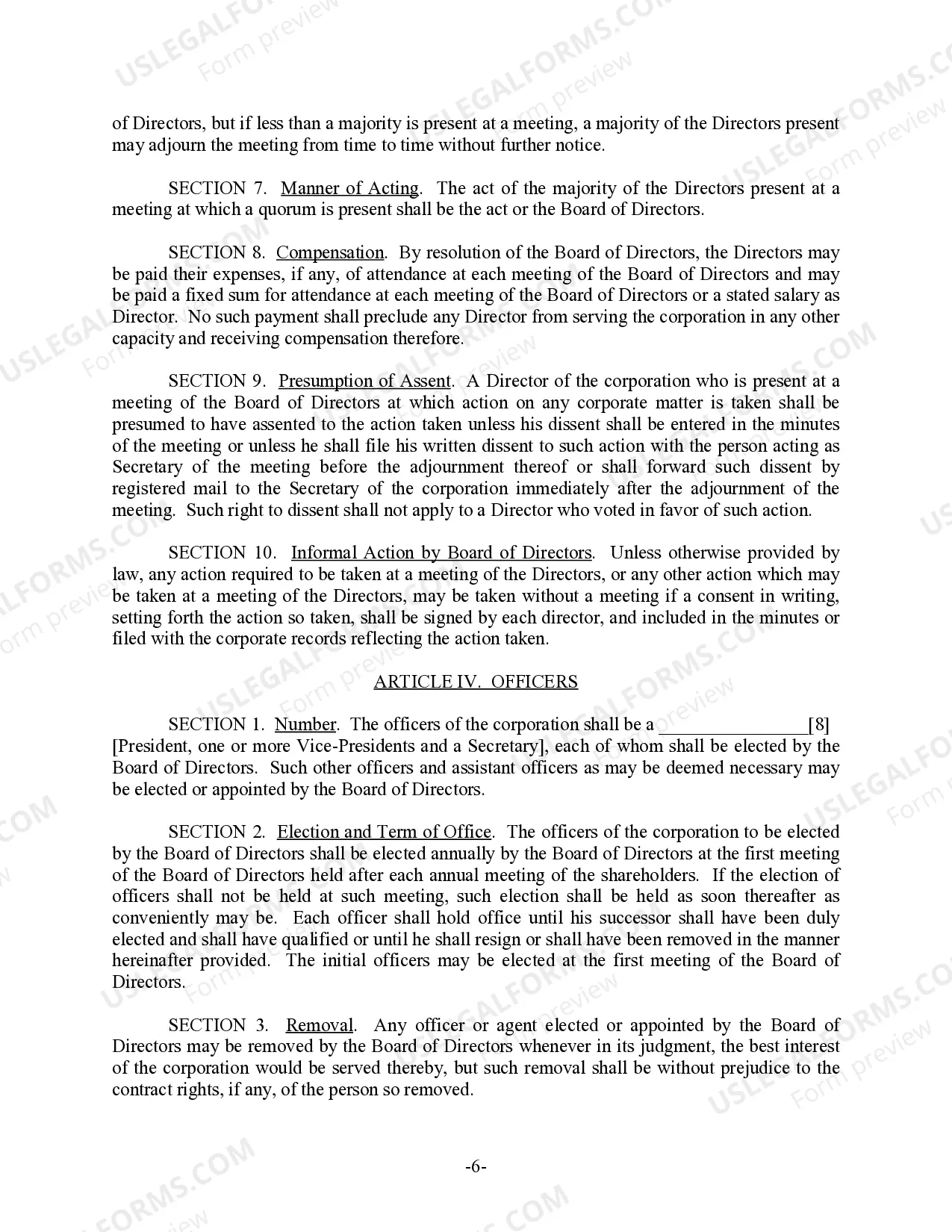
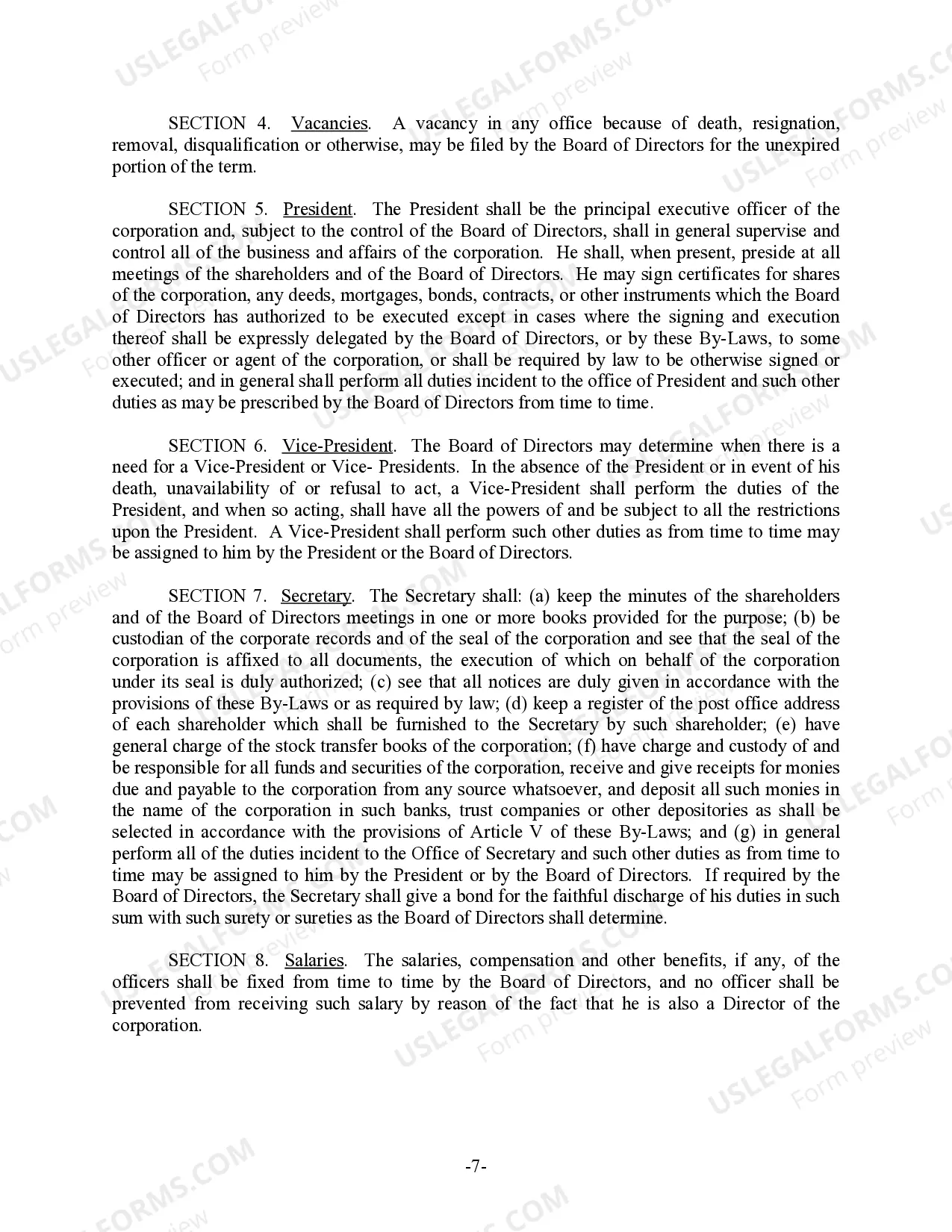
- Director and officer duties and powers
- Shareholder voting processes and rights
- Amendment procedures for bylaws

When to use this document
This form is essential when establishing a corporation in Vermont. Use it to define the structure and internal rules that will govern the corporation's operations. It is applicable when forming a new corporation or revising existing bylaws to reflect changes in corporate governance or requirements.
Who this form is for
This form is intended for:
- Newly established corporations in Vermont
- Corporations looking to update their existing bylaws
- Business owners and directors seeking to ensure legal compliance
- Legal professionals assisting clients in corporate governance matters
Steps to complete this form
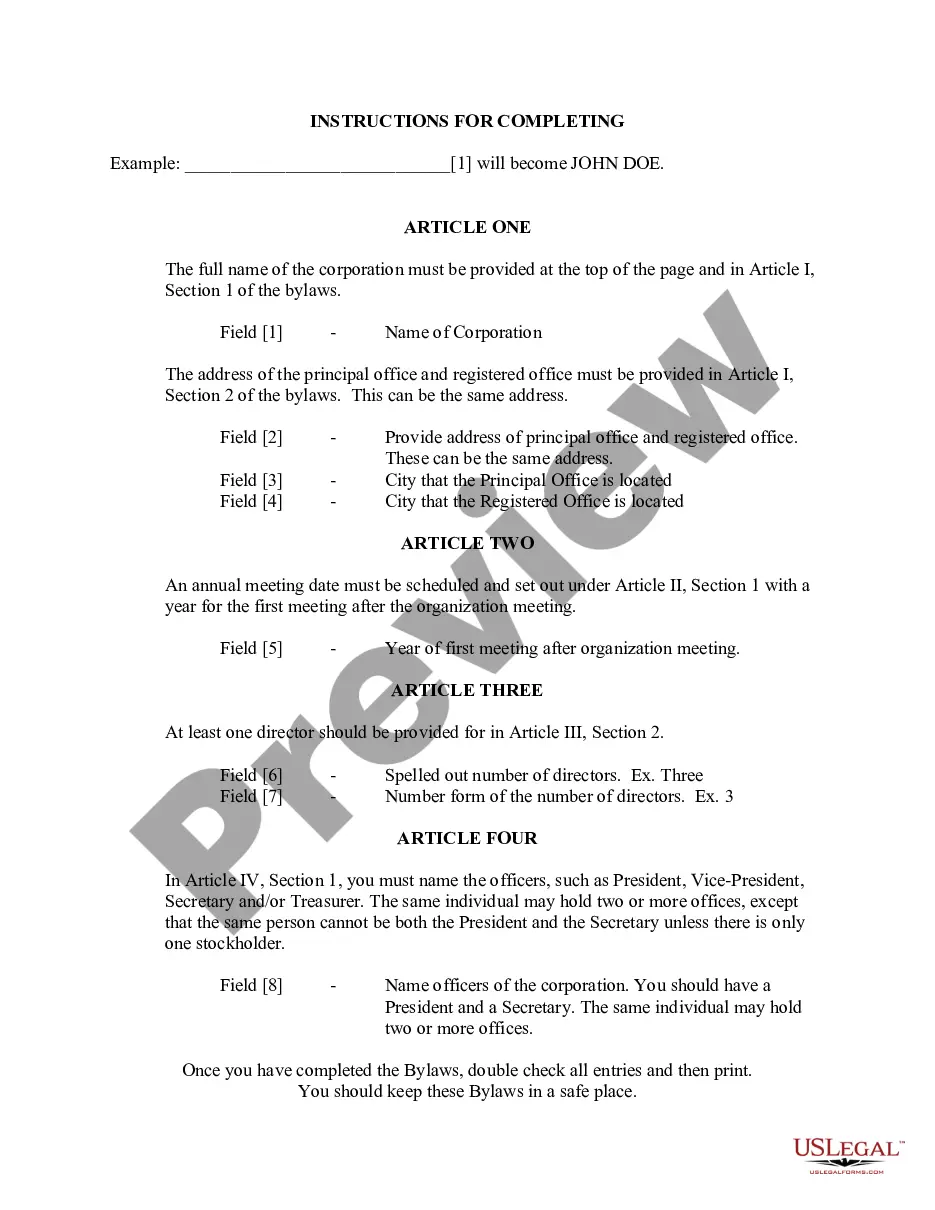
- Identify the full name of the corporation and enter it at the top of the document.
- Provide the principal office address and registered office address of the corporation.
- Set the date for the annual shareholders meeting and specify the year for the first meeting.
- List the number of directors and their names in the respective sections.
- Name the officers of the corporation, ensuring to include at least a President and a Secretary.
- Review the completed bylaws for accuracy and maintain copies in a secure location.
Does this form need to be notarized?
This form does not typically require notarization to be legally valid. However, some jurisdictions or document types may still require it. US Legal Forms provides secure online notarization powered by Notarize, available 24/7 for added convenience.
Get your form ready online
Our built-in tools help you complete, sign, share, and store your documents in one place.
Make edits, fill in missing information, and update formatting in US Legal Forms—just like you would in MS Word.
Download a copy, print it, send it by email, or mail it via USPS—whatever works best for your next step.
Sign and collect signatures with our SignNow integration. Send to multiple recipients, set reminders, and more. Go Premium to unlock E-Sign.
If this form requires notarization, complete it online through a secure video call—no need to meet a notary in person or wait for an appointment.
We protect your documents and personal data by following strict security and privacy standards.

Make edits, fill in missing information, and update formatting in US Legal Forms—just like you would in MS Word.

Download a copy, print it, send it by email, or mail it via USPS—whatever works best for your next step.

Sign and collect signatures with our SignNow integration. Send to multiple recipients, set reminders, and more. Go Premium to unlock E-Sign.

If this form requires notarization, complete it online through a secure video call—no need to meet a notary in person or wait for an appointment.

We protect your documents and personal data by following strict security and privacy standards.
Avoid these common issues
- Failing to include all required sections, such as shareholder voting procedures.
- Not providing accurate addresses for the principal and registered offices.
- Neglecting to set or update the date for the annual meeting.
- Overlooking quorum requirements or voting protocols.
Benefits of using this form online
- Convenient access to legally vetted bylaws anytime and anywhere.
- Editable templates allow for customization to fit specific corporate needs.
- Downloadable format enables easy printing and sharing with stakeholders.
What to keep in mind
- The Vermont Bylaws for Corporation establishes crucial governance rules.
- It is essential for legal compliance when forming or amending a corporation.
- Accurate completion and review are critical to prevent errors and ensure validity.
Looking for another form?
Form popularity
FAQ
Put simply, Corporate Bylaws are the internal rules of your organization. They create the structure of your company and help to make sure that it runs smoothly. These fundamental rules will guide how your business will operate so everyoneshareholders, executives, and employeesare on the same page.
Corporate bylaws are the set of rules that govern a corporation's operations. They are legally enforceable as a contract among the members of the corporation.
Bylaws are required when the articles of incorporation do not specify the number of directors in a corporation.Aside from number of directors, all the matters typically covered in the bylaws are otherwise covered by California statute, which would apply in the absence of any contrary lawful bylaw provision.
The bylaws of a corporation are the governing rules by which the corporation operates. Bylaws are created by the board of directors when the corporation is formed.
The basic difference is pretty simple. Articles of Incorporation are public records, Bylaws are not.For a corporation, this document is called Articles of Incorporation and Articles of Organization for a Limited Liability Company (LLC).
The bylaws are the corporation's operating manual; they describe how the corporation is organized and runs its affairs. You do not file the bylaws with the state, but you need to explain the roles of the corporation's participants, and technology can play a role in carrying out the bylaws.
Bylaws generally define things like the group's official name, purpose, requirements for membership, officers' titles and responsibilities, how offices are to be assigned, how meetings should be conducted, and how often meetings will be held.
Taxes. Corporations must file their annual tax returns. Securities. Corporations must issue stock as their security laws and articles of incorporation mandate. Bookkeeping. Board meetings. Meeting minutes. State registration. Licensing.
Corporate bylaws commonly include information that specifies, for example, the number of directors the corporation has, how they will be elected, their qualification, and the length of their terms. It can also specify when, where, and how your board of directors can call and conduct meetings, and voting requirements.