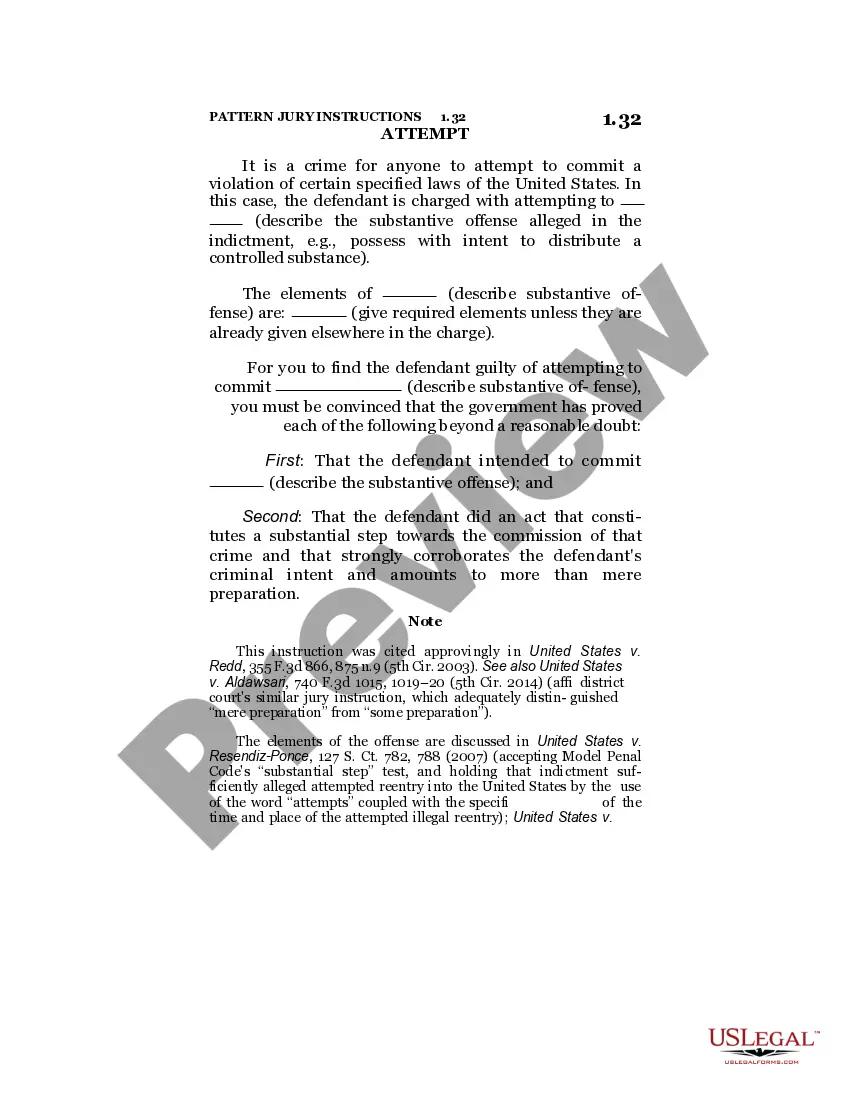
Virginia Deed of Easement to the Government
What is this form?
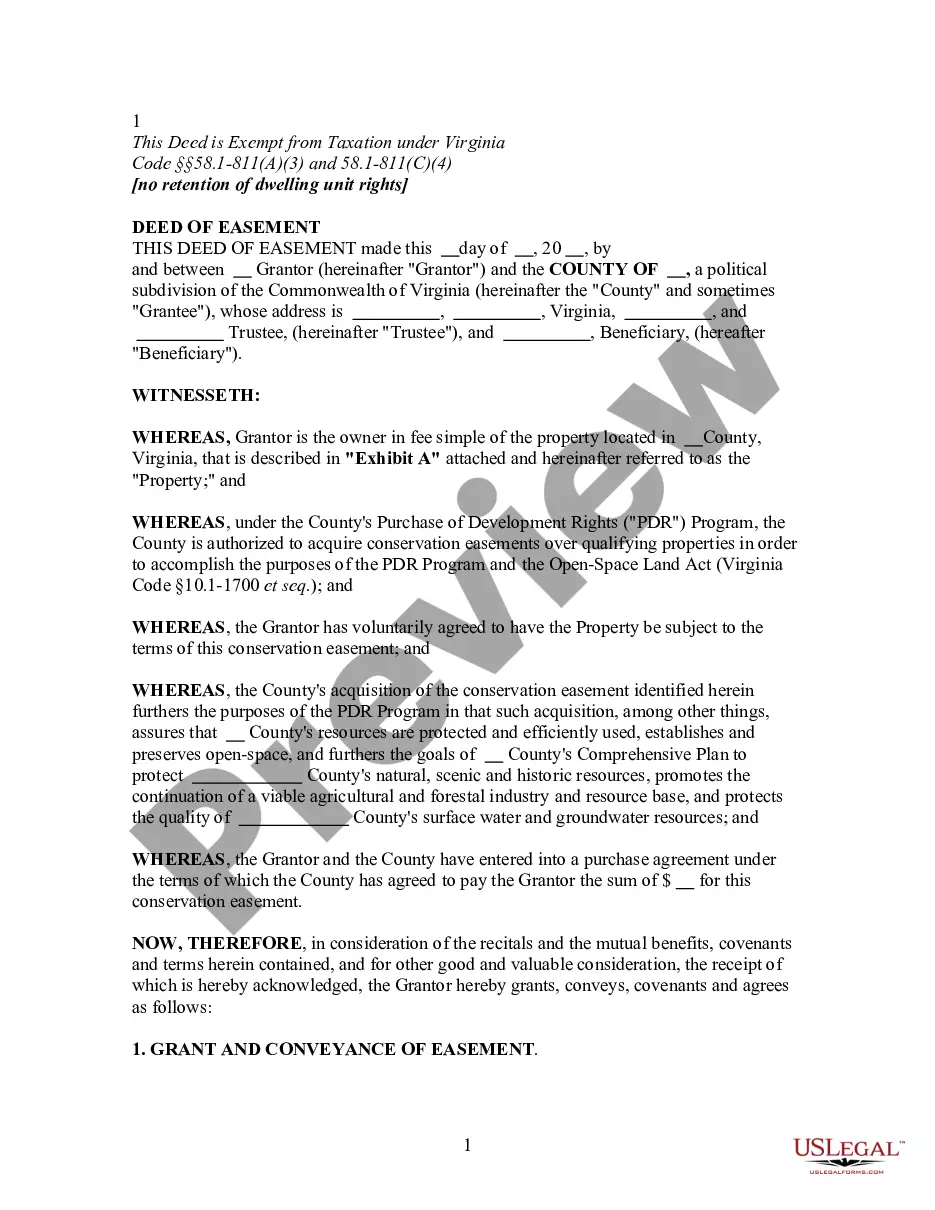
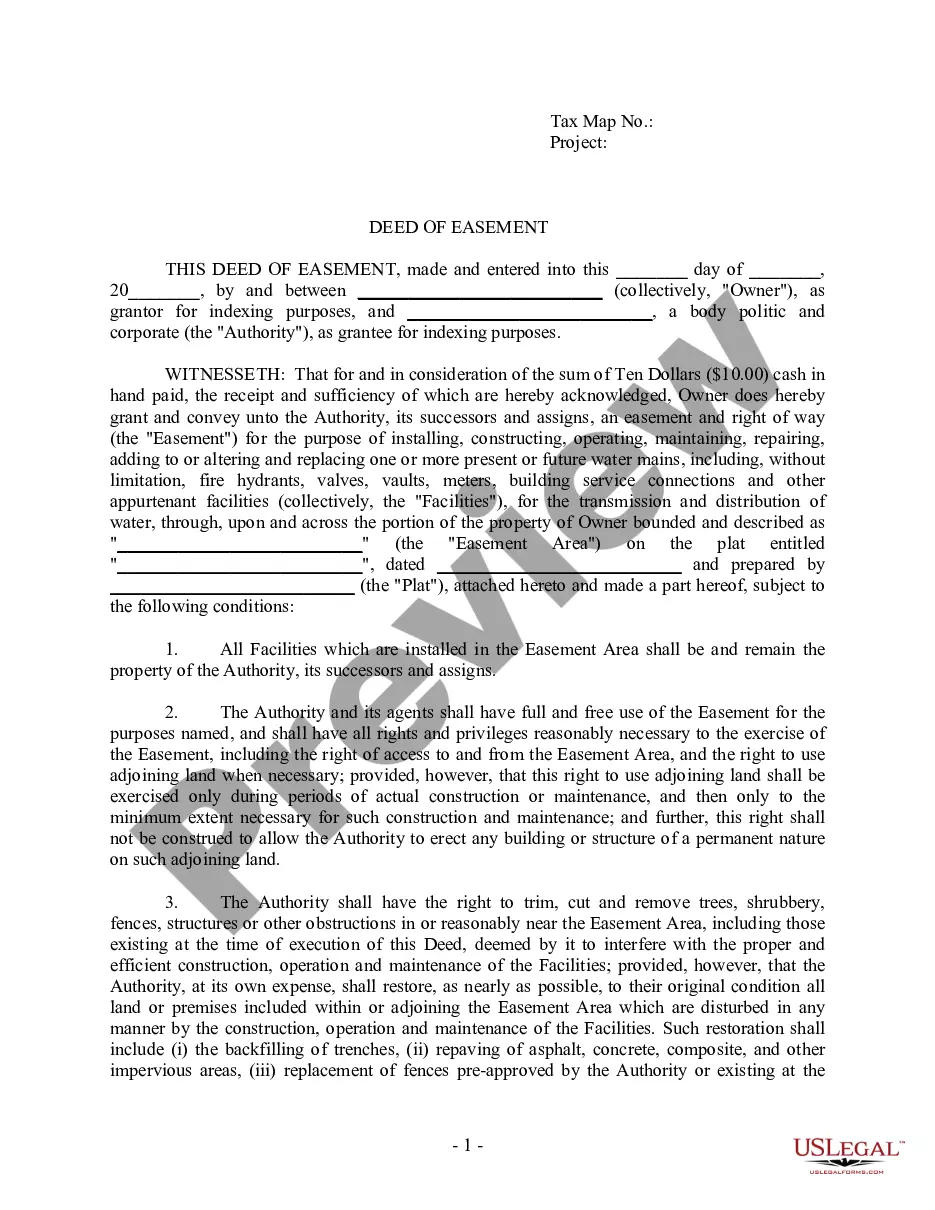
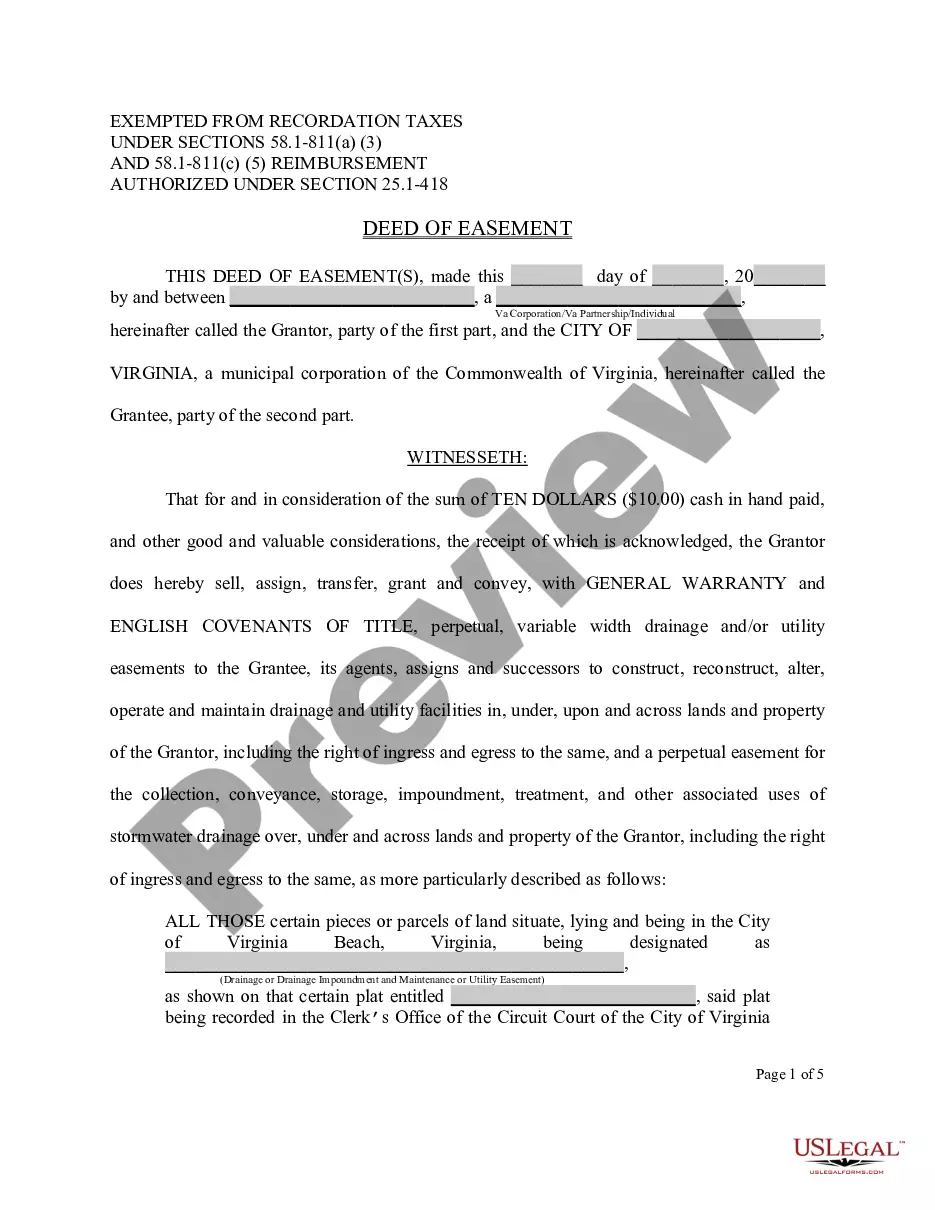
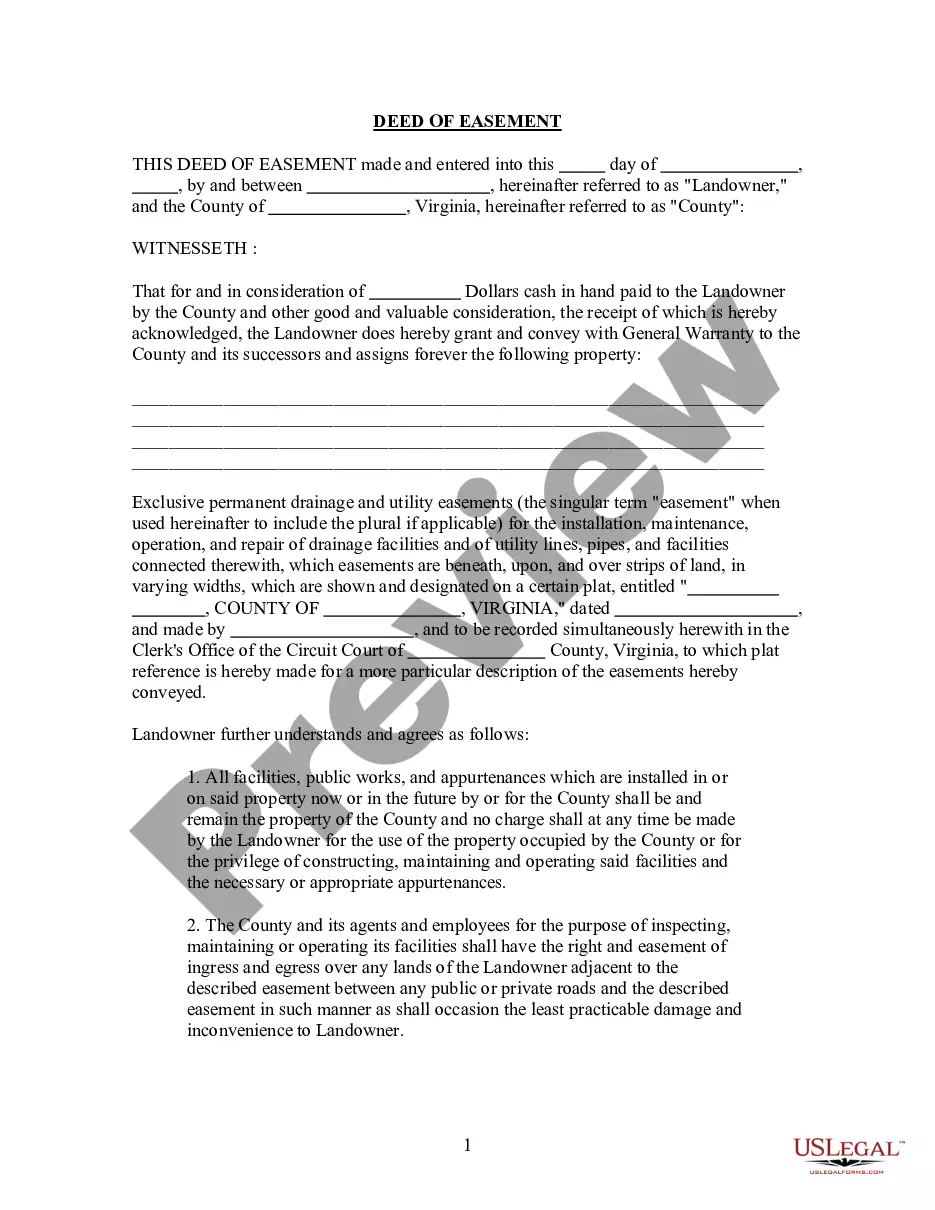
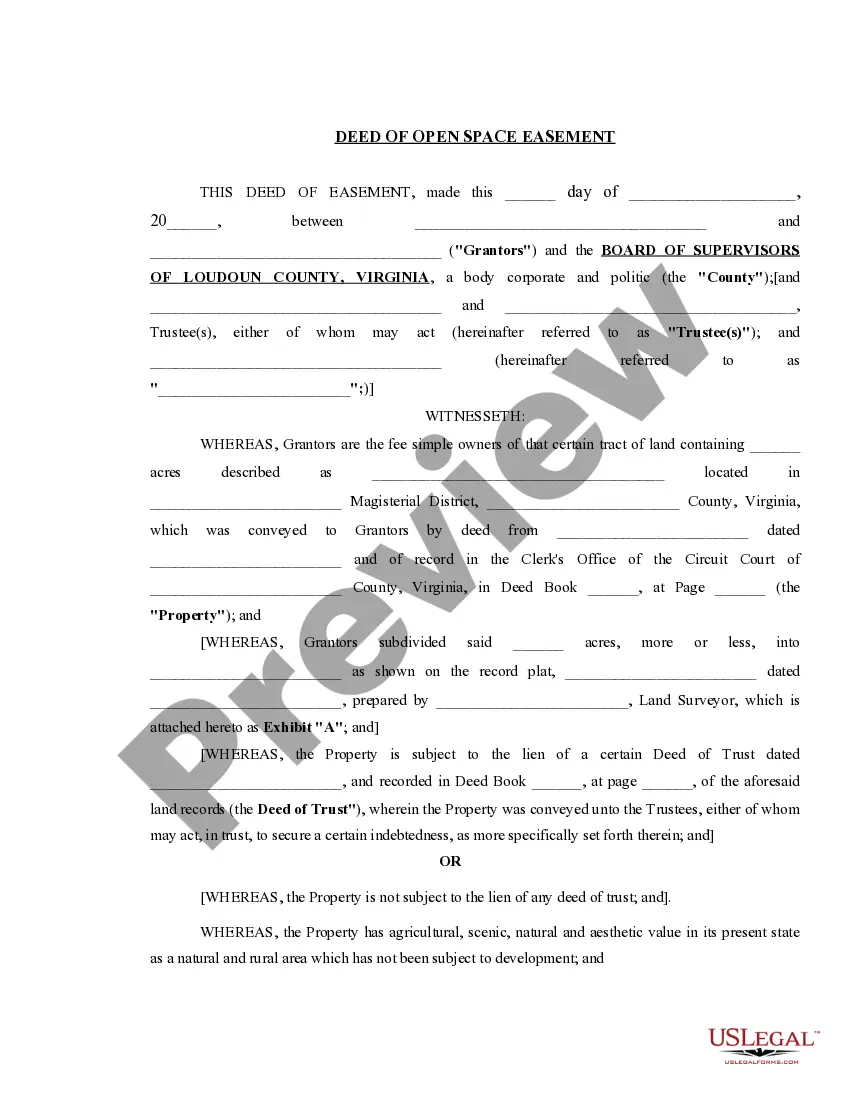
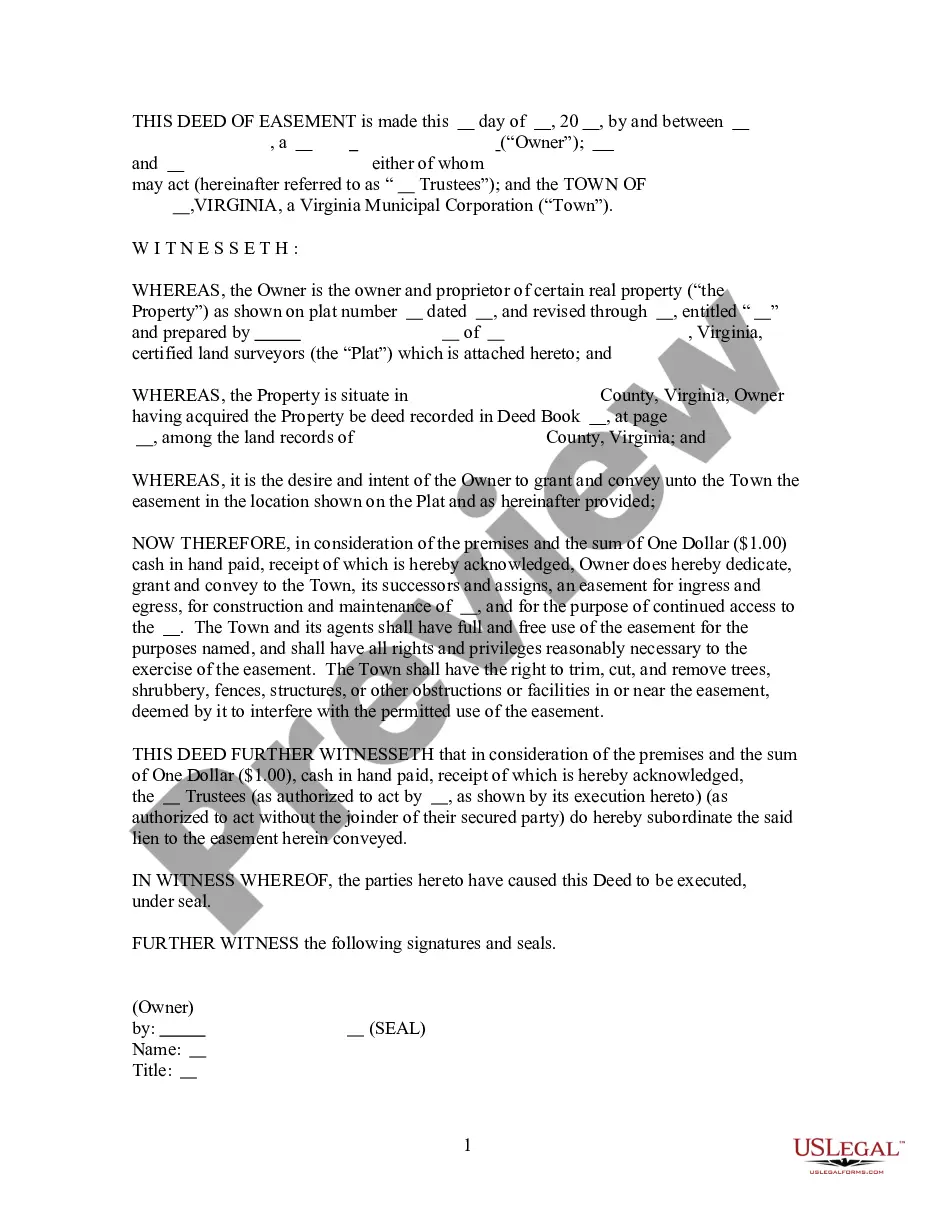
The Deed of Easement to the Government is a legal document that grants a government entity certain rights over private property for conservation purposes. This form is designed to protect the natural and cultural values of the property while restricting its development to maintain its scenic and agricultural character. Unlike general easements, this form specifically applies to properties aimed at preserving open space and aligning with local governmental conservation goals.
Form components explained
- Identification of the Grantor (property owner) and Grantee (government entity).
- Description of the property involved, including its location and purpose.
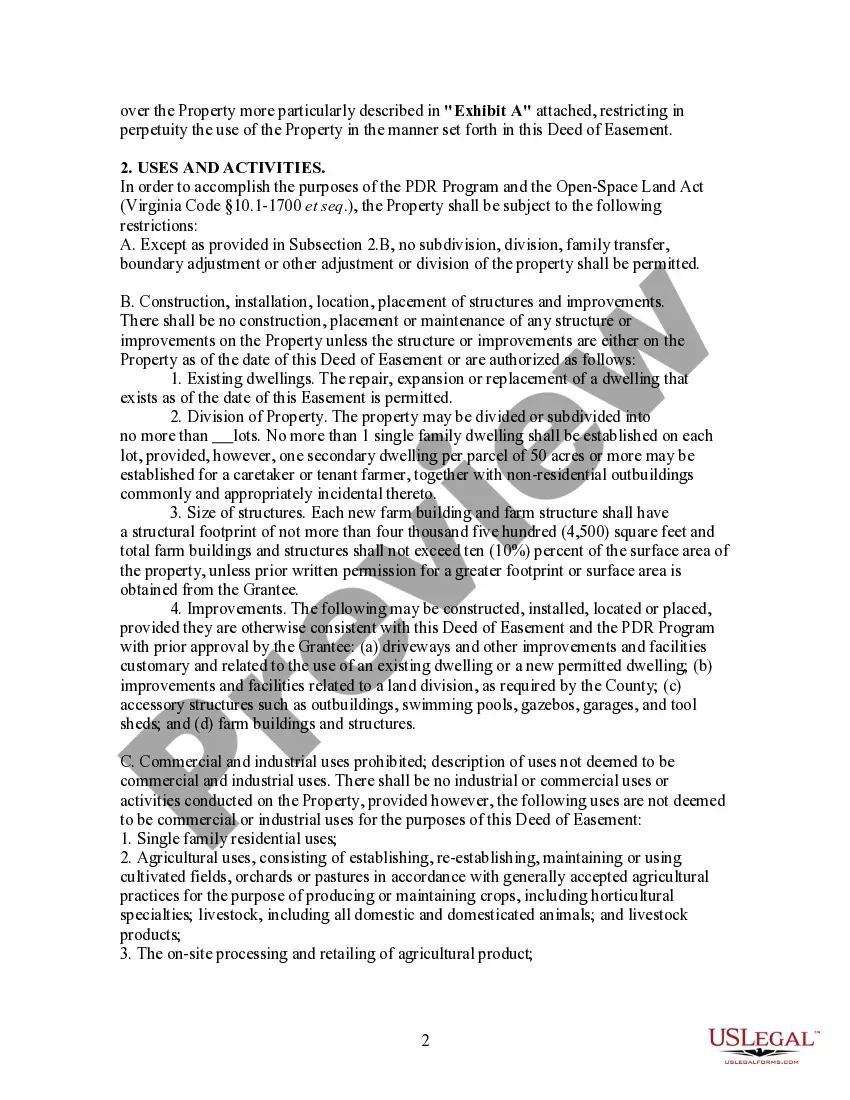
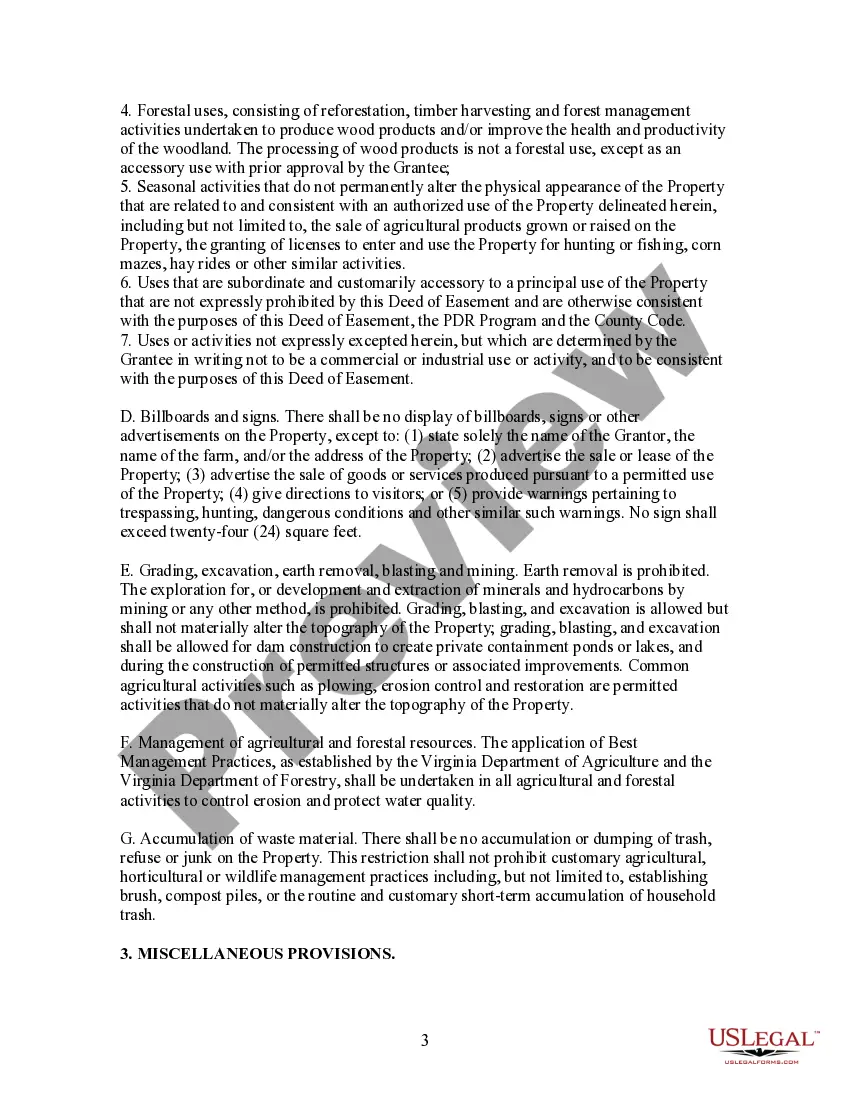
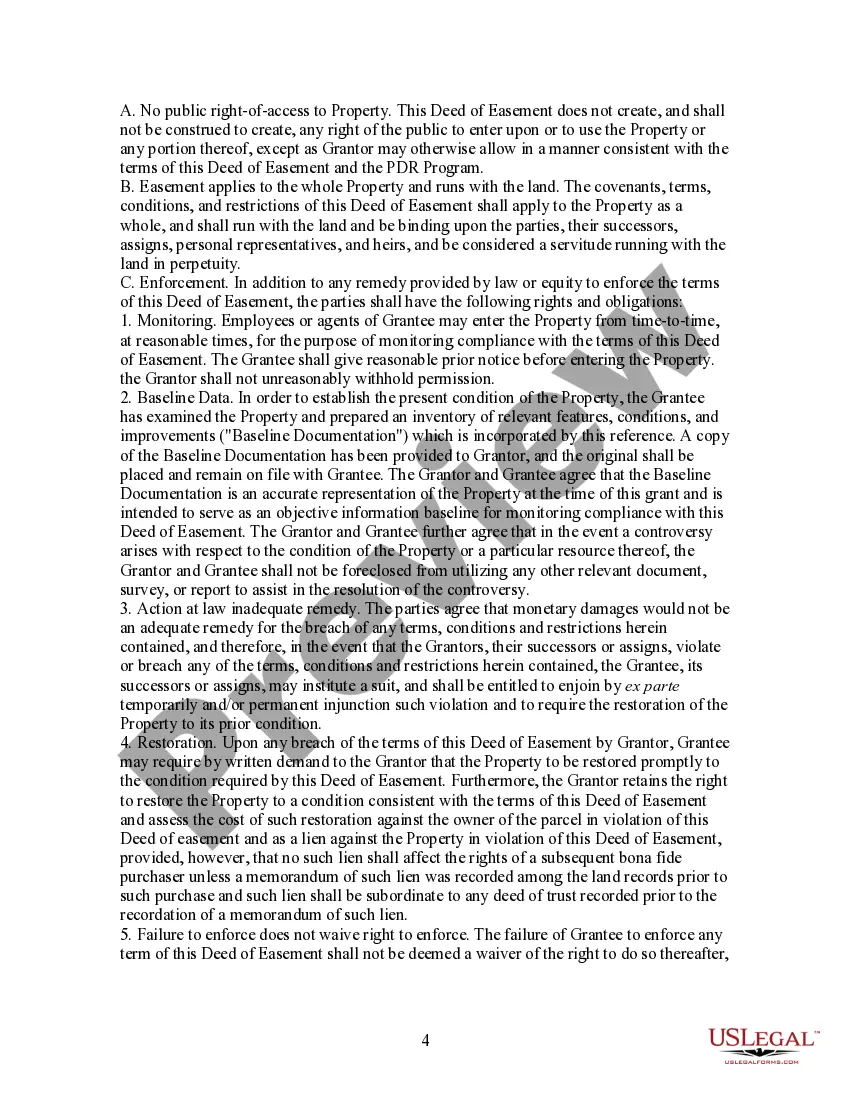
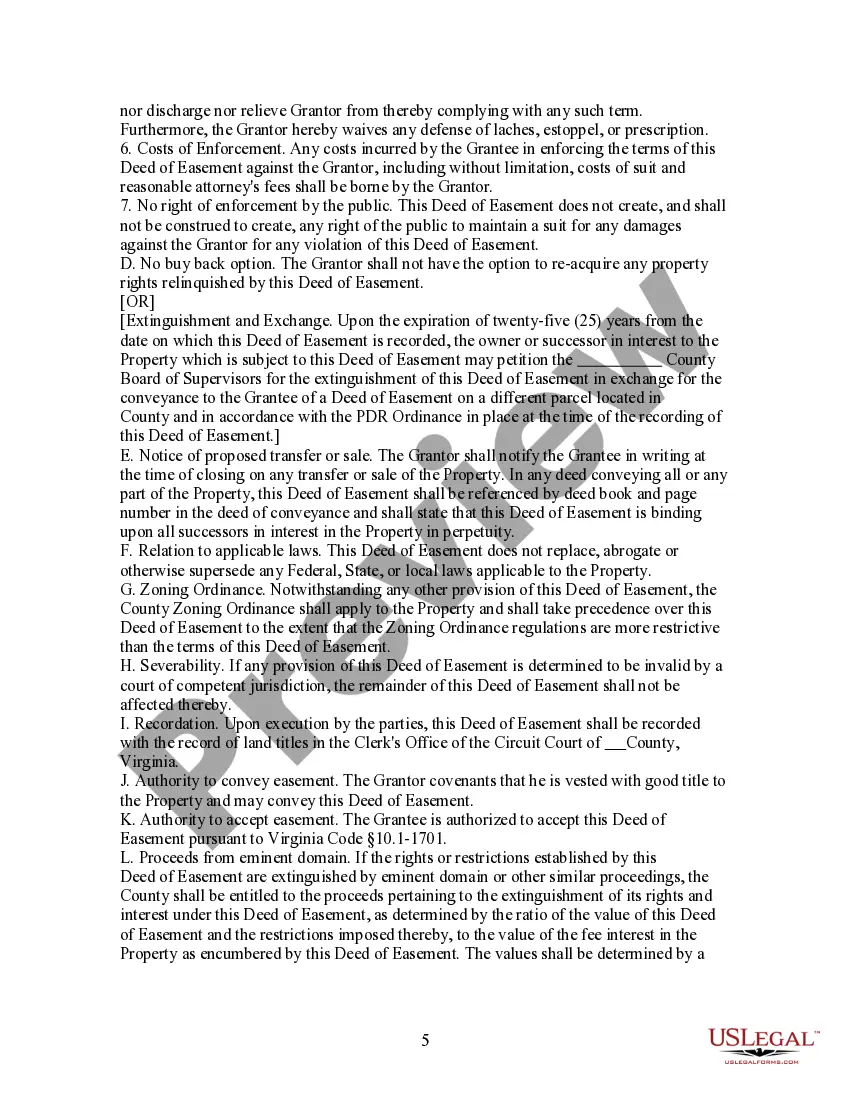
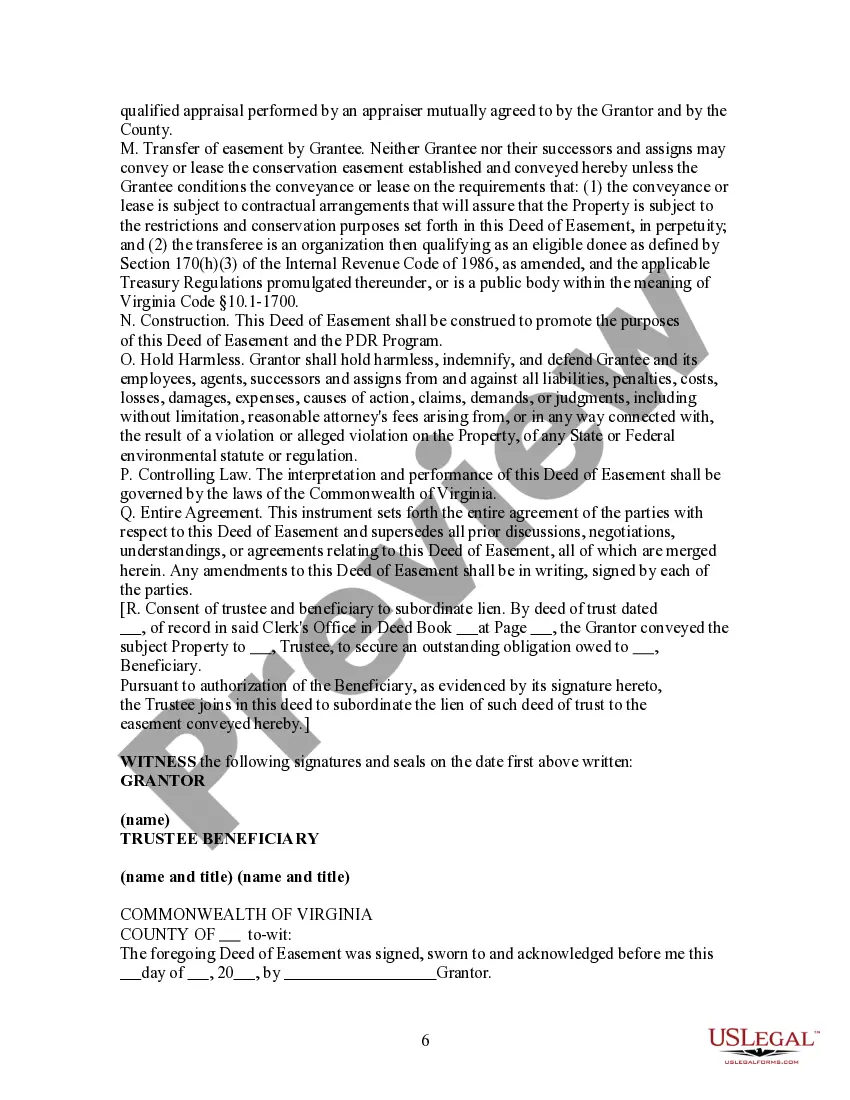
- Details of the conservation easement, including restrictions on future use and development.
- Provisions for monitoring compliance and enforcement of the easement terms.
- Conditions under which existing structures may be maintained or expanded.
Situations where this form applies
This form should be used when a landowner wishes to voluntarily restrict the development of their property to support conservation efforts. It is often utilized in agricultural, woodland, or wetland areas to ensure that they are preserved for future generations. If you are engaged in a Purchase of Development Rights program or similar governmental initiative to protect open space, this form would be appropriate.
Who needs this form
This form is suitable for:
- Property owners wishing to grant conservation easements to local government.
- Farmers and landowners with agricultural properties looking to preserve their land.
- Individuals or organizations involved in conservation efforts in partnership with government entities.
Instructions for completing this form
- Identify the parties involved by entering the names and addresses of the Grantor and Grantee.
- Provide a detailed description of the property, including its location and current conditions.
- Specify the terms of the conservation easement, including any restrictions on property use and potential approvals required.
- Include provisions for monitoring, maintaining compliance, and any associated agreements with the Trustee or Beneficiary.
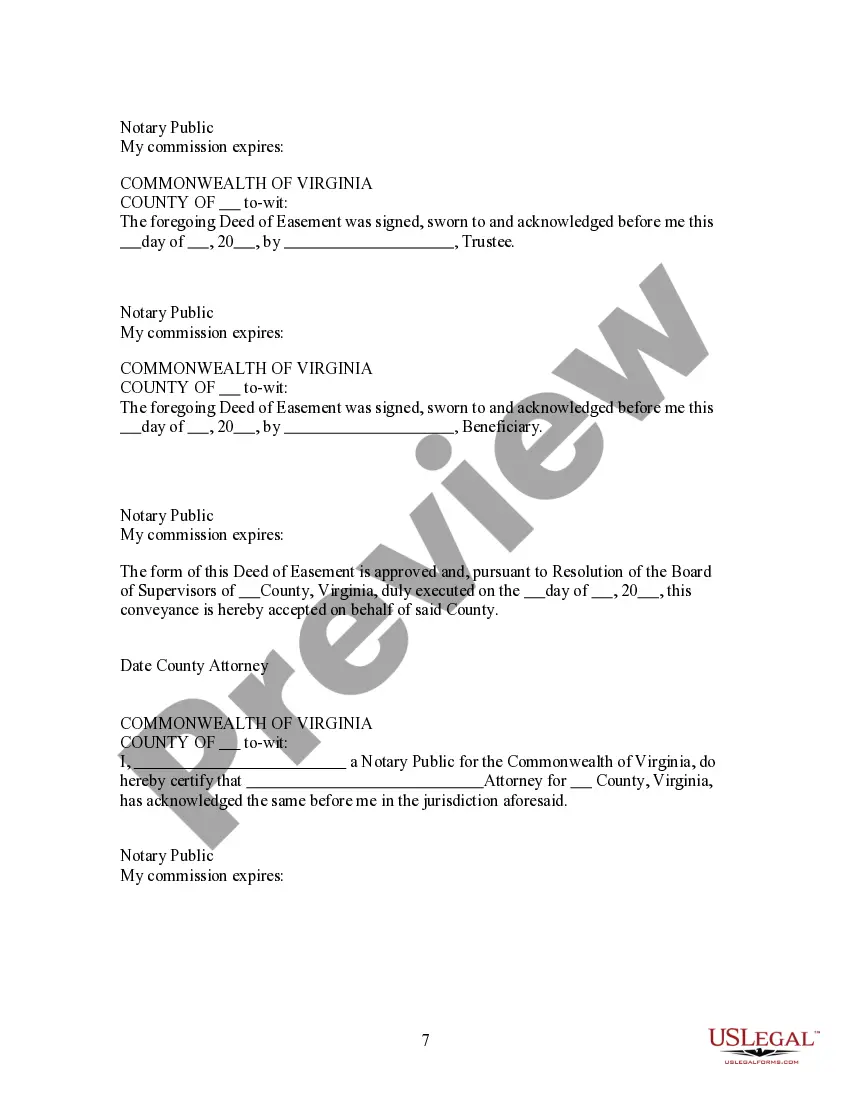
- Sign the document in the presence of a notary public, ensuring all parties acknowledge the agreement.
Does this document require notarization?
This form needs to be notarized to ensure legal validity. US Legal Forms provides secure online notarization powered by Notarize, allowing you to complete the process through a verified video call, available anytime.
Get your form ready online
Our built-in tools help you complete, sign, share, and store your documents in one place.
Make edits, fill in missing information, and update formatting in US Legal Forms—just like you would in MS Word.
Download a copy, print it, send it by email, or mail it via USPS—whatever works best for your next step.
Sign and collect signatures with our SignNow integration. Send to multiple recipients, set reminders, and more. Go Premium to unlock E-Sign.
If this form requires notarization, complete it online through a secure video call—no need to meet a notary in person or wait for an appointment.
We protect your documents and personal data by following strict security and privacy standards.

Make edits, fill in missing information, and update formatting in US Legal Forms—just like you would in MS Word.

Download a copy, print it, send it by email, or mail it via USPS—whatever works best for your next step.

Sign and collect signatures with our SignNow integration. Send to multiple recipients, set reminders, and more. Go Premium to unlock E-Sign.

If this form requires notarization, complete it online through a secure video call—no need to meet a notary in person or wait for an appointment.

We protect your documents and personal data by following strict security and privacy standards.
Avoid these common issues
- Not clearly defining the property boundaries, leading to ambiguity.
- Failing to include all required signatures or notarization.
- Omitting specific restrictions or conditions that could lead to future disputes.
- Not keeping a copy of the signed document for personal records.
Benefits of completing this form online
- Convenience of completing the form at your own pace from anywhere.
- Editability ensures you can tailor the document to your specific needs.
- Access to professionally drafted templates designed by licensed attorneys.
- Immediate download allows for quicker processing and submission when needed.
Looking for another form?
Form popularity
FAQ
Include the whole length and width. Do this by reference to plans and a ground inspection. Deduct the "after scenario" value from the "before scenario" value to arrive at a value per unit of the easement land. Multiply by the measured area of the easement land to arrive at a total market value.
The value of the easement is based on the difference between the value of the whole property before the taking and its value after the taking with the easement in place.
Easements are usually but not always registered on the Title to the property. Registration takes place with Land and Property Information in NSW and the Office of Regulatory Services in the ACT. The purpose of registering an easement over land is to show on the public record that an easement exists.
An easement is a "nonpossessory" property interest that allows the holder of the easement to have a right of way or use property that they do not own or possess. An easement doesn't allow the easement holder to occupy the land or to exclude others from the land unless they interfere with the easement holder's use.
Rights of way (similar to the driveway example, but also including walkways or pathways); Public utilities, such as gas, electricity or water and sewer mains; Parking areas; Access to light and air; and. Shared walls.
In most situations, easements will not decrease the value of the property. If the easement has strict rules or requirements the property owner must follow, however, it can affect property value and marketability.
When one of the owners of either the dominant estate which an easement benefits or the servient estate over which the easement runs becomes the owner of both properties, then there is a unity of the two titles, and since an owner does not need an easement over the owner's own property, according to Florida law, the
When the government (or, in some cases, a private entity) needs access to private property, it may exercise its power of eminent domain to do so. . In broad strokes, an easement is the legal right of one party to use or access someone else's property, whether that be over, under or through the land.
The party gaining the benefit of the easement is the dominant estate (or dominant tenement), while the party granting the benefit or suffering the burden is the servient estate (or servient tenement). For example, the owner of parcel A holds an easement to use a driveway on parcel B to gain access to A's house.