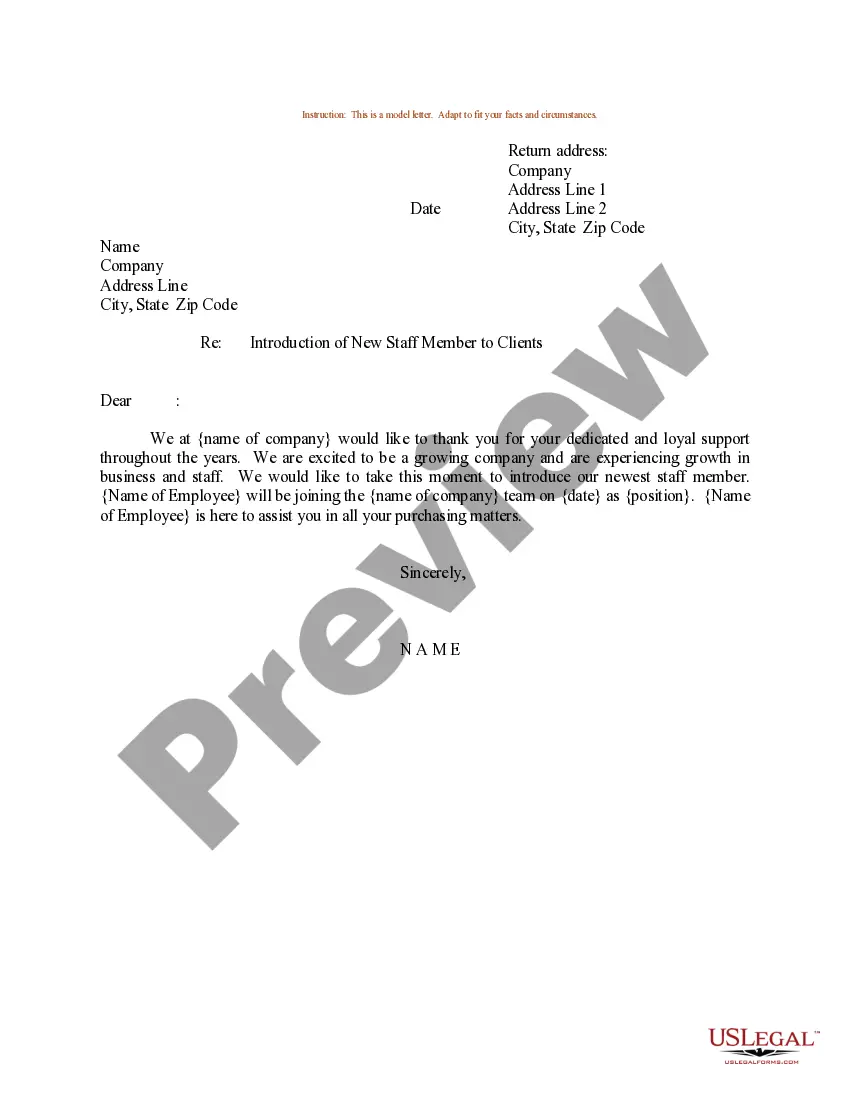
Virginia Letter from Landlord to Tenant for Failure to keep premises as clean and safe as condition of premises permits - Remedy or lease terminates
Understanding this form
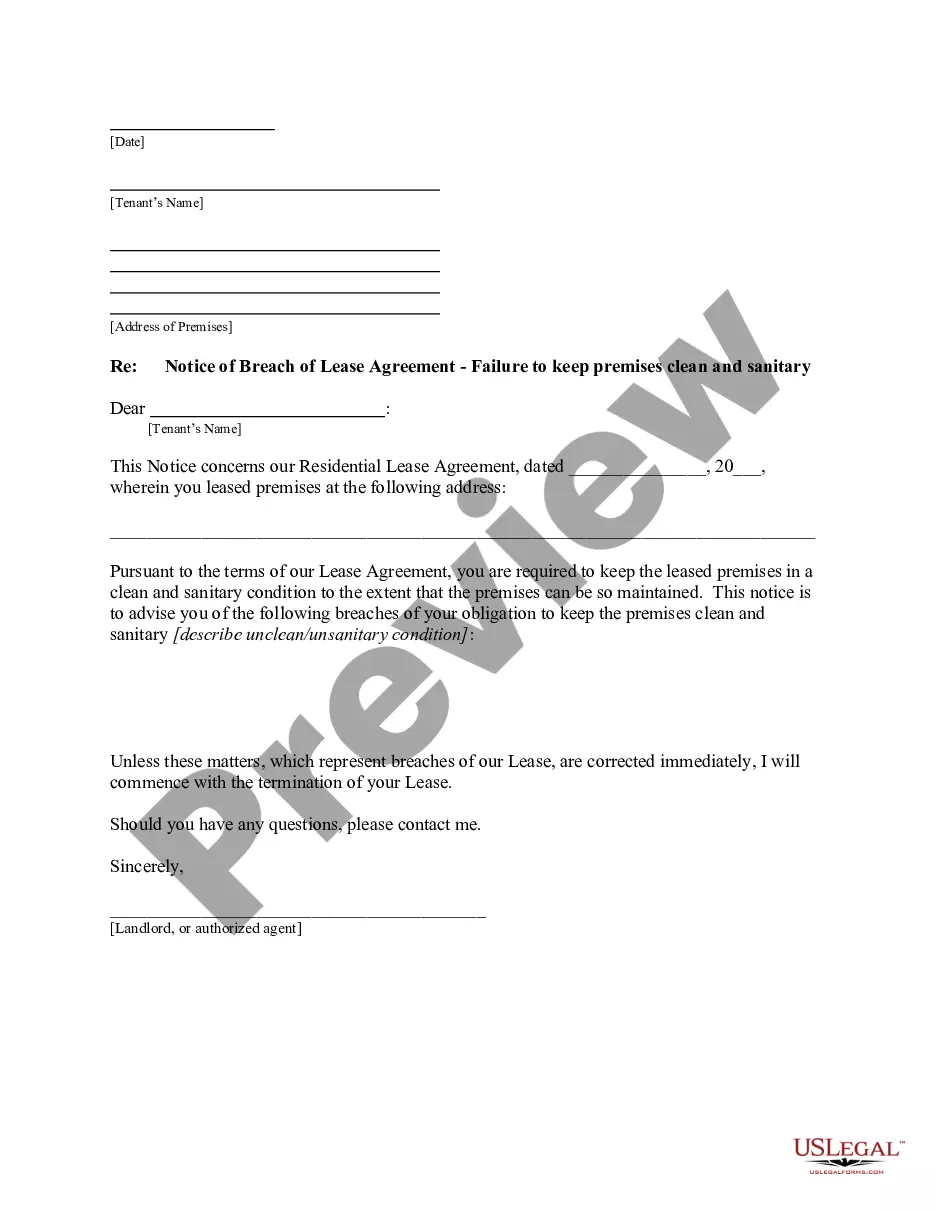
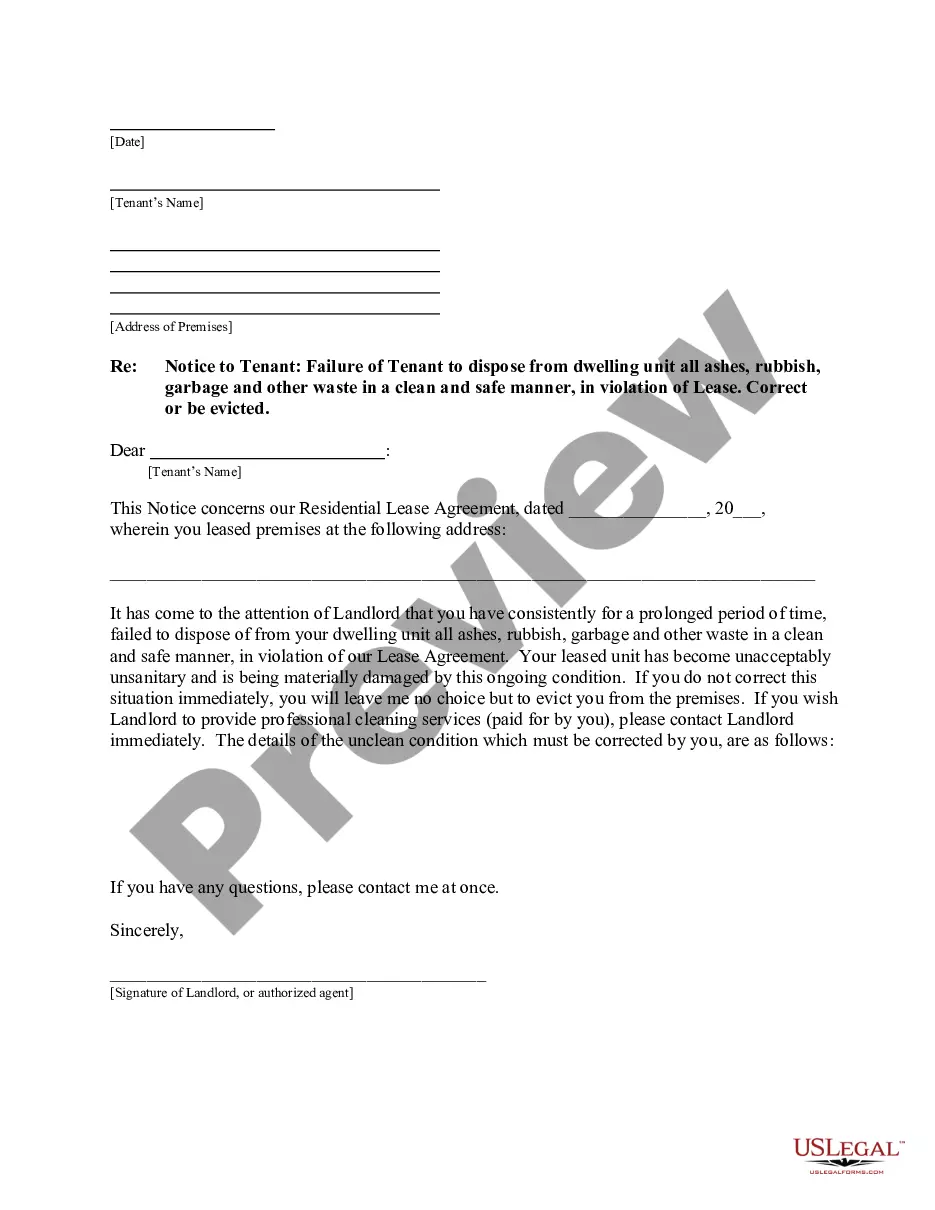
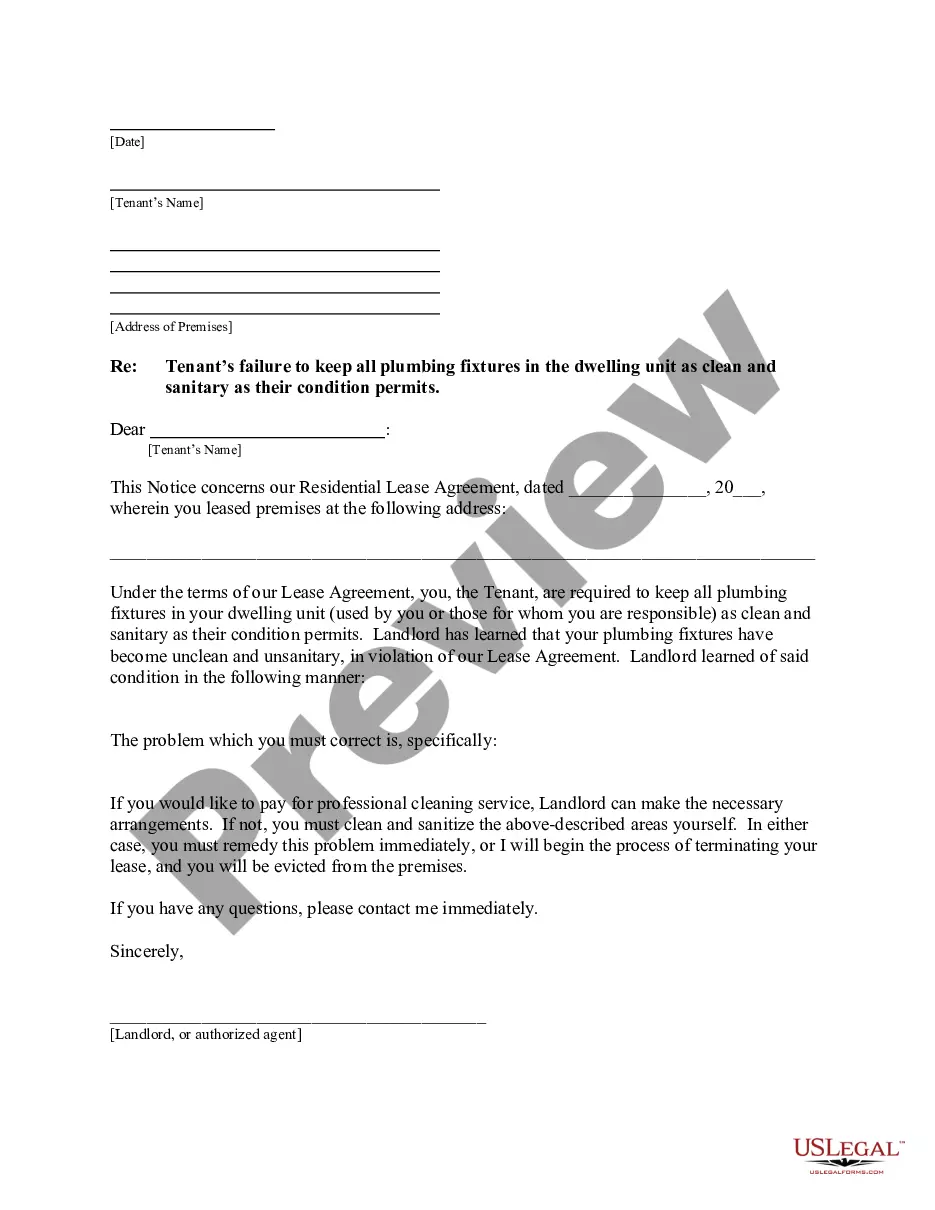
This form is a letter from a landlord to a tenant regarding their failure to maintain the rental premises in a clean and sanitary condition. It serves as a formal notice outlining breaches of the tenant's obligations as specified in the lease agreement. This notice is essential for landlords who need to address cleanliness and safety issues while protecting their rights under the lease, making it distinct from other eviction notices or lease termination forms.
What’s included in this form
- Identification of the landlord and tenant, including addresses.
- Description of the unclean or unsanitary conditions observed.
- Reference to specific lease provisions regarding cleanliness obligations.
- Notification of potential remedies or lease termination.
- Opportunity for the tenant to correct the noted breaches.


Common use cases
Who can use this document
- Landlords or property managers who require tenants to maintain clean premises.
- Landlords who have observed unsanitary or unsafe conditions in their rental units.
- Property owners needing to document communication regarding lease compliance.
- Legal professionals assisting landlords with tenant-related issues.
Completing this form step by step
- Identify and enter the names and addresses of both the landlord and tenant.
- Specify the property in question by including the address and relevant details.
- Clearly describe the observed unclean or unsanitary conditions.
- Reference the lease terms that outline the tenant's cleanliness obligations.
- Sign and date the notice before delivering it to the tenant.
Notarization requirements for this form
Notarization is not commonly needed for this form. However, certain documents or local rules may make it necessary. Our notarization service, powered by Notarize, allows you to finalize it securely online anytime, day or night.
Get your form ready online
Our built-in tools help you complete, sign, share, and store your documents in one place.
Make edits, fill in missing information, and update formatting in US Legal Forms—just like you would in MS Word.
Download a copy, print it, send it by email, or mail it via USPS—whatever works best for your next step.
Sign and collect signatures with our SignNow integration. Send to multiple recipients, set reminders, and more. Go Premium to unlock E-Sign.
If this form requires notarization, complete it online through a secure video call—no need to meet a notary in person or wait for an appointment.
We protect your documents and personal data by following strict security and privacy standards.

Make edits, fill in missing information, and update formatting in US Legal Forms—just like you would in MS Word.

Download a copy, print it, send it by email, or mail it via USPS—whatever works best for your next step.

Sign and collect signatures with our SignNow integration. Send to multiple recipients, set reminders, and more. Go Premium to unlock E-Sign.

If this form requires notarization, complete it online through a secure video call—no need to meet a notary in person or wait for an appointment.

We protect your documents and personal data by following strict security and privacy standards.
Common mistakes
- Failing to provide a detailed description of the unclean conditions.
- Neglecting to include a reference to the specific lease provisions.
- Incorrectly identifying the parties involved or the property details.
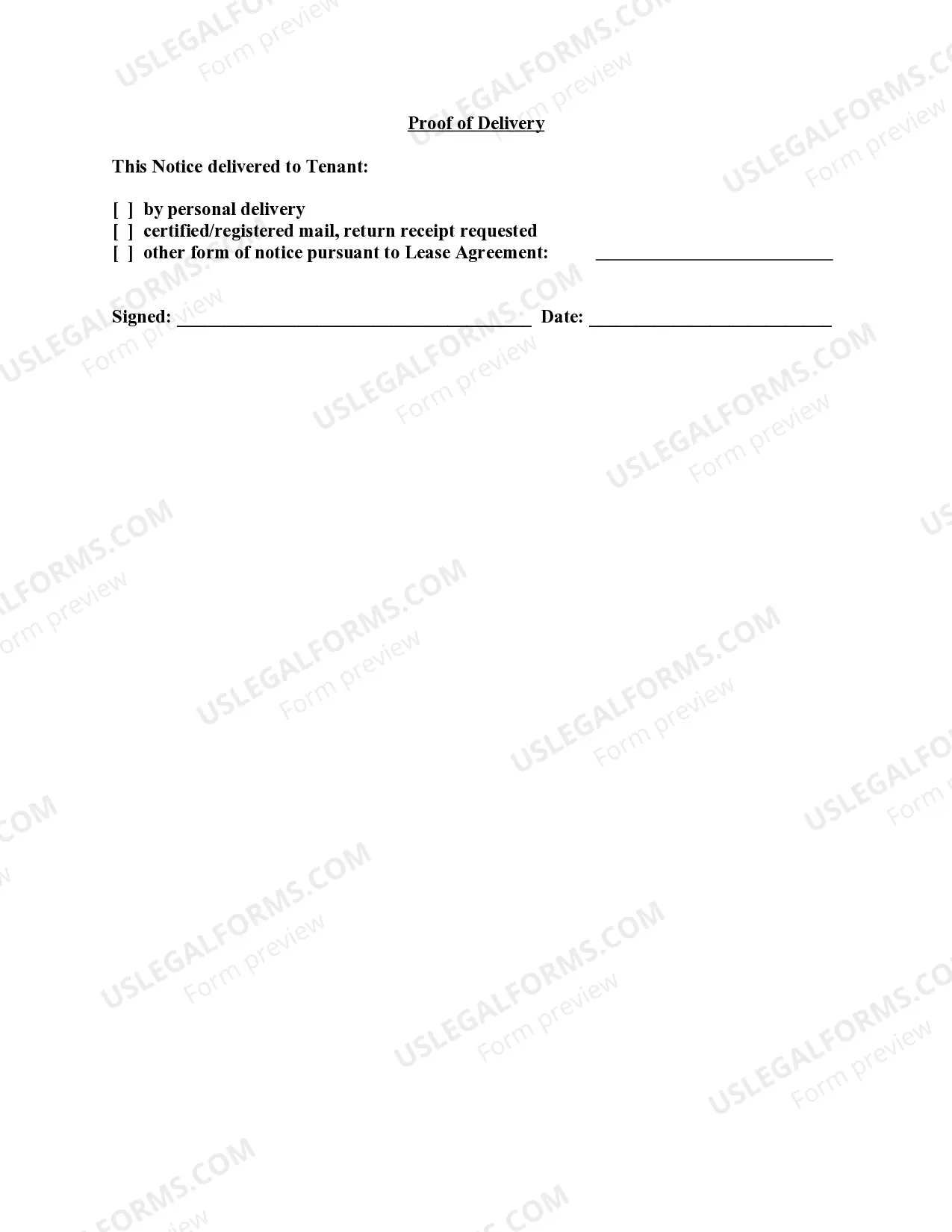
- Not following appropriate delivery methods for the notice.
Advantages of online completion
- Convenience of downloading and filling out the form at your own pace.
- Editability to tailor the content to fit specific situations.
- Access to legally vetted templates drafted by licensed attorneys.
Legal use & context
- This notice serves as a formal communication regarding compliance with lease terms.
- It provides a documented record that may be useful if further legal action is required.
- Following the proper process outlined in this form can help protect the landlord's rights.
Main things to remember
- The form is a formal notice addressing unsanitary conditions in a rental property.
- It provides the tenant an opportunity to remedy the situation before lease termination.
- Always include specific details to strengthen your case when issues arise.
Looking for another form?
Form popularity
FAQ
Tenancy at sufferance is an agreement in which a property renter is legally permitted to live on a property after a lease term has expired but before the landlord demands the tenant vacate the property. If a tenancy at sufferance occurs, the original lease conditions must be met including the payment of any rents.
NOTE: Under Virginia law, if you do not have a lease, and you do not pay rent, you are considered a tenant at sufferance. This means you can be evicted for any reason at all, at any time, and no notice needs to be given to you.If the rent is paid by the week, only a 7-day written notice is required.
NOTE: Under Virginia law, if you do not have a lease, and you do not pay rent, you are considered a tenant at sufferance. This means you can be evicted for any reason at all, at any time, and no notice needs to be given to you.If the rent is paid by the week, only a 7-day written notice is required.
Which best describes a tenancy at sufferance? When the tenant stays beyond her lease without consent. A lease agreement was signed for 8 months by the lessor and the lessee.
When you want to evict a tenant who is occupying the premises on a month-to-month basis, give the tenant a 30-day notice to quit, get a summons for unlawful detainer from the court, and appear at the hearing to argue the case. If you win, obtain a writ of possession and have the sheriff evict the tenants.
TERMINATING OR ENDING YOUR TENANCY If you have no written lease and you pay rent by the month, the tenancy can be terminated by either you or the landlord for any reason or no reason at all, by giving at least 30 days written notice before the next rental due date.
As a renter in Virginia, you have legal protections under the Virginia Residential Landlord and Tenant Act (VRLTA) that include the right to: A fair application fee. A fair security deposit. A decent and safe place to live.
No, the landlord can use the deposit for other costs set out in the lease. For instance, some leases state that the tenant agrees to pay the cost of carpet cleaning once she moves out. If that part of the lease is proper, the landlord can deduct for that charge.That is okay if the landlord wants to do that.
As a renter in Virginia, you have legal protections under the Virginia Residential Landlord and Tenant Act (VRLTA) that include the right to: A fair application fee. A fair security deposit.A certain level of security.