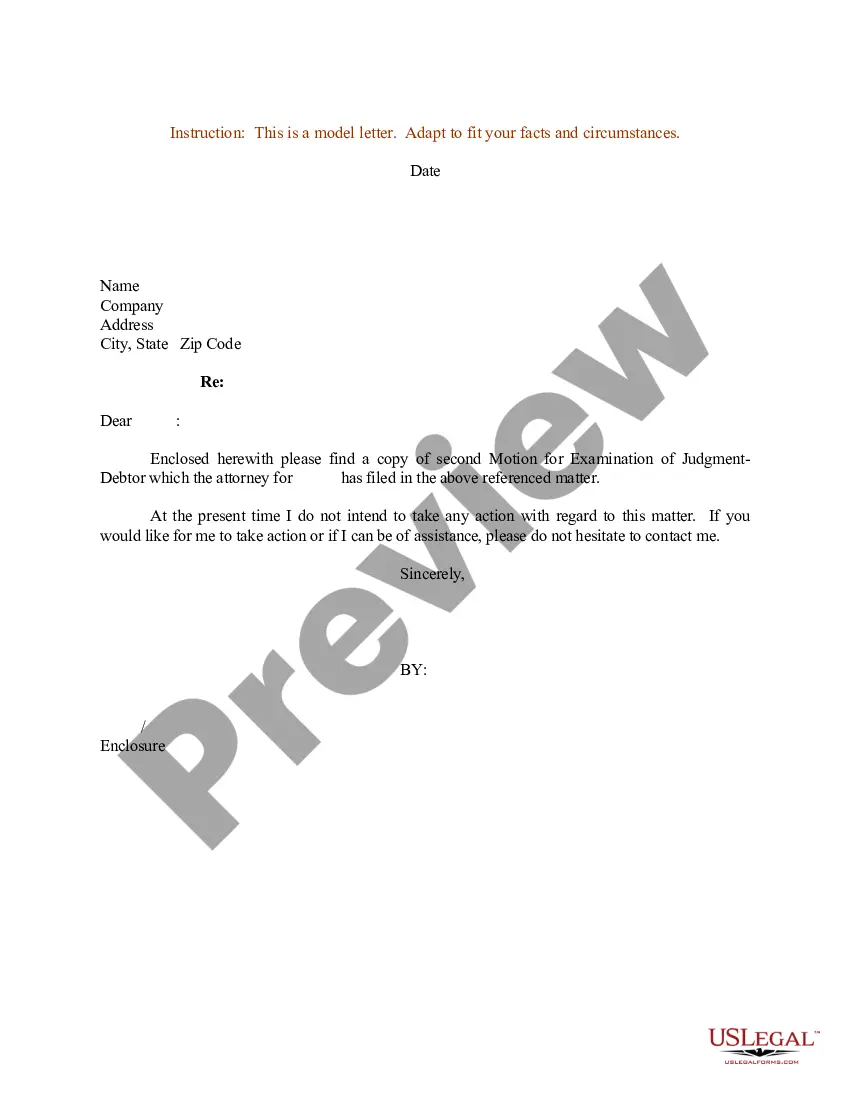
Utah Estate Planning Questionnaire and Worksheets
What this document covers
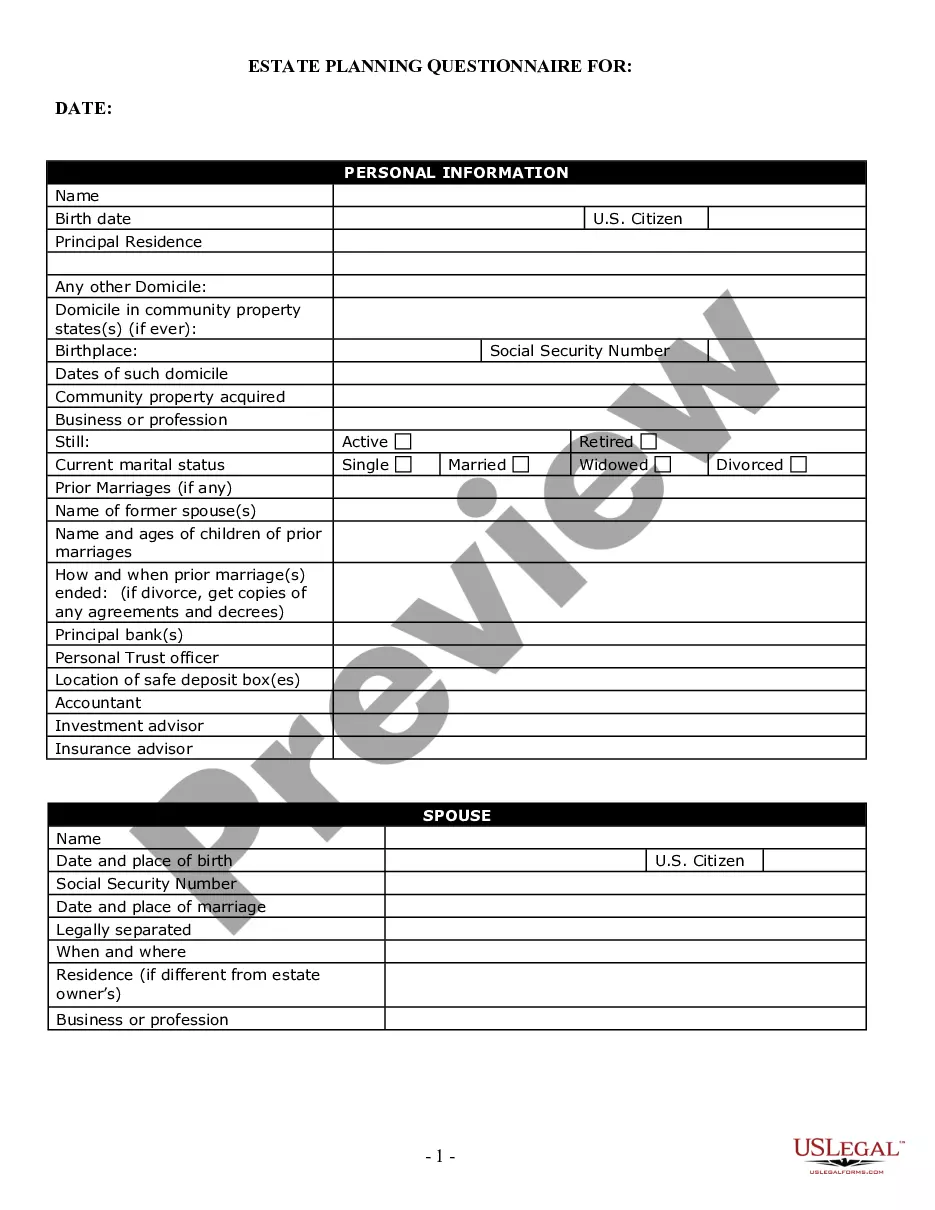
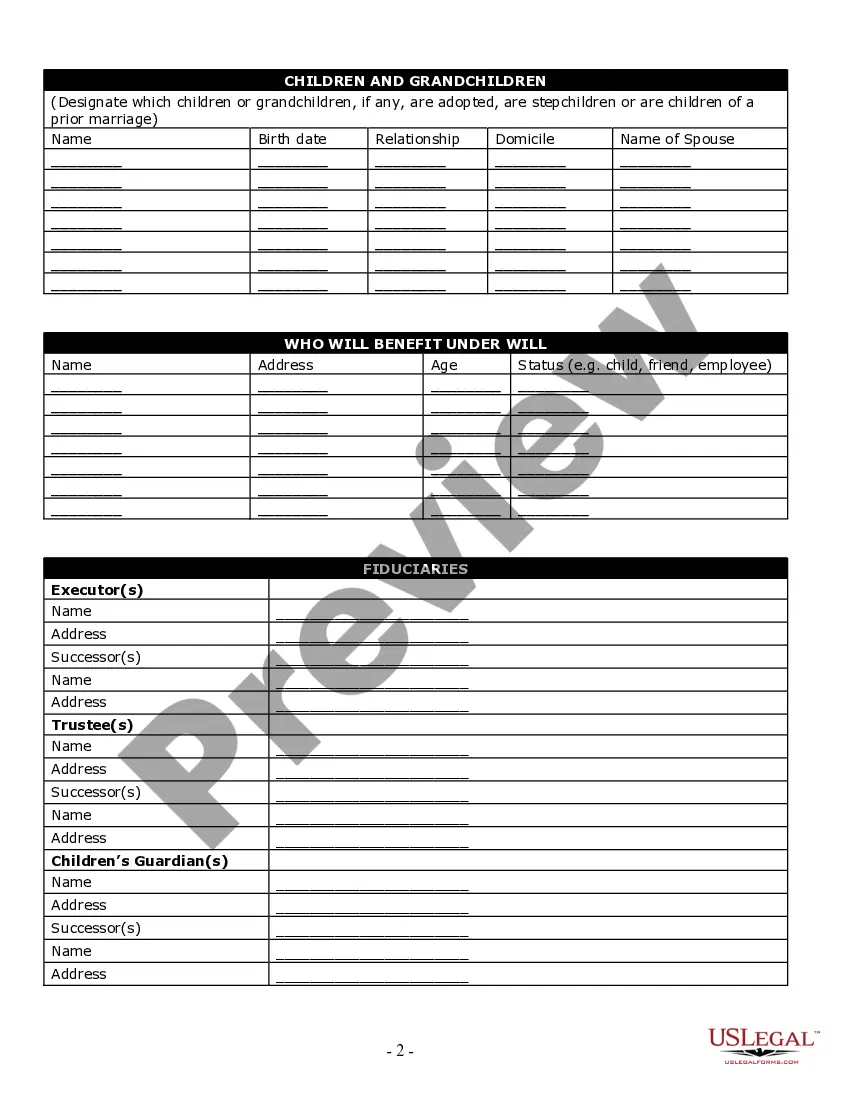
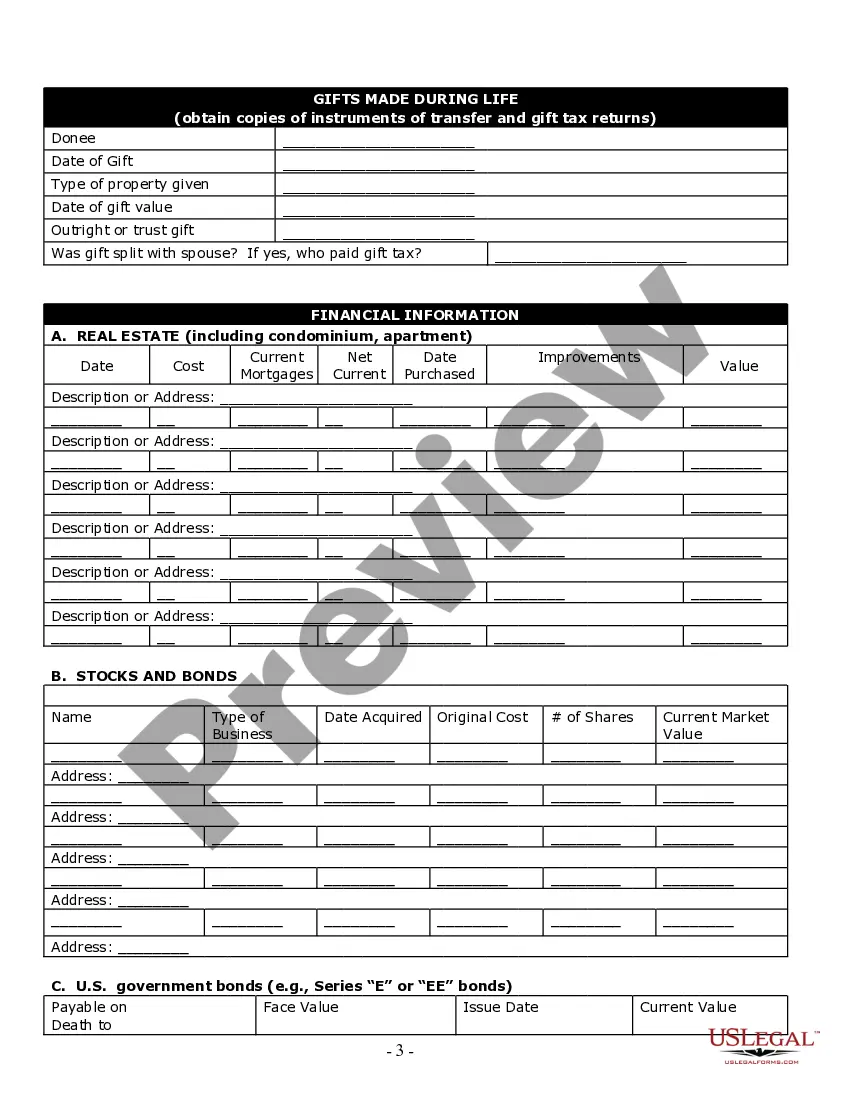
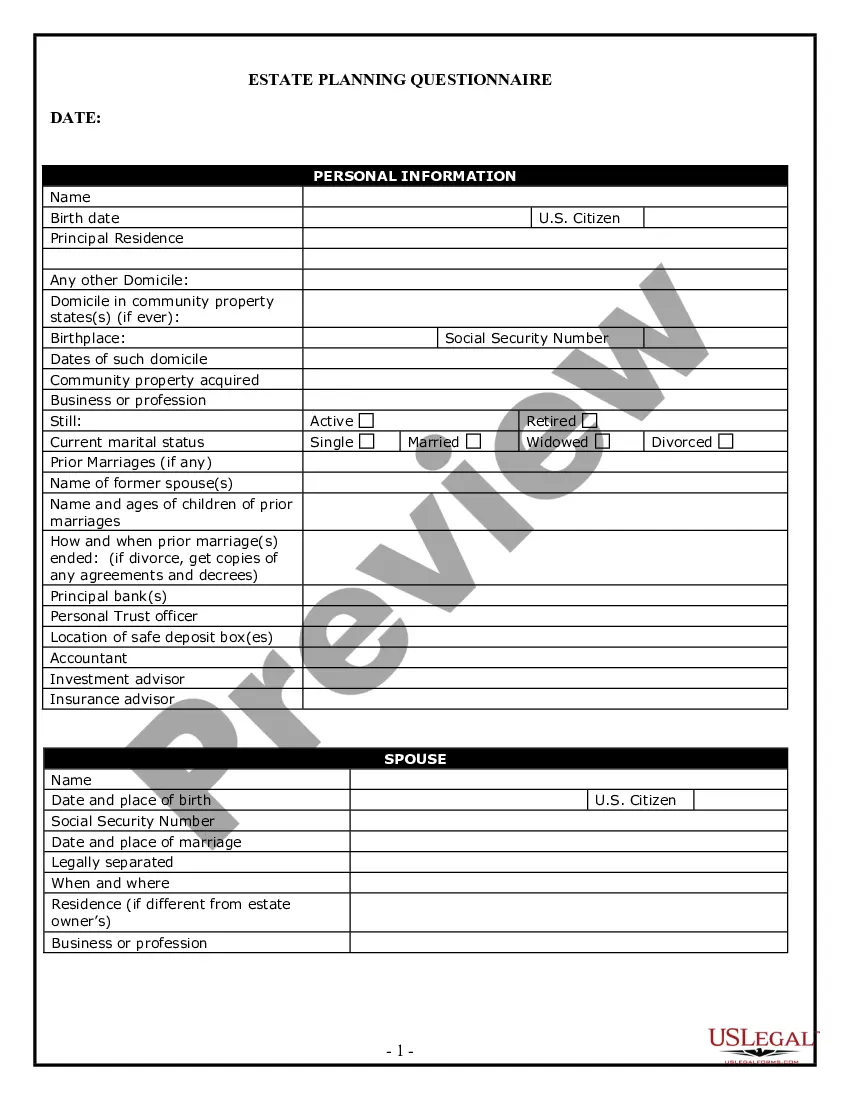
The Estate Planning Questionnaire and Worksheets is a crucial document designed to gather relevant information about a person's estate. This form helps individuals compile personal and financial data that are essential for effective estate planning. Unlike other legal forms, this questionnaire is not a binding document but serves as a preparatory tool for individuals and attorneys to assess one's overall financial situation.
What’s included in this form
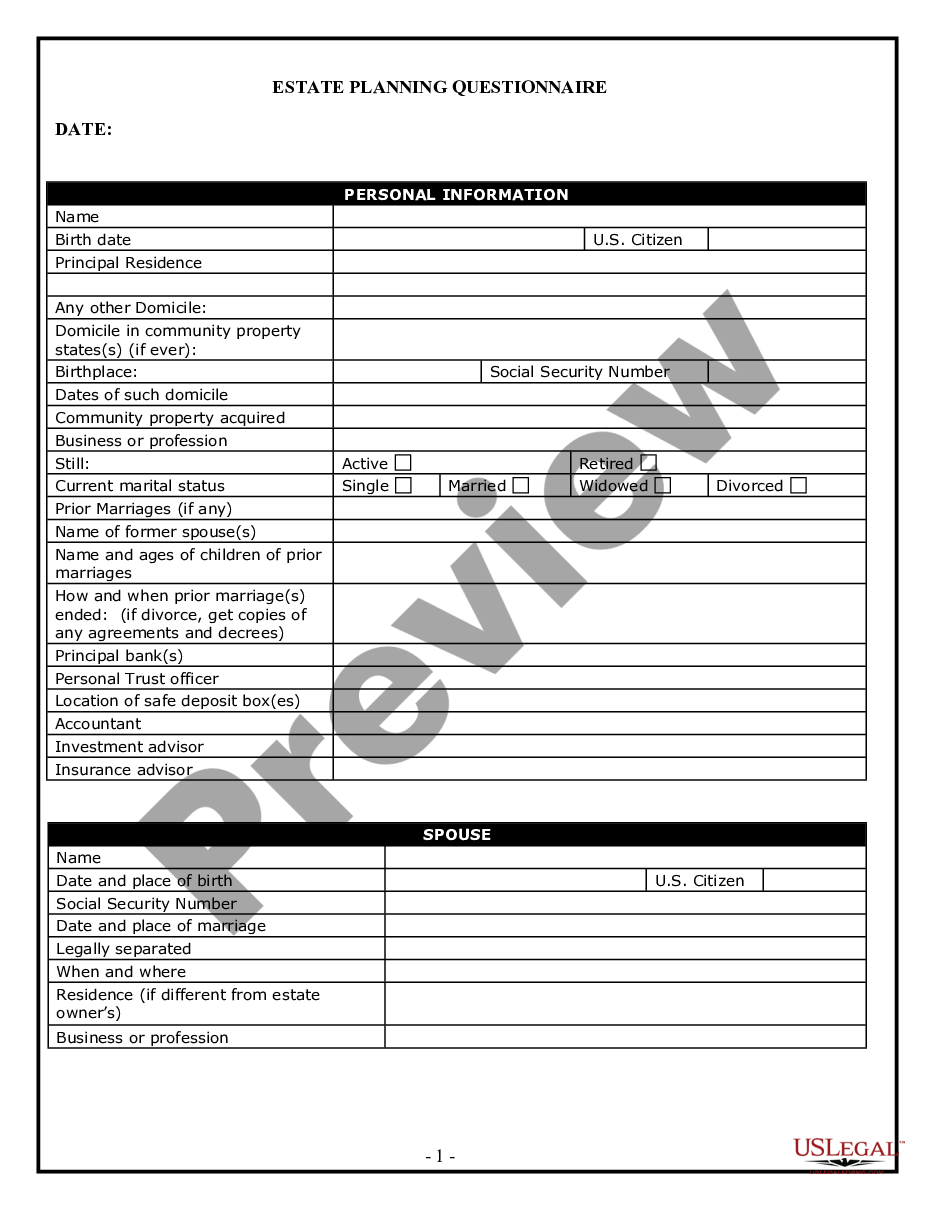
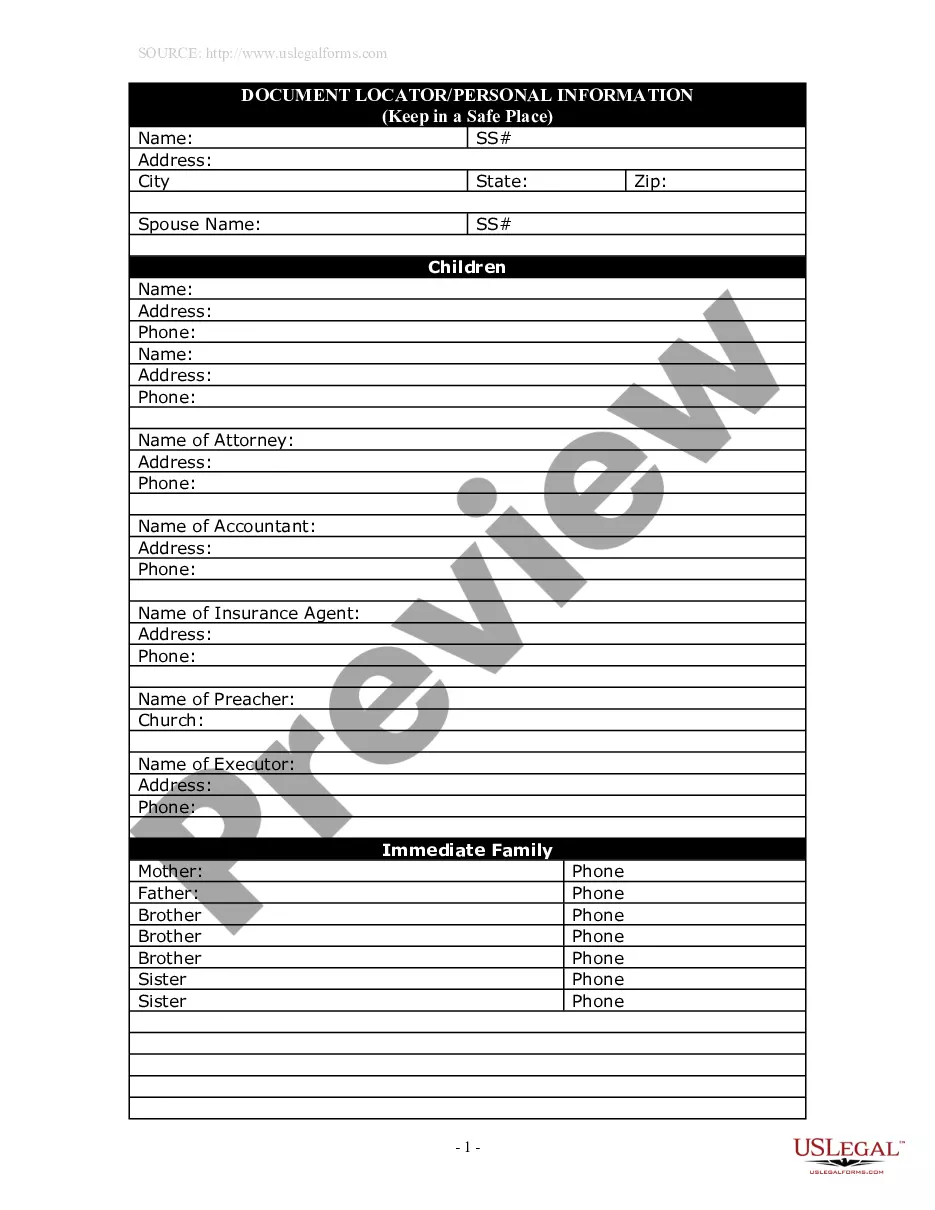
- Personal information, including name, address, and contact details.
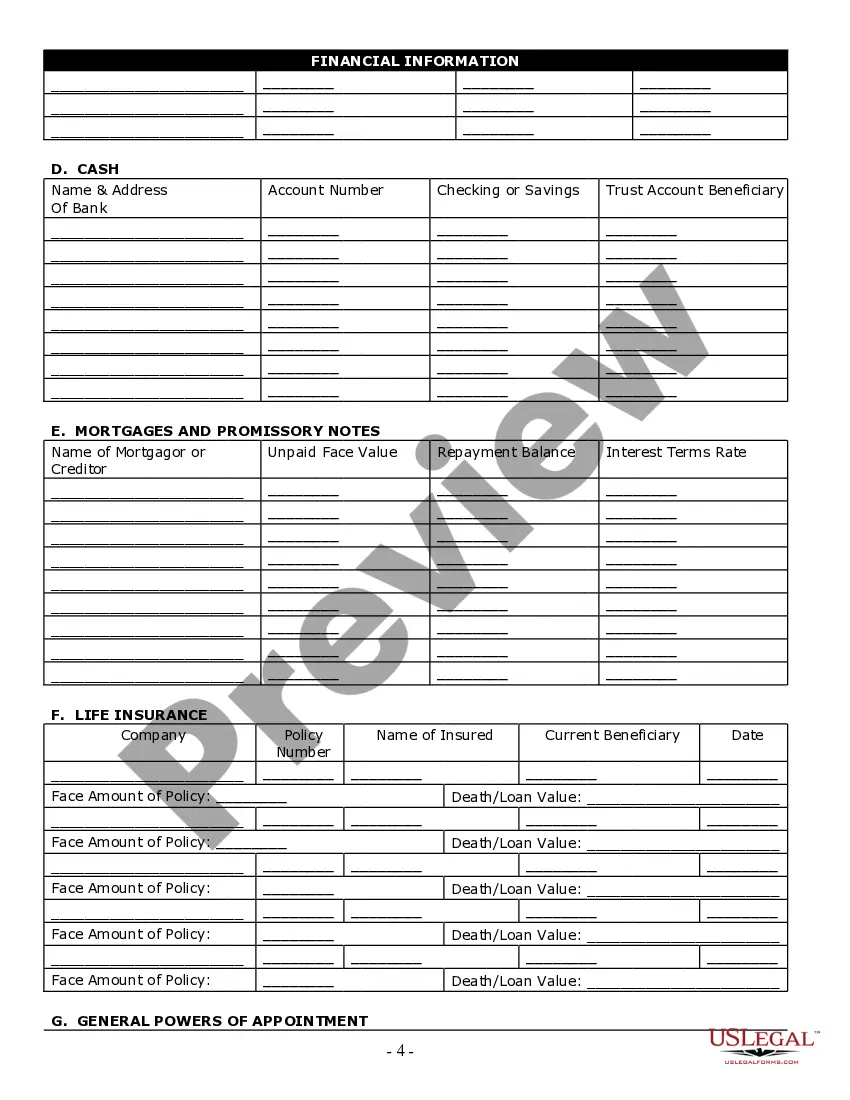
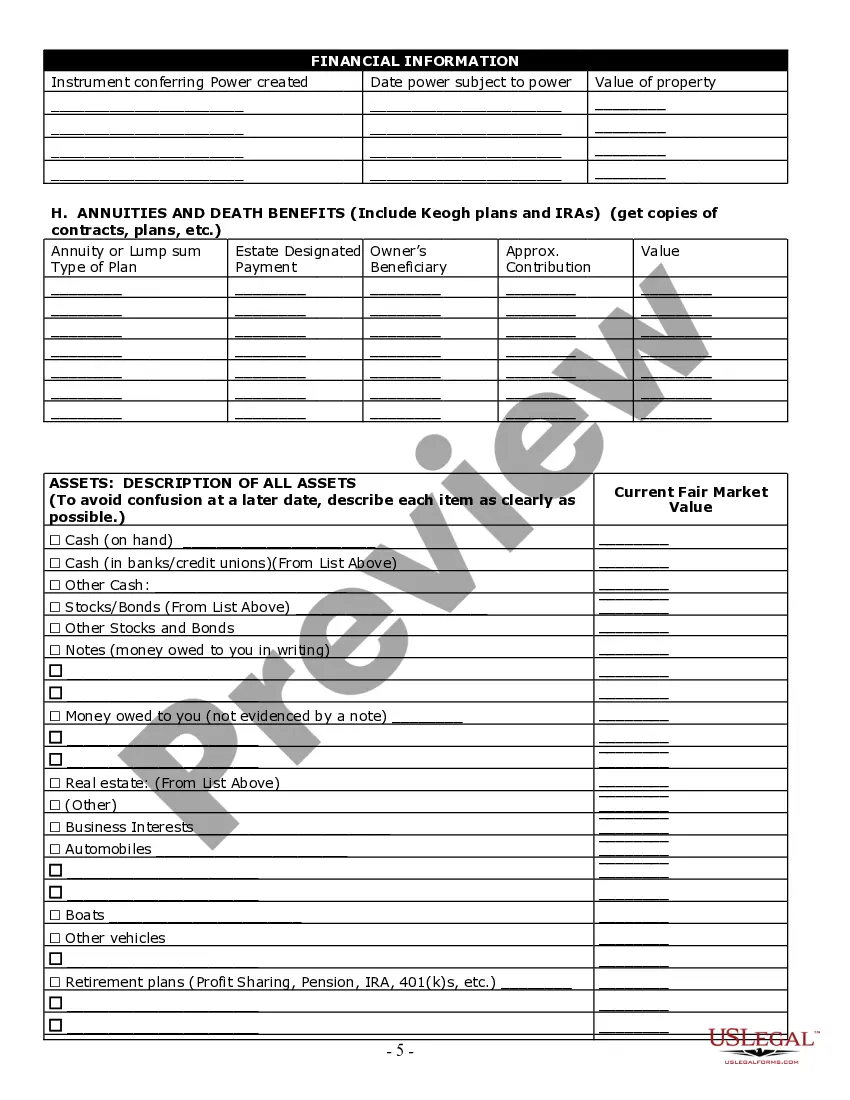
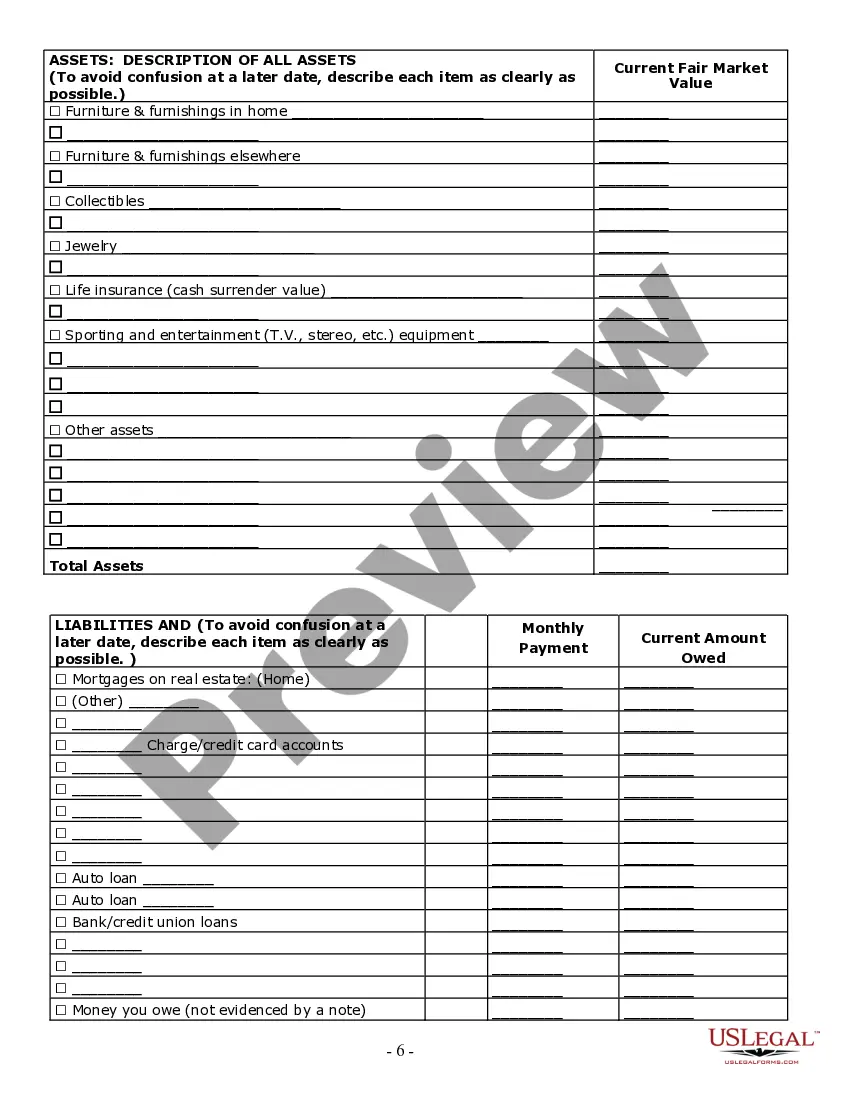
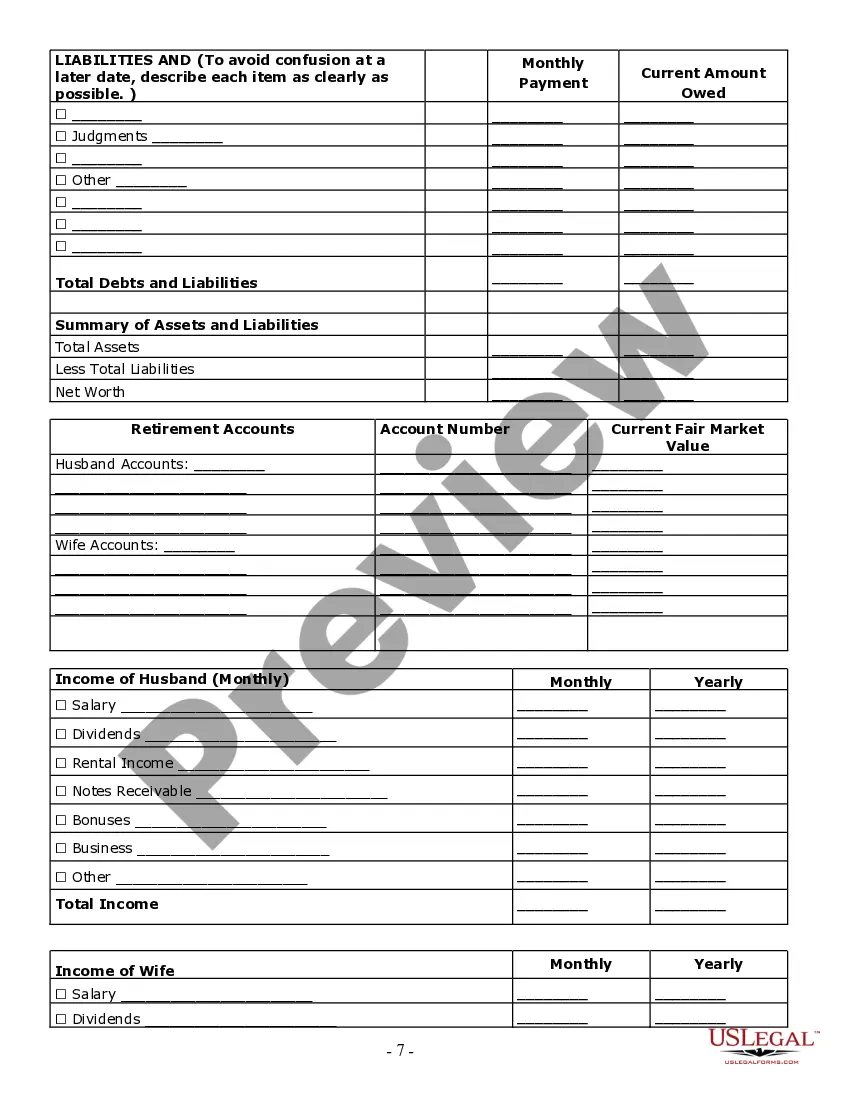
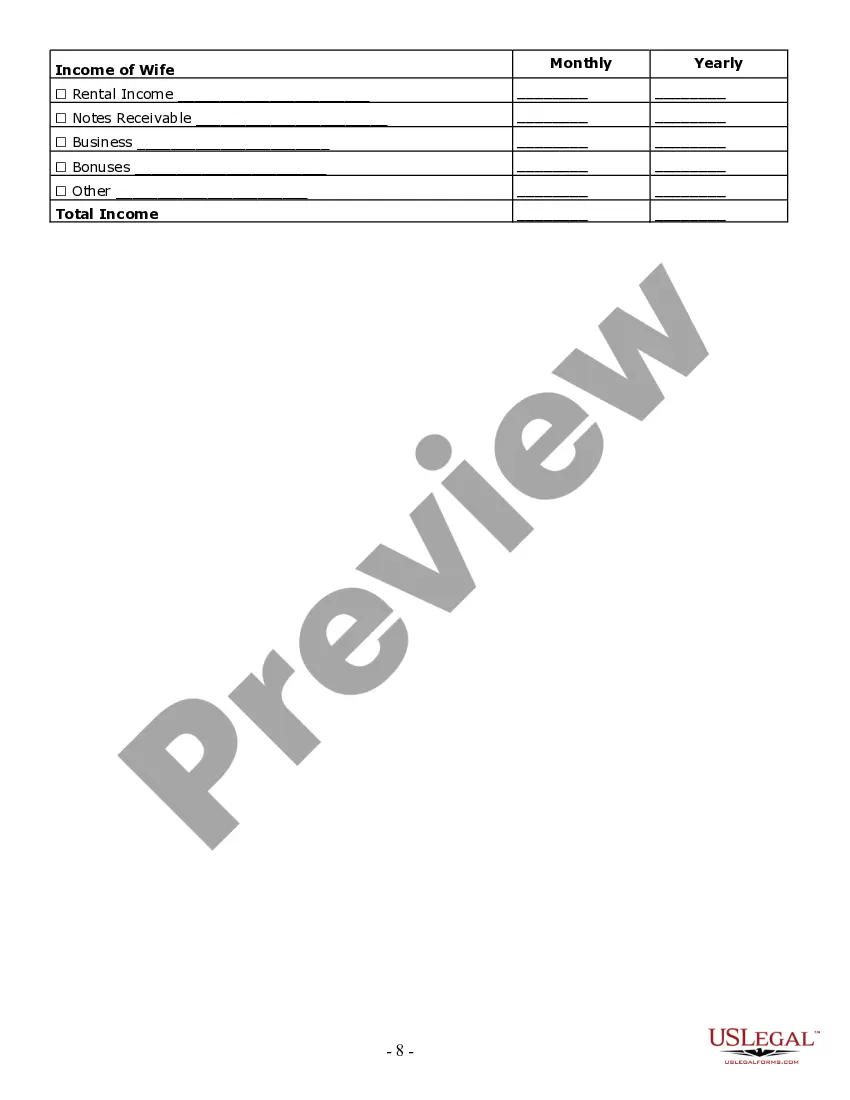
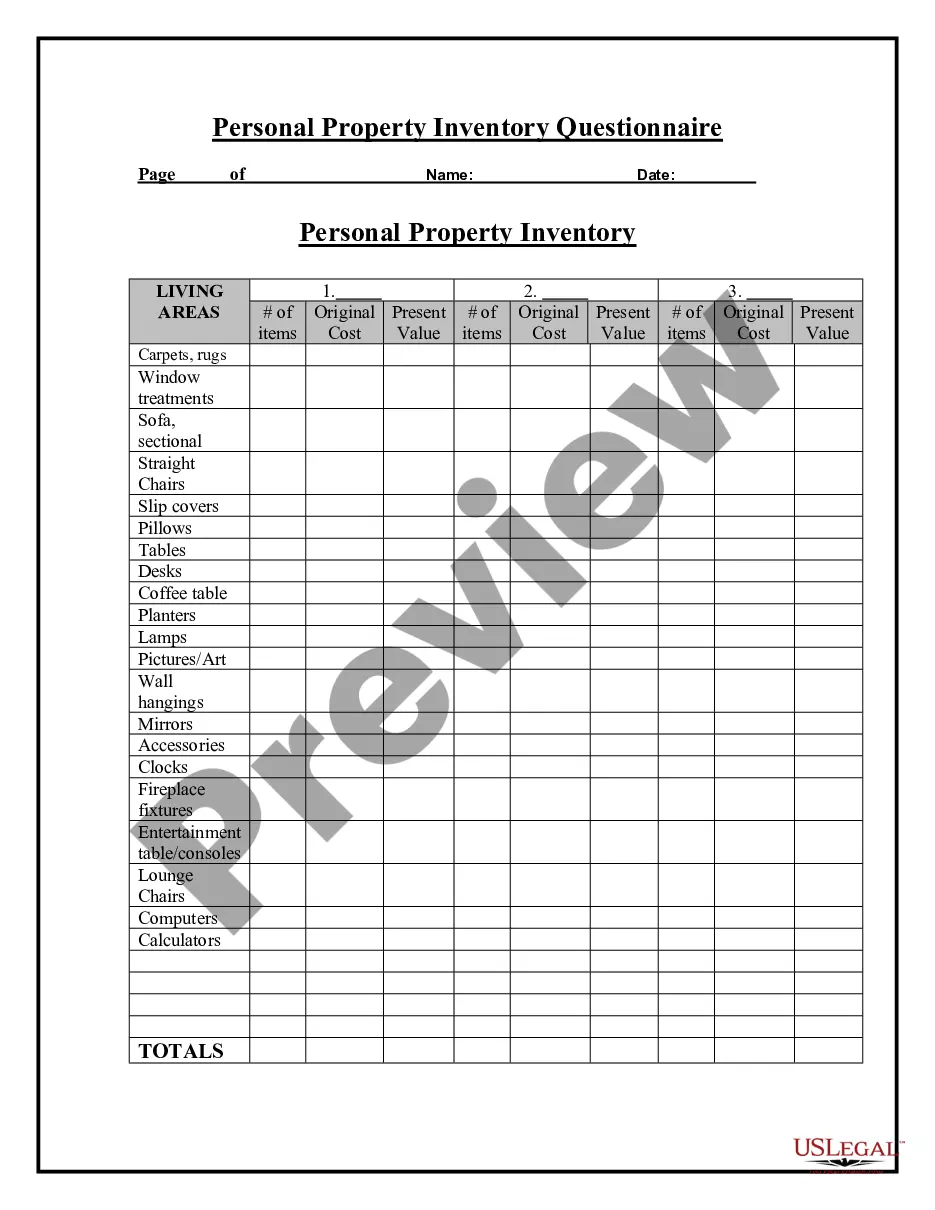
- Financial information covering assets, liabilities, and income sources.
- Questions about family dynamics and dependents.
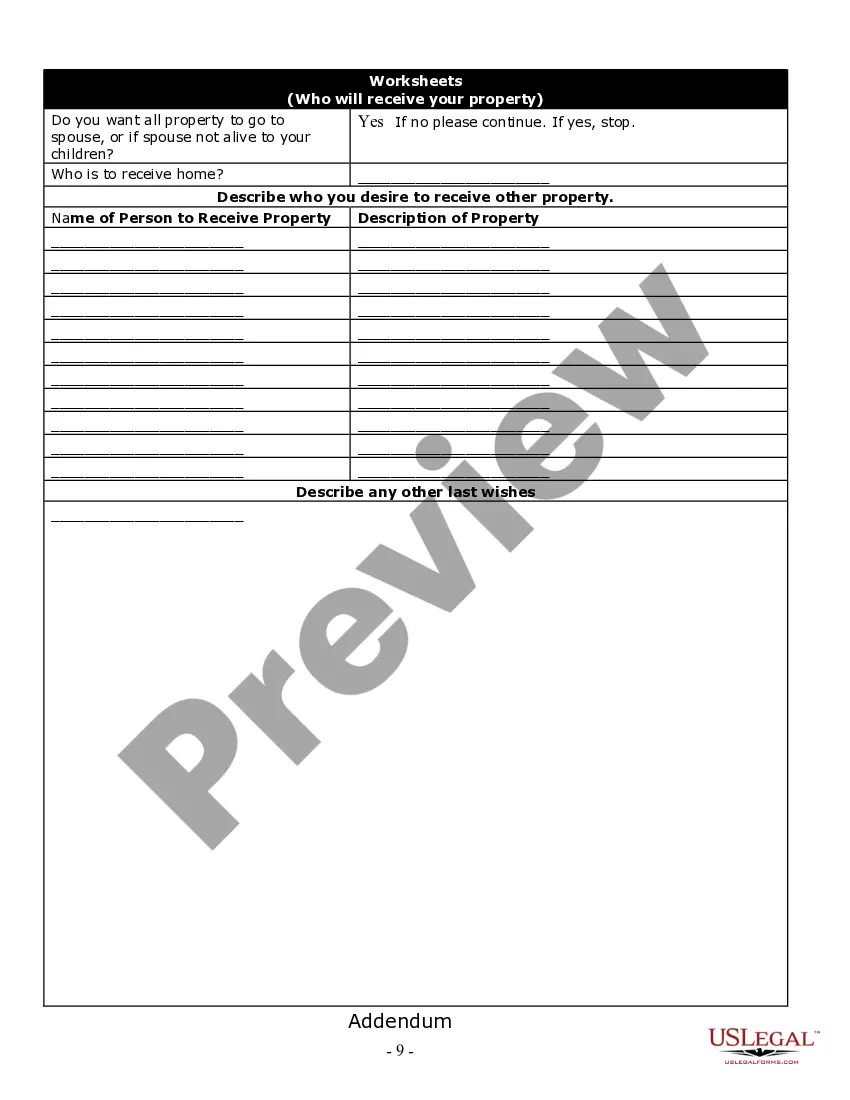
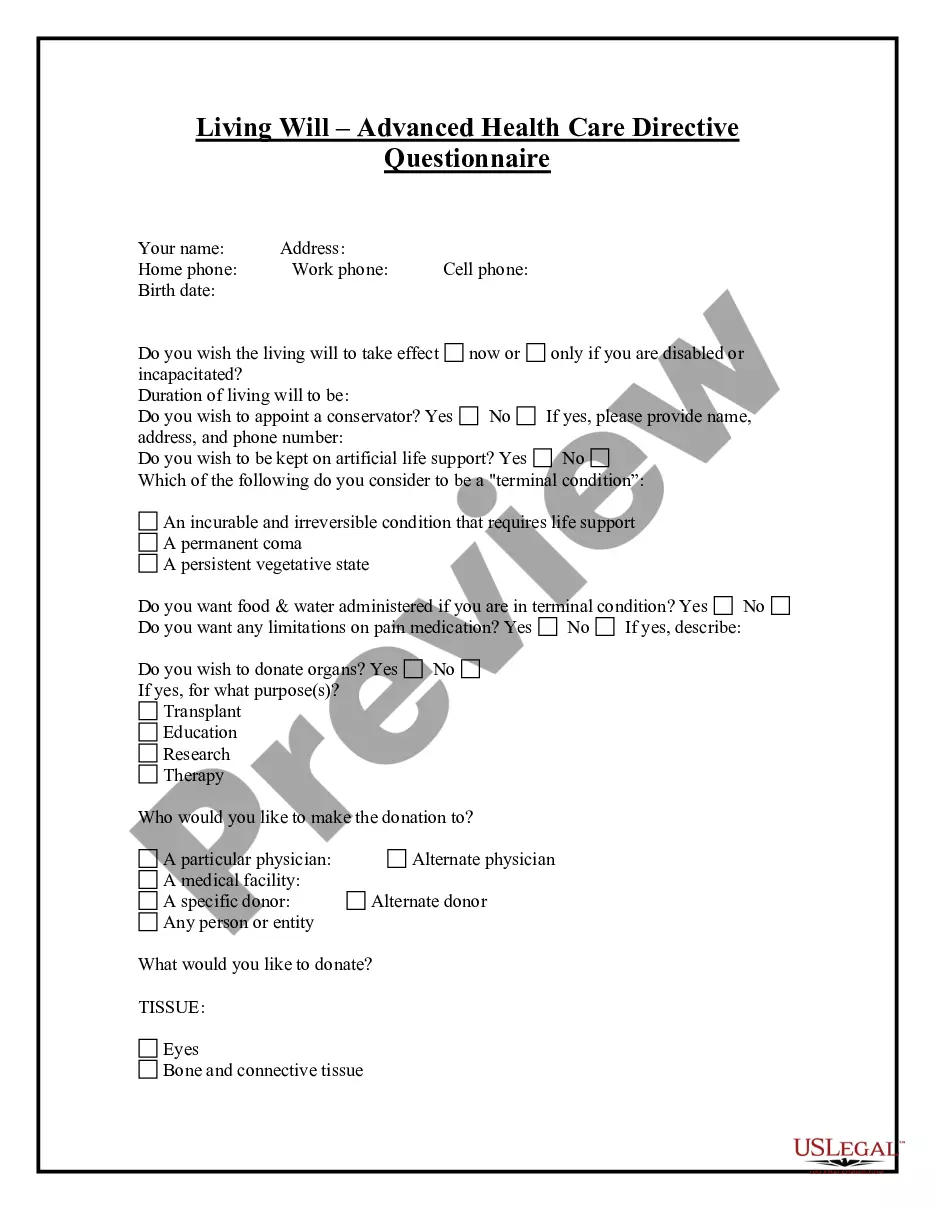
- Special considerations for healthcare decisions and end-of-life wishes.
- Spaces for notes or additional information relevant to estate planning.
Common use cases
This form is particularly useful in various scenarios, such as when an individual is planning their estate, preparing for a meeting with an attorney, or conducting a self-assessment of their financial situation. It is beneficial for anyone looking to create a comprehensive estate plan, ensuring all necessary information is organized and available.
Who needs this form
The following individuals should consider using the Estate Planning Questionnaire and Worksheets:
- Individuals seeking to establish or update their estate plan.
- Clients meeting with an attorney for estate planning purposes.
- Anyone wanting to assess their financial status regarding estate planning.
- Individuals with dependents who require facilitated estate planning discussions.
Steps to complete this form
- Begin by entering your personal information in the designated fields.
- Add detailed financial information regarding your assets and liabilities.
- Answer questions about your family and any dependents who may be affected by your estate plan.
- Include any specific health care or end-of-life wishes you may have.
- Review all entered information for accuracy and completeness before finalizing.
Does this form need to be notarized?
Notarization is not commonly needed for this form. However, certain documents or local rules may make it necessary. Our notarization service, powered by Notarize, allows you to finalize it securely online anytime, day or night.
Get your form ready online
Our built-in tools help you complete, sign, share, and store your documents in one place.
Make edits, fill in missing information, and update formatting in US Legal Forms—just like you would in MS Word.
Download a copy, print it, send it by email, or mail it via USPS—whatever works best for your next step.
Sign and collect signatures with our SignNow integration. Send to multiple recipients, set reminders, and more. Go Premium to unlock E-Sign.
If this form requires notarization, complete it online through a secure video call—no need to meet a notary in person or wait for an appointment.
We protect your documents and personal data by following strict security and privacy standards.

Make edits, fill in missing information, and update formatting in US Legal Forms—just like you would in MS Word.

Download a copy, print it, send it by email, or mail it via USPS—whatever works best for your next step.

Sign and collect signatures with our SignNow integration. Send to multiple recipients, set reminders, and more. Go Premium to unlock E-Sign.

If this form requires notarization, complete it online through a secure video call—no need to meet a notary in person or wait for an appointment.

We protect your documents and personal data by following strict security and privacy standards.
Common mistakes
- Omitting or incorrectly entering financial information.
- Failing to consider all dependents and their needs.
- Not updating the form to reflect recent life changes like marriage, divorce, or the birth of a child.
- Neglecting to consult with an attorney after completing the questionnaire.
Benefits of completing this form online
- Convenience of accessing the form anytime and from anywhere.
- Easy to edit, allowing for updates as your financial situation changes.
- Reliable format that ensures your information is organized clearly.
- Instant download for quick use in your estate planning process.
Legal use & context
- This form helps in legally compiling personal and financial information necessary for effective estate planning.
- It ensures that all relevant details are considered when setting up estate documents.
Quick recap
- The Estate Planning Questionnaire is essential for organizing personal and financial information for estate plans.
- It is suitable for individuals and legal professionals alike.
- Completing the form helps avoid common mistakes in estate planning.
Looking for another form?
Form popularity
FAQ
A will may be a relatively simple document that sets forth your wishes regarding the distribution of property; it may also include instructions regarding the care of minor children. An estate plan goes much further than a will.
While a Will governs the distribution of assets, it does not exempt assets administered under its authority from the probate process. However, a Utah Living Trust will fully govern and administer any assets held under its name, exempting Trust assets from probate.
Lay out Your Assets & Think About Final Wishes. Consider Your Digital Assets. Gather Documents Needed for Will Preparation. Choose Your Executor & Beneficiaries. Nominate Guardians. Sign Your Will. Store Your Will. Update or Amend Your Will.
This questionnaire provides for the preparation of your Will. Each individual should complete a questionnaire even if a husband and wife are both making Wills. GLOSSARY OF TERMS. BENEFICIARY: Any individual(s), church or organization chosen to receive your assets after death.
Will/trust. Durable power of attorney. Beneficiary designations. Letter of intent. Healthcare power of attorney. Guardianship designations.
Bank accounts. Brokerage or investment accounts. Retirement accounts and pension plans. A life insurance policy.
A living trust, specifically a revocable living trust, is a legal document that places your assetsinvestments, bank accounts, real estate, vehicles and valuable personal propertyin trust for your benefit during your lifetime, and spells out where you'd like these things to go upon your death.
More Than a Last Will. Itemize Your Inventory. Follow with Non-Physical Assets. Assemble a List of Debts. Make a Memberships List. Make Copies of Your Lists. Review Your Retirement Account. Update Your Insurance.
What Do You Hope To Achieve With A Will? What Is Your Family Situation? What Assets Do You Own? Where Do You Want Your Assets To Be Distributed? Who Will Be Responsible For Your Estate?