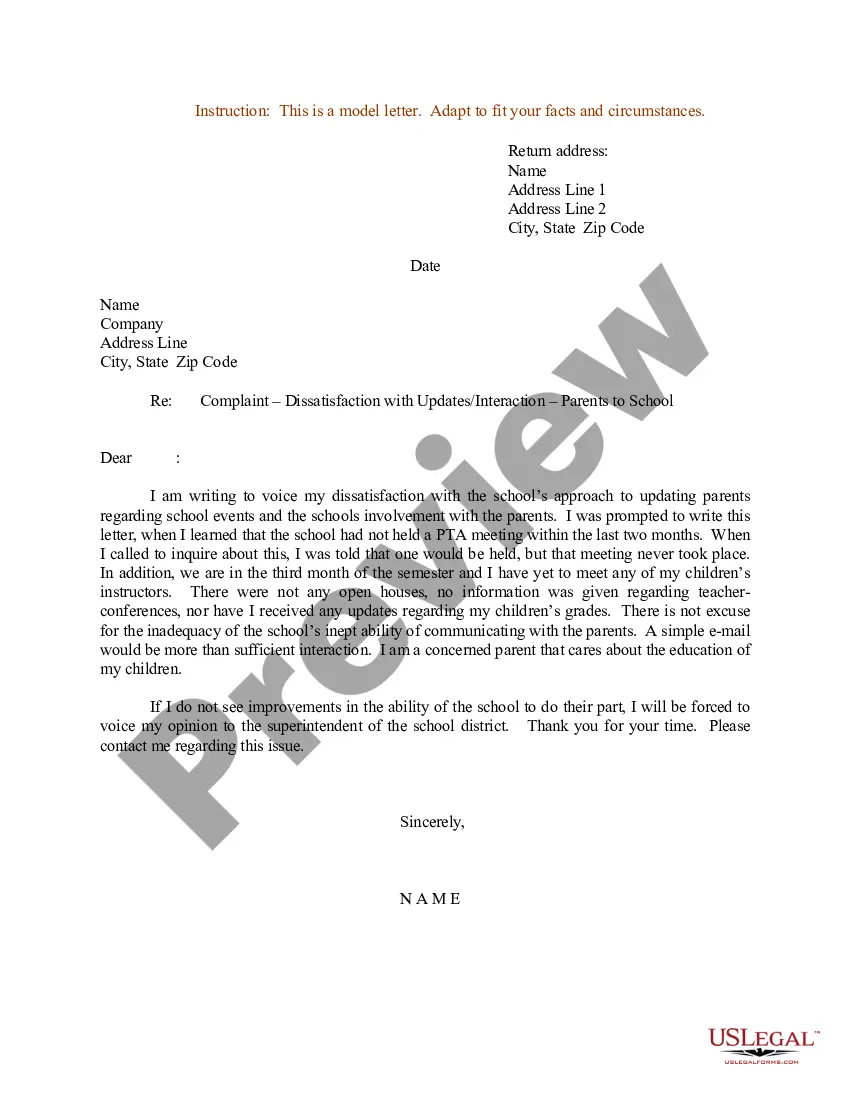
Utah Last Will and Testament for Married person with Minor Children from Prior Marriage
What this document covers
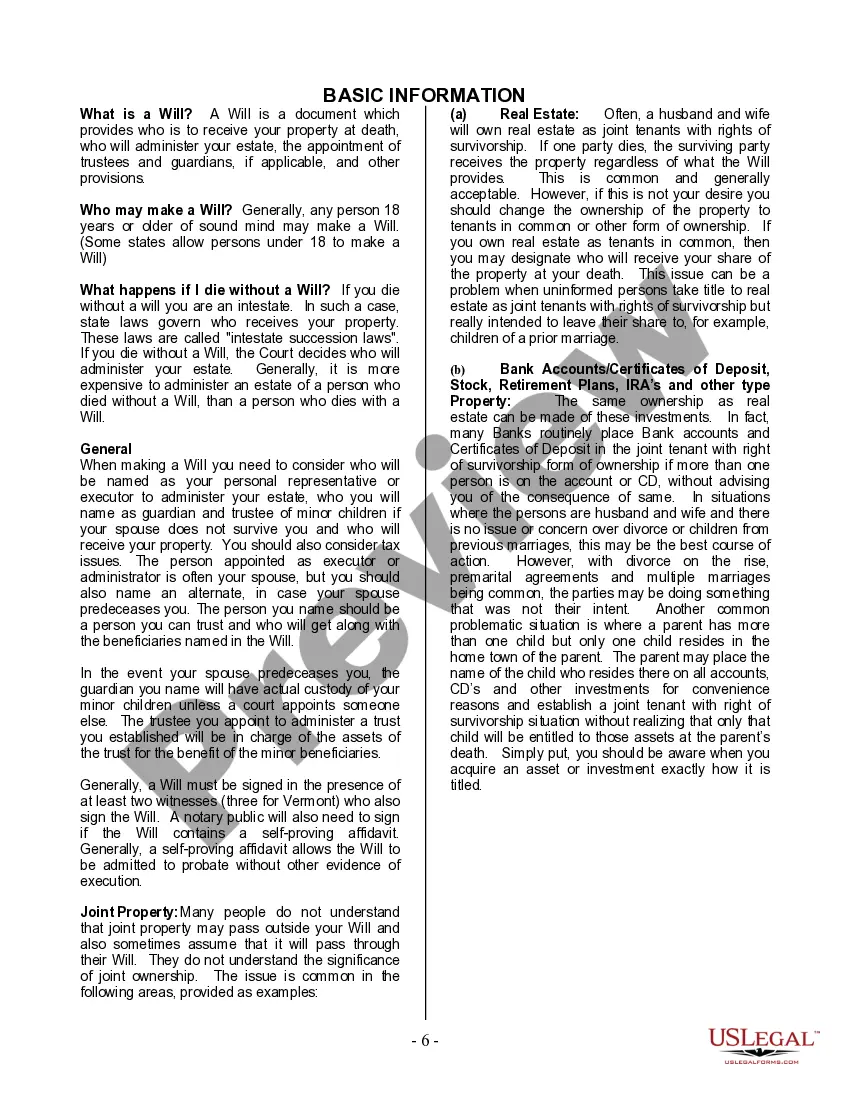
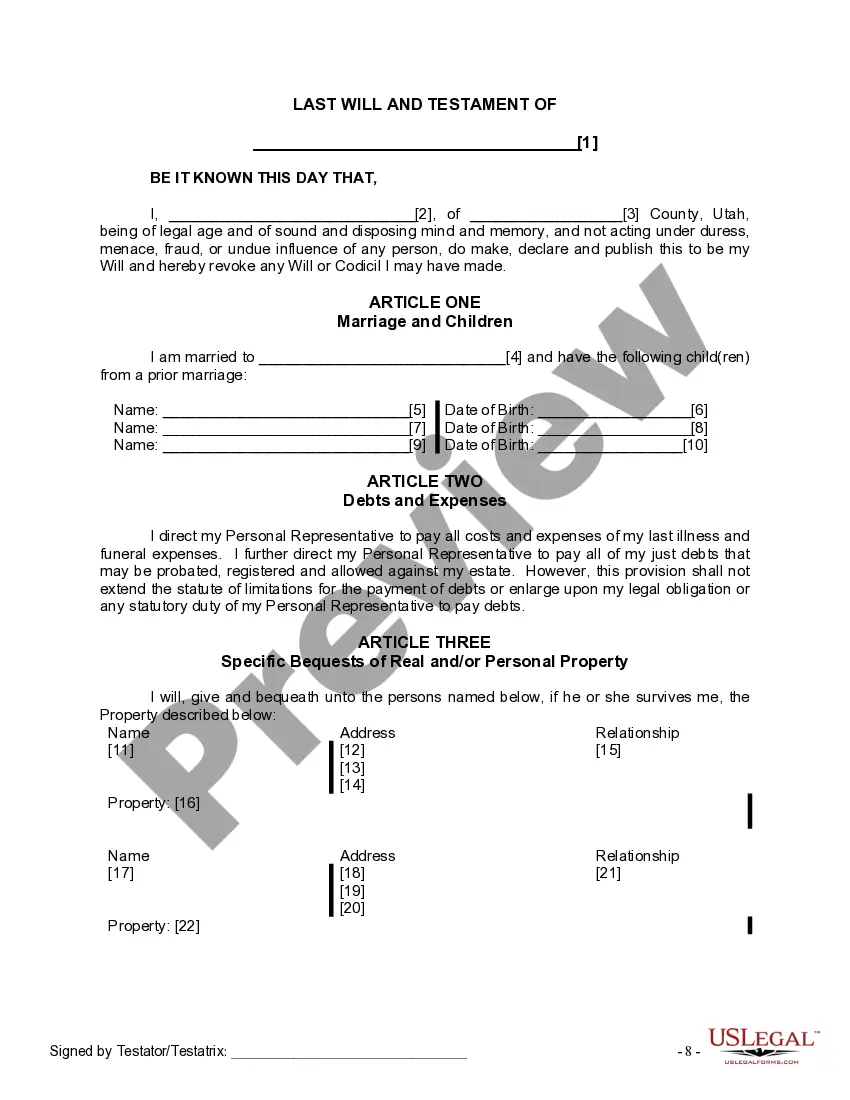
This form is a Last Will and Testament specifically designed for a married individual who has minor children from a previous marriage. It establishes how assets will be distributed, appoints a personal representative (executor), and designates guardianship for minor children. This form stands out from other wills as it accounts for the unique family dynamics of blended families, ensuring that all children's needs are considered.
Key components of this form
- Article on personal information, including name, residence, and marital status.
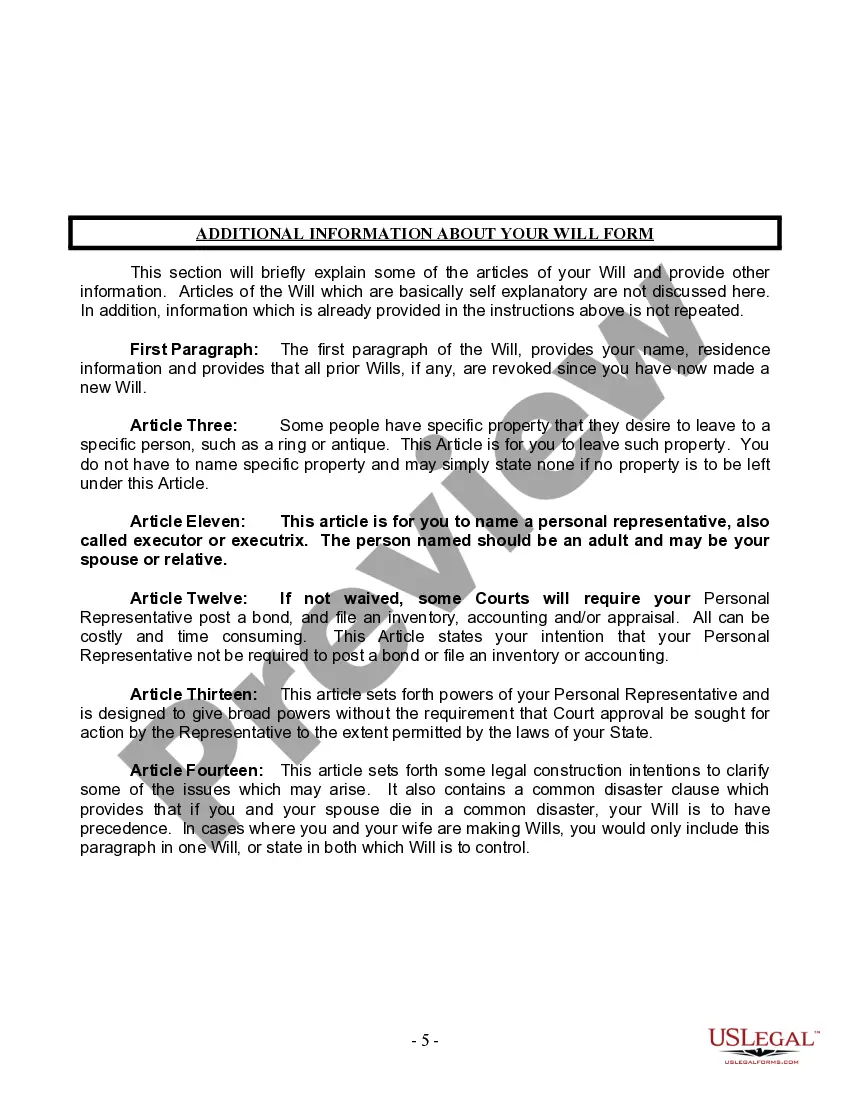
- Appointment of a personal representative or executor to handle the estate.
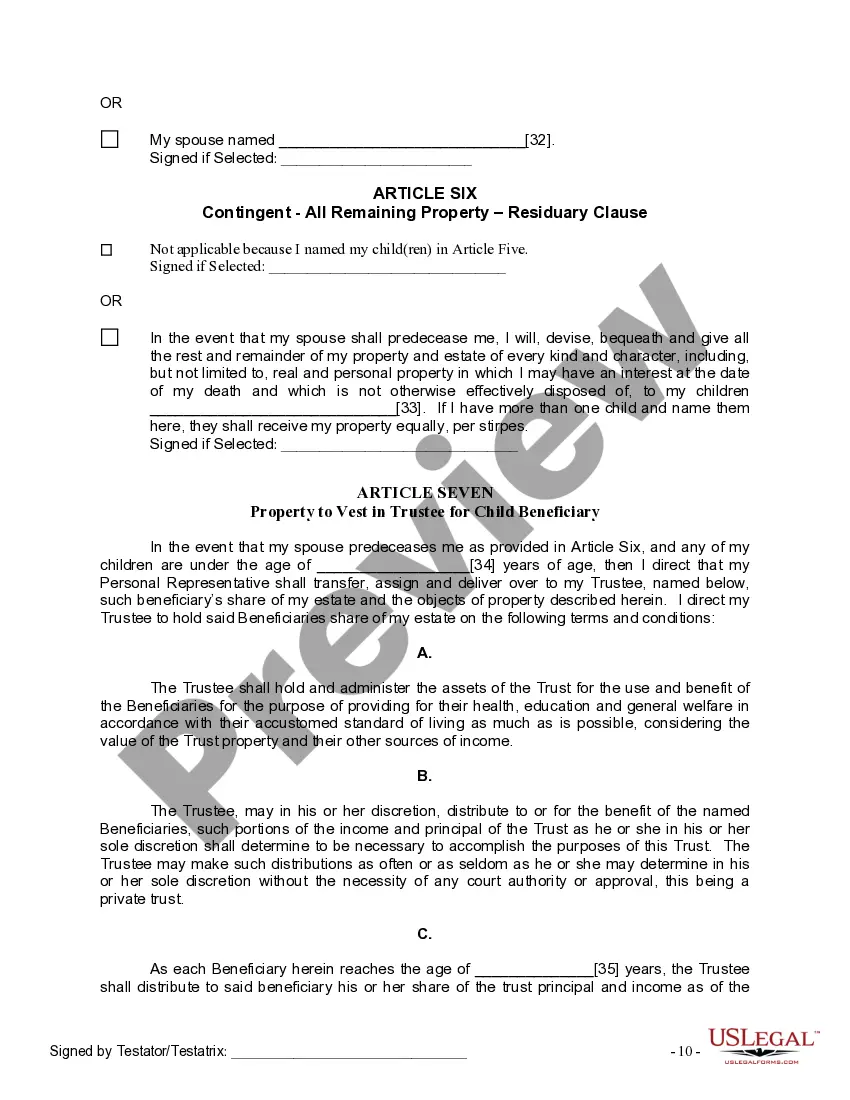
- Provisions for the guardianship of minor children from a prior marriage.
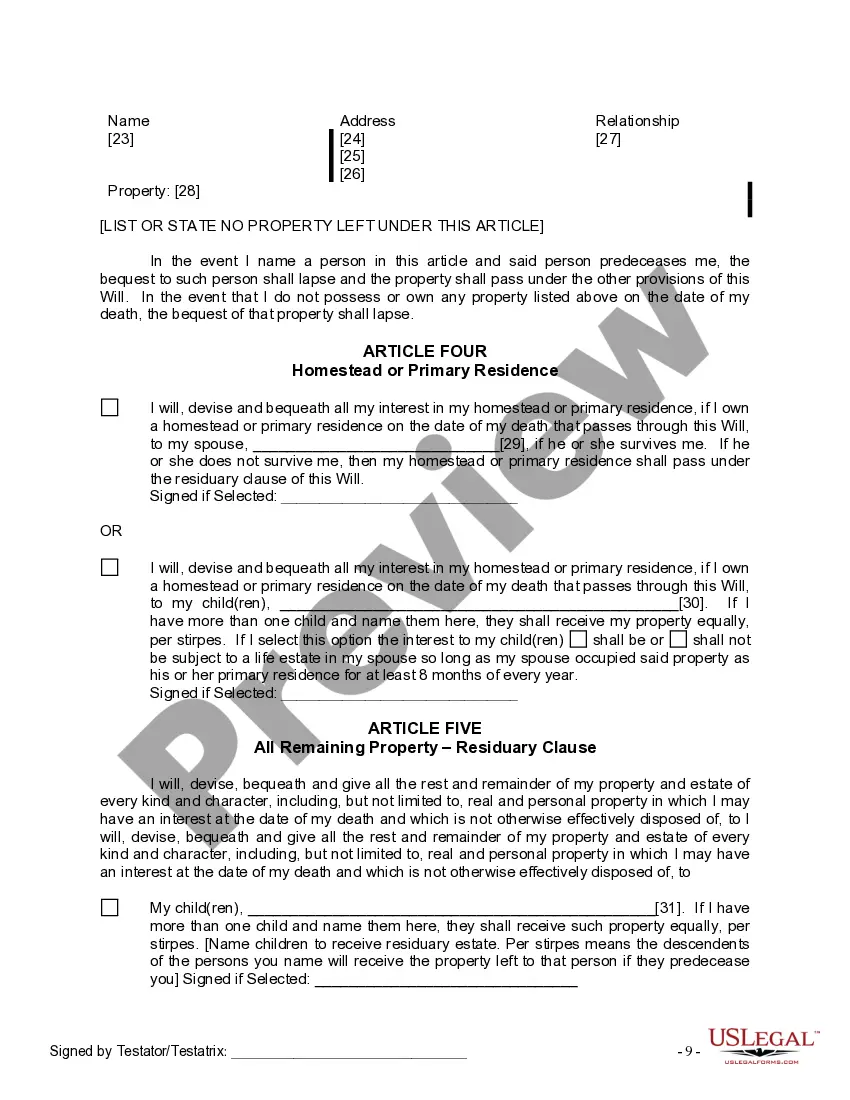
- Allocation of specific property and the remainder of the estate to beneficiaries.
- Establishment of trusts for minor beneficiaries until they reach a specified age.
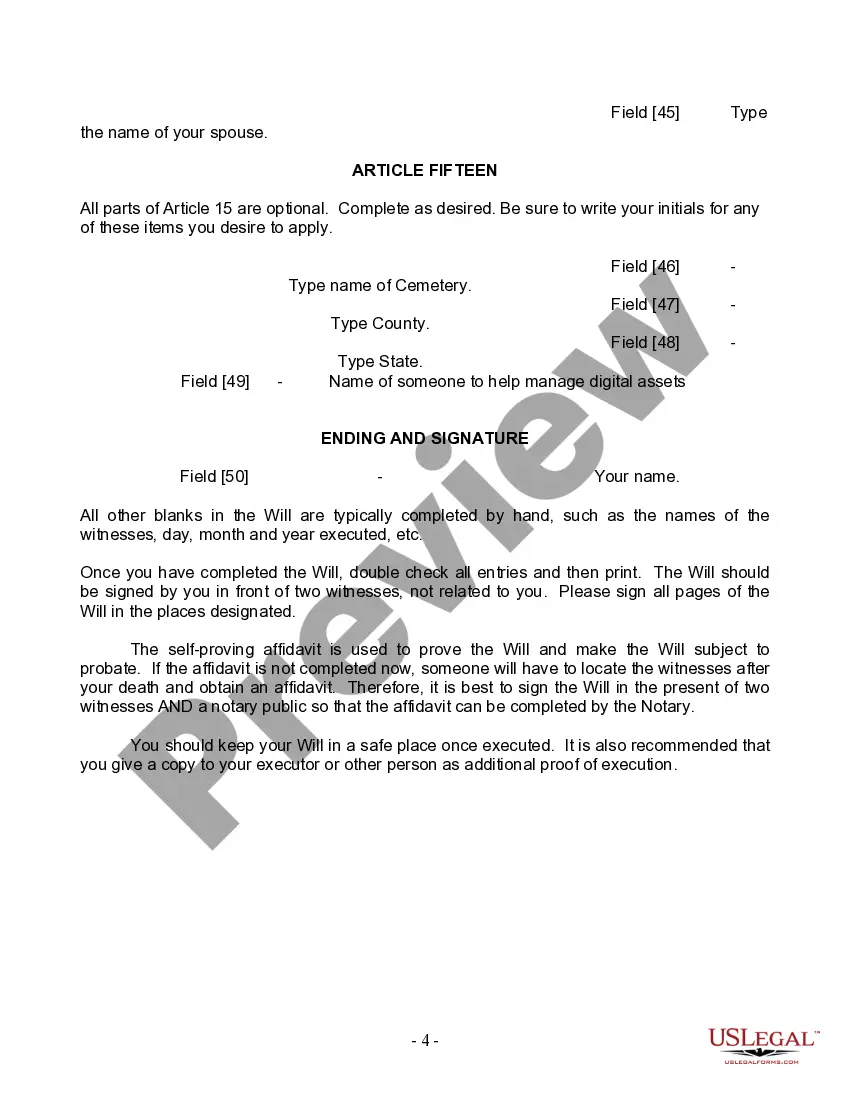
- Requirements for signing in front of witnesses and notes on notarization.

When to use this form
This form should be used when a married individual with minor children from a previous marriage wants to outline their wishes regarding asset distribution and guardianship in the event of their death. It is essential to have a clear document that reflects intent, especially in complex family situations, to prevent disputes among family members and ensure that all children are provided for appropriately.
Who can use this document
Intended audience:
- Married individuals with children from a prior marriage.
- Individuals looking to establish clear directives regarding estate distribution and guardianship.
- Those wanting to ensure that their minor children are financially supported after their passing.
- People who want to simplify the probate process and outline their wishes explicitly.
Instructions for completing this form
Steps to complete this form:
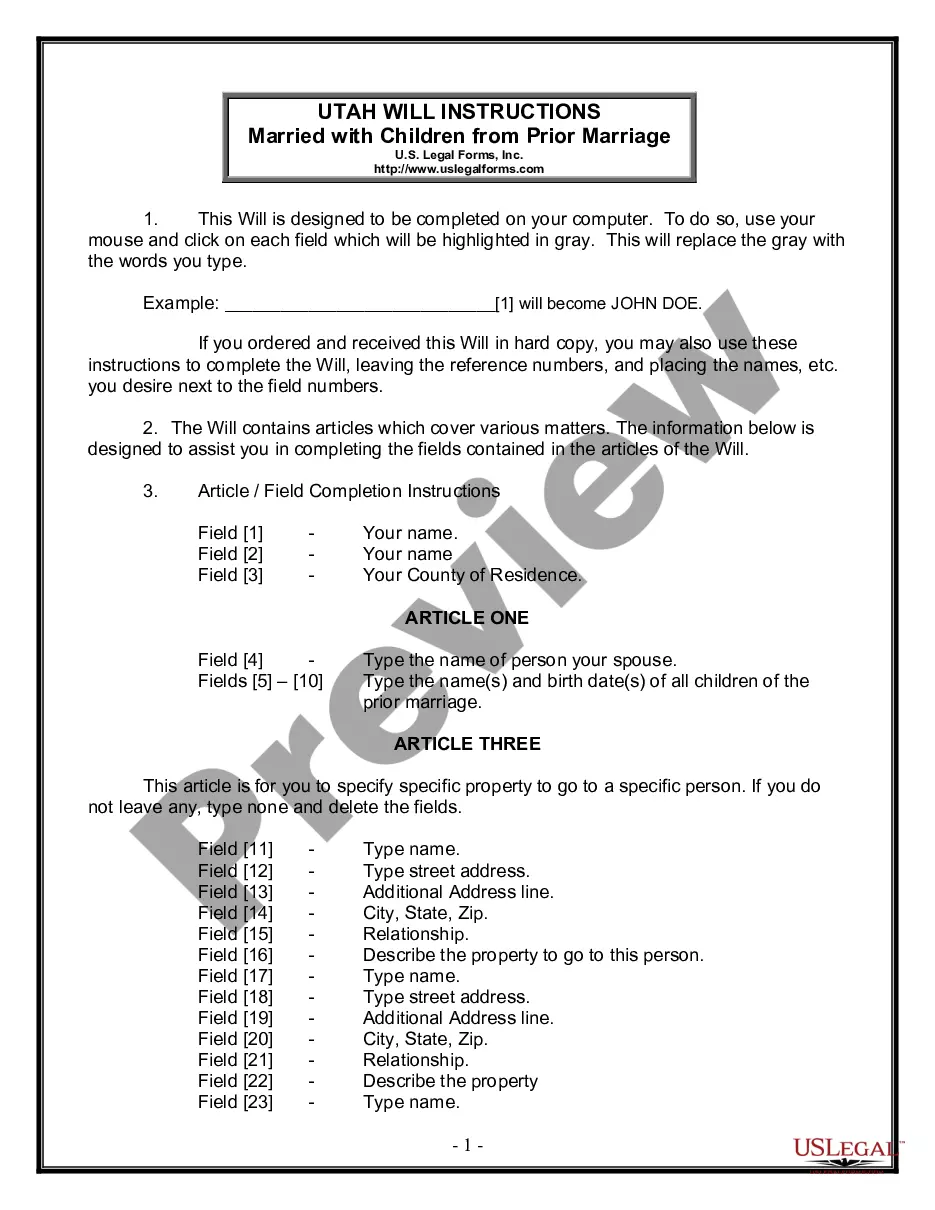
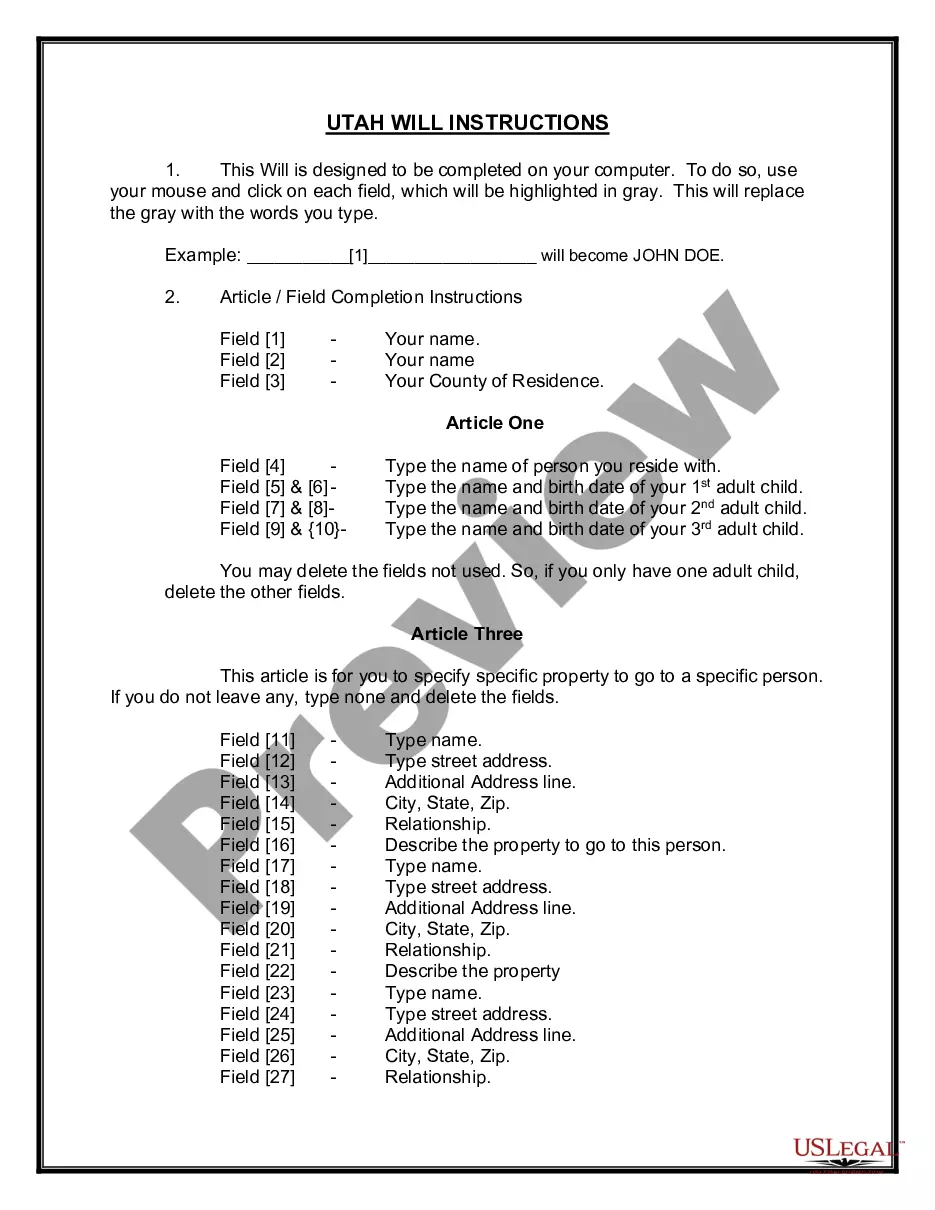
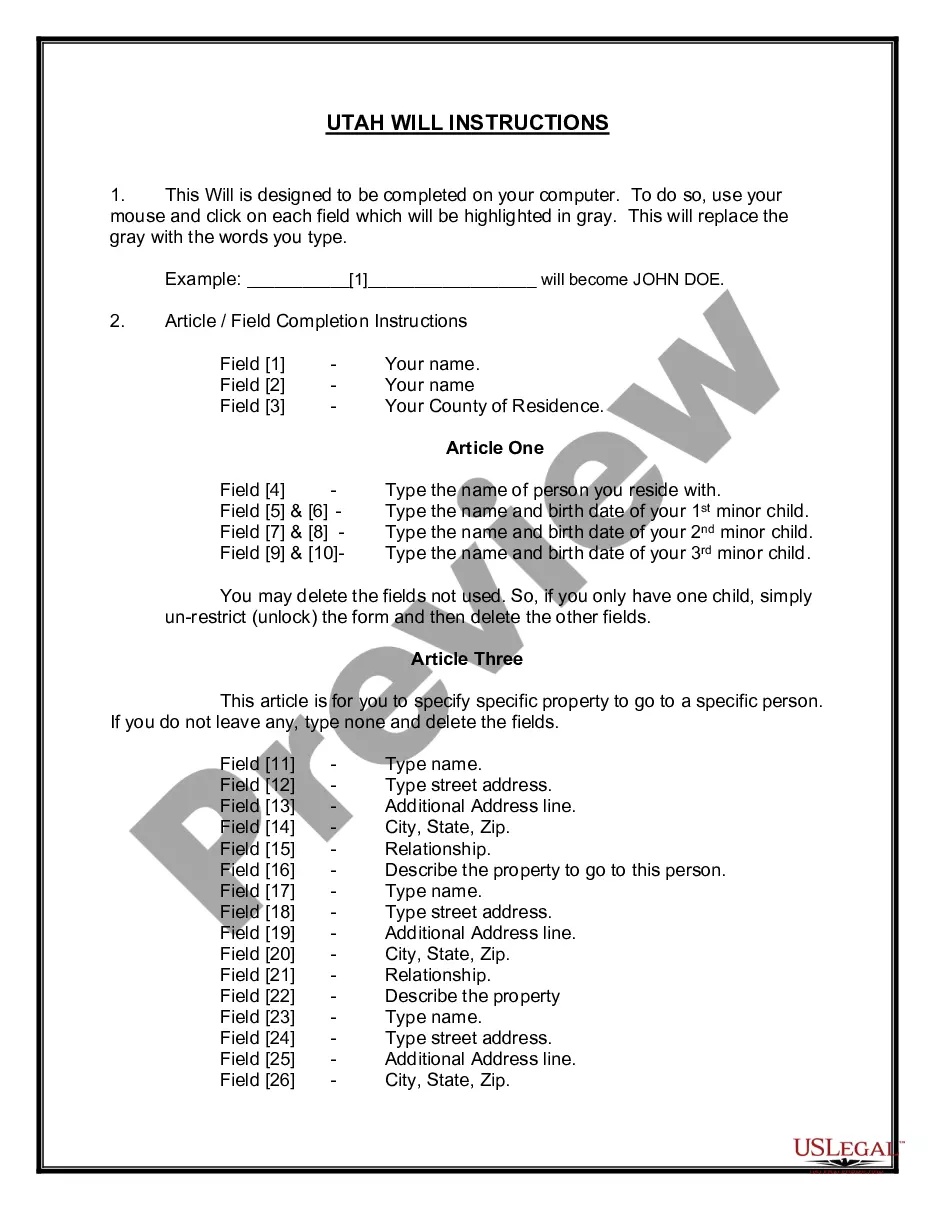
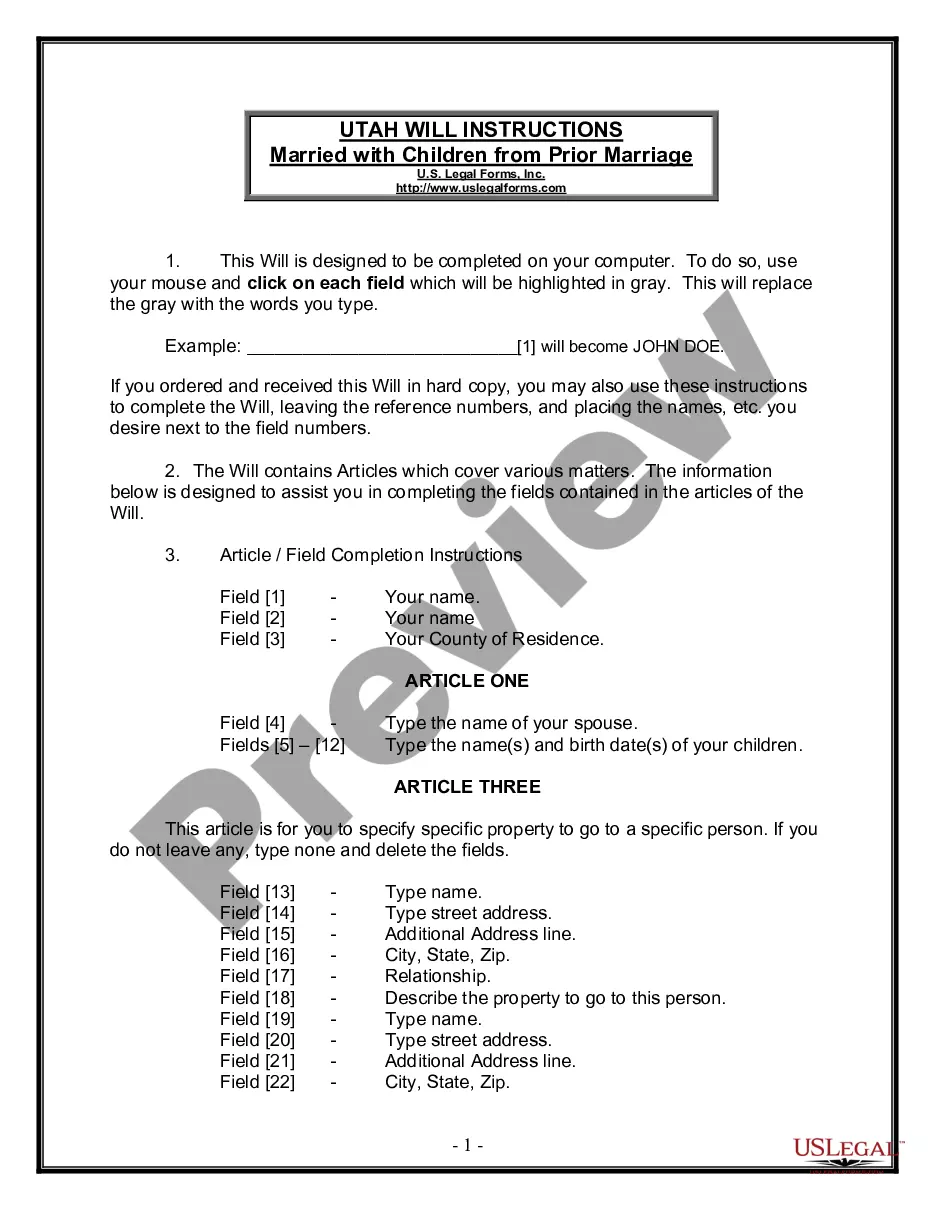
- Enter your name and residence information in the designated fields.
- Specify the name of your spouse and list all children from the prior marriage.
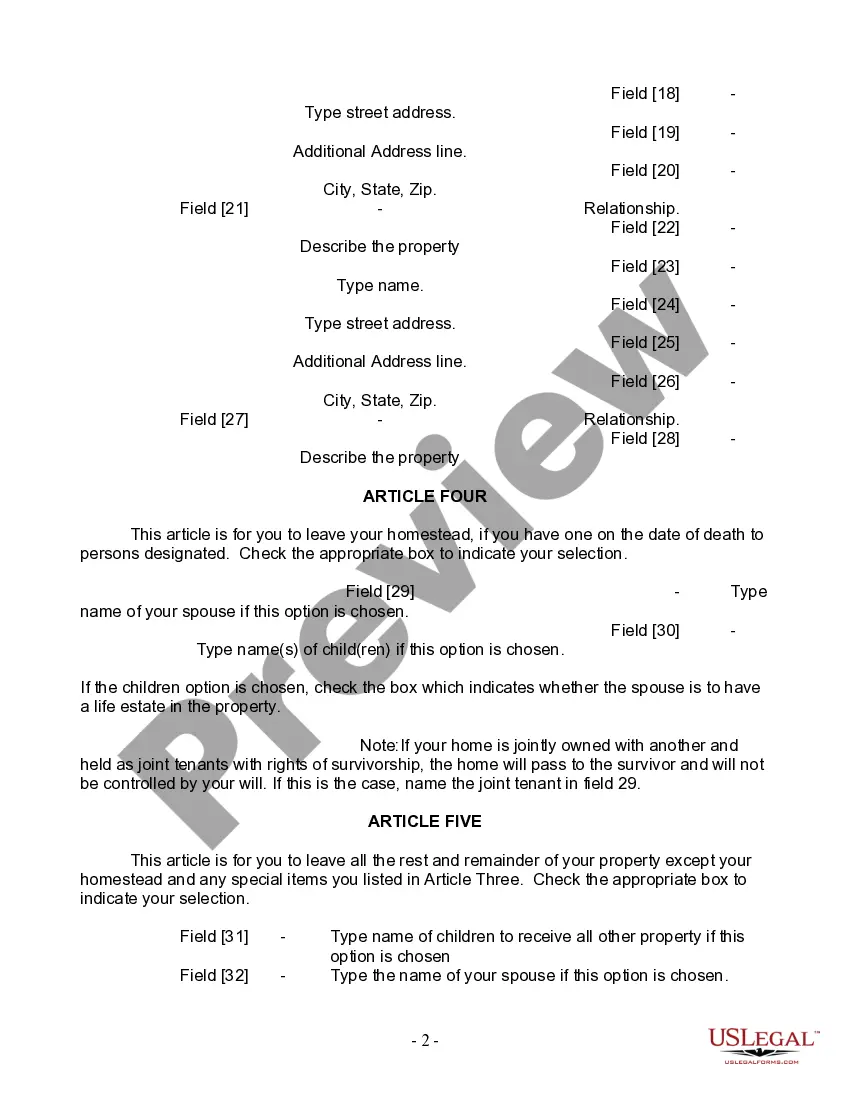
- Outline any specific property bequests and indicate who should receive them.
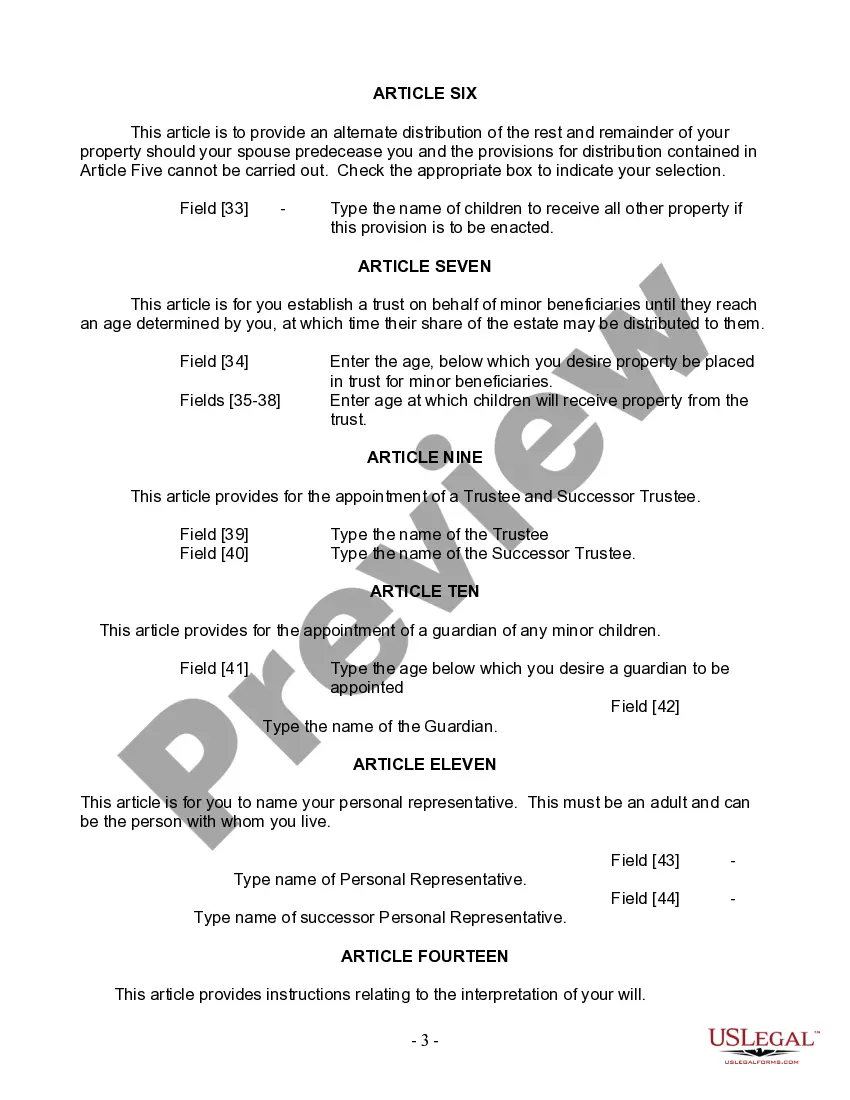
- Designate a personal representative and specify any trustees for minor beneficiaries.
- Sign the document in front of two witnesses to ensure its validity.
- Consider notarizing the will for additional legal standing, where applicable.
Notarization guidance
Yes, this form must be notarized to be legally valid. Notarization adds an extra layer of verification that can help expedite the probate process. US Legal Forms offers integrated online notarization, available twenty-four seven through secure video calls, ensuring your will meets all legal standards without the need for travel.
Get your form ready online
Our built-in tools help you complete, sign, share, and store your documents in one place.
Make edits, fill in missing information, and update formatting in US Legal Forms—just like you would in MS Word.
Download a copy, print it, send it by email, or mail it via USPS—whatever works best for your next step.
Sign and collect signatures with our SignNow integration. Send to multiple recipients, set reminders, and more. Go Premium to unlock E-Sign.
If this form requires notarization, complete it online through a secure video call—no need to meet a notary in person or wait for an appointment.
We protect your documents and personal data by following strict security and privacy standards.

Make edits, fill in missing information, and update formatting in US Legal Forms—just like you would in MS Word.

Download a copy, print it, send it by email, or mail it via USPS—whatever works best for your next step.

Sign and collect signatures with our SignNow integration. Send to multiple recipients, set reminders, and more. Go Premium to unlock E-Sign.

If this form requires notarization, complete it online through a secure video call—no need to meet a notary in person or wait for an appointment.

We protect your documents and personal data by following strict security and privacy standards.
Common mistakes to avoid
Common mistakes:
- Failing to name a backup personal representative in case the primary one cannot serve.
- Not specifying who will care for minor children should both parents pass away.
- Overlooking the need for signatures from witnesses, leading to invalidation of the will.
- Neglecting to review or update the will after major life events, such as divorce or the birth of additional children.
Benefits of completing this form online
Benefits of using this form online:
- Convenience of completing the document at your own pace.
- Editability allows for easy updates and adjustments as circumstances change.
- Access to legal templates that ensure compliance with state requirements.
- Secure storage options for keeping your will safe and easily accessible.
Summary of main points
- This will is essential for married individuals with previous children to ensure proper distribution of assets.
- It includes specific clauses for guardianship and trust management for minor beneficiaries.
- Be certain to complete the form in accordance with your state's legal requirements, including notarization.
- Using this form online offers convenient, reliable options tailored to your needs.
Looking for another form?
Form popularity
FAQ
Under Utah law, a will must be filed with the court with reasonable promptness after the death of the testator. Utah Code § 75-2-902. So, after you pass away, your will should be filed in your local probate court by the person named to be your personal representative (also called an executor or administrator).
A notarized will does not need to be probated.When a person dies leaving behind a will that is not notarized, the law requires that its validity be ascertained by a notary or by a court. Similarly, any non-notarized modification made to a will must be probated, whether the will is notarized or not.
Fraud or Undue Influence A nonfamily caregiver forcing the testator to leave them an inheritance. A family member getting the testator to sign a will by pretending it is just a general legal document that needs a signature.
Yes. Handwritten (holographic) wills are valid in Utah if they meet certain requirements. What do I need in a holographic will? A holographic will should be entirely in your own handwriting.
A will can also be declared invalid if someone proves in court that it was procured by undue influence. This usually involves some evil-doer who occupies a position of trust -- for example, a caregiver or adult child -- manipulating a vulnerable person to leave all, or most, of his property to the manipulator instead
No, in Utah, you do not need to notarize your will to make it legal. However, Utah allows you to make your will "self-proving" and you'll need to go to a notary if you want to do that. A self-proving will speeds up probate because the court can accept the will without contacting the witnesses who signed it.
Witnesses: A Utah will must be signed by at least two witnesses, each of whom have signed within a reasonable time after witnessing the signing of the will or the testator's acknowledgement of the signature or of the will. Writing: A Utah will must be in writing. Beneficiaries: A testator can leave property to anyone.