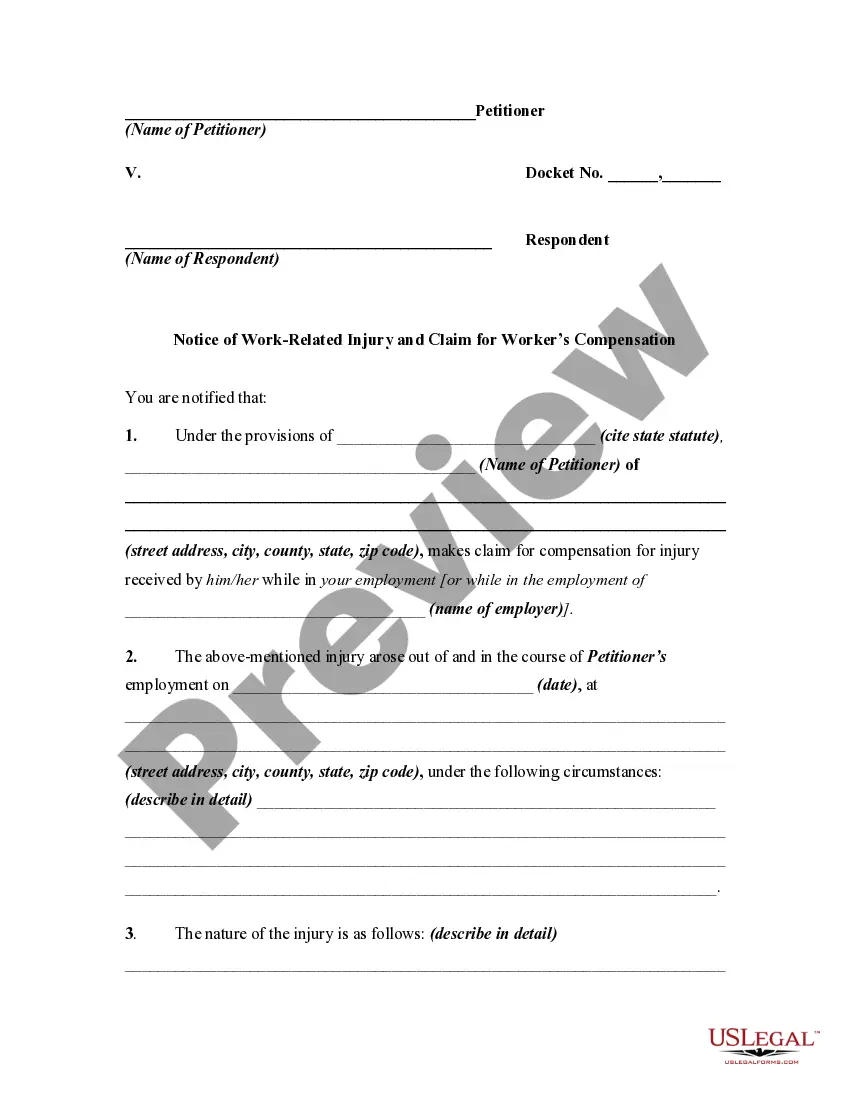
Utah Warranty Deed for Limited Partnership or LLC is the Grantor, or Grantee
What this document covers
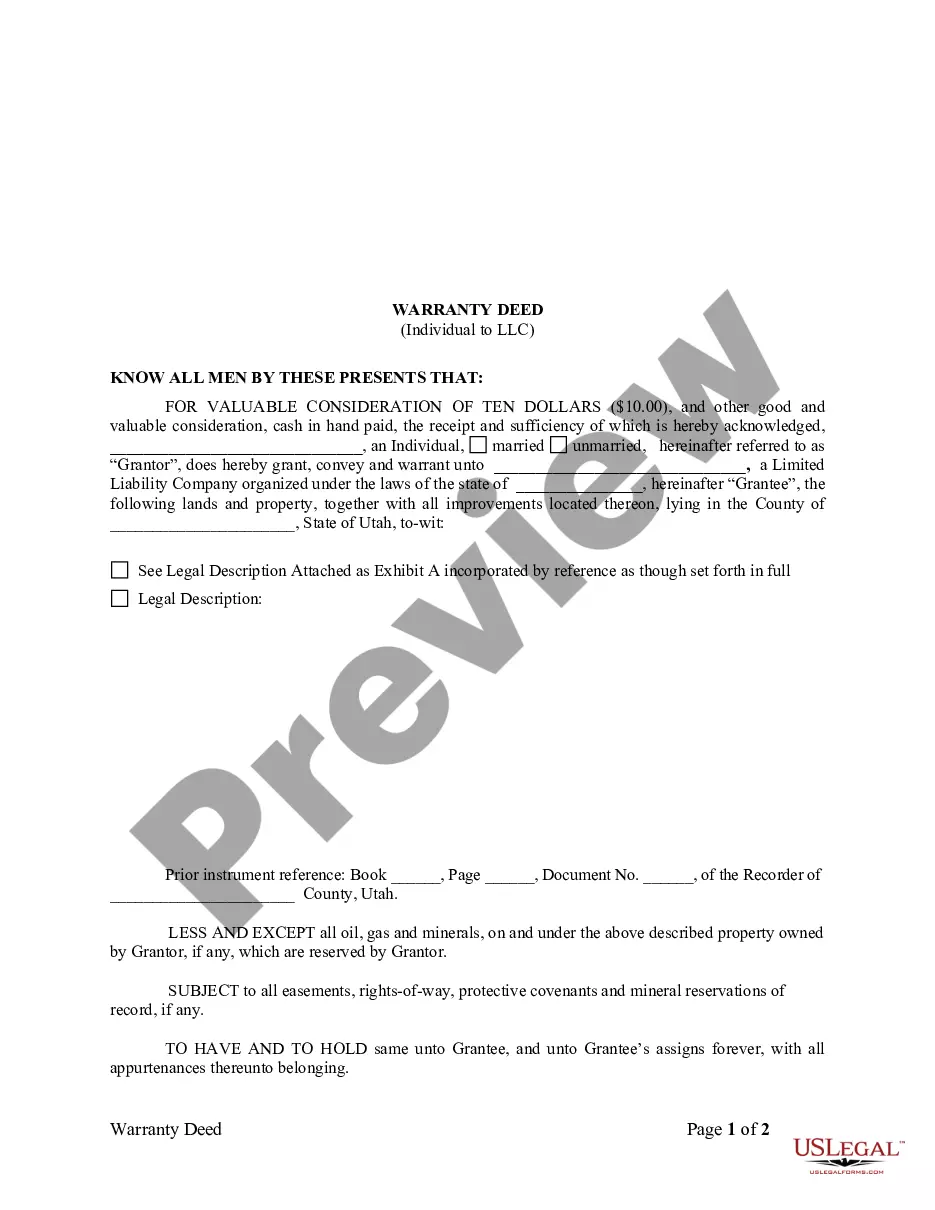
The Warranty Deed for Limited Partnership or LLC is a legal document used to transfer ownership of property from one party to another, where either the grantor or grantee is a limited partnership or a limited liability company (LLC). This form provides a warranty of clear title, ensuring that the property is free from encumbrances, and it is specifically designed for entities rather than individuals, making it distinct from standard warranty deeds. This form is essential for property transactions involving business entities.
What’s included in this form
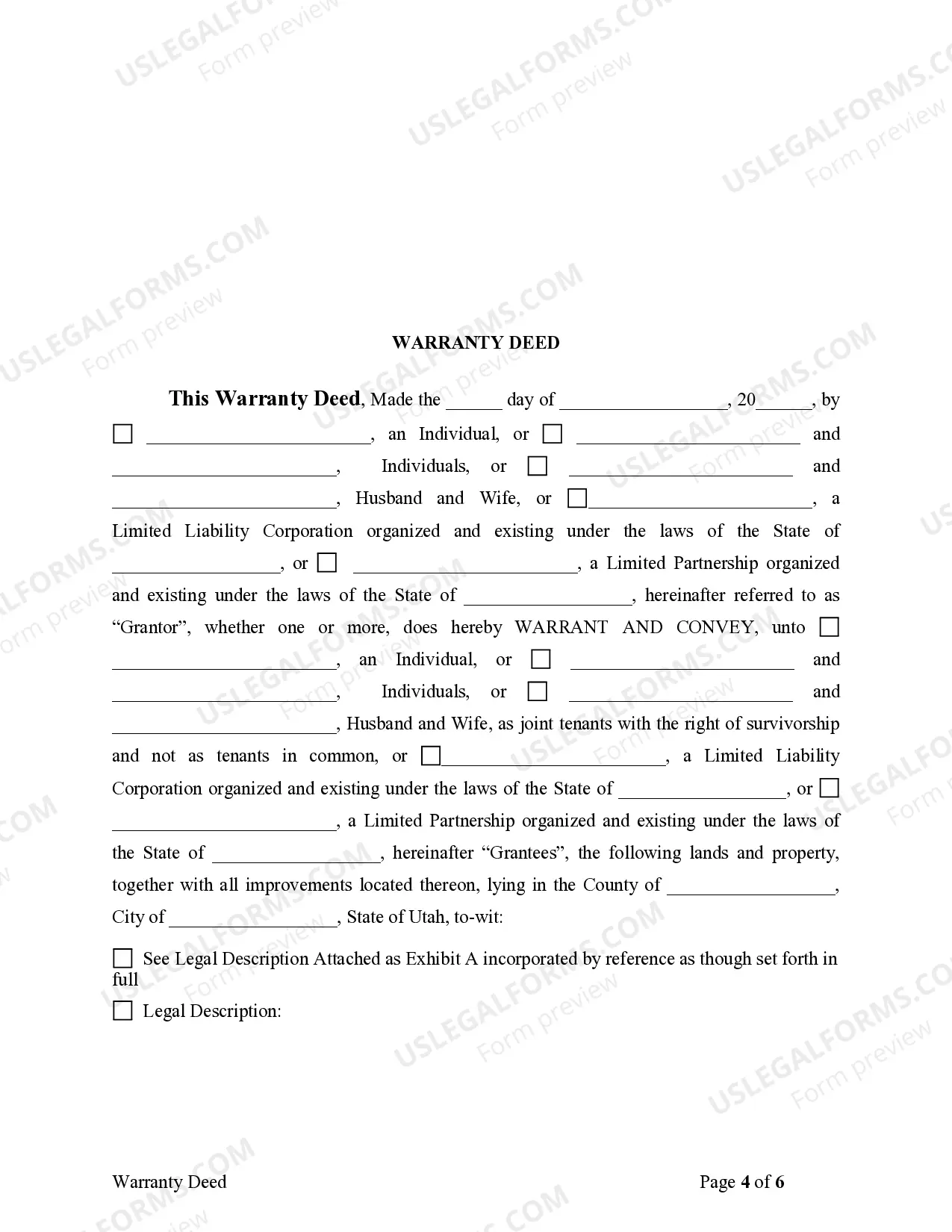
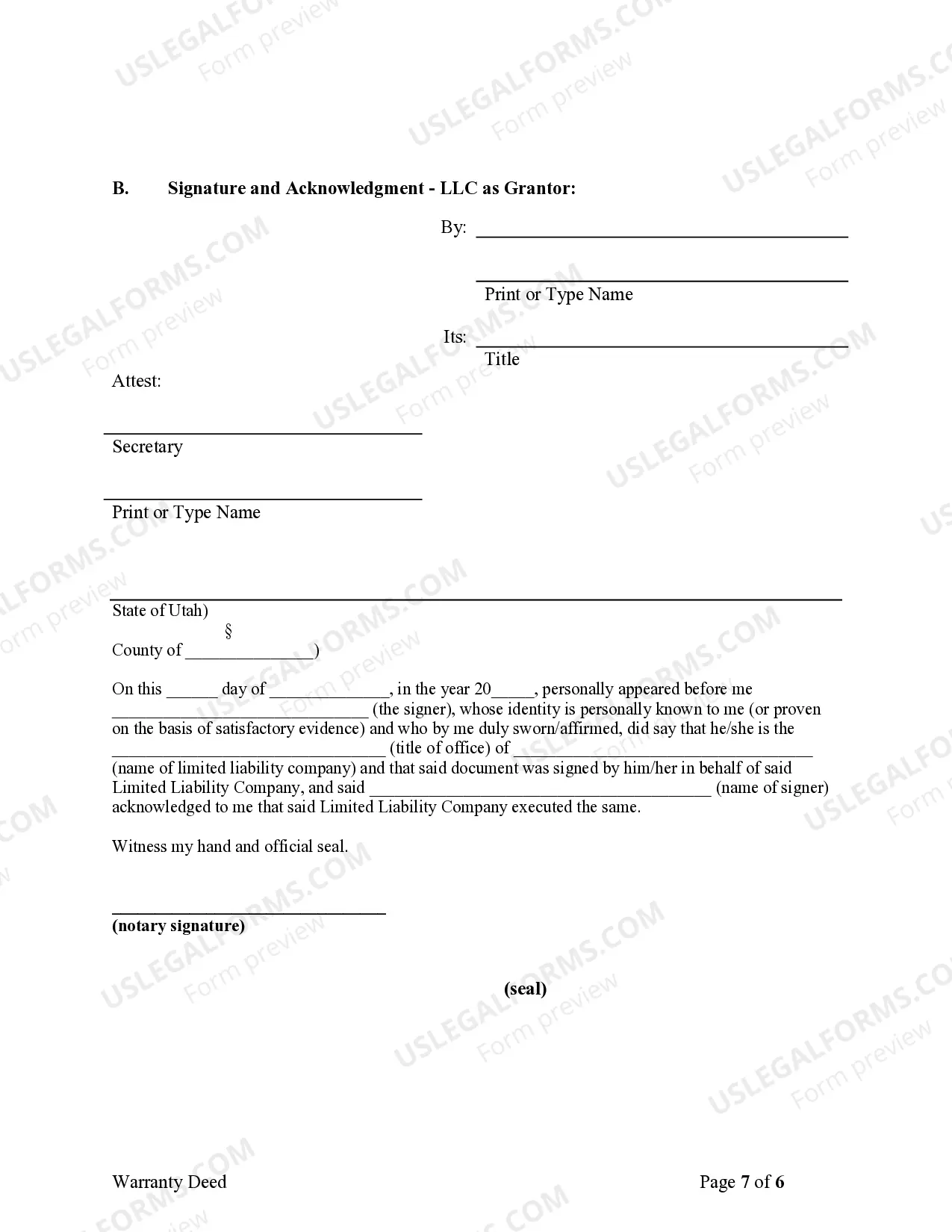
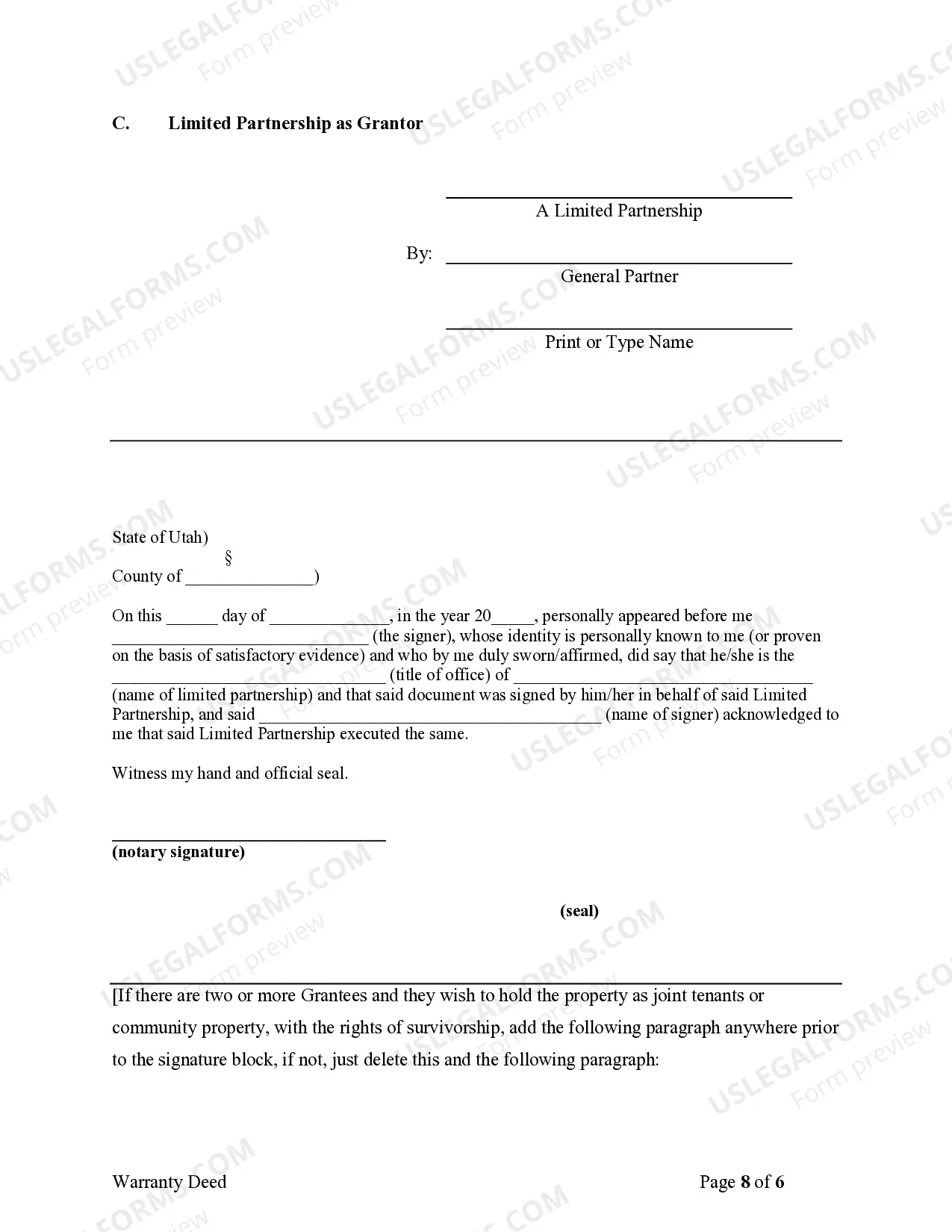
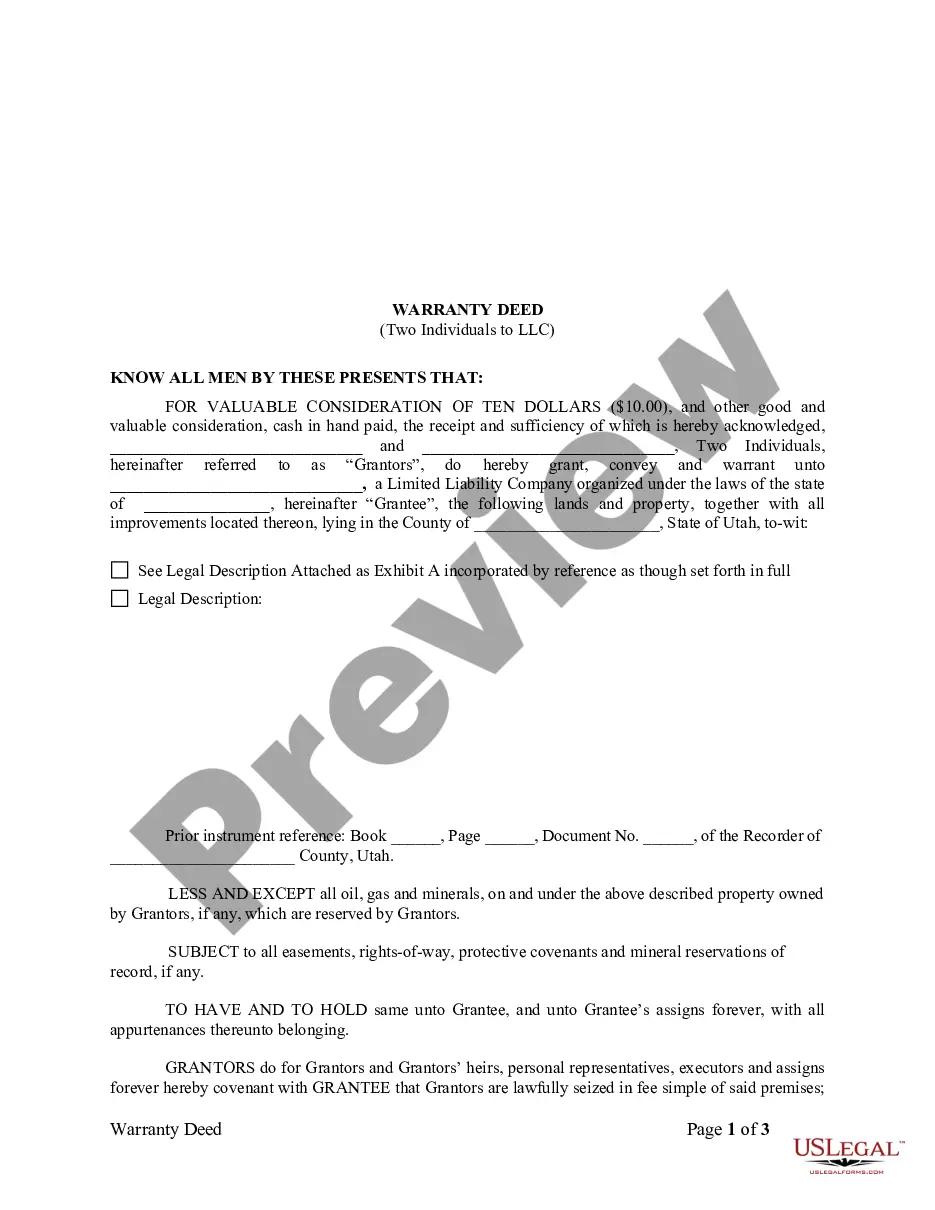
- Identification of the grantor and grantee, specifying whether they are individuals, a limited liability corporation, or a limited partnership.
- A detailed legal description of the property being conveyed.
- Warranty clause affirming that the grantor holds clear title to the property.
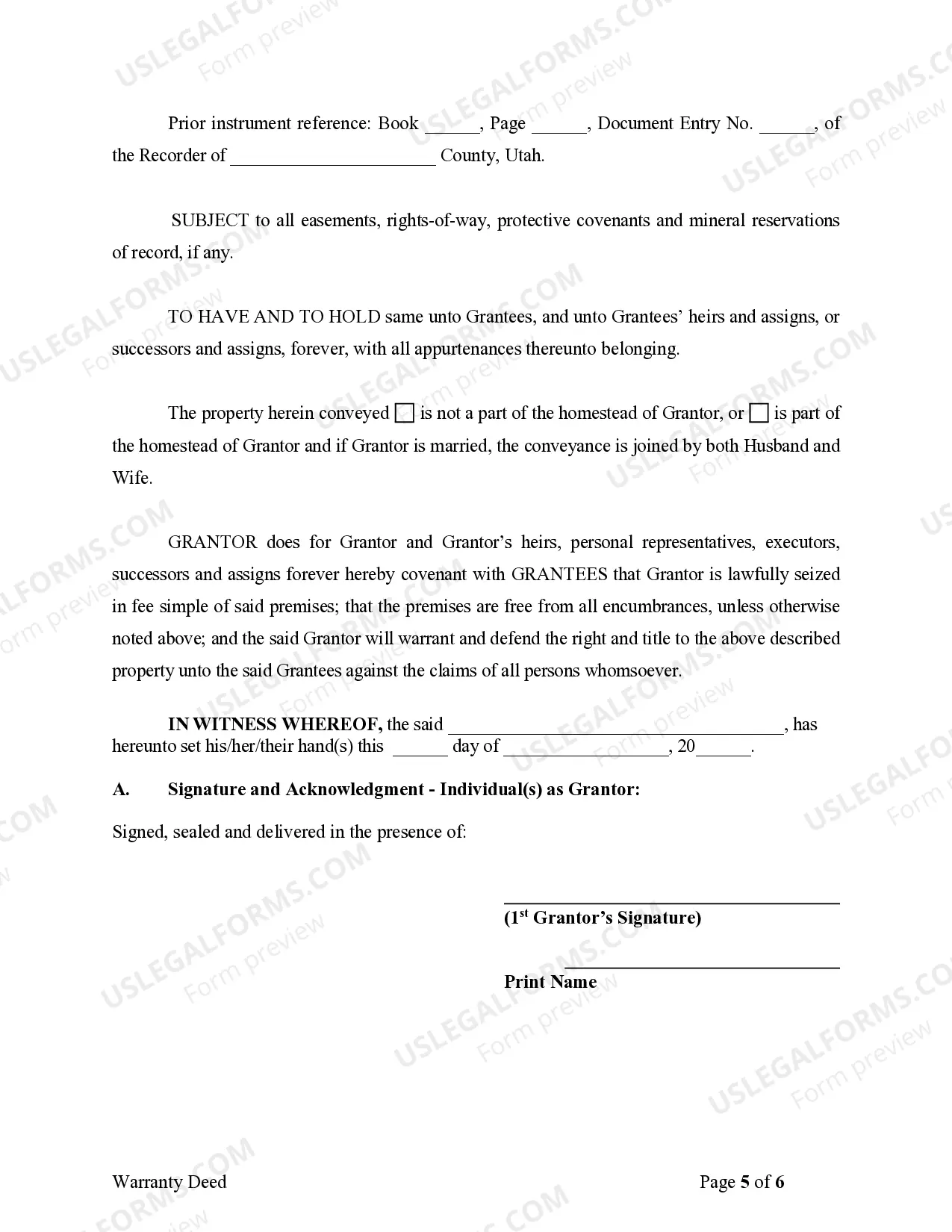
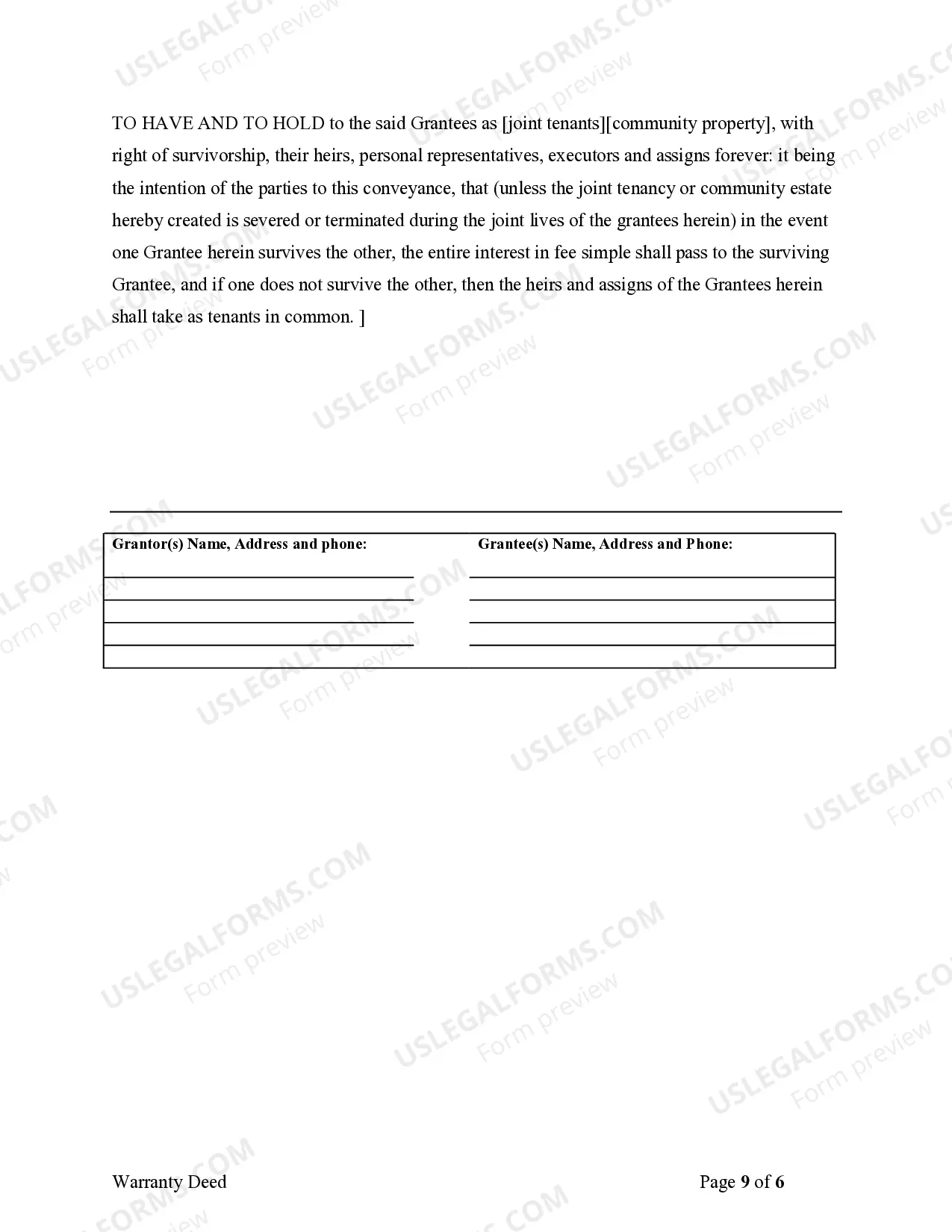
- Terms specifying the type of joint tenancy, including the right of survivorship if applicable.
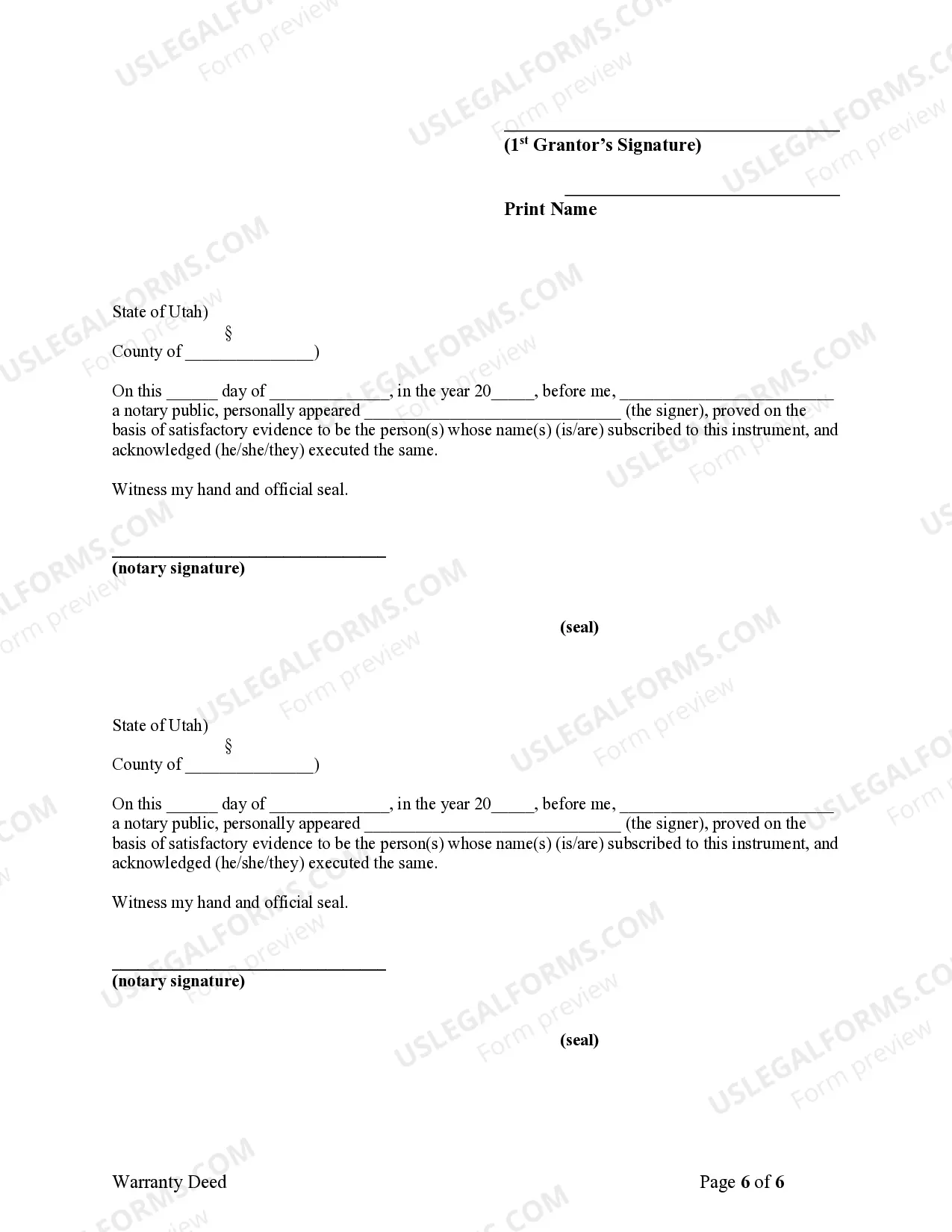
- Signature blocks for the grantor and any necessary witnesses or notaries.



When this form is needed
This form should be used when a limited partnership or LLC is involved in a property transaction. Common scenarios include the acquisition of real estate by a business entity, transferring property ownership between business entities, or when a partnership desires to assert property rights legally. It is essential for ensuring that the property rights are clearly defined and legally protected within the context of business transactions.
Intended users of this form
This form is appropriate for:
- Limited partnerships wishing to transfer ownership of real estate.
- Limited liability companies involved in property transactions.
- Individuals acting on behalf of a business entity in real estate dealings.
- Real estate professionals facilitating transactions that include business entities as parties.
Completing this form step by step
- Identify the grantor and grantee, clearly noting their legal entity type (LLC or limited partnership).
- Provide a detailed legal description of the property being transferred.
- Select the appropriate type of joint tenancy if applicable and indicate the survivorship terms.
- Insert the date of the transaction and ensure all parties sign the document.
- Ensure any necessary witnesses are present for the signatures, if required.
Notarization guidance
This form must be notarized to be legally valid. US Legal Forms provides secure online notarization powered by Notarize, allowing you to complete the process through a verified video call.
Get your form ready online
Our built-in tools help you complete, sign, share, and store your documents in one place.
Make edits, fill in missing information, and update formatting in US Legal Forms—just like you would in MS Word.
Download a copy, print it, send it by email, or mail it via USPS—whatever works best for your next step.
Sign and collect signatures with our SignNow integration. Send to multiple recipients, set reminders, and more. Go Premium to unlock E-Sign.
If this form requires notarization, complete it online through a secure video call—no need to meet a notary in person or wait for an appointment.
We protect your documents and personal data by following strict security and privacy standards.

Make edits, fill in missing information, and update formatting in US Legal Forms—just like you would in MS Word.

Download a copy, print it, send it by email, or mail it via USPS—whatever works best for your next step.

Sign and collect signatures with our SignNow integration. Send to multiple recipients, set reminders, and more. Go Premium to unlock E-Sign.

If this form requires notarization, complete it online through a secure video call—no need to meet a notary in person or wait for an appointment.

We protect your documents and personal data by following strict security and privacy standards.
Common mistakes
- Failing to provide a complete legal description of the property.
- Not clearly specifying the type of grantor or grantee entity.
- Omitting signatures from all necessary parties.
- Not consulting local regulations that may affect the property transfer.
Benefits of completing this form online
- Convenience of completing the form at any time, avoiding travel and in-person meetings.
- Editability allows users to ensure all details are accurate before finalizing.
- Structured format helps guide users through completion, reducing the potential for errors.
Looking for another form?
Form popularity
FAQ
In a Warranty Deed, the grantee is the person who the interest in a property is being transferred to. For example, if you are buying a property from someone else, you are the grantee, and the person selling it is the grantor.
It's important to note that a warranty deed does not actually prove the grantor has ownership (a title search is the best way to prove that), but it is a promise by the grantor that they are transferring ownership and if it turns out they don't actually own the property, the grantor will be responsible for compensating
No, in most states, the Grantee is not required to sign the Quitclaim Deed. However, some counties do require that the Quitclaim Deed be signed by the Grantee in addition to the Grantor.
Typically, the lender will provide you with a copy of the deed of trust after the closing. The original warranty deeds are often mailed to the grantee after they are recorded. These are your original copies and should be kept in a safe place, such as a fireproof lockbox or a safe deposit box at a financial institution.
A grantee is the recipient of something, such as a college grant or real estate property. A grantor is a person or entity that transfers to another person or entity the interest or ownership rights to an asset. Legal documents, such as deeds, detail the transfer of assets between grantors and grantees.
Grantor's signature: The grantor must sign the deed for it to be valid. Usually, if more than one person owns a property, all the owners must sign. In some states a husband or wife who own property by themselves may have to have the spouse also sign the deed even though the spouse does not have title to the property.
The Utah warranty deed is a form of deed that provides an unlimited warranty of title. It makes an absolute guarantee that the current owner has good title to the property.
A warranty deed, also known as a general warranty deed, is a legal real estate document between the seller (grantor) and the buyer (grantee). The deed protects the buyer by pledging that the seller holds clear title to the property and there are no encumbrances, outstanding liens, or mortgages against it.
No, California does not require that the Grantee sign a warranty deed. However, some states and counties require that the deed be signed by the Grantee in addition to the Grantor.