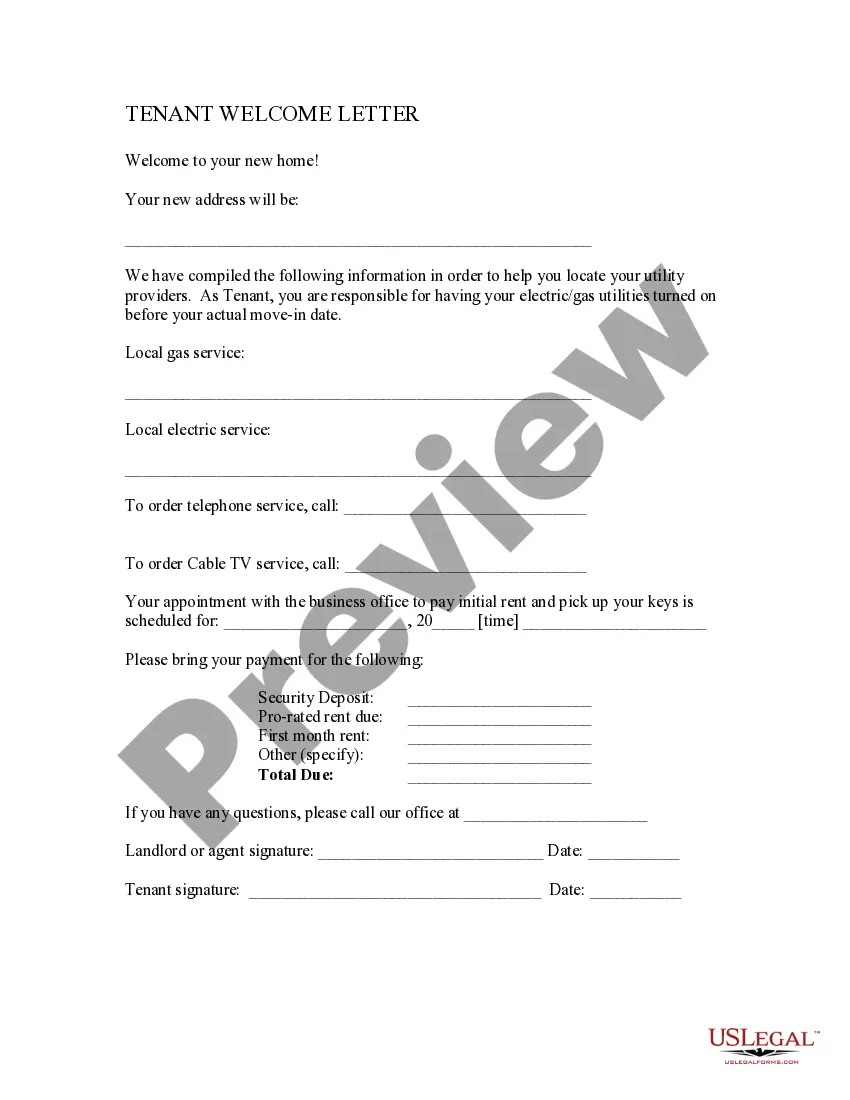
Utah Tenant Welcome Letter
What is this form?
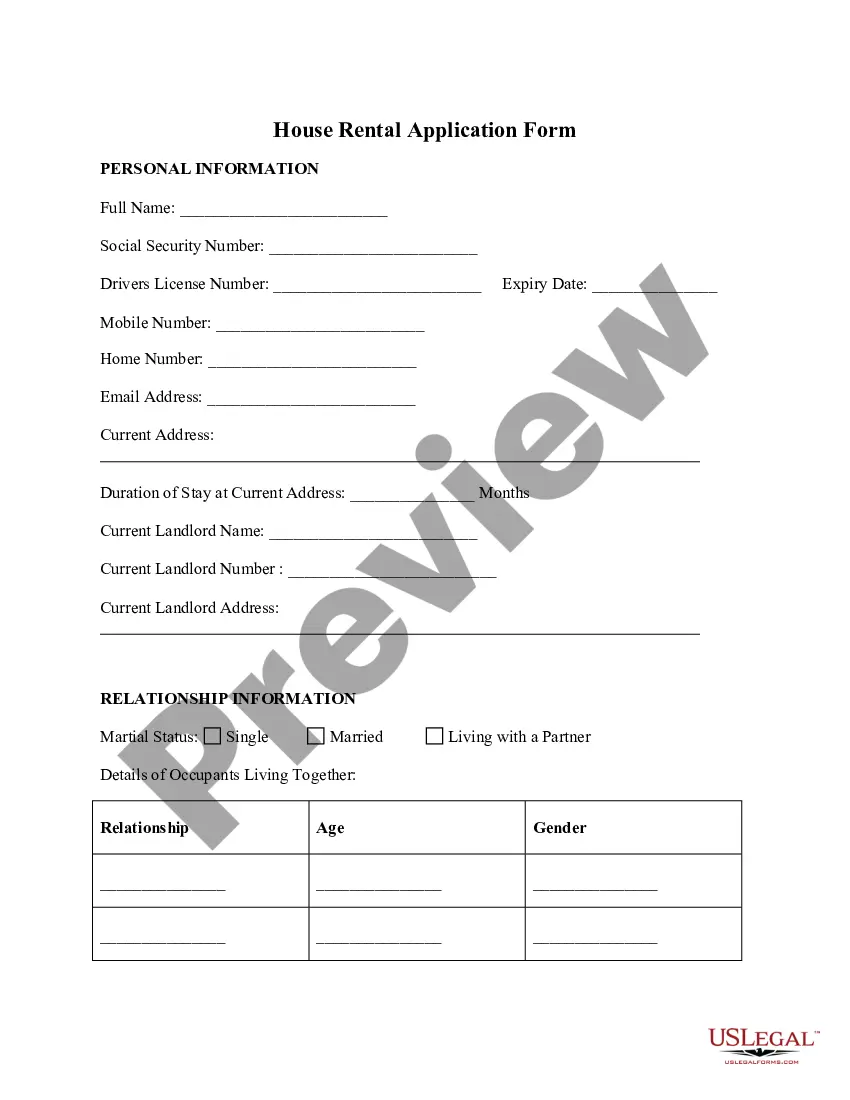
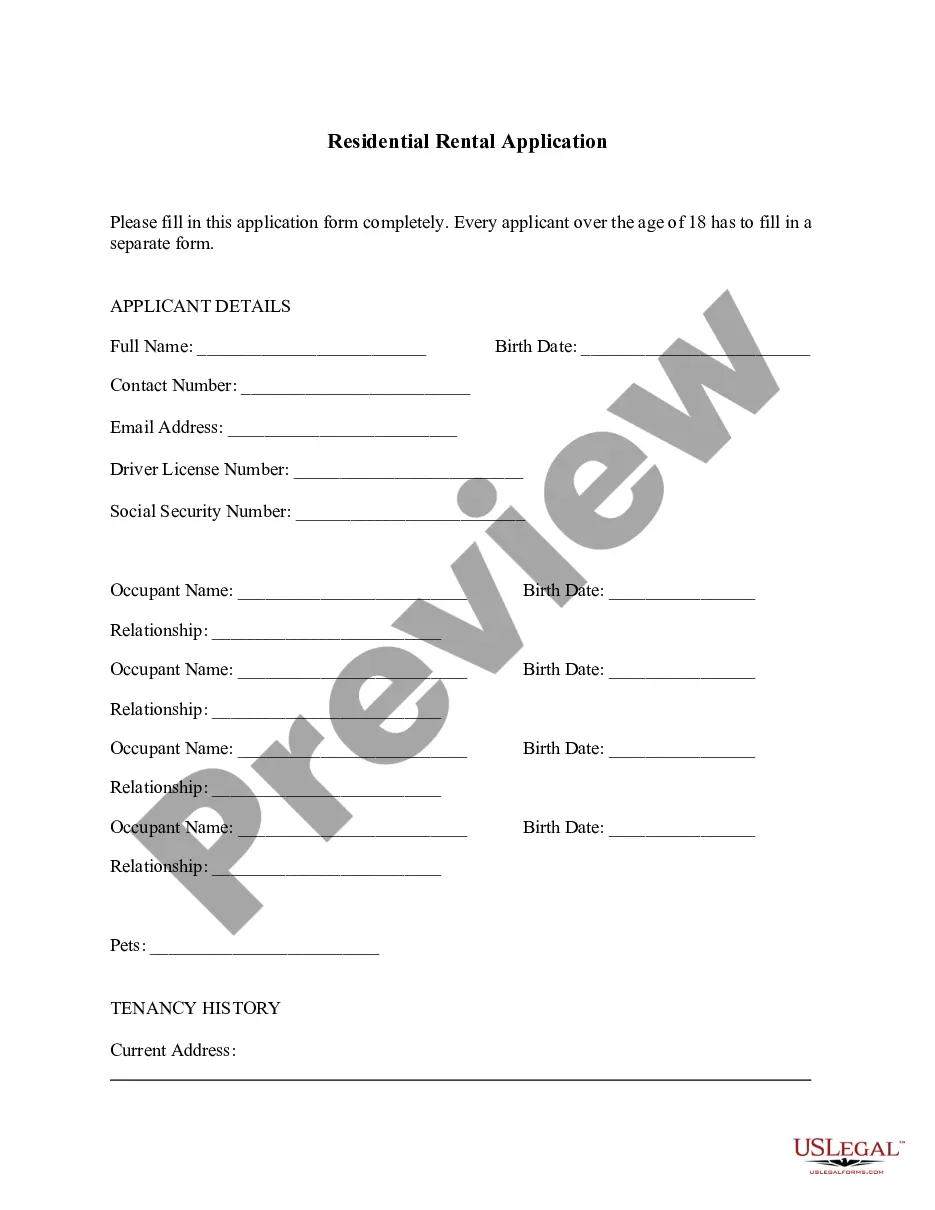
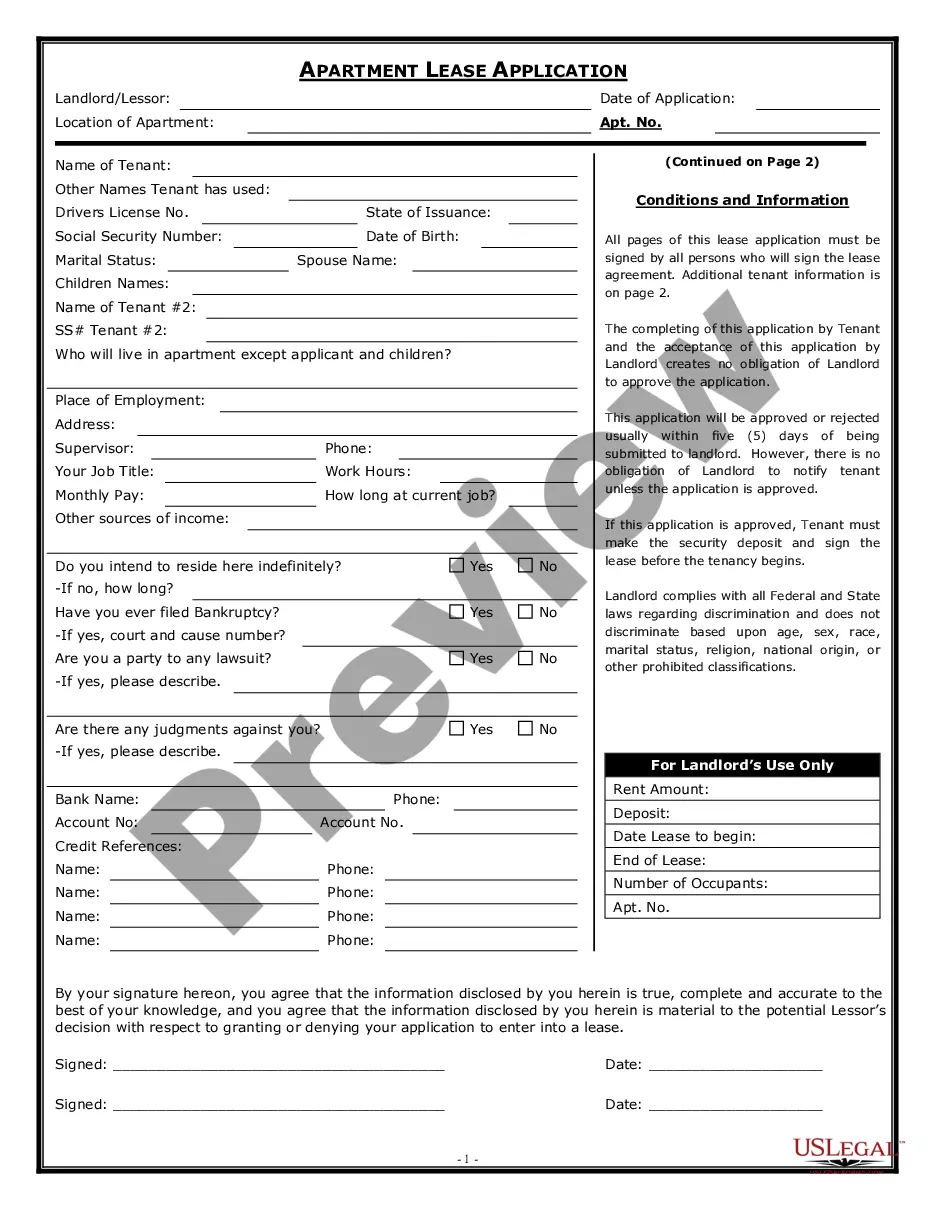
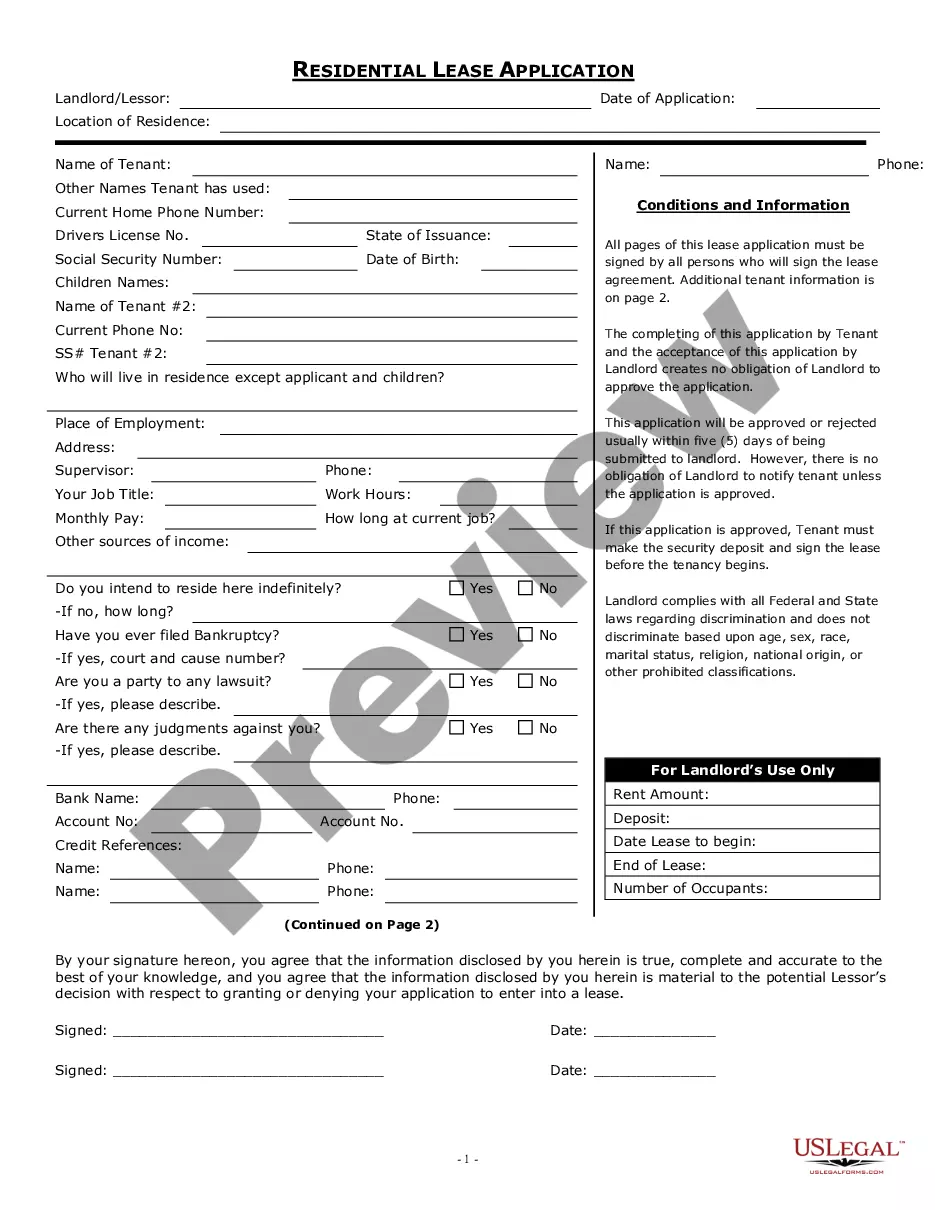
The tenant welcome letter is a formal document designed to provide essential information to new tenants. This letter serves as an introduction and includes contact details for utility providers and reminders related to the lease agreement. It helps establish clear communication between landlords and tenants, differentiating it from other forms like lease agreements or notices to vacate.
Form components explained
- Contact information for utility services.
- Payment instructions for the security deposit, prorated rent, and first month's rent.
- A section to specify any additional payments due.
- A total amount due for initial payments.
Situations where this form applies
This tenant welcome letter should be used when a landlord leases a property to a new tenant. It is important to provide this document at the beginning of the tenancy to ensure that the tenant has all the necessary information for a smooth transition into their new home.
Who this form is for
The following individuals or entities should consider using this form:
- Landlords who are renting out residential properties.
- Property managers overseeing tenant relations.
- Real estate agents facilitating rental agreements.
Instructions for completing this form
- Start by providing the contact details for utility providers relevant to the property.
- Specify the amounts for the security deposit, prorated rent, and first month's rent in the designated fields.
- Include any other fees or charges that the tenant should be aware of.
- Sum up the total due amount and make it clear for the tenant to understand their payment obligations.
- Deliver the completed welcome letter to the tenant at the time of lease signing.
Is notarization required?
This form does not typically require notarization unless specified by local law. Ensure to check any state-specific requirements that may necessitate notarization to enhance legal validity.
Get your form ready online
Our built-in tools help you complete, sign, share, and store your documents in one place.
Make edits, fill in missing information, and update formatting in US Legal Forms—just like you would in MS Word.
Download a copy, print it, send it by email, or mail it via USPS—whatever works best for your next step.
Sign and collect signatures with our SignNow integration. Send to multiple recipients, set reminders, and more. Go Premium to unlock E-Sign.
If this form requires notarization, complete it online through a secure video call—no need to meet a notary in person or wait for an appointment.
We protect your documents and personal data by following strict security and privacy standards.

Make edits, fill in missing information, and update formatting in US Legal Forms—just like you would in MS Word.

Download a copy, print it, send it by email, or mail it via USPS—whatever works best for your next step.

Sign and collect signatures with our SignNow integration. Send to multiple recipients, set reminders, and more. Go Premium to unlock E-Sign.

If this form requires notarization, complete it online through a secure video call—no need to meet a notary in person or wait for an appointment.

We protect your documents and personal data by following strict security and privacy standards.
Common mistakes
- Failing to provide complete contact information for utility services.
- Omitting important payment details, leading to confusion for the tenant.
- Not updating the form with current amounts due or relevant changes in policy.
Benefits of completing this form online
- Convenient access to a ready-made template tailored by licensed attorneys.
- Editability allows landlords to customize information quickly.
- Reliability in ensuring compliance with legal standards for tenant communications.
Key takeaways
- The Tenant Welcome Letter helps streamline the move-in process for new tenants.
- It includes critical information like payment details and utility contacts.
- A well-completed welcome letter fosters a positive landlord-tenant relationship.
Looking for another form?




Form popularity
FAQ
Your contact information. Time and date of the rental walkthrough. Time and location for key collection. Instructions on setting up utilities.
A tenant welcome letter provides an informal way for a landlord to say hello or a more formal way to provide helpful information. The document can refer to a list of apartment rules and regulations and include a checklist of the unit's move-in condition.
Clean the Unit and Repair Damage. Provide Information About Utilities. Assemble a Welcome Package. Help With Logistics During the Move. A Warm Welcome for Your Tenant.
Write your welcome letter to demonstrate to others that you value them. Express your appreciation. Keep it short, inviting, and to the point. Attach a gift or provide useful information. Include an invitation to a special event. Use language that conveys your enthusiasm or appreciation.
Begin the letter with the date on which you mail or deliver the letter in person. Include your name, address and phone number, followed by the tenant's name and address. You can also insert a subject line that summarizes the reason for the letter to vacate. Start with a salutation, followed by your tenant's name.
Congratulations! You've found new tenants and you're ready to welcome them to your property. Up until now, you've put in a lot of work: you've listed your property, screened tenants, signed a lease, and now you're ready to help your tenants settle in.
A tenant welcome letter provides an informal way for a landlord to say hello or a more formal way to provide helpful information. The document can refer to a list of apartment rules and regulations and include a checklist of the unit's move-in condition.
A welcome letter is a document provided by you to new employees. Welcome letters introduce key team members and provide basic information to the new employee to prepare them for their first day on the job.