Attempted Coercion and Enticement of a Minor to Engage in Sexual Activity
What is this form?
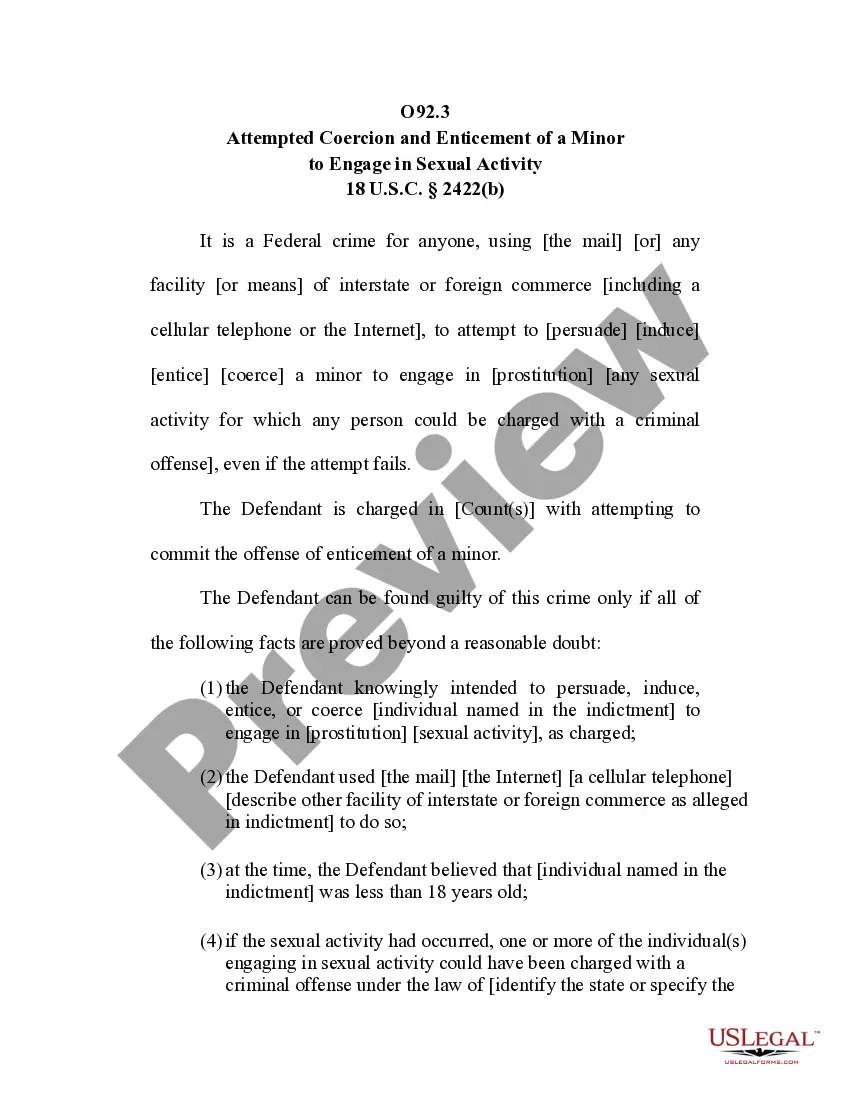
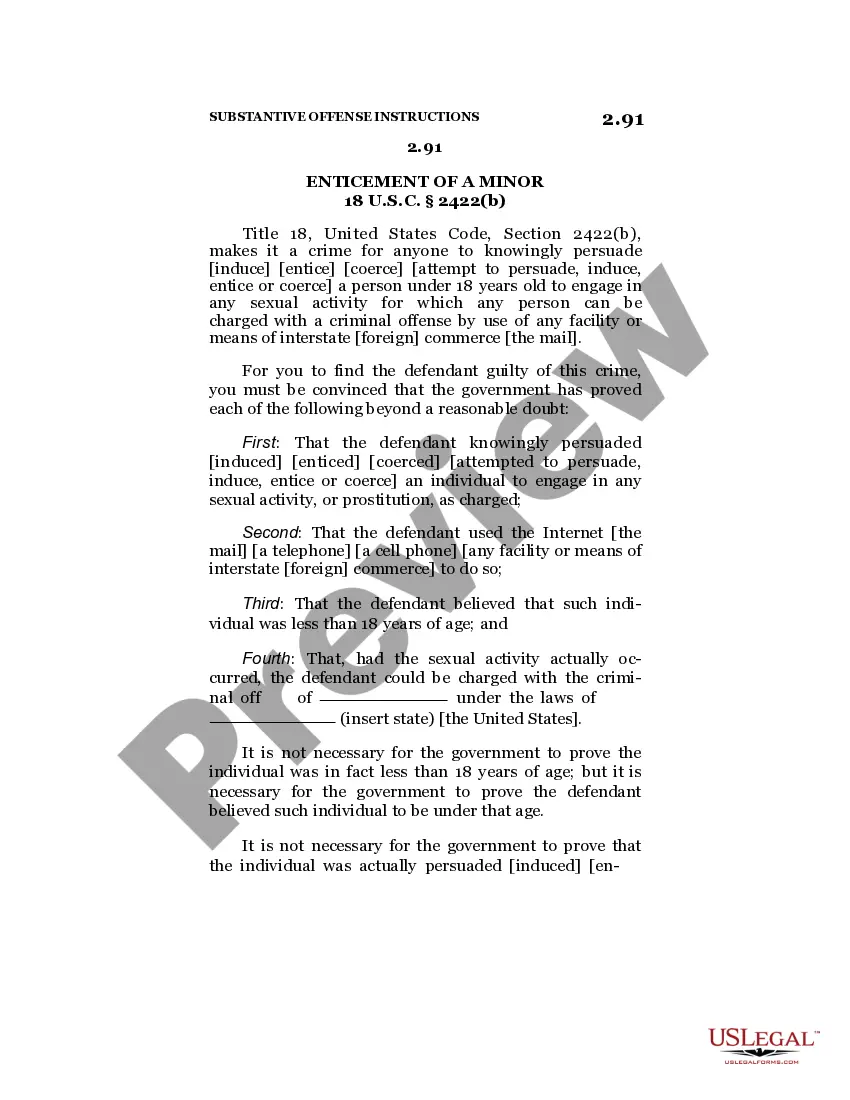
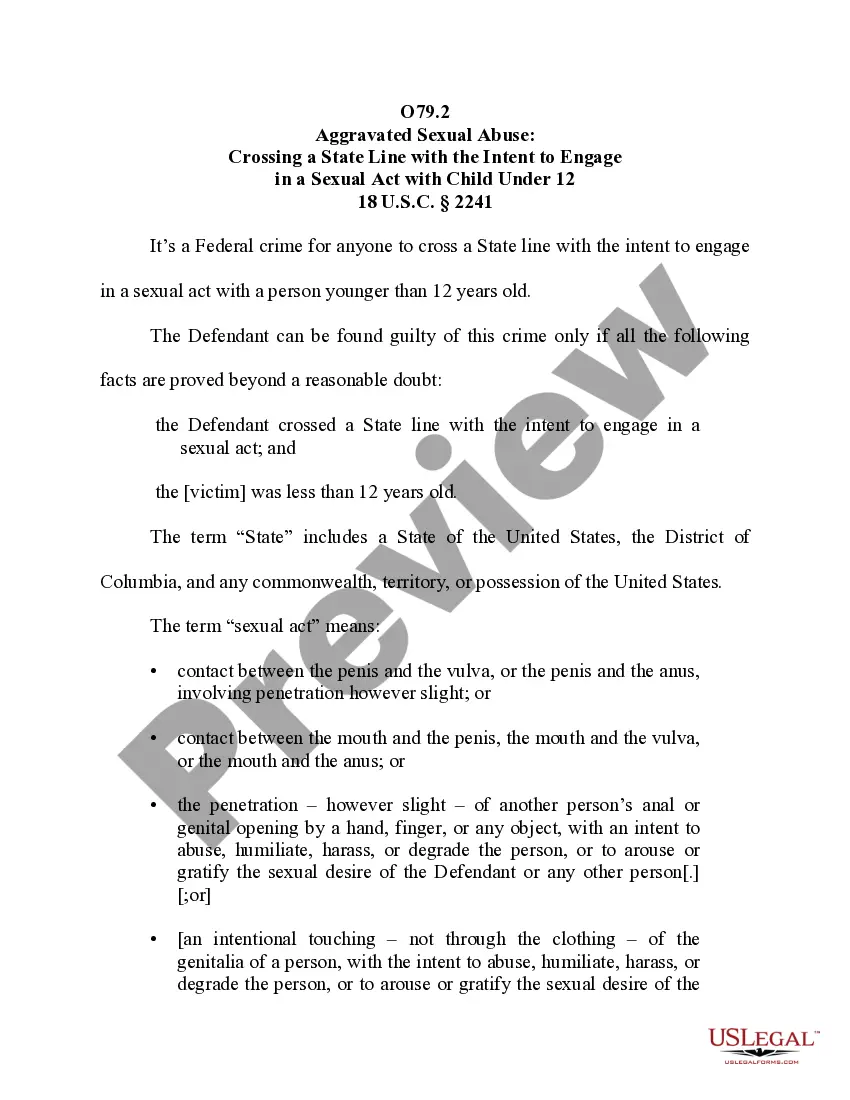
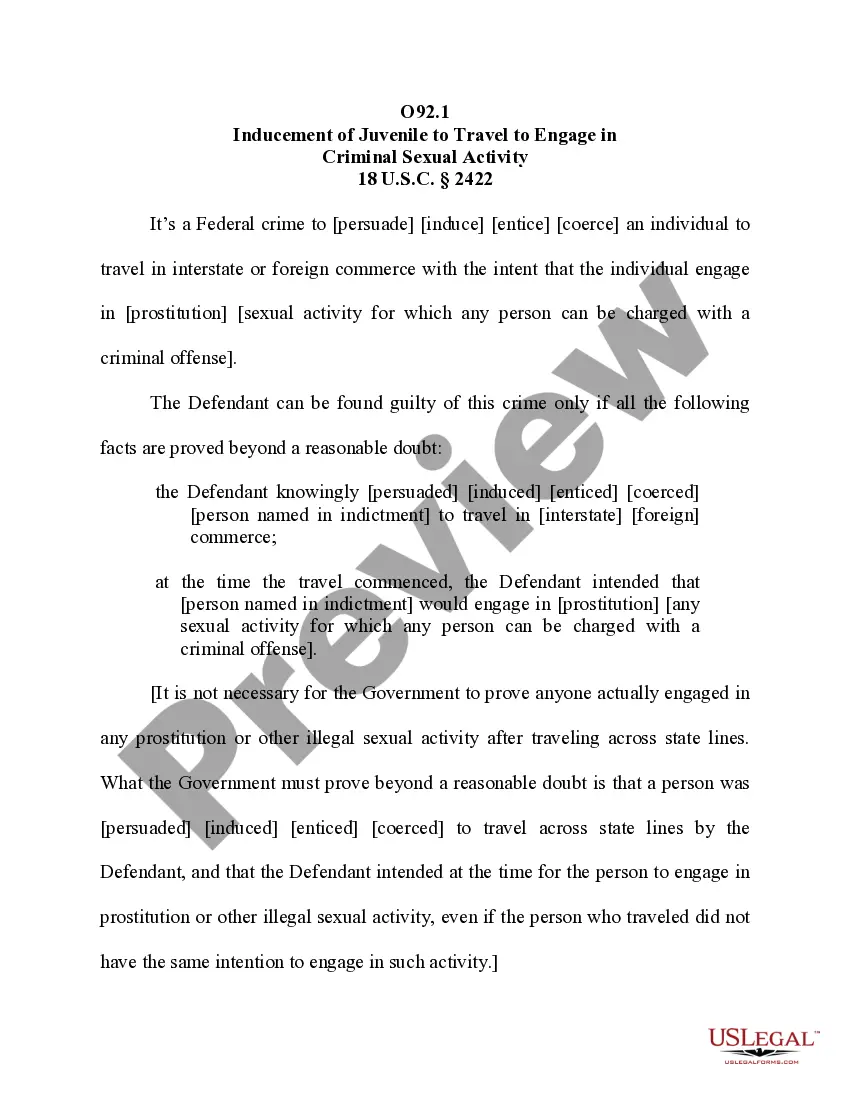
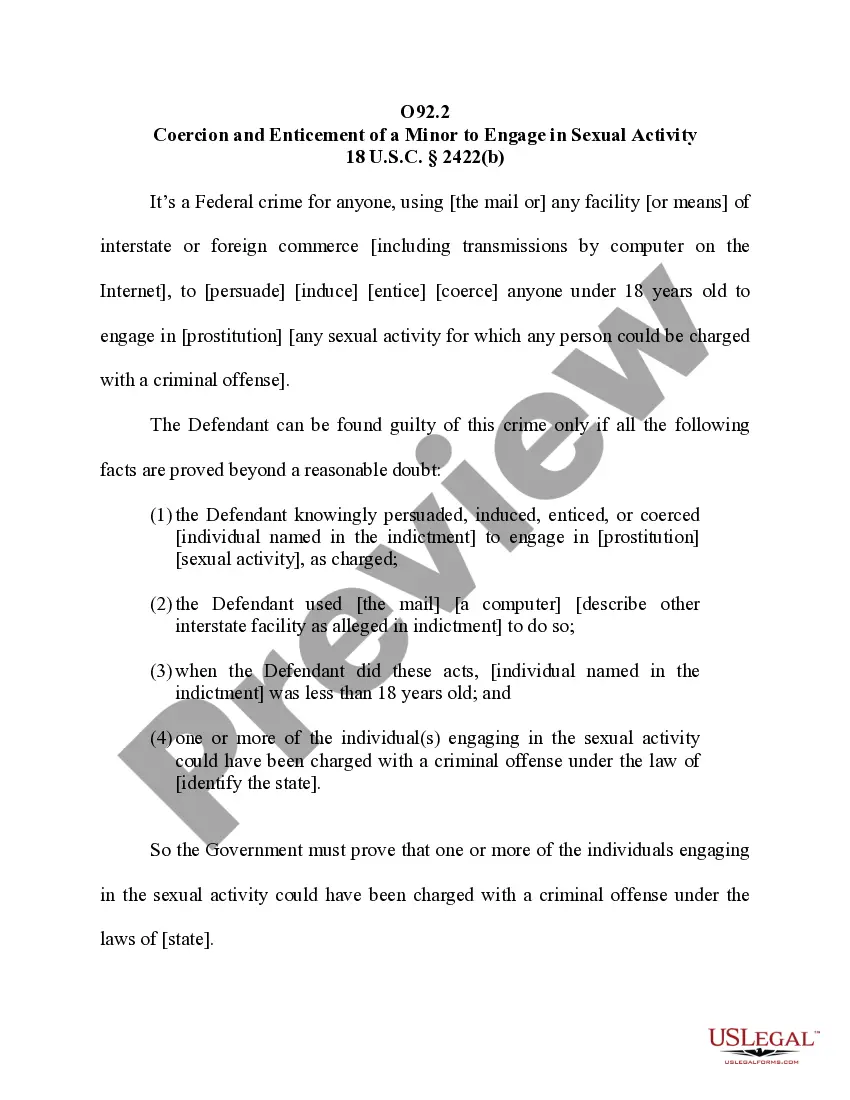
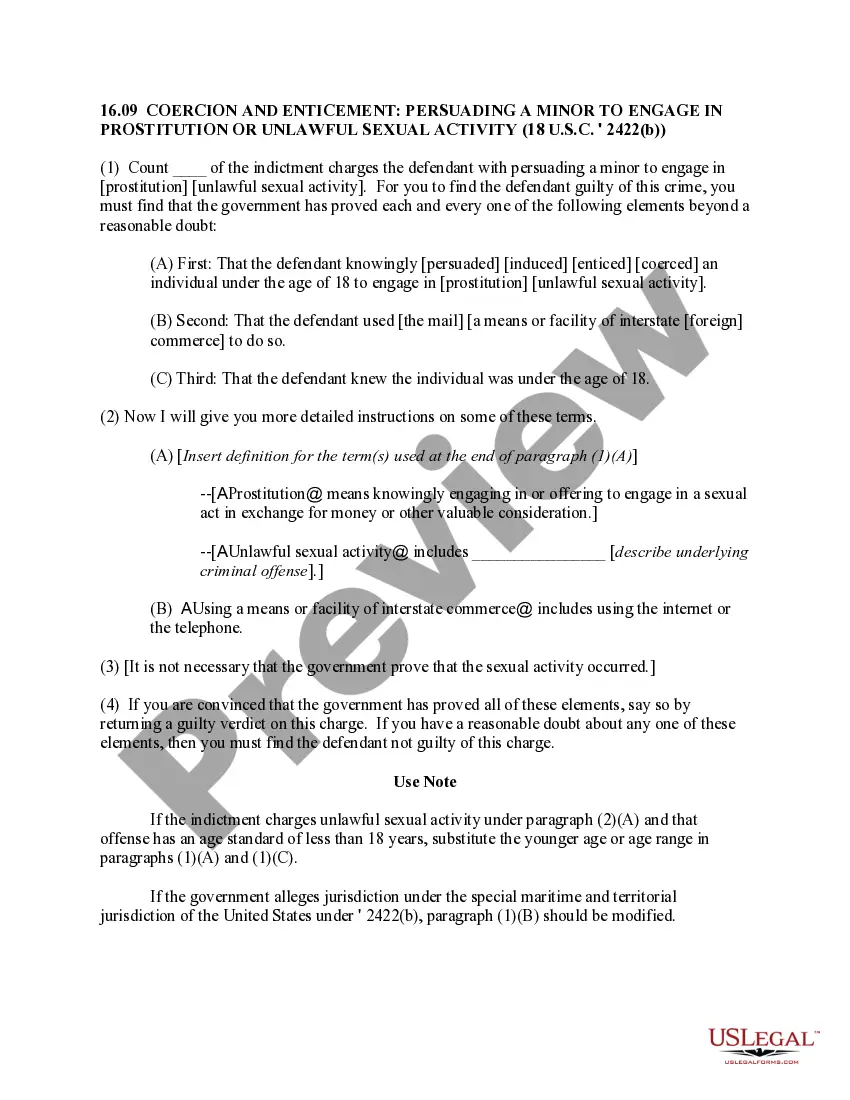
The Attempted Coercion and Enticement of a Minor to Engage in Sexual Activity form is a legal document used in federal court proceedings. It outlines the definition and elements necessary for proving a charge of enticing or coercing a minor into sexual activity. This form is specifically designed for situations where an individual is accused of attempting to persuade a minor to engage in illegal sexual conduct, regardless of whether the attempt was ultimately successful. Unlike other legal forms related to minors, this form focuses exclusively on attempted offenses, emphasizing the seriousness of such actions under federal law.
Key components of this form
- Definition of attempted coercion and enticement of a minor.
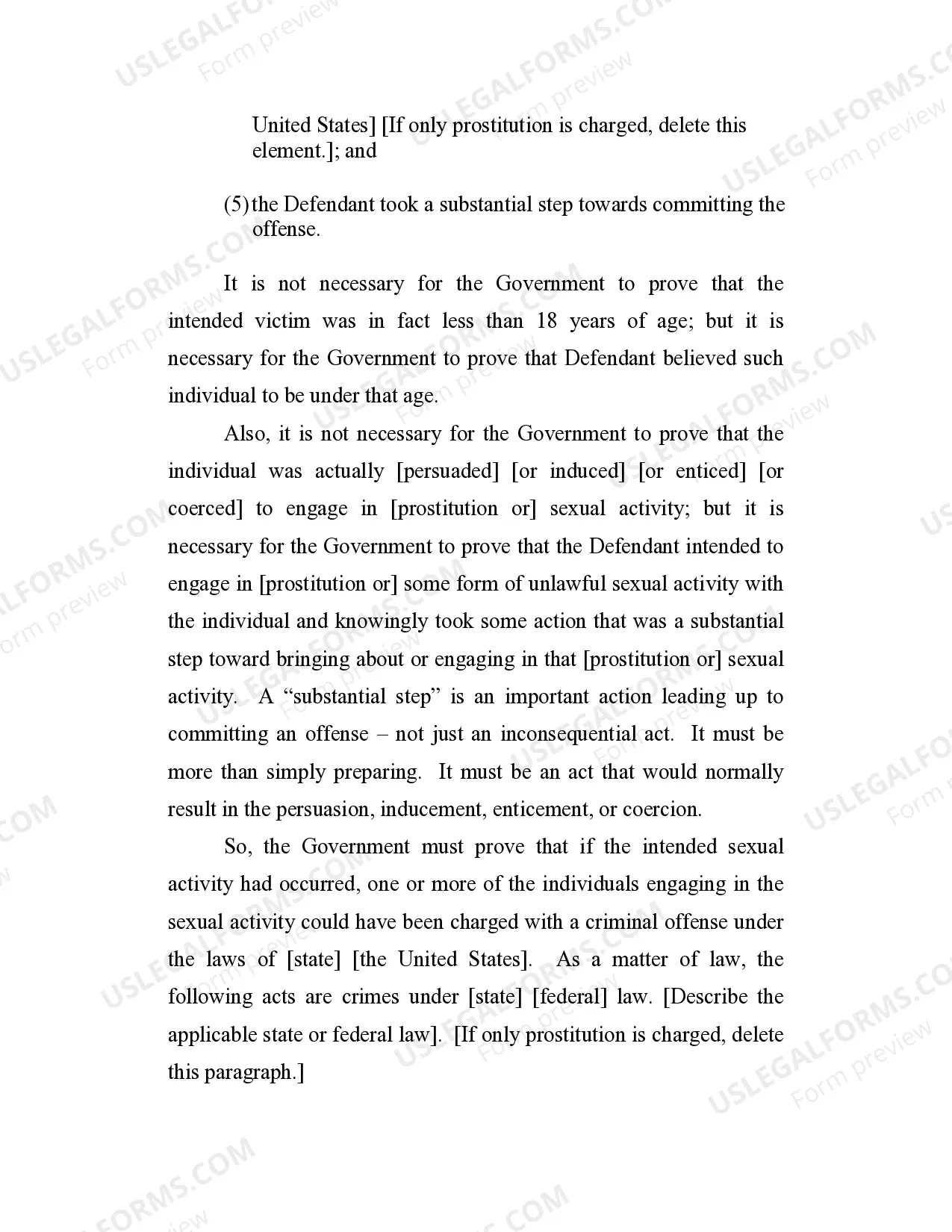
- Criteria for proving the defendantâs intent and beliefs regarding the age of the minor.
- Clarification that actual engagement in sexual activity is not required for a charge.
- Details on what constitutes a "substantial step" toward committing the offense.
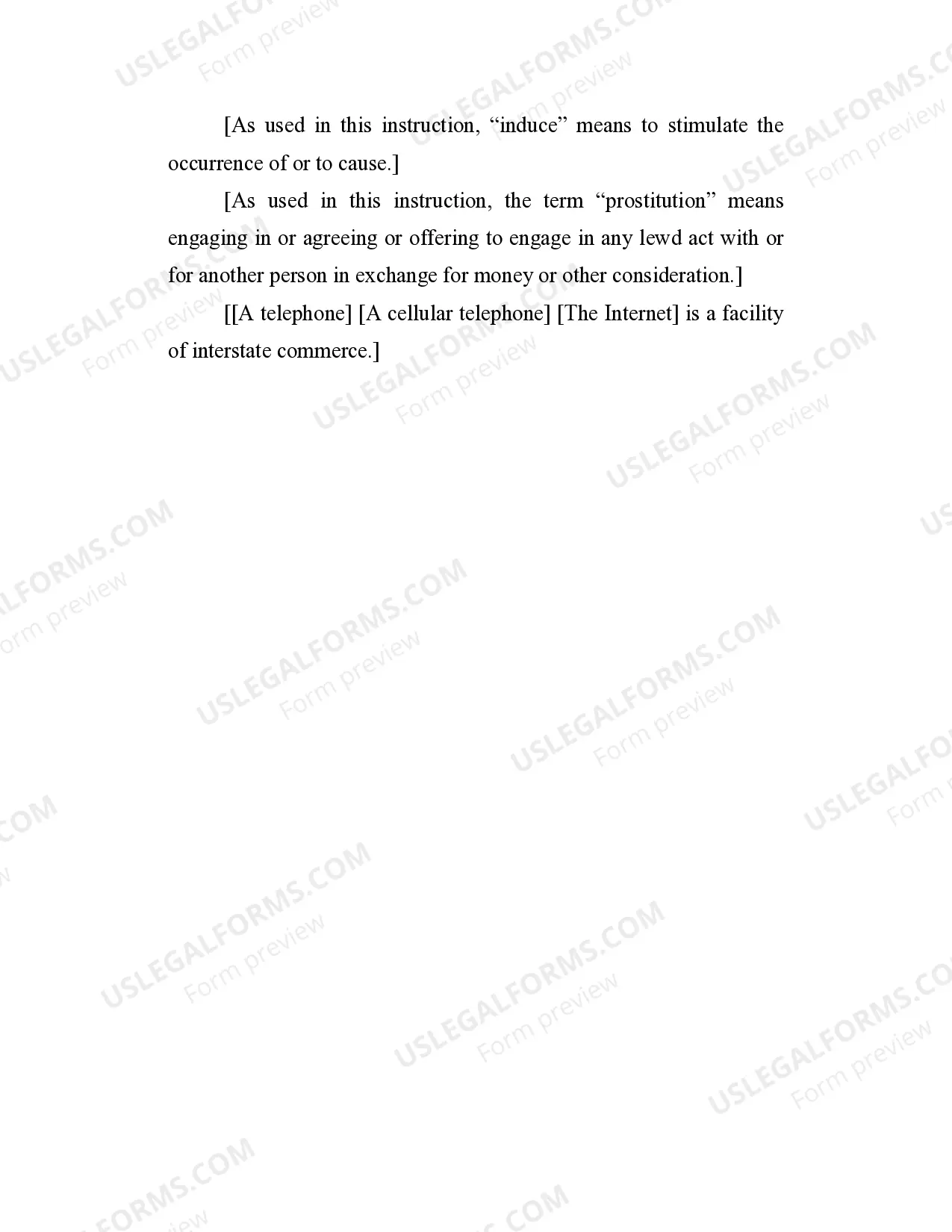
- Reference to applicable state or federal laws concerning sexual conduct.
Situations where this form applies
This form should be used in cases where an individual is facing charges of attempting to entice a minor into sexual activity. It is pertinent in federal criminal cases where evidence suggests that the accused took significant actions, such as using communication tools like a phone or the internet, with the intention of engaging with a minor in illegal sexual acts. It is essential for educators, social workers, and law enforcement agencies to understand the implications of this form when handling cases involving minors and sexual crimes.
Who needs this form
- Legal professionals representing defendants in federal court.
- Prosecutors handling cases of attempted enticement involving minors.
- Victims advocating for justice in cases involving coercion or enticement.
- Researchers or students studying criminal law related to sexual offenses against minors.
How to complete this form
- Identify the defendant and any specific counts they are charged with.
- Clearly describe the actions taken by the defendant that constitute alleged coercion or enticement.
- Specify the means of communication used by the defendant (e.g., internet, phone).
- State the believed age of the minor involved in the case.
- Detail the intended sexual activity and the relevant state or federal laws that apply.
Notarization requirements for this form
This form does not typically require notarization unless specified by local law. However, it is advisable to check with legal counsel to ensure compliance with any jurisdiction-specific requirements.
Get your form ready online
Our built-in tools help you complete, sign, share, and store your documents in one place.
Make edits, fill in missing information, and update formatting in US Legal Forms—just like you would in MS Word.
Download a copy, print it, send it by email, or mail it via USPS—whatever works best for your next step.
Sign and collect signatures with our SignNow integration. Send to multiple recipients, set reminders, and more. Go Premium to unlock E-Sign.
If this form requires notarization, complete it online through a secure video call—no need to meet a notary in person or wait for an appointment.
We protect your documents and personal data by following strict security and privacy standards.

Make edits, fill in missing information, and update formatting in US Legal Forms—just like you would in MS Word.

Download a copy, print it, send it by email, or mail it via USPS—whatever works best for your next step.

Sign and collect signatures with our SignNow integration. Send to multiple recipients, set reminders, and more. Go Premium to unlock E-Sign.

If this form requires notarization, complete it online through a secure video call—no need to meet a notary in person or wait for an appointment.

We protect your documents and personal data by following strict security and privacy standards.
Mistakes to watch out for
- Failing to accurately define the "substantial step" towards committing the offense.
- Inadequately describing the means used to attempt to entice the minor.
- Overlooking the requirement to prove the defendant's belief about the minor's age.
- Not citing the correct state or federal laws that apply to the case.
Why complete this form online
- Quick access to legally vetted templates prepared by licensed attorneys.
- Convenient digital format allows for easy downloading and completion.
- Regular updates ensure that the form meets current legal standards.
- Flexibility to edit and customize the form as needed for specific cases.
Legal use & context
- This form outlines the criteria for federal prosecution of attempted enticement.
- Understanding this form is crucial for both defense and prosecution in legal cases.
- Legal practitioners should be aware of the importance of intent and action in these cases.
Summary of main points
- The form details federal standards for attempted coercion and enticement.
- Clear definitions and requirements are provided for legal proceedings.
- Proper completion of the form ensures accurate representation of the case.
Looking for another form?
Form popularity
FAQ
Federal charges for child enticement are typically brought against a defendant who is accused of engaging in a conversation with a minor that may or may not lead to a meeting for the purpose of partaking in sexual activity such as sexual fondling or intercourse.
In order to be considered coercion, a person must fear for the life of someone they care about or fear for their own life based on the threat made. An example of this would be an ex-husband threatening to kill a shared child if custody paperwork is not signed.
Deterrence, Compellence, and Brute Force: Definitions The central characteristic of both forms of coercion is that they depend, ultimately, on cooperation by the party receiving the threat.
It shall be unlawful to coerce, intimidate, threaten, or interfere with any person in the exercise or enjoyment of, or on account of his having exercised or enjoyed, or on account of his having aided or encouraged any other person in the exercise or enjoyment of, any right granted or protected by section 3603, 3604,
(18 U.S.C. § 2422(b)) Mere preparation is not a substantial step toward committing the crime. To constitute a substantial step, a defendant's act or actions must unequivocally demonstrate that the crime will take place unless interrupted by independent circumstances.
Specifically, 18 U.S. Code section 2422(a) provides that anyone who knowingly induces or coerces another person to travel over state lines or out of the country to engage in any sexual activity that constitutes a criminal offense, such as prostitution, can be convicted of a crime.
Coercion committed by instilling in the victim a fear that he/she. or another person would be charged with a crime, that the. defendant reasonably believed the threatened charge to be true.