Texas Notice to Beneficiaries of being Named in Will
What this document covers
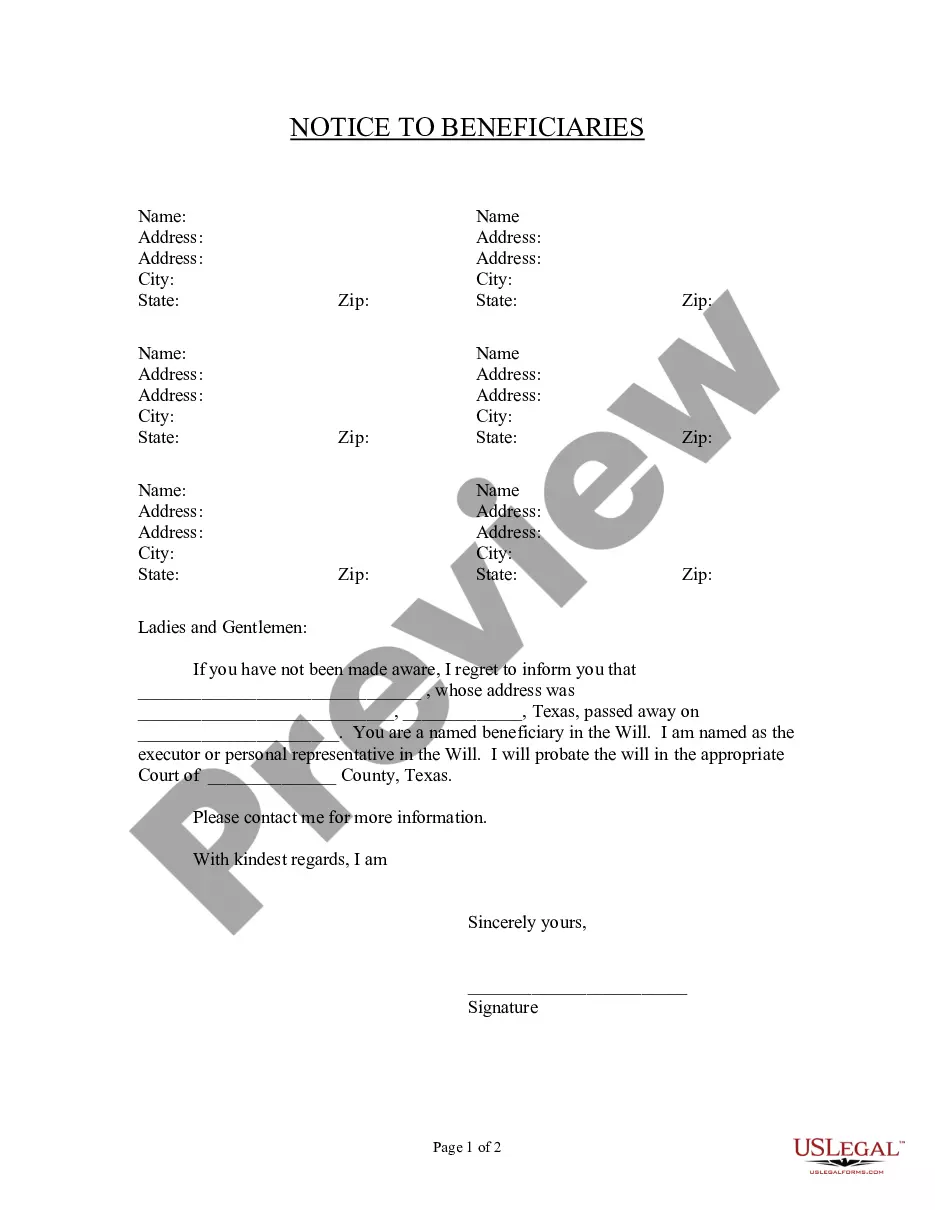
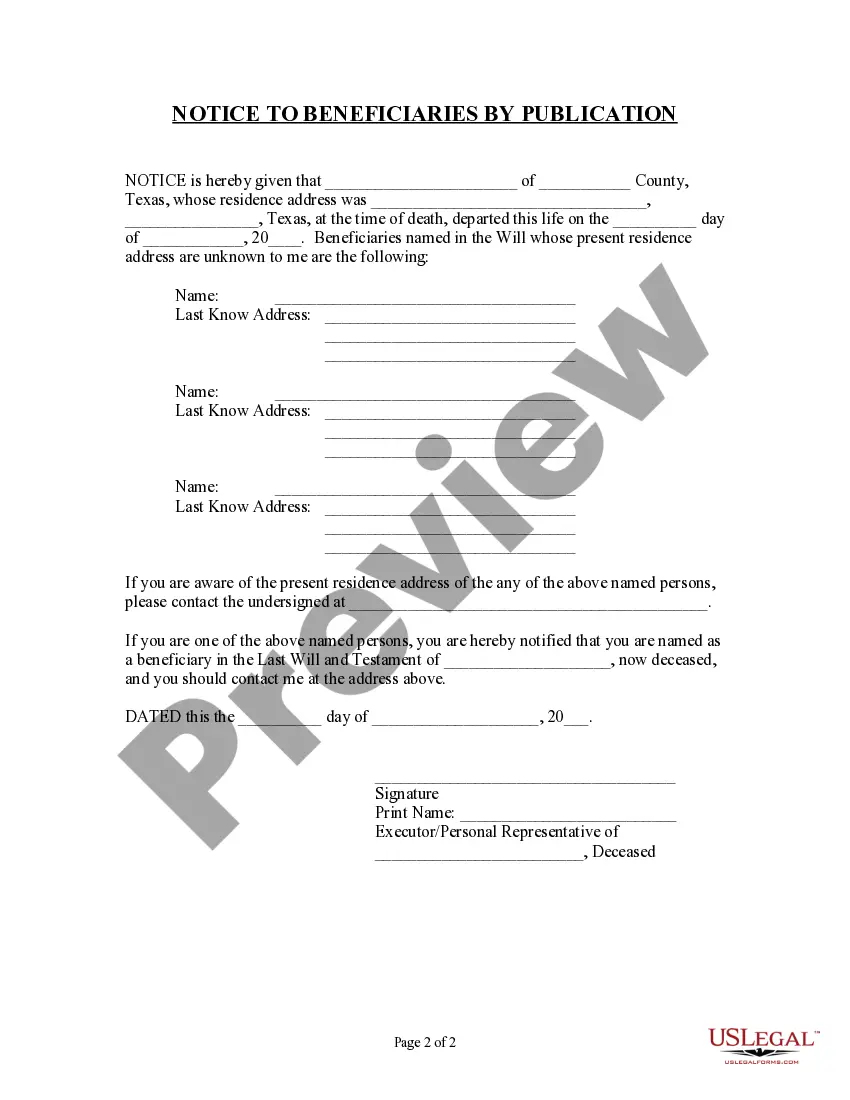
The Notice to Beneficiaries of being Named in Will is a legal document designed for the executor or personal representative to formally notify beneficiaries identified in a deceased person's will. This notice is essential to inform beneficiaries of their rights and the existence of the will, ensuring that all interested parties are aware of the probate process. Unlike similar forms, this notice can also be published when a beneficiary's location is unknown, ensuring that all heirs receive the proper information concerning their inheritance.
Key components of this form
- Executor or personal representative's contact information.
- Name and address of the deceased.
- Details of the will and its probate process.
- List of named beneficiaries.
- Second notice section for publication regarding unknown beneficiaries.

When this form is needed
This form should be used whenever an executor or personal representative needs to inform beneficiaries named in a will about the death of the testator. It is also essential in situations where the location of a beneficiary is not known, allowing for proper notification through publication. This process is a critical step in the probate proceedings, ensuring compliance with legal requirements.
Who needs this form
- Executors or personal representatives of deceased individuals.
- Beneficiaries named in a will.
- Individuals seeking legal closure or information regarding a deceased person's estate.
How to complete this form
- Identify yourself as the executor or personal representative.
- Fill in the name and address of the deceased.
- Specify the date of death.
- List the names of beneficiaries, including their last known addresses.
- Sign and date the form, providing your contact information.
Does this form need to be notarized?
This form does not typically require notarization unless specified by local law. It is important to verify any specific requirements in Texas or the jurisdiction where the will is probated. Should you need further assistance, US Legal Forms offers integrated online notarization options to facilitate the process.
Get your form ready online
Our built-in tools help you complete, sign, share, and store your documents in one place.
Make edits, fill in missing information, and update formatting in US Legal Forms—just like you would in MS Word.
Download a copy, print it, send it by email, or mail it via USPS—whatever works best for your next step.
Sign and collect signatures with our SignNow integration. Send to multiple recipients, set reminders, and more. Go Premium to unlock E-Sign.
If this form requires notarization, complete it online through a secure video call—no need to meet a notary in person or wait for an appointment.
We protect your documents and personal data by following strict security and privacy standards.

Make edits, fill in missing information, and update formatting in US Legal Forms—just like you would in MS Word.

Download a copy, print it, send it by email, or mail it via USPS—whatever works best for your next step.

Sign and collect signatures with our SignNow integration. Send to multiple recipients, set reminders, and more. Go Premium to unlock E-Sign.

If this form requires notarization, complete it online through a secure video call—no need to meet a notary in person or wait for an appointment.

We protect your documents and personal data by following strict security and privacy standards.
Typical mistakes to avoid
- Failing to include all named beneficiaries in the notice.
- Not providing accurate or complete information about the deceased.
- Omitting your contact information, making it difficult for beneficiaries to reach out.
Benefits of using this form online
- Convenience of completing and downloading the form from anywhere.
- Easy editability to ensure all personal details are accurate before submission.
- Reliability through templates drafted by licensed attorneys, ensuring legal compliance.
What to keep in mind
- The Notice to Beneficiaries informs heirs of their rights and the probate process.
- This form includes a publication option for unknown beneficiaries.
- Using this form assists executors and representatives in fulfilling their legal obligations efficiently.
Looking for another form?

Form popularity
FAQ
All taxes and liabilities paid from the estate, including medical expenses, attorney fees, burial or cremation expenses, estate sale costs, appraisal expenses, and more. The executor should keep all receipts for any services or transactions needed to liquidate the assets of the deceased.
The executor can sell property without getting all of the beneficiaries to approve.If the executor can sell the property for more than 90 percent of its appraised value then they do not need to get the permission of the beneficiaries or of the court.
If you fail to probate a will within the 4 year time period, then the decedent's estate will be treated as though they died intestate without a will. There are specific laws in Texas that govern which heirs are entitled to the estate's assets when a person dies intestate.
According to estate planning attorney Adam Ansari, it is legal for an executor to purchase the home instead of selling it, as long as the executor purchases the property for fair market value and all of the beneficiaries agree with the terms of the sale.
Texas has a probate process similar to many other states, but before we go any further, let's ask an important question: Do you even need to probate the estate? Not all assets go through probate. Assets that automatically transfer to another person without a court order will avoid probate.
Generally the heirs don't decide if the house is sold unless somehow it is titled in all their names. If is a specific gift and the will requires it be transferred to all six, and one does not want to sell, that person can buy out the other 5. There of course is always a partition Acton.
An executor can sell a property without the approval of all beneficiaries. The will doesn't have specific provisions that require beneficiaries to approve how the assets will be administered. However, they should consult with beneficiaries about how to share the estate.
No. The person must be appointed by the probate court as the personal representative and letters issued for the appointment as personal representative to be effective. California Probate Code §8400(a).To learn about the duties of a personal representative in California probate, click here.