Texas General Power of Attorney for Care and Custody of Child or Children
What this document covers
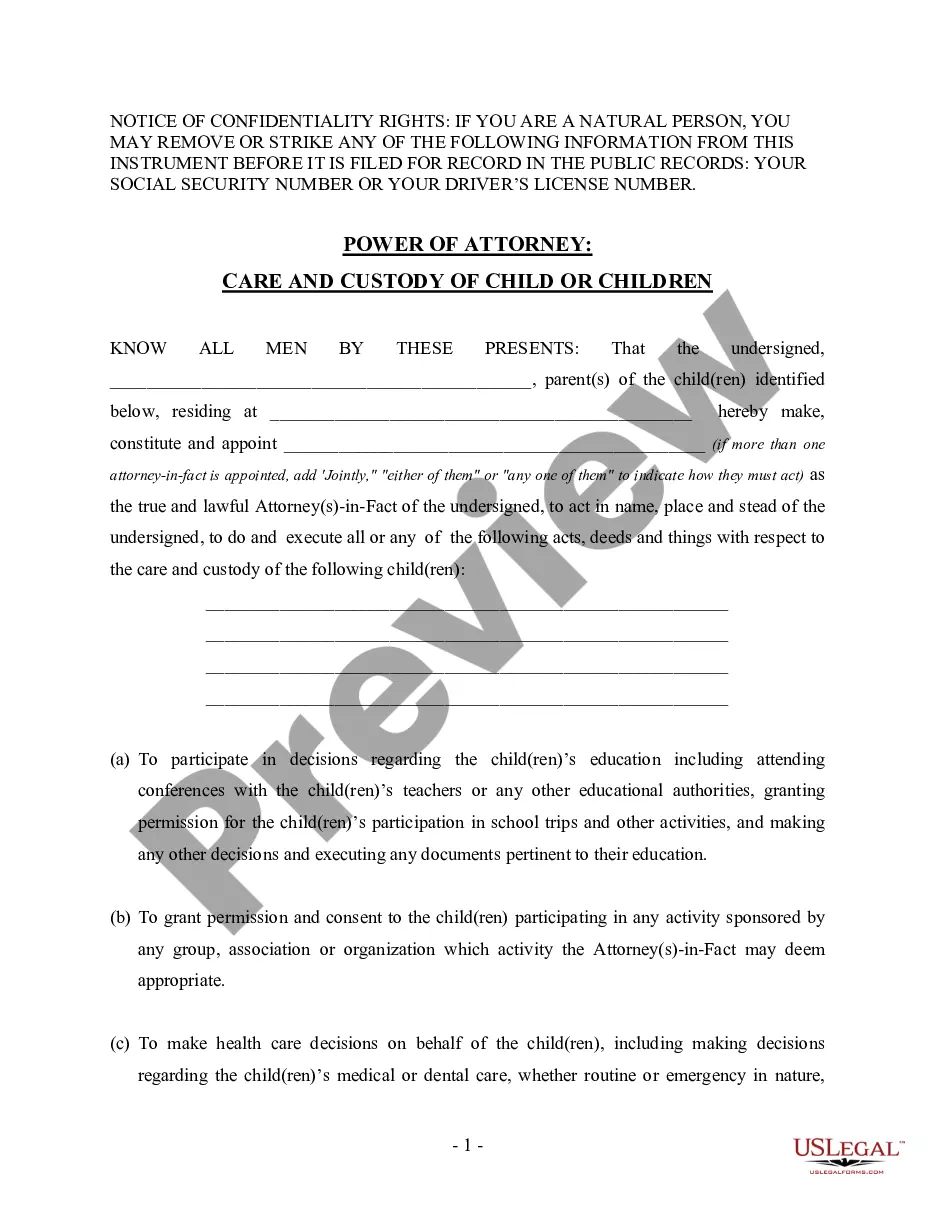
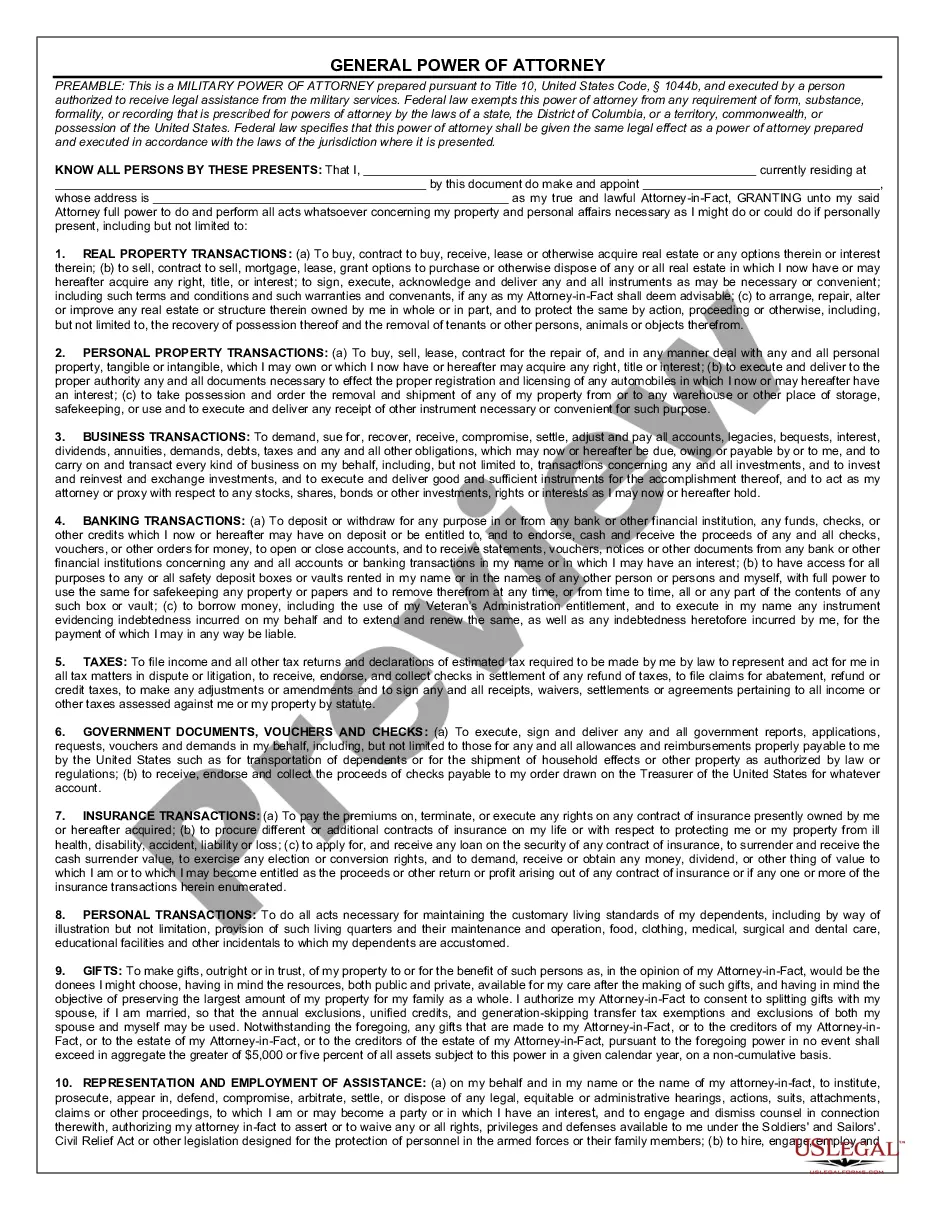
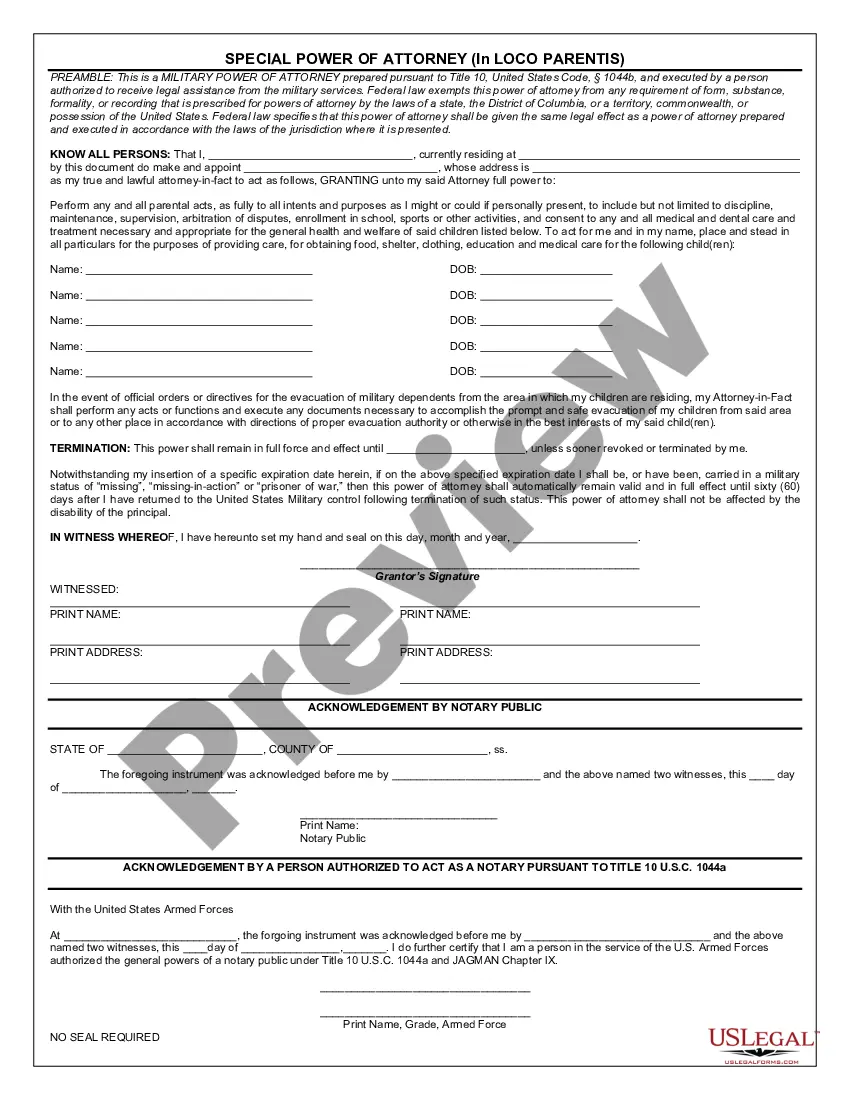
The General Power of Attorney for Care and Custody of Child or Children is a legal document that allows a parent or guardian to appoint another individual (the attorney-in-fact) to make decisions regarding the care and custody of their child or children. This includes authority over educational and health care decisions. Unlike a general power of attorney for finances or property, this form focuses specifically on matters related to the welfare of minor children.
Key components of this form
- Identification of the parent(s) granting the power of attorney.
- Appointment of one or more attorneys-in-fact to act on behalf of the parent(s).
- Specific powers granted to the attorney(s)-in-fact, including educational and health care decisions.
- Exclusions from the authority, such as marriage or adoption consent.
- HIPAA release authority for accessing health information of the child(ren).
- Duration of the power of attorney and conditions for revocation.


When to use this document
This form is useful in various situations, such as when a parent is temporarily unable to care for their child due to travel, illness, or other personal circumstances. It can also be used when parents need to delegate rights to a trusted individual for a specific period, allowing the attorney-in-fact to handle decisions about education and healthcare in the parentâs absence.
Who needs this form
- Biological or legal parents seeking to delegate temporary caregiving responsibilities.
- Guardians wanting to ensure a trusted person can make decisions for their minor children.
- Individuals needing to manage caregiving responsibilities while away from the child for an extended period.
Steps to complete this form
- Identify the parent(s) granting the power of attorney and provide their contact information.
- Choose one or more individuals to act as the attorney(s)-in-fact.
- List the names of the child(ren) for whom the authority is granted.
- Clearly outline the powers being delegated, such as health care and educational decisions.
- Specify the start and end dates for the power of attorney, if applicable.
- Provide signatures of the parent(s) and obtain notarization if required.
Does this form need to be notarized?
Yes, this form must be notarized to be legally valid. The notarization process helps verify the identities of the individuals signing the document, providing additional legal protection. US Legal Forms offers integrated online notarization, allowing you to complete this step securely via a video call, any time of day.
Get your form ready online
Our built-in tools help you complete, sign, share, and store your documents in one place.
Make edits, fill in missing information, and update formatting in US Legal Forms—just like you would in MS Word.
Download a copy, print it, send it by email, or mail it via USPS—whatever works best for your next step.
Sign and collect signatures with our SignNow integration. Send to multiple recipients, set reminders, and more. Go Premium to unlock E-Sign.
If this form requires notarization, complete it online through a secure video call—no need to meet a notary in person or wait for an appointment.
We protect your documents and personal data by following strict security and privacy standards.
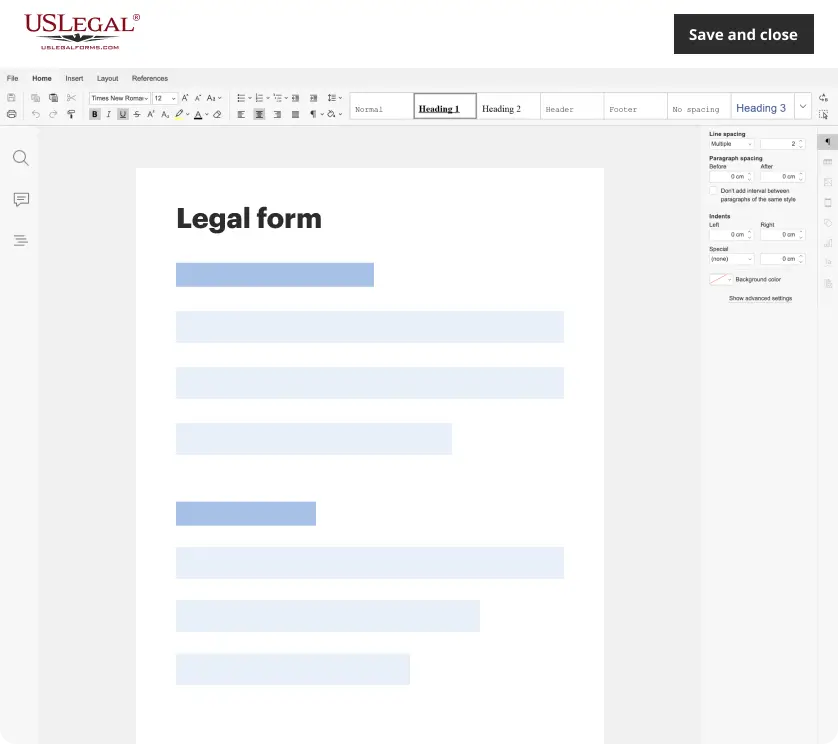
Make edits, fill in missing information, and update formatting in US Legal Forms—just like you would in MS Word.
Download a copy, print it, send it by email, or mail it via USPS—whatever works best for your next step.
Sign and collect signatures with our SignNow integration. Send to multiple recipients, set reminders, and more. Go Premium to unlock E-Sign.

If this form requires notarization, complete it online through a secure video call—no need to meet a notary in person or wait for an appointment.

We protect your documents and personal data by following strict security and privacy standards.
Mistakes to watch out for
- Failing to notarize the document when required, which could invalidate the power of attorney.
- Not clearly defining the scope of authority granted to the attorney-in-fact.
- Neglecting to include all childrenâs names if multiple children are involved.
Why use this form online
- Immediate access to legally drafted documents by licensed attorneys.
- Easy to download and edit according to specific needs.
- Secure handling of sensitive information without the need for in-person visits.
Summary of main points
- This form grants another person authority to make decisions about your childâs care and custody.
- It is essential for temporary measures when a parent is unable to fulfill their responsibilities.
- Always ensure the document is notarized for legality.
- Review and understand the specific powers you are delegating carefully.
Looking for another form?
Form popularity
FAQ
Learn the basics of powers of attorney. In general, a power of attorney gives one person the right to make binding decisions on behalf of someone else. Talk it through with your parent(s) Consult with a lawyer. Document your rights. Execute the document.
A guardianship is for managing the person's personal affairs; a conservatorship is for managing the person's financial matters. A conservatorship generally supercedes a power of attorney.
An agent under a durable POA does not have any power until the principal is incapacitated. Once that happens, however, the designated individual must make health care decisions for the principal.
A power of attorney is a legal document in which one person nominates and gives legal authority to another to act on affairs on their behalfi. In effect, a power of attorney allows you delegate the management of your affairs to someone you trustii.
A Durable Power of Attorney for Health Care allows you to appoint a person or persons to make health care decisions if you cannot act for yourself.A Durable Power of Attorney for Health Care is broader because it can apply to any condition you may have or treatment you may need.
In Texas, all power of attorney forms need to be notarized.The current Texas medical power of attorney forms also require that two witnesses be present when you sign the forms. The witnesses also must give their contact information and sign the forms.
A Power of Attorney might be used to allow another person to sign a contract for the Principal. It can be used to give another person the authority to make health care decisions, do financial transactions, or sign legal documents that the Principal cannot do for one reason or another.
In most cases, power of attorney is preferred to legal guardianship because more control is retained by the person being protected. However, if court supervision is needed, guardianship may be more appropriate. Guardianship also gives the guardian court-ordered authority that third parties, like banks, must recognize.
They do not act for their own benefit under a power of attorney or make decisions that involve their own assets and finances.In other words, the attorney-in-fact does not become responsible for repaying the lender from the attorney-in-fact's personal funds if the principal runs out of money.