Texas Living Trust for Husband and Wife with Minor and or Adult Children
What this document covers
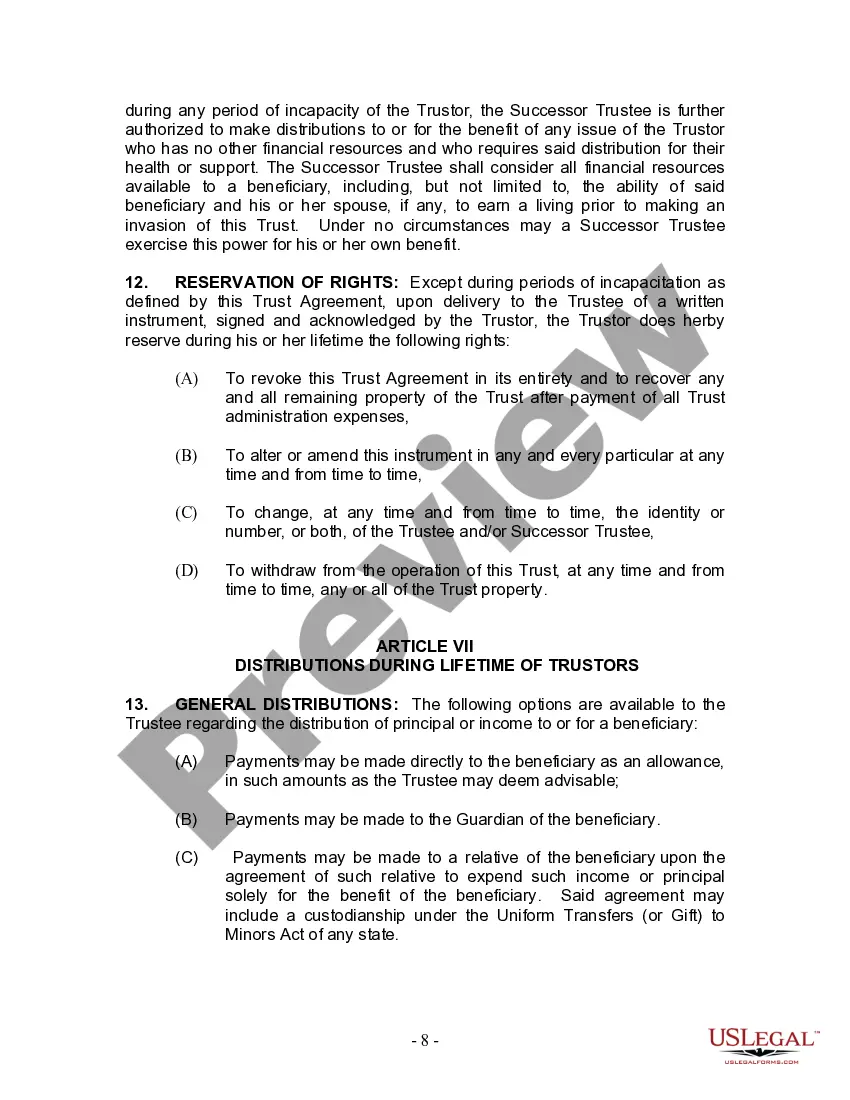
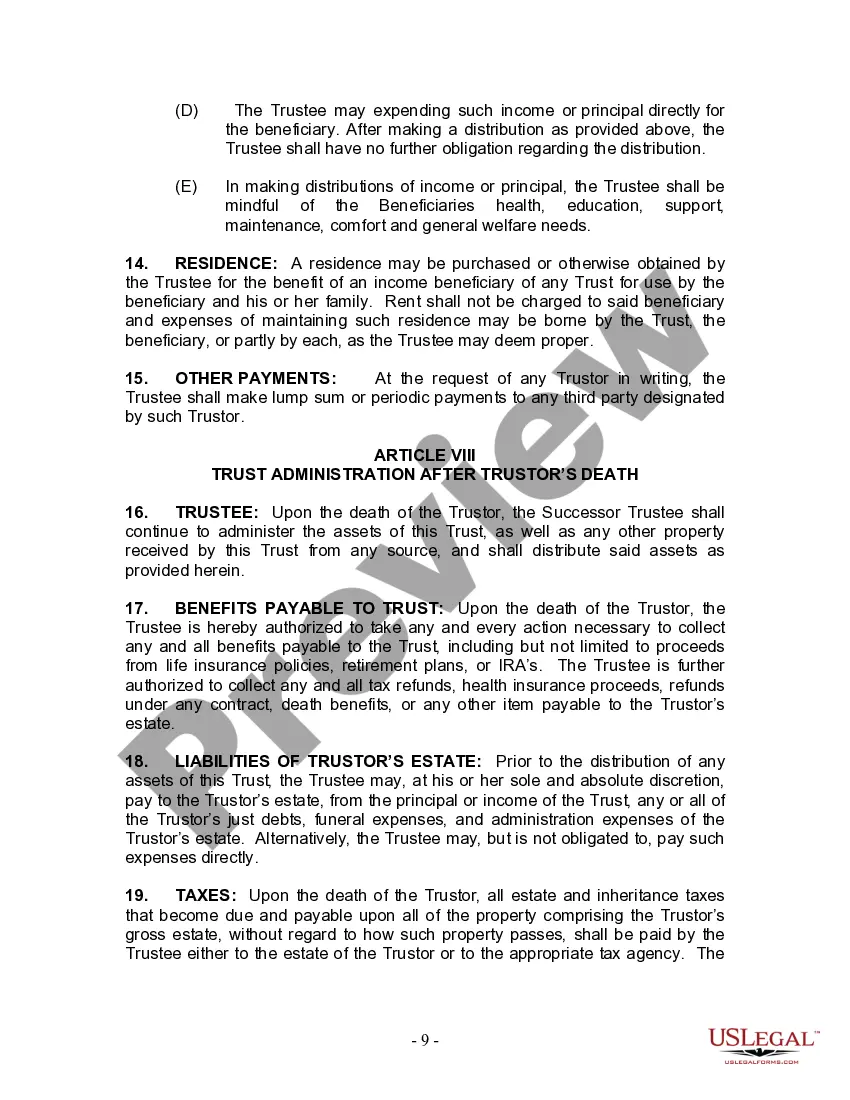
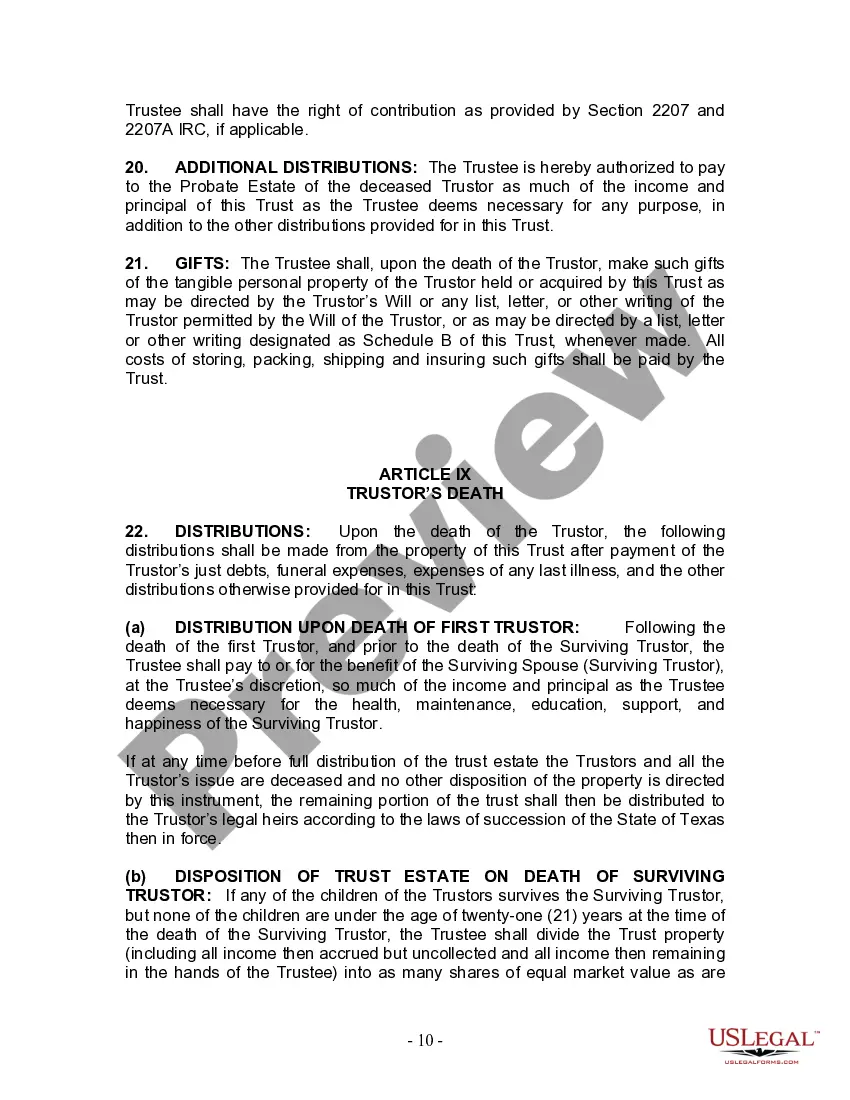
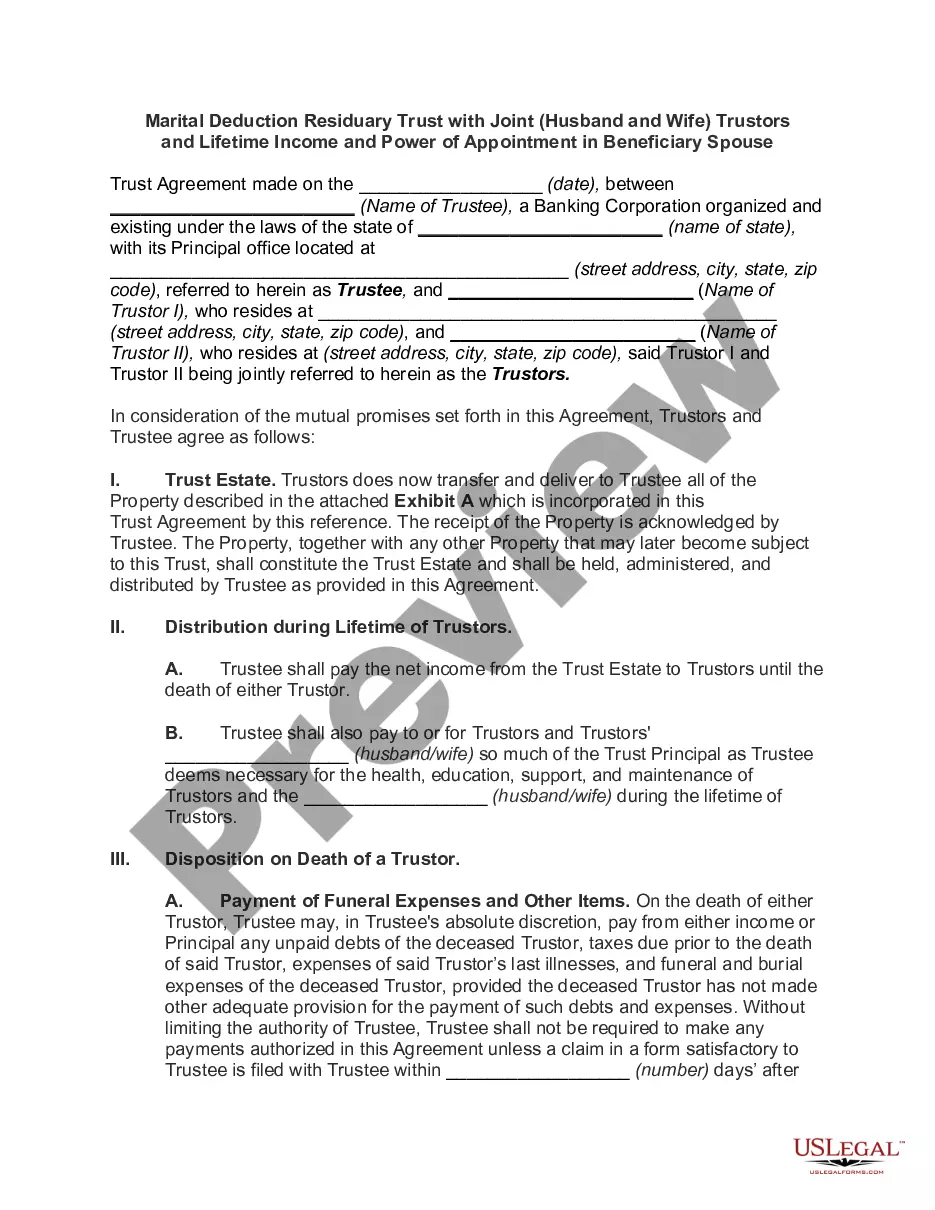
This form is a Living Trust for Husband and Wife with Minor and or Adult Children, designed for couples who wish to manage their assets during their lifetimes and ensure a smooth transfer of those assets upon their deaths. It allows the creators (Trustors) to retain control while benefiting their children as beneficiaries, reducing the need for probate proceedings after their passing. This trust is particularly beneficial for those with both minor and adult children as it addresses their varying needs and provides specific directives for asset management and distribution.
Main sections of this form
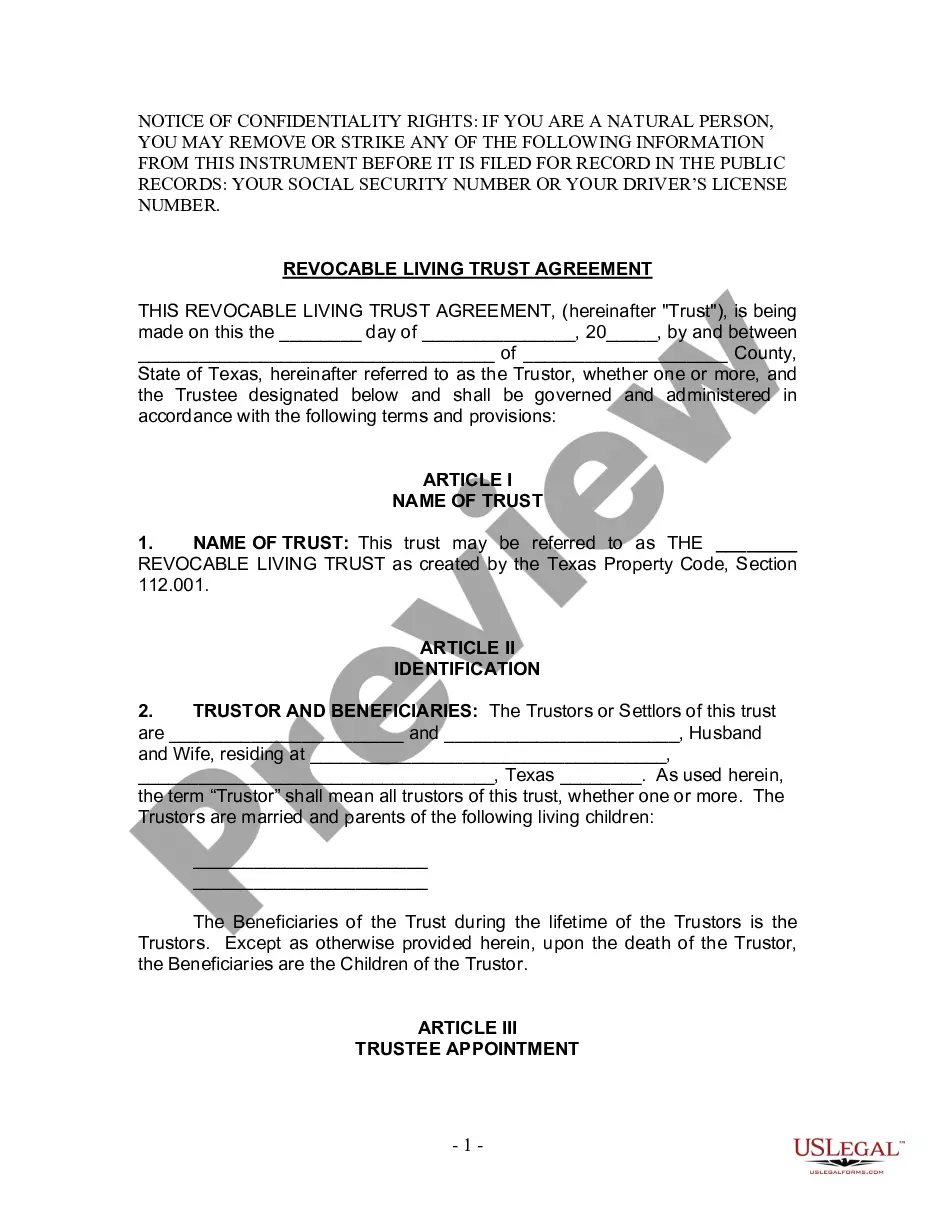
- Trustor and beneficiaries: Identifies the couple creating the trust and their children.
- Trustee appointment: Designates the individual or entity responsible for managing the trust.
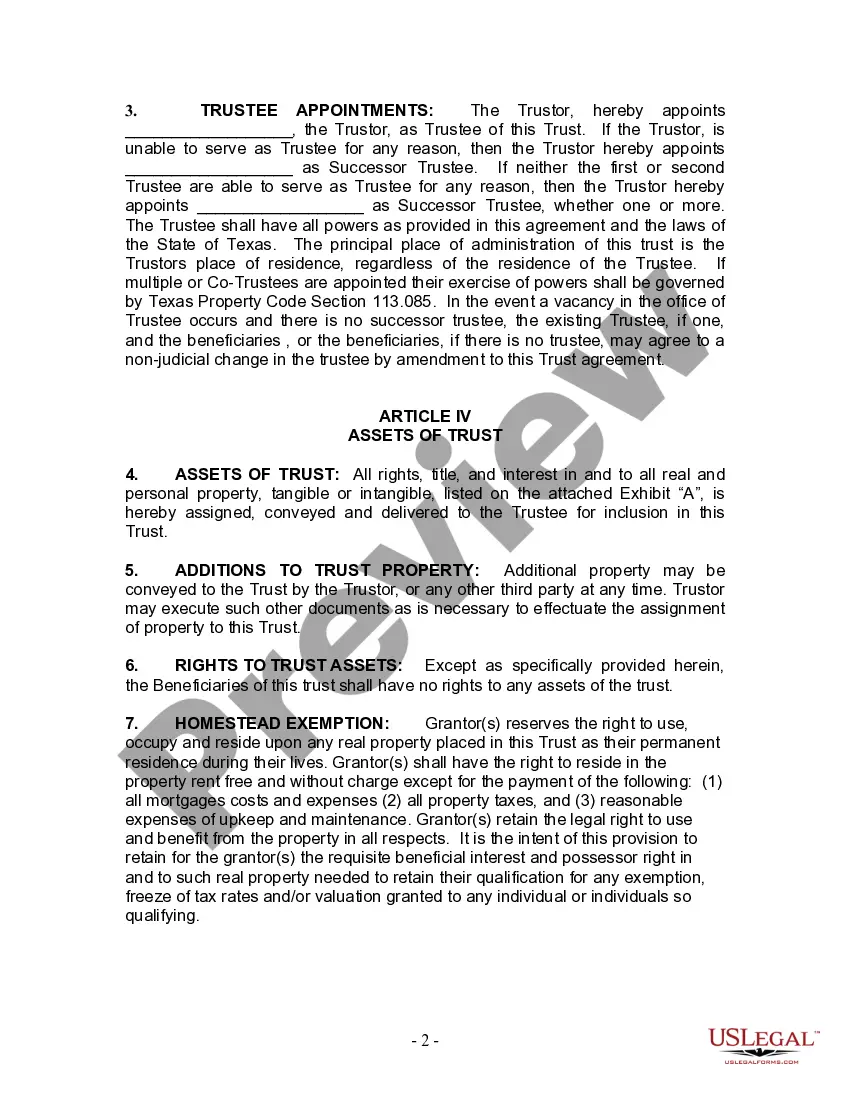
- Assets of trust: Details the property and assets included in the trust.
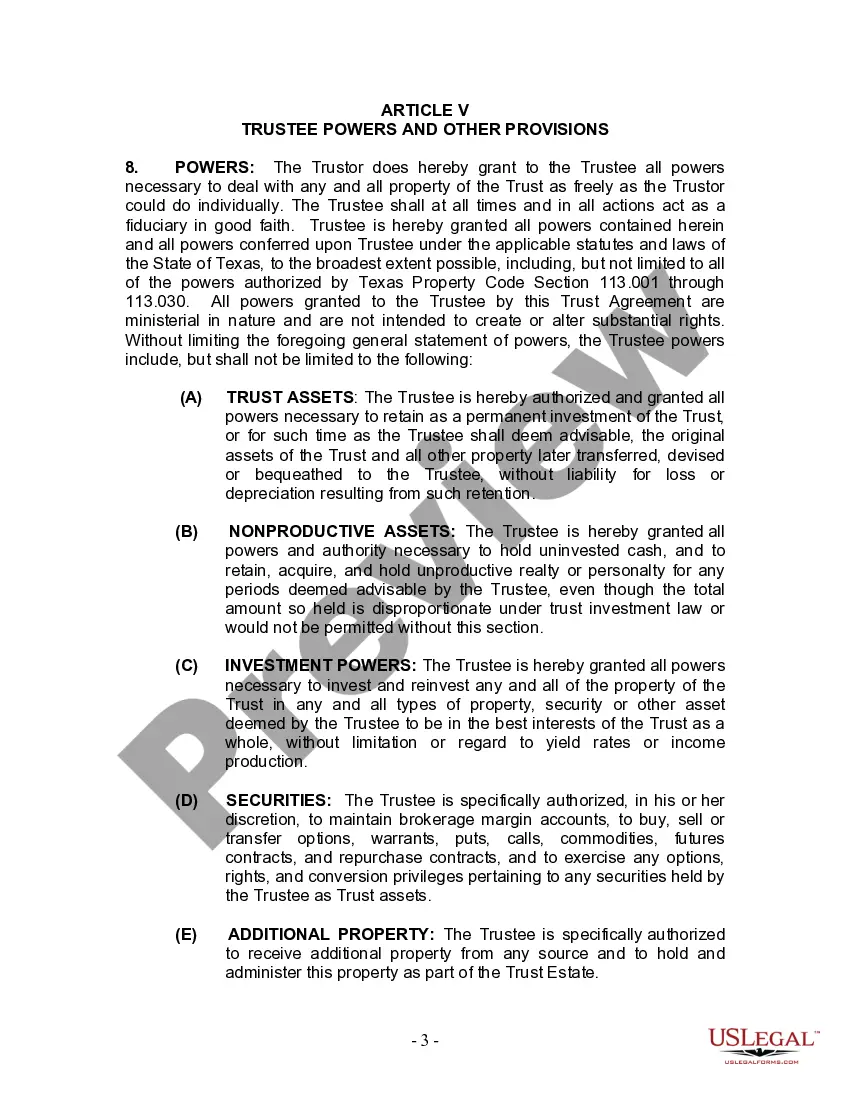
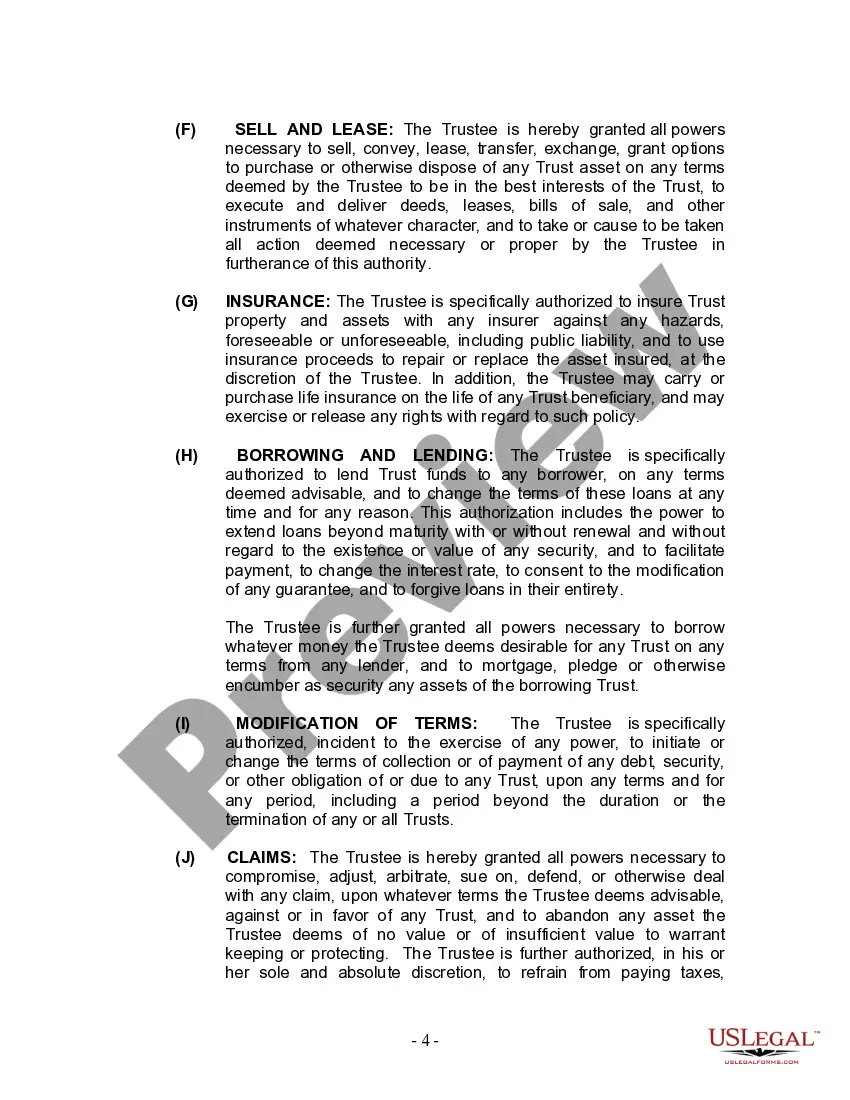
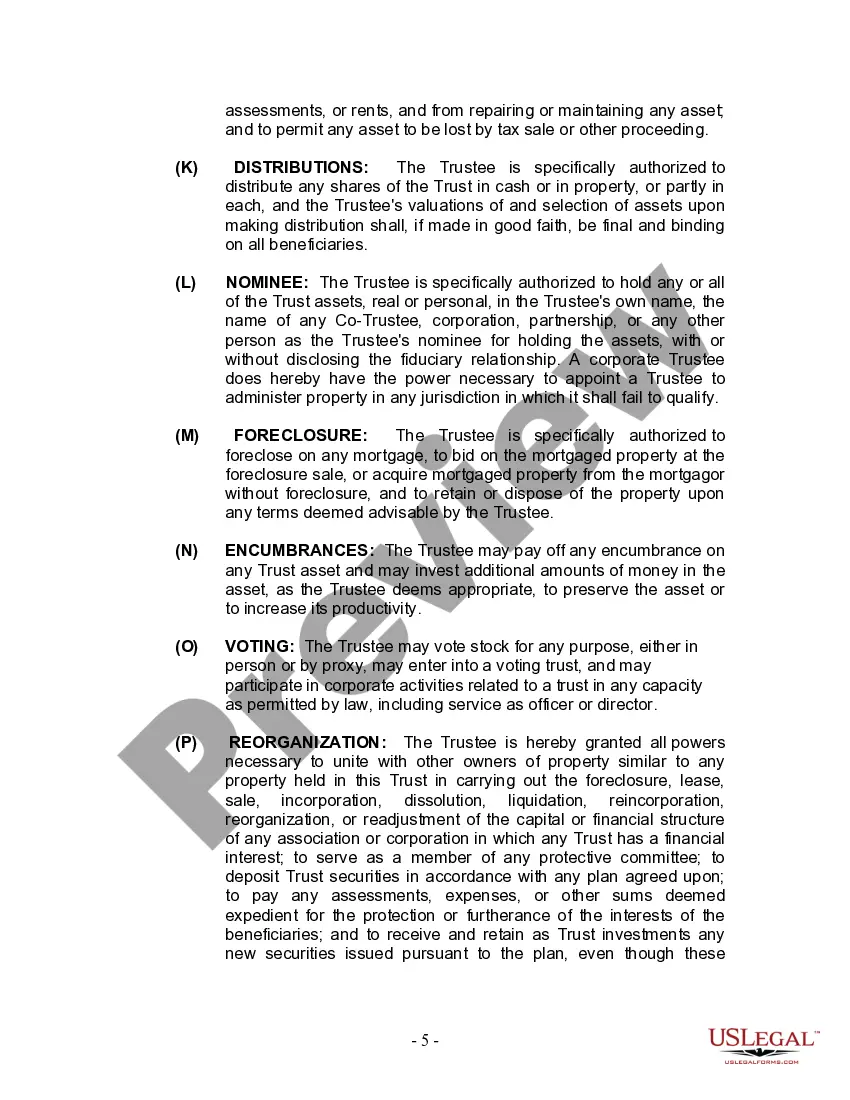
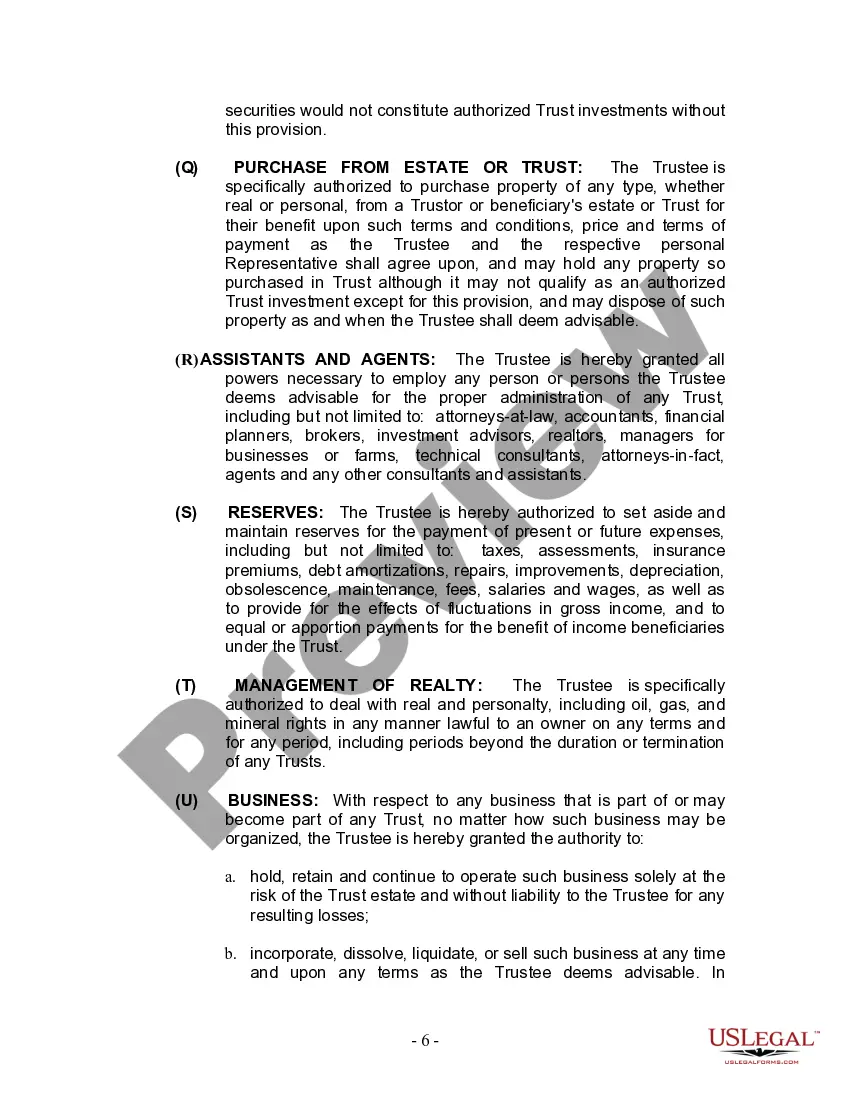
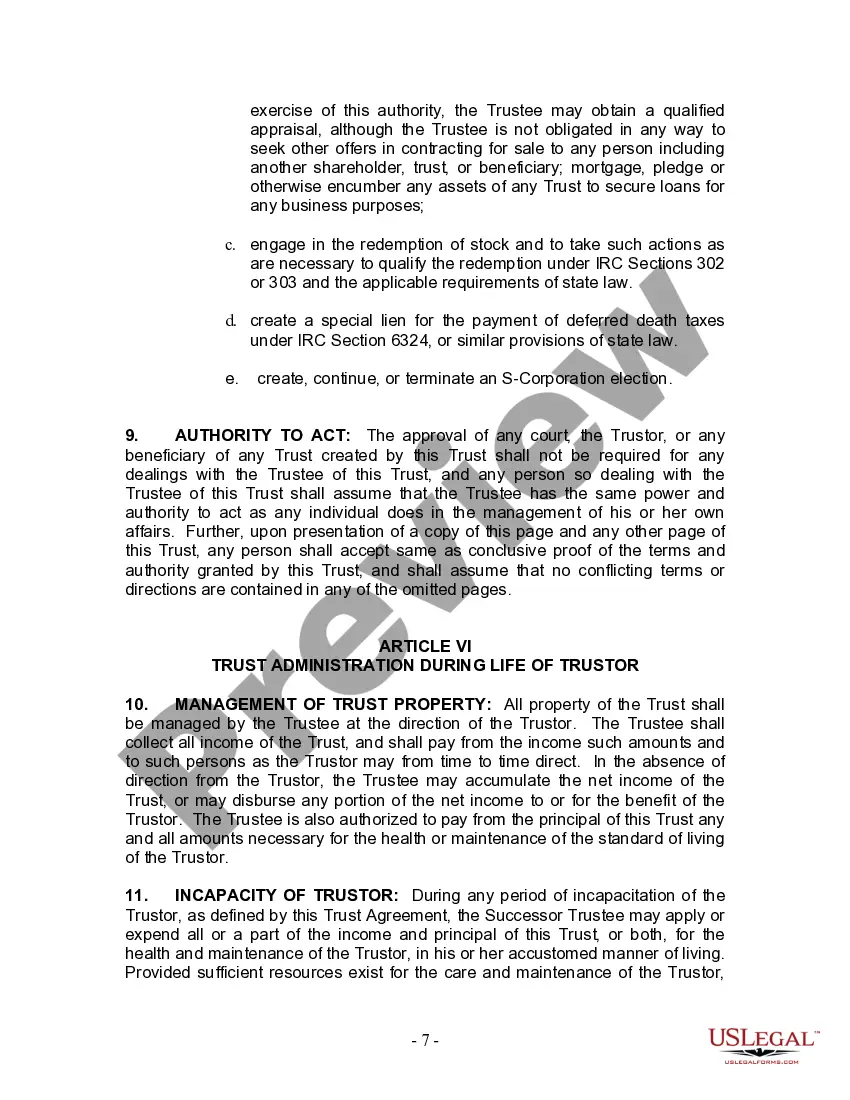
- Trustee powers and provisions: Outlines the authority and responsibilities of the trustee.
- Management of trust property: Explains how the trustee handles the assets during the Trustors' lifetime.
- Distrbutions after death: Describes how assets are divided among beneficiaries after the passing of the Trustors.



When this form is needed
This form should be used by married couples who have children and want to create a trust for effective estate planning. It is particularly useful when couples wish to avoid the complexities and delays associated with probate, ensure financial stability for minor children, and provide clear directions for the management and distribution of their assets after death. Additionally, this form can be helpful in situations where the parents want to protect their children's inheritance until they reach maturity or meet certain conditions.
Who should use this form
- Married couples looking to manage their estate proactively.
- Families with minor and adult children wishing to provide for their financial future.
- Parents wanting to avoid probate and ensure a smooth transition of assets.
- Individuals seeking to maintain control over their assets while alive and designate specific terms for after their passing.
Instructions for completing this form
- Identify the parties: Provide the names of both Trustors (Husband and Wife) along with their residence details.
- Designate beneficiaries: List the names of the children who will benefit from the trust, both minor and adult.
- Appoint a trustee: Select a trustee who will manage the trust during the Trustors' lifetime and after their passing.
- Detail the assets: Include a list of all property and assets to be placed in the trust.
- Sign and notarize: Both Trustors should sign the document and have it notarized to ensure its legality.
Notarization requirements for this form
Notarization is required for this form to take effect. Our online notarization service, powered by Notarize, lets you verify and sign documents remotely through an encrypted video session, available 24/7.
Get your form ready online
Our built-in tools help you complete, sign, share, and store your documents in one place.
Make edits, fill in missing information, and update formatting in US Legal Forms—just like you would in MS Word.
Download a copy, print it, send it by email, or mail it via USPS—whatever works best for your next step.
Sign and collect signatures with our SignNow integration. Send to multiple recipients, set reminders, and more. Go Premium to unlock E-Sign.
If this form requires notarization, complete it online through a secure video call—no need to meet a notary in person or wait for an appointment.
We protect your documents and personal data by following strict security and privacy standards.

Make edits, fill in missing information, and update formatting in US Legal Forms—just like you would in MS Word.

Download a copy, print it, send it by email, or mail it via USPS—whatever works best for your next step.

Sign and collect signatures with our SignNow integration. Send to multiple recipients, set reminders, and more. Go Premium to unlock E-Sign.

If this form requires notarization, complete it online through a secure video call—no need to meet a notary in person or wait for an appointment.

We protect your documents and personal data by following strict security and privacy standards.
Common mistakes to avoid
- Failing to list all significant assets: Ensure all properties and valuables are accounted for.
- Overlooking successor trustee appointments: Always designate who will take over if the primary trustee cannot serve.
- Not updating the trust after significant life events: Review and amend the trust after marriages, births, or changes in financial situations.
Why complete this form online
- Convenience of downloading and filling out at your own pace.
- Editable templates allow for personalization to meet specific family needs.
- Access to forms drafted by licensed attorneys to ensure legal compliance.
Key takeaways
- A living trust for husband and wife allows for effective estate management and asset transfer upon death.
- Designating a trustee ensures your wishes are honored regarding asset distribution.
- This form complies with Texas laws, offering peace of mind and legal protection.
Looking for another form?
Form popularity
FAQ
1The first step is determining which type of trust you'll need.2Next, you'll want to take stock of your assets and property.3You'll also need to choose a trustee.4Make the trust document.5Sign the trust document in front of a notary.6Put the property you want inside the trust.
The process of funding your living trust by transferring your assets to the trustee is an important part of what helps your loved ones avoid probate court in the event of your death or incapacity.Qualified retirement accounts such as 401(k)s, 403(b)s, IRAs, and annuities, should not be put in a living trust.Assets You Should NOT Put In a Living Trust - Qualls Law Firm\nwww.quallslawfirm.com > post > assets-you-should-not-put-in-a-living-trust
Cash Accounts. Rafe Swan / Getty Images. Non-Retirement Investment and Brokerage Accounts. Non-qualified Annuities. Stocks and Bonds Held in Certificate Form. Tangible Personal Property. Business Interests. Life Insurance. Monies Owed to You.
Qualified retirement accounts 401ks, IRAs, 403(b)s, qualified annuities. Health saving accounts (HSAs) Medical saving accounts (MSAs) Uniform Transfers to Minors (UTMAs) Uniform Gifts to Minors (UGMAs) Life insurance. Motor vehicles.
A Revocable Living Trust Defined Assets can include real estate, valuable possessions, bank accounts and investments. As with all living trusts, you create it during your lifetime. (There are also testamentary trusts, which don't take effect until after you die.)
1Pick a type of living trust. If you're married, you'll first need to decide whether you want a single or joint trust.2Take stock of your property.3Choose a trustee.4Draw up the trust document.5Sign the trust.6Transfer your property to the trust.
A living trust in Texas allows you to use your assets during your lifetime and securely transfer them to your beneficiaries after your death. A revocable living trust (also called an inter vivos trust) offers a variety of benefits as an estate planning tool.
The process of funding your living trust by transferring your assets to the trustee is an important part of what helps your loved ones avoid probate court in the event of your death or incapacity. Qualified retirement accounts such as 401(k)s, 403(b)s, IRAs, and annuities, should not be put in a living trust.
Although a typical will package costs $1,000 to $1,200, and a trust can run $2,500, a legal insurance plan like Texas Legal can save Texans hundreds or even thousands on their estate planning costs.