Texas Agreed Cancellation of Lease
Understanding this form
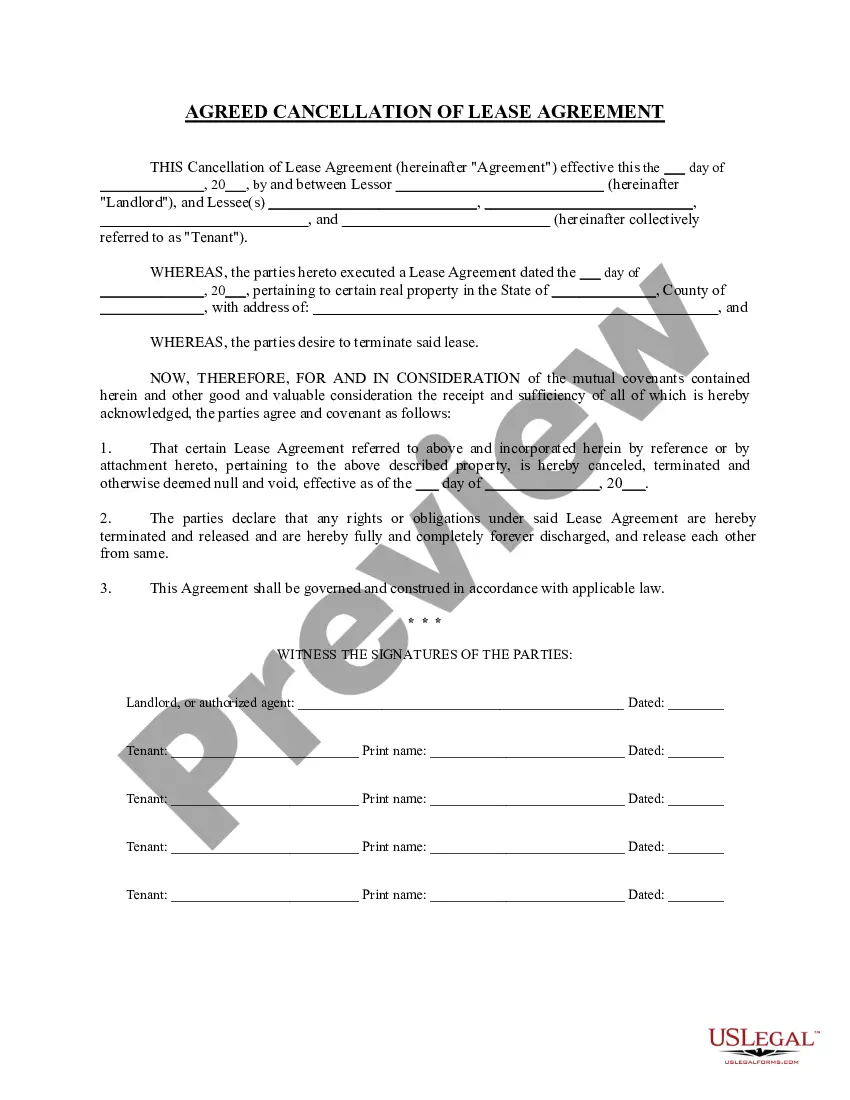
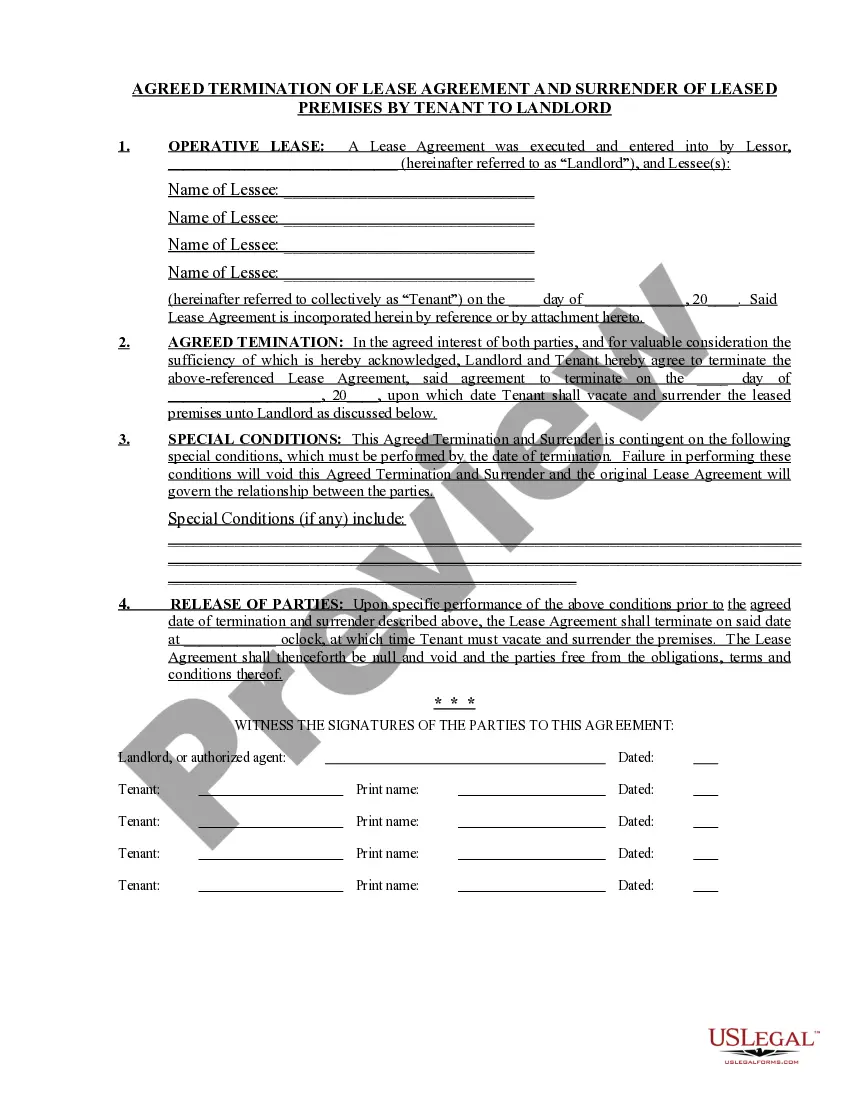
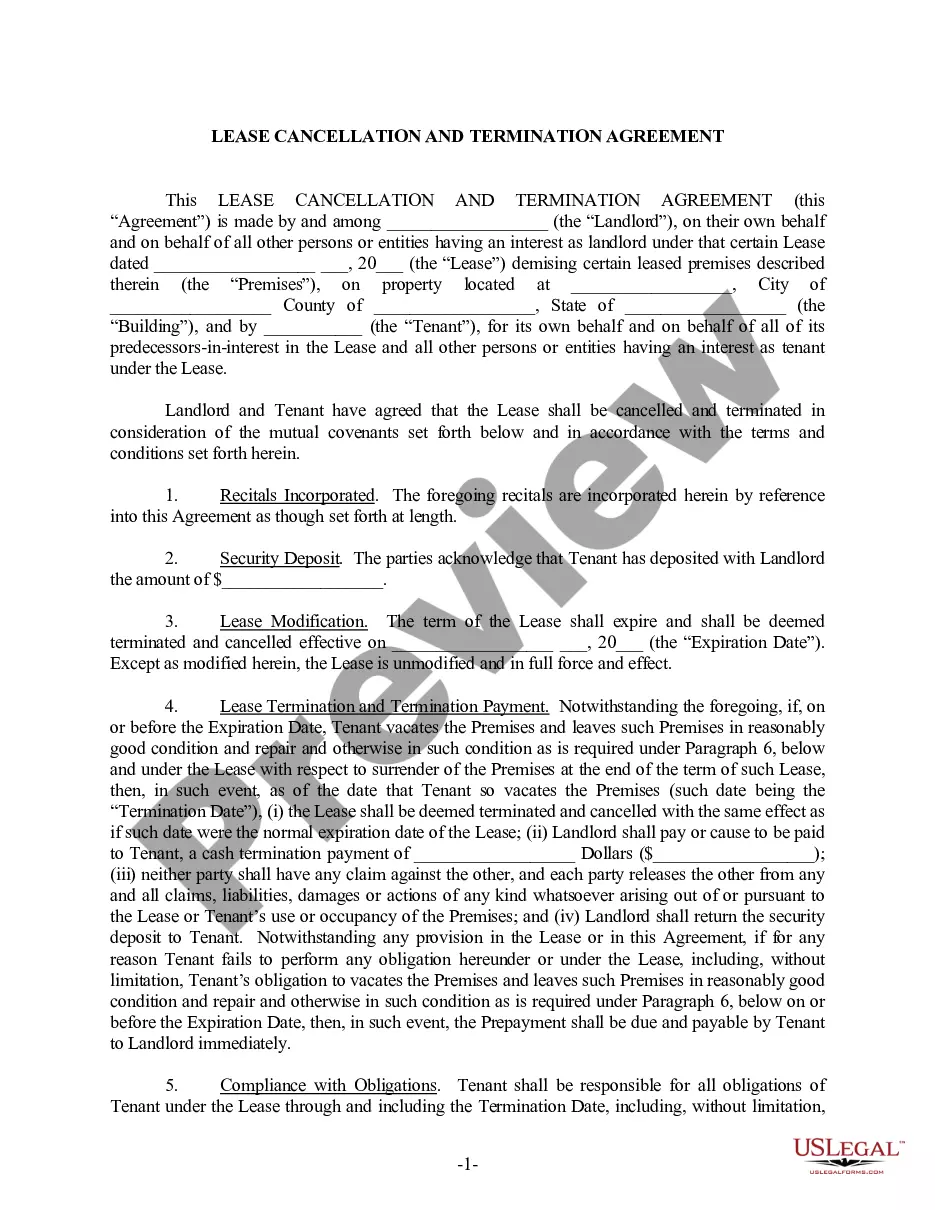
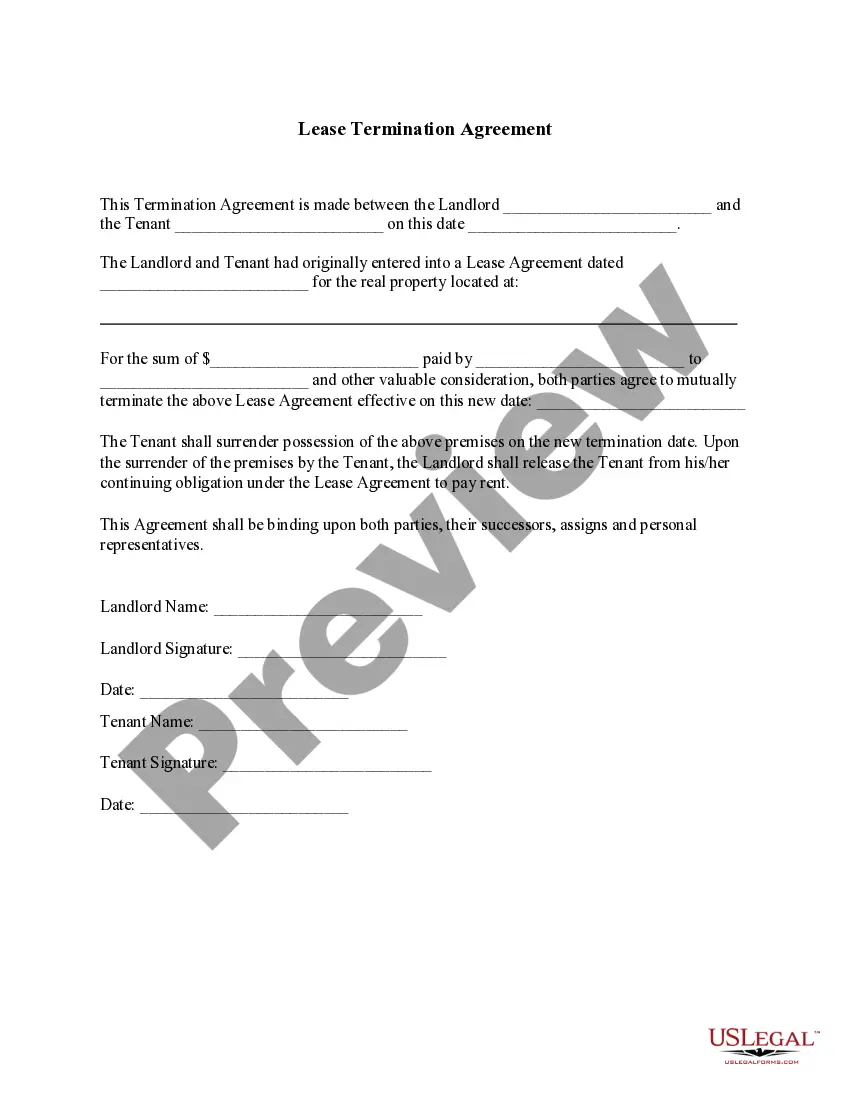
The Agreed Cancellation of Lease serves as a mutual agreement between the Landlord and Tenant to terminate a lease without imposing consequences or conditions on either party. This form provides a simple and clear method to cancel an existing lease, differentiating it from similar forms that may involve penalties or specific conditions for termination.
Main sections of this form
- Effective date: The date when the cancellation agreement becomes legally binding.
- Parties involved: Names and roles of the Landlord and Tenant(s).
- Reference to original lease: Identification of the lease being canceled.
- Termination clause: Declaration that the original lease is deemed null and void.
- Release of obligations: Statement discharging any rights or duties under the canceled lease.
- Signatures: Signatures of all parties involved to confirm agreement and understanding.
Situations where this form applies
This form is ideal when both the Landlord and Tenant have mutually decided to terminate a lease agreement. Scenarios may include changes in personal circumstances, relocation, or other reasons that lead to an amicable decision to end the tenancy without penalties. It effectively releases both parties from further obligations under the initial lease.
Who can use this document
- Landlords who wish to amicably end a lease with their tenants.
- Tenants who have agreed with their landlord to terminate their lease early.
- Both parties who desire clear documentation of the cancellation to avoid future disputes.
Steps to complete this form
- Identify and fill in the date of the agreement.
- Provide the names and signatures of the Landlord and all Tenants involved.
- Reference the original lease by including the execution date and property details.
- State the effective date of the cancellation.
- Ensure all parties understand and agree to release each other from obligations under the original lease.
Does this document require notarization?
This form does not typically require notarization unless specified by local law. However, having the agreement notarized can provide additional legal assurance and documentation of the identities of the parties involved.
Get your form ready online
Our built-in tools help you complete, sign, share, and store your documents in one place.
Make edits, fill in missing information, and update formatting in US Legal Forms—just like you would in MS Word.
Download a copy, print it, send it by email, or mail it via USPS—whatever works best for your next step.
Sign and collect signatures with our SignNow integration. Send to multiple recipients, set reminders, and more. Go Premium to unlock E-Sign.
If this form requires notarization, complete it online through a secure video call—no need to meet a notary in person or wait for an appointment.
We protect your documents and personal data by following strict security and privacy standards.

Make edits, fill in missing information, and update formatting in US Legal Forms—just like you would in MS Word.

Download a copy, print it, send it by email, or mail it via USPS—whatever works best for your next step.

Sign and collect signatures with our SignNow integration. Send to multiple recipients, set reminders, and more. Go Premium to unlock E-Sign.

If this form requires notarization, complete it online through a secure video call—no need to meet a notary in person or wait for an appointment.

We protect your documents and personal data by following strict security and privacy standards.
Typical mistakes to avoid
- Failing to fill in all required fields, such as names and dates.
- Not having all parties sign the document, which can lead to disputes.
- Neglecting to reference the original lease correctly, leading to confusion about which lease is being canceled.
- Not verifying state-specific regulations regarding lease cancellations.
Benefits of completing this form online
- Instant access to a legally vetted template tailored for cancellation of lease agreements.
- Conveniently downloadable and editable to suit your specific needs.
- Secure storage and easy retrieval for future reference.
Looking for another form?
Form popularity
FAQ
Non-Payment Eviction If you fail to pay your rent or break your lease in another major way, the landlord can have you evicted within two weeks of breaching the contract.Texas regulations state that tenants are liable for any expenses that the landlord incurs because a lease was broken.
In some circumstances, a tenant can break a fixed-term agreement early without penalty. A tenant can give 14 days' written notice to end an agreement early without penalty if: they have accepted an offer of social housing (e.g. from DCJ Housing)
Make sure this is the best option for you. Figure out if you can break your lease under Texas law. Re-read your lease agreement. Negotiate with your landlord. Move out and hope your landlord re-rents quickly.
Declare a Constructive Eviction. Point Out Landlord Breaches to Reduce Your Debt. Landlords Have a Duty to Mitigate Their Damages. Consequences for Breaking Your Lease. Look for These Clauses in Your Lease. Your Landlord May Have a Duty to Mitigate. Declare a Constructive Eviction.
With that said, the lease does not terminate immediately. Once the notice is delivered, the earliest the lease can terminate is 30 days after the beginning of the next rent period.
A broken lease will not appear on your credit report, but any unpaid rent from your broken lease will stay on your credit report for 7 years.
As a rule, the Texas Apartment Association typically recommends landlords charge 85% of a month's rent to cover early lease termination expenses. In extreme circumstances, a landlord may sue a former delinquent tenant for past rent. Most of these cases are heard in small claims court with the maximum claim of $10,000.
Give the landlord/agent a written termination notice and vacate move out and return the keys according to your notice, and/or. apply to the NSW Civil & Administrative Tribunal (NCAT) for a termination order.
While some jurisdictions may have provisions that allow consumers to change their minds with no consequences, generally there is no cooling-off period for leasing real property. Once the landlord and tenant sign a lease and a copy is delivered to the both parties, it becomes a valid contract.