Texas Assignment of Lease and Rent from Borrower to Lender
What this document covers
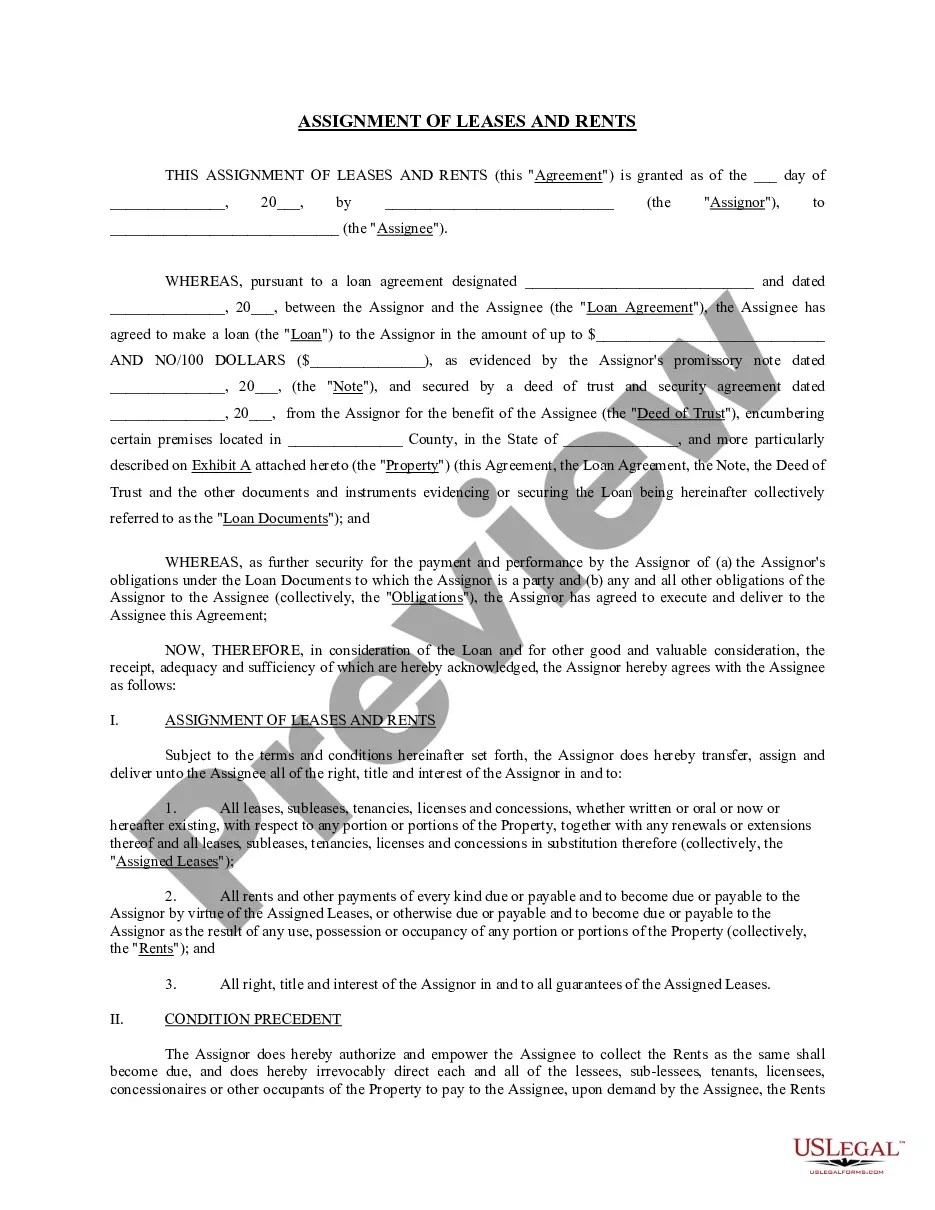
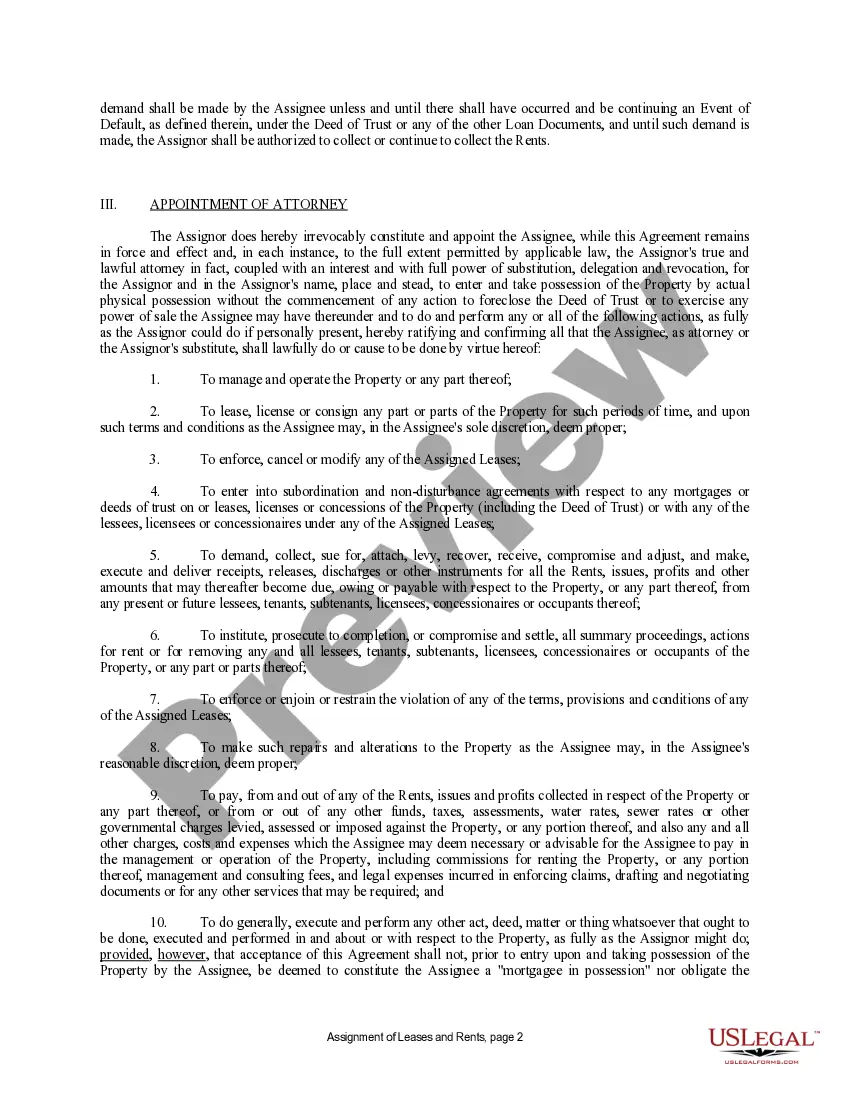
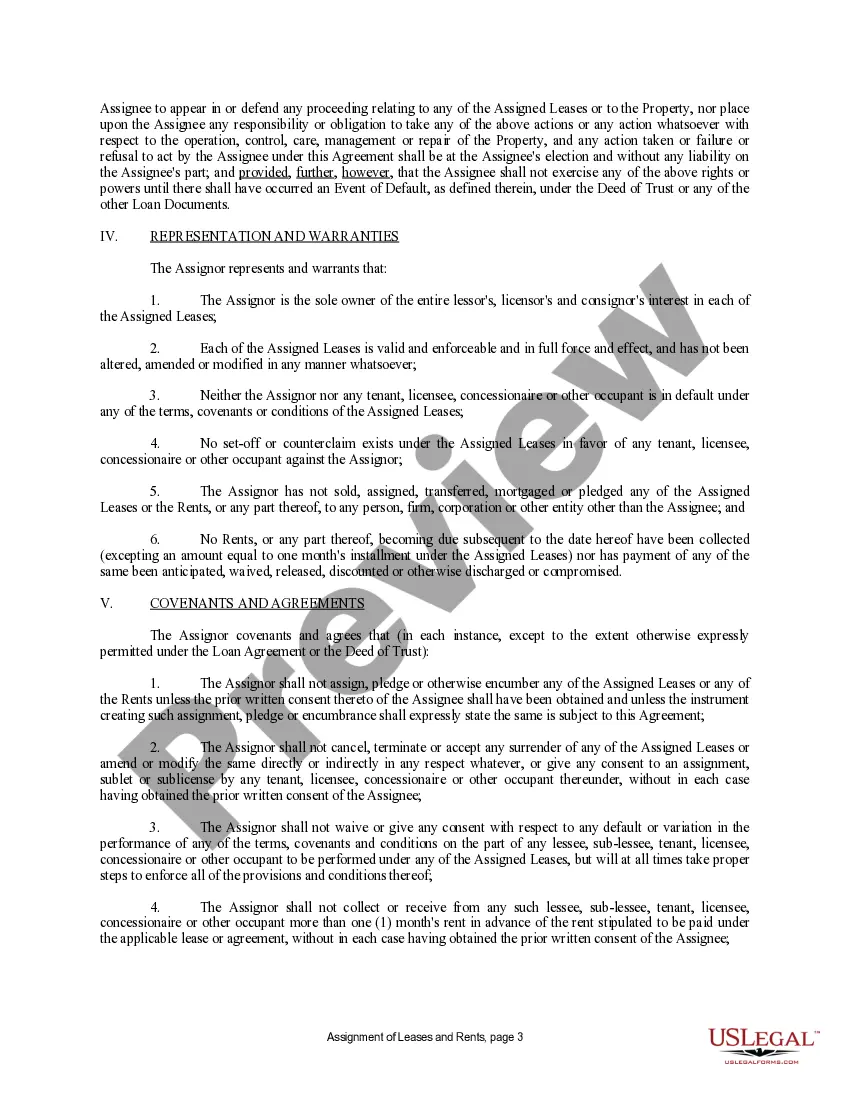
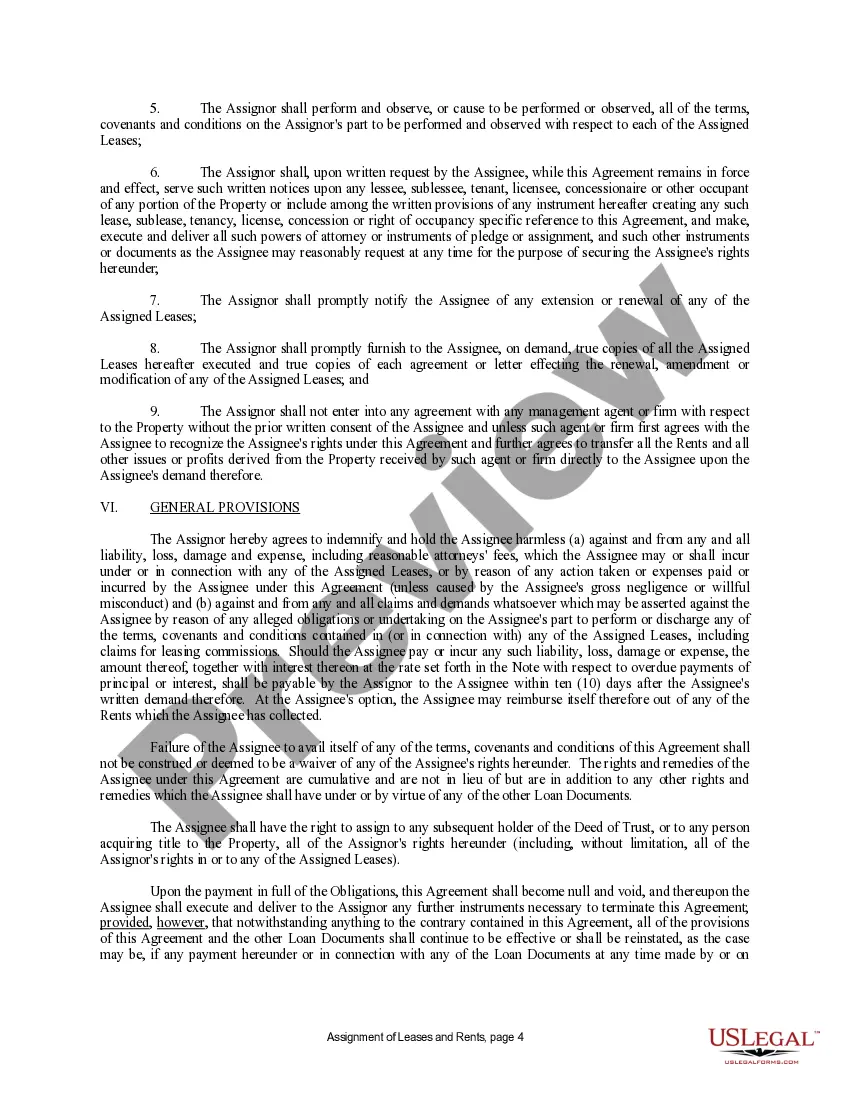
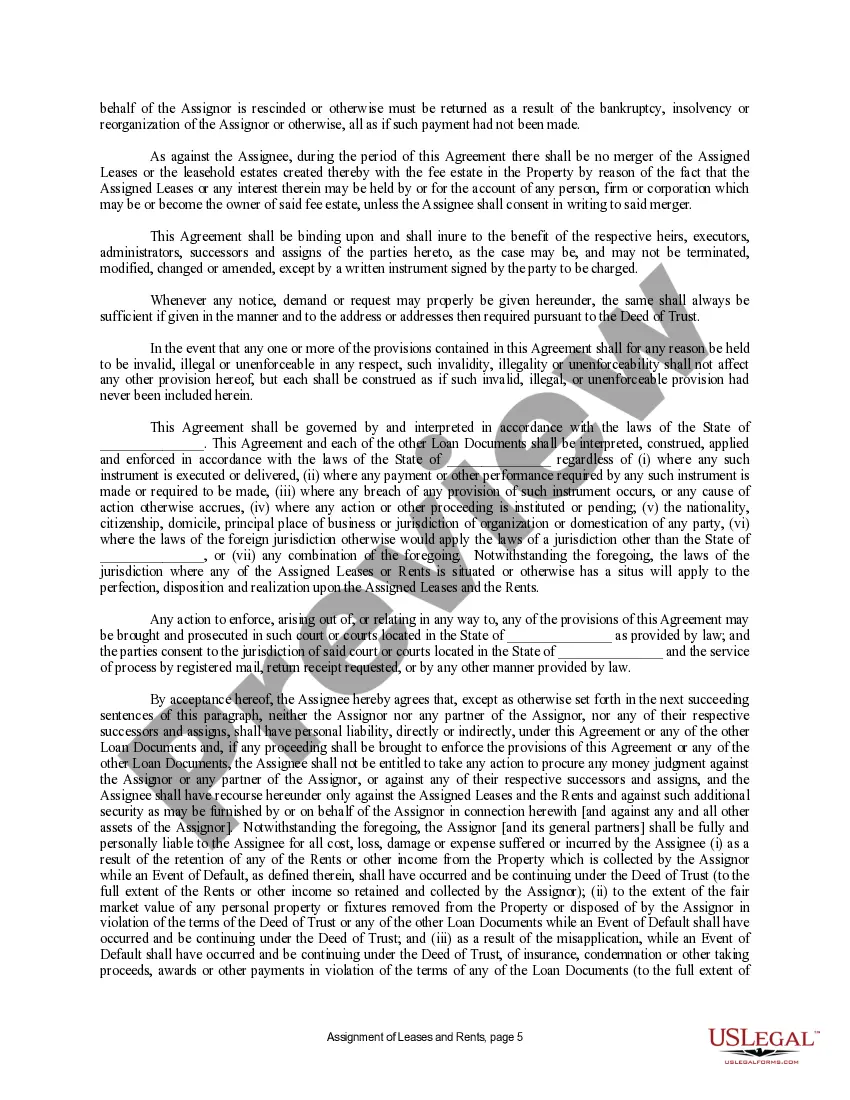
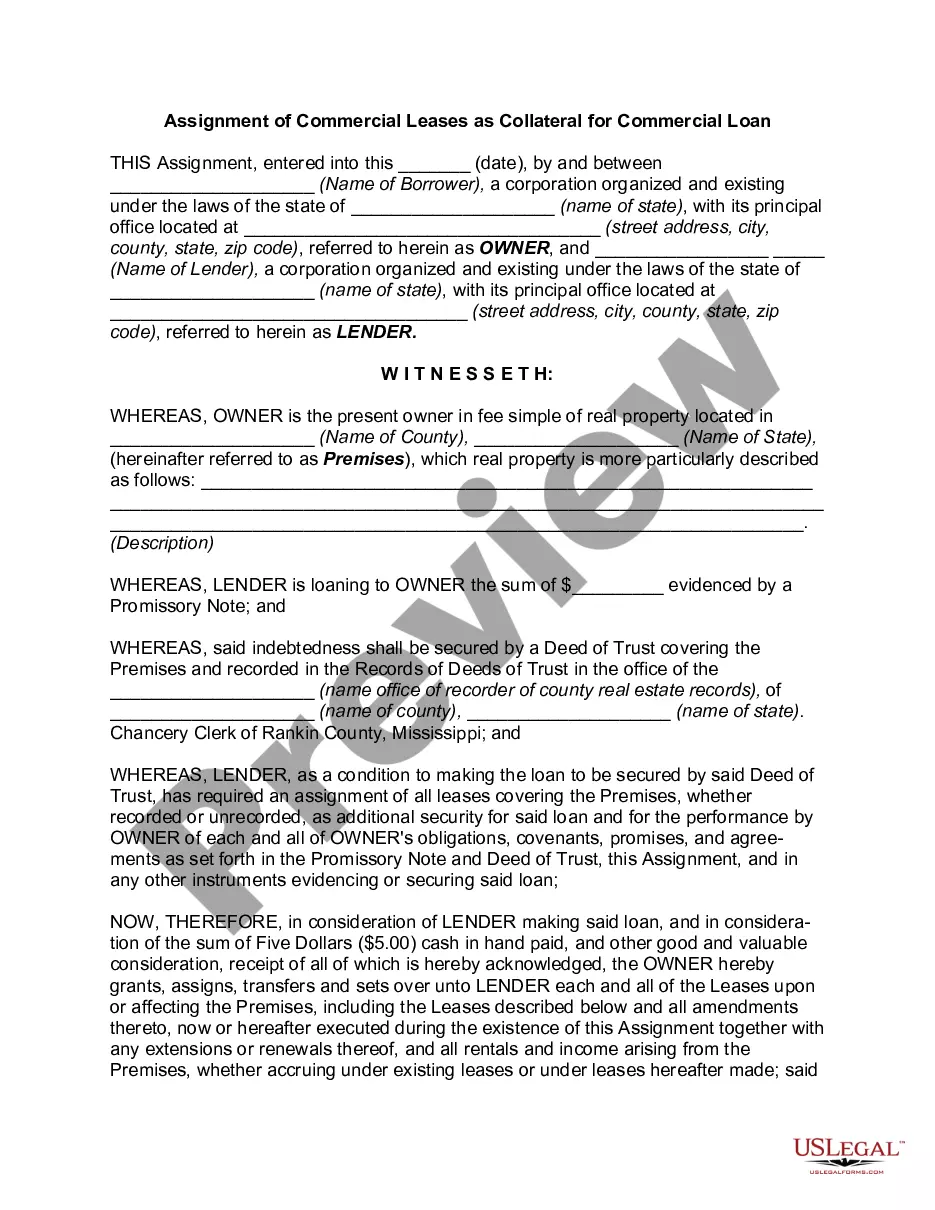
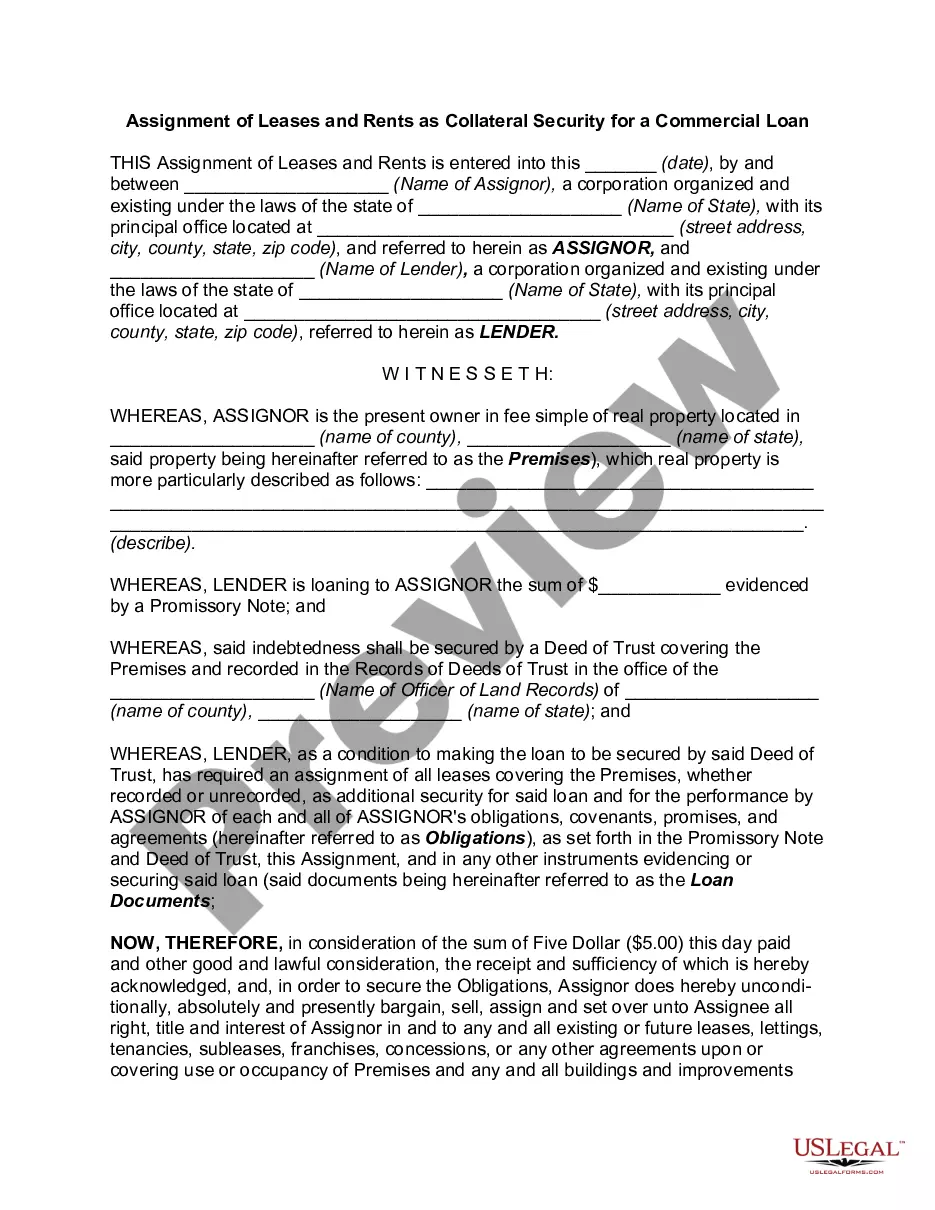
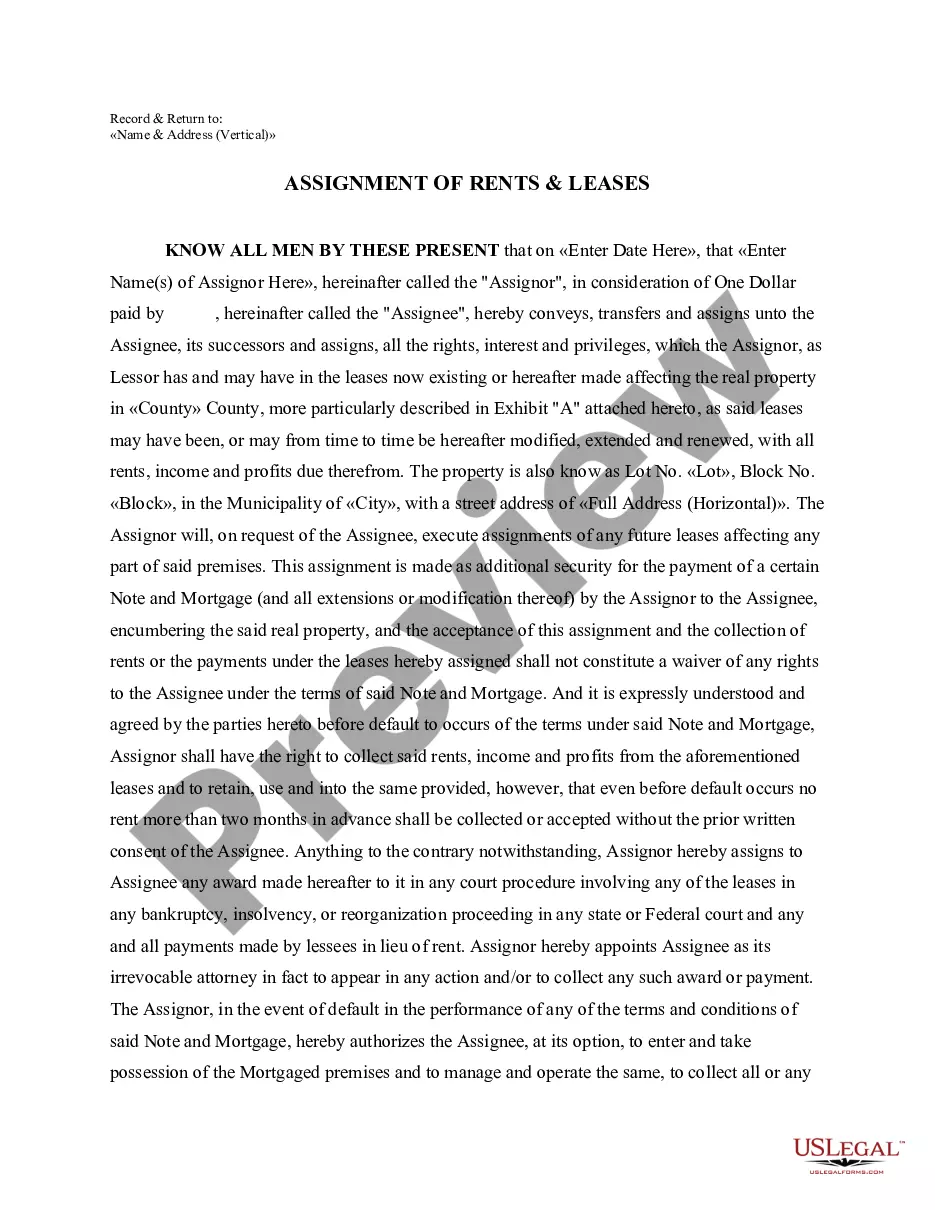
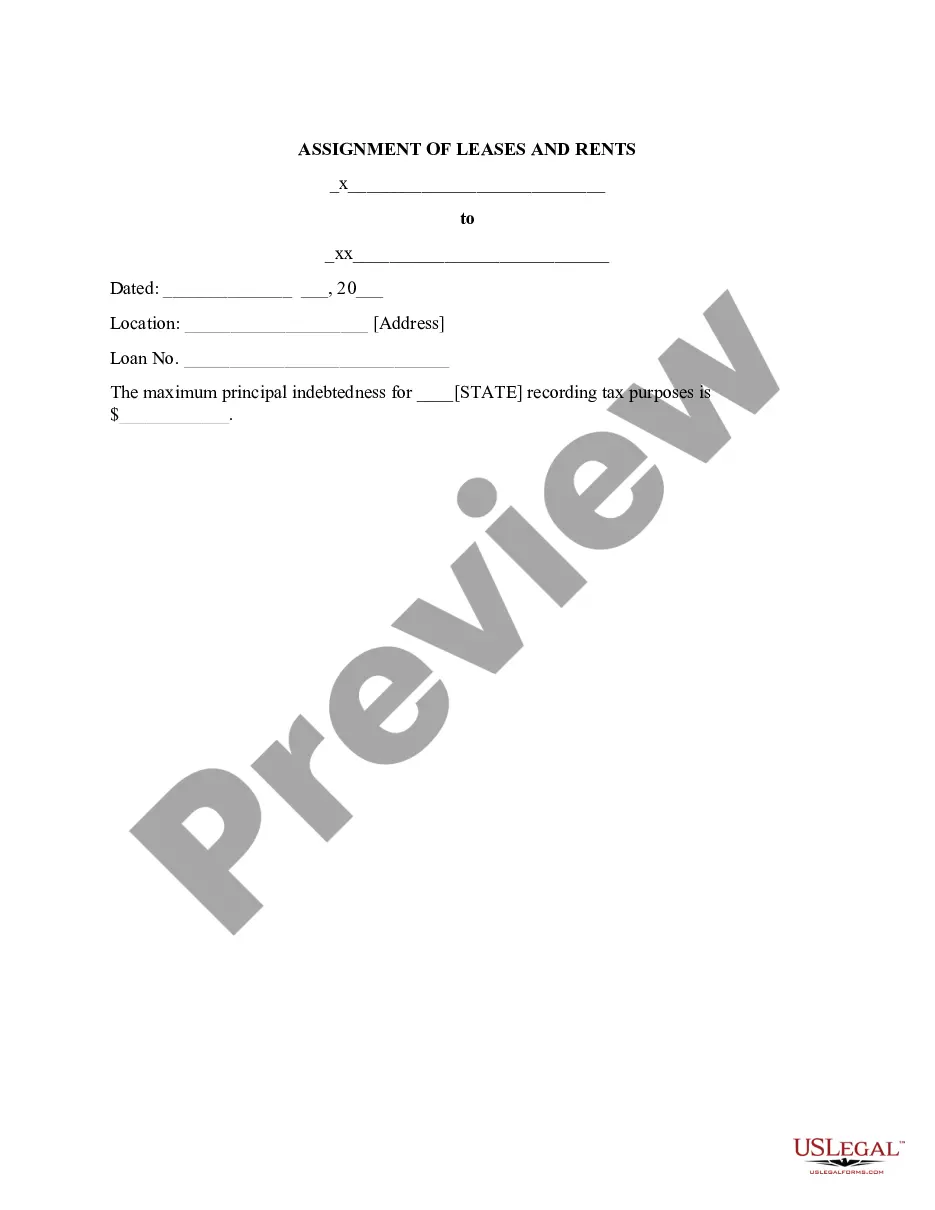
The Assignment of Lease and Rent from Borrower to Lender is a legal document that facilitates the transfer of lease rights and rental income from a borrower to a lender. This agreement is primarily used when a borrower takes a loan secured by real estate and needs to assign rental income to the lender as collateral to ensure repayment of the debt. Unlike standard lease agreements, this assignment specifically focuses on granting rights to collect rents and manage leases to the lender in case of default.
What’s included in this form
- Identification of the Assignor (Borrower) and Assignee (Lender).
- Details regarding the loan agreement, including the loan amount and terms.
- Transfer of rights related to all leases and rental agreements associated with the property.
- Authorization for the Assignee to collect rents under specified conditions.
- Indemnification clauses regarding liabilities associated with the leases.

When to use this form
This form is typically used when a borrower secures a loan against a property that generates rental income. It is relevant in situations where the borrower needs to ensure the lender can collect rent payments directly in the event of a default on the loan. This assignment protects the lenderâs interests and provides a legal claim to the rental income until the loan is repaid.
Who needs this form
- Property owners (borrowers) seeking financing secured by rental properties.
- Lenders who require collateral in the form of rental income.
- Real estate investors involved in property leasing who need to formalize expectations with lenders.
Instructions for completing this form
- Identify the parties involved by entering the names of the Assignor and Assignee.
- Specify the loan agreement details, including the loan amount and date.
- List any properties associated with the leases to be assigned.
- Enter any special conditions or authorizations related to rent collection.
- Both parties should sign and date the agreement to finalize the assignment.
Is notarization required?
This form does not typically require notarization unless specified by local law. However, having it notarized may provide additional legal protection by verifying the identity of the parties involved.
Get your form ready online
Our built-in tools help you complete, sign, share, and store your documents in one place.
Make edits, fill in missing information, and update formatting in US Legal Forms—just like you would in MS Word.
Download a copy, print it, send it by email, or mail it via USPS—whatever works best for your next step.
Sign and collect signatures with our SignNow integration. Send to multiple recipients, set reminders, and more. Go Premium to unlock E-Sign.
If this form requires notarization, complete it online through a secure video call—no need to meet a notary in person or wait for an appointment.
We protect your documents and personal data by following strict security and privacy standards.

Make edits, fill in missing information, and update formatting in US Legal Forms—just like you would in MS Word.

Download a copy, print it, send it by email, or mail it via USPS—whatever works best for your next step.

Sign and collect signatures with our SignNow integration. Send to multiple recipients, set reminders, and more. Go Premium to unlock E-Sign.

If this form requires notarization, complete it online through a secure video call—no need to meet a notary in person or wait for an appointment.

We protect your documents and personal data by following strict security and privacy standards.
Avoid these common issues
- Failing to specify the exact amount of the loan and associated terms.
- Neglecting to include all relevant lease agreements in the assignment.
- Omitting signatures or dates, which can render the form unenforceable.
Benefits of using this form online
- Convenience of completing the form at your own pace from any location.
- Access to legally vetted templates ensuring compliance with state laws.
- Easy editing features that allow for quick adjustments to the document.
Looking for another form?
Form popularity
FAQ
A lease is a contract between a lessor, who own a property, and a lessee, who is paying to temporarily occupy or use that property. This contract creates an agreement that both parties must abide by. Learn how leases work and why you need one.
Assigning a lease requires the landlord's written consent.Essentially the landlord wants to make sure that the new tenant will be in a position to pay the rent and meet their obligations.
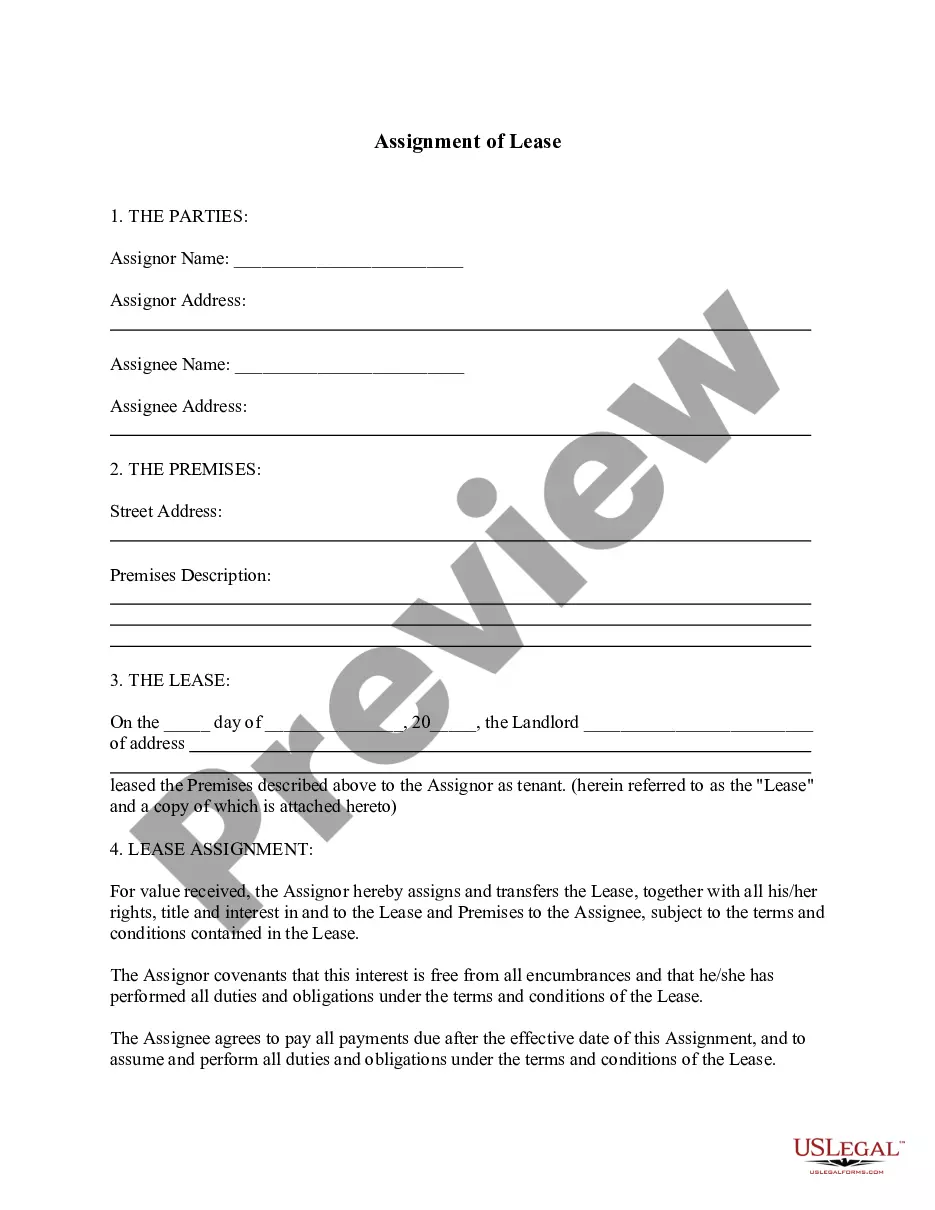
An assignment of a lease is a complete transfer of the right to be the tenant under the lease. The third-party assignee becomes the "tenant" under the lease, taking over all of the leased premises, substituting for the old tenant.
The landlord's lawyer usually prepares the agreement. However, the outgoing tenant or the incoming tenant pays these costs, not the landlord.
An assignment of a lease is a complete transfer of the right to be the tenant under the lease. The third-party assignee becomes the "tenant" under the lease, taking over all of the leased premises, substituting for the old tenant.
Sometimes called Assignment of Leases, Rents and Profits or simply Assignment of Rents, this is a document attached to a mortgage loan agreement which entitles the lender to any income (from leases, rents, etc.) derived from the property once the owner defaults on the loan.
An assignment is the complete transfer of one party's interest in an agreement to a third party. In this case, the original tenant is giving all of his or her interest to a new tenant.
This might include financial statements, business history and professional references; and. there is an agreement about who is liable for the costs of the deed of assignment. The landlord's lawyer usually prepares the agreement. However, the outgoing tenant or the incoming tenant pays these costs, not the landlord.
For commercial lending purposes, an assignment of leases assigns the debtor's rights, as landlord under a lease or leases, to the creditor for the collection of rent as additional security for a debt or other obligation.