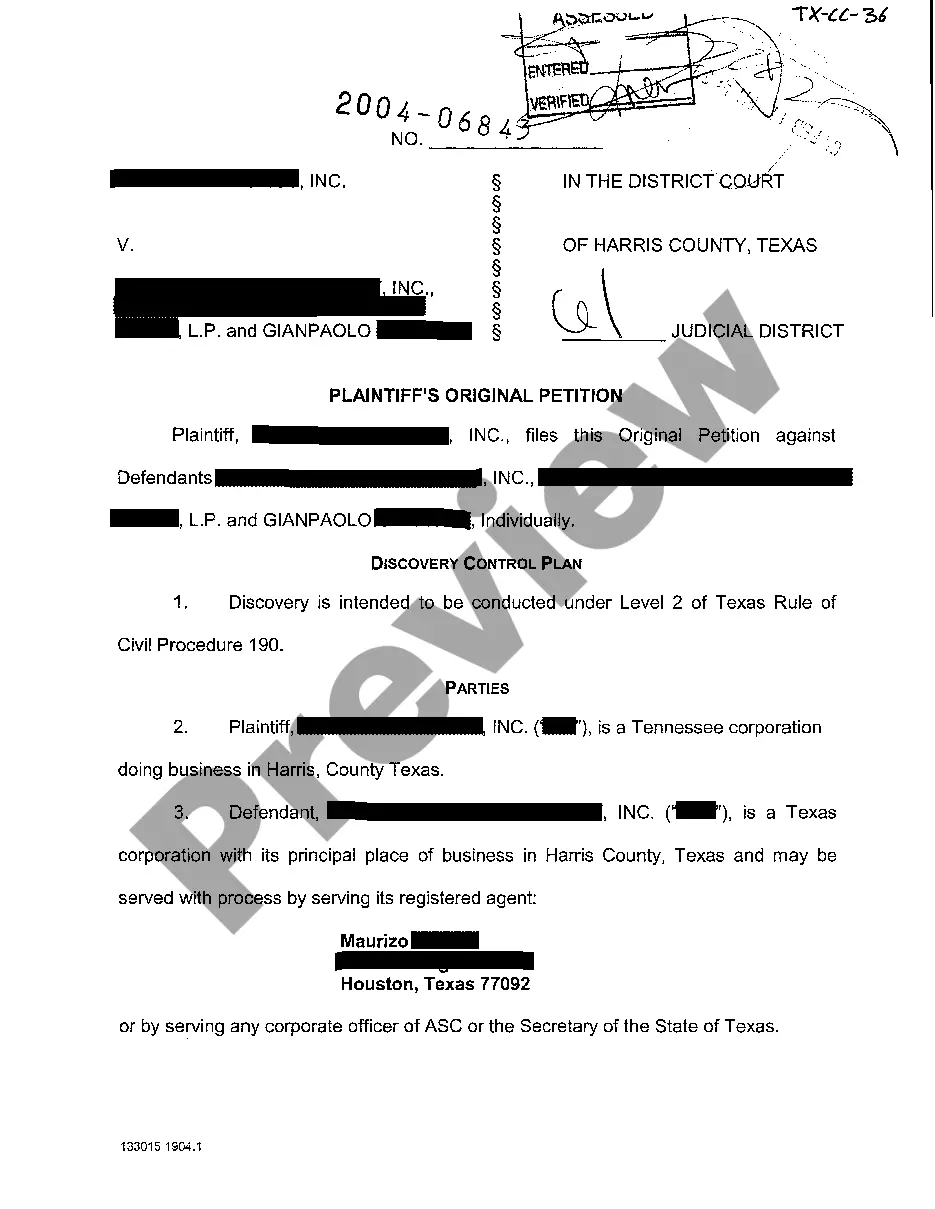
Texas Letter from Tenant to Landlord containing Notice of wrongful deductions from security deposit and demand for return
Overview of this form
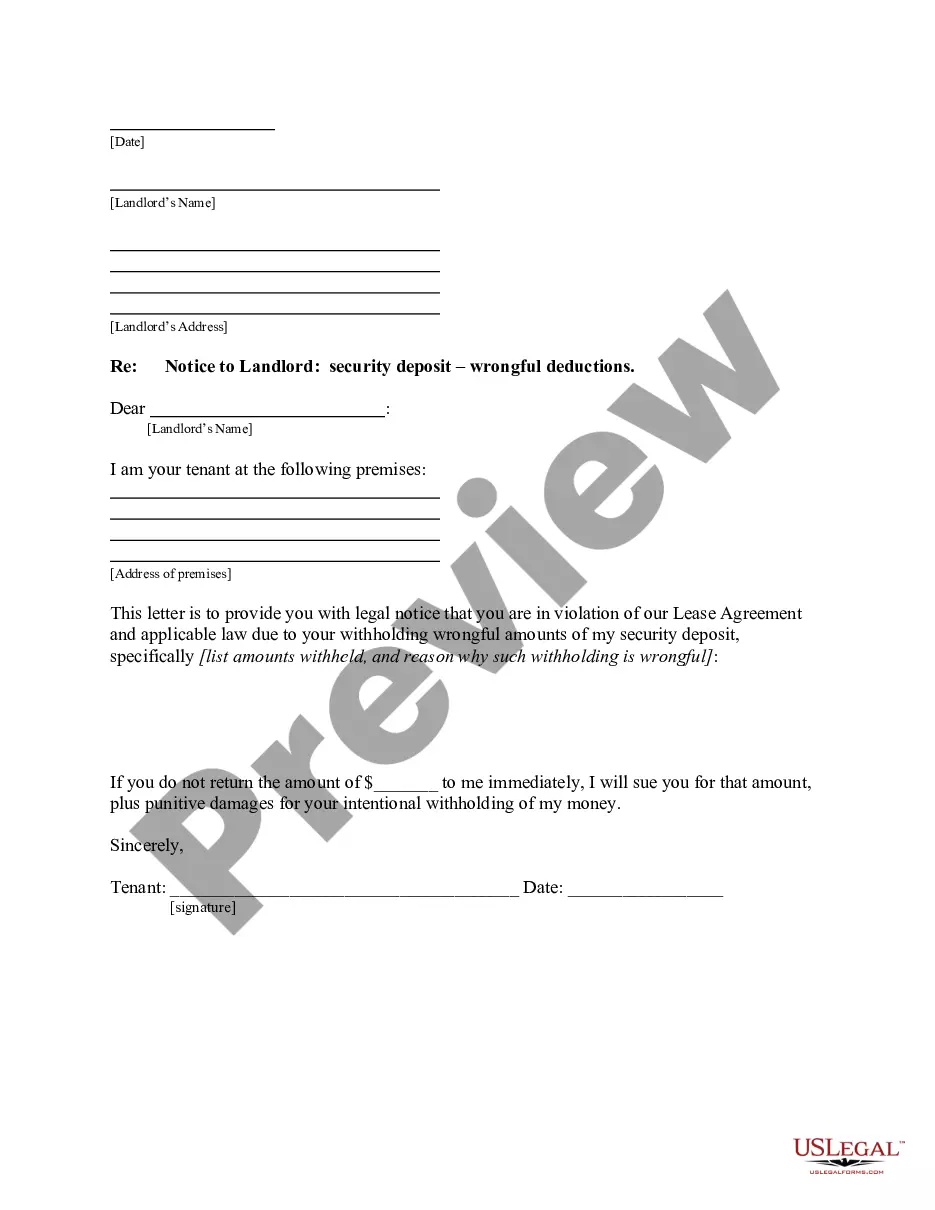
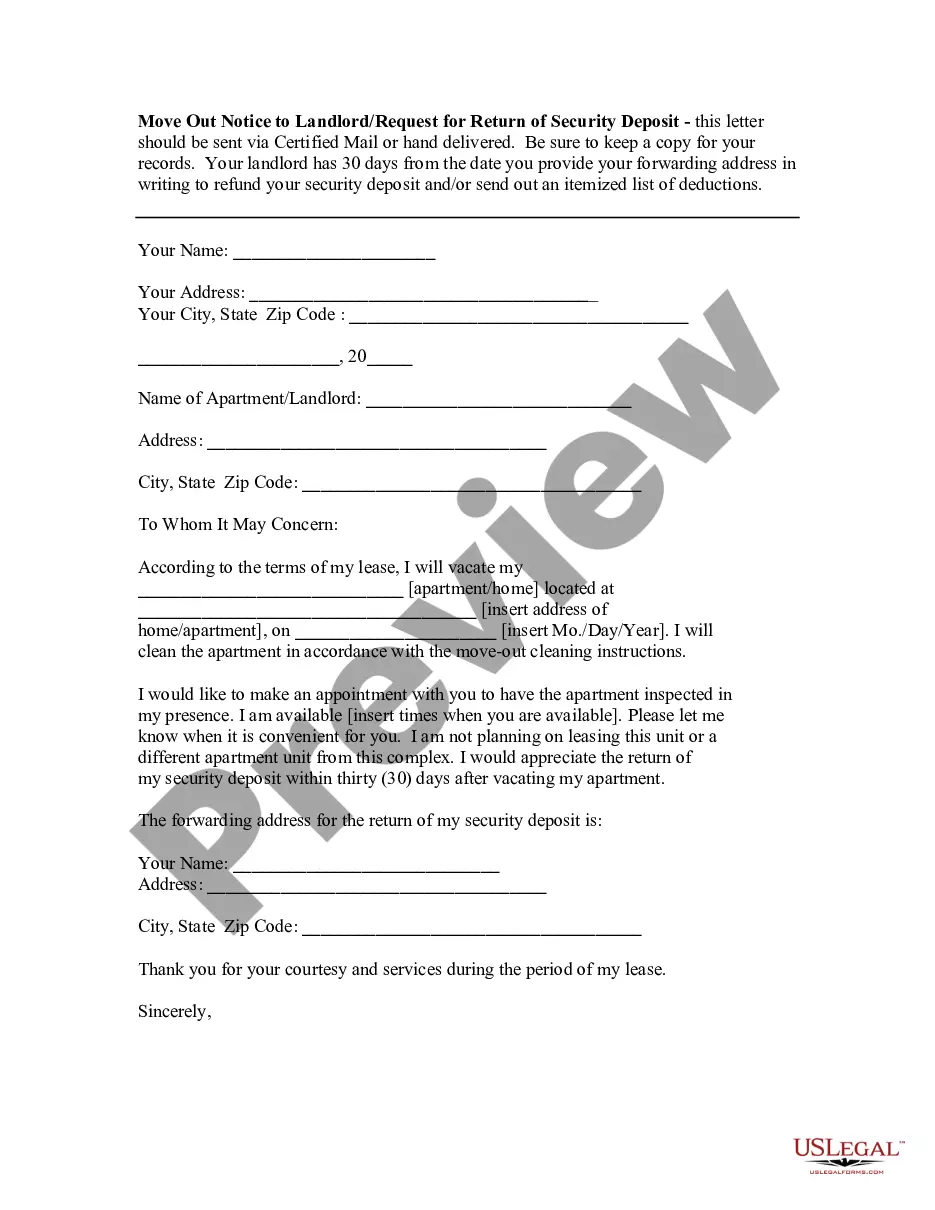
This form is a Letter from Tenant to Landlord containing Notice of wrongful deductions from security deposit and demand for return. It is designed to notify the landlord of any improper deductions made from the tenant's security deposit and to formally demand the return of the legitimate amount. This letter is crucial for ensuring that tenants can articulate their grievances clearly and seek resolution in a professional manner, distinguishing it from other types of rental correspondence.
Key components of this form
- Tenant's signature and date for validation.
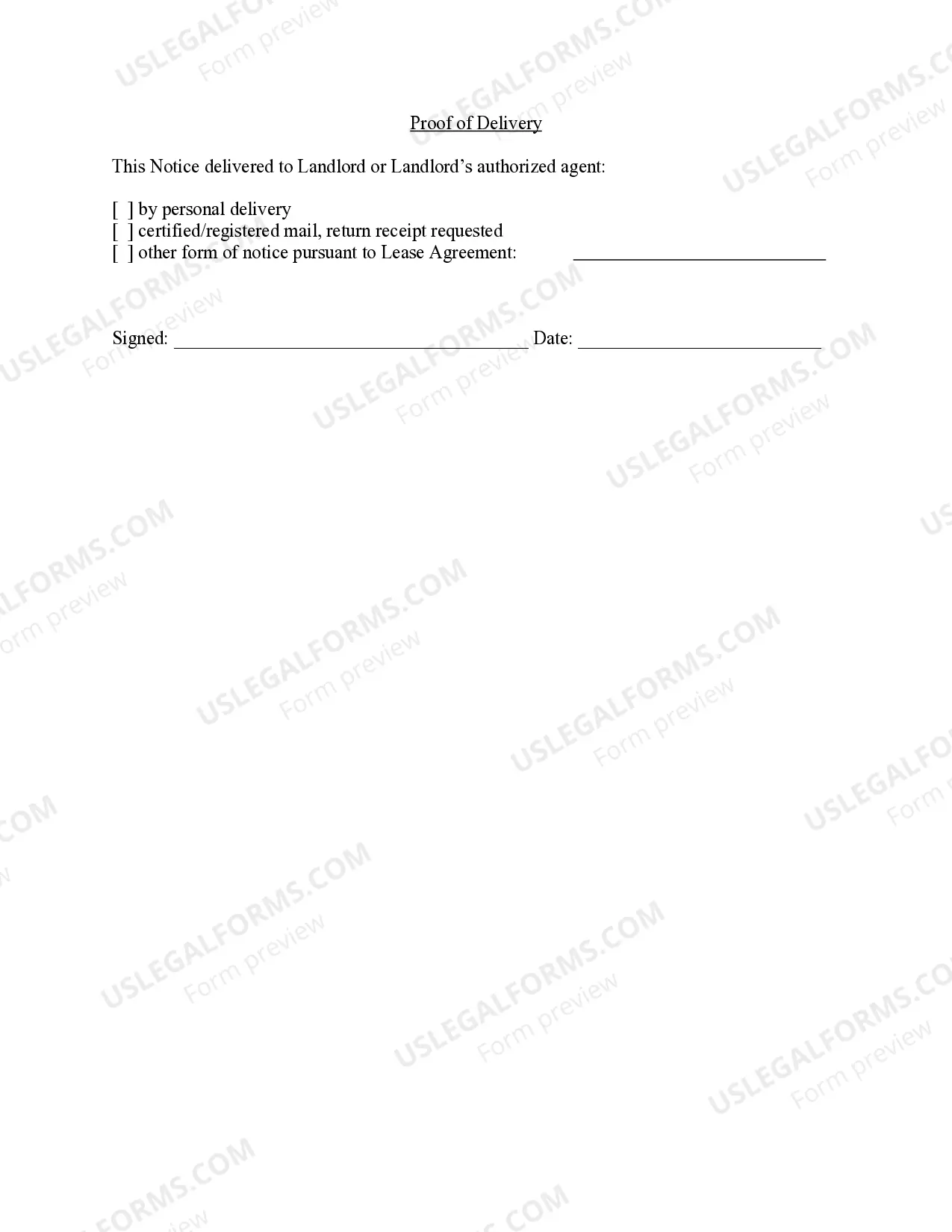
- Proof of delivery method to confirm receipt by the landlord.
- Detailed notice of specific wrongful deductions from the security deposit.
- Clear demand for the return of the remaining security funds.



When this form is needed
This form is essential when a tenant identifies deductions from their security deposit that they believe are unjustified. It should be used when the tenant has either received a breakdown of the deductions from the landlord or has observed issues that warrant a formal disputation. By using this form, tenants can document their claims and initiate the conversation about returning the deducted funds.
Who needs this form
- Tenants who have moved out of a rental property.
- Individuals who have received their final account statement detailing the deductions.
- Tenants seeking to resolve disputes regarding their security deposit with their landlord.
How to complete this form
- Identify the parties involved (tenant and landlord).
- Clearly state the specific deductions that are disputed.
- Include the date of the notice and the delivery method.
- Signed by the tenant to make it a legally binding document.
- Ensure proofs of delivery are retained for future reference.
Does this document require notarization?
Notarization is not commonly needed for this form. However, certain documents or local rules may make it necessary. Our notarization service, powered by Notarize, allows you to finalize it securely online anytime, day or night.
Get your form ready online
Our built-in tools help you complete, sign, share, and store your documents in one place.
Make edits, fill in missing information, and update formatting in US Legal Forms—just like you would in MS Word.
Download a copy, print it, send it by email, or mail it via USPS—whatever works best for your next step.
Sign and collect signatures with our SignNow integration. Send to multiple recipients, set reminders, and more. Go Premium to unlock E-Sign.
If this form requires notarization, complete it online through a secure video call—no need to meet a notary in person or wait for an appointment.
We protect your documents and personal data by following strict security and privacy standards.

Make edits, fill in missing information, and update formatting in US Legal Forms—just like you would in MS Word.

Download a copy, print it, send it by email, or mail it via USPS—whatever works best for your next step.

Sign and collect signatures with our SignNow integration. Send to multiple recipients, set reminders, and more. Go Premium to unlock E-Sign.

If this form requires notarization, complete it online through a secure video call—no need to meet a notary in person or wait for an appointment.

We protect your documents and personal data by following strict security and privacy standards.
Common mistakes
- Not clearly specifying the deductions being contested.
- Failing to include proof of delivery documentation.
- Neglecting to sign and date the letter.
Benefits of using this form online
- Convenient access to a legally vetted document.
- Ability to download and edit the form as necessary.
- Quick turnaround in addressing disputes regarding security deposits.
Looking for another form?

Form popularity
FAQ
Type your letter. Concisely review the main facts. Be polite. Write with your goal in mind. Ask for exactly what you want. Set a deadline. End the letter by stating you will promptly pursue legal remedies if the other party does not meet your demand. Make and keep copies.
(a) Before returning a security deposit, the landlord may deduct from the deposit damages and charges for which tenant is legally liable under the lease or as a result of breaching the lease. (b) The landlord may not retain any portion of a security deposit to cover normal wear and tear.
Before you go to court, a number of states require you to send a demand letter to your opposing party. An attorney is usually not necessary at this point and you can write a demand letter on your own. To write one, gather necessary documents, draft your letter, and send the letter to your opposing party.
The date of the letter and the landlord's full name and address. The address of the residence you rented and the date you moved in. A statement that you've been paying your rent timely and that you are current with your payments.
Before returning a security deposit, the landlord may deduct from the deposit damages and charges for which the tenant is legally liable under Texas security deposit laws or as a result of breaching the lease. The landlord may not retain any portion of a security deposit to cover normal wear and tear.
Moving In. In Alberta, most landlords require a tenant to pay a security deposit or damage deposit before moving in. A security deposit is a one-time only payment and cannot be more than one month's rent.
The Real Deal with Carpet Cleaning According to the Department of Agriculture, Trade and Consumer Protection, landlords CANNOT charge for routine carpet cleaning - during the lease or from a security deposit-no matter what your lease says.
"Normal wear and tear" means deterioration that results from the intended use of a dwelling, including, for the purposes of Subchapters B and D, breakage or malfunction due to age or deteriorated condition, but the term does not include deterioration that results from negligence, carelessness, accident, or abuse of the
Contact your landlord or agent. Set out your evidence and the reasons you don't agree with deductions from your deposit in writing. Raise a dispute with your deposit scheme. Consider court action.