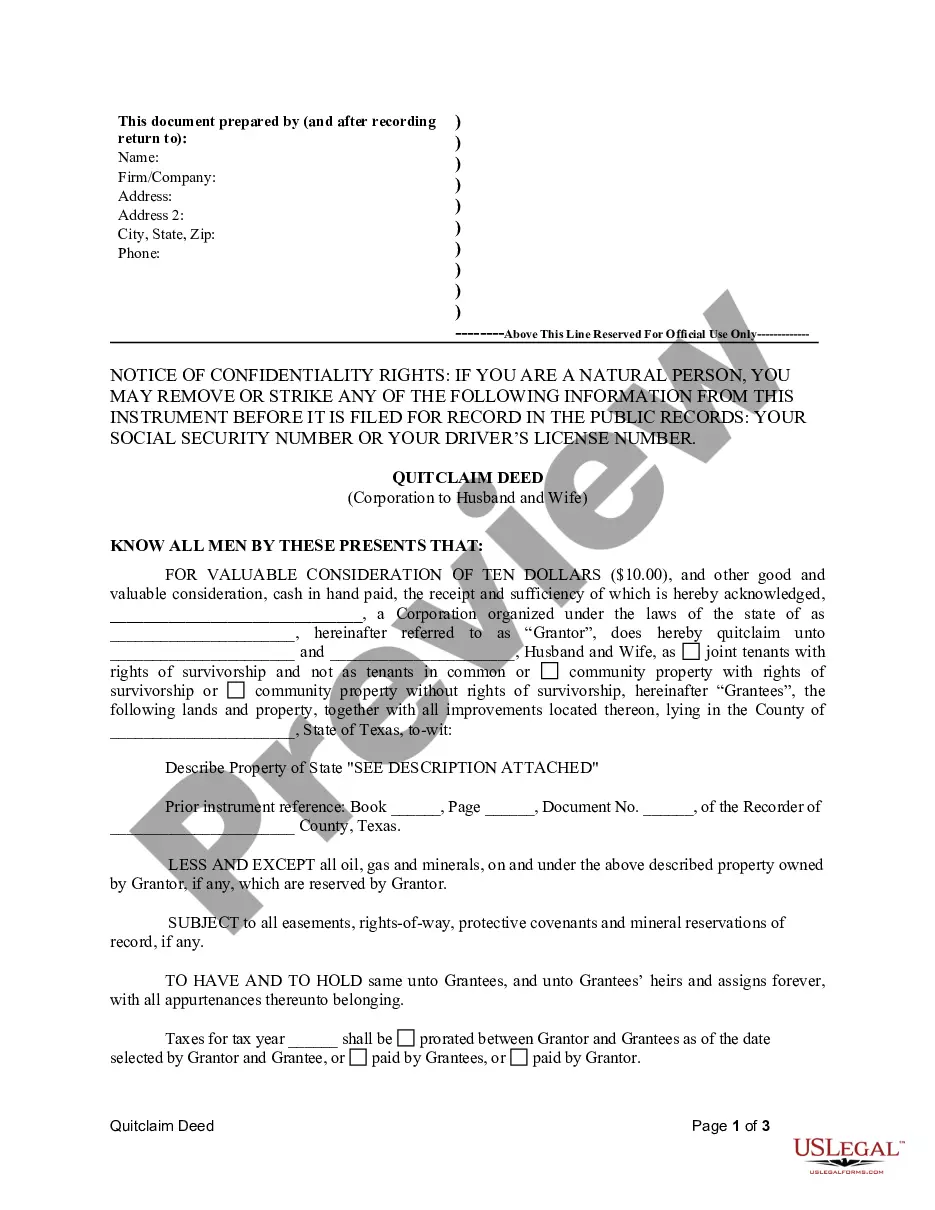
Texas Quitclaim Deed - One Individual to Two Individuals
About this form
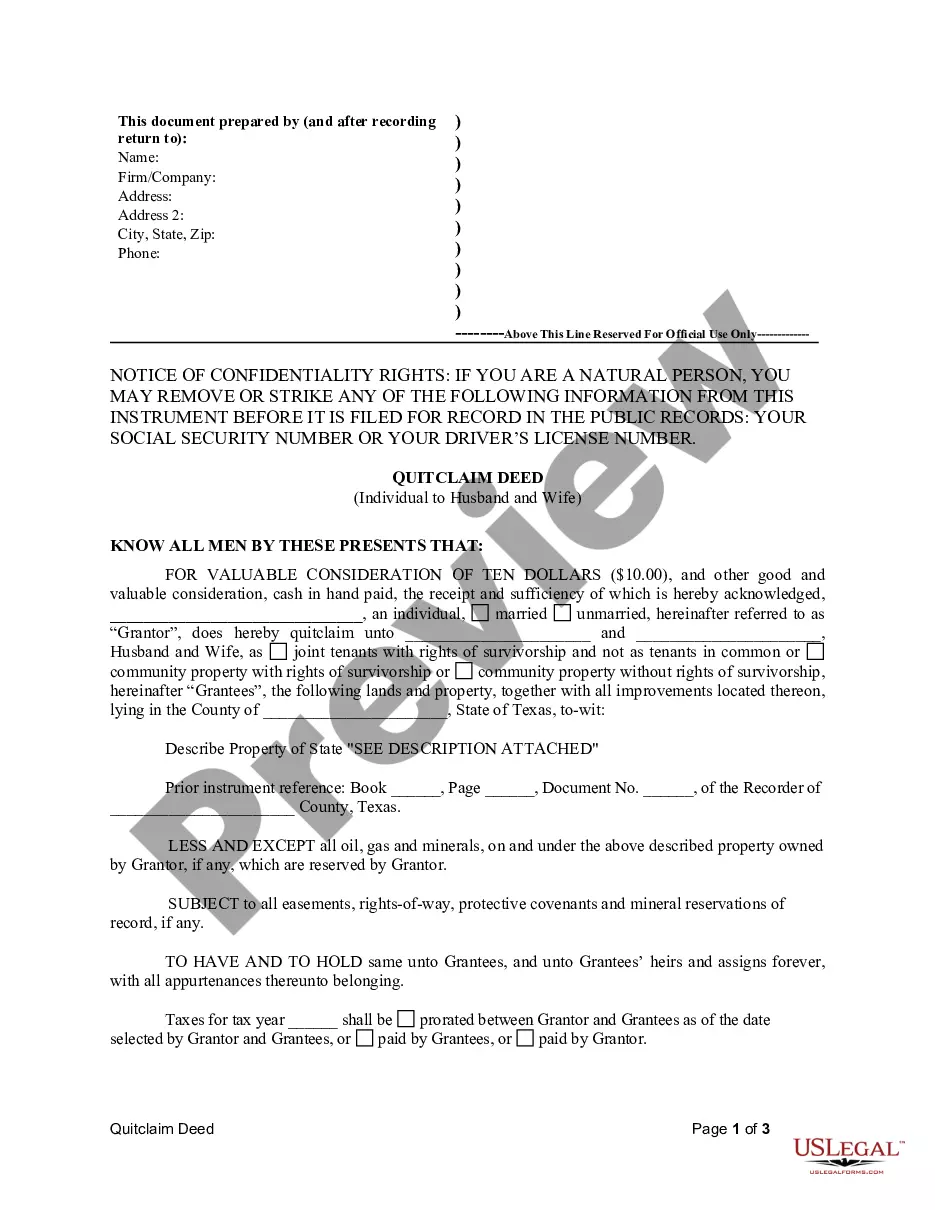
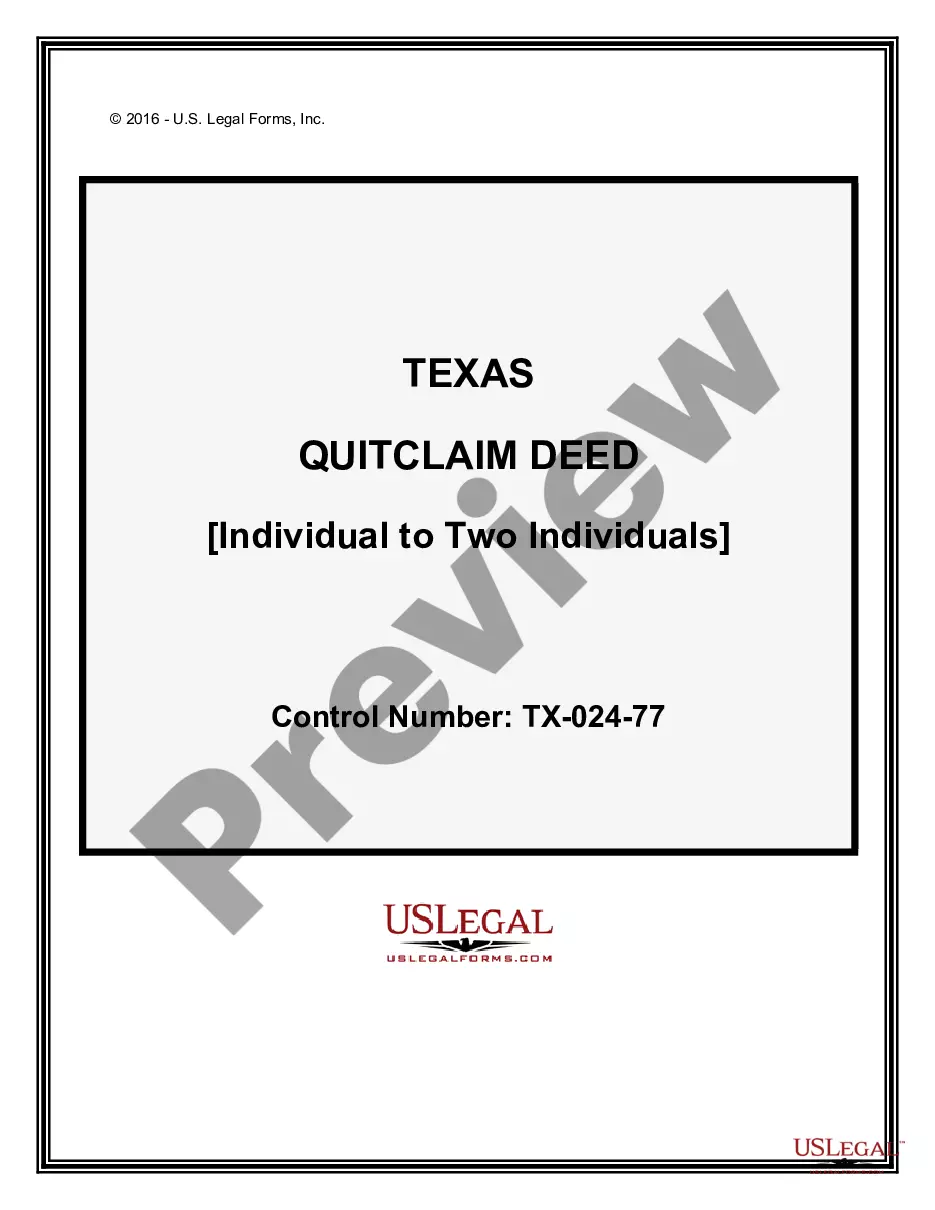
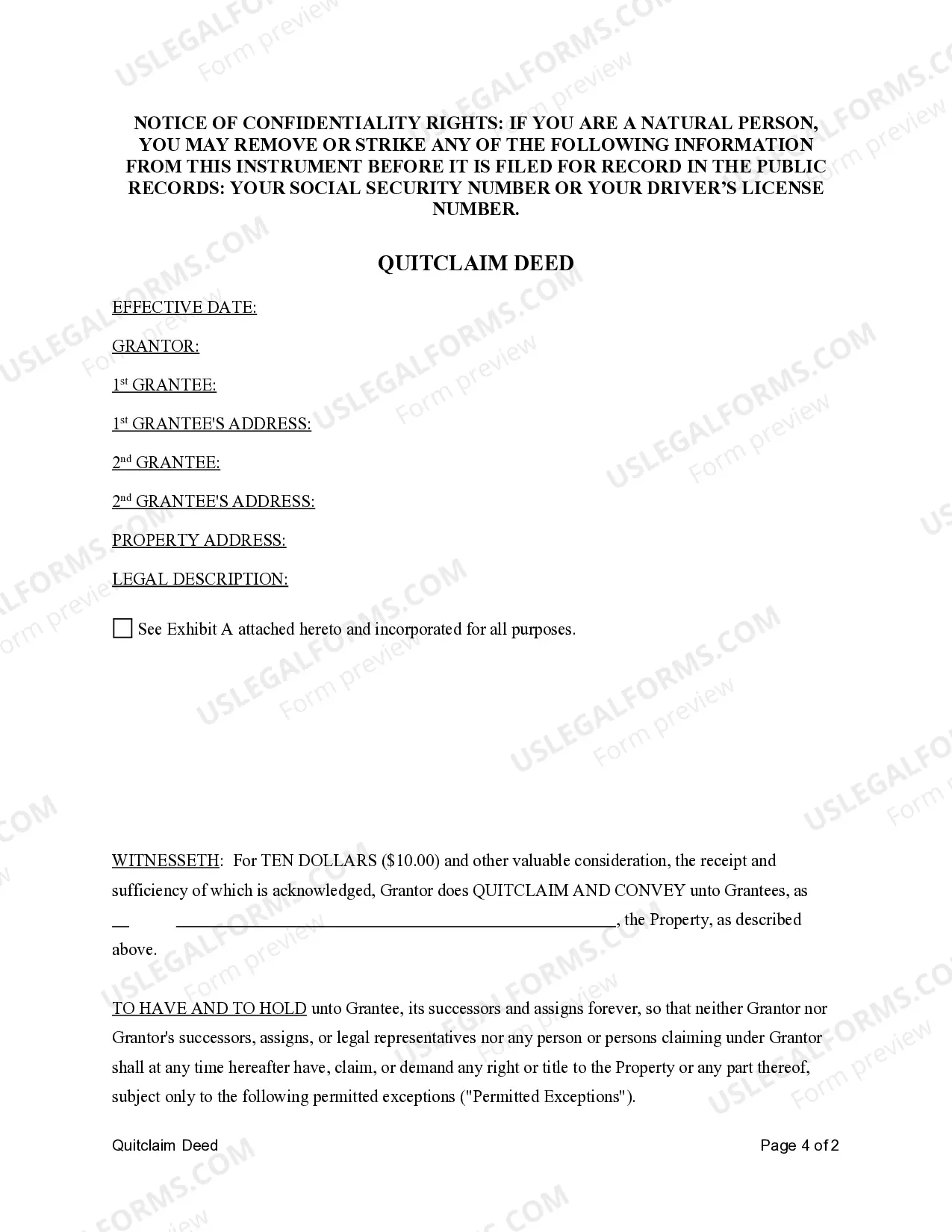
This Quitclaim Deed is a legal document used when a grantor (one individual) transfers their interest in a property to two grantees (two individuals). Unlike a warranty deed, a quitclaim deed does not guarantee that the grantor holds clear title to the property. This form is specifically designed for concurrent ownership situations, making it ideal for various arrangements like tenants in common or joint tenancy with right of survivorship.
Form components explained
- Identification of the grantor and grantees.
- Description of the property being conveyed.
- Statement conveying any interest, including life estate if applicable.
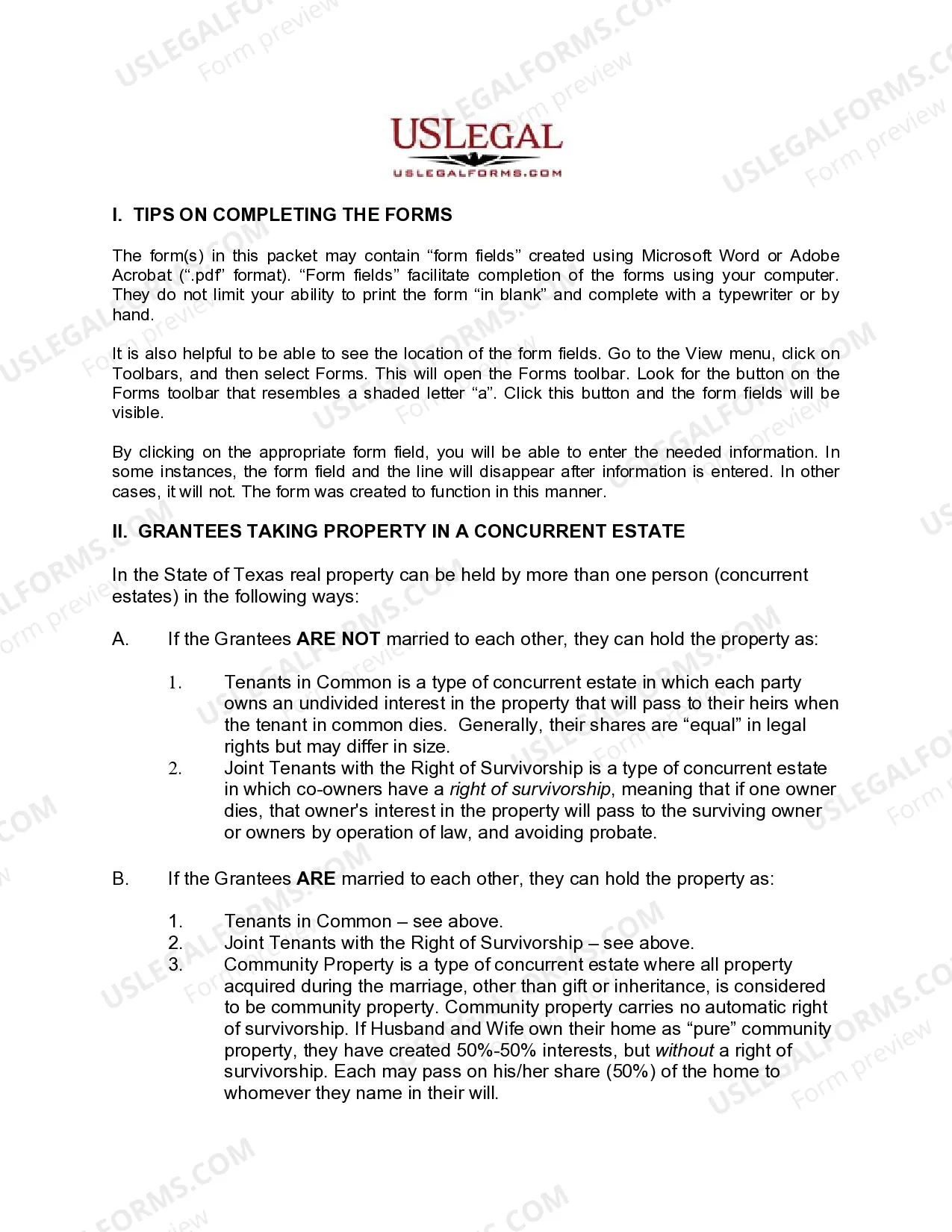
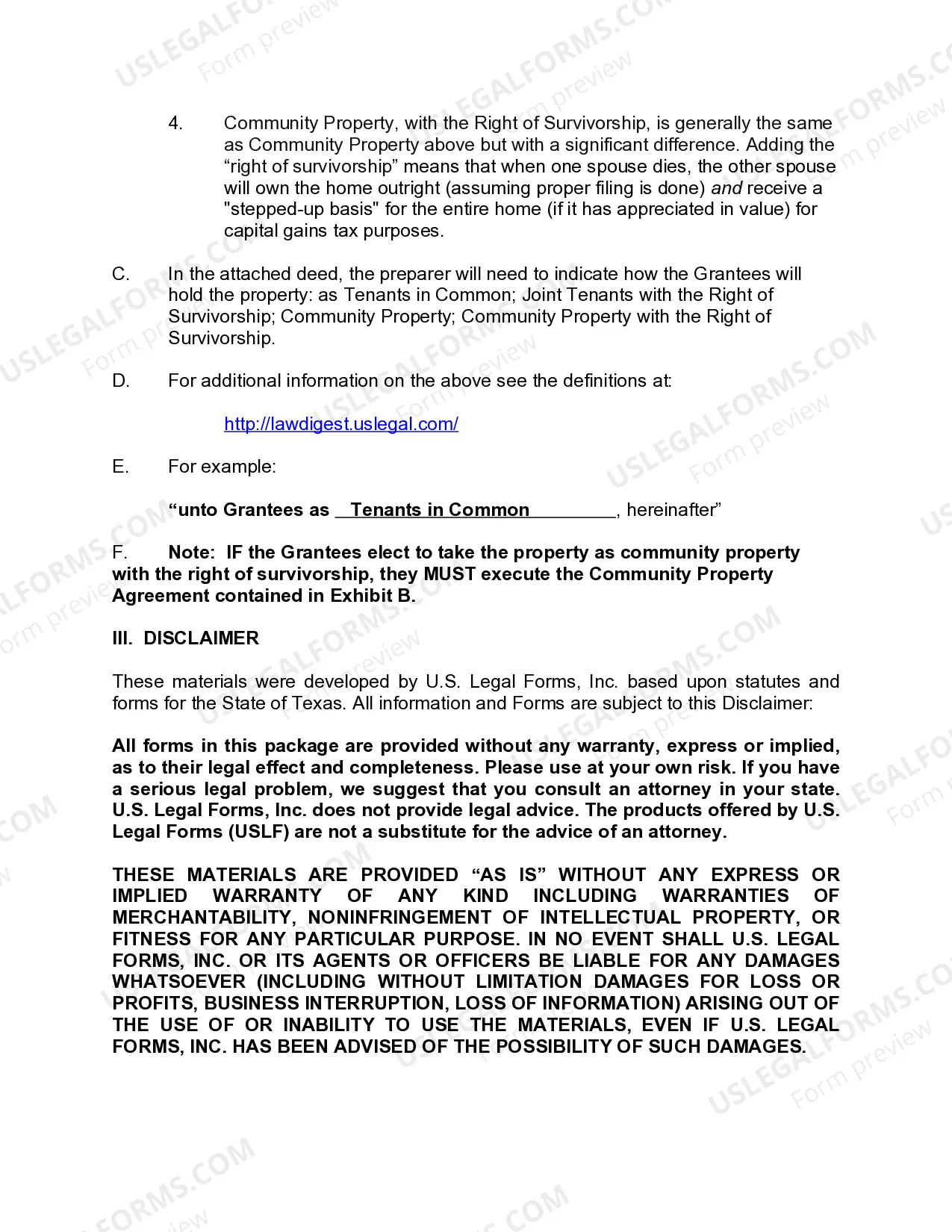
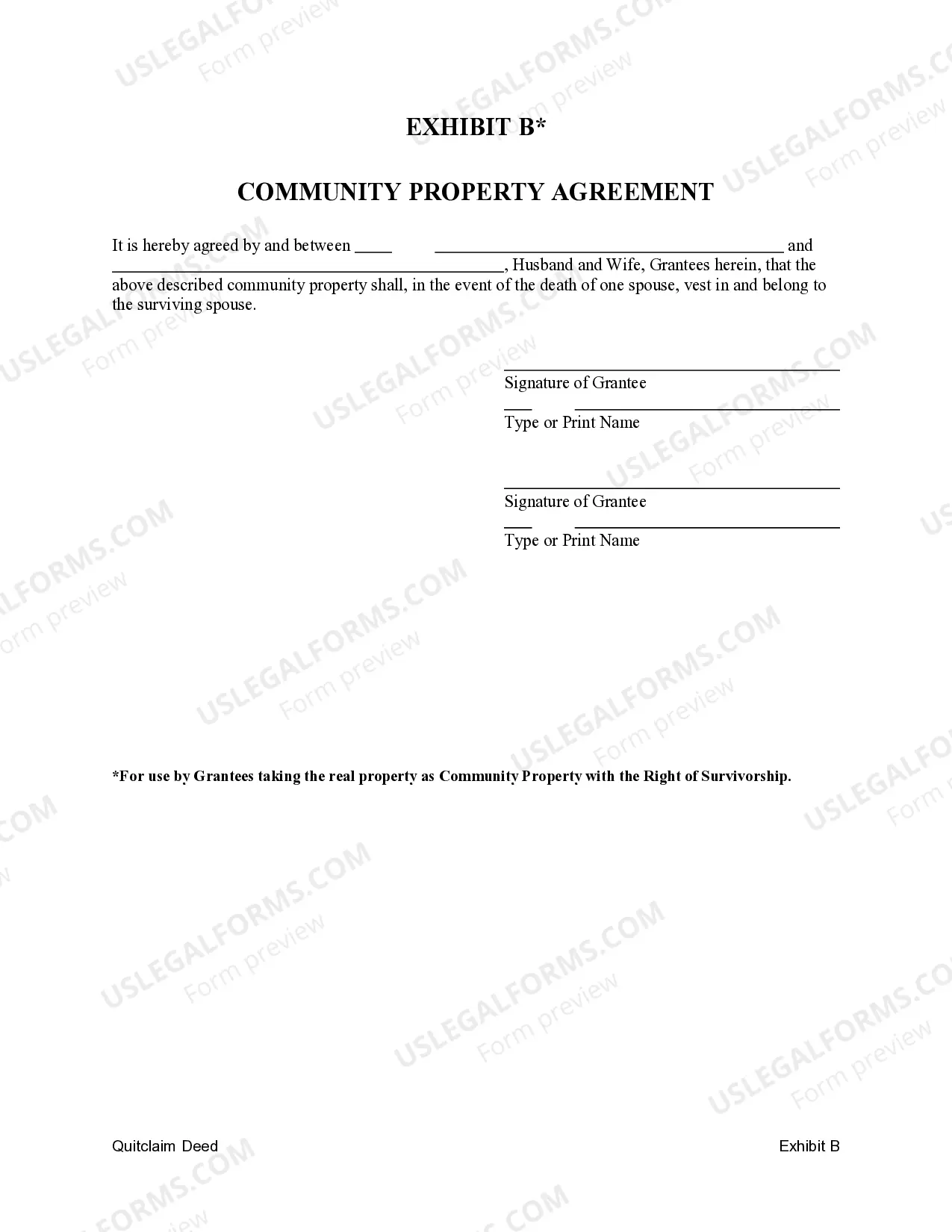
- Options for how the grantees will hold the property.
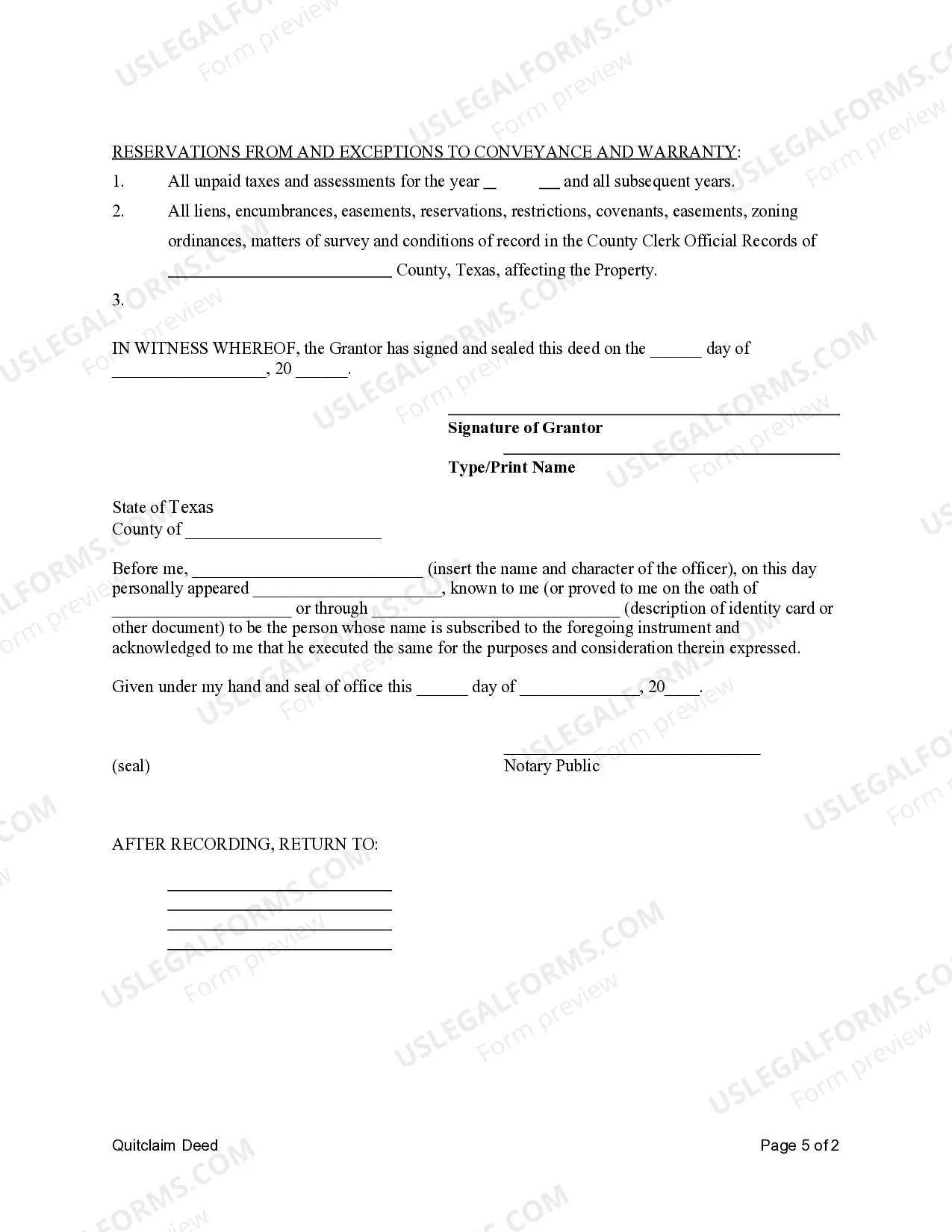
- Signatures and date fields for all parties involved.






When to use this document
This form is needed when an individual wishes to transfer their property interest to two other individuals. Common scenarios include family transactions, transferring property to friends, or changing the ownership structure among co-owners. It is particularly useful when the parties want to avoid the formalities of a warranty deed.
Who this form is for
- Individuals looking to transfer property to friends or family.
- Property owners wishing to formalize ownership with multiple parties.
- Anyone needing a legal document for property interest transfer without warranties.
How to complete this form
- Identify the grantor (the individual transferring the property).
- List the names of the two grantees receiving the property.
- Provide a clear description of the property involved in the transfer.
- Select how the grantees will hold the property (e.g., tenants in common, joint tenants).
- Ensure all parties sign the form and include the date.
Notarization requirements for this form
This form needs to be notarized to ensure legal validity. US Legal Forms provides secure online notarization powered by Notarize, allowing you to complete the process through a verified video call, available anytime.
Get your form ready online
Our built-in tools help you complete, sign, share, and store your documents in one place.
Make edits, fill in missing information, and update formatting in US Legal Forms—just like you would in MS Word.
Download a copy, print it, send it by email, or mail it via USPS—whatever works best for your next step.
Sign and collect signatures with our SignNow integration. Send to multiple recipients, set reminders, and more. Go Premium to unlock E-Sign.
If this form requires notarization, complete it online through a secure video call—no need to meet a notary in person or wait for an appointment.
We protect your documents and personal data by following strict security and privacy standards.

Make edits, fill in missing information, and update formatting in US Legal Forms—just like you would in MS Word.

Download a copy, print it, send it by email, or mail it via USPS—whatever works best for your next step.

Sign and collect signatures with our SignNow integration. Send to multiple recipients, set reminders, and more. Go Premium to unlock E-Sign.

If this form requires notarization, complete it online through a secure video call—no need to meet a notary in person or wait for an appointment.

We protect your documents and personal data by following strict security and privacy standards.
Common mistakes
- Failing to accurately describe the property being transferred.
- Not including all necessary parties' names and signatures.
- Assuming no need for a notary, depending on state requirements.
- Leaving out the selection of how the grantees will hold the property.
Benefits of using this form online
- Convenient access to download and complete the form at any time.
- Editability allows for adjustments without needing to print multiple copies.
- Reliably drafted to meet legal standards in Texas, ensuring compliance.
Looking for another form?
Form popularity
FAQ
A person who signs a quitclaim deed to transfer property they do not own results in no title at all being transferred since there is no actual ownership interest. The quitclaim deed only transfers the type of title you own.
Discuss property ownership interests. Access a copy of your title deed. Complete, review and sign the quitclaim or warranty form. Submit the quitclaim or warranty form. Request a certified copy of your quitclaim or warranty deed.
The Quit Claim Deed form uses the terms of Grantor (Seller or Owner of said property) and Grantee (Buyer of said property) for the two parties involved. First, the parties must fill in the date. Then, write in the name of the county and state in which the property is located.
Step 1: Download the TX quitclaim deed form. Step 2: In the upper left-hand corner, add the name and address of the person preparing the form. Under this, add the name and address of the person who will receive the form after the recorder's office is finished with it. Step 3: Write the county in the appropriate blank.
In Texas, you can't add your spouse's name to an existing deed, but you can create a new deed by transferring the property from yourself to you and your spouse jointly. You can do this by using either a deed without warranty or a quit claim deed.
Rates vary by state and law office but typically fall in the range of $200 to $400 per hour. Title companies routinely prepare quitclaim deeds in many states.
You can use a simple form, called a quitclaim deed, to transfer your joint property ownership to either yourself, a family member, a former spouse, or even a trust. Many utilize this deed to make property title transfers without the time and expense of legal fees.
Laws Section 13.002. Recording This form must be filed at the Recorder's Office in the County Clerk's Office. Signing (Section 11.002(c)) The Grantor(s) has the choice of authorizing this form in the presence of Two (2) Witnesses or a Notary Public.
To use a Quitclaim Deed to add someone to a property deed or title, you would need to create a Quitclaim Deed and list all of the current owners in the grantor section. In the grantee section, you would list all of the current owners as well as the person you would like to add.