Texas Quitclaim Deed - Individual to Individual and Trust
Understanding this form
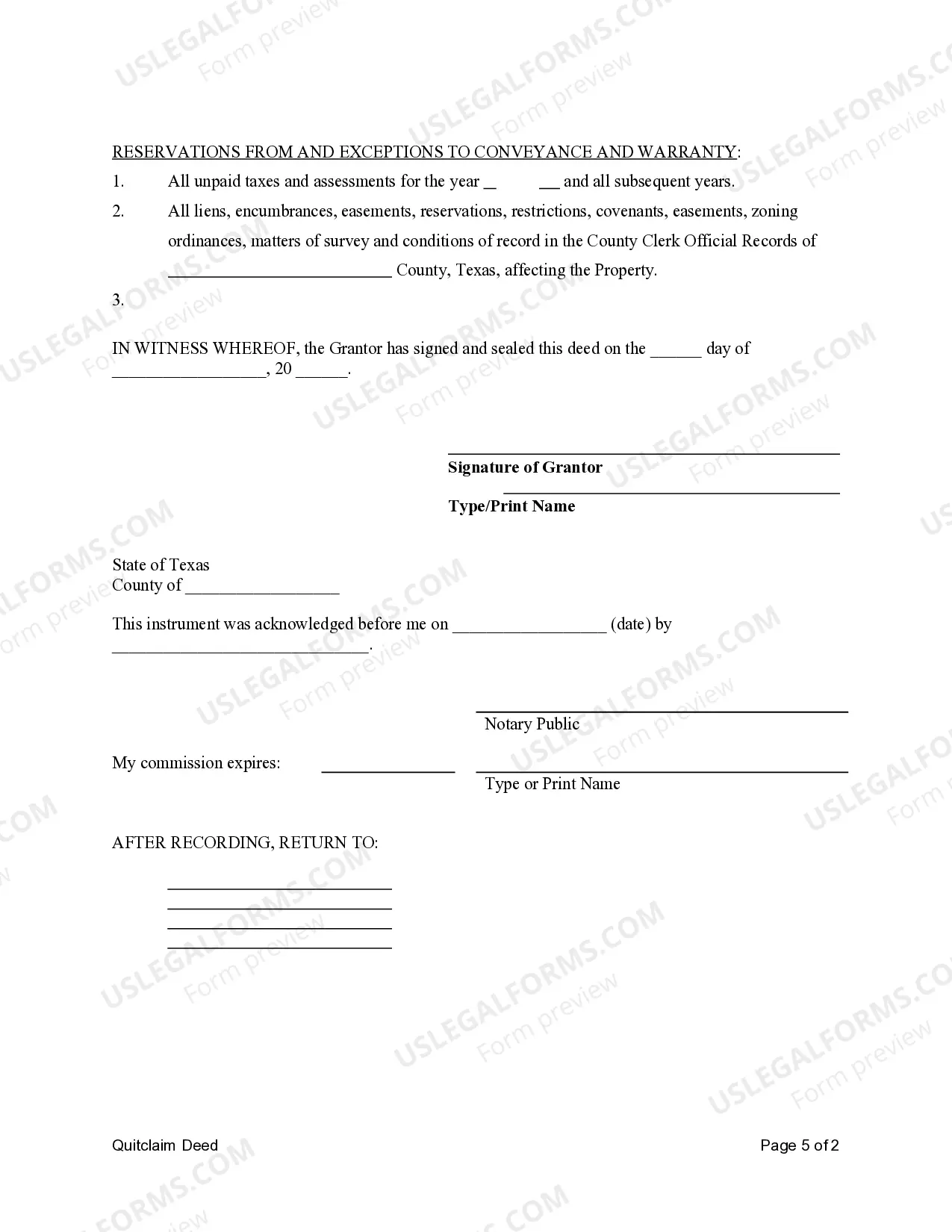
The Quitclaim Deed - Individual to Individual and Trust is a legal document that allows an individual, known as the grantor, to transfer ownership of property to another individual and a trust, known as the grantees. Unlike a warranty deed, the quitclaim deed does not guarantee that the grantor holds clear title to the property being transferred. This form is essential for property transactions where the parties want to quickly and easily transfer title without extensive legal warranties.
Main sections of this form
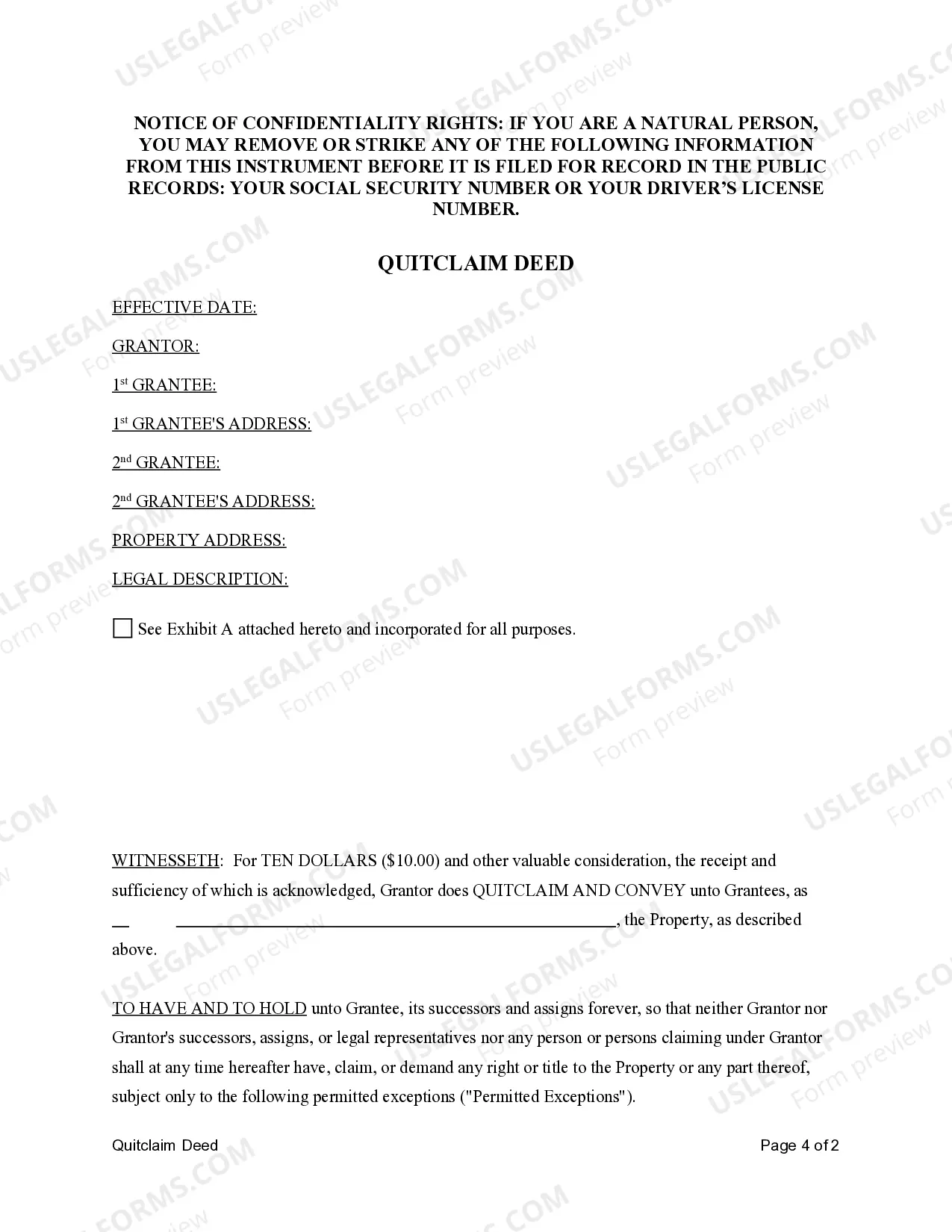
- Identification of the grantor and grantees.
- Description of the property being transferred.
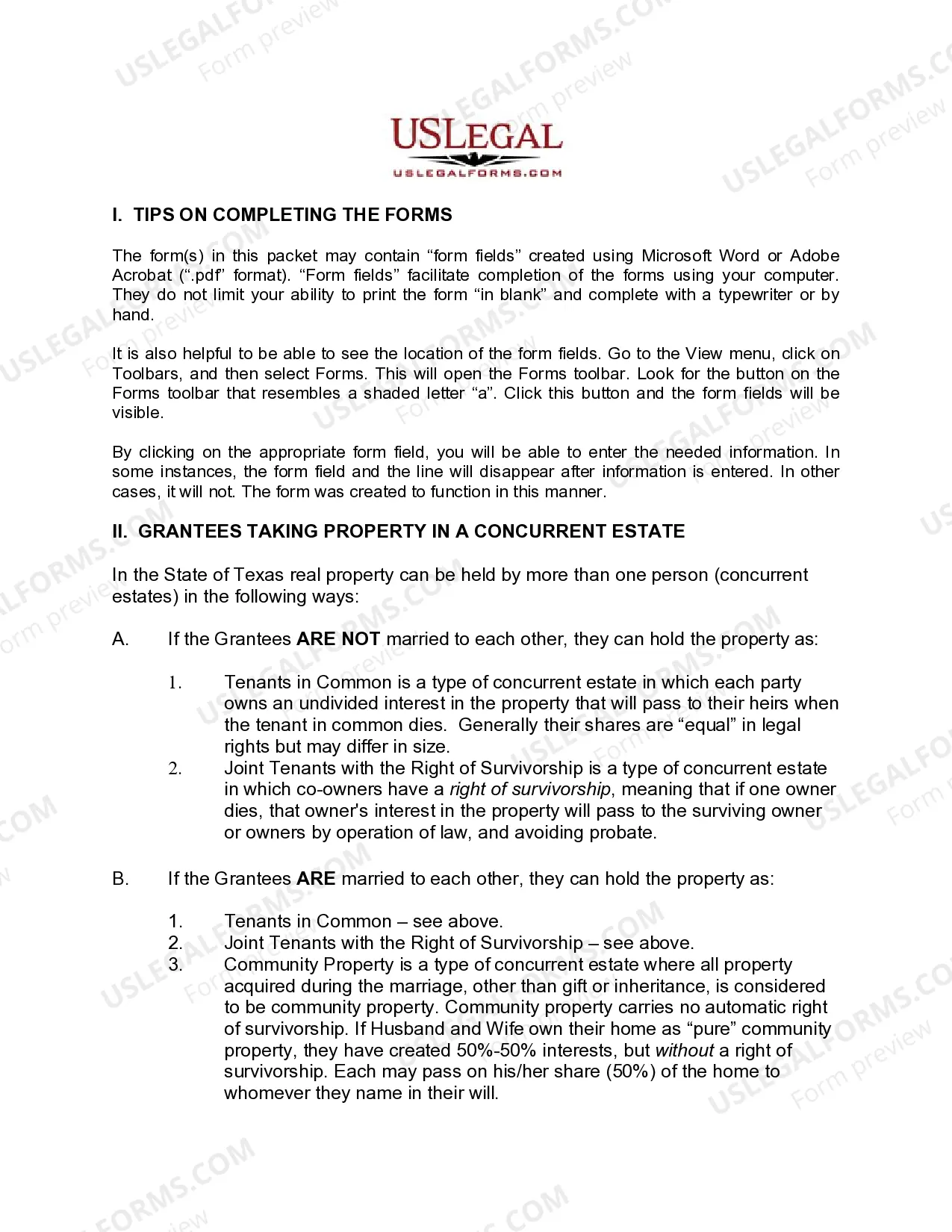
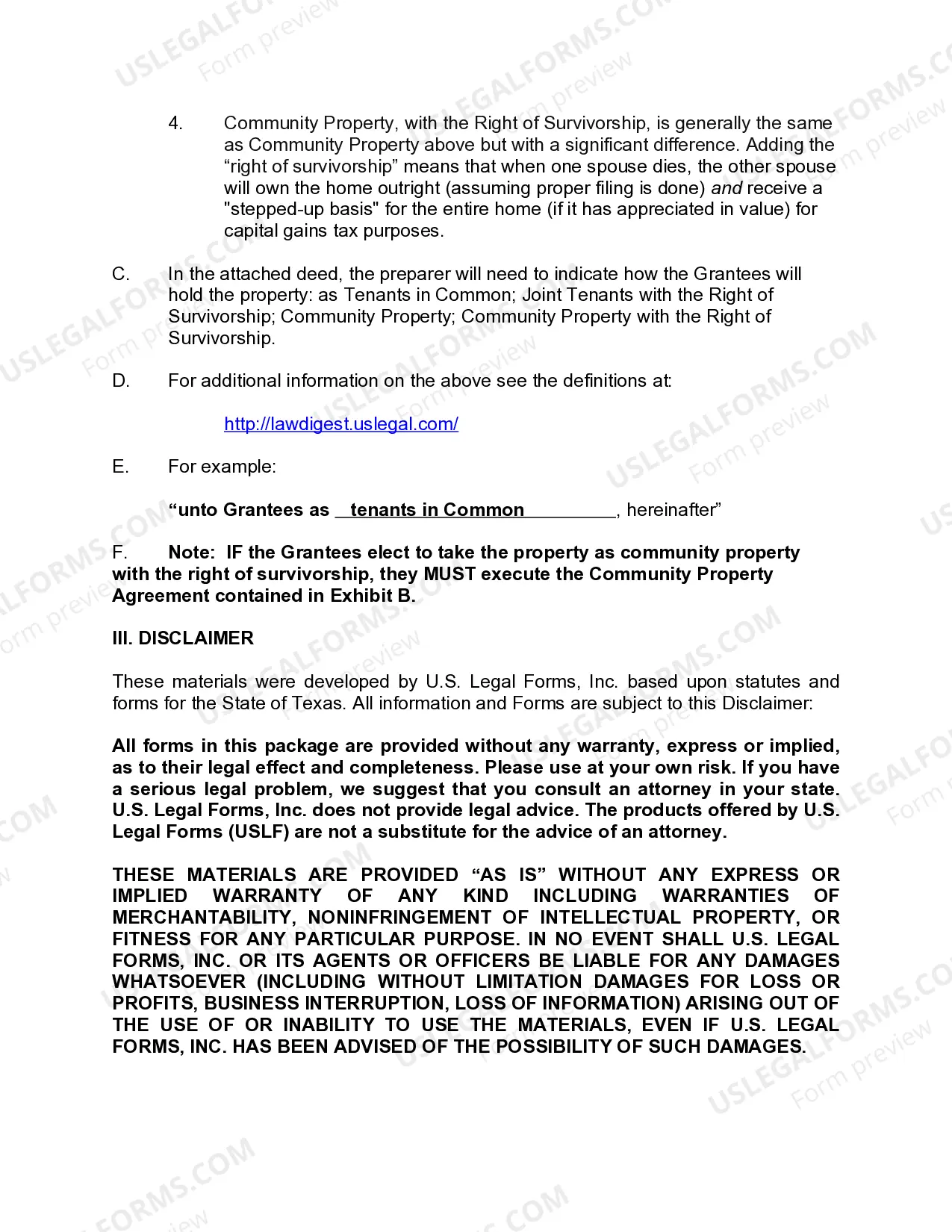
- Statements specifying how the grantees will hold the property (e.g., Tenants in Common, Joint Tenants with Right of Survivorship).
- Signatures of all parties involved.
- Notarization section to validate the deed (if applicable).






Common use cases
This form is commonly used in real estate transactions when an individual wishes to transfer property to another individual and a trust without providing warranties on the title. Typical scenarios include transferring property as part of estate planning, among family members, or in transactions involving a trust where the legal title is to be held by the trust.
Who this form is for
This form is suitable for:
- Individuals transferring property to another individual and a trust.
- Property owners involved in informal sales or transactions.
- Individuals engaged in estate planning or simplifying property transfer processes.
Completing this form step by step
- Identify the parties involved: the grantor and the grantees.
- Clearly describe the property being transferred, including any legal description.
- Select the way the grantees will hold the property, such as Tenants in Common or Joint Tenants with Right of Survivorship.
- Complete any necessary witness and signature lines, including the grantor's signature.
- Ensure the form is notarized if required by local law to validate the deed.
Notarization requirements for this form
This form must be notarized to be legally valid. US Legal Forms provides secure online notarization powered by Notarize, allowing you to complete the process through a verified video call.
Get your form ready online
Our built-in tools help you complete, sign, share, and store your documents in one place.
Make edits, fill in missing information, and update formatting in US Legal Forms—just like you would in MS Word.
Download a copy, print it, send it by email, or mail it via USPS—whatever works best for your next step.
Sign and collect signatures with our SignNow integration. Send to multiple recipients, set reminders, and more. Go Premium to unlock E-Sign.
If this form requires notarization, complete it online through a secure video call—no need to meet a notary in person or wait for an appointment.
We protect your documents and personal data by following strict security and privacy standards.

Make edits, fill in missing information, and update formatting in US Legal Forms—just like you would in MS Word.

Download a copy, print it, send it by email, or mail it via USPS—whatever works best for your next step.

Sign and collect signatures with our SignNow integration. Send to multiple recipients, set reminders, and more. Go Premium to unlock E-Sign.

If this form requires notarization, complete it online through a secure video call—no need to meet a notary in person or wait for an appointment.

We protect your documents and personal data by following strict security and privacy standards.
Common mistakes
- Failing to provide a complete legal description of the property.
- Not specifying how the grantees will hold the property.
- Omitting signatures or not having the deed notarized when required.
- Using outdated forms that may not comply with current legal standards.
Why complete this form online
- Convenient access to legal forms that can be completed from home.
- Edit the form easily to ensure accuracy before printing.
- Reliable templates drafted by licensed attorneys, ensuring compliance with state laws.
- Provides immediate download options for quick use.
Quick recap
- The Quitclaim Deed allows for property transfer without title guarantees.
- It is essential to clearly outline the property and grantee details.
- Notarization is typically required for legal effectiveness.
- Understanding the ownership structure is crucial before completing the deed.
Looking for another form?
Form popularity
FAQ
The Quit Claim Deed form uses the terms of Grantor (Seller or Owner of said property) and Grantee (Buyer of said property) for the two parties involved. First, the parties must fill in the date. Then, write in the name of the county and state in which the property is located.
Yes, you can use a Quitclaim Deed to transfer a gift of property to someone. You must still include consideration when filing your Quitclaim Deed with the County Recorder's Office to show that title has been transferred, so you would use $10.00 as the consideration for the property.
You can use a simple form, called a quitclaim deed, to transfer your joint property ownership to either yourself, a family member, a former spouse, or even a trust. Many utilize this deed to make property title transfers without the time and expense of legal fees.
No. And unless the deed identifies the trust as an owner, then father is the owner of an interest. It is a common mistake to set up a trust and then fail to deed property into the trust. However, you cannot force him to make the changes you are...
Laws Section 13.002. Recording This form must be filed at the Recorder's Office in the County Clerk's Office. Signing (Section 11.002(c)) The Grantor(s) has the choice of authorizing this form in the presence of Two (2) Witnesses or a Notary Public.
Yes, a quit claim deed supercedes the trust. The only thing that can be done is to file a suit in court challenging the deed as the product of fraud and undue influence. A court action like that will cost thousands of dollars, but might be worth it if the house was owned free and clear.
But you might be wondering if an owner can transfer a deed to another person without a real estate lawyer. The answer is yes. Parties to a transaction are always free to prepare their own deeds.A quitclaim deed, for example, is far simpler than a warranty deed.
Step 1: Download the TX quitclaim deed form. Step 2: In the upper left-hand corner, add the name and address of the person preparing the form. Under this, add the name and address of the person who will receive the form after the recorder's office is finished with it. Step 3: Write the county in the appropriate blank.
Rates vary by state and law office but typically fall in the range of $200 to $400 per hour. Title companies routinely prepare quitclaim deeds in many states.