Tennessee Mutual Wills package with Last Wills and Testaments for Married Couple with No Children
Understanding this form
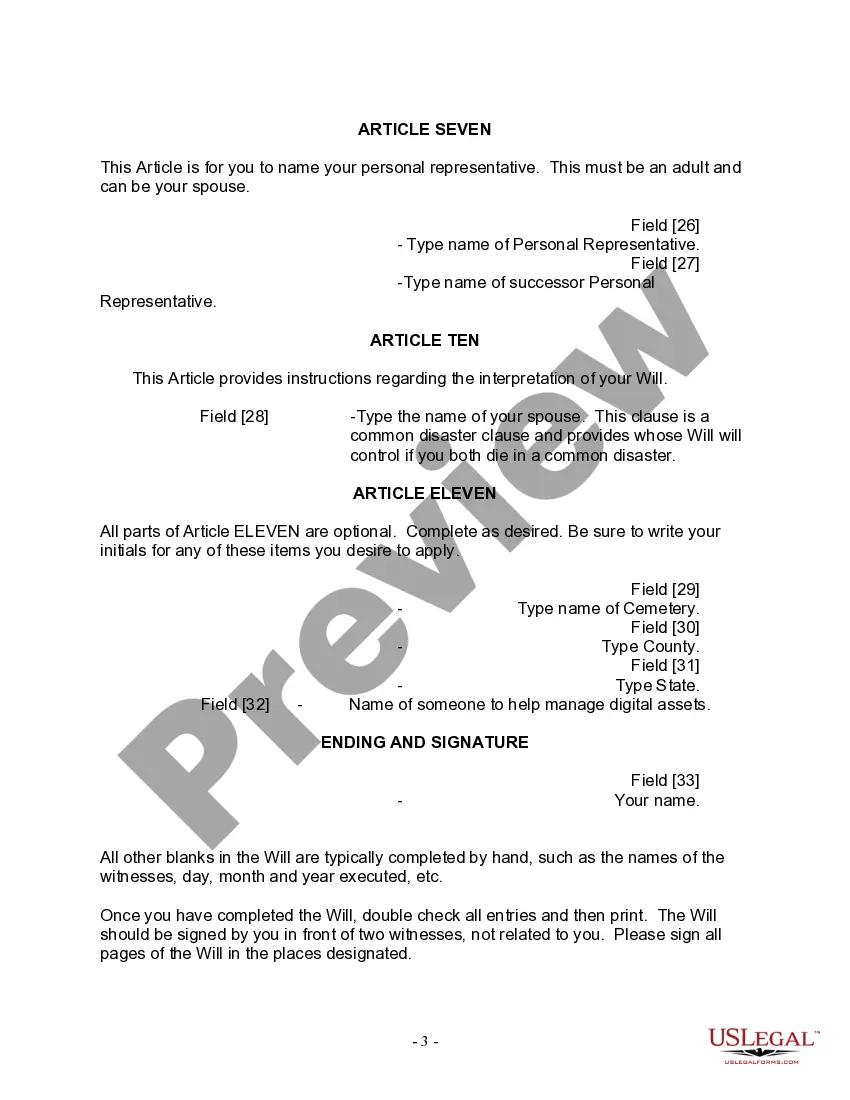
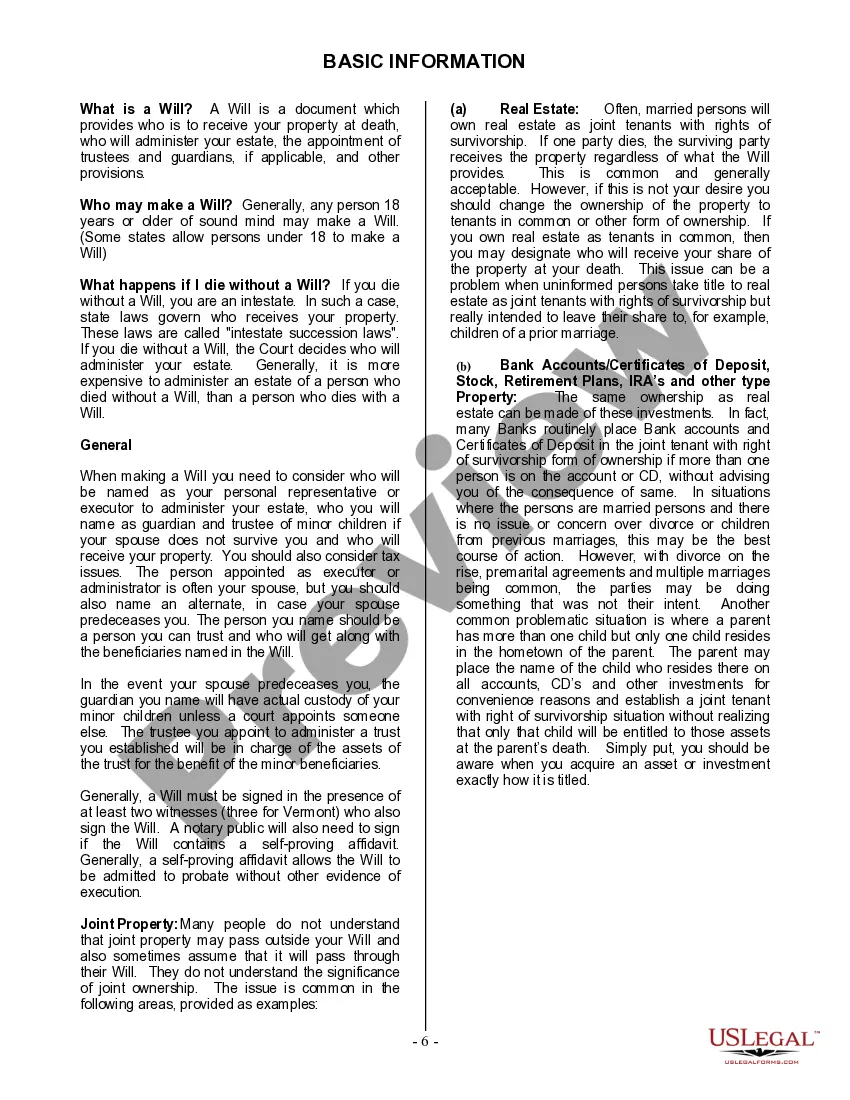
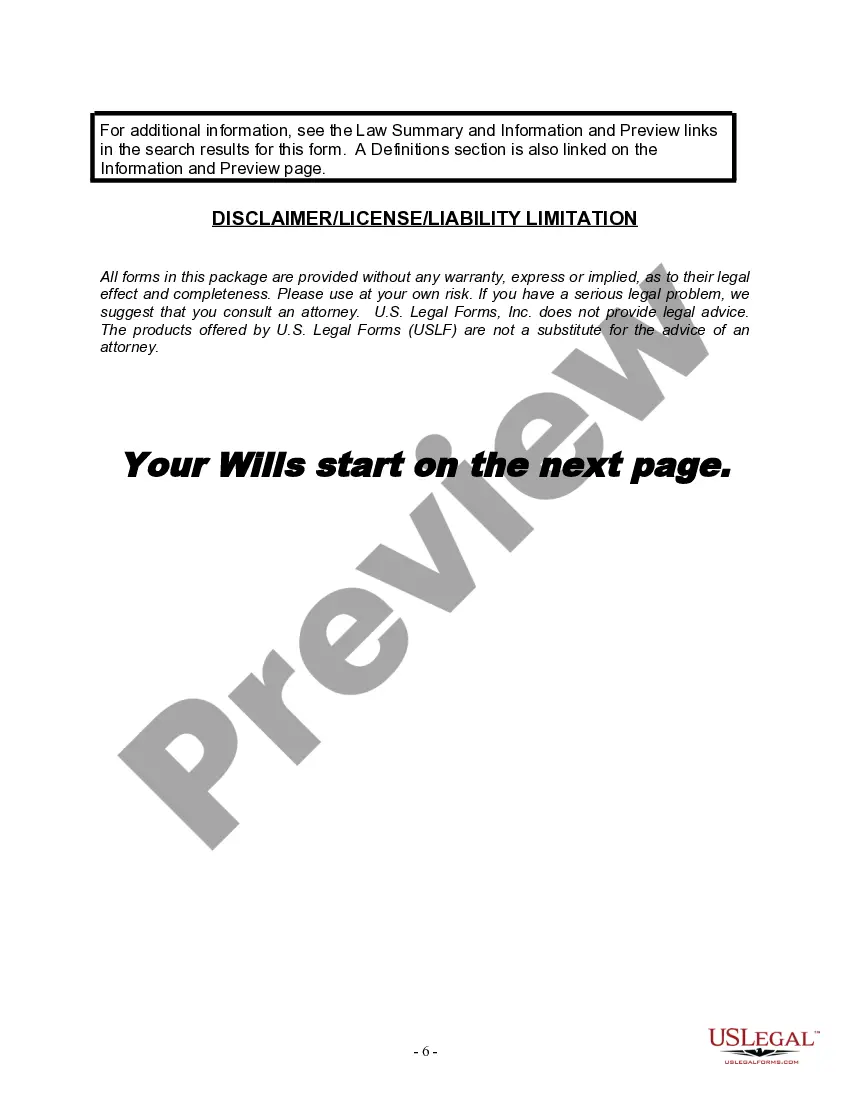
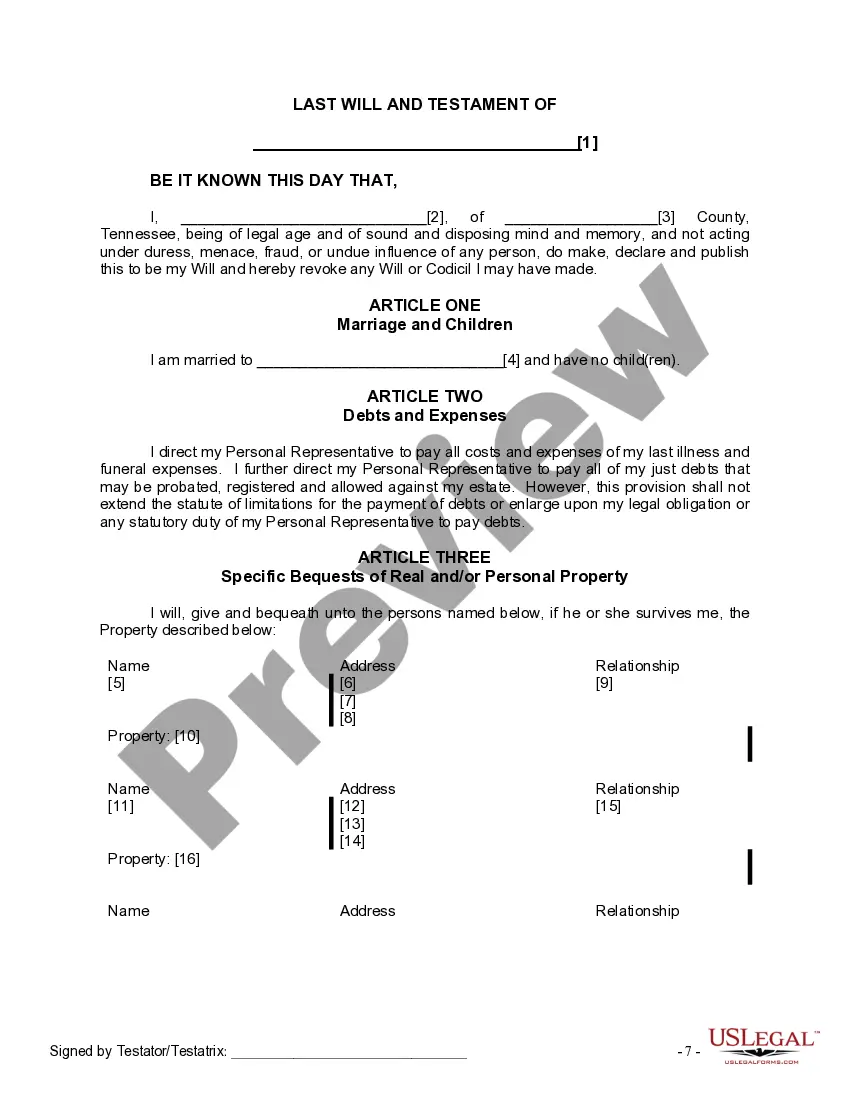
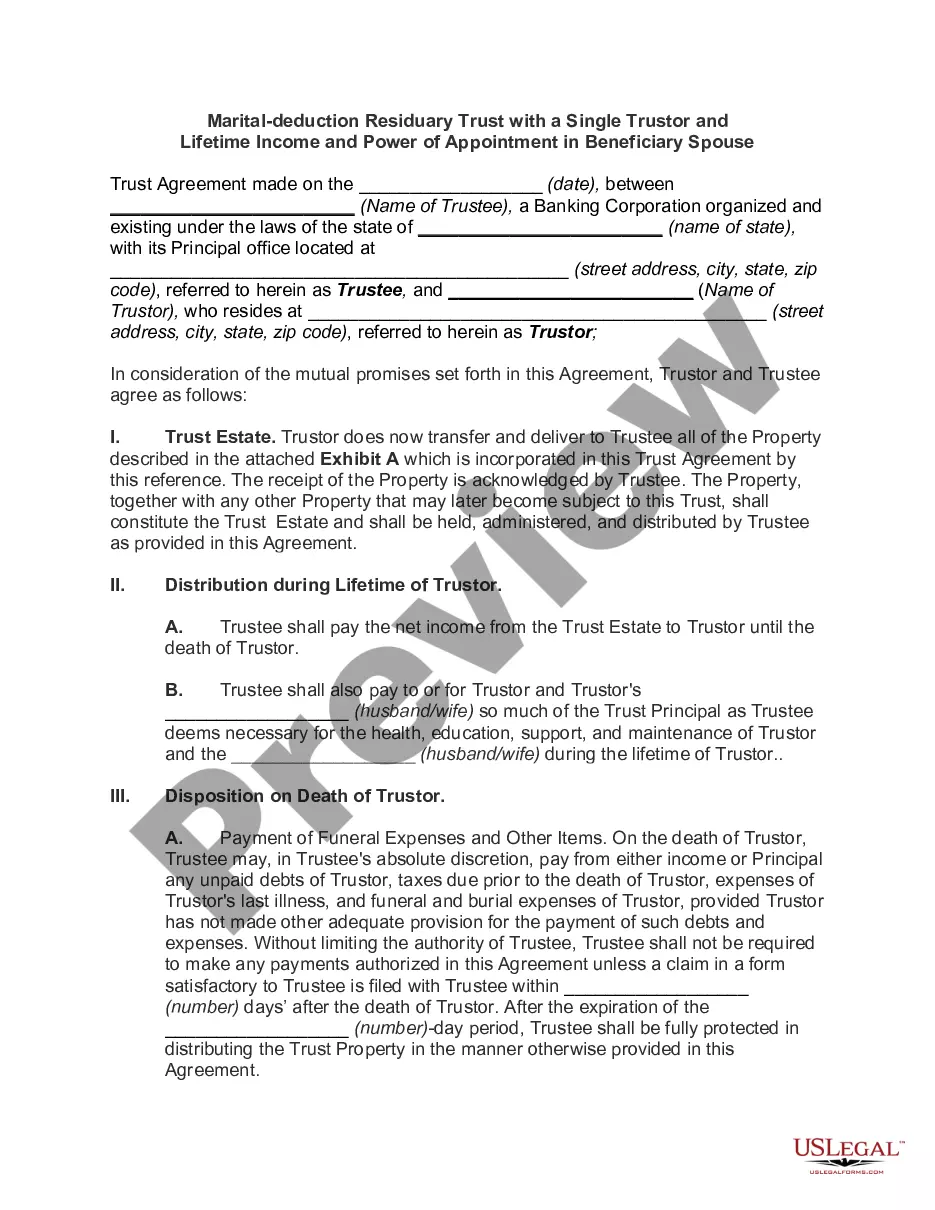
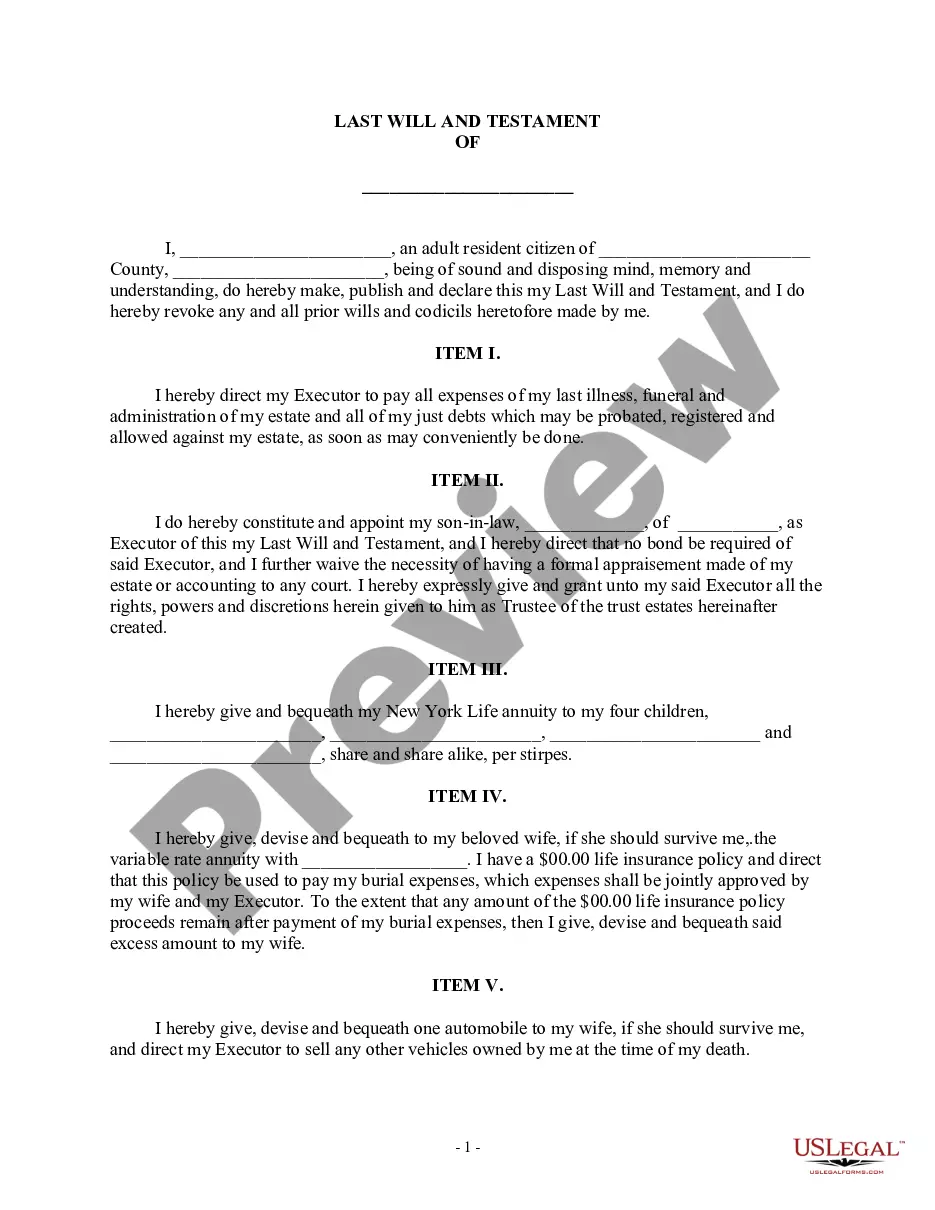
The Mutual Wills package with Last Wills and Testaments for Married Couples with No Children is a legal document set designed for spouses who want to stipulate how their assets will be distributed upon their passing, especially in the absence of children. This package includes two willsâone for each spouseâand allows them to make mutual agreements on property distribution, thereby ensuring that both parties are on the same page regarding their estate plans. Unlike standard wills, mutual wills are binding agreements between the spouses that cannot be changed unilaterally, providing an additional layer of assurance and clarity in estate planning.
Main sections of this form
- Two individual wills, one for each spouse.
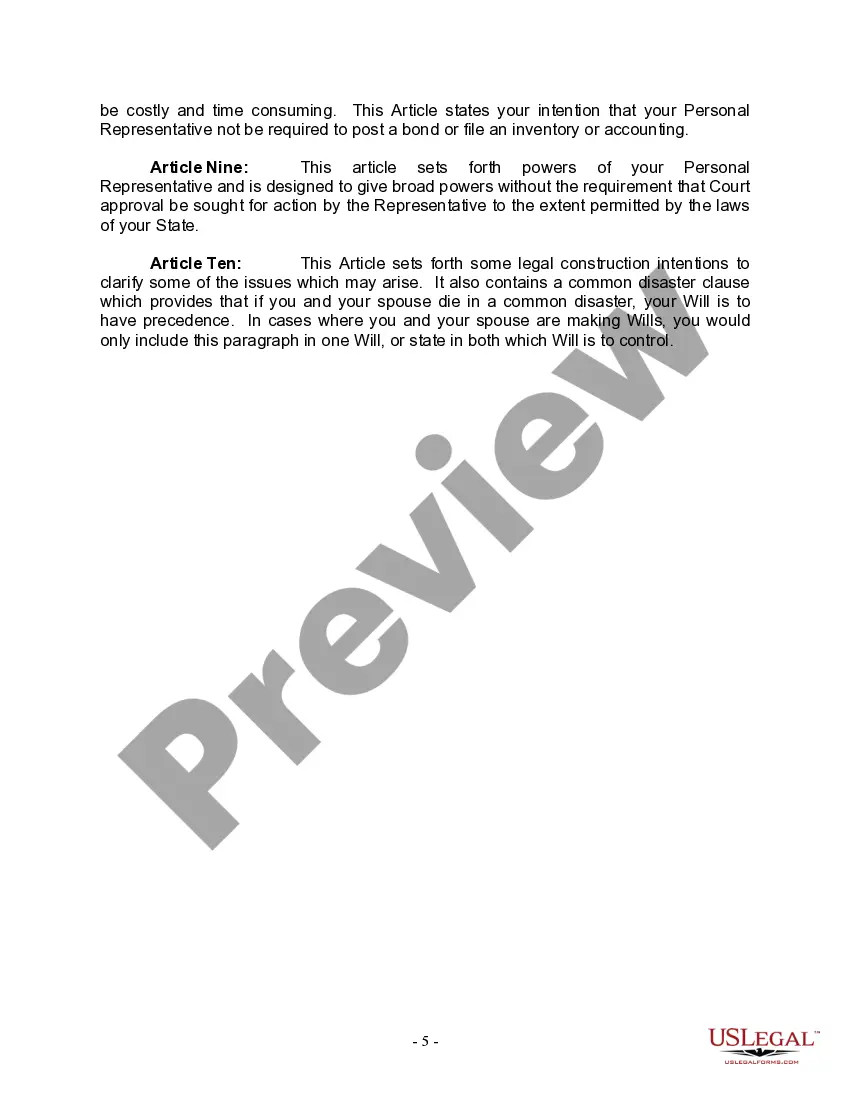
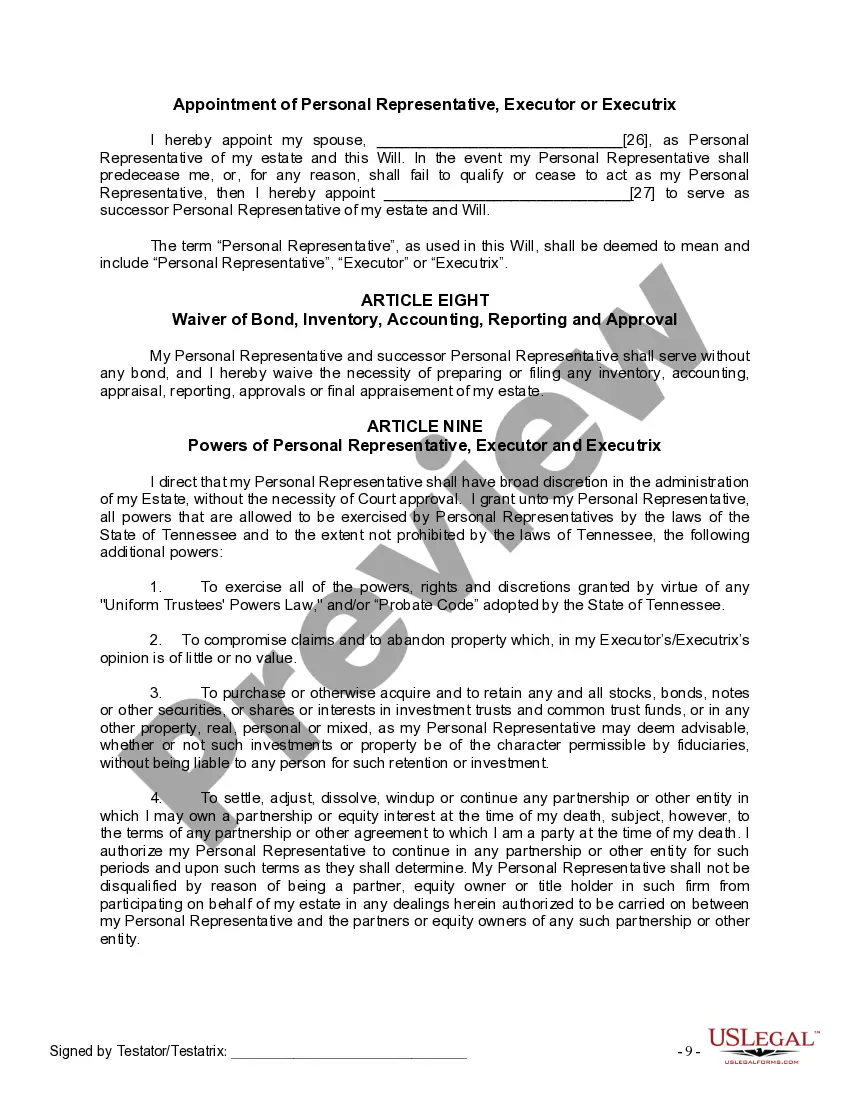
- Appointment of a personal representative or executor to manage the estate.
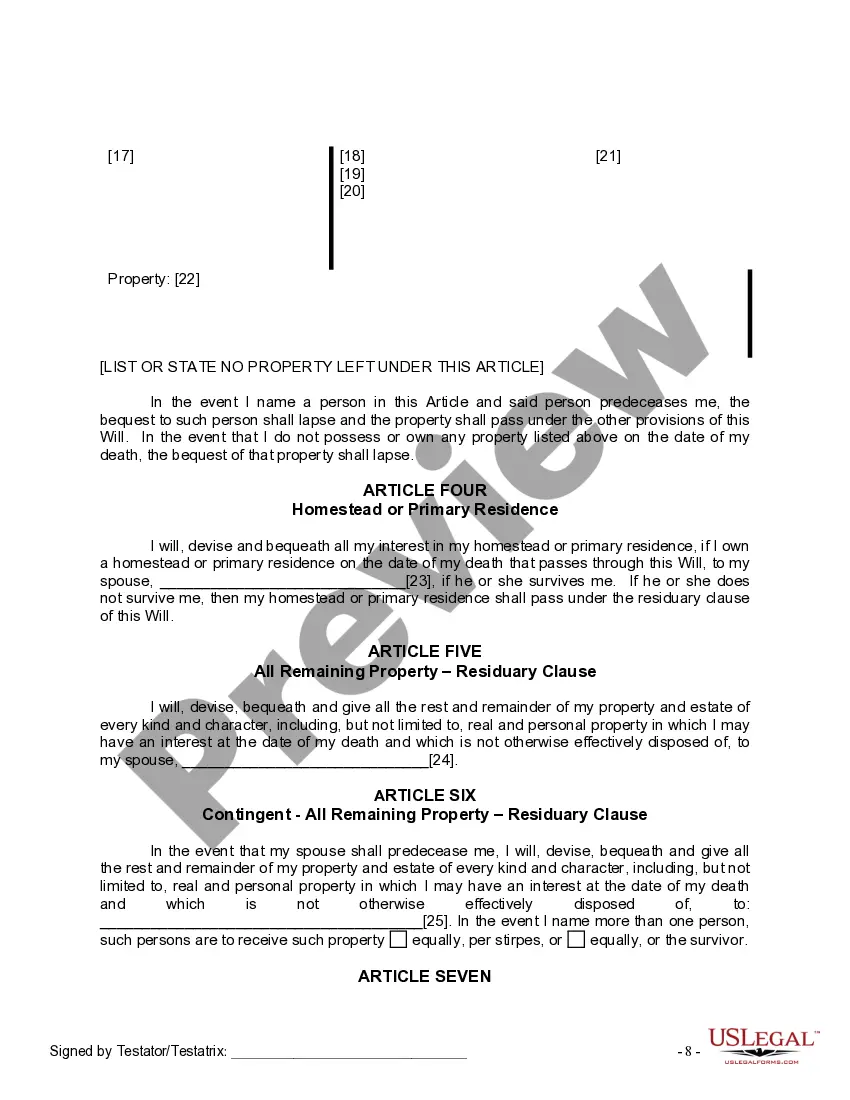
- Specification of property distribution and specific gifts to individuals.
- Provisions for any property, including homestead allocation.
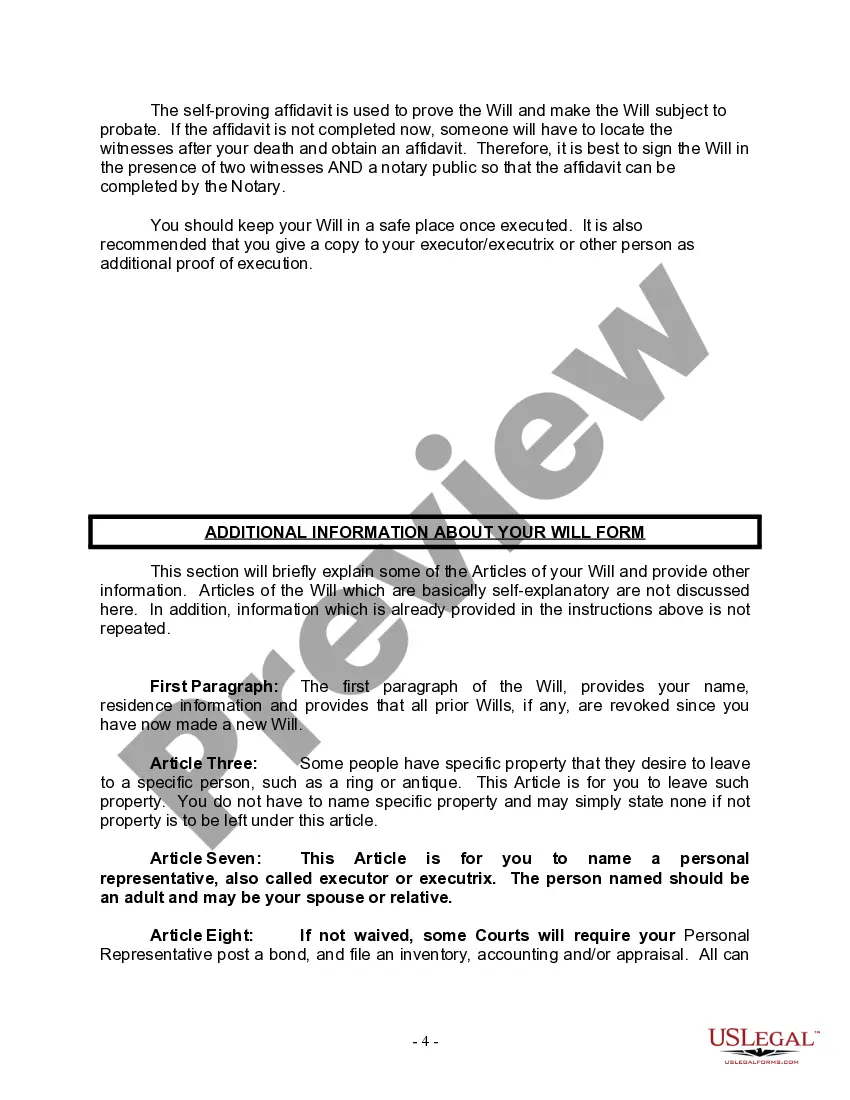
- Instructions on signing and witnessing the wills, including a self-proving affidavit if applicable.




Common use cases
This form is suitable for married couples without children who wish to create legally binding wills that reflect their mutual wishes regarding property distribution. It is especially useful when couples are looking to ensure that their assets are managed and distributed according to their joint desires upon one or both spouses' passing. This form should also be utilized when couples want to prevent unilateral changes to their estate plans, ensuring mutual consent is required for any alterations.
Who this form is for
- Married couples without children.
- Couples looking to create legally binding mutual wills.
- Individuals who want to clearly outline how their property should be distributed to each other and others.
- Anyone wanting to ensure that their spouse's interests are protected after their death.
Steps to complete this form
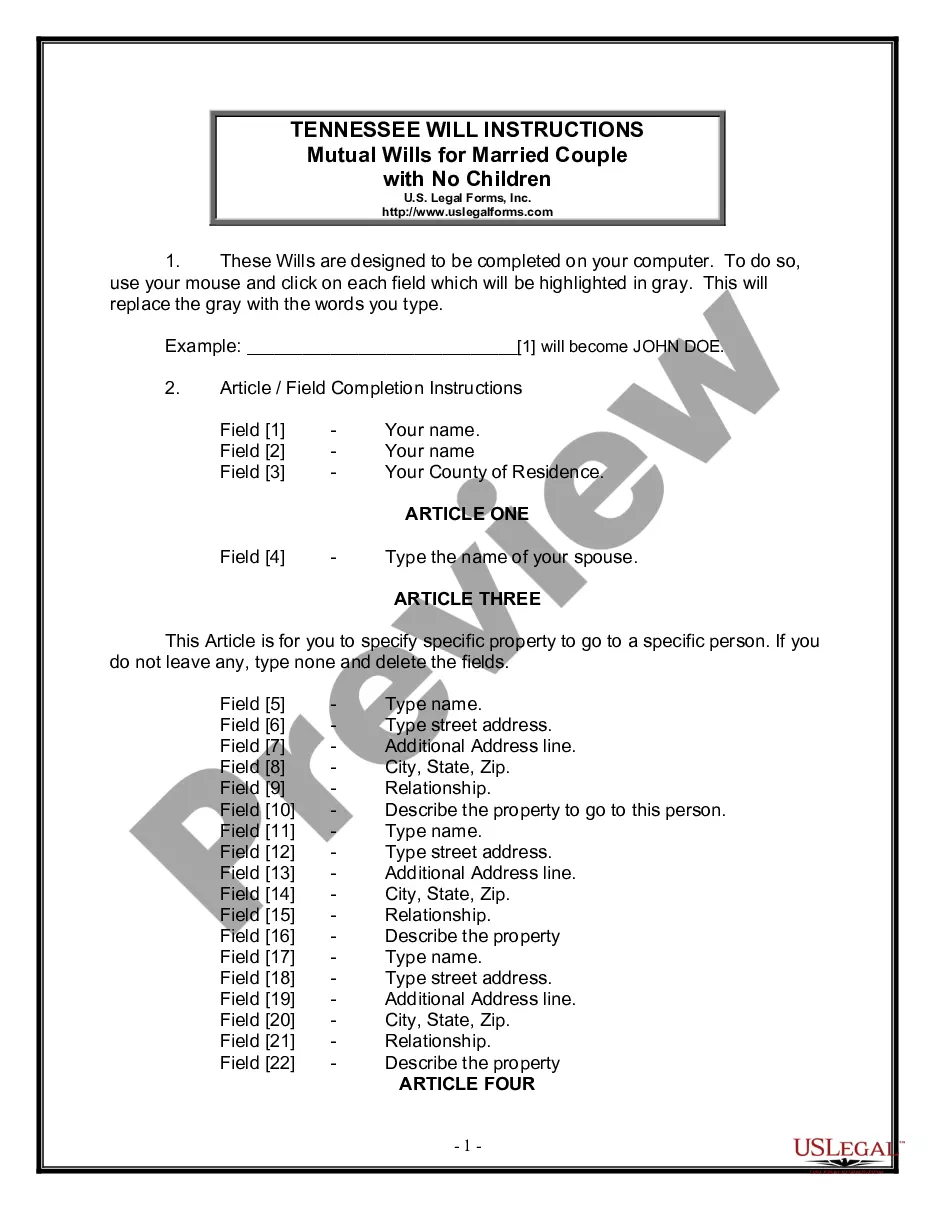
- Begin by entering your names and County of Residence in the designated fields.
- Assign a personal representative (executor) for your estate.
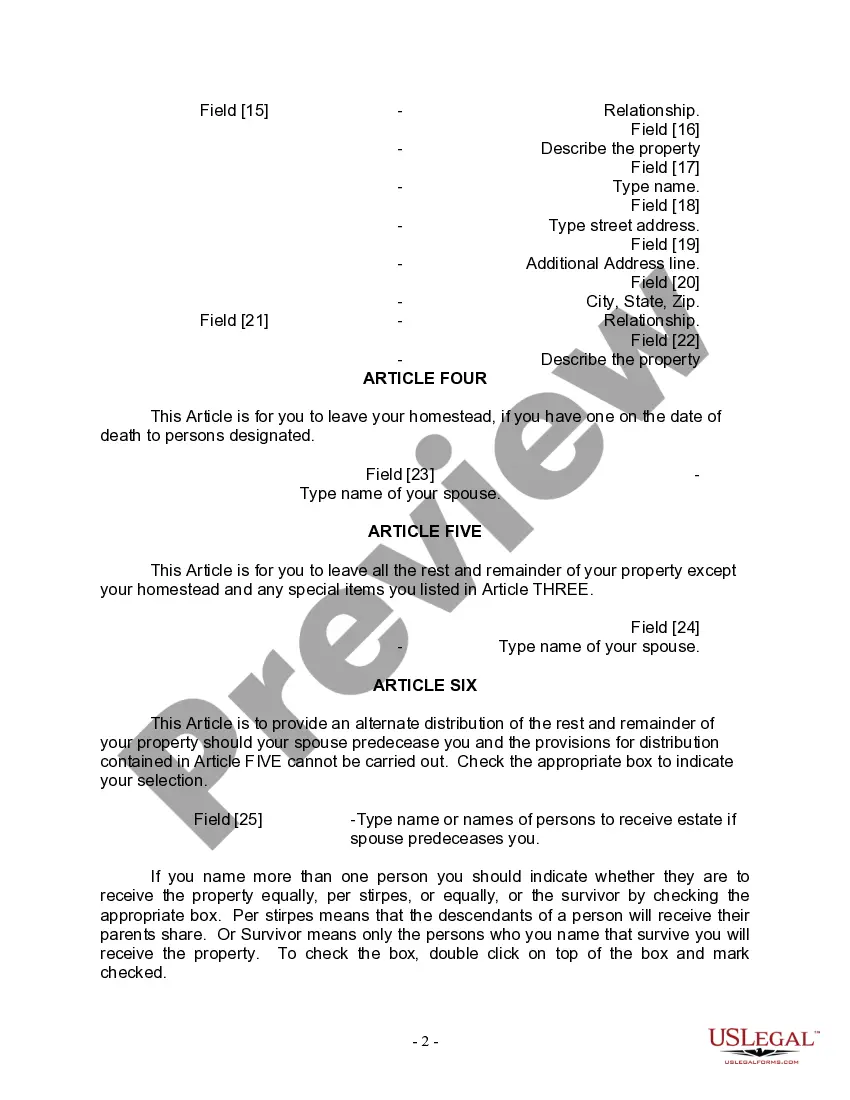
- Specify any specific property and their intended beneficiaries in the appropriate sections.
- Complete homestead allocation if applicable and designate a successor if the spouse predeceases.
- Sign the wills in the presence of two witnesses who are not related to you.
- If applicable, complete and sign the self-proving affidavit in front of a notary public.
Does this document require notarization?
Yes, this form must be notarized to be legally valid if it includes a self-proving affidavit. Notarization helps verify the identities of the signers and can simplify the probate process. US Legal Forms offers integrated online notarization, allowing you to notarize your documents securely, conveniently, and at any time.
Get your form ready online
Our built-in tools help you complete, sign, share, and store your documents in one place.
Make edits, fill in missing information, and update formatting in US Legal Forms—just like you would in MS Word.
Download a copy, print it, send it by email, or mail it via USPS—whatever works best for your next step.
Sign and collect signatures with our SignNow integration. Send to multiple recipients, set reminders, and more. Go Premium to unlock E-Sign.
If this form requires notarization, complete it online through a secure video call—no need to meet a notary in person or wait for an appointment.
We protect your documents and personal data by following strict security and privacy standards.

Make edits, fill in missing information, and update formatting in US Legal Forms—just like you would in MS Word.

Download a copy, print it, send it by email, or mail it via USPS—whatever works best for your next step.

Sign and collect signatures with our SignNow integration. Send to multiple recipients, set reminders, and more. Go Premium to unlock E-Sign.

If this form requires notarization, complete it online through a secure video call—no need to meet a notary in person or wait for an appointment.

We protect your documents and personal data by following strict security and privacy standards.
Mistakes to watch out for
- Failing to have the wills signed by two witnesses.
- Not completing the self-proving affidavit where required by state law.
- Leaving out important details regarding asset distribution.
- Assuming mutual wills can be changed solely by one party afterwards.
- Overlooking to keep a copy of the executed wills in a safe place.
Why use this form online
- Conveniently complete the forms from home without needing a legal professional.
- Easily edit and review your information before finalizing.
- Access clear instructions to help you through the filling process.
- Ensure compliance with state-specific legal language and requirements.
- These mutual wills are legally binding documents that ensure your wishes are followed regarding the distribution of your estate.
- Proper execution and witnessing ensure that the wills are enforceable in probate court.
Key takeaways
- The Mutual Wills package provides a comprehensive solution for married couples without children.
- Document preparation should follow state-specific laws to ensure validity.
- Completing these wills can provide security and clarity in estate planning, ensuring your partner is protected.
Looking for another form?

Form popularity
FAQ
Only assets that the deceased person owned in his or her own name, alone, must go through probate. All other assets pass to new owners without oversight from the probate court. Assets that go through probate make up what's called the probate estate.
Create the initial document. Start by titling the document Last Will and Testament" and including your full legal name and address. Designate an executor. Appoint a guardian. Name the beneficiaries. Designate the assets. Ask witnesses to sign your will. Store your will in a safe place.
As long as it was properly signed and witnessed by two adult independent witnesses who are present at the time you sign your will, it should be legally binding.Using the wrong wording could mean that your instructions aren't followed, or even that your will isn't valid.
No. You can make your own will in Tennessee, using Nolo's do-it-yourself will software or online will programs. However, you may want to consult a lawyer in some situations. For example, if you think that your will might be contested or if you want to disinherit your spouse, you should talk with an attorney.
However, the process can take longer if there is a dispute over the deceased person's will or any unusual assets or debts involved. In terms of filing for probate, if the estate is small and has a value of $50,000 or less, a small estate affidavit can be filed 45 days after the death of the property owner.
Generally, yes. The Tennessee statute on Wills recognizes the validity of holographic or handwritten Wills. T.C.A. § 32-1-105.
Witnesses: A Tennessee will must be signed by at least two witnesses, who should not also be beneficiaries in the will, in the presence of the testator and of each other. Writing: A Tennessee will must be in writing. Beneficiaries: A testator can leave property to anyone.
Tennessee, however, has no statutory time limit for when an executor must submit the will for probate. There is no penalty for not probating a will. That means if the will is never submitted to probate, the assets remain in the decedent's name so long as the estate continues to pay the required taxes.
For the vast majority of individuals, my cost to prepare an estate package including a Will, Power of Attorney, Healthcare Power of Attorney and Living is a flat rate of $450.00. I charge this same flat rate for both single individuals and married couples.