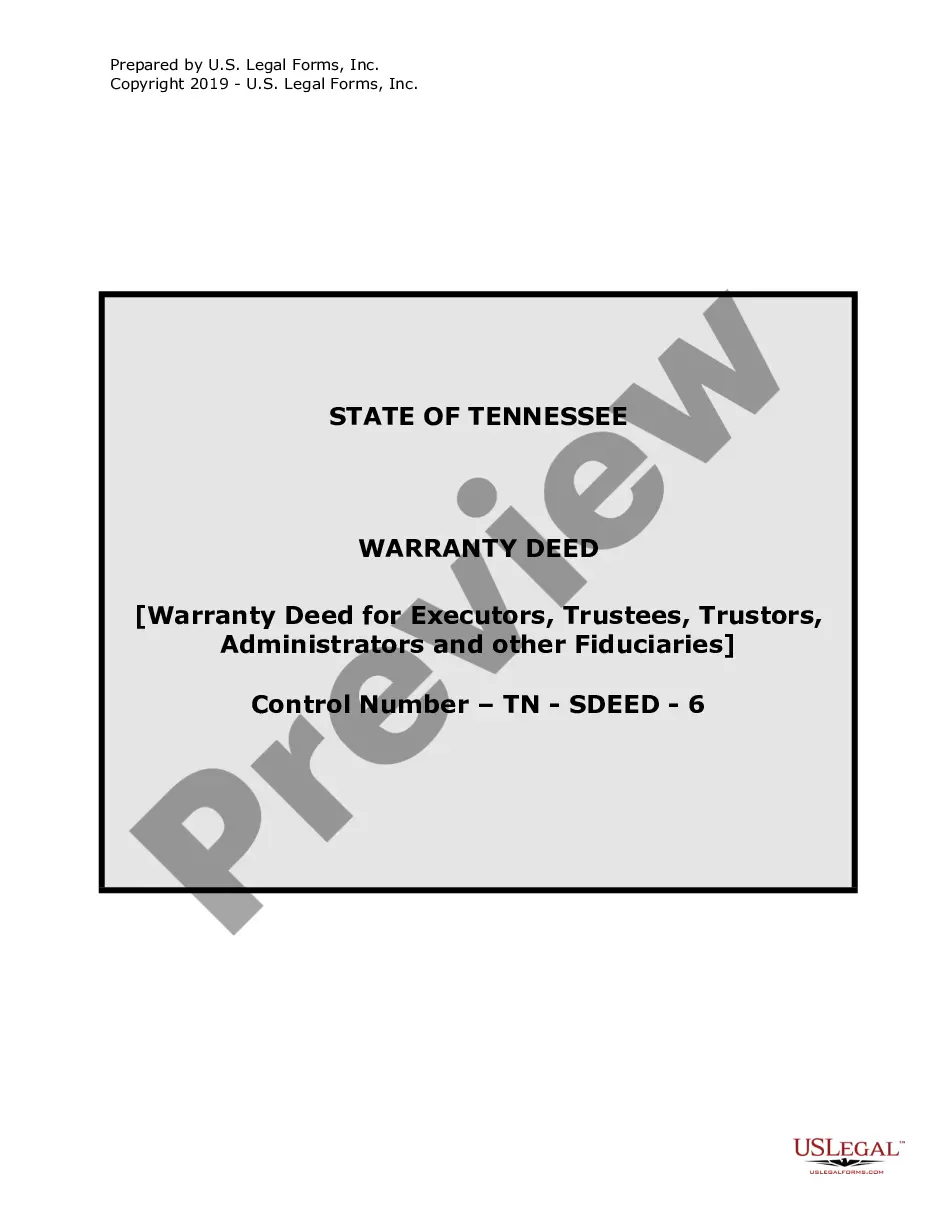
Tennessee Fiduciary Deed for use by Executors, Trustees, Trustors, Administrators and other Fiduciaries
What this document covers
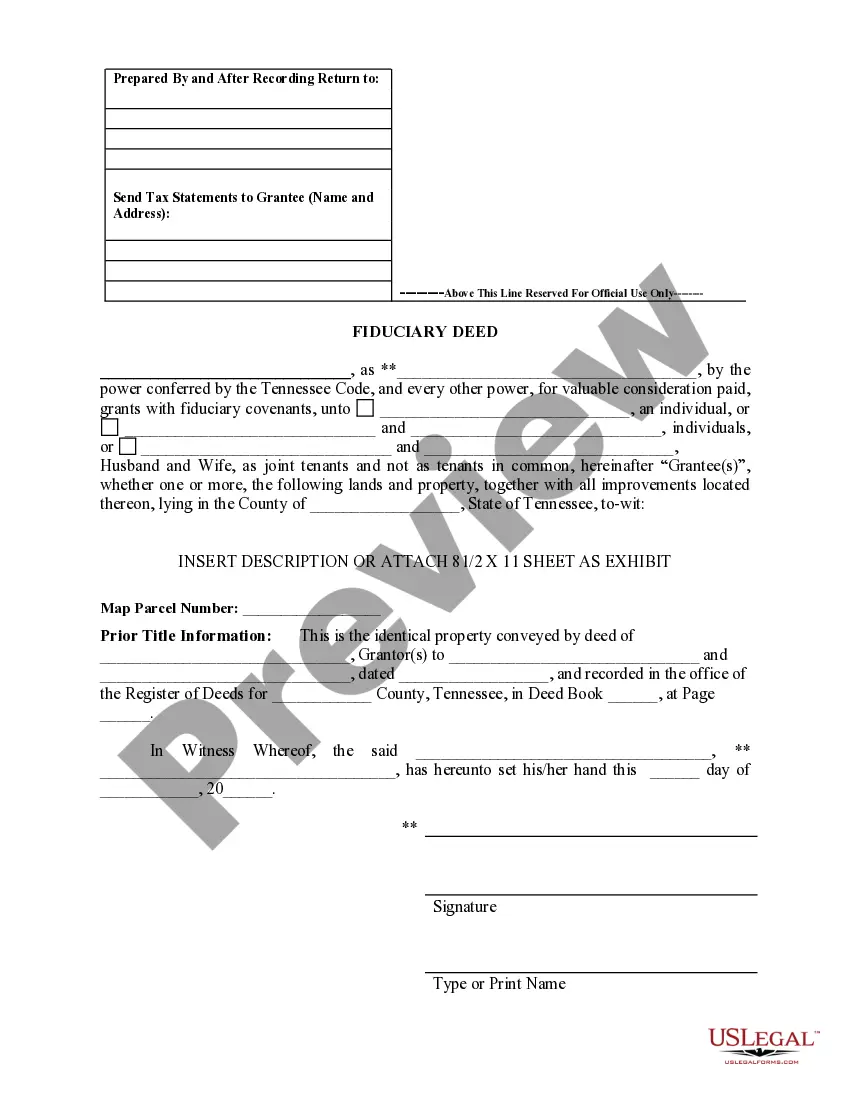
The Fiduciary Deed is a legal document used by executors, trustees, trustors, administrators, and other fiduciaries to transfer property ownership on behalf of another individual. This deed is distinct as it grants rights typically conferred through fiduciary relationships, meaning it is executed by someone authorized to act for another party, especially in managing assets after death or under a trust. Using this form ensures that the legal responsibilities and obligations of the fiduciary are upheld during property transactions in Tennessee.
What’s included in this form
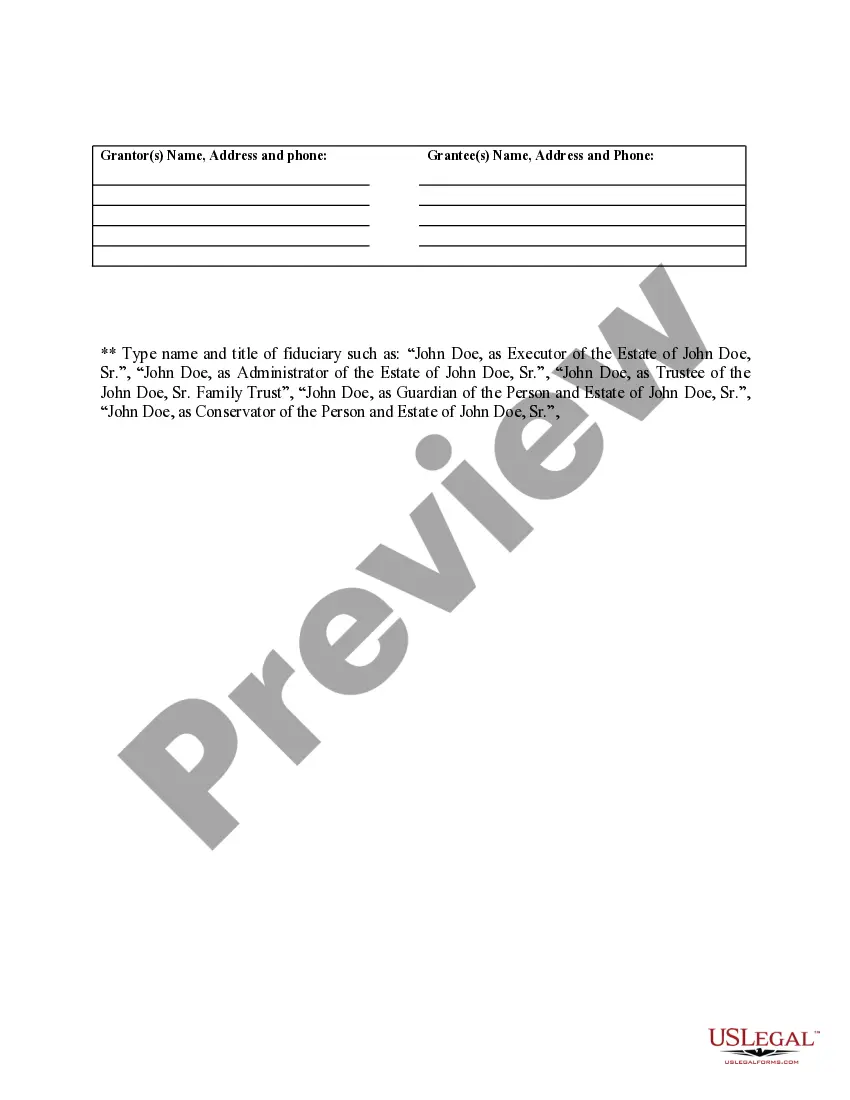
- Identification of the grantor (the fiduciary) and grantee (the recipient of the property).
- Description of the property being conveyed, including tax parcel numbers.
- Prior title information to indicate the history of ownership.
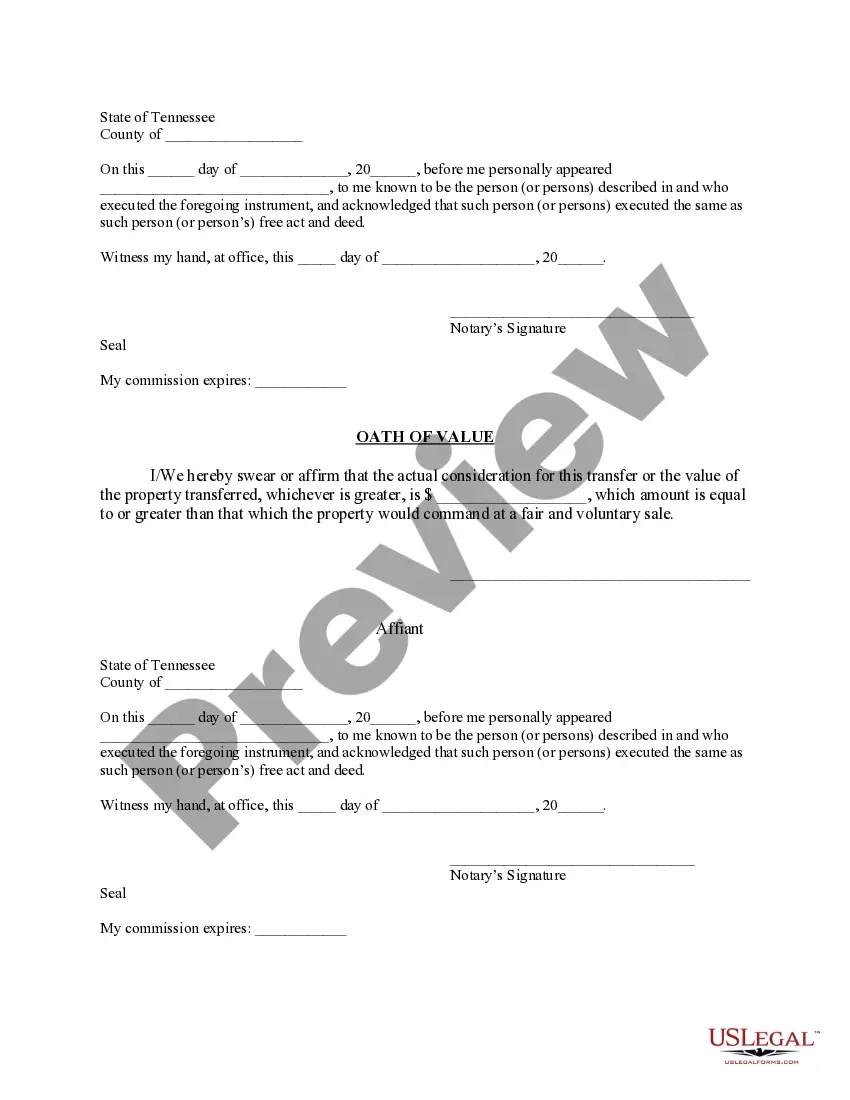
- Notary acknowledgment to validate the execution of the document.
- Oath of value declaration to confirm the property's worth.


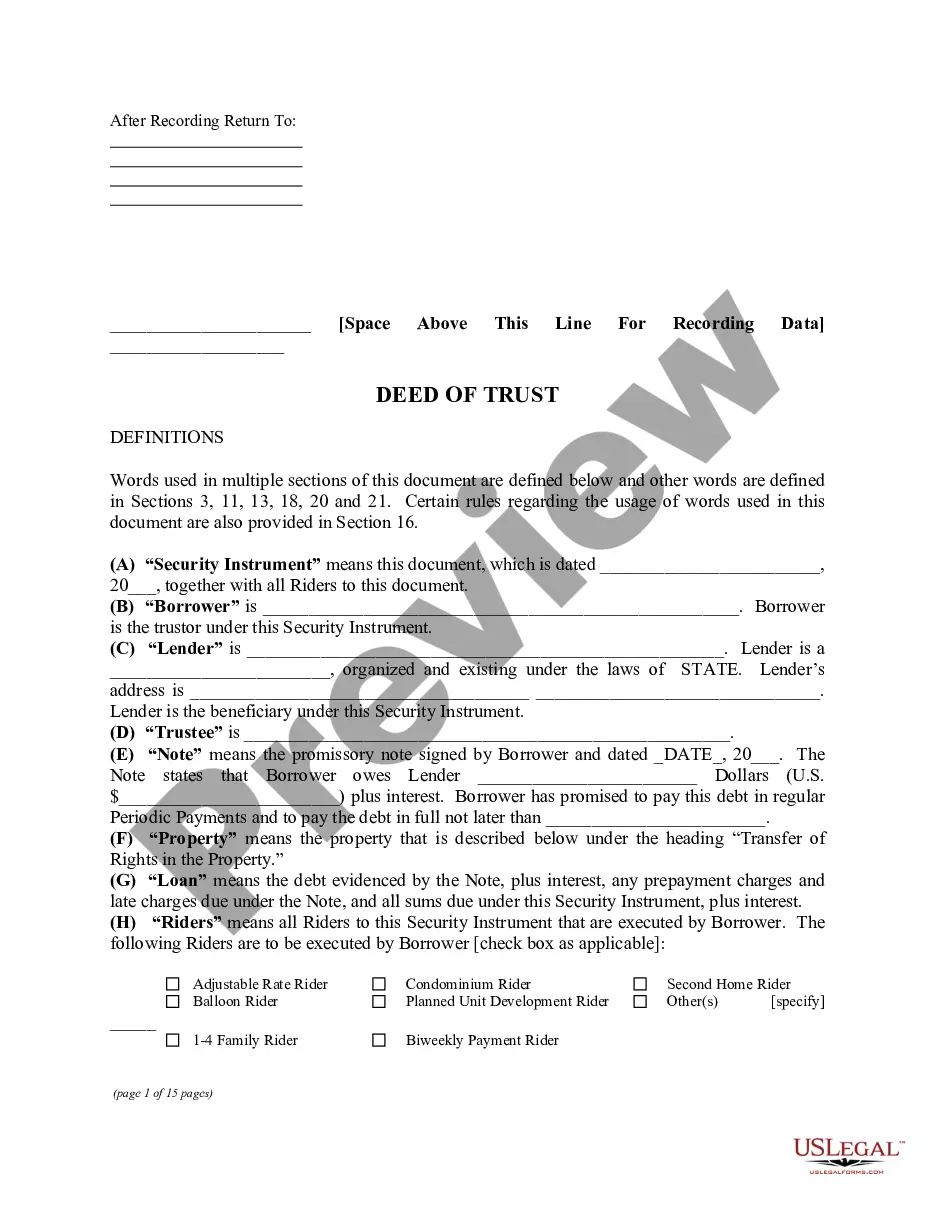
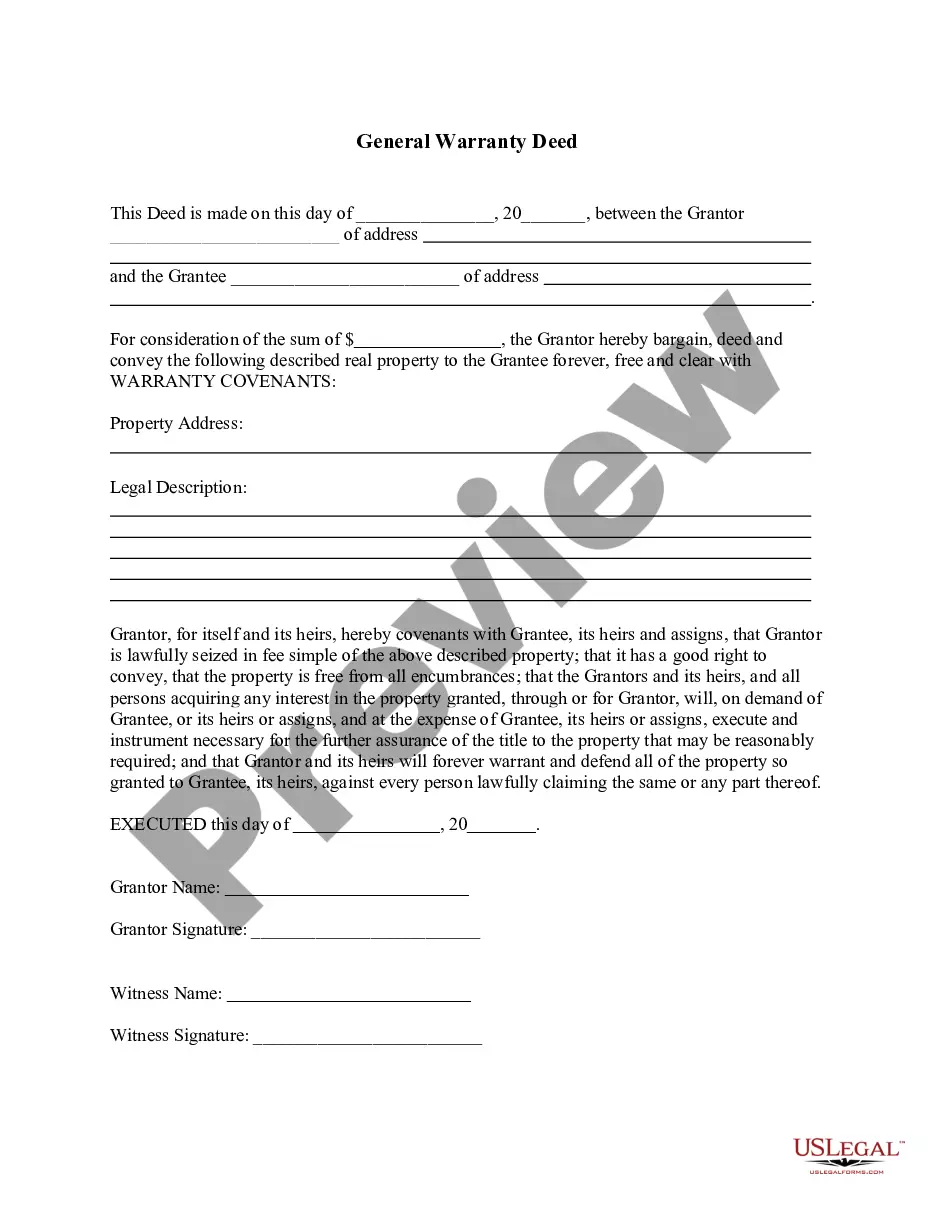
When to use this document
This Fiduciary Deed is necessary when a fiduciary, such as an executor of a will or a trustee of a trust, needs to legally transfer real property to an individual or entity. It is commonly used during estate settlement processes where assets are distributed among heirs or beneficiaries, or when a trust is executed, transferring property held within it to the beneficiaries.
Who needs this form
- Executors managing the estate of a deceased person.
- Trustees handling assets for the beneficiaries of a trust.
- Administrators who are appointed to oversee an estate without a will.
- Guardians or conservators managing property for someone unable to do so themselves.
Completing this form step by step
- Identify the parties involved: the grantor (fiduciary) and grantee.
- Clearly describe the property including necessary details such as the legal description and tax parcel number.
- Enter prior title information to establish a chain of ownership.
- Complete the signature fields, ensuring the fiduciary signs as they are representing another person.
- Include notary information where required and ensure the document is notarized to maintain legal validity.
Is notarization required?
This form needs to be notarized to ensure legal validity. US Legal Forms provides secure online notarization powered by Notarize, allowing you to complete the process through a verified video call, available anytime.
Get your form ready online
Our built-in tools help you complete, sign, share, and store your documents in one place.
Make edits, fill in missing information, and update formatting in US Legal Forms—just like you would in MS Word.
Download a copy, print it, send it by email, or mail it via USPS—whatever works best for your next step.
Sign and collect signatures with our SignNow integration. Send to multiple recipients, set reminders, and more. Go Premium to unlock E-Sign.
If this form requires notarization, complete it online through a secure video call—no need to meet a notary in person or wait for an appointment.
We protect your documents and personal data by following strict security and privacy standards.

Make edits, fill in missing information, and update formatting in US Legal Forms—just like you would in MS Word.

Download a copy, print it, send it by email, or mail it via USPS—whatever works best for your next step.

Sign and collect signatures with our SignNow integration. Send to multiple recipients, set reminders, and more. Go Premium to unlock E-Sign.

If this form requires notarization, complete it online through a secure video call—no need to meet a notary in person or wait for an appointment.

We protect your documents and personal data by following strict security and privacy standards.
Common mistakes to avoid
- Failing to provide a complete and accurate property description.
- Not including a valid notary signature and seal.
- Leaving out previous title information that is essential for record-keeping.
- Not having the fiduciary sign in the correct capacity (e.g., as executor or trustee).
Benefits of using this form online
- Convenience of downloading and completing the form at your own pace.
- Editability to customize the form fields easily on your computer.
- Access to a reliable template that complies with Tennessee's legal standards.
Looking for another form?
Form popularity
FAQ
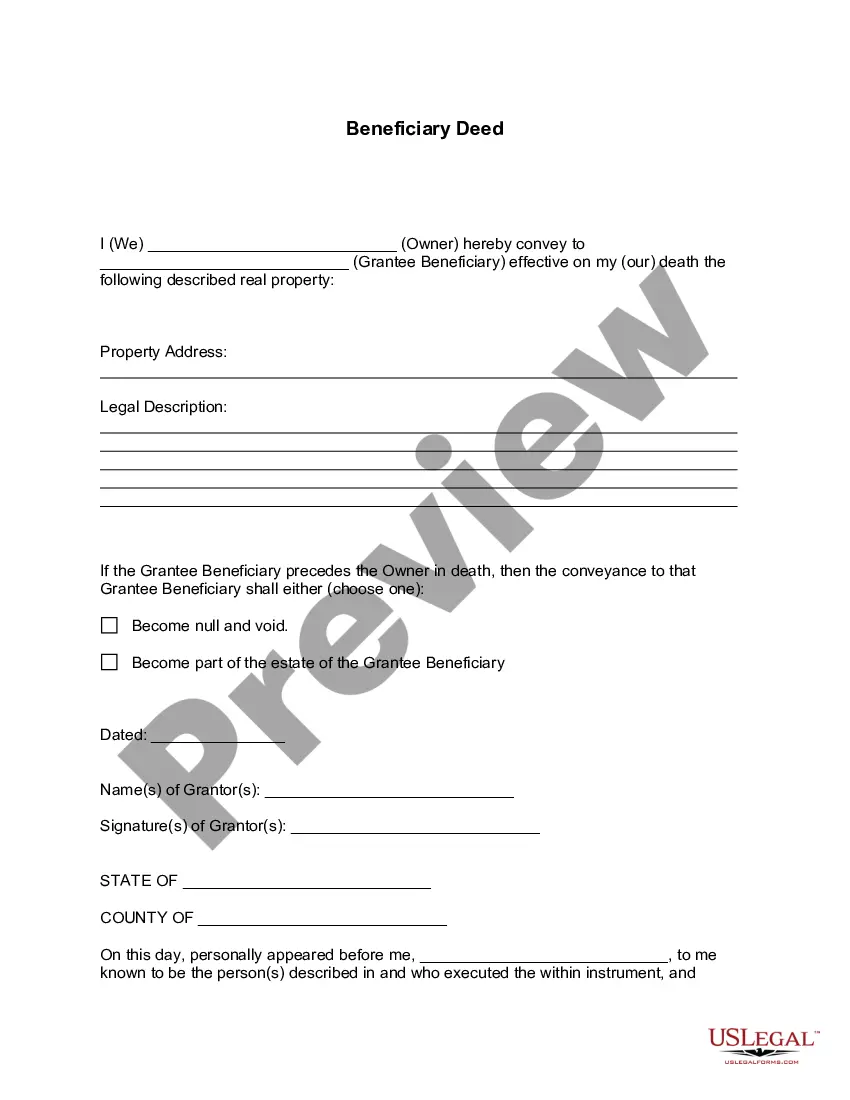
Tennessee does not allow real estate to be transferred with transfer-on-death deeds.
Typically the answer is no. However, there may be an exception to this general rule. Accordingly, please call Ascent Law LLC (801) 676-5506 for your Free Consultation.
In most states, an executor's deed must be signed by a witness and notarized. An executor's deed should be recorded in the real estate records of the county in which the property being conveyed is located.
Executor's Deed: This may be used when a person dies testate (with a will). The estate's executor will dispose of the decedent's assets and an executor's deed may be used to convey the title or real property to the grantee.
Once the COURT appoints you as executor, you will record an affidavit of death of joint tenant to get your mother's name of the property. Then, when you get an order for final distribution, you will record a certified copy to get the property into the names of the beneficiaries under the will.
Again, the Executors of the Estate have overall authority, so can accept an offer from a potential buyer. But again, the Executors must act in the Beneficiaries' best interests, and so have a duty to sell the property for a reasonable sum.