Tennessee Power of Attorney Forms Package
About this form package
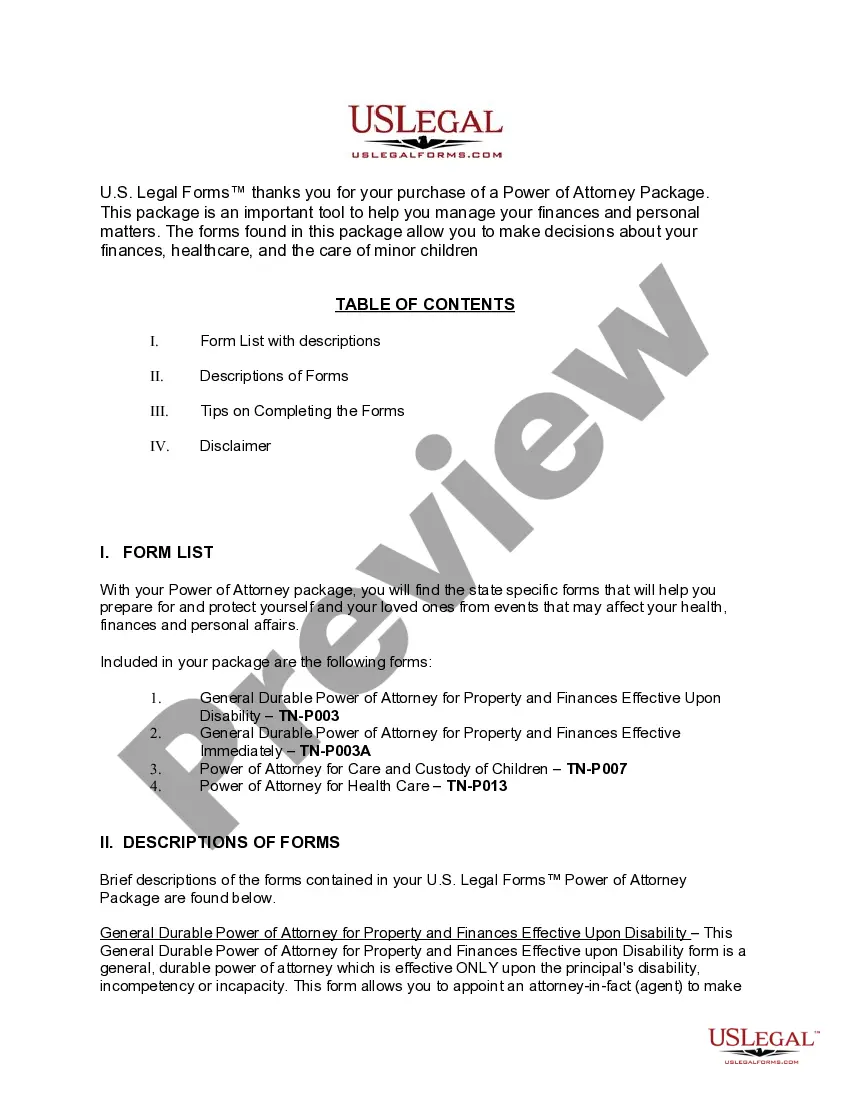
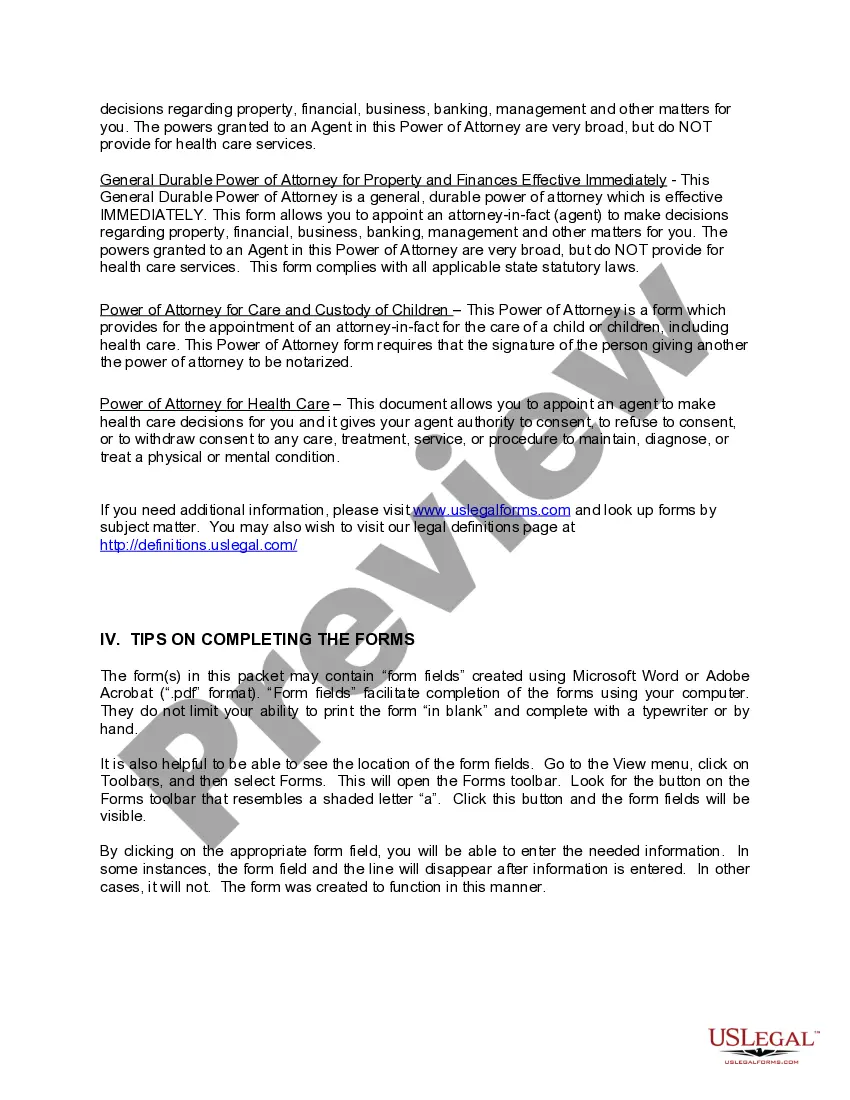
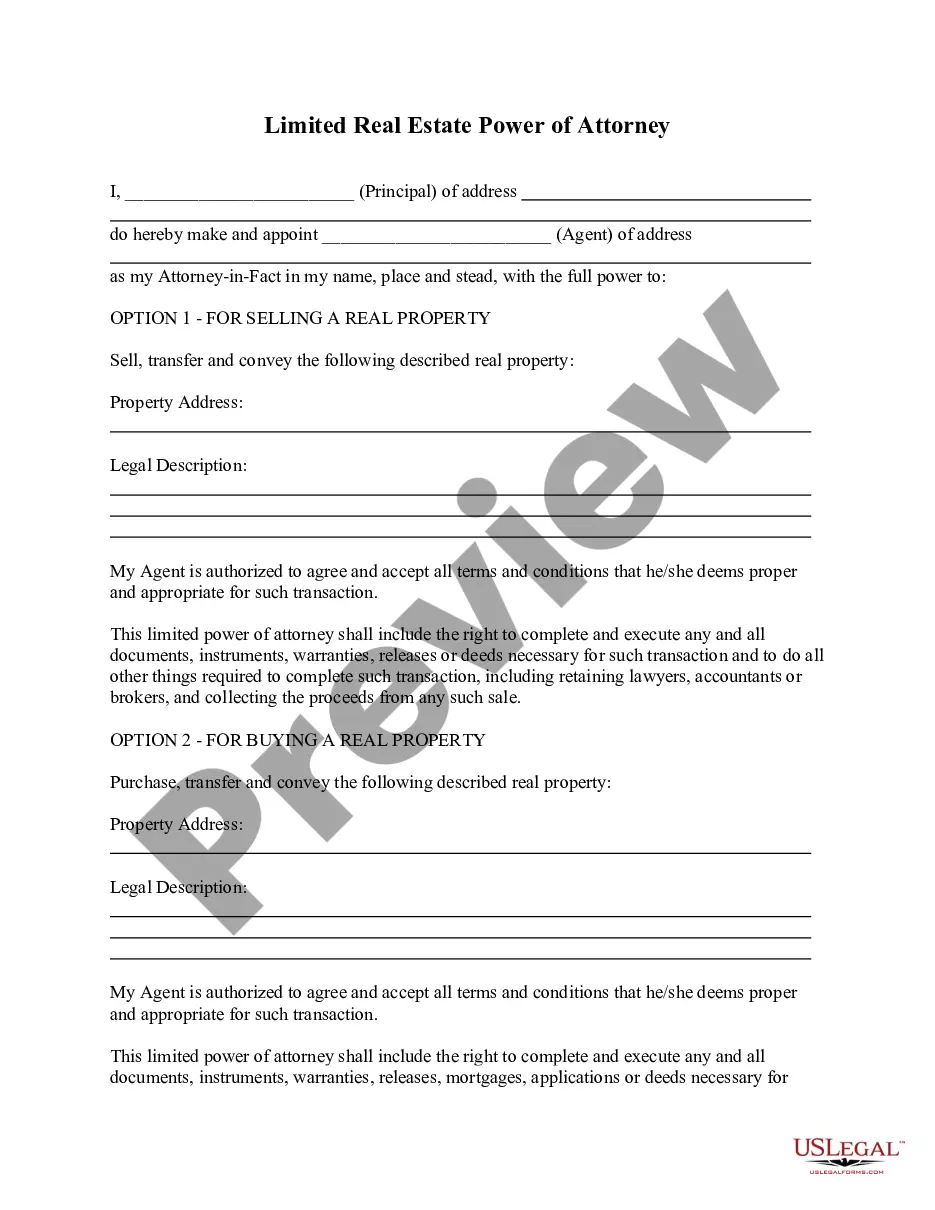
The Tennessee Power of Attorney Forms Package provides essential legal documents that empower you to make decisions regarding your finances, healthcare, and the care of minor children. This package includes four key forms: General Durable Power of Attorney for Property and Finances Effective Upon Disability, General Durable Power of Attorney for Property and Finances Effective Immediately, Power of Attorney for Care and Custody of Children, and Power of Attorney for Health Care. These forms are crafted to comply with Tennessee law, ensuring they meet all necessary legal standards.
Forms you’ll find in this package
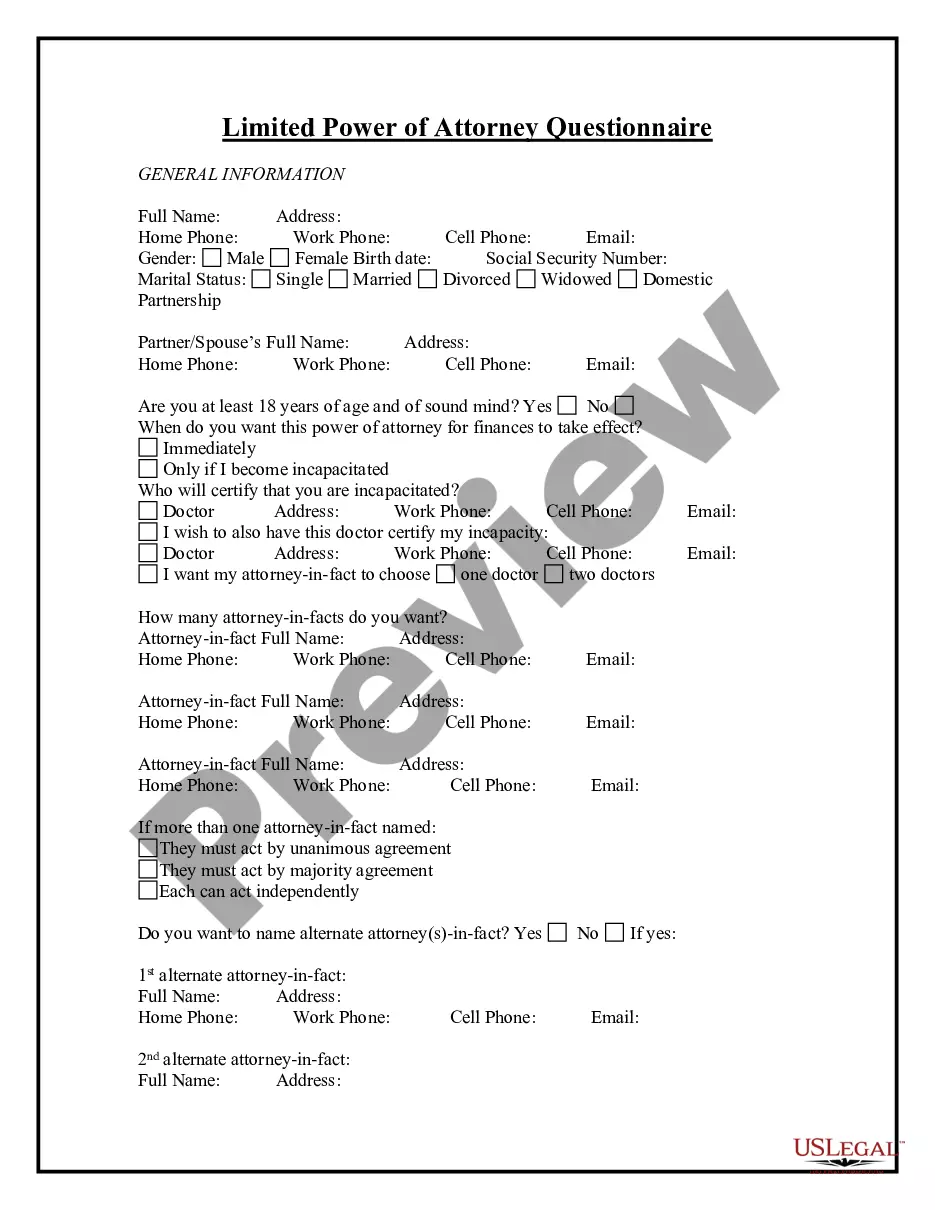
- General Durable Power of Attorney for Property and Finances or Financial Effective upon Disability
- General Durable Power of Attorney for Property and Finances or Financial Effective Immediately
- General Power of Attorney for Care and Custody of Child or Children
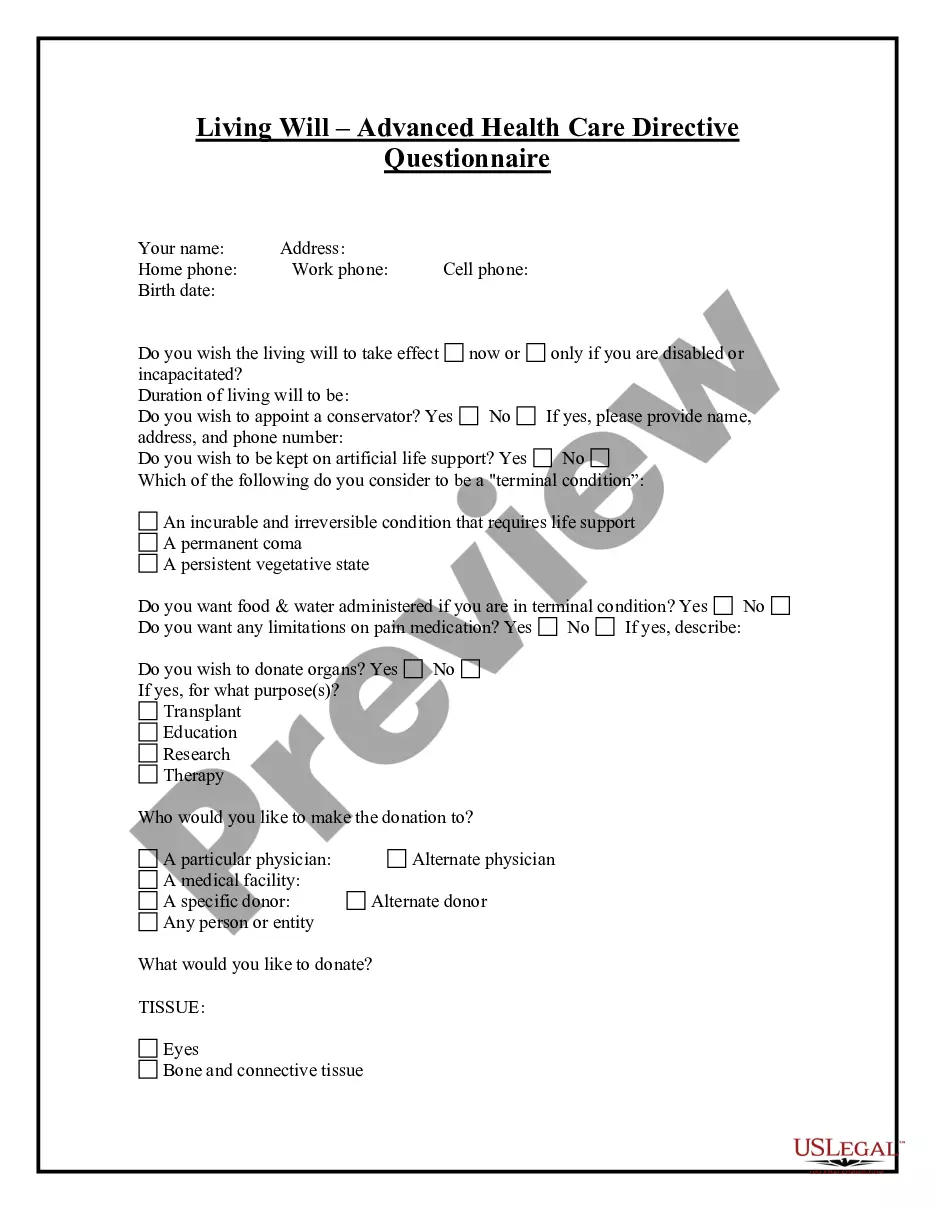
- Power of Attorney for Health Care - Durable Power of Attorney for Health Care

Common use cases
This package is crucial in various situations where you need to appoint an agent to manage your legal and financial affairs, particularly if you become incapacitated. Here are some scenarios in which this package is especially useful:
- You want to proactively designate someone to manage your finances if you become unable to do so.
- You need to arrange healthcare decisions to be made on your behalf when you are not in a position to make them.
- You are looking for a reliable way to authorize someone to care for your children in your absence.
- You wish to simplify the management of your property and financial affairs for your loved ones.
Who this form package is for
- Individuals seeking to ensure their financial matters are handled according to their wishes.
- Parents who need a legal framework for appointing someone to care for their children.
- Persons approaching medical procedures who want to establish a healthcare decision maker.
- Anyone who wishes to prepare in advance for unexpected situations impacting their health or financial capability.
How to complete these forms
- Review the included forms to understand their purpose and requirements.
- Identify the parties involved, including the agent you wish to designate.
- Fill in all required fields, paying attention to names, dates, and specific instructions.
- Ensure that any required signatures are obtained, and if necessary, arrange for notarization.
- Store the completed forms in a safe, accessible location and provide copies to relevant parties.
Do documents in this package require notarization?
Notarization is required for one or more forms in this package. US Legal Forms provides secure online notarization powered by Notarize, allowing you to complete the process through a verified video call.
Get your form ready online
Our built-in tools help you complete, sign, share, and store your documents in one place.
Make edits, fill in missing information, and update formatting in US Legal Forms—just like you would in MS Word.
Download a copy, print it, send it by email, or mail it via USPS—whatever works best for your next step.
Sign and collect signatures with our SignNow integration. Send to multiple recipients, set reminders, and more. Go Premium to unlock E-Sign.
If this form requires notarization, complete it online through a secure video call—no need to meet a notary in person or wait for an appointment.
We protect your documents and personal data by following strict security and privacy standards.

Make edits, fill in missing information, and update formatting in US Legal Forms—just like you would in MS Word.

Download a copy, print it, send it by email, or mail it via USPS—whatever works best for your next step.

Sign and collect signatures with our SignNow integration. Send to multiple recipients, set reminders, and more. Go Premium to unlock E-Sign.

If this form requires notarization, complete it online through a secure video call—no need to meet a notary in person or wait for an appointment.

We protect your documents and personal data by following strict security and privacy standards.
Typical mistakes to avoid
- Failing to sign or date the forms correctly.
- Neglecting to include all required information in form fields.
- Forgetting to consult a notary when required by law.
- Not providing copies to the designated agent or relevant family members.
Benefits of using this package online
- Convenience of downloading and completing forms at your own pace.
- Editability allows you to customize the forms to reflect your specific needs.
- Access to state-specific legal documents drafted by professionals, ensuring reliability.
- Time-saving, as forms can be filled out and printed at home without the need for office visits.
Looking for another form?


Form popularity
FAQ
A Power of Attorney might be used to allow another person to sign a contract for the Principal. It can be used to give another person the authority to make health care decisions, do financial transactions, or sign legal documents that the Principal cannot do for one reason or another.
Clearly identify the principal (the person who is granting the power) Clearly identify the agent (the person who will have the specified powers) Specify exactly what legal acts the agent is entitled to perform.
Duties of an Agent Through one or more powers of attorney, the principal can authorize an agent to manage numerous tasks, including entering into contracts, dealing with real and personal property, handling the principal's financial and tax affairs, and arranging for the principal's housing and health care.
Does a Power of Attorney need to be recorded in Tennessee? Typically, a Tennessee Power of Attorney does not need to be recorded unless it deals with real estate transactions.
Tennessee law requires a durable power of attorney to be either signed before two witnesses or signed and notarized in order to be valid. It also must specifically state its authorization to make health care decisions.
A general power of attorney acts on behalf of the principal in any and all matters, as allowed by the state. The agent under a general POA agreement may be authorized to take care of issues such as handling bank accounts, signing checks, selling property and assets like stocks, filing taxes, etc.
Choose the limited power of attorney made for your state. Input personal information about both the principal and the agent or attorney-in-fact. Explain the powers of the agent. Include the date the limited power of attorney expires or will be revoked.
A power of attorney is a legal document that allows a principal to appoint an agent to act for them should they become incapacitated. The agent is expected to place the principal's interests ahead of his or her own, which is why it is important for you and your loved one to pick a trusted individual.
A general power of attorney ends on your death or incapacitation unless you rescind it before then. Durable. A durable power of attorney can be general or limited in scope, but it remains in effect after you become incapacitated.