Tennessee HVAC Contract for Contractor
What this document covers
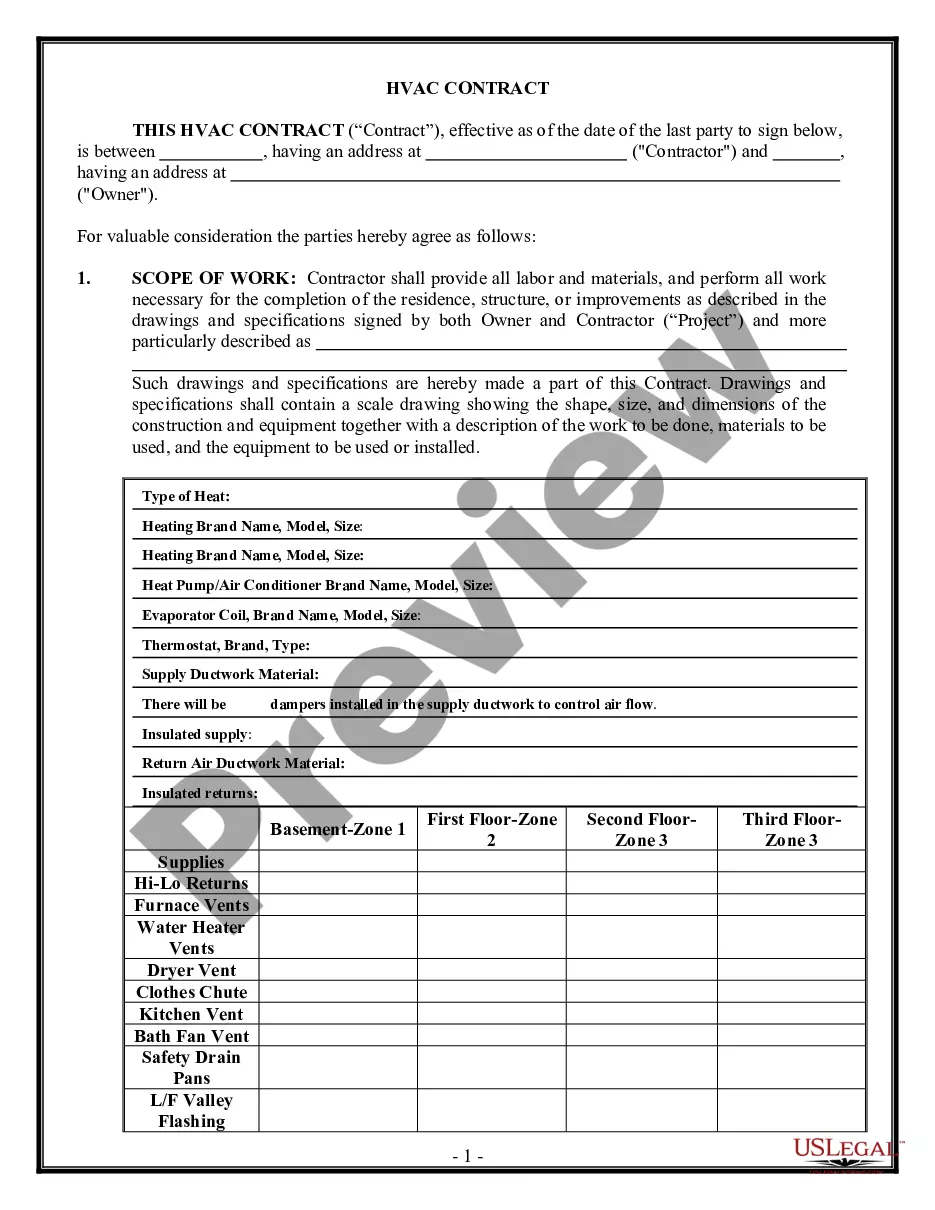
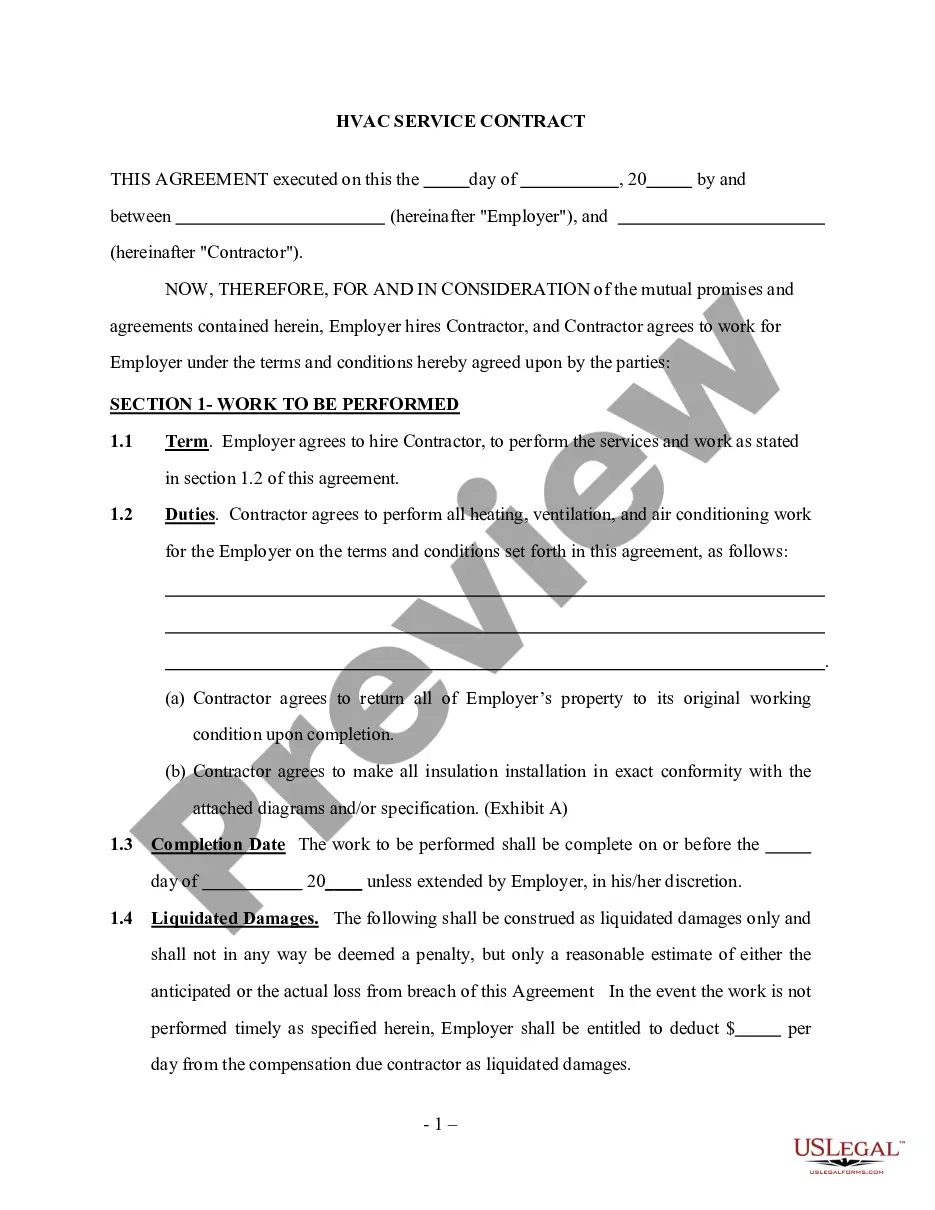
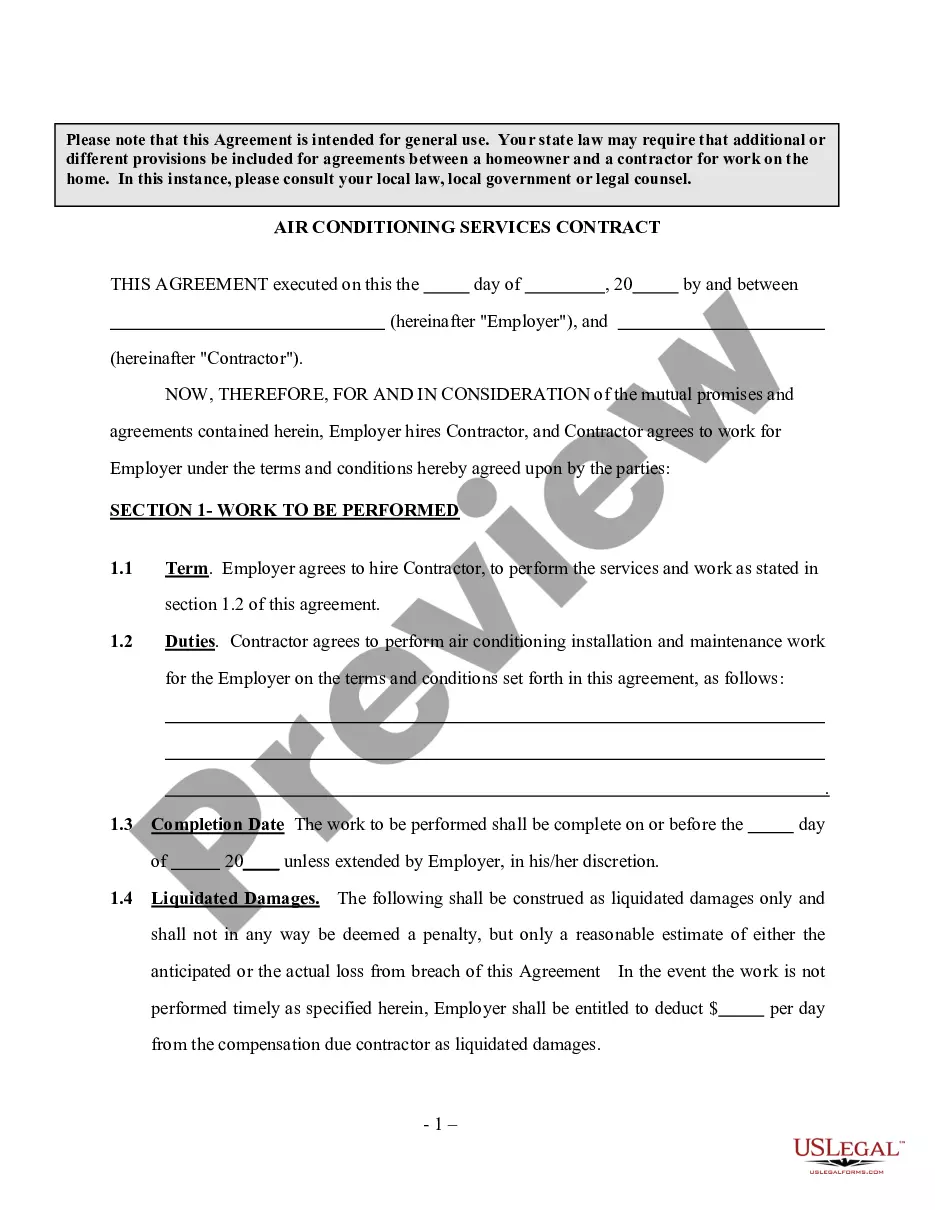
The HVAC Contract for Contractor is a legal document that outlines the agreement between HVAC contractors and property owners. This form is specifically designed to be used in the State of Tennessee, detailing aspects such as payment arrangements (either cost plus or fixed fee), change orders, and responsibilities regarding permits and insurance. Unlike generic contracts, this form caters to the specific needs of HVAC projects, ensuring compliance with state laws.
What’s included in this form
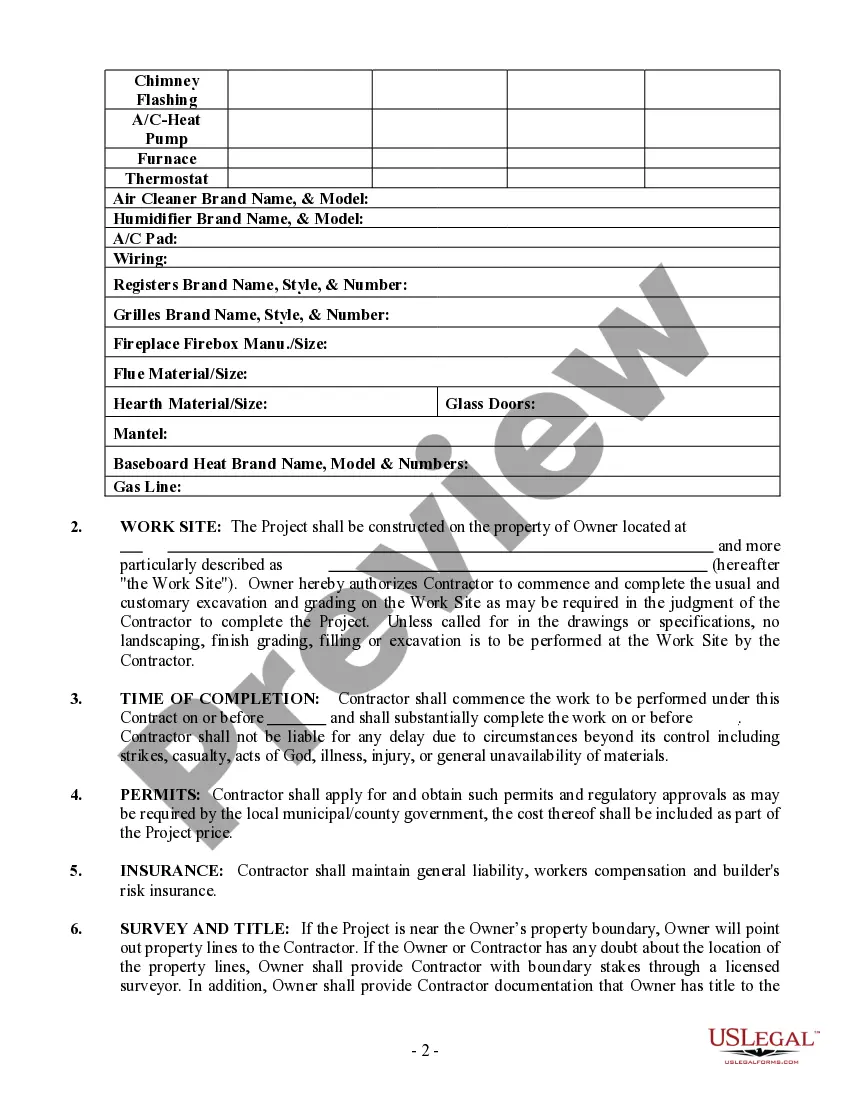
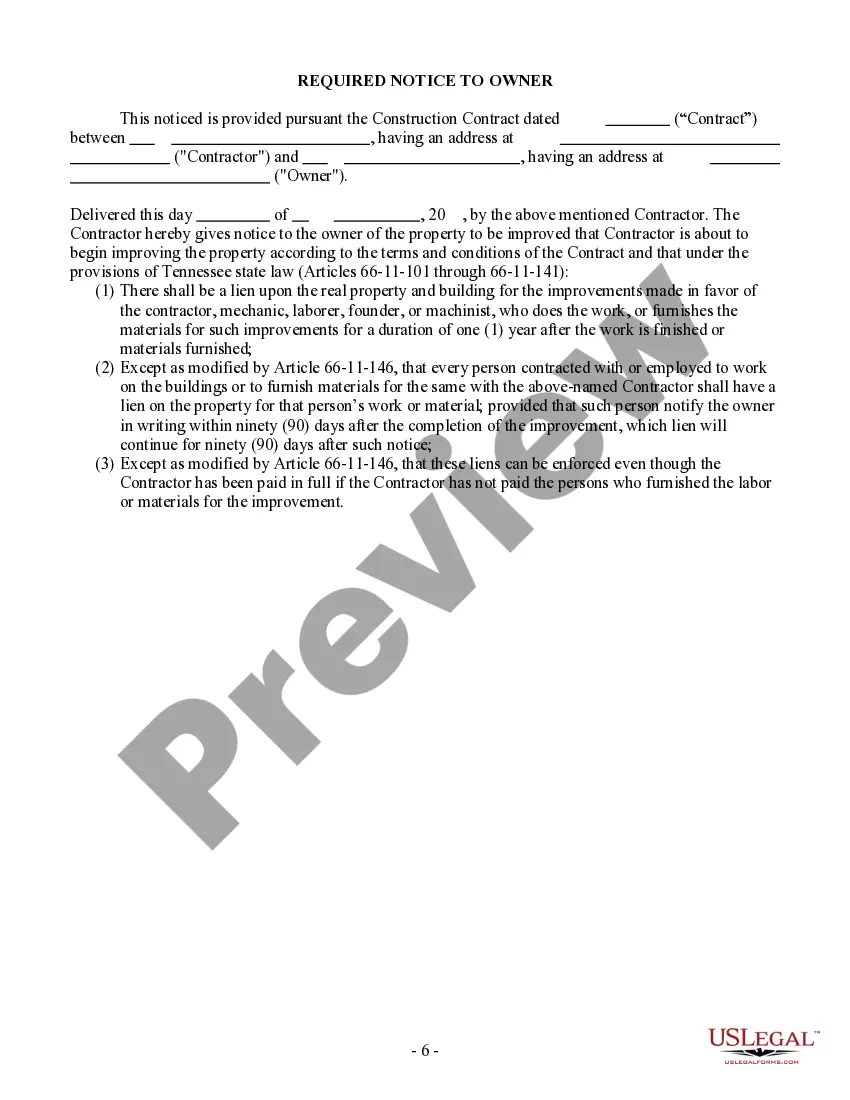
- Permits: The contractor is responsible for obtaining necessary permits and approvals.
- Insurance: Specifies insurance requirements including general liability, workers compensation, and builders risk insurance.
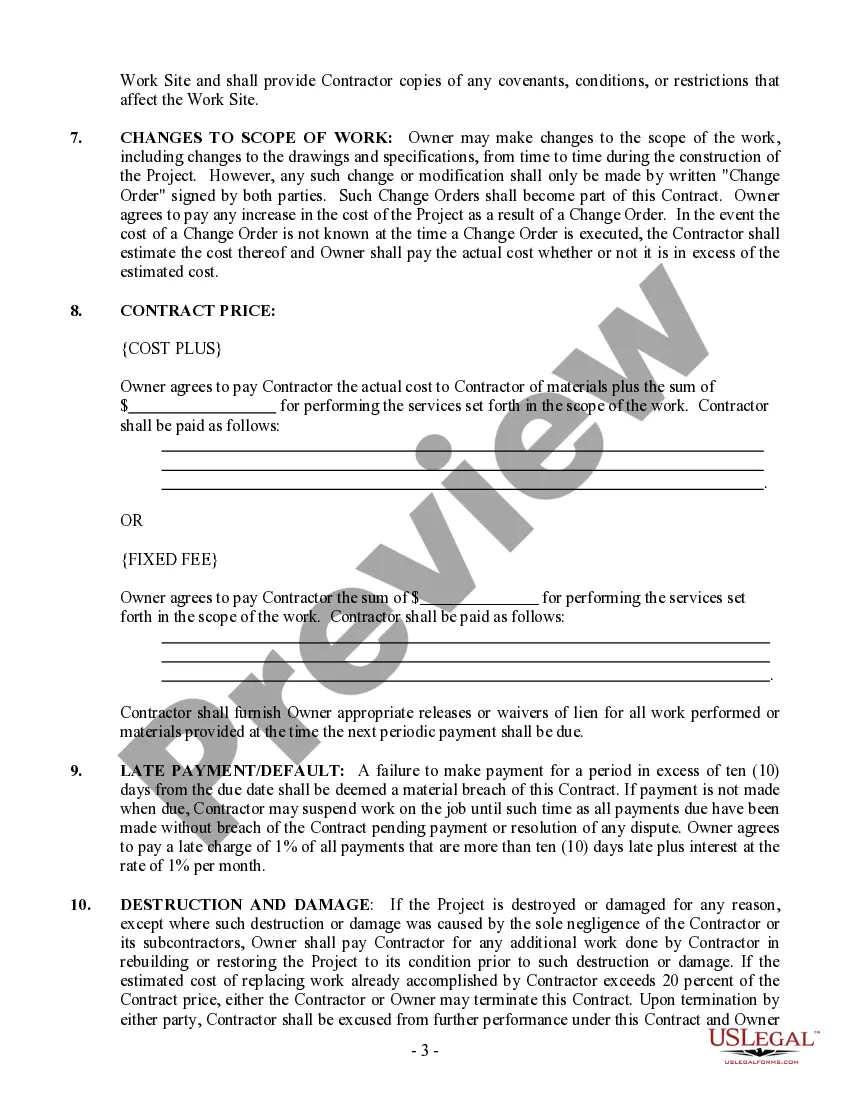
- Changes to Scope of Work: Outlines the process for making changes to the project and the implications for costs.
- Destruction and Damage: Details responsibilities and rights in case of project damage, including possible termination conditions.
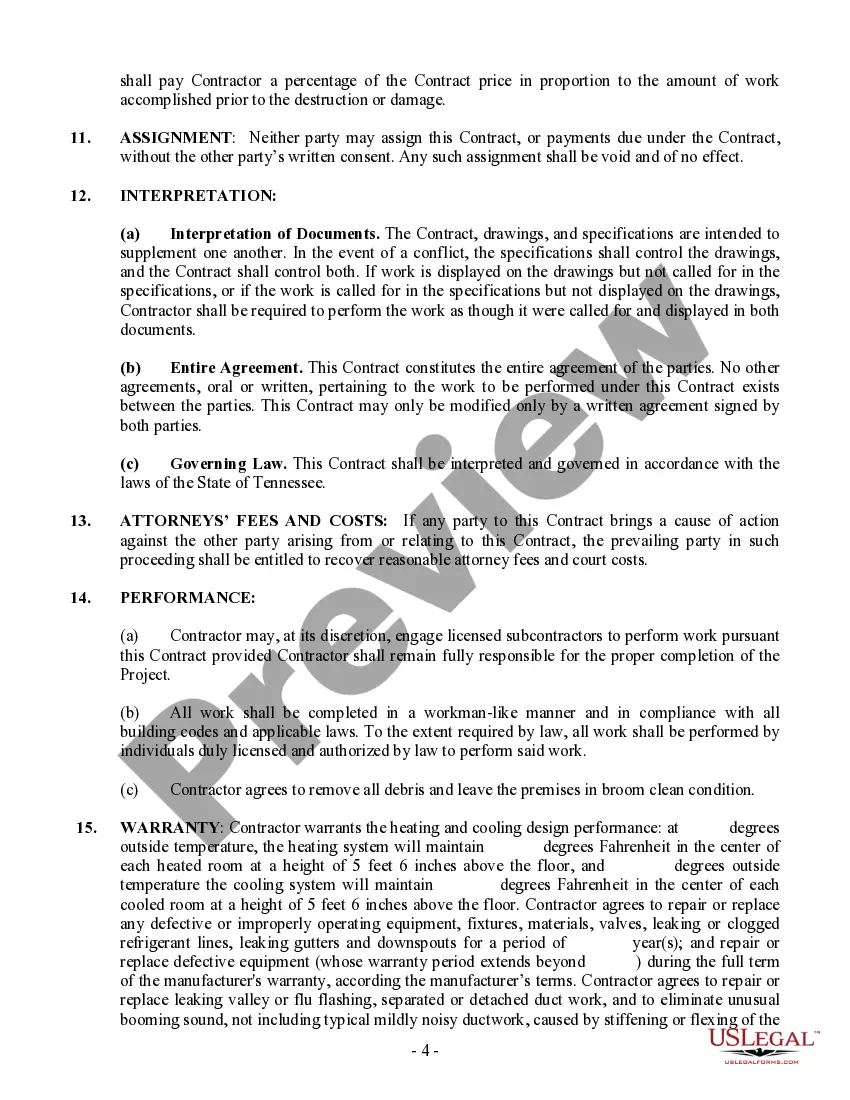
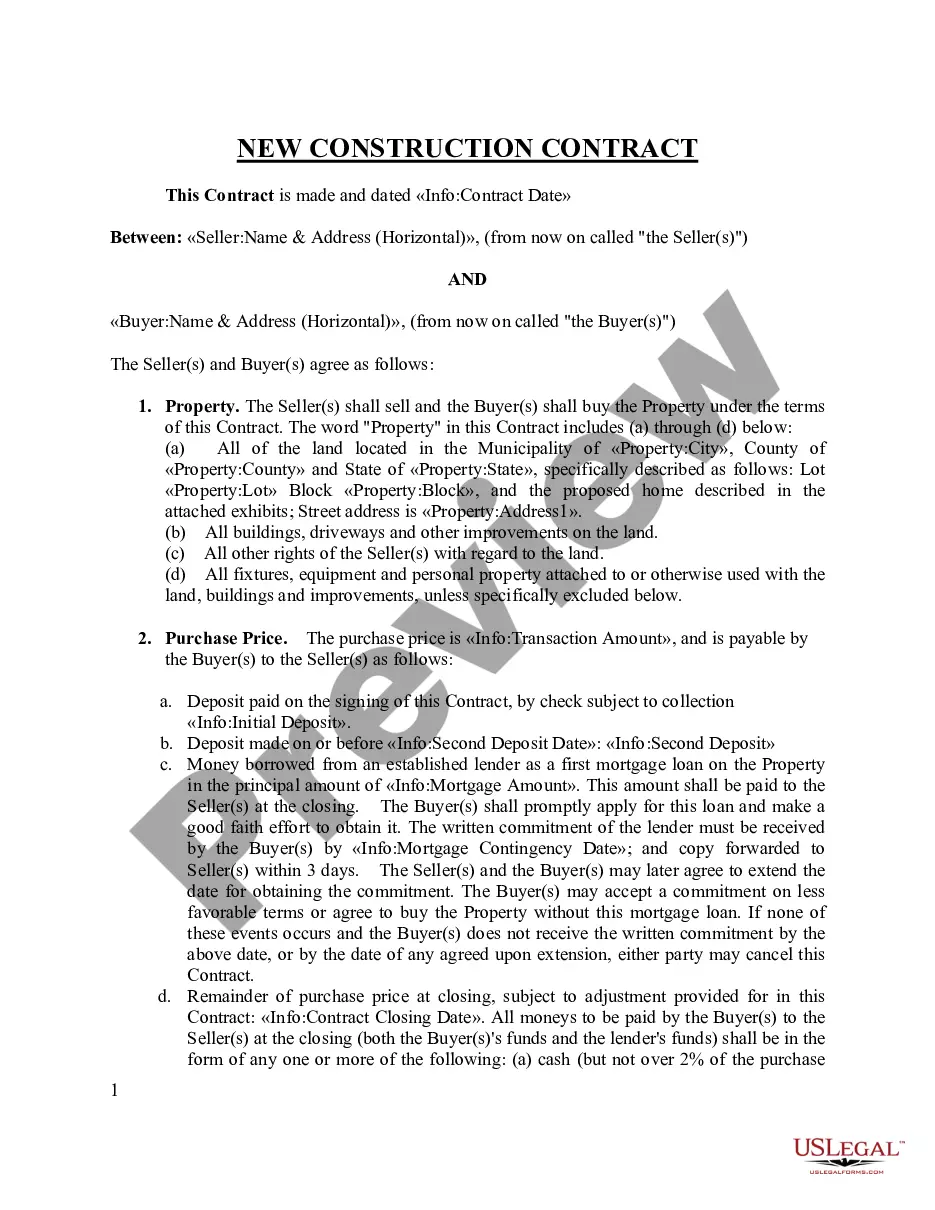
- Assignment: Clarifies that neither party may transfer their rights or obligations under the contract without consent.
- Governing Law: Establishes that the contract is governed by Tennessee law.

Common use cases
This form should be used whenever a property owner hires an HVAC contractor for installation, repair, or maintenance services. It is essential in situations where specific legal protections need to be established regarding the scope of work, payment structure, and liability. The contract is also useful if any changes to the originally agreed-upon work are anticipated during the project.
Who this form is for
- HVAC Contractors interested in formalizing agreements with property owners.
- Property Owners looking to hire licensed HVAC professionals and protect their interests.
- Anyone involved in HVAC projects in Tennessee who seeks clarity on contractual obligations and rights.
Completing this form step by step
- Identify the parties involved: Clearly state the names and contact information of both the contractor and the property owner.
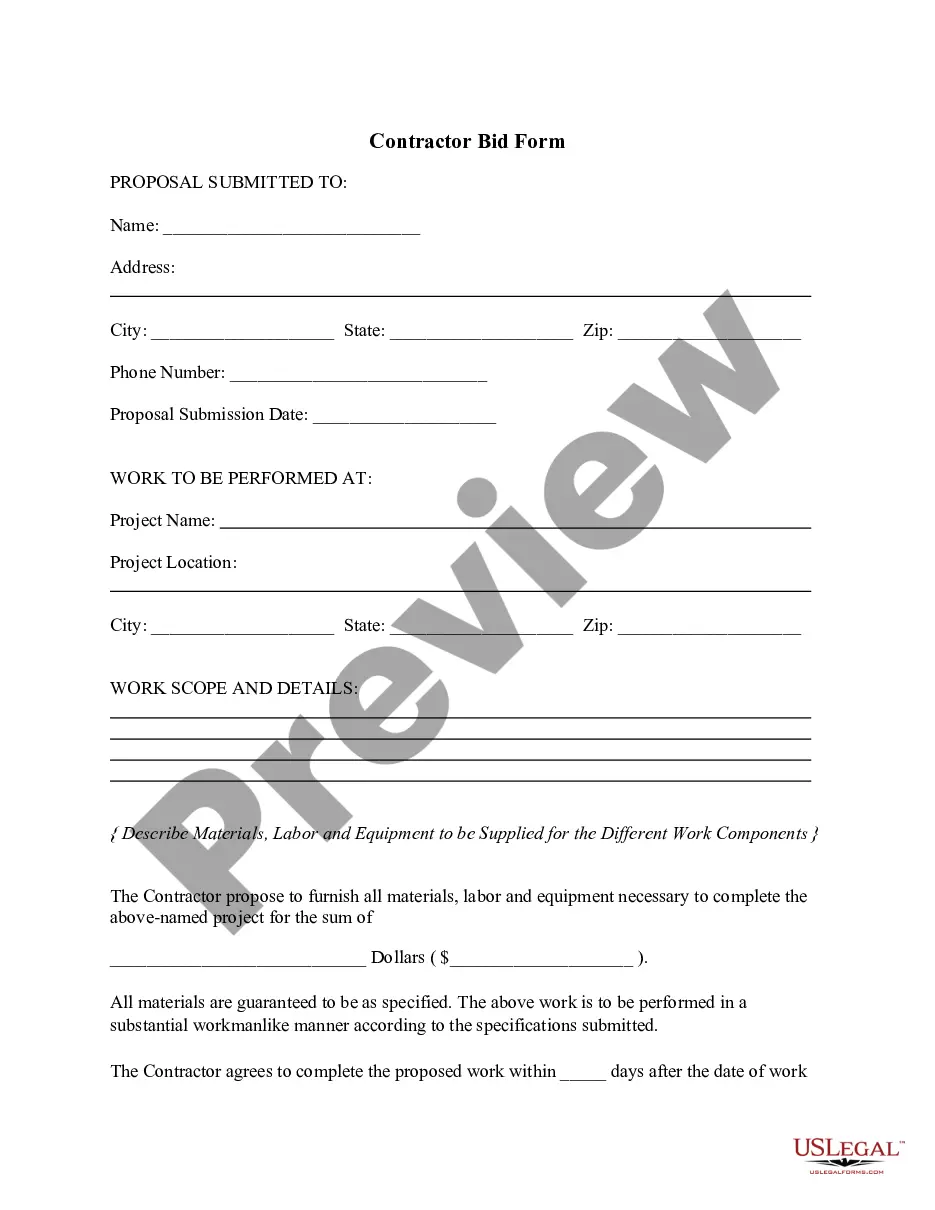
- Specify project details: Include the scope of work and the project's location.
- Determine payment terms: Choose between a cost-plus or fixed fee arrangement and specify any related terms.
- Review insurance and permits: Ensure insurance requirements are met and that permits are outlined and approved.
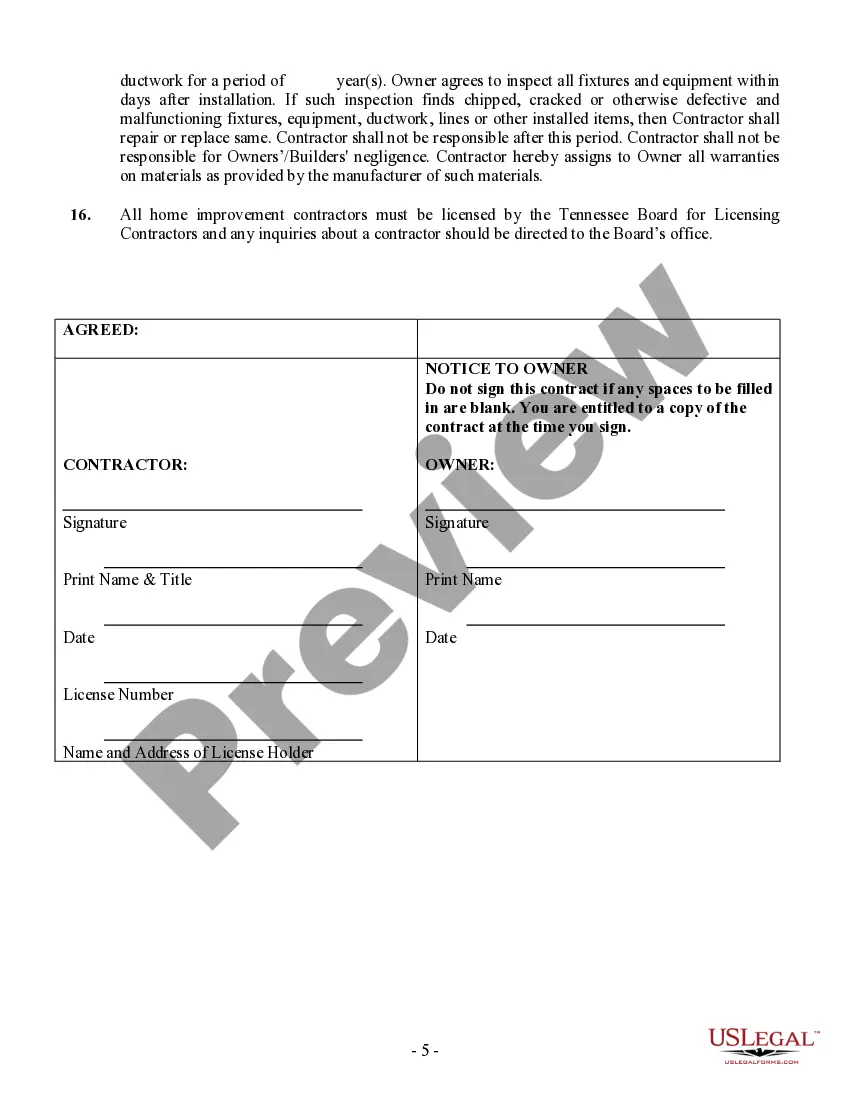
- Sign and date the contract: Both parties must sign the agreement to make it legally binding.
Notarization guidance
This form does not typically require notarization unless specified by local law. However, it is advisable to check local regulations or consult an attorney to ensure all legal requirements are met.
Get your form ready online
Our built-in tools help you complete, sign, share, and store your documents in one place.
Make edits, fill in missing information, and update formatting in US Legal Forms—just like you would in MS Word.
Download a copy, print it, send it by email, or mail it via USPS—whatever works best for your next step.
Sign and collect signatures with our SignNow integration. Send to multiple recipients, set reminders, and more. Go Premium to unlock E-Sign.
If this form requires notarization, complete it online through a secure video call—no need to meet a notary in person or wait for an appointment.
We protect your documents and personal data by following strict security and privacy standards.

Make edits, fill in missing information, and update formatting in US Legal Forms—just like you would in MS Word.

Download a copy, print it, send it by email, or mail it via USPS—whatever works best for your next step.

Sign and collect signatures with our SignNow integration. Send to multiple recipients, set reminders, and more. Go Premium to unlock E-Sign.

If this form requires notarization, complete it online through a secure video call—no need to meet a notary in person or wait for an appointment.

We protect your documents and personal data by following strict security and privacy standards.
Mistakes to watch out for
- Neglecting to specify all project details in the contract.
- Failing to address change order procedures clearly.
- Not keeping copies of all signed agreements for reference.
Advantages of online completion
- Instant download: Access the form immediately after purchase.
- Editability: Easily fill in specific details or modify sections as needed.
- Legal compliance: Crafted by licensed attorneys to comply with state laws.
What to keep in mind
- The HVAC Contract for Contractor is essential for legally formalizing HVAC projects in Tennessee.
- It includes critical components that protect both the contractor and the property owner.
- Properly completing and signing this form can prevent disputes during the project.
- Clear documentation of changes and responsibilities helps ensure project success.
Looking for another form?
Form popularity
FAQ
The average salary for an HVAC technician in Tennessee is around $41,460 per year.
Step 1 (Testing - Exam and Reciprocal Information) All must pass the "Business and Law" exam Step 2 (Financial Statement) Step 3 (Reference Letter and Insurance) Step 4 (Corporations. Step 5 (Application, Signatures, and Notarize) Step 6 (Submit Application & $250 fee)
Pass the official Tennessee HVAC/Refrigeration exam and the Business/Law exam. Provide financial statements to the licensing board. Carry workers' compensation insurance, if hiring employees. Have experience working as an HVAC apprentice. Be at least 18 years old with a high school diploma or GED.
A Tennessee contractor's license is required BEFORE bidding or offering a price, for projects $25,000 and up (includes materials and labor), as a prime (general) contractor; and also subcontractors performing electrical, mechanical, plumbing, HVAC, roofing and masonry are also required to be licensed as a contractor,
Tennessee. A handyman in Tennessee is not required to hold a state license unless the job they are working on is worth more than $25,000. A home improvement license is required for remodeling jobs worth between $3,000 and $24,999.
A homeowner of the residential property may perform work themselves ( individual use), without a contractor's license, as long as the residential structure is not open to the public; or for sale, lease or rent). Allowed one homeowner permit once every two (2) years.
The Home Improvement license is required by law to perform remodeling to existing residential homes, where the cost is more than $3,000 to less than $25,000 ($25,000 and up require a "Contractor's" license).
It is required to repair, replace, remodel, alter, conversion, modernization, improvement, or addition to any land or building, such as, driveways, swimming pools, porches, garages, landscaping, fences, fall-out shelters, roofing, painting and other improvements adjacent to the dwelling (see T.C.A.