Tennessee Fencing Contract for Contractor
What is this form?
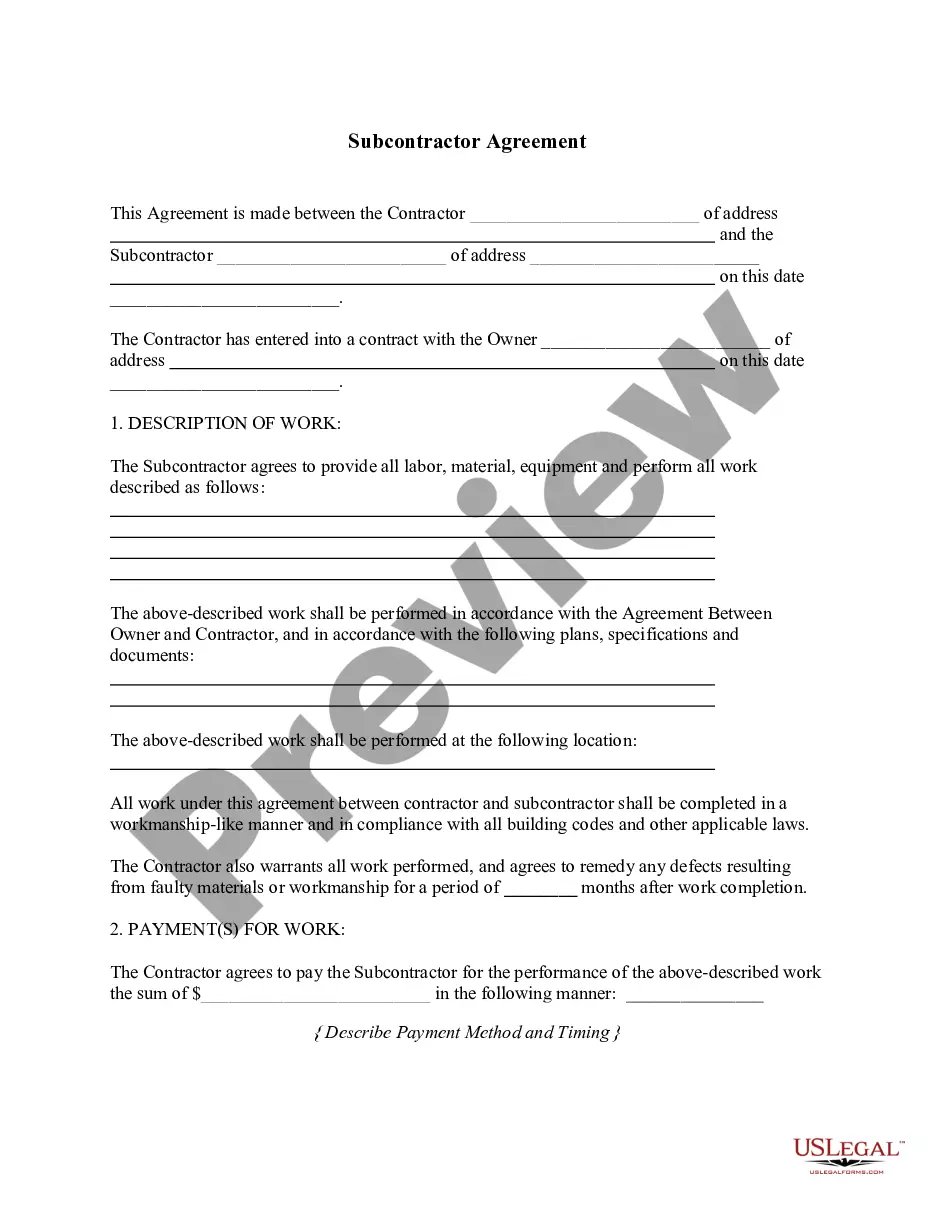
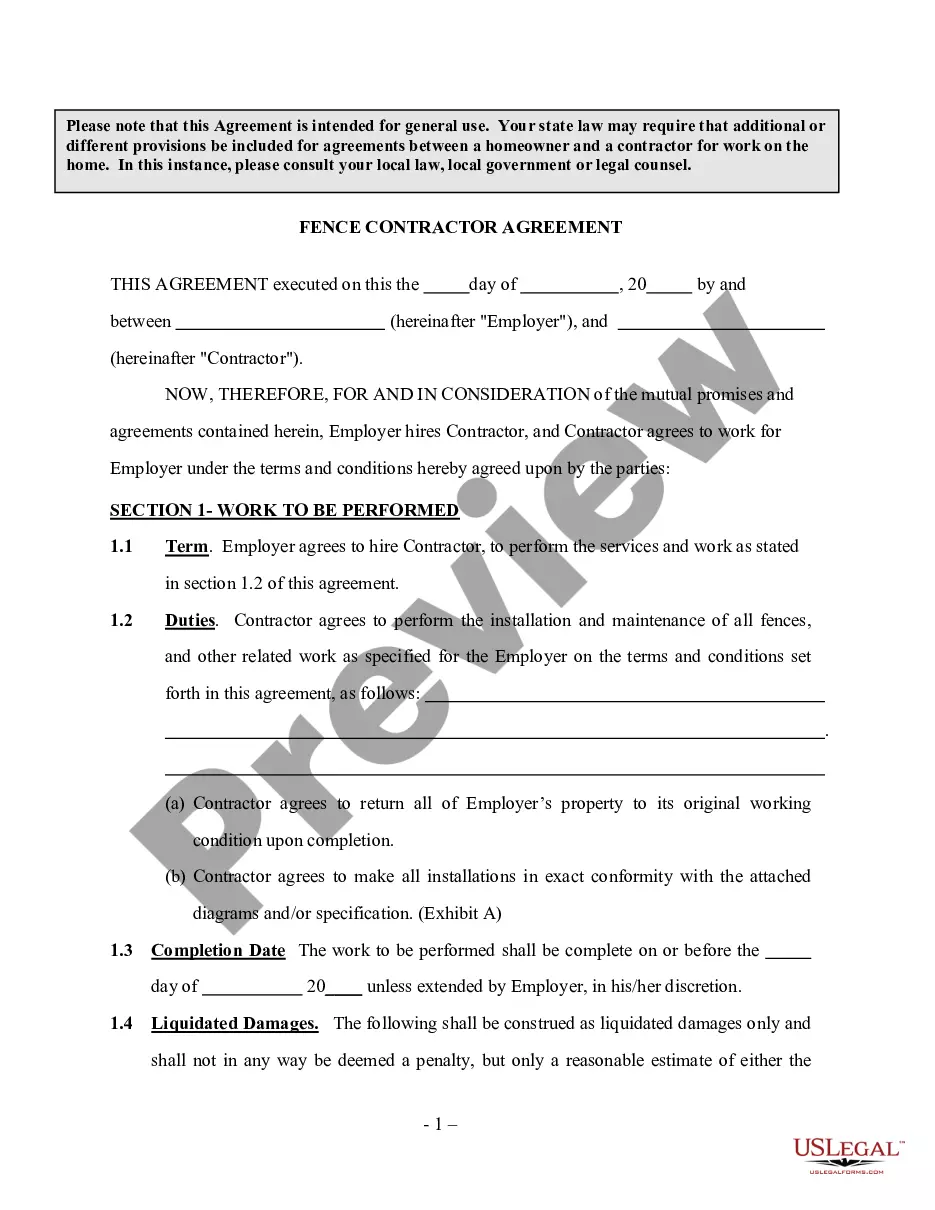
The fencing contract for contractor is a formal agreement between a fencing contractor and a property owner that outlines the terms and conditions of a fencing project. This contract can accommodate either a cost-plus or fixed fee payment arrangement, ensuring clear expectations for both parties. It also covers important aspects such as change orders, work site conditions, warranties, and insurance requirements. This ensures compliance with the legal standards in the State of Tennessee, providing a reliable framework for successful project execution.
Main sections of this form
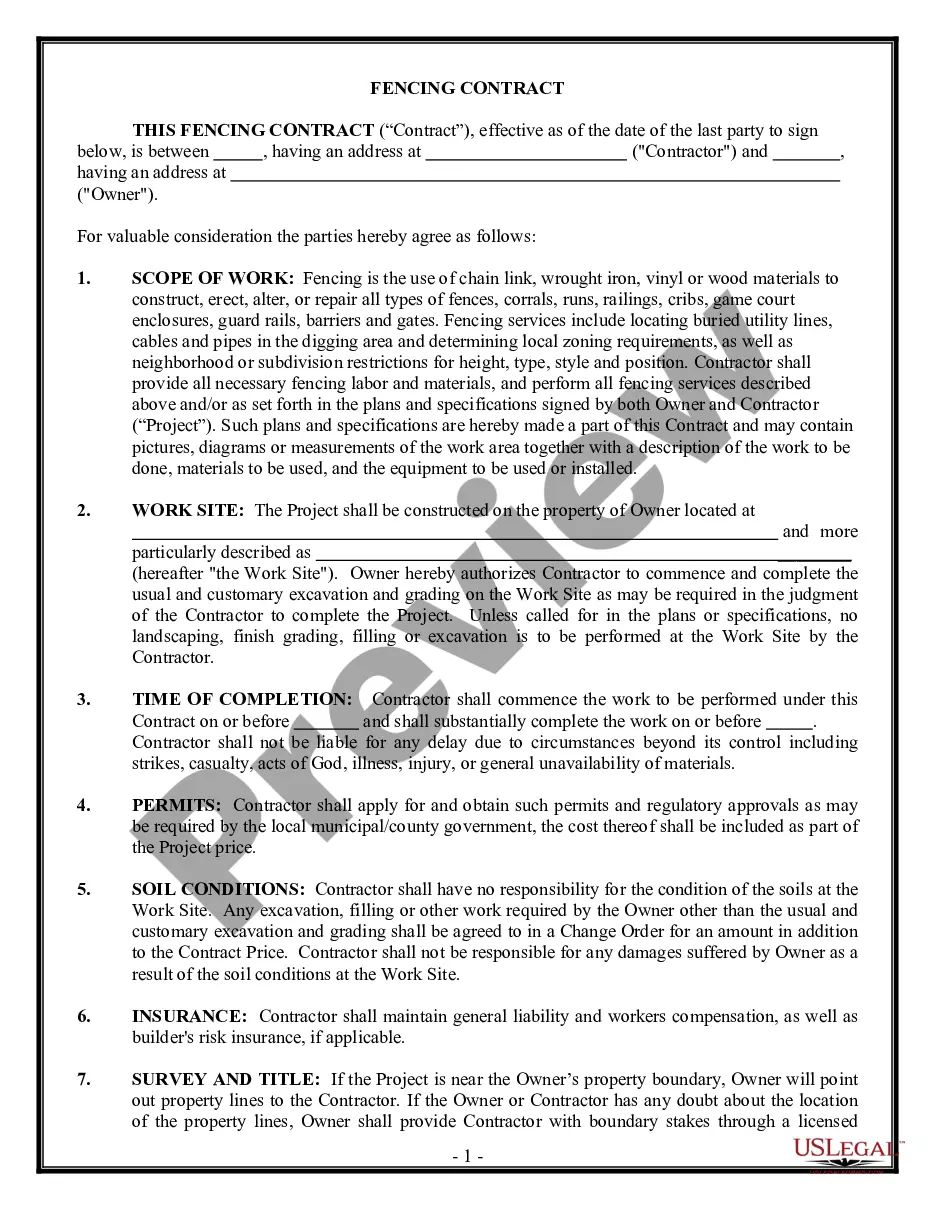
- Work site details and location of the project.
- Permit application responsibilities for the contractor.
- Liability for soil conditions and additional work requirements.
- Insurance obligations for the contractor.
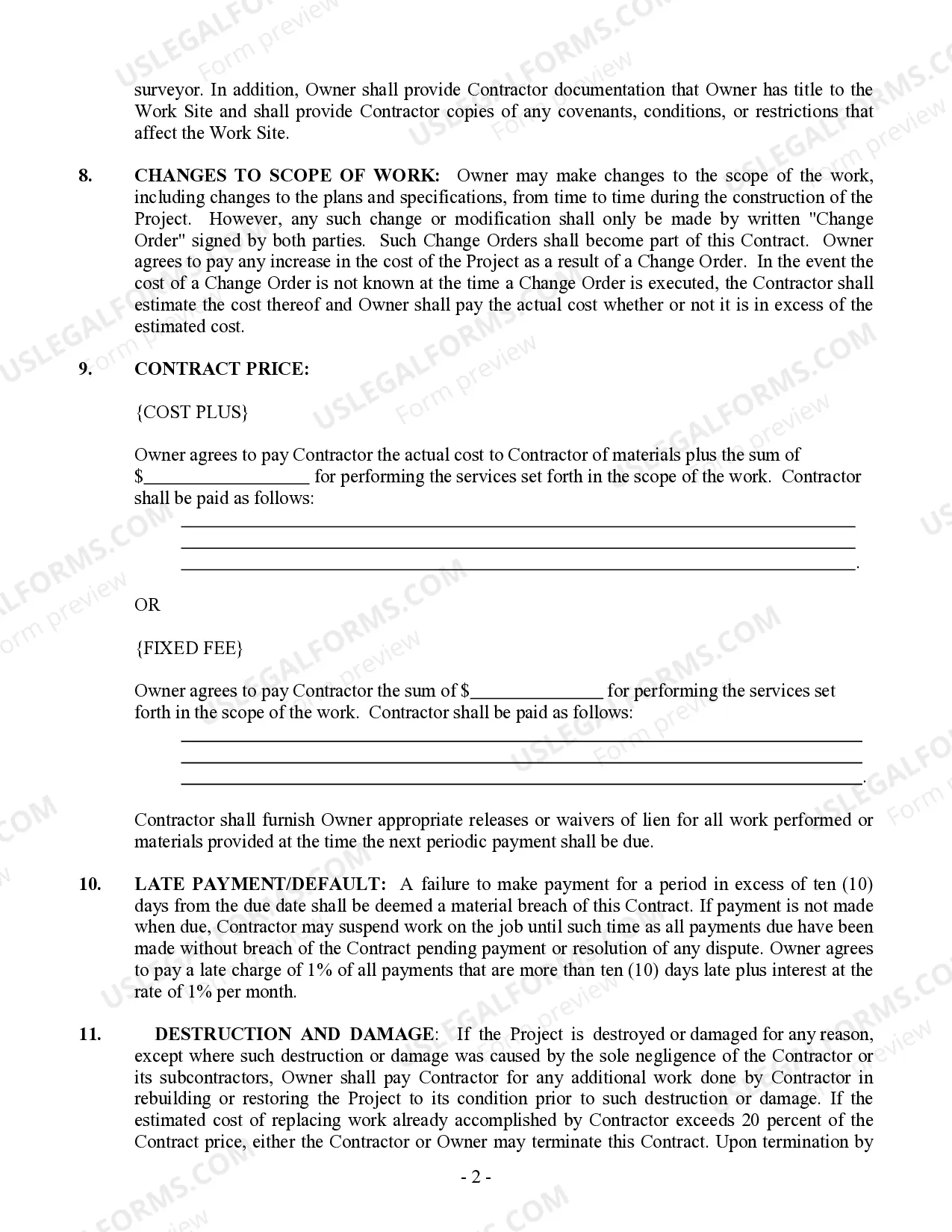
- Agreement on scope changes through written change orders.
- Contract price details, including cost-plus arrangements.
- Consequences of late payments and defaults.
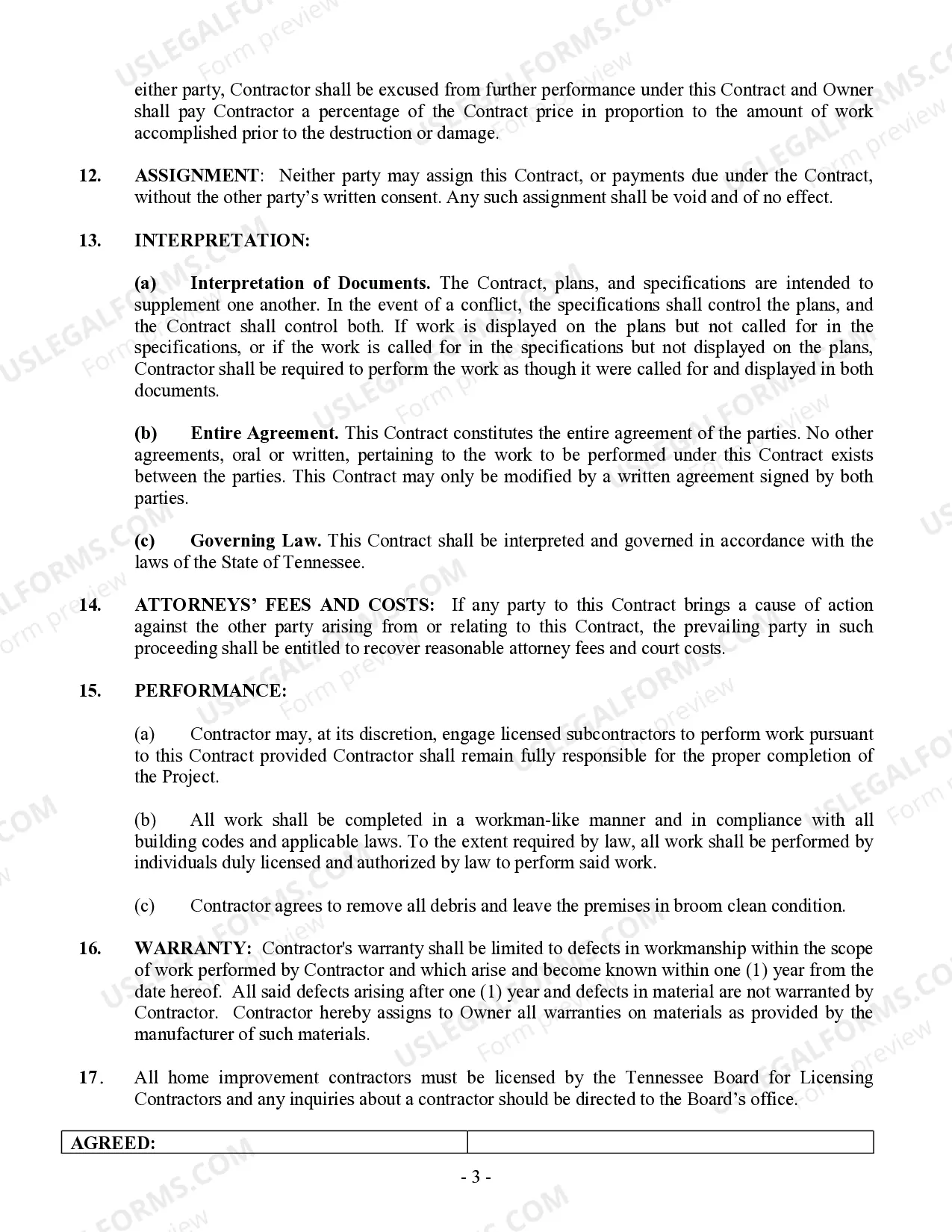
- Warranties on workmanship and materials.

When this form is needed
This form should be used when property owners engage a fencing contractor for new installations, repairs, or enhancements to existing fencing. It is particularly beneficial when project scopes might fluctuate or when specific permits are necessary. Utilize this contract to ensure clarity and legal protection throughout the fencing project.
Who should use this form
- Property owners seeking to hire a fencing contractor.
- Fencing contractors looking to formalize the terms of their projects.
- Individuals or businesses in Tennessee planning fencing installations or repairs.
- Parties needing a clear framework for payment and project scope management.
How to prepare this document
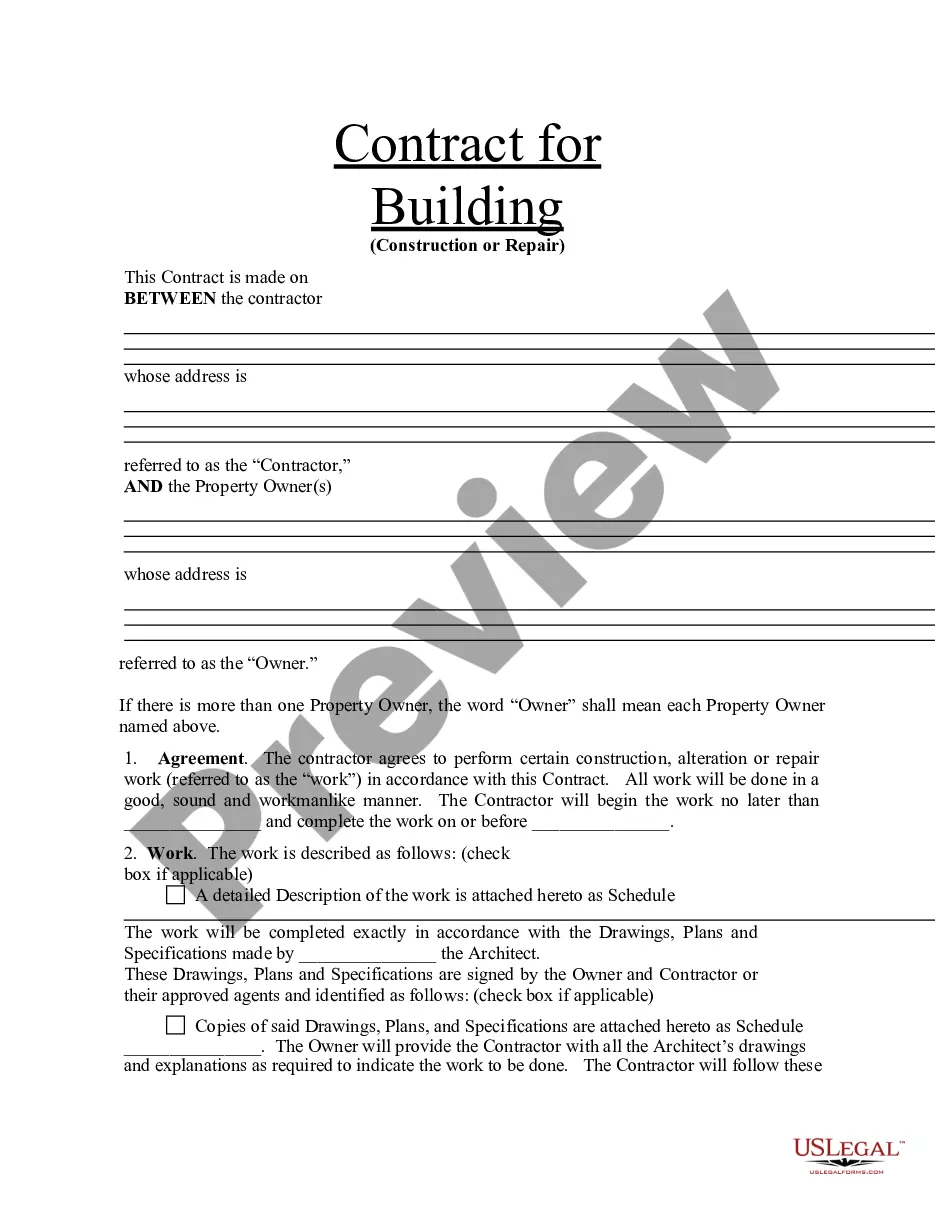
- Identify and list the legal names and addresses of both the contractor and the property owner.
- Specify the work site address where the fencing project will take place.
- Include any necessary permit information and outline responsibilities for obtaining such permits.
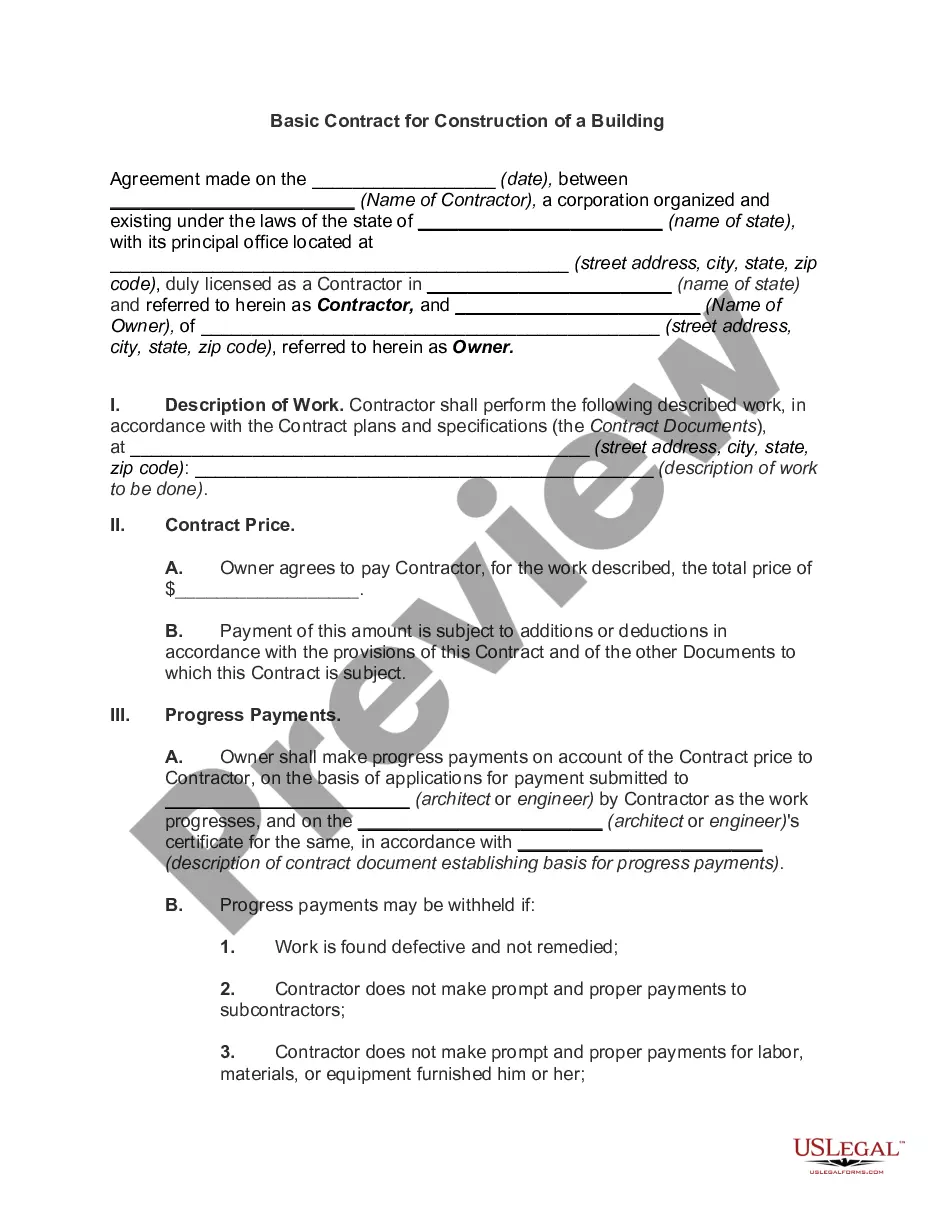
- Detail the contract price and any specific payment arrangements (fixed fee or cost-plus).
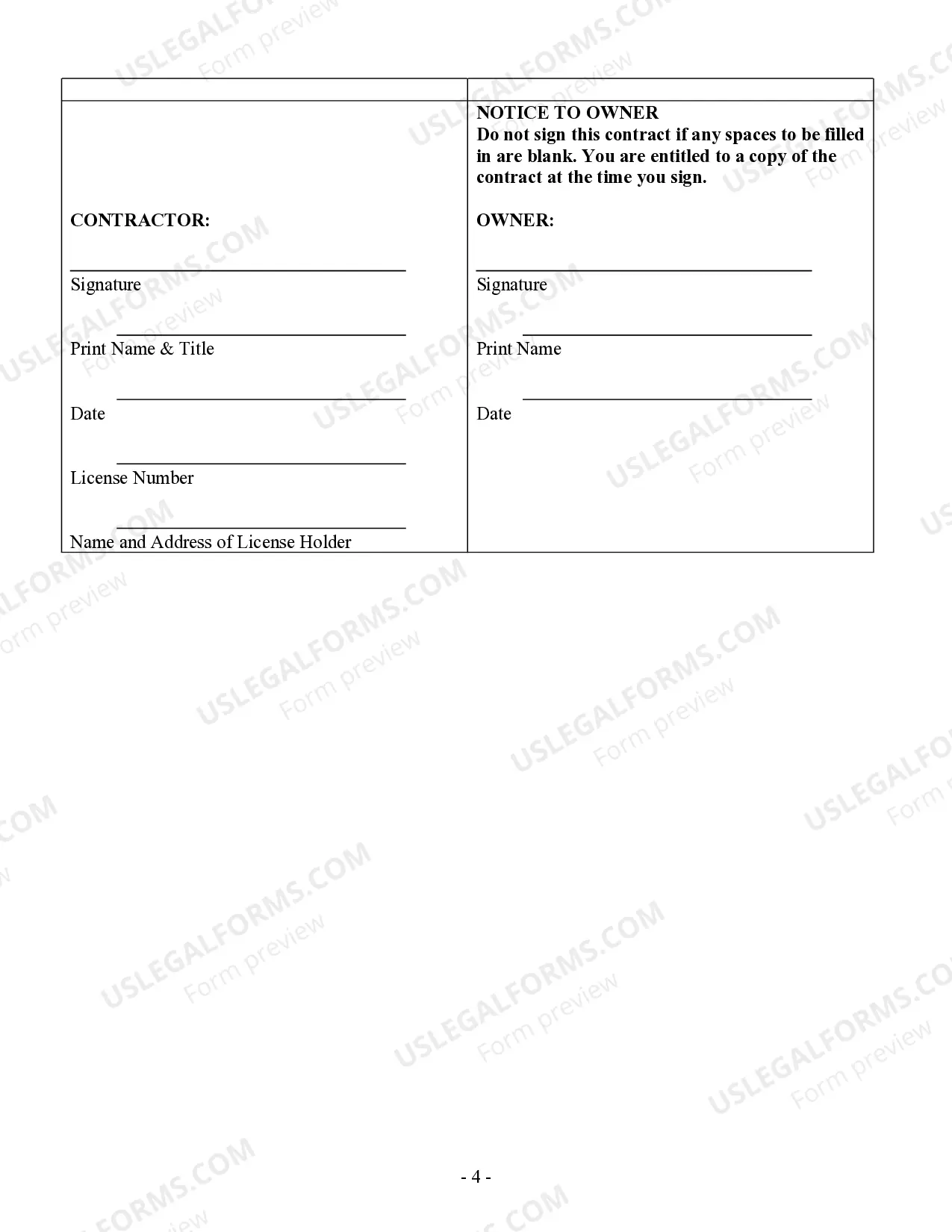
- Ensure signatures are provided from both parties to validate the agreement.
Does this form need to be notarized?
This form does not typically require notarization to be legally valid. However, some jurisdictions or document types may still require it. US Legal Forms provides secure online notarization powered by Notarize, available 24/7 for added convenience.
Get your form ready online
Our built-in tools help you complete, sign, share, and store your documents in one place.
Make edits, fill in missing information, and update formatting in US Legal Forms—just like you would in MS Word.
Download a copy, print it, send it by email, or mail it via USPS—whatever works best for your next step.
Sign and collect signatures with our SignNow integration. Send to multiple recipients, set reminders, and more. Go Premium to unlock E-Sign.
If this form requires notarization, complete it online through a secure video call—no need to meet a notary in person or wait for an appointment.
We protect your documents and personal data by following strict security and privacy standards.

Make edits, fill in missing information, and update formatting in US Legal Forms—just like you would in MS Word.

Download a copy, print it, send it by email, or mail it via USPS—whatever works best for your next step.

Sign and collect signatures with our SignNow integration. Send to multiple recipients, set reminders, and more. Go Premium to unlock E-Sign.

If this form requires notarization, complete it online through a secure video call—no need to meet a notary in person or wait for an appointment.

We protect your documents and personal data by following strict security and privacy standards.
Common mistakes to avoid
- Failing to clearly define the work scope, leading to disputes.
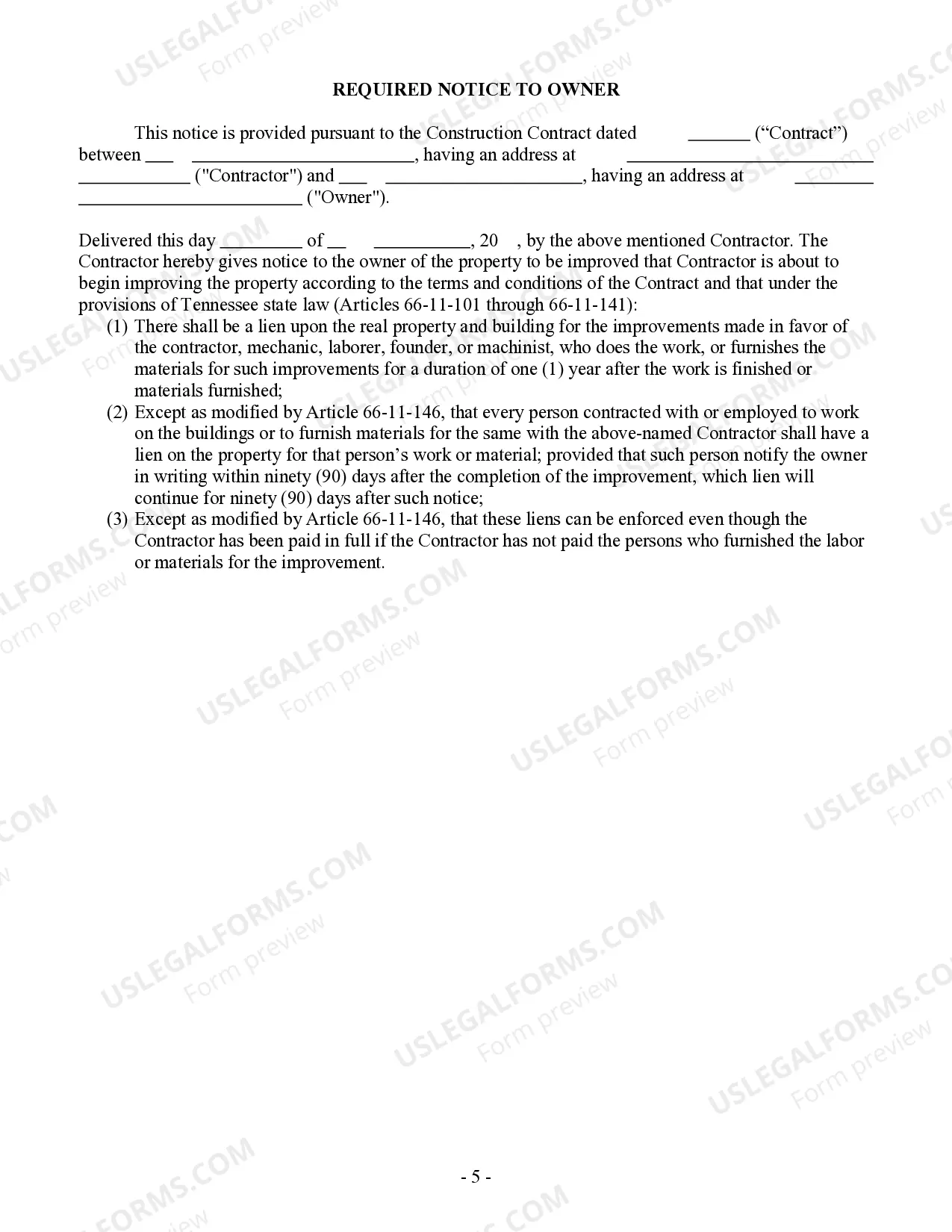
- Not including necessary permits or failing to confirm who is responsible for obtaining them.
- Ignoring insurance requirements, which could expose parties to liability issues.
- Not recording change orders in writing, resulting in misunderstandings.
- Omitting signatures, which invalidates the contract.
Benefits of completing this form online
- Convenient access to the form for immediate download and use.
- Edit and customize the contract to fit your unique project needs.
- Reliability, as the form has been crafted by licensed attorneys to ensure legal compliance.
Legal use & context
- The contract outlines the rights and obligations of both the property owner and the contractor.
- Provides mechanisms for addressing changes to the project and late payments.
- Clear delineation of responsibilities helps prevent conflicts and disputes.
Key takeaways
- This form formalizes the agreement between a fencing contractor and a property owner.
- It is essential for outlining payment terms, responsibilities, and project details.
- The contract is tailored for compliance with Tennessee state laws.
- Ensure all parties understand their obligations to avoid common pitfalls.
Looking for another form?



Form popularity
FAQ
A homeowner of the residential property may perform work themselves ( individual use), without a contractor's license, as long as the residential structure is not open to the public; or for sale, lease or rent). Allowed one homeowner permit once every two (2) years.
A Tennessee contractor's license is required BEFORE bidding or offering a price, for projects $25,000 and up (includes materials and labor), as a prime (general) contractor; and also subcontractors performing electrical, mechanical, plumbing, HVAC, roofing and masonry are also required to be licensed as a contractor,
Make sure the contractor obtains a permit if the job requires one. Ask for a copy of the contractor's license and proof of insurance. Pay by check and get a receipt. Document any changes to the contract in writing.
Tennessee. A handyman in Tennessee is not required to hold a state license unless the job they are working on is worth more than $25,000. A home improvement license is required for remodeling jobs worth between $3,000 and $24,999.
The Home Improvement license is required by law to perform remodeling to existing residential homes, where the cost is more than $3,000 to less than $25,000 ($25,000 and up require a "Contractor's" license).
Step 1 (Testing - Exam and Reciprocal Information) All must pass the "Business and Law" exam Step 2 (Financial Statement) Step 3 (Reference Letter and Insurance) Step 4 (Corporations. Step 5 (Application, Signatures, and Notarize) Step 6 (Submit Application & $250 fee)
It is required to repair, replace, remodel, alter, conversion, modernization, improvement, or addition to any land or building, such as, driveways, swimming pools, porches, garages, landscaping, fences, fall-out shelters, roofing, painting and other improvements adjacent to the dwelling (see T.C.A.