South Dakota Limited Power of Attorney for Stock Transactions and Corporate Powers
What this document covers
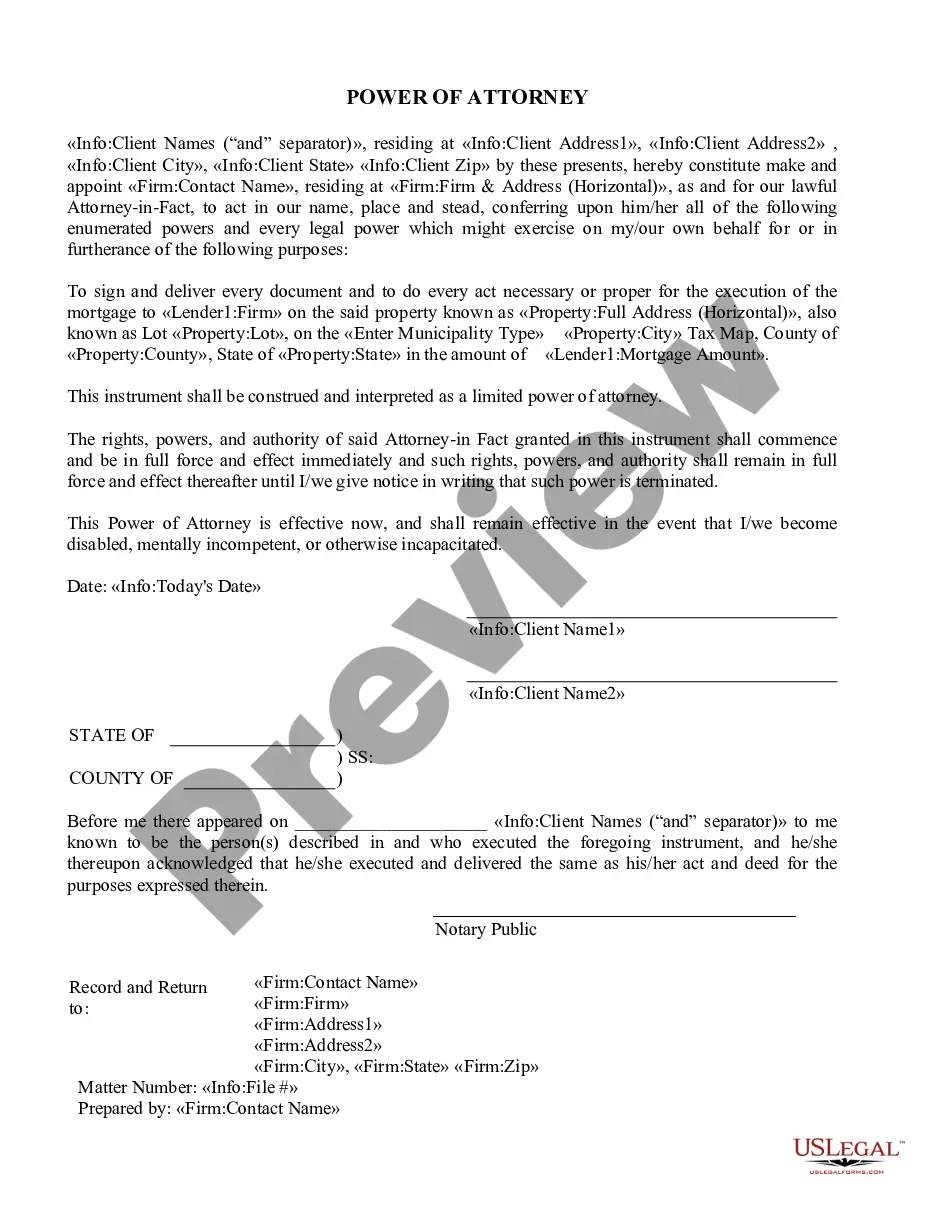
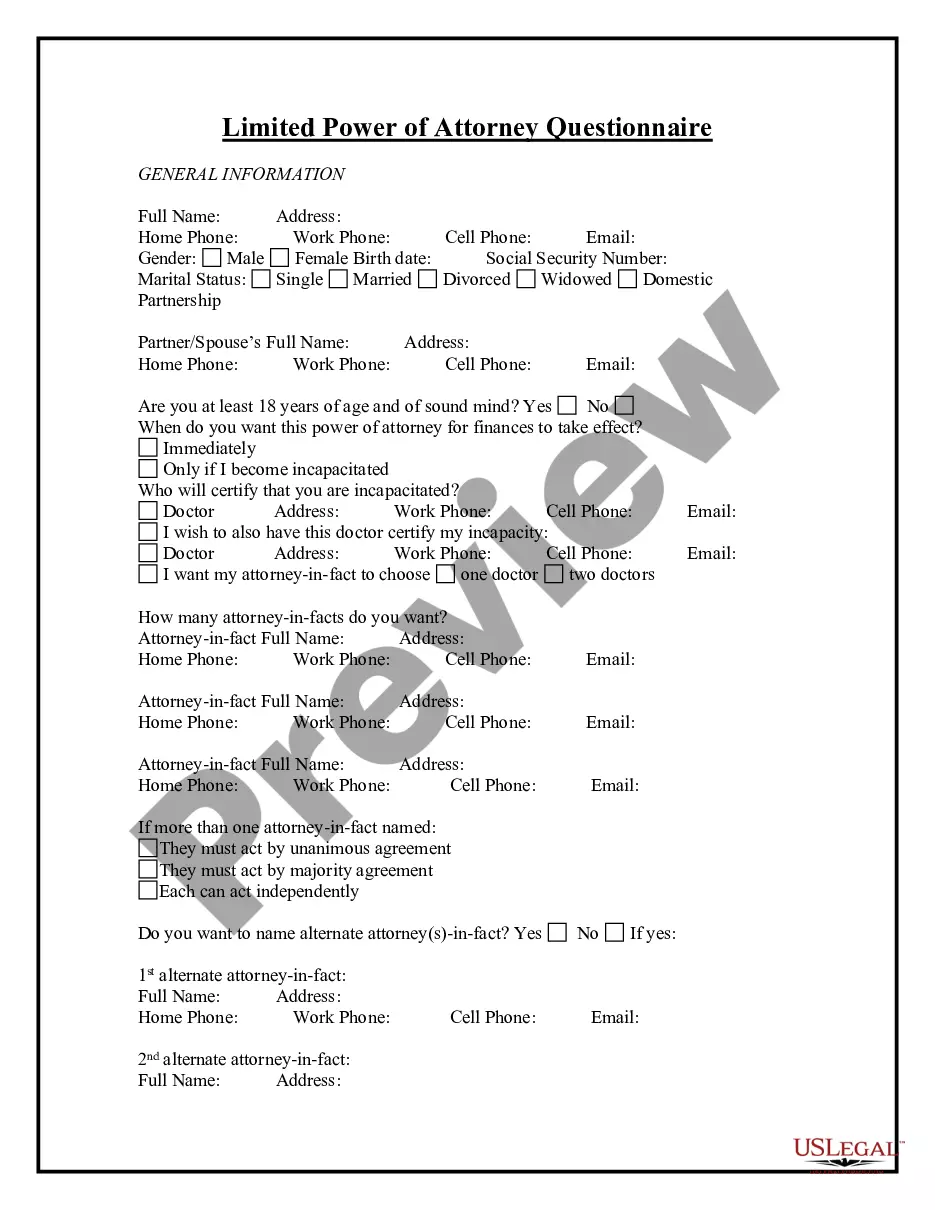
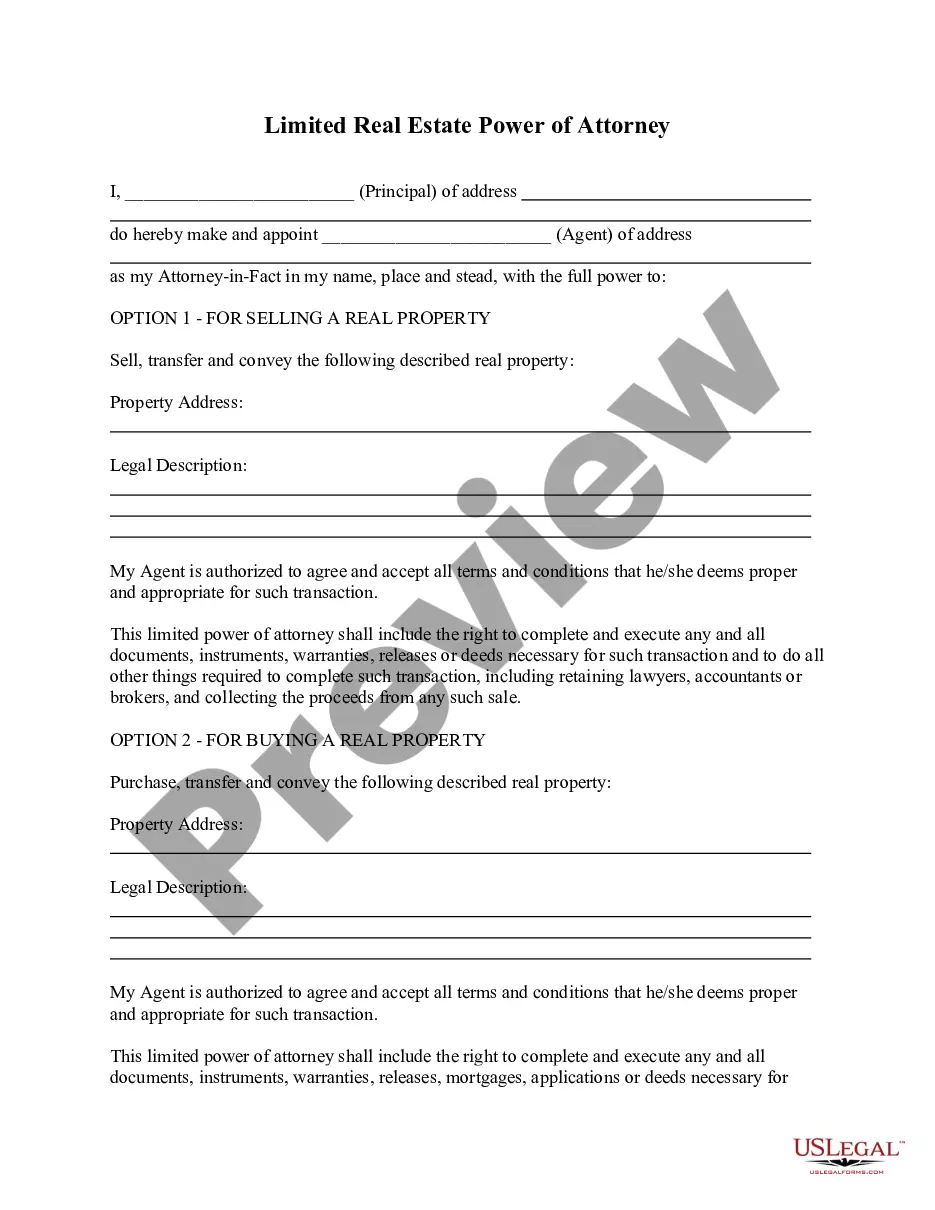
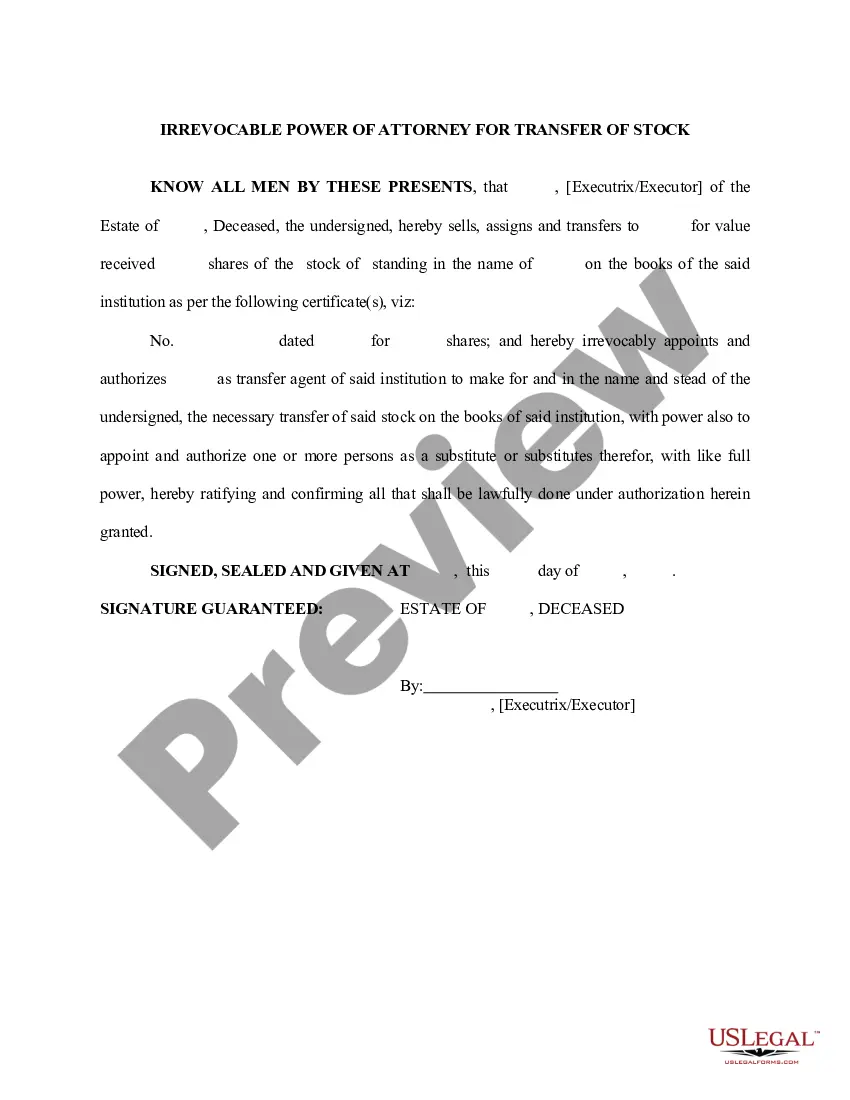
The Limited Power of Attorney for Stock Transactions and Corporate Powers is a legal document that grants an individual the authority to manage stock transactions and corporate powers on behalf of another person. Unlike a general power of attorney, this form is specifically tailored for stock-related matters, enabling a shareholder to authorize a trusted person to vote shares and perform corporate duties without needing further approval. This document is essential for those wishing to delegate these specific financial responsibilities while maintaining control over other aspects of their legal interests.
Form components explained
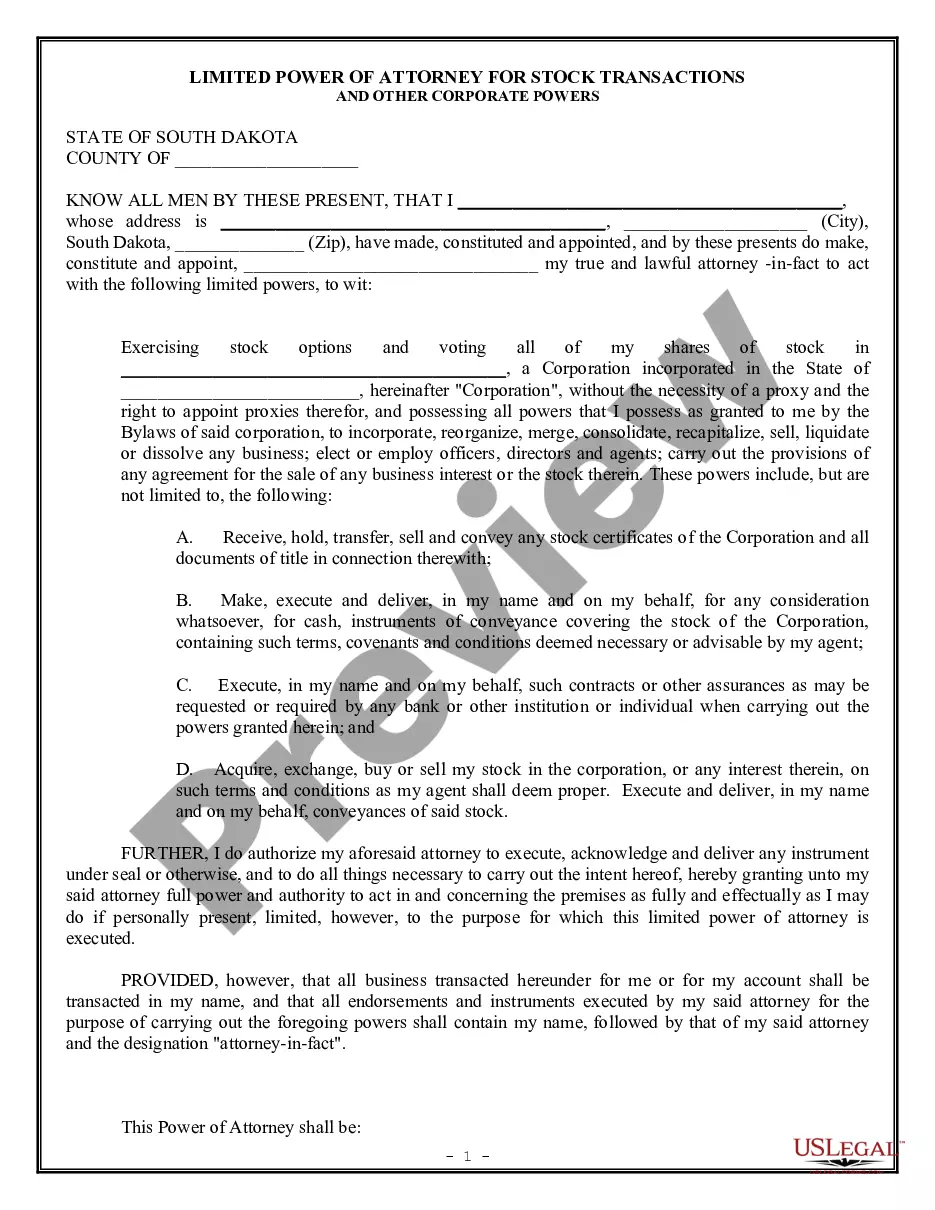
- Principal Information: Personal details of the shareholder granting the power of attorney.
- Attorney-in-Fact Designation: Identification of the individual who will act on behalf of the principal.
- Powers Granted: Specific authorities related to stock transactions and corporate decisions.
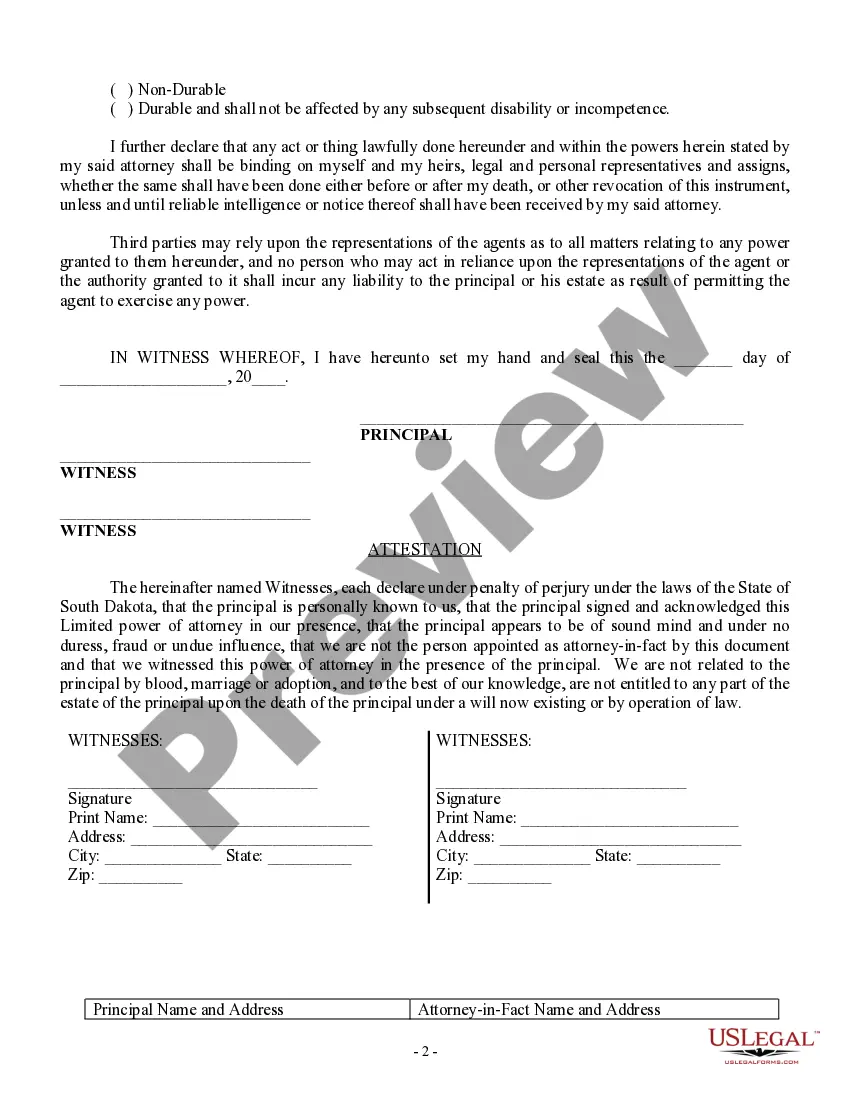
- Signatures: Required signatures of the principal and two witnesses.
- Durability Clause: Option to indicate if the power of attorney is durable or non-durable.

Common use cases
This form is useful when a shareholder needs to delegate their authority to manage stock transactions and make corporate decisions temporarily or during their absence. Common scenarios include situations where the shareholder is unable to attend a corporate meeting or wishes to empower someone to handle stock sales and purchases, participate in corporate voting, or manage specific corporate activities while they are away or unable to act personally.
Who should use this form
This form is suitable for:
- Shareholders looking to empower someone to manage their stock transactions.
- Individuals involved in corporate governance seeking to delegate specific powers.
- Those who require assistance in handling stock-related matters due to absence or incapacity.
How to prepare this document
- Identify the principal by entering their full name and address at the top of the form.
- Specify the name of the attorney-in-fact who will be authorized to act on behalf of the principal.
- Clearly outline the powers being granted related to stock transactions and corporate governance.
- Have the principal sign the document in the presence of two witnesses, who must also sign the form.
- Decide whether the power is durable or non-durable and indicate this on the form.
Notarization requirements for this form
This form does not typically require notarization unless specified by local law. However, it does need to be witnessed to ensure its legal validity. Be sure to check any specific requirements that may vary by state or corporate bylaws.
Get your form ready online
Our built-in tools help you complete, sign, share, and store your documents in one place.
Make edits, fill in missing information, and update formatting in US Legal Forms—just like you would in MS Word.
Download a copy, print it, send it by email, or mail it via USPS—whatever works best for your next step.
Sign and collect signatures with our SignNow integration. Send to multiple recipients, set reminders, and more. Go Premium to unlock E-Sign.
If this form requires notarization, complete it online through a secure video call—no need to meet a notary in person or wait for an appointment.
We protect your documents and personal data by following strict security and privacy standards.

Make edits, fill in missing information, and update formatting in US Legal Forms—just like you would in MS Word.

Download a copy, print it, send it by email, or mail it via USPS—whatever works best for your next step.

Sign and collect signatures with our SignNow integration. Send to multiple recipients, set reminders, and more. Go Premium to unlock E-Sign.

If this form requires notarization, complete it online through a secure video call—no need to meet a notary in person or wait for an appointment.

We protect your documents and personal data by following strict security and privacy standards.
Avoid these common issues
- Failing to have the document signed in front of two witnesses.
- Not clearly specifying the powers being granted, which can lead to ambiguity.
- Neglecting to indicate whether the power of attorney is durable or non-durable.
Why use this form online
- Convenient access to downloadable templates that can be filled out at home.
- Editability allows users to customize the form to fit their specific needs easily.
- Reliability, as the forms are drafted by licensed attorneys to meet legal standards.
Legal use & context
- This form grants limited authority, ensuring that the attorney-in-fact can only act within the powers specified.
- It is legally binding and can be enforced as long as the principal has not revoked it.
- It protects the interests of both the principal and the attorney-in-fact when executing stock transactions.
Quick recap
- The Limited Power of Attorney for Stock Transactions is essential for shareholders who need to delegate authority for stock-related decisions.
- This form must be signed by the principal and two witnesses to be legally valid in South Dakota.
- Understand whether you need a durable or non-durable designation before completing the form.
Looking for another form?
Form popularity
FAQ
If the agent is acting improperly, family members can file a petition in court challenging the agent. If the court finds the agent is not acting in the principal's best interest, the court can revoke the power of attorney and appoint a guardian. The power of attorney ends at death.
Limited Power of Attorney (LPOA) is an authorization that permits a portfolio manager to perform specific functions on behalf of the account owner. In general, the LPOA allows the manager to execute an agreed-upon investment strategy and take care of routine related business without contacting the account holder.
A limited power of attorney grants the representative that you choose (the agent or attorney-in-fact) the power to act on your behalf under limited circumstances.Under a general power of attorney, the agent or attorney-in-fact can do anything that you can do.
The biggest limitation on a power of attorney is that it can only be signed when the principal is of sound mind.If the principal is unable to make decisions, the principal's family will need to go to court to become a court appointed guardian before they can make financial or medical decisions.
Can the Power of Attorney be used by the agent to take my money or property without my permission? Unfortunately, you can run the risk that the agent you choose to give your Power of Attorney could abuse the power by spending your money or taking your money without your knowledge or worse without your permission.
Signing Requirements: No specific signing requirement; however, it is suggested that the document be notarized. Tax Power of Attorney (Form RV-071) Used when you wish to appoint another to take care of your tax issues in front of the tax authority, such as to obtain information and make filings, etc.
When you give someone the POA, there are important limitations to the power the agent has. First, your agent must make decisions within the terms of the legal document and can't make decisions that break the agreement, and the agent can be held liable for any fraud or negligence.