South Dakota Salary Verification form for Potential Lease
About this form
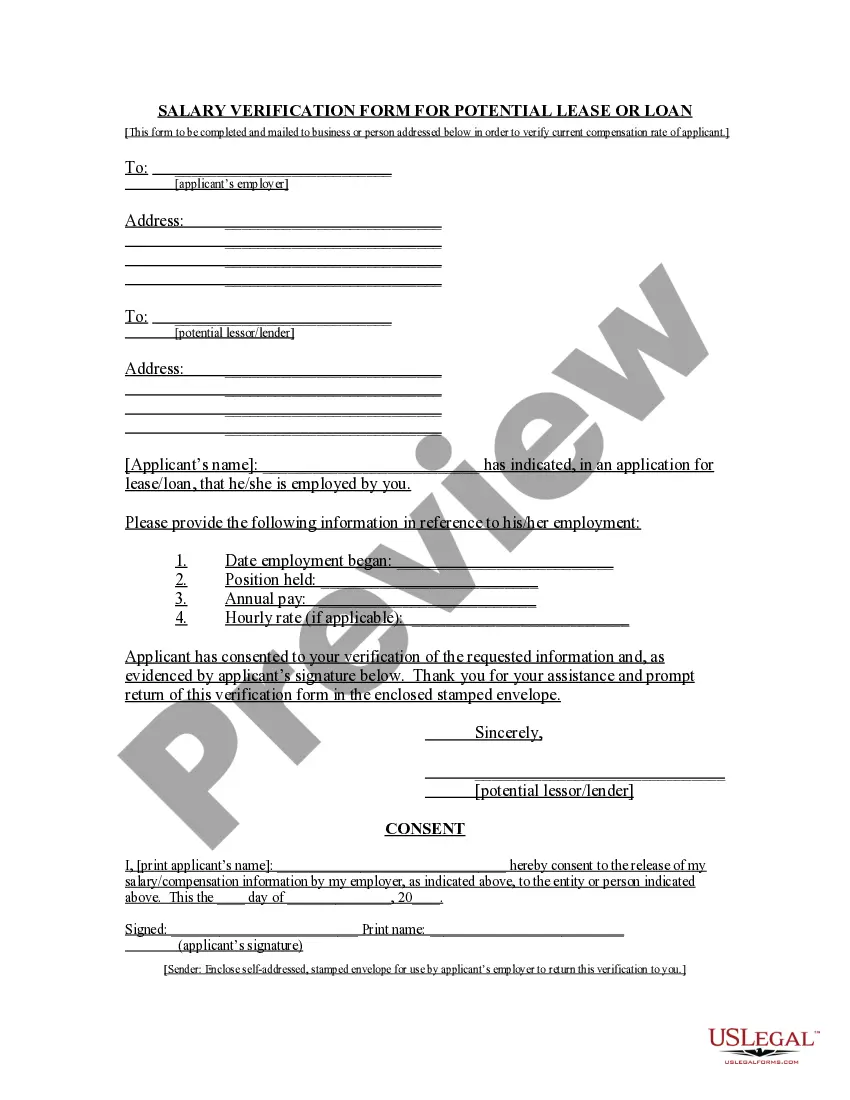
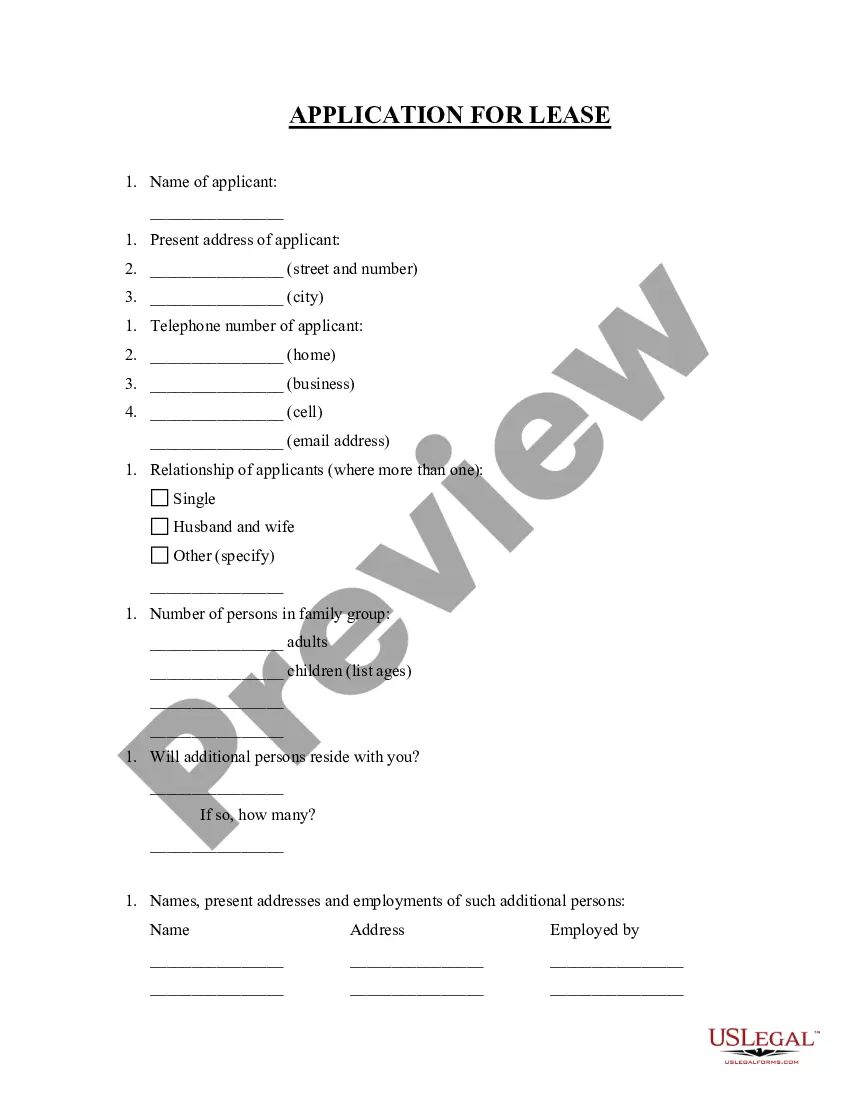
The Salary Verification form for Potential Lease is a document used by landlords to confirm a prospective tenant's income as stated in their lease application. This form serves a crucial role in ensuring the applicant's financial suitability for the rental property, helping landlords make informed decisions. Unlike general income verification documents, this form specifically addresses the context of leasing and is paired with a Tenant Consent Form to authorize the employer's release of information.
Key parts of this document
- Employer details: Space to enter the name of the applicant's employer.
- Employment information: Sections to provide the date employment began and the applicant's position held.
- Compensation details: Fields for annual pay and hourly rate, if applicable.
- Applicant's consent: An area for the applicant to sign, indicating their permission for the employer to release income information.
- Return instructions: Reminder to provide a self-addressed, stamped envelope for easy return of the verification.

When to use this form
This form is used by landlords when they need to verify the claimed income of prospective tenants as part of the lease application process. It should be sent to the tenant's employer when a rental application is under review and the landlord seeks additional assurance of the applicant's financial stability.
Who this form is for
- Landlords and property managers who are assessing tenant applications.
- Employers who are asked to confirm the income of their employees.
- Prospective tenants who are applying for a lease and need to authorize income verification.
Steps to complete this form
- Identify the employer: Provide the name and contact details of the applicant's employer.
- Fill in employment details: Include the start date of employment and title of the position held.
- Enter compensation: Specify the applicant's annual income and hourly wage if relevant.
- Obtain applicant's consent: Ensure the applicant signs the consent section to authorize the release of their salary information.
- Mail the form: Include a self-addressed, stamped envelope for the employer's convenience in returning the completed verification.
Does this form need to be notarized?
This form usually doesn’t need to be notarized. However, local laws or specific transactions may require it. Our online notarization service, powered by Notarize, lets you complete it remotely through a secure video session, available 24/7.
Get your form ready online
Our built-in tools help you complete, sign, share, and store your documents in one place.
Make edits, fill in missing information, and update formatting in US Legal Forms—just like you would in MS Word.
Download a copy, print it, send it by email, or mail it via USPS—whatever works best for your next step.
Sign and collect signatures with our SignNow integration. Send to multiple recipients, set reminders, and more. Go Premium to unlock E-Sign.
If this form requires notarization, complete it online through a secure video call—no need to meet a notary in person or wait for an appointment.
We protect your documents and personal data by following strict security and privacy standards.
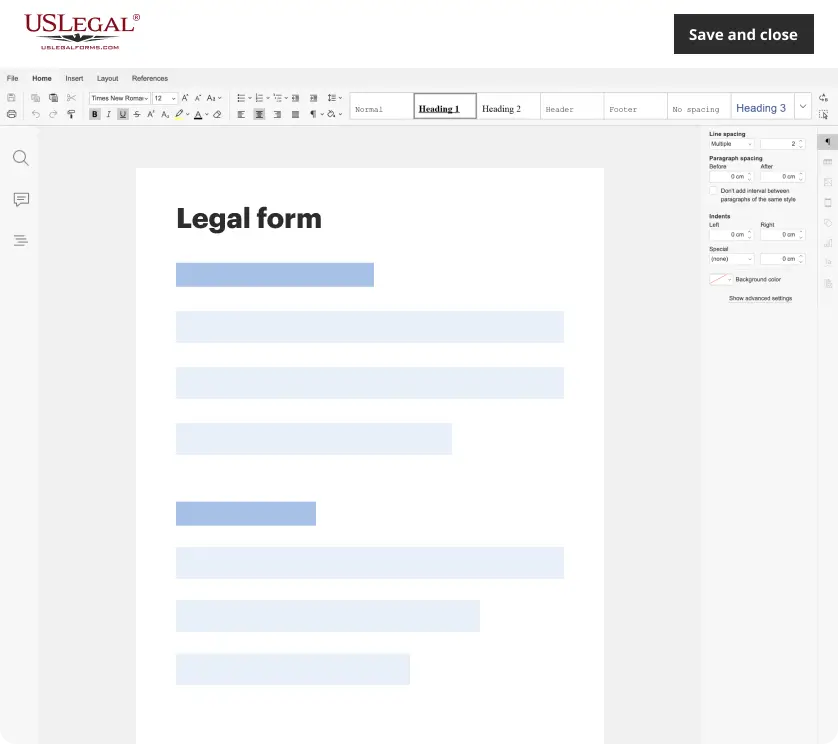
Make edits, fill in missing information, and update formatting in US Legal Forms—just like you would in MS Word.
Download a copy, print it, send it by email, or mail it via USPS—whatever works best for your next step.
Sign and collect signatures with our SignNow integration. Send to multiple recipients, set reminders, and more. Go Premium to unlock E-Sign.
If this form requires notarization, complete it online through a secure video call—no need to meet a notary in person or wait for an appointment.
We protect your documents and personal data by following strict security and privacy standards.
Avoid these common issues
- Failing to include the applicant's consent signature.
- Not providing complete employer details, which may delay the verification process.
- Leaving compensation fields blank or incorrectly filled.
Advantages of online completion
- Convenience: Download and customize the form at your own pace.
- Editability: Easily make adjustments to fields as needed before sending.
- Reliability: Forms are drafted by licensed attorneys, ensuring compliance with legal standards.
Looking for another form?

Form popularity
FAQ
The tenant should fill his original name with father name, permanent address, and other essential information in the given form. It verifies a tenant and makes it easy for the landlord to involve the police in case of a dispute.
Typically, your letter should state the person's full name, relation to you, and the confirmation that he or she lives with you. Since a letter of this kind will also require you to prove that the person you are writing it for is self-sufficient, you may need to prove that he or she helps pay bills as well.
The first sentence should explain who is writing the letter and why. It should also give the name of the tenant, so the purpose of the letter is clear. The writer may be a property manager or the owner of the property. The landlord can include, if applicable, a statement on the character of the tenant.
State the purpose of the letter. In the first paragraph, explain that you are writing to verify that the tenants live on your property. Also include the address where they live. For example, you can write, I am writing to confirm that Mr.
To whomsoever it may concern, I, Priya Kumar, certify that I presently live at (complete address). I am living at this address since last three years. I am writing this letter to formally verify my address proof.
Lease verification is a process of ensuring the negotiated terms of a company's commercial premises lease are accurately reflected in the rental billings received from its landlord. Rent, for most businesses, is the second highest expense after labour.
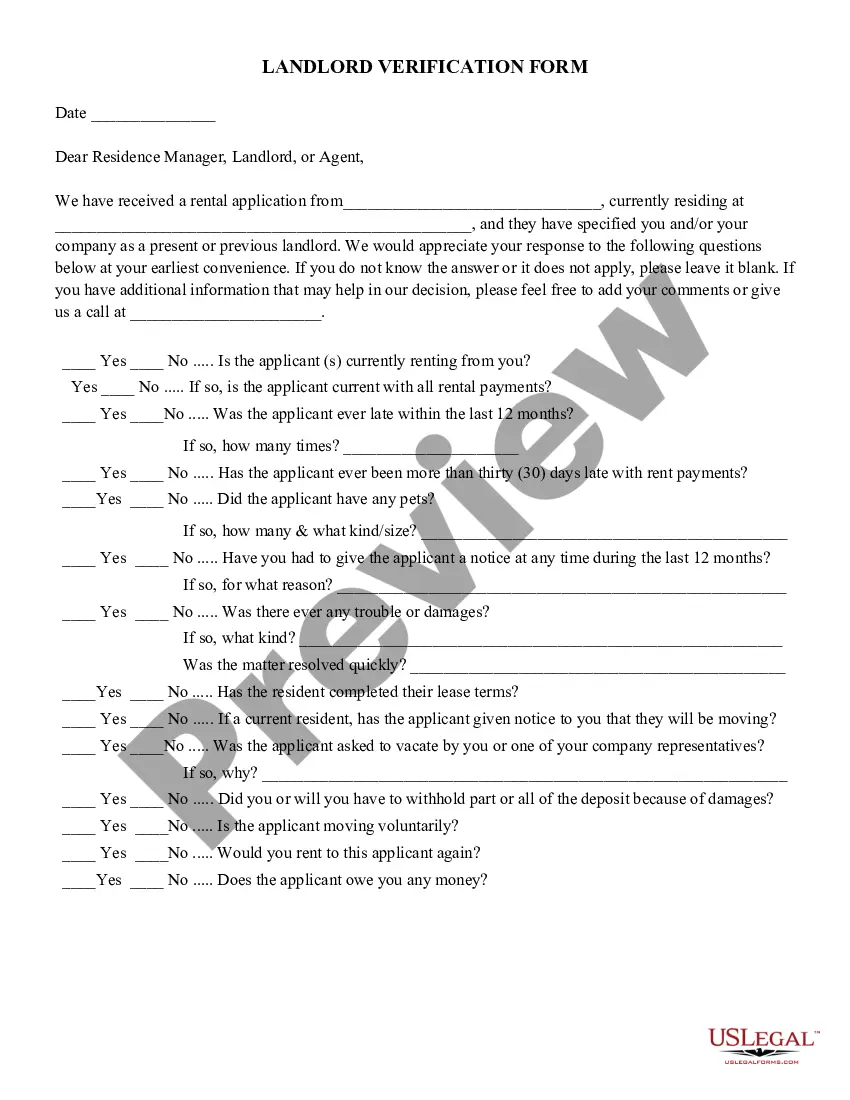
The landlord verification form is a document used by a landlord when verifying the previous rental information of an applicant for tenancy. The requesting landlord must send the form to the applicant's current or past landlord in order to obtain all details related to the tenancy of the individual.