South Dakota Lien Statement by Corporation
What is this form?
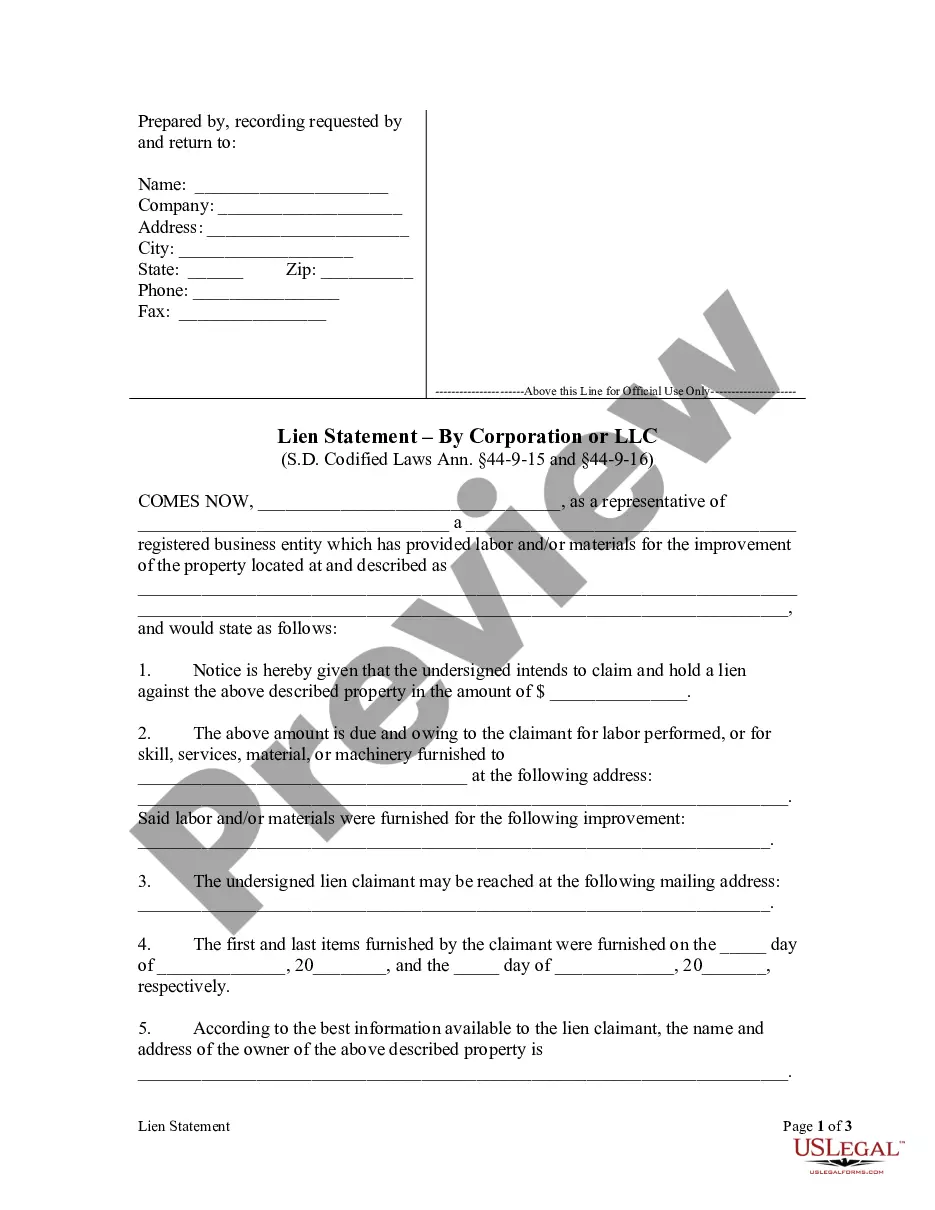
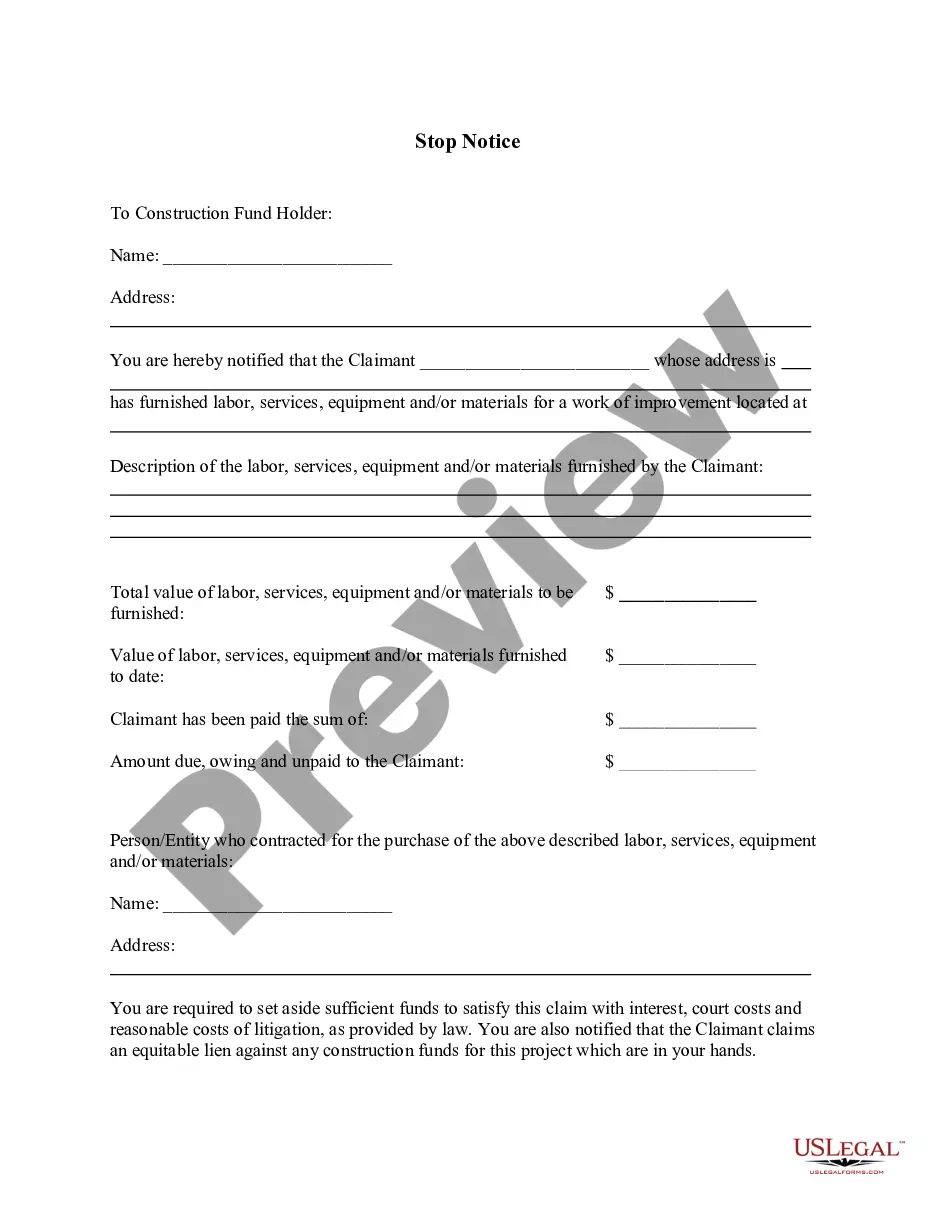
The Lien Statement by Corporation is a legal document used by corporations to assert a lien against a property for unpaid work or materials provided. This form ensures that the lien claim is officially recorded and helps protect the corporation's right to receive payment. It stands out from similar forms by being specifically structured for corporate entities, incorporating detailed information about the claim and the property involved.
Key components of this form
- Name and contact information of the corporation filing the lien.
- Description of the property for which the lien is being claimed.
- Amount due for labor or materials provided to improve the property.
- Dates of service indicating when work was started and completed.
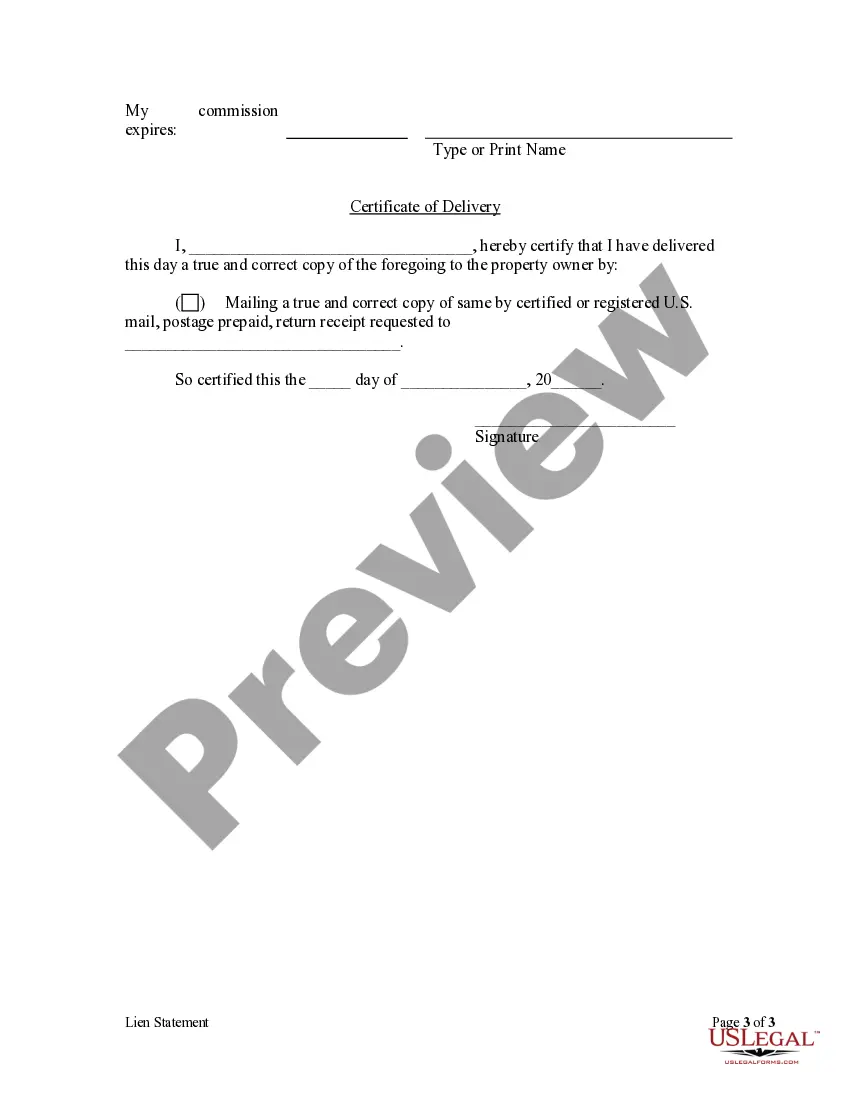
- Ownerâs name and address to ensure proper notification.
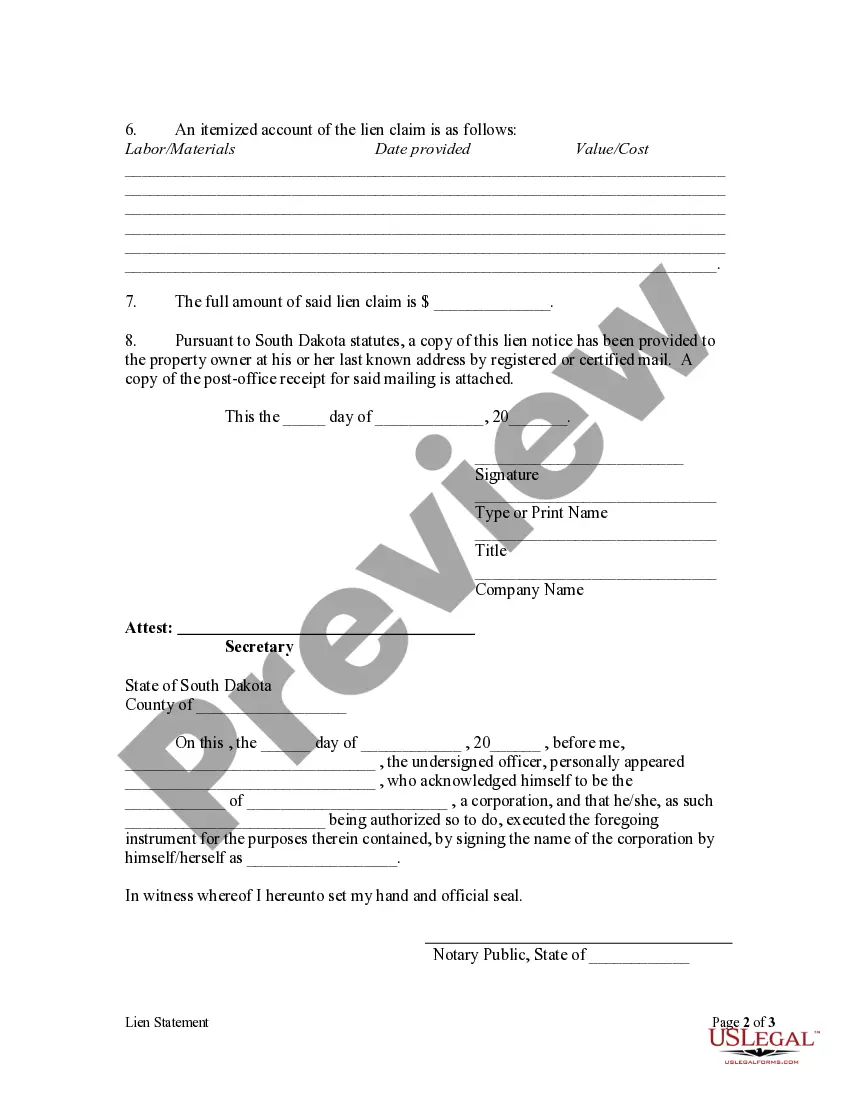
- Signature of a corporate representative and notarization details.
Situations where this form applies
This form should be used when a corporation has provided labor, materials, or services for a property improvement and has not received payment. It must be filed within one hundred and twenty days of completing the work or providing materials to secure the right to claim a lien on the property.
Who should use this form
This form is intended for:
- Corporations that have provided labor, material, or services for property improvements.
- Corporate representatives authorized to act on behalf of their company.
- Entities seeking to enforce a claim for unpaid work in real estate projects.
Steps to complete this form
- Identify the corporation filing the lien and provide the necessary contact information.
- Clearly describe the property involved, including its address and any relevant details.
- Specify the amount owed for the labor or materials provided.
- Enter the dates for when the work began and when it was completed.
- Include the ownerâs name and address to ensure they receive the lien notice.
- Affix the signature of the corporate representative and have the document notarized.
Does this document require notarization?
Yes, this form must be notarized to be legally valid. This ensures the authenticity of the signatures and the integrity of the document. US Legal Forms provides integrated online notarization services available 24/7, allowing you to securely notarize documents without the need to travel.
Get your form ready online
Our built-in tools help you complete, sign, share, and store your documents in one place.
Make edits, fill in missing information, and update formatting in US Legal Forms—just like you would in MS Word.
Download a copy, print it, send it by email, or mail it via USPS—whatever works best for your next step.
Sign and collect signatures with our SignNow integration. Send to multiple recipients, set reminders, and more. Go Premium to unlock E-Sign.
If this form requires notarization, complete it online through a secure video call—no need to meet a notary in person or wait for an appointment.
We protect your documents and personal data by following strict security and privacy standards.

Make edits, fill in missing information, and update formatting in US Legal Forms—just like you would in MS Word.

Download a copy, print it, send it by email, or mail it via USPS—whatever works best for your next step.

Sign and collect signatures with our SignNow integration. Send to multiple recipients, set reminders, and more. Go Premium to unlock E-Sign.

If this form requires notarization, complete it online through a secure video call—no need to meet a notary in person or wait for an appointment.

We protect your documents and personal data by following strict security and privacy standards.
Common mistakes to avoid
- Failing to file the lien statement within the required time frame of one hundred and twenty days.
- Inaccurately describing the property, leading to potential disputes over the lien.
- Not notifying the property owner properly, which could affect the enforceability of the lien.
- Omitting required signatures or failing to have the document notarized when needed.
Benefits of completing this form online
- Convenient access to legal form templates that can be downloaded and filled out at your pace.
- Editability allows for customization to suit specific needs before submission.
- Reliability, as all forms are drafted by licensed attorneys to ensure legal compliance.
Quick recap
- A Lien Statement by Corporation is essential for claiming unpaid amounts on property improvements.
- Timeliness in filing is crucial for protecting your rights as a creditor.
- Ensure all information is accurate to avoid common pitfalls that could invalidate your claim.
Looking for another form?
Form popularity
FAQ
Be sure to include the following pieces of information in your lien: The name, company name and address (including county) of the property owner against whom your lien is filed; the same information about the delinquent client, if different; the beginning and ending dates of the unpaid service; the due date for payment
A Lien Demand Letter or Notice of Intent to Lien is a formal demand for payment.A lien demand letter puts a debtor on notice of your intent to lien the job site property by a specific date deadline. Increase your odds of getting paid with a lien demand letter.
Most states require all mechanics lien claims be filed with the county recorder or clerk of court. In South Dakota, however, there are at least 2 offices where mechanics lien claims can be filed, and the lien claimant must make certain they file their lien claim in the right office.
South Dakota has been an ELT state since October 2012.
The nine non-title holding states are: Michigan, Minnesota, New York, Arizona, Kentucky, Oklahoma, Wisconsin, Maryland, and South Dakota.
Motor vehicle titling and registration is handled through your local county treasurer's office. An Motor Vehicle or Boat Title & Registration Application must be signed by the record owner(s) or by an authorized agent for the record owner(s).
Michigan is one of only nine states that are non-title holding states, in which titles are mailed to the owner rather than the lien holder. These states include: Arizona, Kentucky, Maryland, Michigan, Minnesota, New York, Oklahoma, South Dakota and Wisconsin.
A contractor's lien (often known as a mechanic's lien, or a construction lien) is a claim made by contractors or subcontractors who have performed work on a property, and have not yet been paid.After all, contractors would rather work out a deal than go through the hassle of filing a lien against your property.