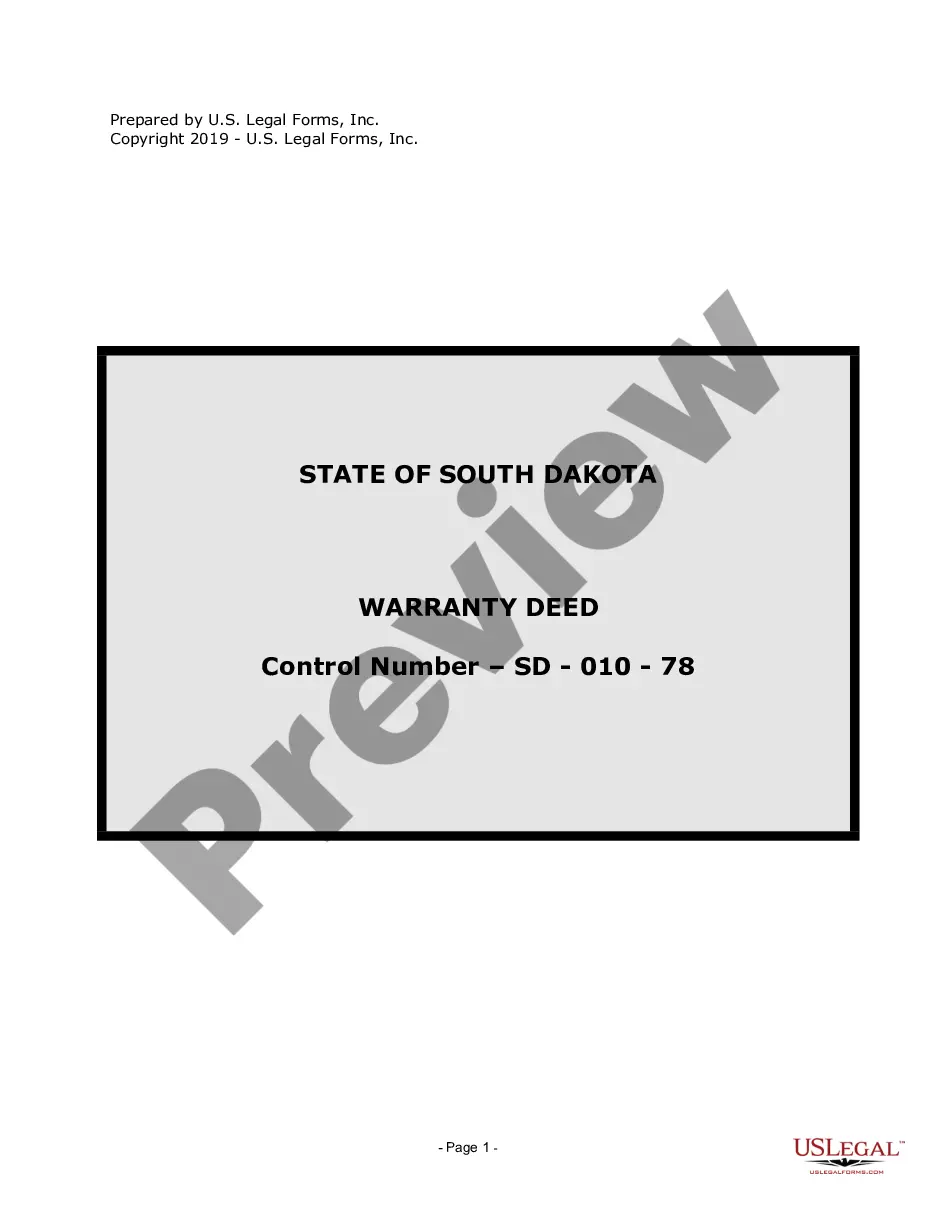
South Dakota Warranty Deed from Corporation to Husband and Wife
Overview of this form
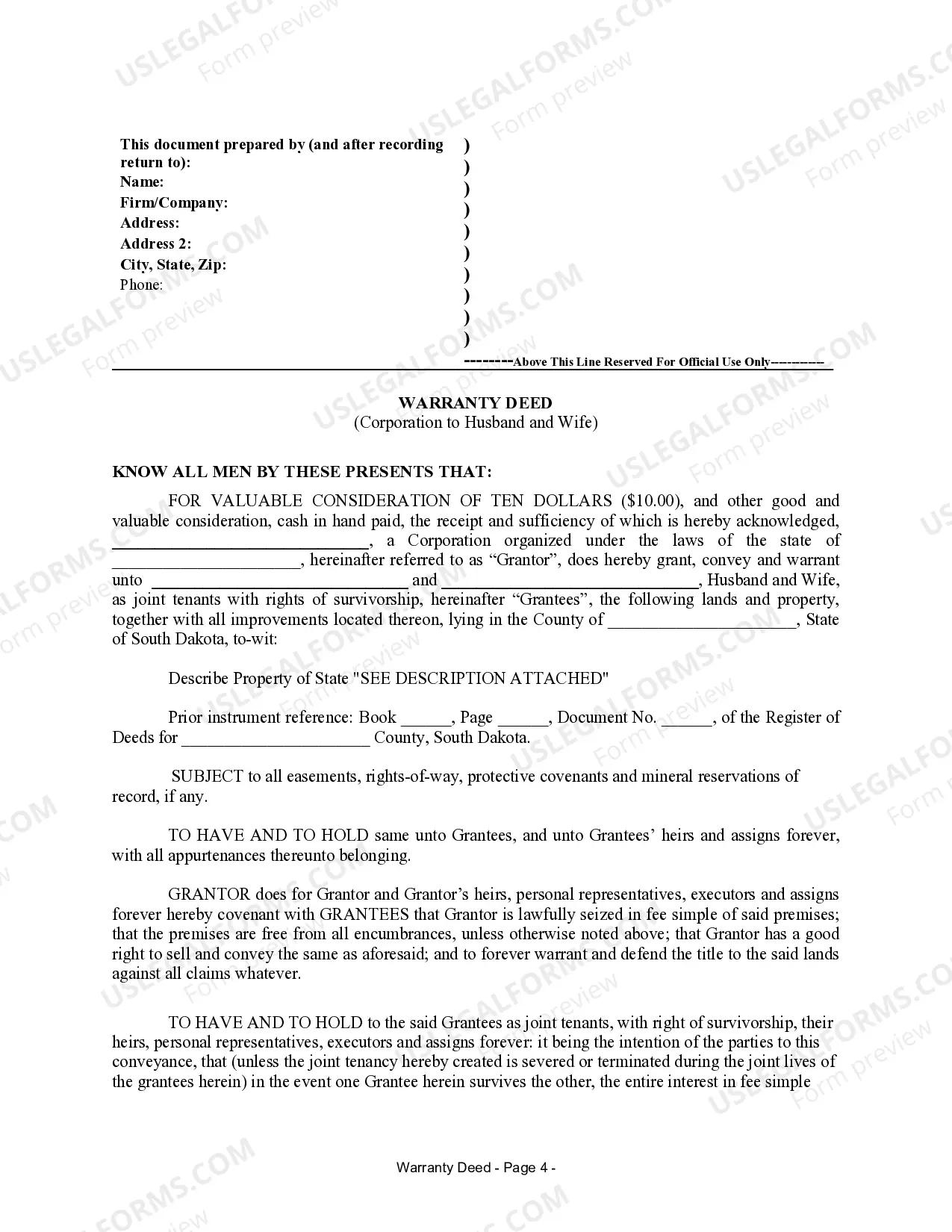
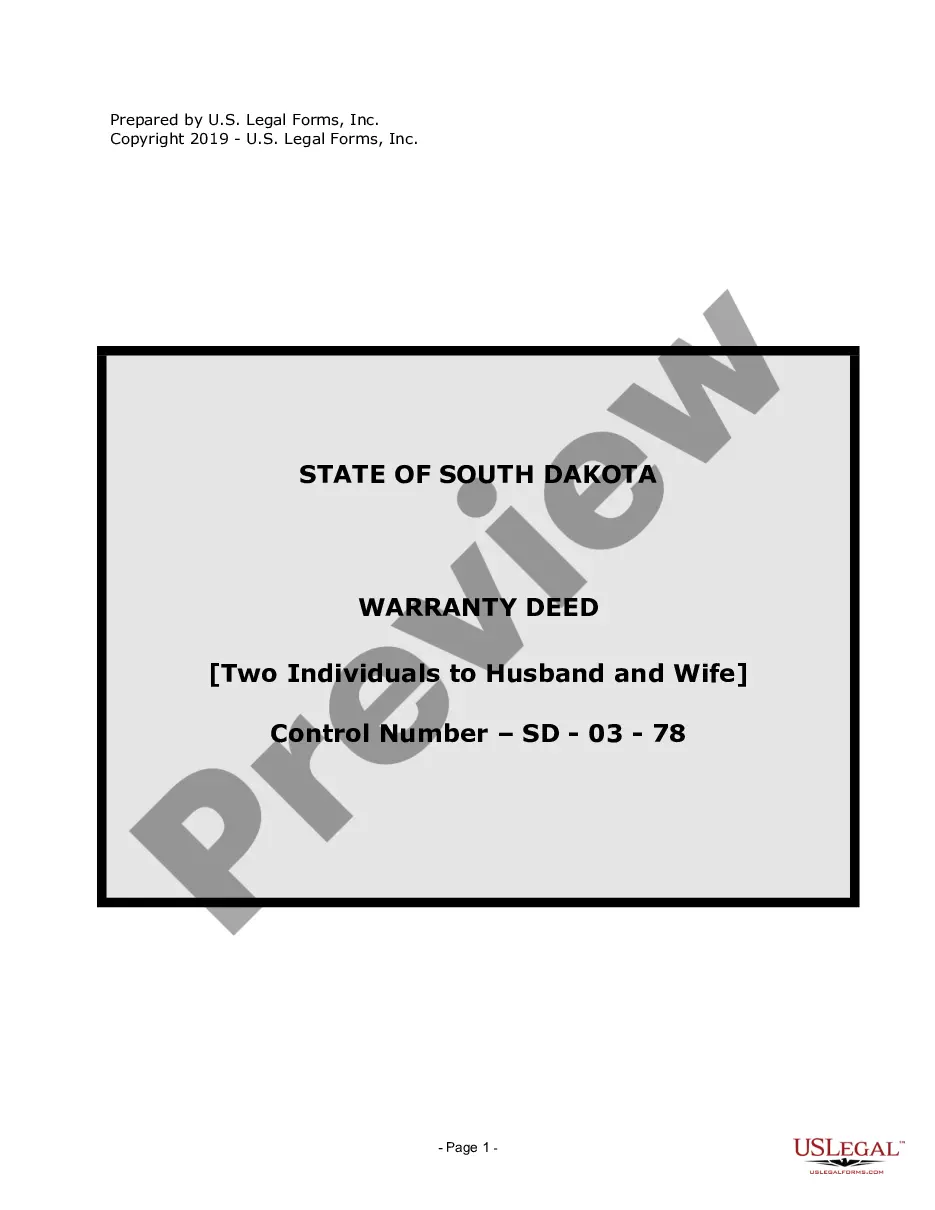
A Warranty Deed from Corporation to Husband and Wife is a legal document used to transfer property ownership from a corporation to a married couple. This form guarantees that the title is valid and free of liens, assuring the grantees of their ownership rights. It differs from other types of deeds by specifically involving corporate grantors and married grantees, ensuring that the title conveys joint tenancy with rights of survivorship.
Key parts of this document
- Identification of the Grantor (the corporation) and Grantees (the husband and wife)
- Description of the property being transferred
- Legal assurances from the Grantor regarding the title
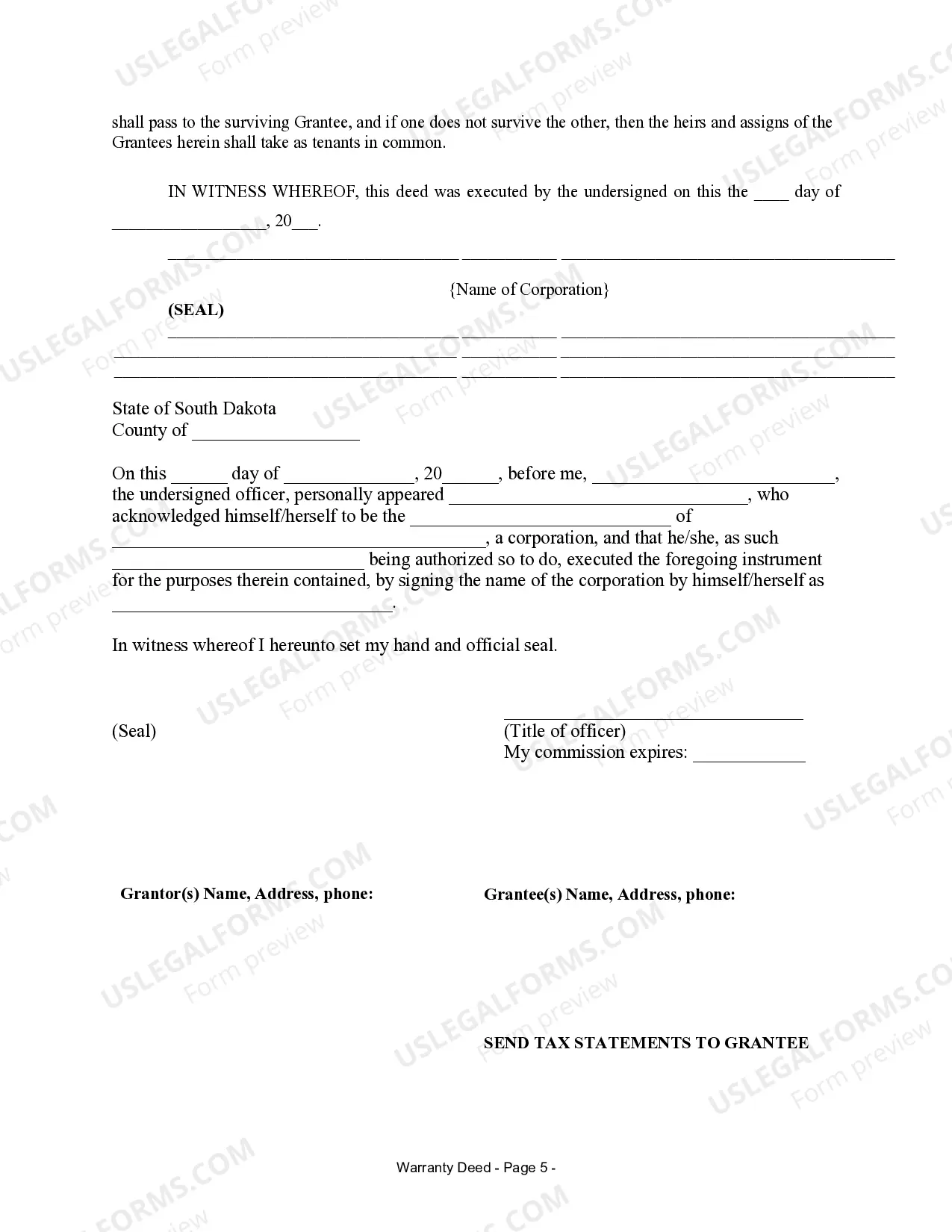
- Signature and title of the corporation's authorized representative
- Notary acknowledgment section for the corporation representative



When to use this document
This form is appropriate when a corporation is transferring real estate to a husband and wife. It's often used in transactions involving family-owned corporations or in scenarios where property needs to be moved into joint ownership for estate planning purposes, tax benefits, or asset protection.
Intended users of this form
This form is designed for:
- Corporations looking to transfer property ownership to individuals
- Married couples acquiring property jointly from a corporation
- Real estate attorneys facilitating property transactions
How to complete this form
- Identify the parties involved: enter the corporation's name as the Grantor and the names of the husband and wife as Grantees.
- Describe the property being transferred, ensuring accuracy in the description and including any attached documentation.
- Fill in the purchase consideration, typically a monetary value.
- Obtain the signature of the authorized representative of the corporation, along with their title.
- Complete the notary acknowledgment section to certify the execution of the deed.
Does this form need to be notarized?
Yes, this form must be notarized to be legally valid. Notarization helps confirm the identity of the signers and the authenticity of the document. US Legal Forms offers integrated online notarization for convenient, secure signing through a video call, available 24/7.
Get your form ready online
Our built-in tools help you complete, sign, share, and store your documents in one place.
Make edits, fill in missing information, and update formatting in US Legal Forms—just like you would in MS Word.
Download a copy, print it, send it by email, or mail it via USPS—whatever works best for your next step.
Sign and collect signatures with our SignNow integration. Send to multiple recipients, set reminders, and more. Go Premium to unlock E-Sign.
If this form requires notarization, complete it online through a secure video call—no need to meet a notary in person or wait for an appointment.
We protect your documents and personal data by following strict security and privacy standards.

Make edits, fill in missing information, and update formatting in US Legal Forms—just like you would in MS Word.

Download a copy, print it, send it by email, or mail it via USPS—whatever works best for your next step.

Sign and collect signatures with our SignNow integration. Send to multiple recipients, set reminders, and more. Go Premium to unlock E-Sign.

If this form requires notarization, complete it online through a secure video call—no need to meet a notary in person or wait for an appointment.

We protect your documents and personal data by following strict security and privacy standards.
Common mistakes to avoid
- Failing to provide a complete property description.
- Not obtaining the necessary signatures from the corporate representatives.
- Neglecting to complete the notary acknowledgment properly.
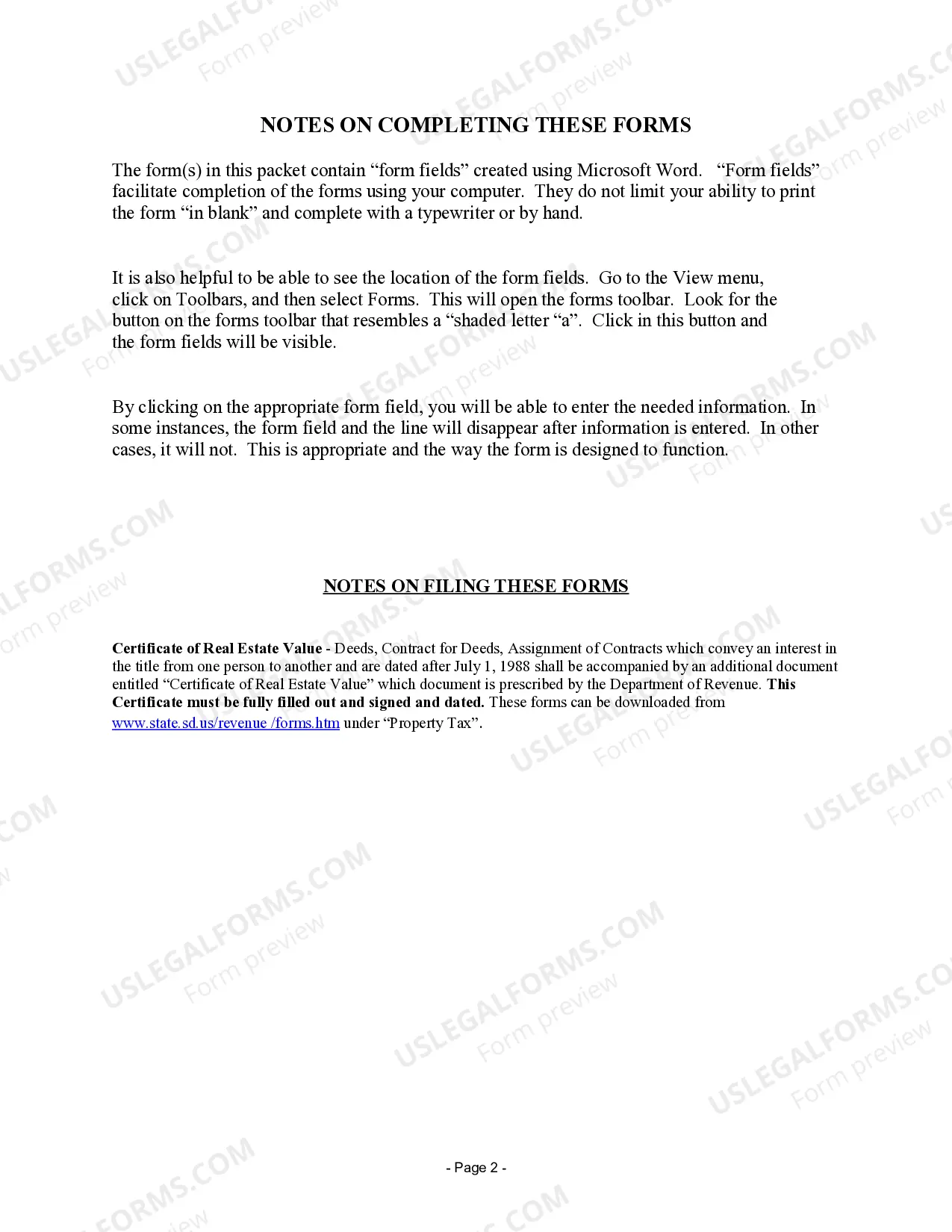
- Forgetting to include the Certificate of Real Estate Value when required.
Benefits of completing this form online
- Convenient access to legal forms at any time.
- Edit and customize the document easily using common word processing software.
- Reliable templates drafted by licensed attorneys ensure compliance with state laws.
Looking for another form?
Form popularity
FAQ
Title the deed and list the amount given for the transfer. If it is a quitclaim deed, title the deed Quitclaim Deed; for warranty deeds, title the deed Warranty Deed. Write In consideration of dollar amount to list the amount given for the transfer. List the names of the parties involved.
In order to make the Warranty Deed legally binding, the Seller needs to sign it front of a notary public. Then signed and notarized deed must be filed at the city or county office for recording property documents. Before filing with this office all previously billed property taxes must be paid in full.
Typically, the lender will provide you with a copy of the deed of trust after the closing. The original warranty deeds are often mailed to the grantee after they are recorded. These are your original copies and should be kept in a safe place, such as a fireproof lockbox or a safe deposit box at a financial institution.
Let's start with the definition of a deed: DEED: A written instrument by which one party, the Grantor, conveys the title of ownership in property to another party, the Grantee. A Warranty Deed contains promises, called covenants, that the Grantor makes to the Grantee.
Contrary to normal expectations, the Deed DOES NOT have to be recorded to be effective or to show delivery, and because of that, the Deed DOES NOT have to be signed in front of a Notary Public. However, if you plan to record it, then it does have to be notarized as that is a County Recorder requirement.
In states like California and Florida, the spouses may use a quitclaim deed to transfer the property without warranting title. Other stateslike Texasrecognize a similar type of deed called a deed without warranty.
A warranty deed guarantees that: The grantor is the rightful owner of the property and has the legal right to transfer the title.The title would withstand third-party claims to ownership of the property. The grantor will do anything to ensure the grantee's title to the property.
Two of the most common ways to transfer property in a divorce are through an interspousal transfer deed or quitclaim deed. When spouses own property together, but then one spouse executes an interspousal transfer or a quitclaim deed, this is known as transmutation.
It's important to note that a warranty deed does not actually prove the grantor has ownership (a title search is the best way to prove that), but it is a promise by the grantor that they are transferring ownership and if it turns out they don't actually own the property, the grantor will be responsible for compensating