South Dakota Renovation Contract for Contractor
What this document covers
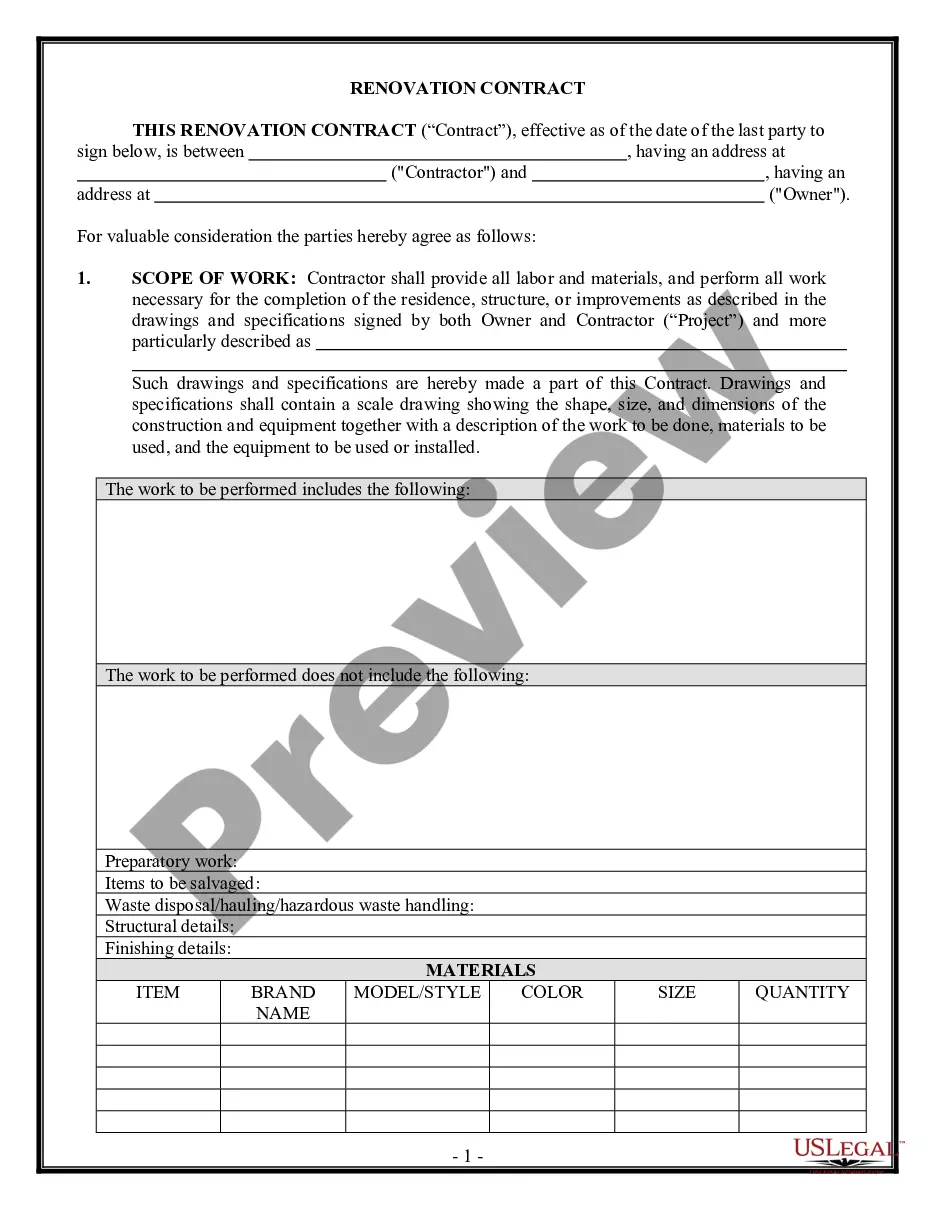
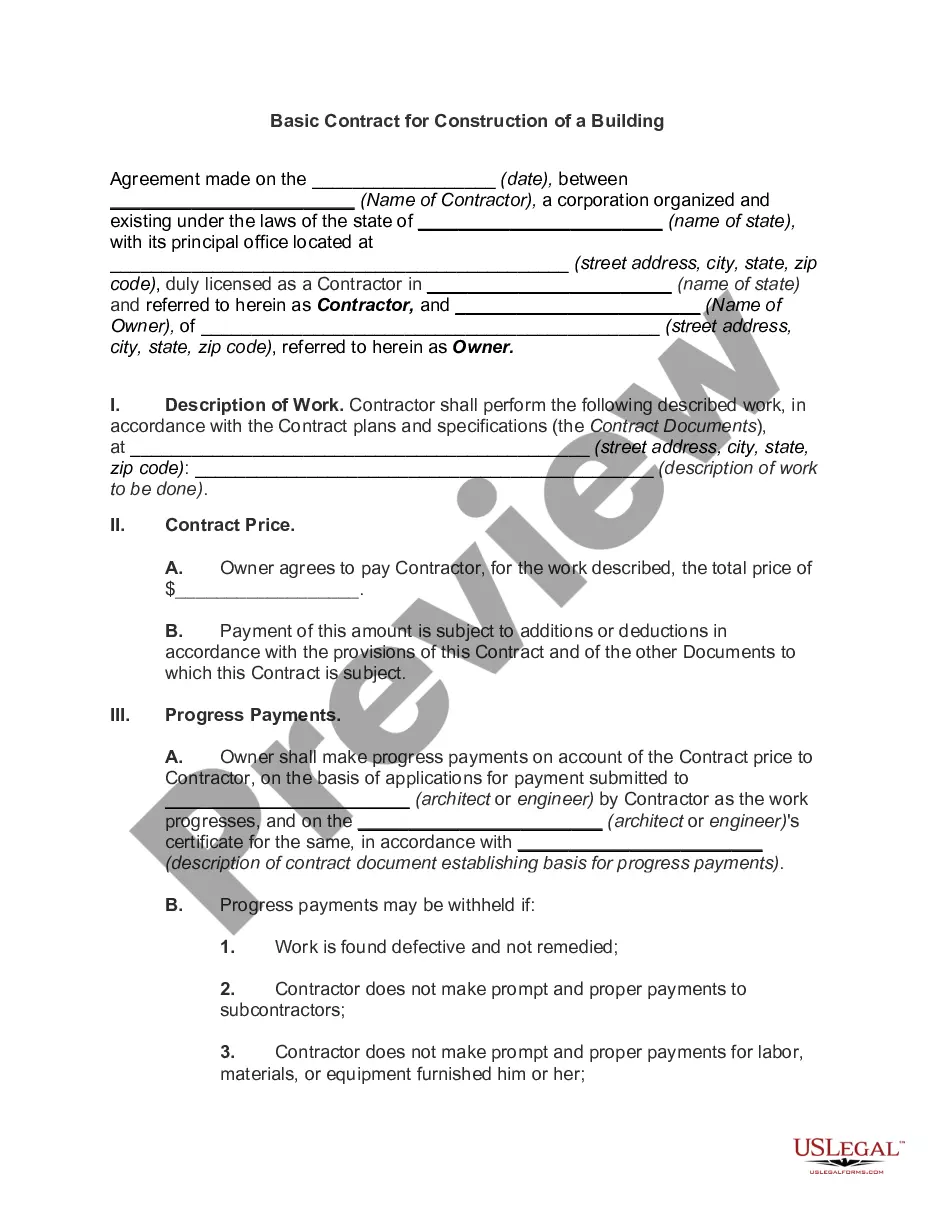
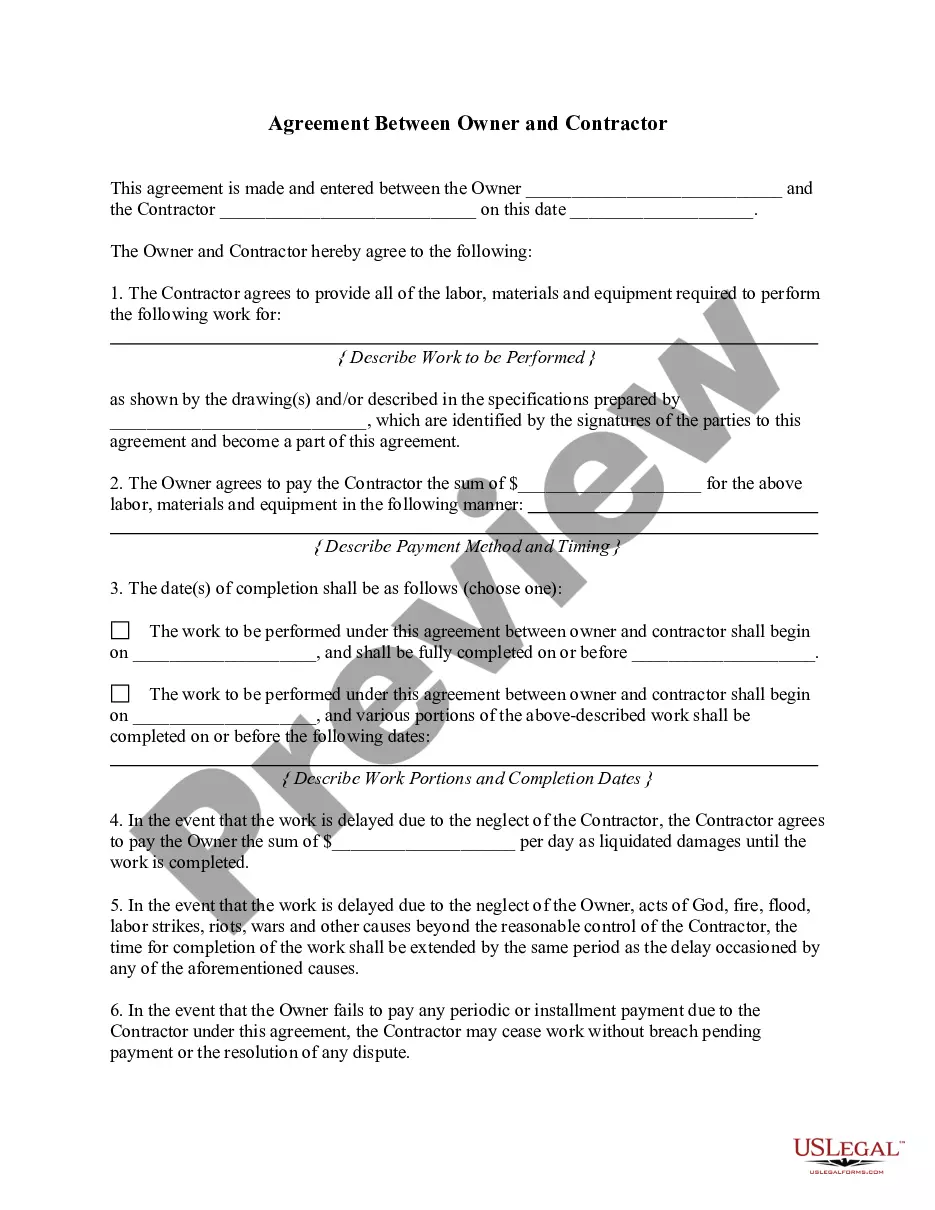
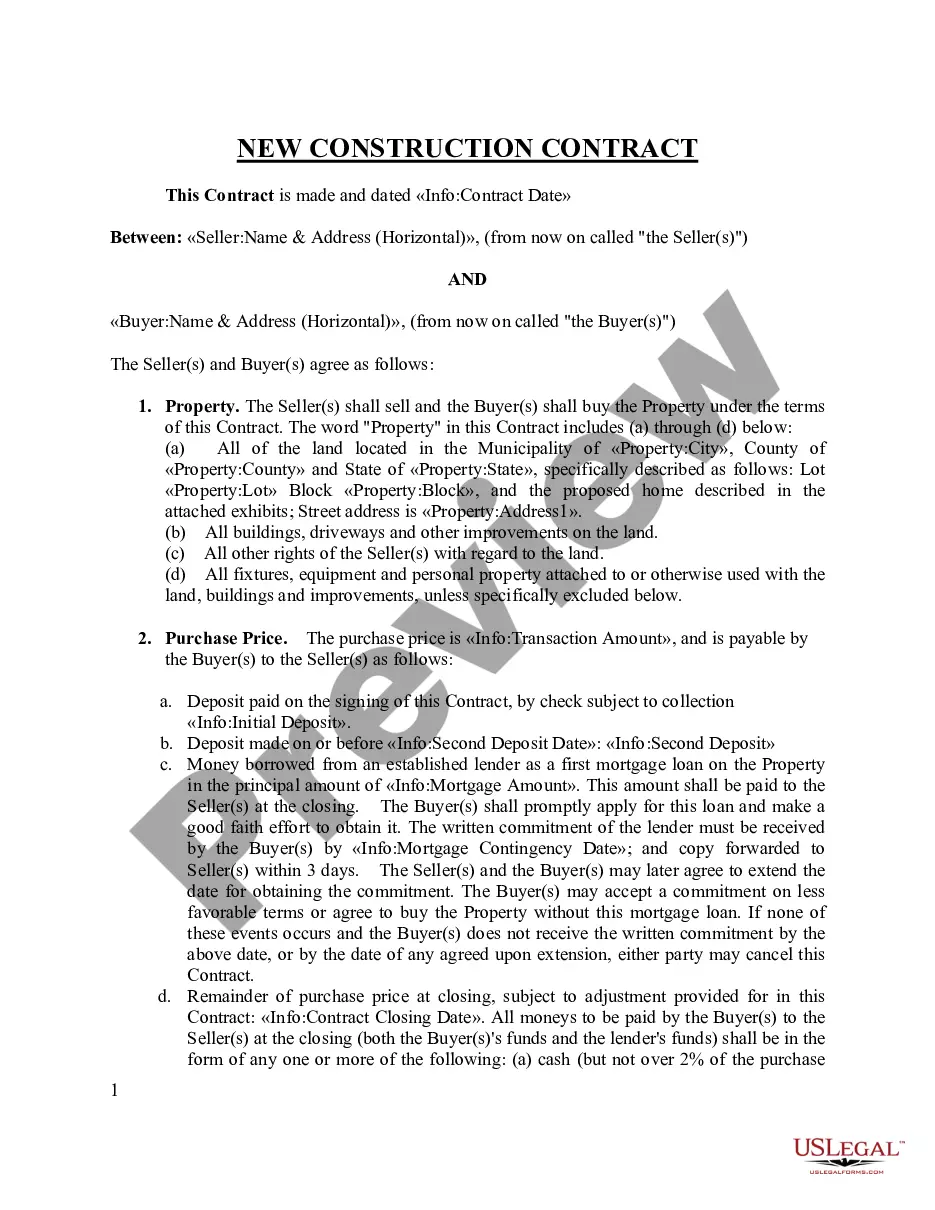
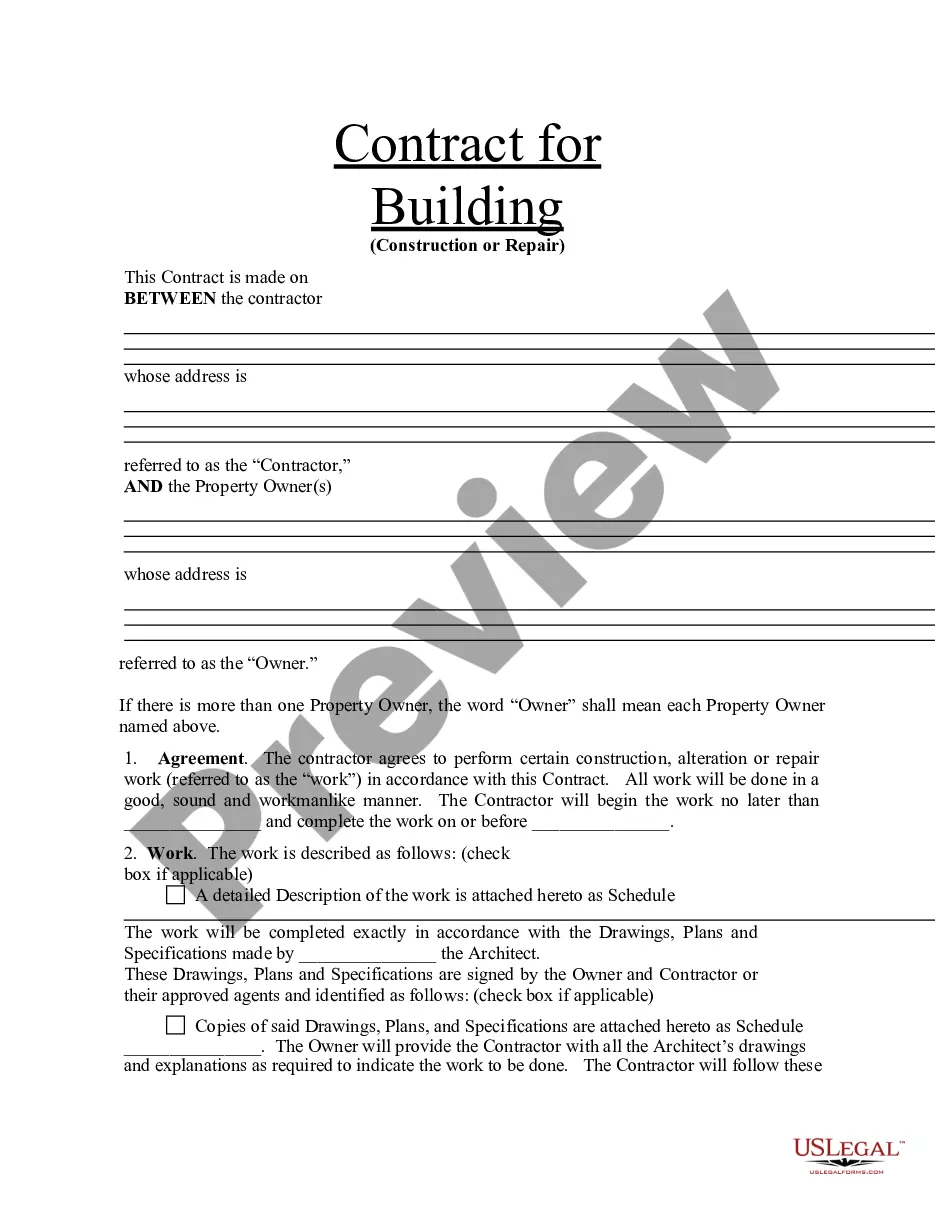
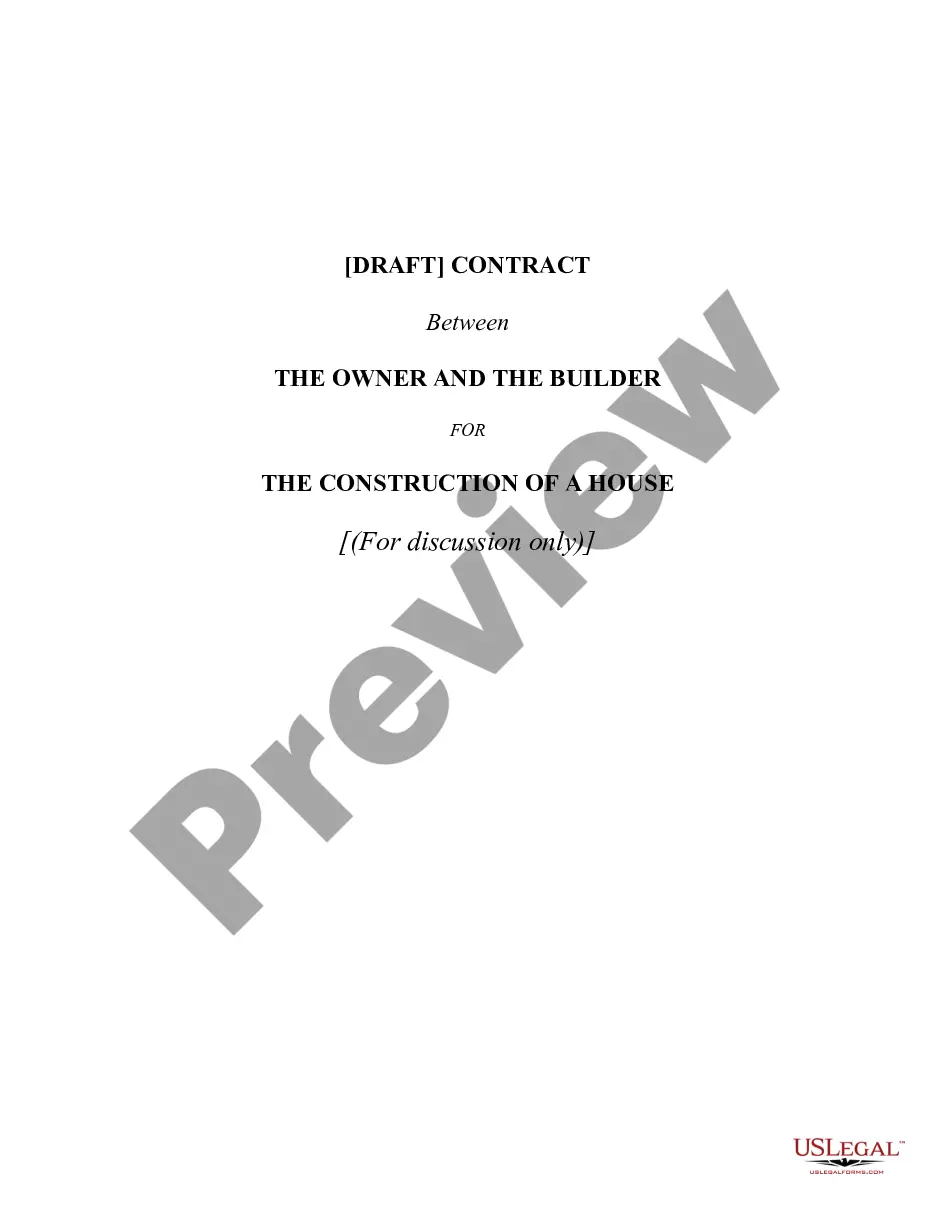
The Renovation Contract for Contractor is a legal agreement designed for use between renovation contractors and property owners. It outlines the terms of a renovation project and can be structured on either a cost-plus or fixed fee basis. This specialized contract details responsibilities regarding permits, insurance, change orders, and other essential project elements, helping to protect the interests of both parties involved in the renovation.
Main sections of this form
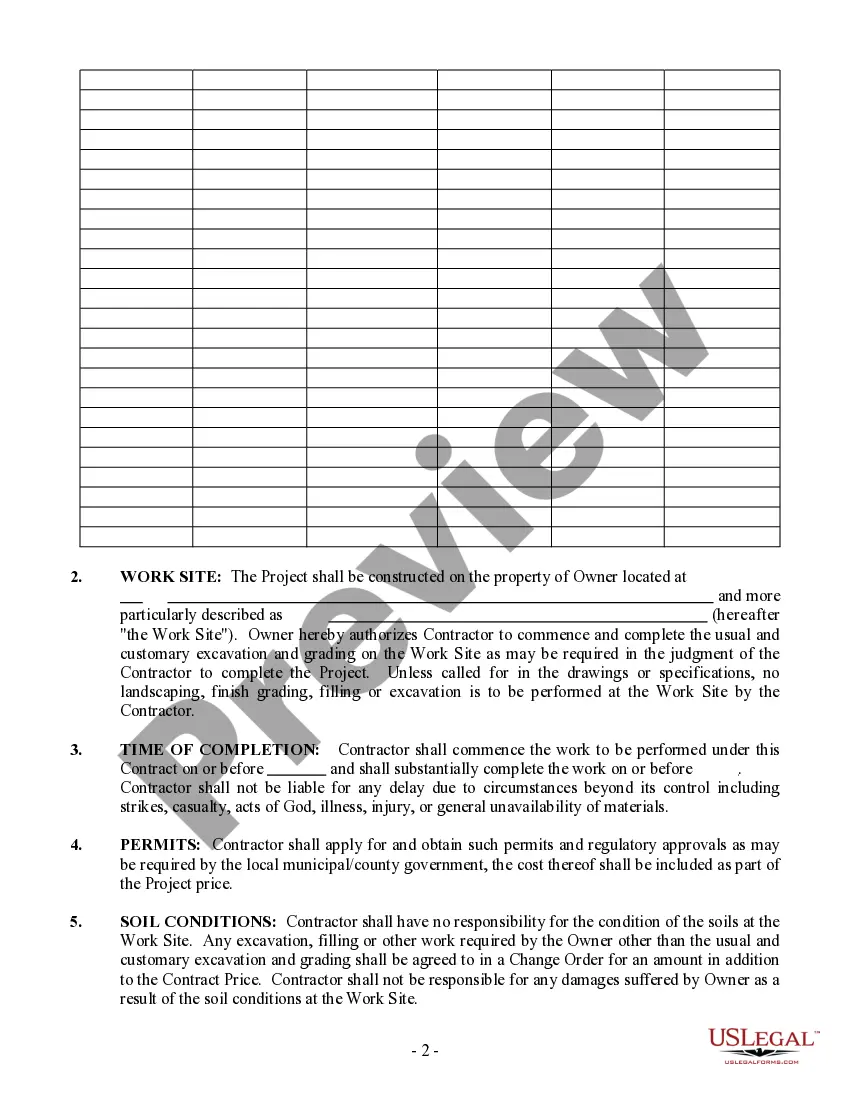
- Permits: The contractor agrees to apply for and obtain necessary permits within the project cost.
- Soil conditions: Outlines the contractor's non-responsibility for soil-related issues at the work site.
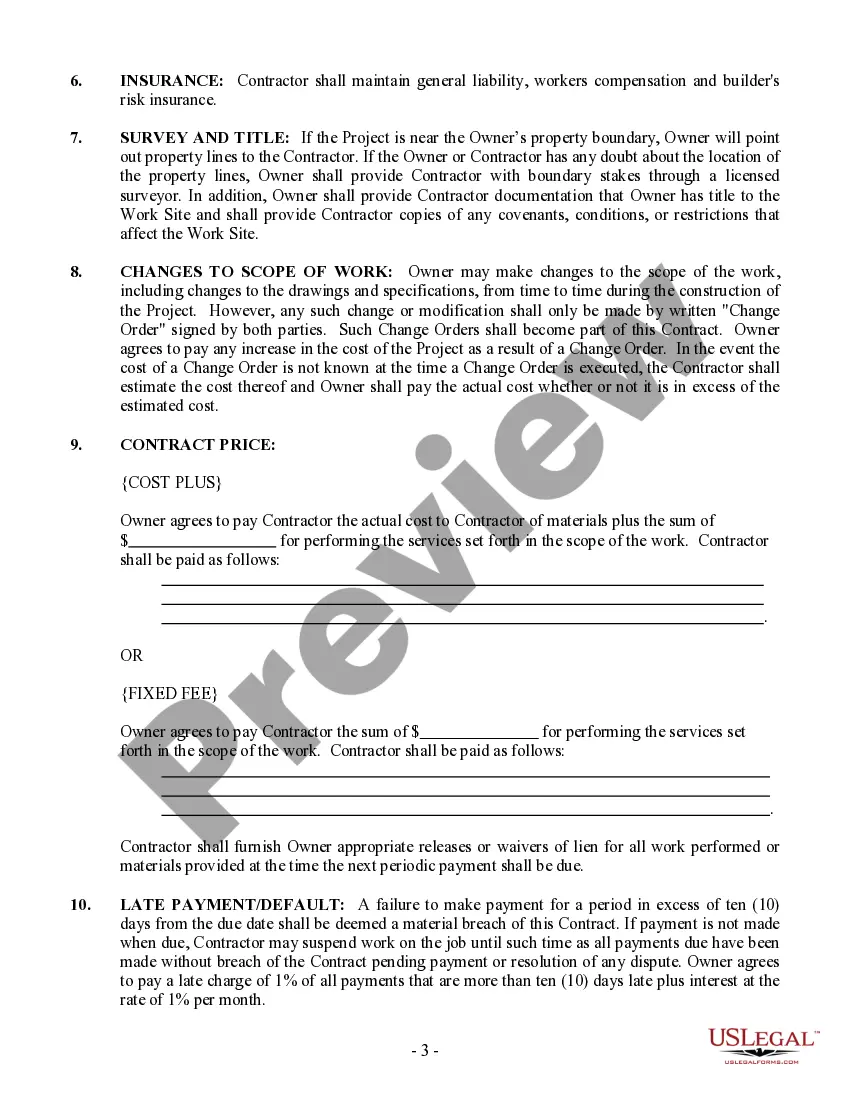
- Insurance: Mandates that the contractor maintains appropriate insurance coverage for the project.
- Changes to scope of work: Allows for modifications with written agreement, detailing how costs will be managed.
- Late payment provisions: Describes penalties for overdue payments and the contractor's rights in case of payment default.
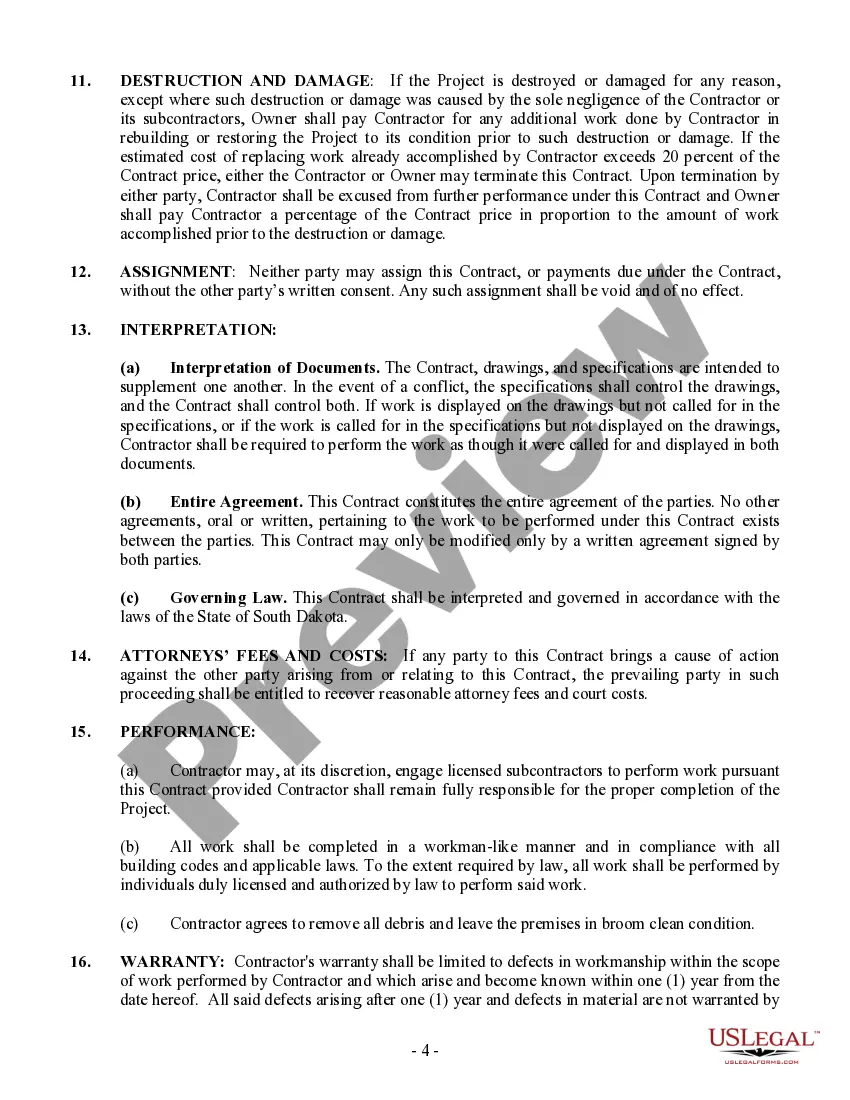
- Warranty terms: Specifies the contractor's warranty on workmanship for one year after project completion.
When to use this document
This Renovation Contract should be used when a property owner engages a contractor for home renovations or improvements. It is particularly relevant in scenarios involving extensive changes to the property, where both parties need clear documentation of expectations, responsibilities, and liabilities. The contract is also essential when the project scope is likely to change, ensuring that all modifications are recorded and agreed upon.
Who needs this form
- Property owners looking to hire a renovation contractor for home improvement projects.
- Renovation contractors seeking a structured agreement to formalize terms with clients.
- Individuals involved in home renovations who wish to ensure they have clear, legally binding documentation of the project terms.
Steps to complete this form
- Identify the parties: Clearly state the names and addresses of both the contractor and the property owner.
- Specify the project details: Outline the scope of work, including specific tasks and timelines.
- Detail financial arrangements: Indicate whether the payment will be on a cost-plus or fixed fee basis and the total contract price.
- Include provisions for changes: Describe how changes to the scope of work will be documented and how costs will be adjusted.
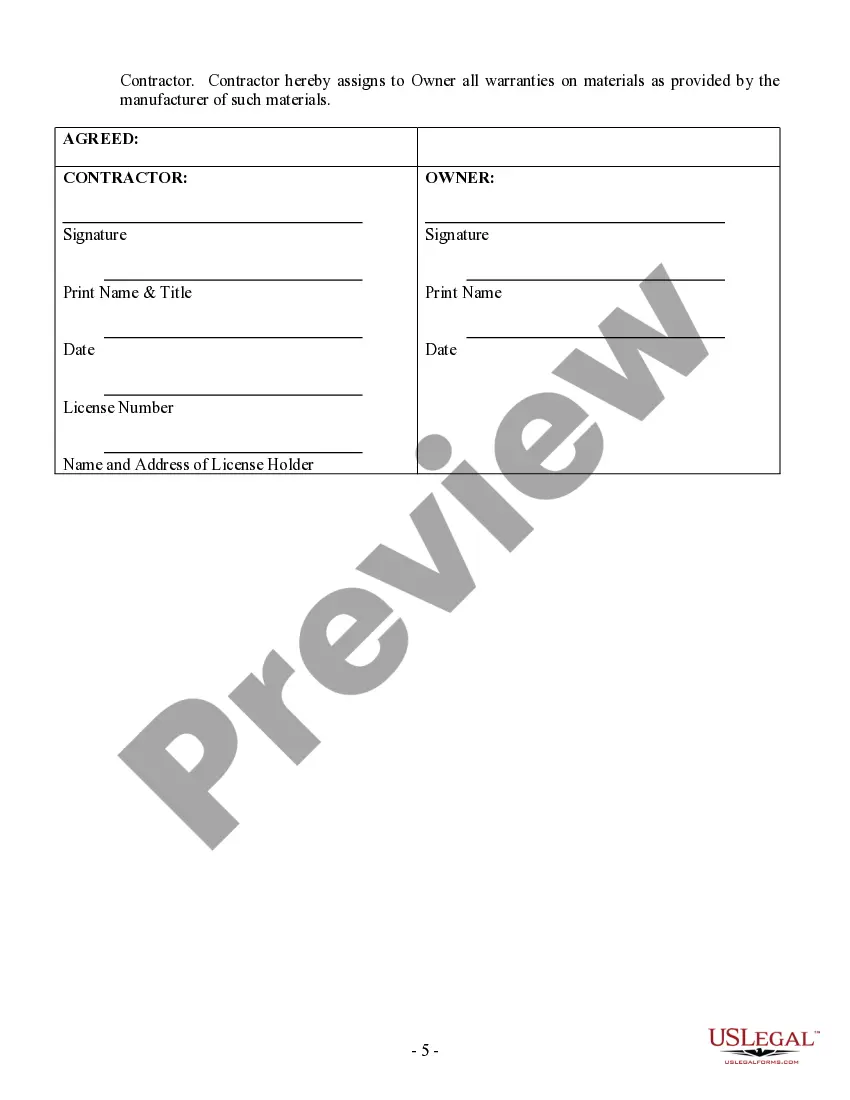
- Sign and date the contract: Ensure both parties sign the contract to make it legally binding.
Is notarization required?
This form does not typically require notarization unless specified by local law. However, it is advisable for both parties to keep a copy and ensure clarity in the agreement to avoid potential disputes.
Get your form ready online
Our built-in tools help you complete, sign, share, and store your documents in one place.
Make edits, fill in missing information, and update formatting in US Legal Forms—just like you would in MS Word.
Download a copy, print it, send it by email, or mail it via USPS—whatever works best for your next step.
Sign and collect signatures with our SignNow integration. Send to multiple recipients, set reminders, and more. Go Premium to unlock E-Sign.
If this form requires notarization, complete it online through a secure video call—no need to meet a notary in person or wait for an appointment.
We protect your documents and personal data by following strict security and privacy standards.

Make edits, fill in missing information, and update formatting in US Legal Forms—just like you would in MS Word.

Download a copy, print it, send it by email, or mail it via USPS—whatever works best for your next step.

Sign and collect signatures with our SignNow integration. Send to multiple recipients, set reminders, and more. Go Premium to unlock E-Sign.

If this form requires notarization, complete it online through a secure video call—no need to meet a notary in person or wait for an appointment.

We protect your documents and personal data by following strict security and privacy standards.
Avoid these common issues
- Failing to include specific details about project scope, leading to misunderstandings.
- Not obtaining necessary permits before starting work, which can result in legal issues.
- Overlooking the need for both parties to sign written change orders for modifications in the project.
- Neglecting to clarify payment terms, which can result in disputes over costs.
- Not addressing insurance requirements, exposing both parties to liability risks.
Advantages of online completion
- Convenience: Easily download and customize the contract from anywhere.
- Editability: Modify sections to fit your specific renovation needs before printing.
- Reliability: Use a form vetted by licensed attorneys to ensure compliance with South Dakota state laws.
Key takeaways
- The Renovation Contract for Contractor is essential for clear communication and protection in home renovation projects.
- Both parties should carefully review the terms, especially regarding changes to work scope and financial arrangements.
- This contract adheres to South Dakota laws, making it suitable for use within the state.
Looking for another form?


Form popularity
FAQ
To become a general contractor, you need at least a high school diploma, but there is an increase in a need for a bachelor's degree or at least an associate degree, plus years of construction industry experience. Regardless of education though, experience in the industry is the most important requirement.
Construction contracts do not necessarily have to be in writing.If contracts listed in the statute of frauds are not in writing, they cannot be enforced. Construction contracts sometimes fall within the terms of a state's statute of frauds and therefore must be in writing in some instances.
A contract is formed when one party makes an offer which is unconditionally accepted by the other.A purported acceptance which contains terms different to the offer is not acceptance. This is called a counter offer which may be accepted by the other party or subject to a further counter offer.
General Contractor Company licensure is not required on the State level in South Dakota. There is no state level license for general contractor firms in South Dakota, however, local licensing requirements may apply. Most contractors are required to obtain a department of revenue contractor's excise tax license.
#1: Review Your Bid. #2: Review Complete Plans. #3: Review All Specifications. #4: Visit the Job Site. #5: Review the Job Schedule. #6: Complete a Project Checklist. #7: Verify Project Funding. #8: Read Complete Contract.
Name of contractor and contact information. Name of homeowner and contact information. Describe property in legal terms. List attachments to the contract. The cost. Failure of homeowner to obtain financing. Description of the work and the completion date. Right to stop the project.
Certificate of Excise Tax. Proof of General Liability Insurance. Proof of Workers' Compensation Insurance. Passing Exam Scores. Payment of licensing and exam fees.
Step 1: Earn an Associate's Degree. Step one is to earn an associate's degree. Step 2: Obtain a Position in Construction. Step two is to obtain a position in construction. Step 3: Obtain a License. Step three is to obtain a license. Step 4: Become a Contractor. Step 5: Obtain Voluntary Certification.
Identifying/Contact Information. Title and Description of the Project. Projected Timeline and Completion Date. Cost Estimate and Payment Schedule. Stop Work Clause and Stop Payment Clause. Act of God Clause. Change Order Agreement. Warranty.