South Carolina Letter from Landlord to Tenant as Notice of Default on Commercial Lease
Overview of this form
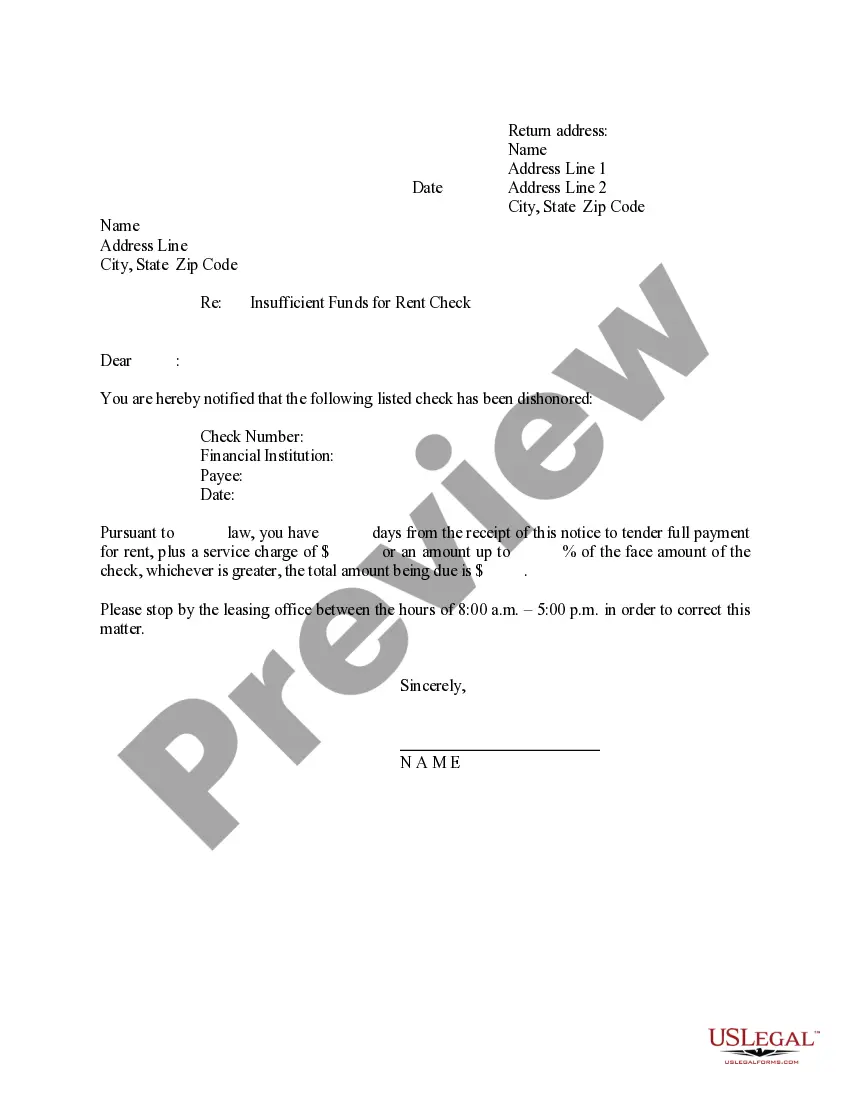
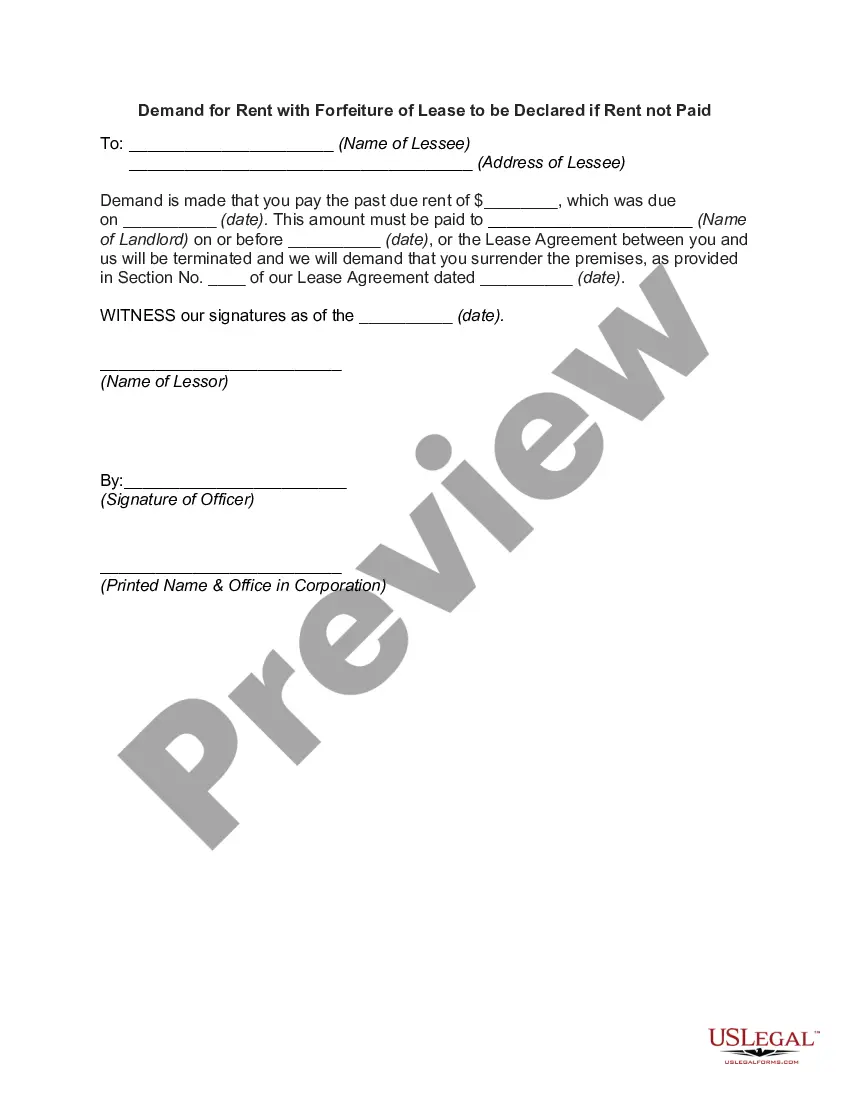
This Letter from Landlord to Tenant as Notice of Default on Commercial Lease serves as an official notification to the tenant regarding breaches in the lease agreement. The purpose of this form is to inform the tenant of specific defaults that have occurred, including any failure to pay rent on time. By using this notice, landlords can clearly communicate expectations and potential consequences, such as eviction, while ensuring compliance with legal requirements. This form is distinct from general eviction notices as it outlines specific breaches and provides the tenant with a timeframe to remedy the situation.
Main sections of this form
- Identification of the landlord and tenant
- Details of the breaches or defaults
- Specified deadline for cure of breaches
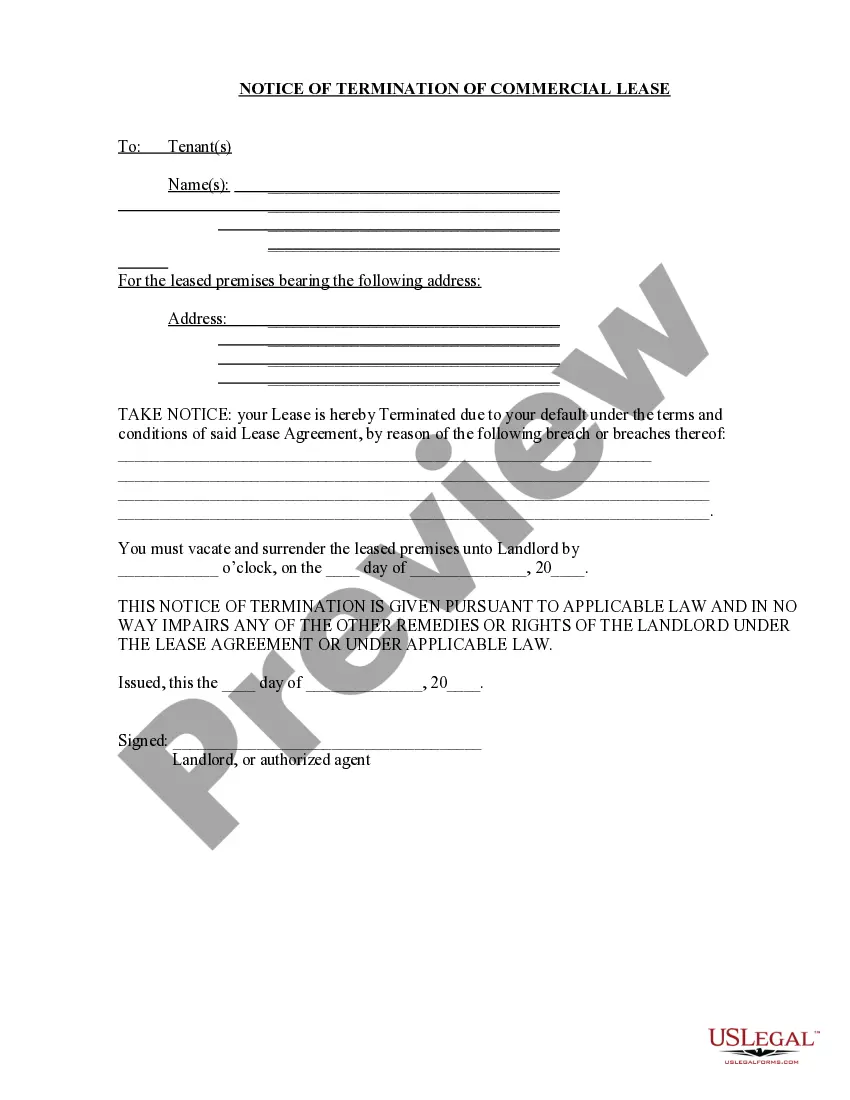
- Statement of potential actions if breaches are not corrected, including eviction
- Signature of the landlord or authorized agent
- Date of issuance of the notice


When this form is needed
This notice should be used when a tenant has failed to comply with the terms of their commercial lease, such as not paying rent on time or violating other lease provisions. It serves as a formal warning that gives the tenant an opportunity to rectify the situation before legal actions, such as eviction, are taken by the landlord. Utilizing this form helps to ensure that the landlord complies with notice requirements prior to proceeding with further legal actions.
Who should use this form
- Landlords of commercial properties
- Property management companies
- Authorized agents acting on behalf of landlords
Completing this form step by step
- Identify the landlord and tenant by entering their full names and contact information.
- Clearly describe the breaches of the lease agreement.
- Enter the deadline date by which the tenant must cure the breaches.
- Specify the potential actions that may be taken if the breaches are not cured.
- Sign the document, indicating the landlord or authorized agent's name and position.
- Date the notice to establish when it was issued.
Does this form need to be notarized?
This form does not typically require notarization unless specified by local law. It's crucial to check your stateâs regulations to ensure compliance.
Get your form ready online
Our built-in tools help you complete, sign, share, and store your documents in one place.
Make edits, fill in missing information, and update formatting in US Legal Forms—just like you would in MS Word.
Download a copy, print it, send it by email, or mail it via USPS—whatever works best for your next step.
Sign and collect signatures with our SignNow integration. Send to multiple recipients, set reminders, and more. Go Premium to unlock E-Sign.
If this form requires notarization, complete it online through a secure video call—no need to meet a notary in person or wait for an appointment.
We protect your documents and personal data by following strict security and privacy standards.

Make edits, fill in missing information, and update formatting in US Legal Forms—just like you would in MS Word.

Download a copy, print it, send it by email, or mail it via USPS—whatever works best for your next step.

Sign and collect signatures with our SignNow integration. Send to multiple recipients, set reminders, and more. Go Premium to unlock E-Sign.

If this form requires notarization, complete it online through a secure video call—no need to meet a notary in person or wait for an appointment.

We protect your documents and personal data by following strict security and privacy standards.
Avoid these common issues
- Failure to clearly specify the breaches may lead to confusion.
- Not providing the tenant adequate time to remedy the situation.
- Incomplete or missing signatures could invalidate the notice.
- Not adhering to state-specific rules regarding notice formatting or delivery methods.
Benefits of using this form online
- Convenient access to legal forms at any time.
- Editable templates allow for customization to specific situations.
- Reliability backed by licensed attorneys who draft the forms.
Legal use & context
- This notice serves as an essential step before initiating eviction proceedings.
- It protects the landlordâs rights by providing documentation of breach notifications.
- Failure to issue this notice may affect the landlord's ability to enforce a lease termination.
Main things to remember
- Ensure clarity in identifying breaches and deadlines.
- Utilize this notice to comply with legal obligations before eviction.
- Always verify state-specific rules concerning landlord-tenant notifications.
Looking for another form?
Form popularity
FAQ
For example, the lease may provide that in case of default, the landlord can recover late fees and interest. If the lease is a net lease, it may provide for the landlord to recover such things as property taxes, insurance, utilities, maintenance and repairs.
Dear your landlord or property manager's name, I am writing to inform you I will be vacating my rental unit on date you intend to vacate. This letter meets the 30-day notice requirement outlined in my lease agreement.
Explain the Situation Tell your tenant in straightforward terms what the problem is, and explain that they cannot stay on the property any longer. Describe the Consequences Calmly explain that they will be evicted with necessary court orders if they remain on the property.
Paying the remainder of the rent still owed on the lease in full; Paying a specified amount of liquidated damages as outlined in the contract terms; Paying an additional amount of punitive damages, dependent on local state laws; and/or.
Dear (Name of landlord or manager), This letter constitutes my written (number of days' notice that you need to give based on your lease agreement)-day notice that I will be moving out of my apartment on (date), the end of my current lease. I am leaving because (new job, rent increase, etc.)
A break-early fee is a lump sum payment. The amount of the break-early fee will vary greatly depending upon the commercial tenant's specific circumstances. In exchange for the break-early fee, the landlord will agree to release the commercial tenant from all of its obligations under the commercial lease.
If you're an assured tenant or a protected tenant Your landlord will have to give you notice if they want you to leave. They have to give the reasons why they want to evict you - for example, if you have rent arrears or you've damaged the property. Your landlord will have to go to court and get a court order.
A lease is automatically void when it is against the law, such as a lease for an illegal purpose. In other circumstances, like fraud or duress, a lease can be declared void at the request of one party but not the other.
