South Carolina Flooring Contract for Contractor
Overview of this form
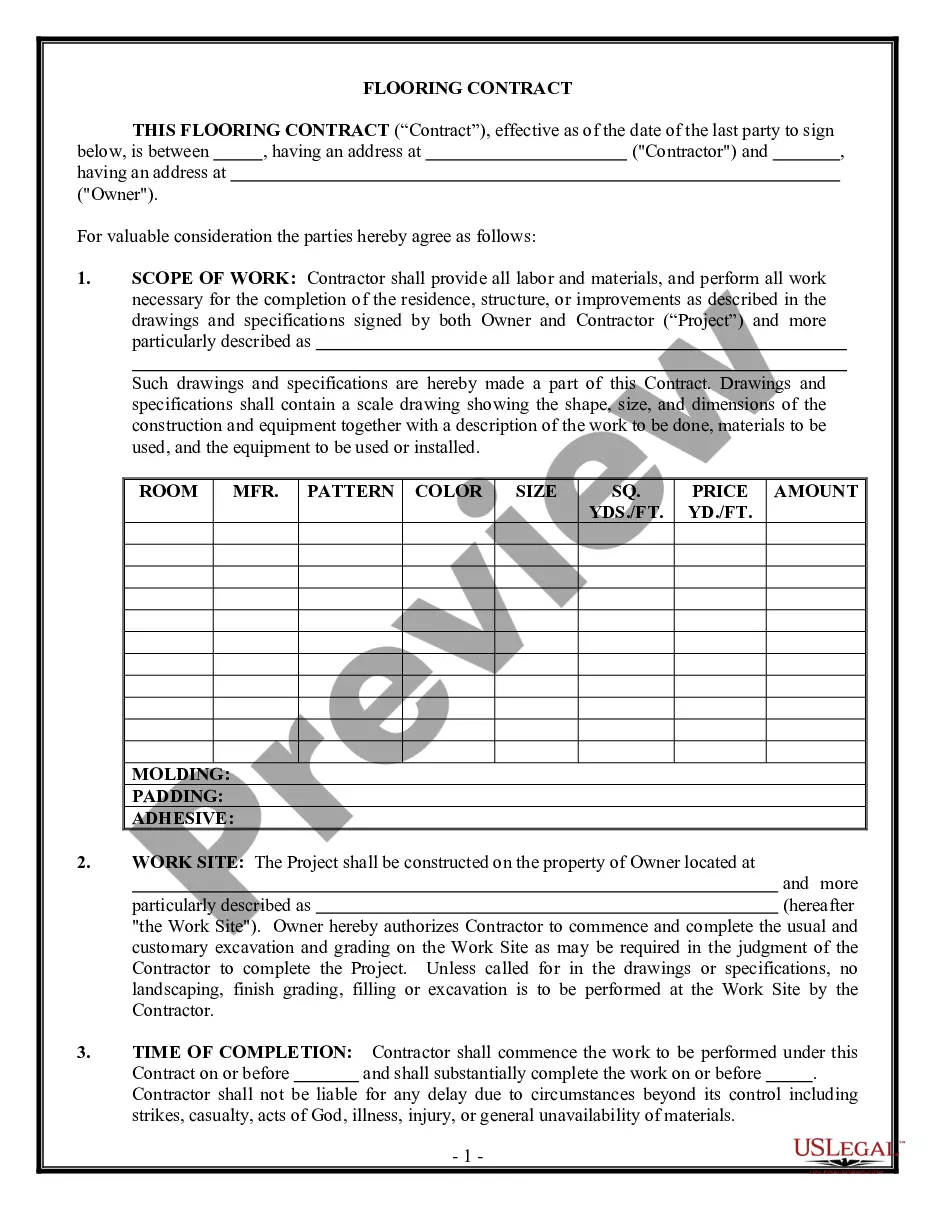
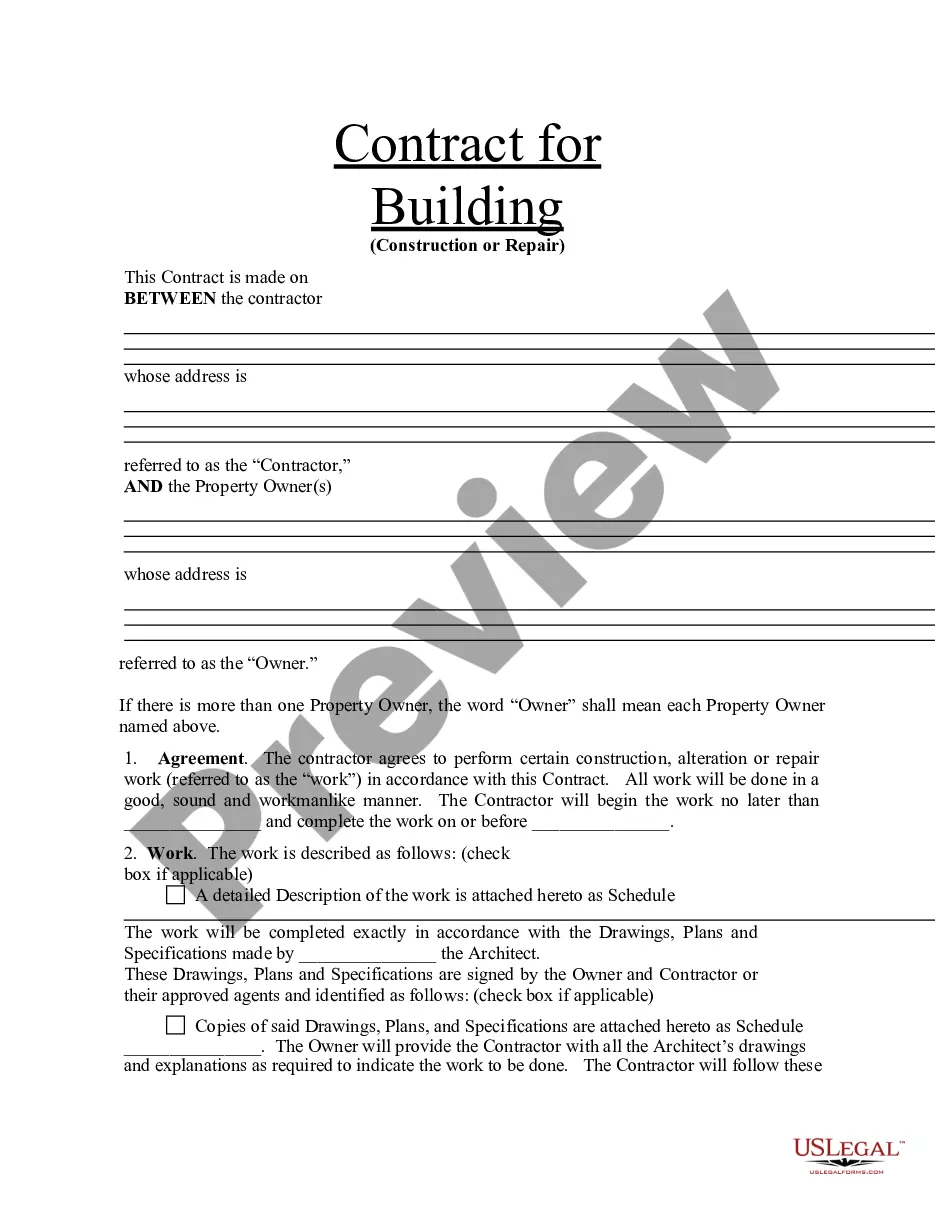
The Flooring Contract for Contractor is a legal document that establishes a formal agreement between a flooring contractor and a property owner. It outlines key details regarding the scope of work, payment structure, and responsibilities of both parties. This contract is tailored specifically for use in South Carolina, distinguishing it from generic contracts used in other states.
What’s included in this form
- Payment arrangement options: cost plus or fixed fee.
- Permits and regulatory approvals required by local authorities.
- Conditions regarding soil and work site responsibilities.
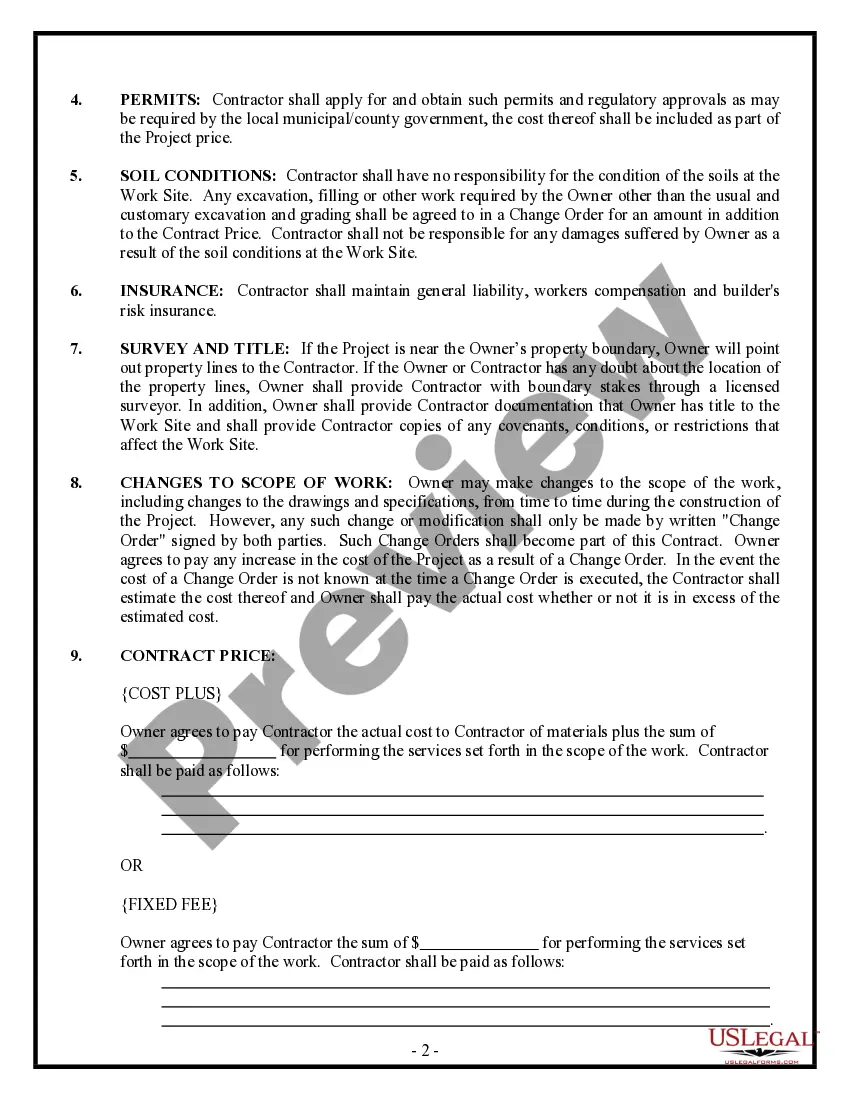
- Insurance requirements for contractors, including liability and workers' compensation.
- Procedures for handling changes to the scope of work through change orders.
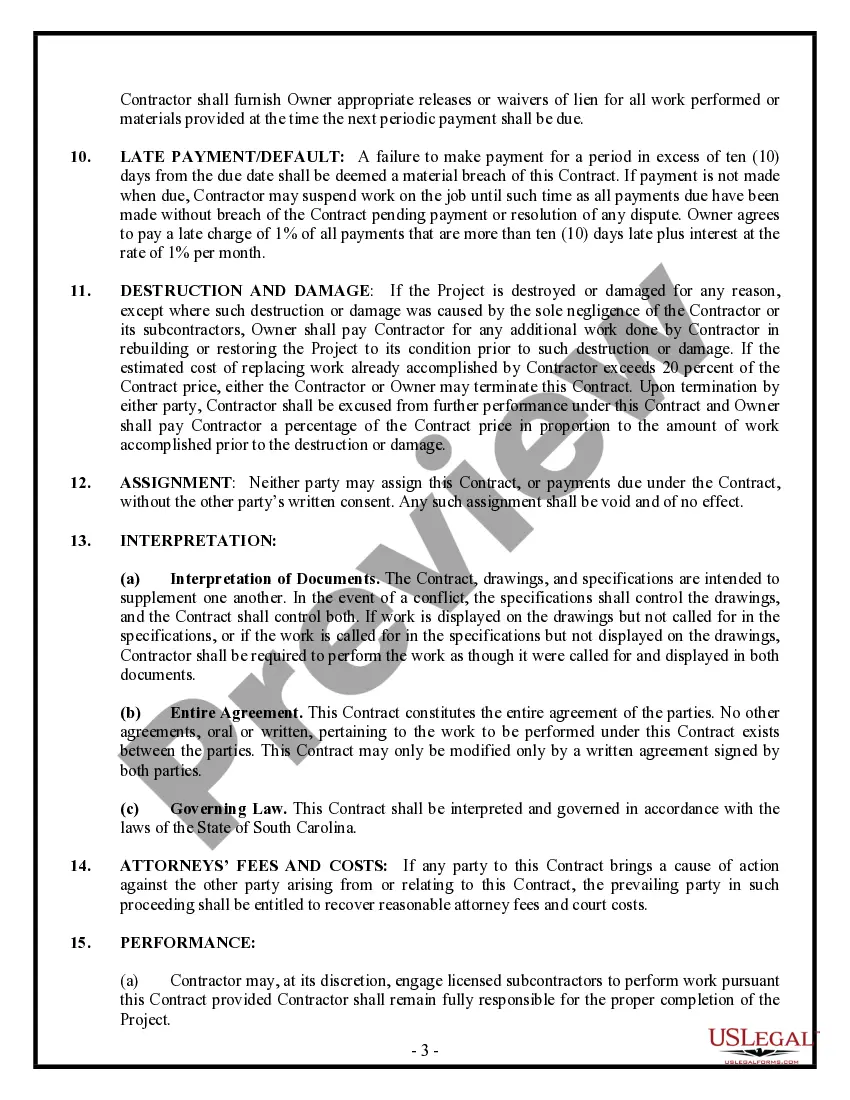
- Clauses regarding late payment and material breach of contract.
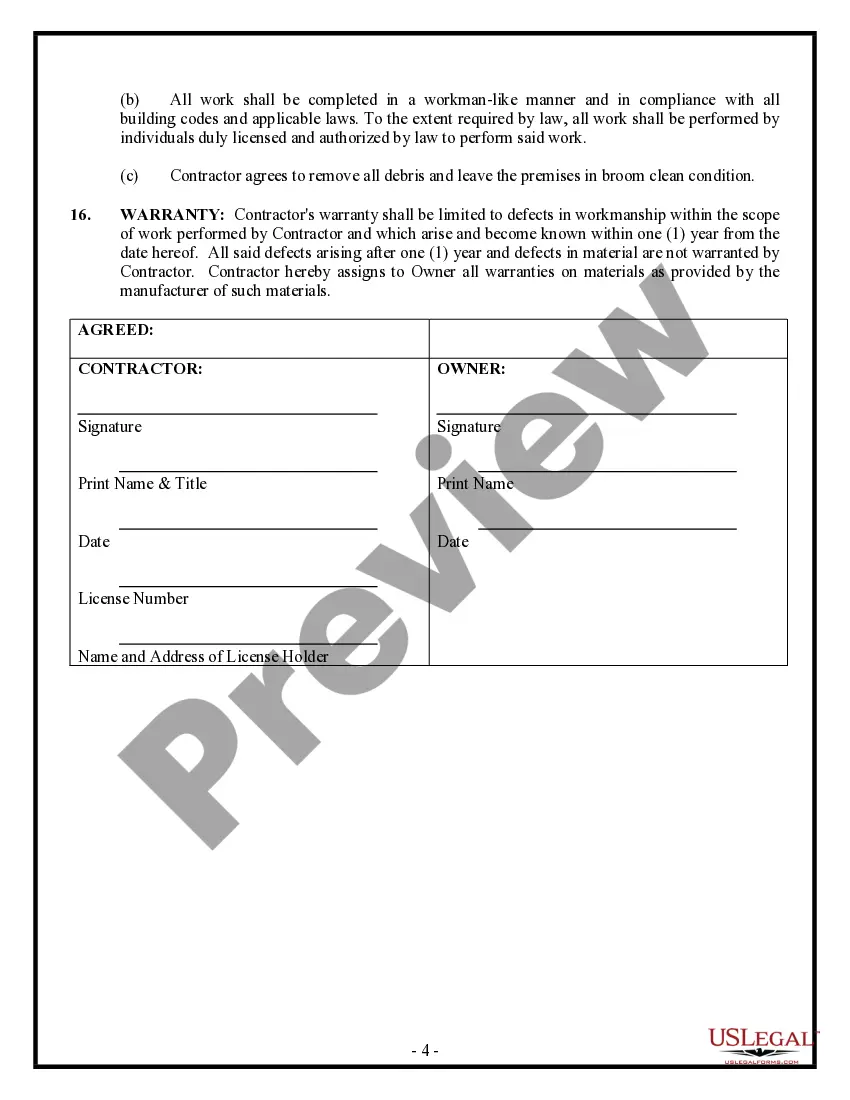
- Contractor's warranty on workmanship for one year.

Situations where this form applies
This form is essential when a property owner engages a flooring contractor to complete installation or renovation tasks involving flooring. It is used in residential and commercial settings, particularly when there are specific project details and payment terms that must be clearly defined. This contract helps protect the rights and obligations of both parties throughout the project.
Intended users of this form
- Property owners seeking professional flooring services.
- Flooring contractors offering their services to property owners.
- Businesses or individuals needing clarity on payment and project scope.
- Parties involved in flooring projects in South Carolina.
Steps to complete this form
- Identify the involved parties: property owner and contractor.
- Specify the project details, including type of flooring and work site conditions.
- Choose your payment arrangement: cost plus or fixed fee.
- Detail any necessary permits and regulatory requirements.
- Sign and date the contract at the designated sections for both parties.
Does this document require notarization?
This form does not typically require notarization unless specified by local law. Always check local regulations to ensure compliance.
Get your form ready online
Our built-in tools help you complete, sign, share, and store your documents in one place.
Make edits, fill in missing information, and update formatting in US Legal Forms—just like you would in MS Word.
Download a copy, print it, send it by email, or mail it via USPS—whatever works best for your next step.
Sign and collect signatures with our SignNow integration. Send to multiple recipients, set reminders, and more. Go Premium to unlock E-Sign.
If this form requires notarization, complete it online through a secure video call—no need to meet a notary in person or wait for an appointment.
We protect your documents and personal data by following strict security and privacy standards.

Make edits, fill in missing information, and update formatting in US Legal Forms—just like you would in MS Word.

Download a copy, print it, send it by email, or mail it via USPS—whatever works best for your next step.

Sign and collect signatures with our SignNow integration. Send to multiple recipients, set reminders, and more. Go Premium to unlock E-Sign.

If this form requires notarization, complete it online through a secure video call—no need to meet a notary in person or wait for an appointment.

We protect your documents and personal data by following strict security and privacy standards.
Common mistakes
- Failing to specify the scope of work clearly, leading to misunderstandings.
- Not addressing change orders properly, which can complicate project costs.
- Overlooking insurance requirements that protect both parties.
- Not specifying payment schedules leading to late payments and disputes.
Benefits of using this form online
- Convenient access: download and complete the form at your own pace.
- Editability: easily make changes before finalizing the contract.
- Reliability: forms are drafted by licensed attorneys to ensure compliance with state laws.
Legal use & context
- This contract serves as a binding agreement between contractors and property owners.
- It helps mitigate risks by clearly outlining responsibilities and liabilities.
- Understanding the limitations and specifications in the contract can prevent legal disputes.
Key takeaways
- The Flooring Contract for Contractor is essential for formalizing agreements between property owners and flooring contractors.
- This contract addresses payment terms, project scope, and responsibilities to protect both parties.
- It is specifically designed to comply with South Carolina regulations.
- Using this form helps avoid common pitfalls in contractor agreements.
Looking for another form?
Form popularity
FAQ
Per South Carolina state law, a general handyman does not need a license to perform basic repair and maintenance tasks for homeowners. However, one does need to register with the South Carolina Department of Labor, Licensing and Regulation.
STEP 1: Plan your business. STEP 2: Form a legal entity. STEP 3: Register for taxes. STEP 4: Open a business bank account & credit card. STEP 5: Set up business accounting. STEP 6: Obtain necessary permits and licenses. STEP 7: Get business insurance.
Acquire 4 years of experience in the trade for which you plan to get the license for. After this, you will have to take two exams: the California Law and Business Exam and the Flooring & Floor Covering C-15 exam.
File Residential Home Builders License Application. Submit a $100 application processing fee. Submit an affidavit of eligibility. Submit proof of at least one year of relevant work experience within the past five years. Pass PSI exam.
Do quality flooring work. Build a great website. Optimize your website for search engines. Take high-quality photographs of your work. Build a strong brand. Build relationships with local contractors. Purchase flooring job leads. Put an ad in the phonebook.
Generally speaking, a general contractor is someone who manages a team of subcontractors to help do various types of construction projects in your home. A custom home builder, however, is specialized in building custom homes and is able to complete this specific type of project start to finish on their own.
What are the costs involved in opening a carpet store? Your startup costs will be between $2,000 and $10,000, depending on your location. You can start from home, or you can use a small workshop with a monthly rent of about $1,000. Expect to pay additional money for high-grade insurance.
FILE A WRITTEN APPLICATION. SUBMIT A CERTIFIED CHECK. SUBMIT AN AFFIDAVIT. PASS THE EXAM. PAY THE LICENSE FEE.
In South Carolina, the South Carolina Department of Labor, Licensing and Regulations is responsible for the licensing of all contractors. General, mechanical, specialty and manufactured housing contractors must be licensed in order to work in the state.