Rhode Island Warranty Deed for Parents to Child with Reservation of Life Estate
About this form
The Warranty Deed for Parents to Child with Reservation of Life Estate is a legal document that allows parents to transfer property ownership to their child while retaining the right to live on the property for the duration of their life. This form serves distinct purposes compared to other types of deeds, as it ensures that the parents can continue to use the property, providing them with security while also allowing for the transfer of ownership to their child without the burden of probate in the future.
Main sections of this form
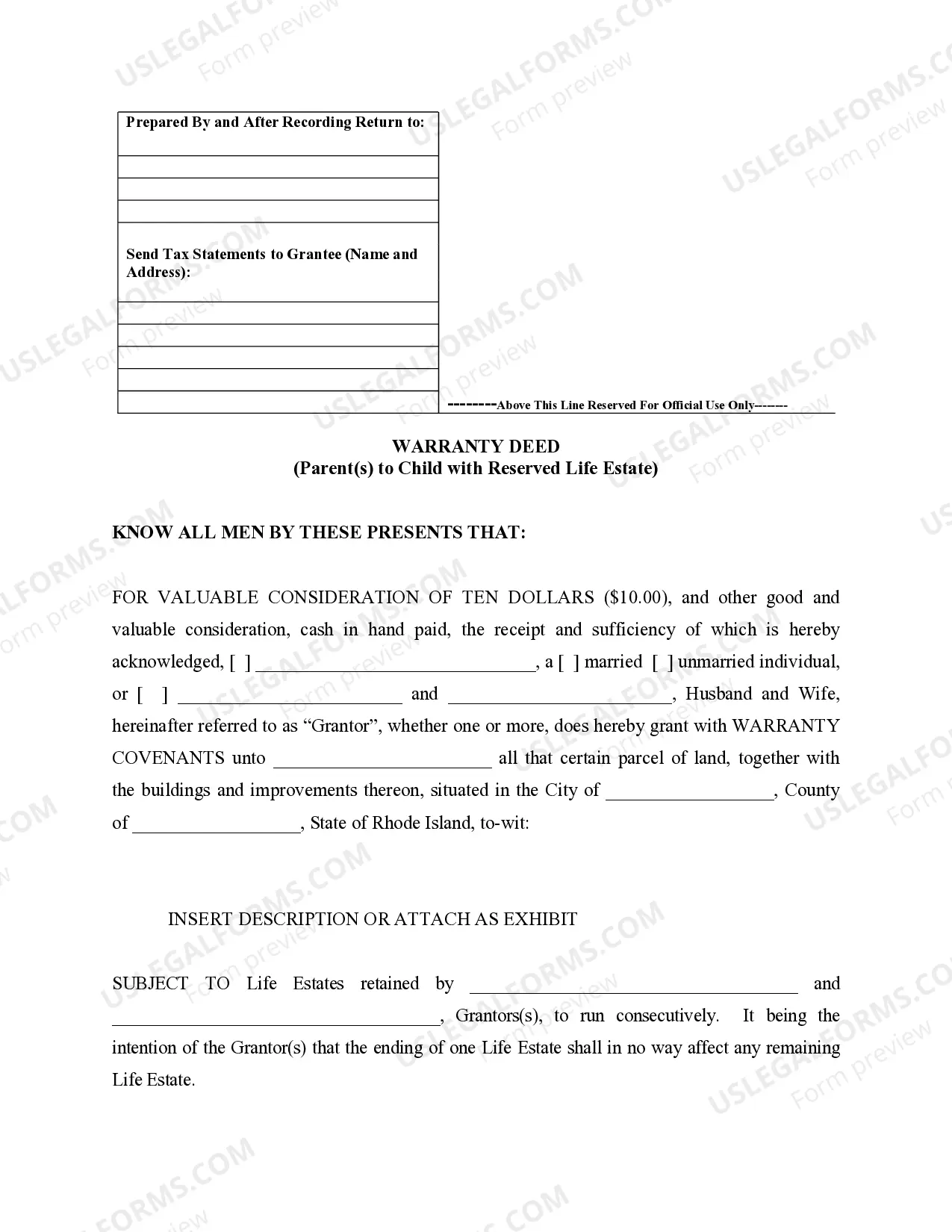
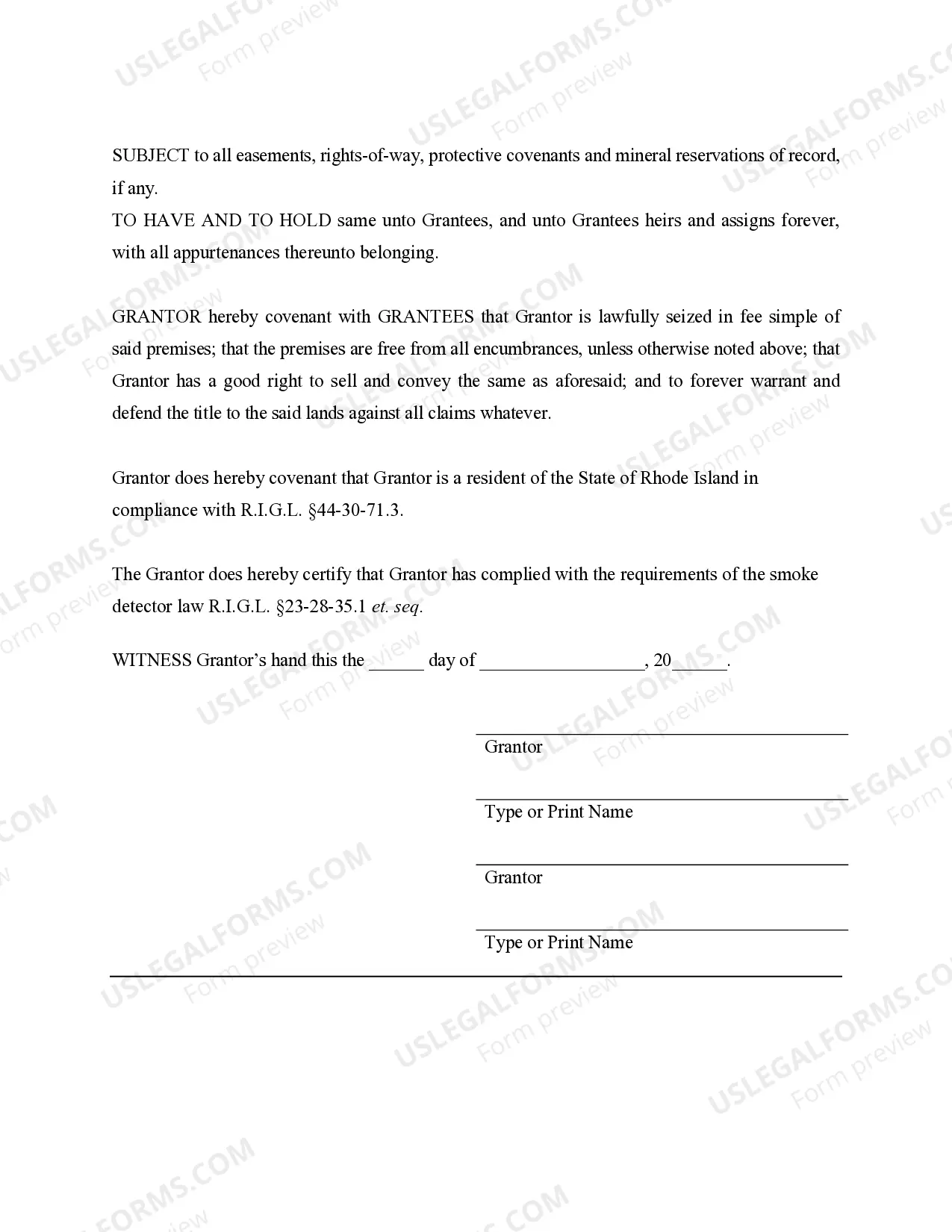
- Identification of the grantor(s) (parents) and grantee(s) (child).
- Description of the property being transferred.
- Statement of the life estate reserved by the grantor(s).
- Covenants regarding the title and encumbrances of the property.
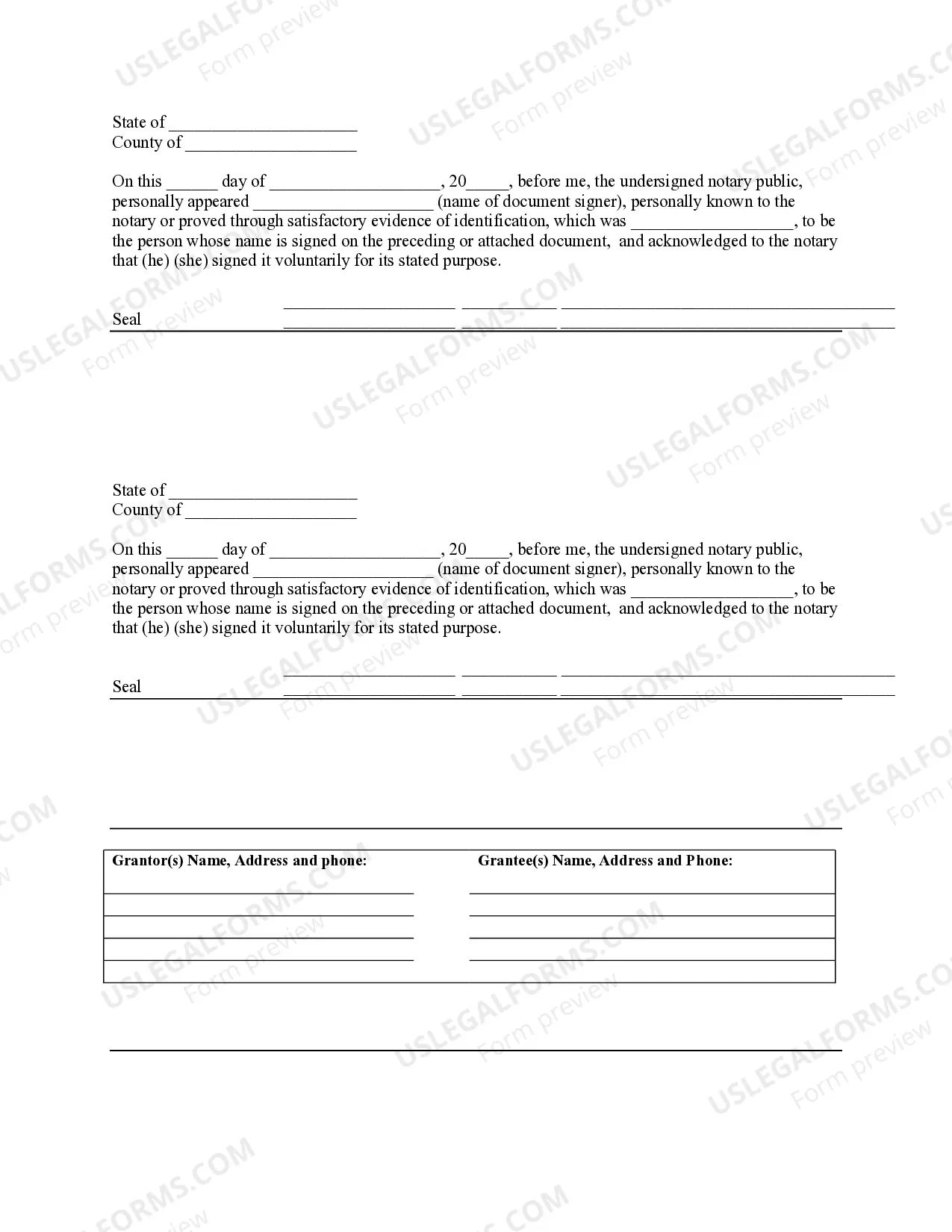
- Space for signatures and the date of execution.



Situations where this form applies
This form is suitable when parents wish to transfer ownership of real estate to their child while ensuring they can continue to reside in the home. It is commonly used in estate planning as a way to avoid probate, protect the property from being sold without consent, and provide for the parents' continued occupancy.
Who this form is for
- Parents wishing to deed property to their child while retaining life rights.
- Individuals engaged in estate planning.
- Families looking to keep property within the family without the risk of losing control during the parents' lifetime.
Instructions for completing this form
- Identify the parties involved by entering the full names of the grantor(s) and grantee(s).
- Specify the property by providing a clear description of the real estate being transferred.
- Indicate the duration of the life estate reserved by the grantor(s).
- Enter the date the deed is executed and obtain the required signatures.
- Ensure that any additional clauses regarding easements or encumbrances are included if applicable.
Does this document require notarization?
This document requires notarization to meet legal standards. US Legal Forms provides secure online notarization powered by Notarize, allowing you to complete the process through a verified video call, available 24/7.
Get your form ready online
Our built-in tools help you complete, sign, share, and store your documents in one place.
Make edits, fill in missing information, and update formatting in US Legal Forms—just like you would in MS Word.
Download a copy, print it, send it by email, or mail it via USPS—whatever works best for your next step.
Sign and collect signatures with our SignNow integration. Send to multiple recipients, set reminders, and more. Go Premium to unlock E-Sign.
If this form requires notarization, complete it online through a secure video call—no need to meet a notary in person or wait for an appointment.
We protect your documents and personal data by following strict security and privacy standards.
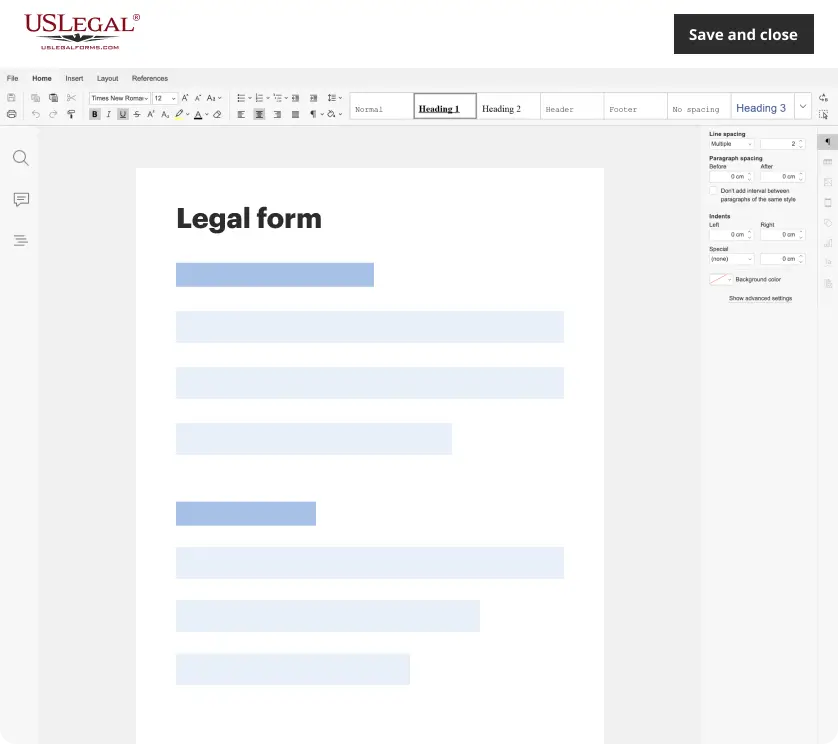
Make edits, fill in missing information, and update formatting in US Legal Forms—just like you would in MS Word.
Download a copy, print it, send it by email, or mail it via USPS—whatever works best for your next step.
Sign and collect signatures with our SignNow integration. Send to multiple recipients, set reminders, and more. Go Premium to unlock E-Sign.

If this form requires notarization, complete it online through a secure video call—no need to meet a notary in person or wait for an appointment.

We protect your documents and personal data by following strict security and privacy standards.
Avoid these common issues
- Failing to accurately describe the property being transferred.
- Omitting signatures from all required parties.
- Not specifying the terms of the life estate clearly.
- Neglecting to review and ensure compliance with state-specific laws.
Why use this form online
- Convenience of completing the form from home at your own pace.
- Editability of the document before finalizing your entries.
- Access to legal forms drafted by licensed attorneys, ensuring accuracy and reliability.
Legal use & context
- This form is valid for transferring property interest while retaining a life estate.
- It is essential to comply with local regulations to ensure enforceability.
Summary of main points
- Understand the implications of retaining a life estate when transferring property.
- Follow local laws to ensure the Warranty Deed is valid and enforceable.
- Utilize this form to protect both the interests of the parents and the child.
Looking for another form?
Form popularity
FAQ
The life tenant cannot change the remainder beneficiary without their consent. If the life tenant applies for any loans, they cannot use the life estate property as collateral. There's no creditor protection for the remainderman. You can't minimize estate tax.
To dissolve a life estate, the life tenant can give their ownership interest to the remainderman. So, if a mother has a life estate and her son has the remainder, she can convey her interest to him, and he will then own the entire interest in the property.
Borrowing Against Life Estate If your property is owned by a life estate, you can still borrow against the property. However, you may face additional hurdles at the lender. First, bring in the appropriate documents establishing the life estate, such as your will or the deed to the property.
What happens to a life estate after someone dies? Upon the life tenant's death, the property passes to the remainder owner outside of probate.They can sell the property or move into and claim it as their primary residence (homestead). Property taxes will not be reassessed.
When the life tenant dies, the house will not go through probate, since at the life tenant's death the ownership will pass automatically to the holders of the remainder interest.The life tenant cannot sell or mortgage the property without the agreement of the remaindermen.
Almost all deeds creating a life estate will also name a remaindermanthe person or persons who get the property when the life tenant dies.The life tenant is the owner of the property until they die. However, the remainderman also has an ownership interest in the property while the life tenant is alive.
Can a life estate deed be contested? The answer is YES! The Life estate is an agreeable choice, particularly where there is an advantage in having the life estate revert back to its real owner (Grantor or Life Tenant).
Although a remainderman has certain rights that need to be protected, he does not have any responsibilities that are owed to the life tenant.Without the consent of the remainderman, the life tenant may not take out a new mortgage or otherwise encumber the property.
A person owns property in a life estate only throughout their lifetime. Beneficiaries cannot sell property in a life estate before the beneficiary's death. One benefit of a life estate is that property can pass when the life tenant dies without being part of the tenant's estate.