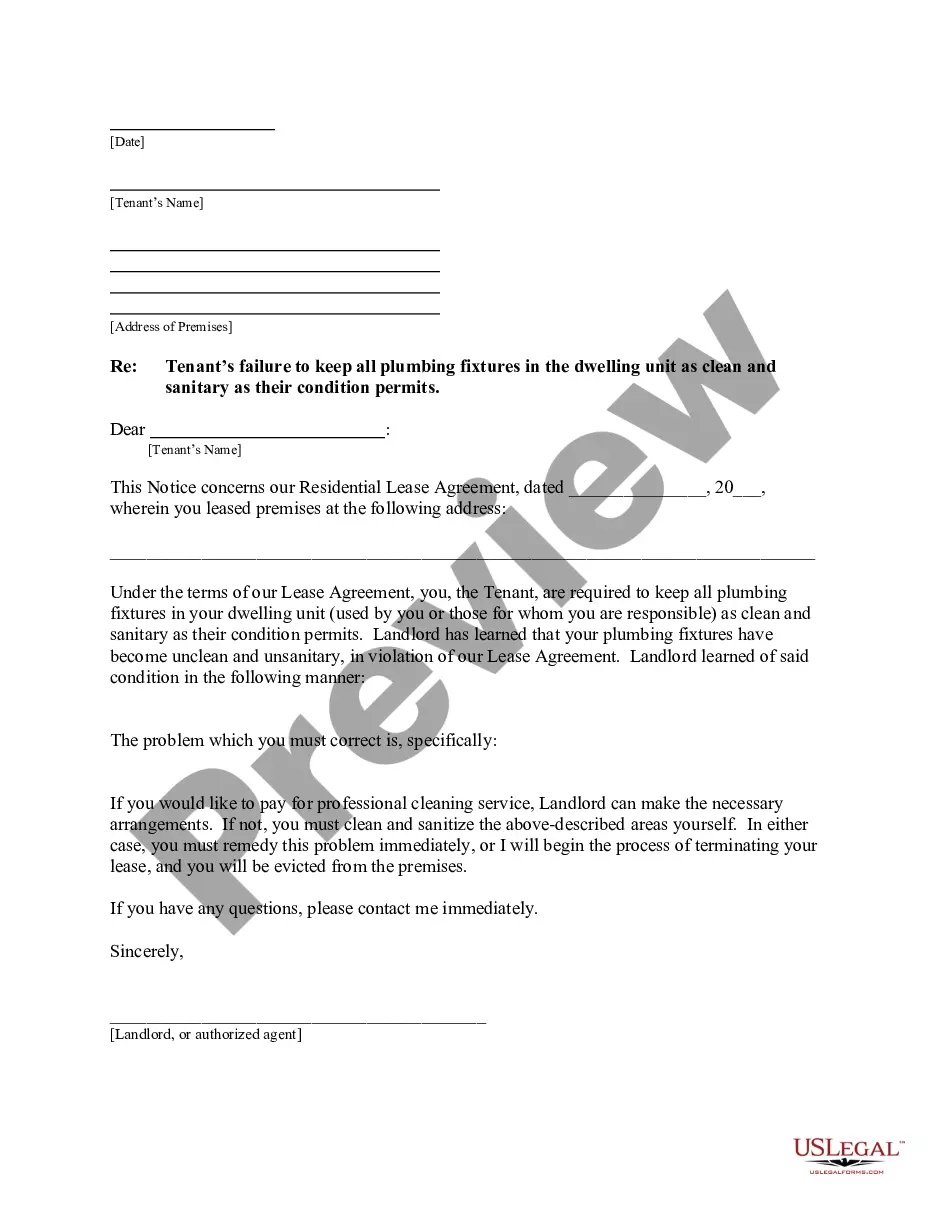
Rhode Island Letter from Landlord to Tenant for Failure to keep all plumbing fixtures in the dwelling unit as clean as their condition permits - Remedy or lease terminates
Overview of this form
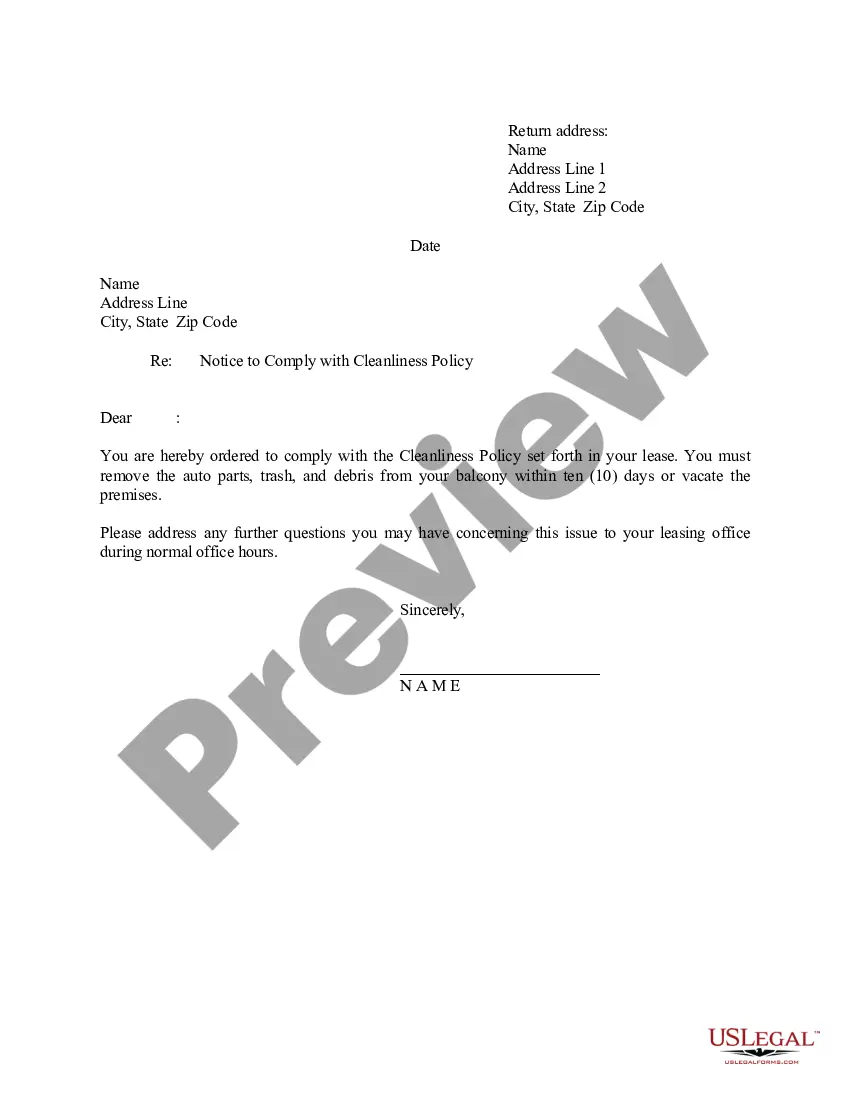
This form is a notice from a landlord to a tenant regarding the tenant's failure to keep all plumbing fixtures in the dwelling unit clean. The letter serves to inform the tenant that the plumbing has deteriorated during their occupancy and that continued neglect could lead to termination of the lease. This form is essential for landlords who want to enforce maintenance standards stipulated in the lease agreement, as it outlines the necessary action to address these concerns before further legal steps are taken.
Key parts of this document
- Identification of the landlord and tenant.
- Description of the maintenance issues with plumbing fixtures.
- Warning of potential lease termination upon continued neglect.
- Signature of the landlord or authorized agent.
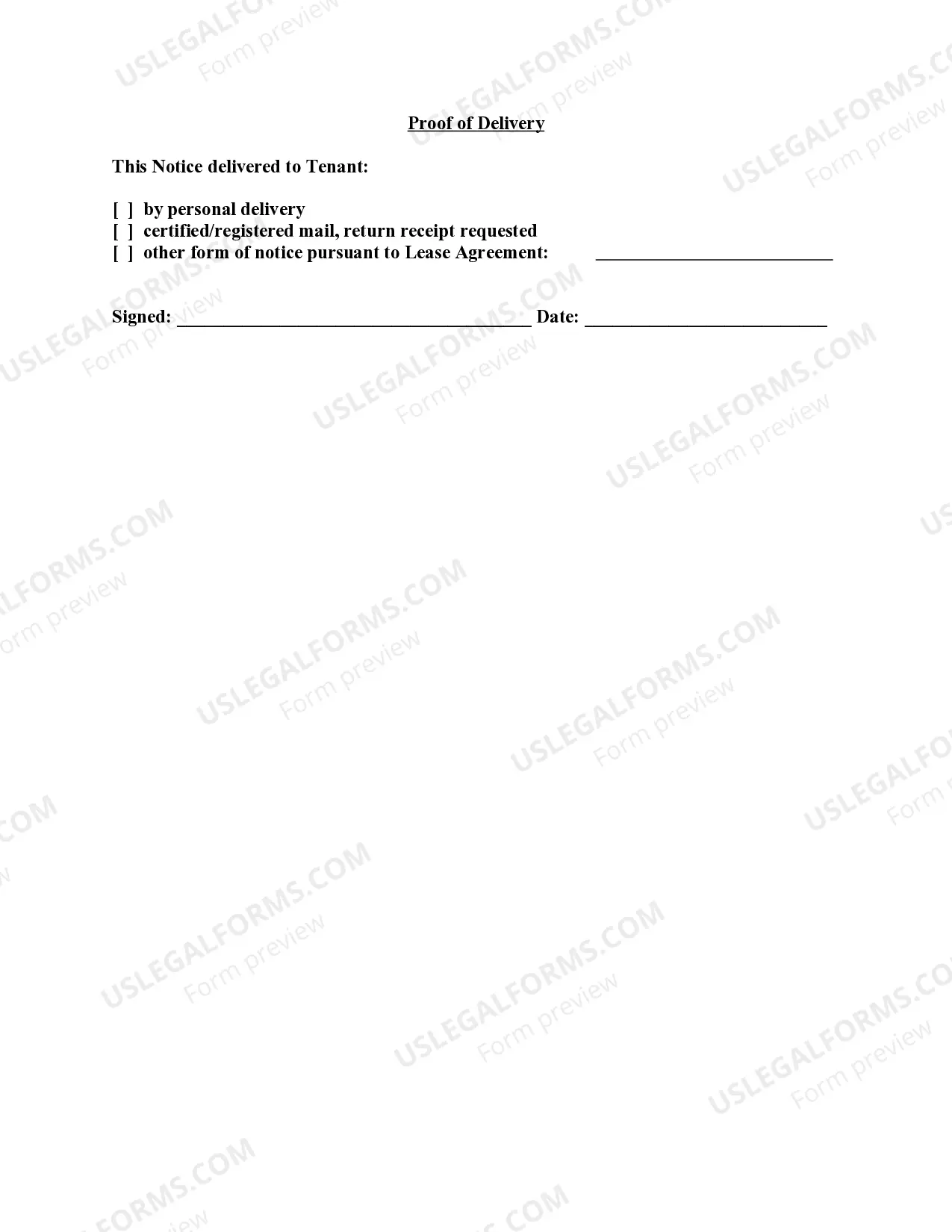
- Proof of delivery method (personal or certified mail).


Common use cases
Who needs this form
- Landlords who rent out residential properties.
- Property management companies overseeing rental units.
- Landlords seeking to formally notify tenants of lease violations.
Completing this form step by step
- Identify the parties: Enter the names of the landlord and tenant.
- Describe the plumbing issues: Clearly state the condition of the plumbing fixtures.
- Warn about lease termination: Indicate that continued neglect could result in lease termination.
- Sign the notice: Have the landlord or authorized agent sign and date the notice.
- Deliver the notice: Choose a delivery method (personal or certified mail) and note it for record-keeping.
Does this form need to be notarized?
Notarization is generally not required for this form. However, certain states or situations might demand it. You can complete notarization online through US Legal Forms, powered by Notarize, using a verified video call available anytime.
Get your form ready online
Our built-in tools help you complete, sign, share, and store your documents in one place.
Make edits, fill in missing information, and update formatting in US Legal Forms—just like you would in MS Word.
Download a copy, print it, send it by email, or mail it via USPS—whatever works best for your next step.
Sign and collect signatures with our SignNow integration. Send to multiple recipients, set reminders, and more. Go Premium to unlock E-Sign.
If this form requires notarization, complete it online through a secure video call—no need to meet a notary in person or wait for an appointment.
We protect your documents and personal data by following strict security and privacy standards.
Make edits, fill in missing information, and update formatting in US Legal Forms—just like you would in MS Word.
Download a copy, print it, send it by email, or mail it via USPS—whatever works best for your next step.
Sign and collect signatures with our SignNow integration. Send to multiple recipients, set reminders, and more. Go Premium to unlock E-Sign.
If this form requires notarization, complete it online through a secure video call—no need to meet a notary in person or wait for an appointment.
We protect your documents and personal data by following strict security and privacy standards.
Typical mistakes to avoid
- Failing to provide specific details about the maintenance issues.
- Not signing the notice, which could invalidate it.
- Using incorrect delivery methods that do not provide proof.
Advantages of online completion
- Easy to customize according to your specific situation.
- Instantly downloadable and accessible for immediate use.
- Secured access to forms drafted by licensed attorneys, ensuring reliability.
Legal use & context
- This form serves as a formal record of communication between the landlord and tenant.
- It is aimed at enforcing tenant obligations and protecting the landlordâs rights.
- Understanding and properly executing this form can prevent future legal disputes.
Looking for another form?
Form popularity
FAQ
You're a landlord if you rent out your property. As a landlord you must: keep your rented properties safe and free from health hazards. make sure all gas and electrical equipment is safely installed and maintained.
The NSW tenant factsheet states that urgent repairs, including blocked toilets, are the responsibility of the landlord. When urgent repairs are required, the tenant must notify the landlord as soon as possible - preferably in writing.
If there is a problem, such as a burst pipe resulting from the landlord's failure to maintain the property, the tenant cannot be held responsible. If a tenant has detected a problem and reported it to the landlord, it is the owner's responsibility to fix them.
When you rent, your landlord is responsible for maintaining the functional aspects of your home such as plumbing, electricity, and heating. Landlords must also generally take action when flooding, a clogged pipe, pest infestation, or other problems occur.
A landlord cannot evict a tenant without an adequately obtained eviction notice and sufficient time. A landlord cannot retaliate against a tenant for a complaint. A landlord cannot forego completing necessary repairs or force a tenant to do their own repairs.A landlord cannot remove a tenant's personal belongings.
If you think your landlord is violating the Fair Housing Act, you can get that landlord in trouble by filing a complaint at HUD.gov. Your remedy for breach of quiet enjoyment is to terminate the lease and move or sue in small claims court.
As stated in the Landlord and Tennant Act 1985, it is the landlord's responsibility to maintain their drainage, pipes and other areas of plumbing. If a drain becomes blocked through tenant misuse however, then the tenant is liable for the cost of repairs.
If you're seeking damages for emotional distress caused by a landlord's discrimination, or punitive damages for especially blatant and intentional discrimination, a lawsuit may well be your best bet. Understand what's involved in suing your landlord. You may file a lawsuit in either federal or state court.
In California, a prospective landlord cannot ask about race, color, religion, sex, gender, gender identity, gender expression, sexual orientation, marital status, national origin, ancestry, familial status, disability, or genetic information.