Rhode Island Warranty Deed from Individual to LLC
Understanding this form
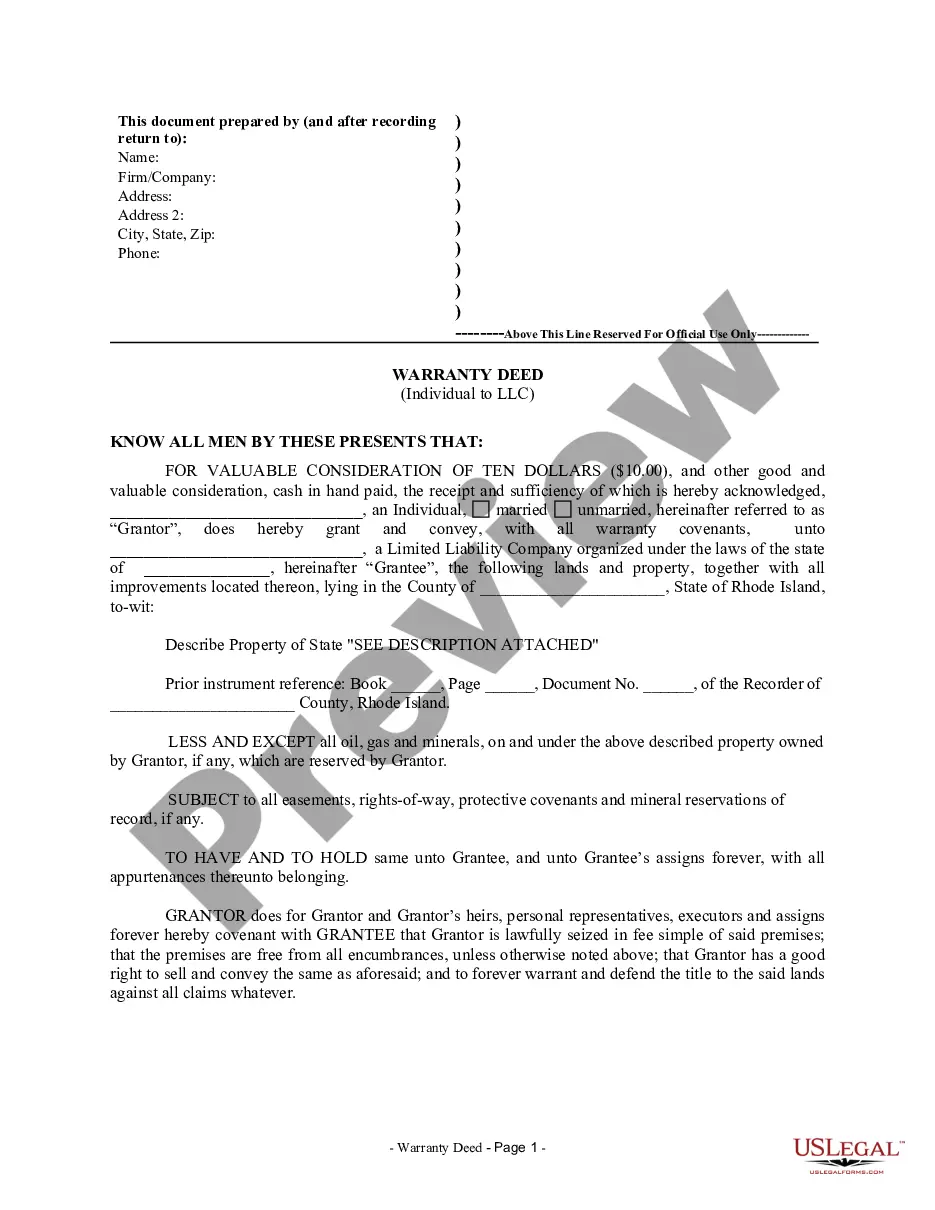
The Warranty Deed from Individual to LLC is a legal document used to transfer property ownership from an individual (the grantor) to a limited liability company (the grantee). This form ensures that the property is conveyed along with specific warranties that protect the grantee's rights. Unlike other deeds, this form includes a reservation clause for oil, gas, and minerals, differentiating it from general warranty deeds that may not specify such reservations.
Key parts of this document
- Description of the property being conveyed.
- Reference to prior ownership documents, including book and page numbers.
- Reservation of oil, gas, and minerals by the grantor.
- Covenants stating the grantor's ownership and authority to convey the property.
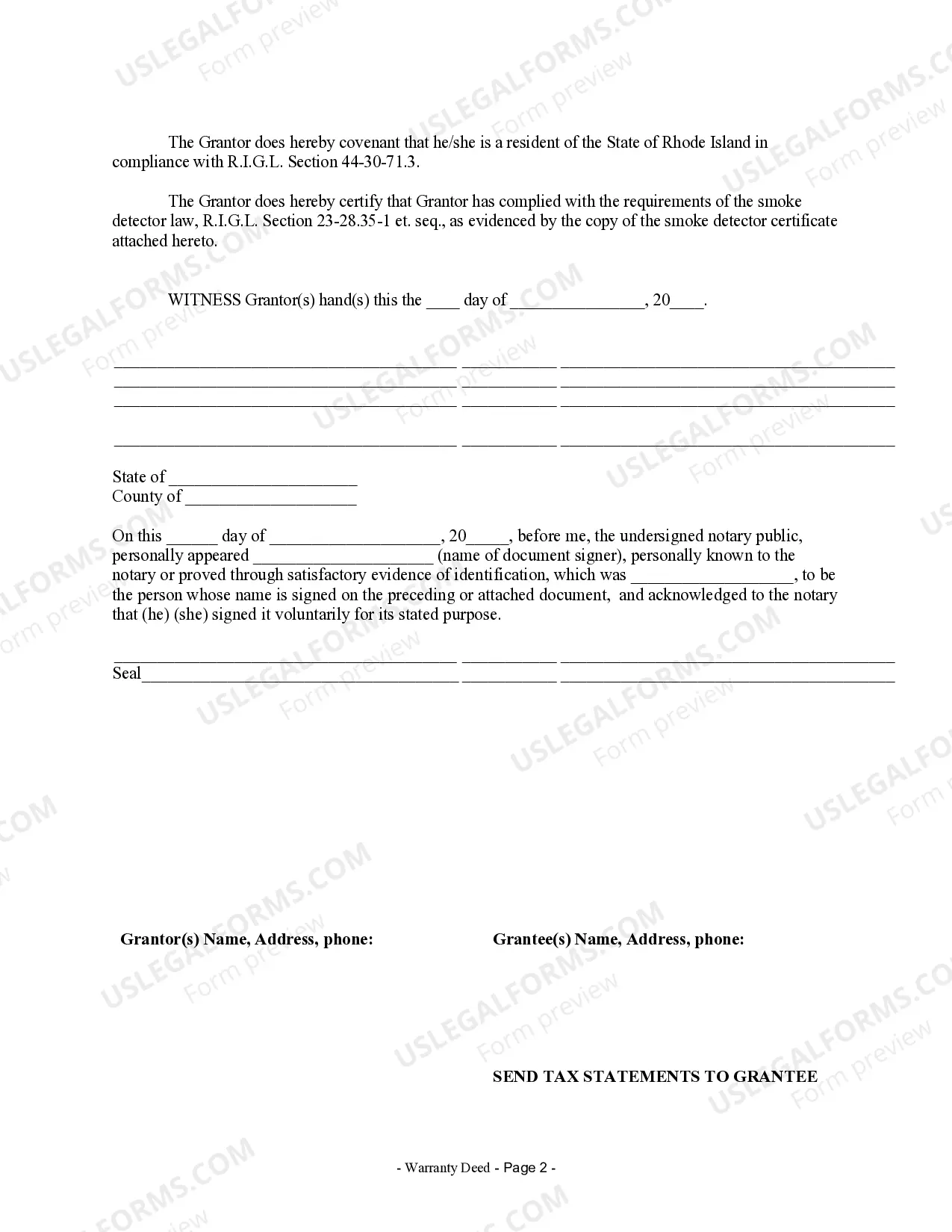
- Certification of compliance with state law, including smoke detector regulations.
- Notarization details for legal validation.





Situations where this form applies
This form is useful when an individual wishes to transfer title to real estate to a limited liability company. Scenarios may include real estate investments, business property transfers, or estate planning purposes where a property owned by an individual is intended to be held by an LLC for liability protection or tax benefits.
Intended users of this form
- Individuals who own property and want to transfer it to an LLC.
- New LLCs needing to formalize property ownership.
- Real estate investors identifying business structures for holding properties.
- Estate planners seeking to streamline asset management through an LLC.
How to complete this form
- Identify the parties: Fill in the names of the grantor (individual) and grantee (LLC).
- Specify the property: Include a detailed description of the property being transferred.
- Reference prior instruments: Enter the book and page numbers of previous documents.
- Complete reservation clauses: Clearly state any reservations for oil, gas, and minerals.
- Sign and date the document in the presence of a notary public.
Notarization guidance
Yes, this form must be notarized to be legally valid. The presence of a notary public is required to verify the identities of the parties signing the deed, ensuring the document's authenticity. US Legal Forms offers integrated online notarization options, allowing users to complete the notarization process securely via video call at any time.
Get your form ready online
Our built-in tools help you complete, sign, share, and store your documents in one place.
Make edits, fill in missing information, and update formatting in US Legal Forms—just like you would in MS Word.
Download a copy, print it, send it by email, or mail it via USPS—whatever works best for your next step.
Sign and collect signatures with our SignNow integration. Send to multiple recipients, set reminders, and more. Go Premium to unlock E-Sign.
If this form requires notarization, complete it online through a secure video call—no need to meet a notary in person or wait for an appointment.
We protect your documents and personal data by following strict security and privacy standards.

Make edits, fill in missing information, and update formatting in US Legal Forms—just like you would in MS Word.

Download a copy, print it, send it by email, or mail it via USPS—whatever works best for your next step.

Sign and collect signatures with our SignNow integration. Send to multiple recipients, set reminders, and more. Go Premium to unlock E-Sign.

If this form requires notarization, complete it online through a secure video call—no need to meet a notary in person or wait for an appointment.

We protect your documents and personal data by following strict security and privacy standards.
Common mistakes
- Failing to accurately describe the property being transferred.
- Omitting the reservation clause for oil, gas, and minerals, if applicable.
- Not including required signatures or notarization.
- Leaving out prior instrument references, which may affect the legality of the deed.
Benefits of using this form online
- Convenience of downloading the form immediately after purchase.
- Editability allows users to tailor the form to their specific needs.
- Prepared by licensed attorneys to ensure accuracy and compliance with local laws.
- Ability to access the form from anywhere without needing to visit an office.
Main things to remember
- This form is essential for transferring property from an individual to a limited liability company.
- It allows the grantor to reserve mineral rights while ensuring the transfer is secure.
- Notarization is required for the deed to be legally effective.
Looking for another form?
Form popularity
FAQ
Typically, the lender will provide you with a copy of the deed of trust after the closing. The original warranty deeds are often mailed to the grantee after they are recorded. These are your original copies and should be kept in a safe place, such as a fireproof lockbox or a safe deposit box at a financial institution.
A quitclaim deed only transfers the grantor's interests in a piece of real estate.A warranty deed contains a guarantee that the grantor has legal title and rights to the real estate. A quitclaim deed offers little to no protection to the grantee. It offers the least amount of protection out of any other type of deed.
A warranty deed, also known as a general warranty deed, is a legal real estate document between the seller (grantor) and the buyer (grantee). The deed protects the buyer by pledging that the seller holds clear title to the property and there are no encumbrances, outstanding liens, or mortgages against it.
A statutory warranty deed is different from a warranty deed because it is a shorter form made available through your state's statutes and it may not outright list the promise that the title is guaranteed to be clear. Instead, because it is a statutory form, this guarantee is implied and is still legally enforceable.