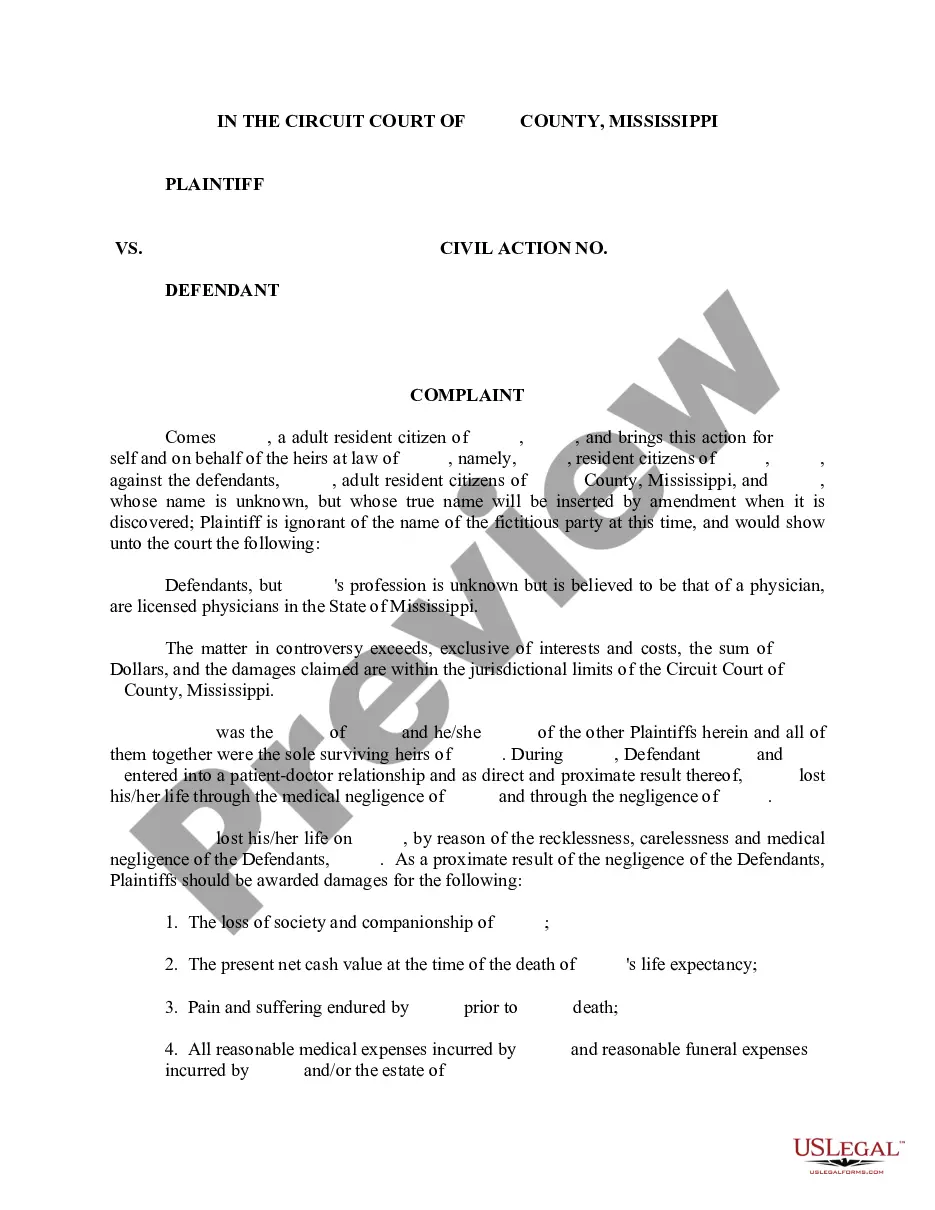
Rhode Island Warranty Deed from Husband and Wife to a Trust
Overview of this form
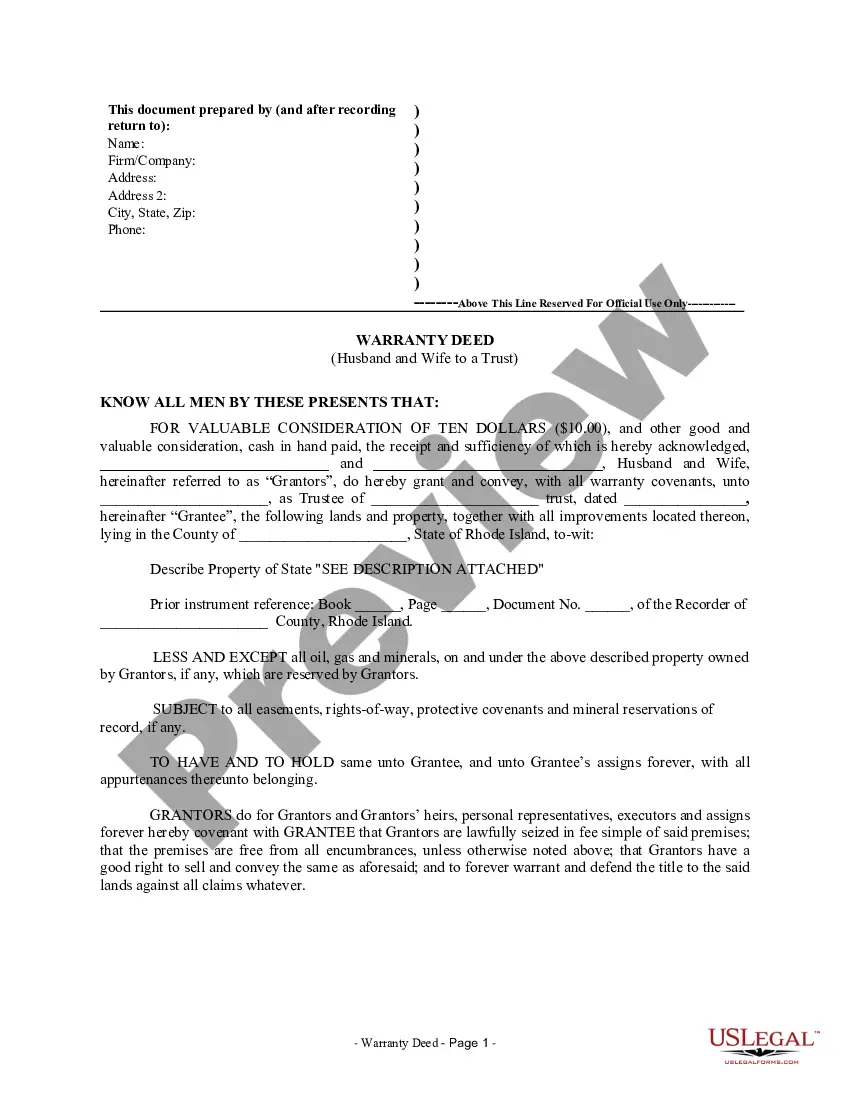
This Warranty Deed from Husband and Wife to a Trust is a legal document that allows a married couple to transfer ownership of property to a trust. The grantors (husband and wife) are conveying and warranting the specified property, while reserving rights to any oil, gas, and minerals beneath the land. Unlike other deeds, this form specifically caters to situations where a trust is the grantee, ensuring proper legal transfer while complying with relevant statutory laws.
Key parts of this document
- Description of the property being transferred.
- Reference to prior instrument for title verification.
- Clauses outlining reservation of oil, gas, and mineral rights.
- Covenants asserting that the property is free of encumbrances.
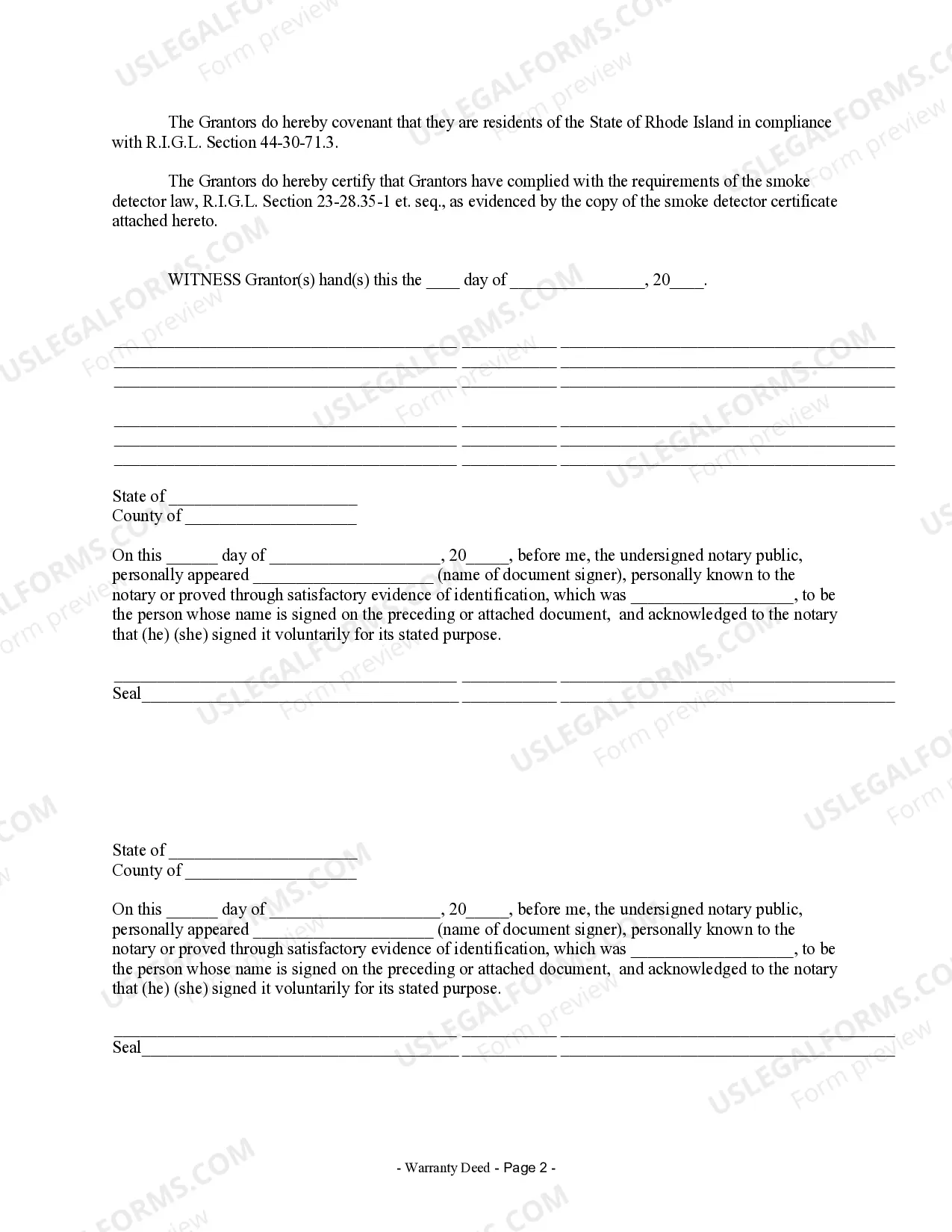
- Certification of compliance with local smoke detector laws.
- Signature sections for both grantors and a notary public.





When to use this document
This warranty deed should be used when a married couple wishes to transfer their property to a trust for estate planning, asset protection, or financial management purposes. It is particularly useful in situations where the couple wants to maintain control over the property while ensuring it is managed according to their wishes after their passing.
Who this form is for
Intended Audience
- Married couples who own real estate and wish to estate plan.
- Individuals setting up a trust for asset management.
- People seeking to transfer property while reserving mineral rights.
- Trustees responsible for managing assets held in trust.
Instructions for completing this form
- Identify the grantors: Fill in the names of the husband and wife.
- Specify the property: Clearly describe the property being transferred.
- Include references: Add prior instrument details for title verification.
- Complete the signatures: The grantors must sign and provide their printed names.
- Notarize the document: Arrange for a notary public to witness the signing.
Is notarization required?
This document requires notarization to meet legal standards. US Legal Forms provides secure online notarization powered by Notarize, allowing you to complete the process through a verified video call, available 24/7.
Get your form ready online
Our built-in tools help you complete, sign, share, and store your documents in one place.
Make edits, fill in missing information, and update formatting in US Legal Forms—just like you would in MS Word.
Download a copy, print it, send it by email, or mail it via USPS—whatever works best for your next step.
Sign and collect signatures with our SignNow integration. Send to multiple recipients, set reminders, and more. Go Premium to unlock E-Sign.
If this form requires notarization, complete it online through a secure video call—no need to meet a notary in person or wait for an appointment.
We protect your documents and personal data by following strict security and privacy standards.

Make edits, fill in missing information, and update formatting in US Legal Forms—just like you would in MS Word.

Download a copy, print it, send it by email, or mail it via USPS—whatever works best for your next step.

Sign and collect signatures with our SignNow integration. Send to multiple recipients, set reminders, and more. Go Premium to unlock E-Sign.

If this form requires notarization, complete it online through a secure video call—no need to meet a notary in person or wait for an appointment.

We protect your documents and personal data by following strict security and privacy standards.
Mistakes to watch out for
- Not accurately describing the property being transferred.
- Failing to properly reserve mineral rights or other interests.
- Omitting necessary signatures or notary acknowledgment.
- Using outdated property references that do not match public records.
Benefits of using this form online
- Convenience of instant download and access to legal documents.
- Editability to customize the form according to specific needs.
- Reliability of using professionally drafted templates by licensed attorneys.
Looking for another form?
Form popularity
FAQ
Typically, the lender will provide you with a copy of the deed of trust after the closing. The original warranty deeds are often mailed to the grantee after they are recorded. These are your original copies and should be kept in a safe place, such as a fireproof lockbox or a safe deposit box at a financial institution.
It's important to note that a warranty deed does not actually prove the grantor has ownership (a title search is the best way to prove that), but it is a promise by the grantor that they are transferring ownership and if it turns out they don't actually own the property, the grantor will be responsible for compensating
No, California does not require that the Grantee sign a warranty deed. However, some states and counties require that the deed be signed by the Grantee in addition to the Grantor.
Retrieve your original deed. Get the appropriate deed form. Draft the deed. Sign the deed before a notary. Record the deed with the county recorder. Obtain the new original deed.
Grantor's signature: The grantor must sign the deed for it to be valid. Usually, if more than one person owns a property, all the owners must sign. In some states a husband or wife who own property by themselves may have to have the spouse also sign the deed even though the spouse does not have title to the property.
A quitclaim deed can be used to transfer property from a trust, but a Special Warranty Deed seems to be a more common way to do this.
The easiest way to grant your spouse title to your home is via a quitclaim deed (Californians generally use an interspousal grant deed). With a quitclaim deed, you can name your spouse as the property's joint owner. The quitclaim deed must include the property's description, including its boundary lines.
No, in most states, the Grantee is not required to sign the Quitclaim Deed. However, some counties do require that the Quitclaim Deed be signed by the Grantee in addition to the Grantor.
Yes you can. This is called a transfer of equity but you will need the permission of your lender. If you are not married or in a civil partnership you may wish to consider creating a deed of trust and a living together agreement which we can explain to you.