Pennsylvania Mutual Wills package with Last Wills and Testaments for Married Couple with No Children
Understanding this form
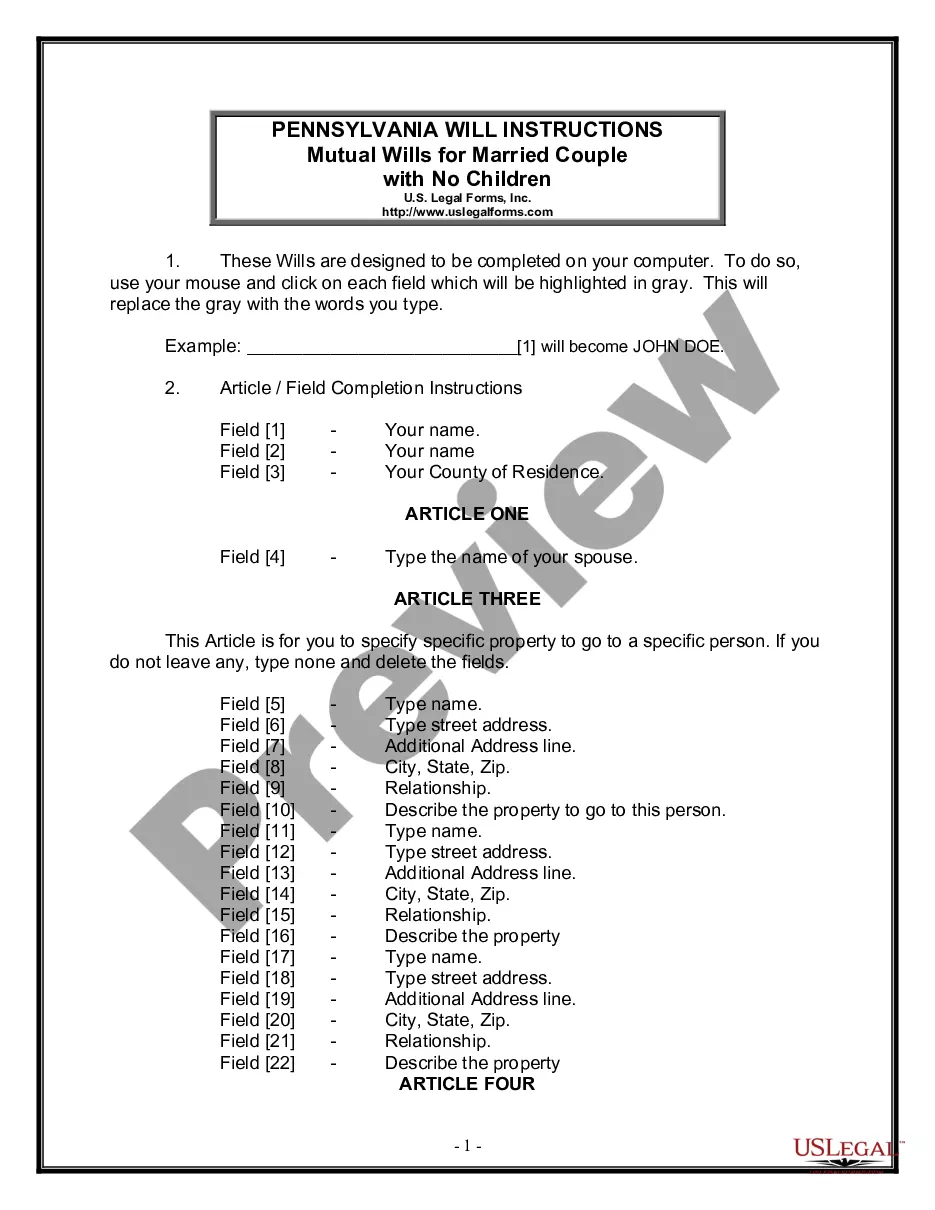
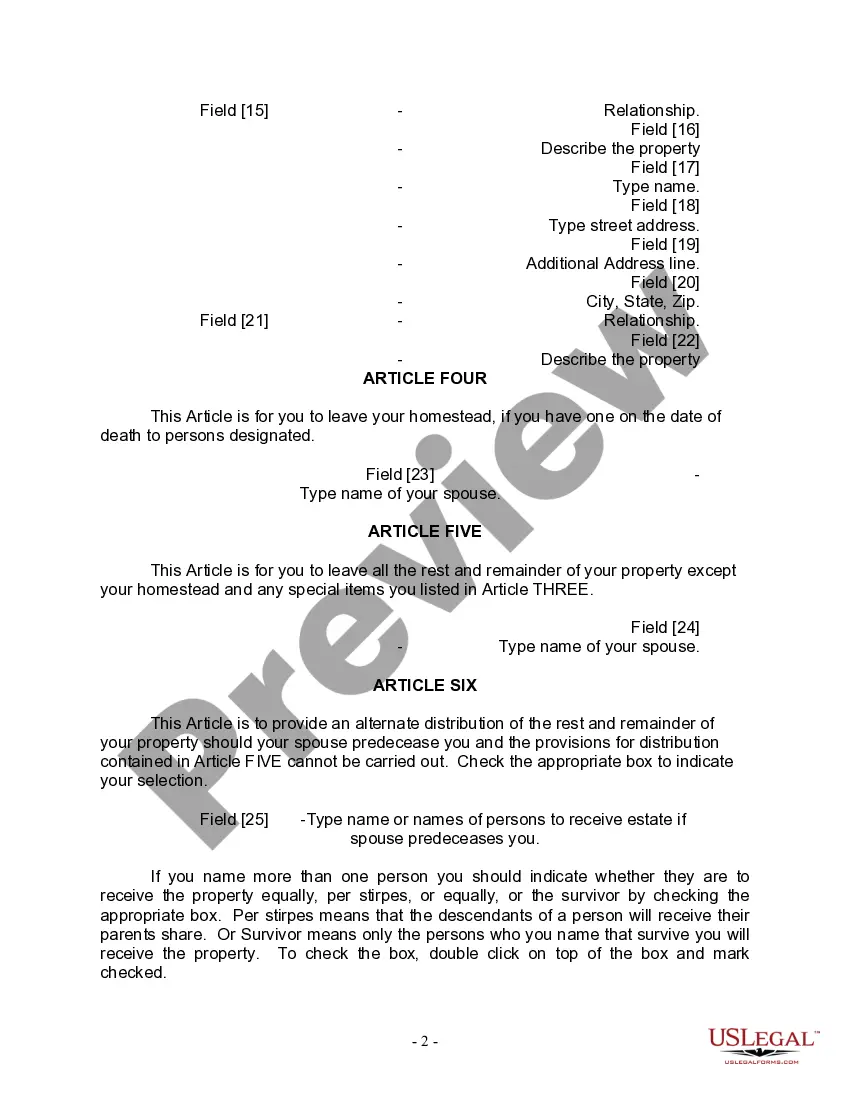
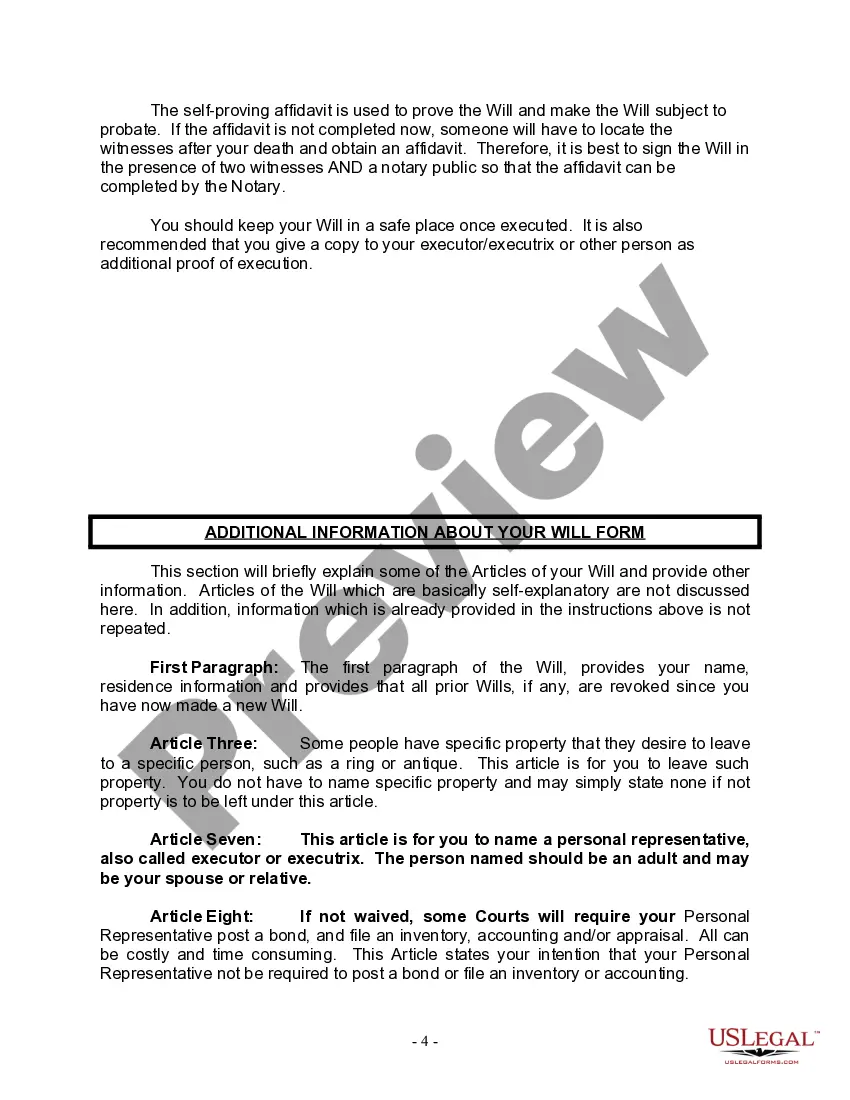
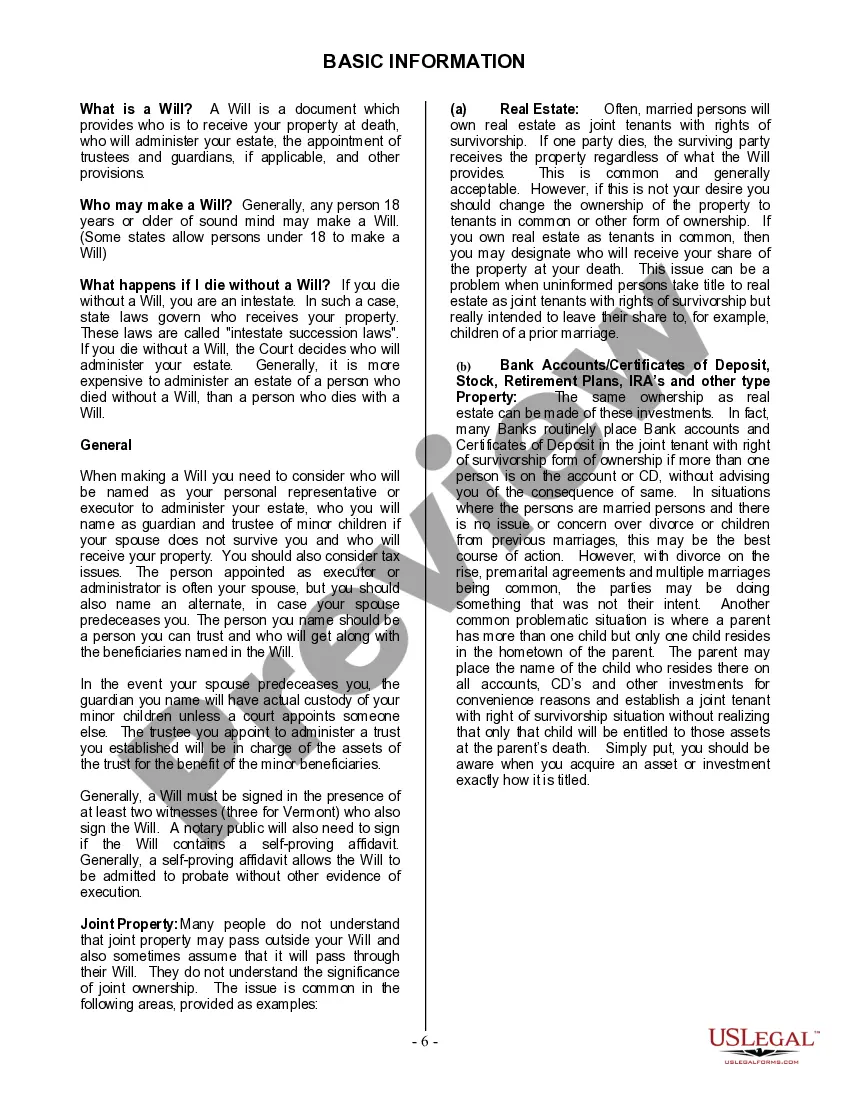
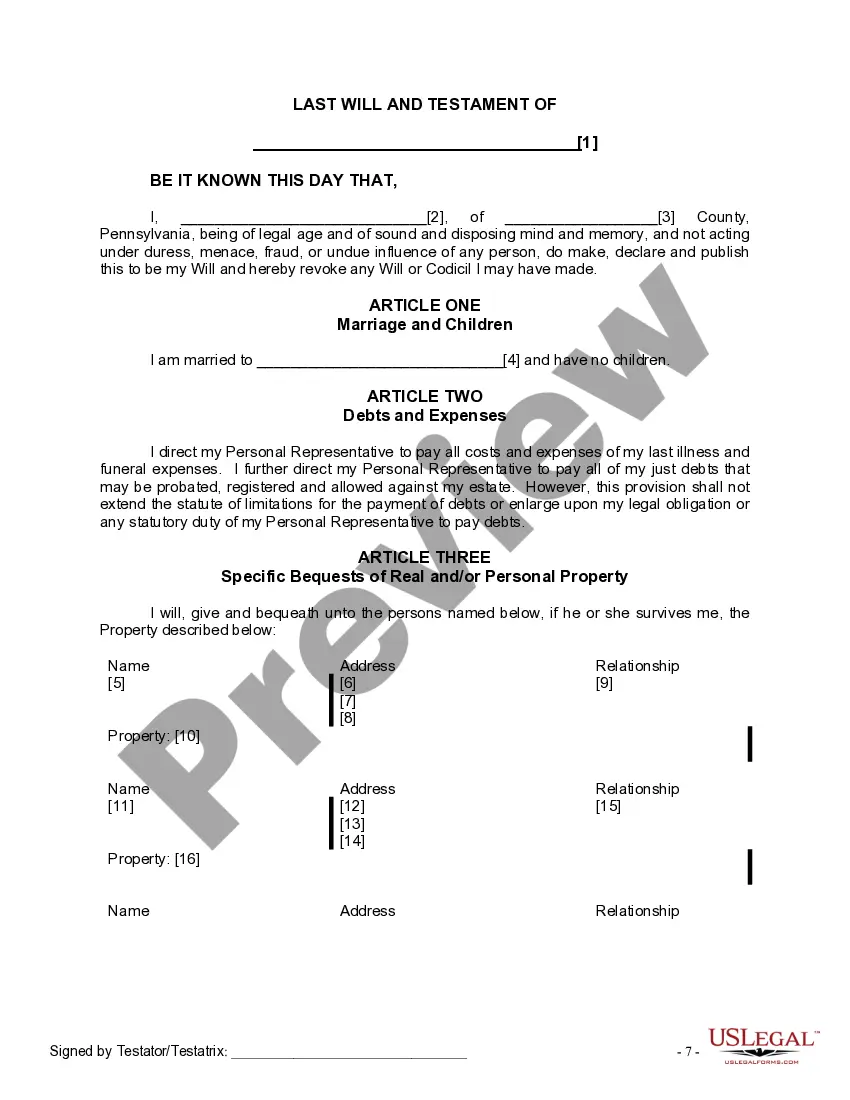
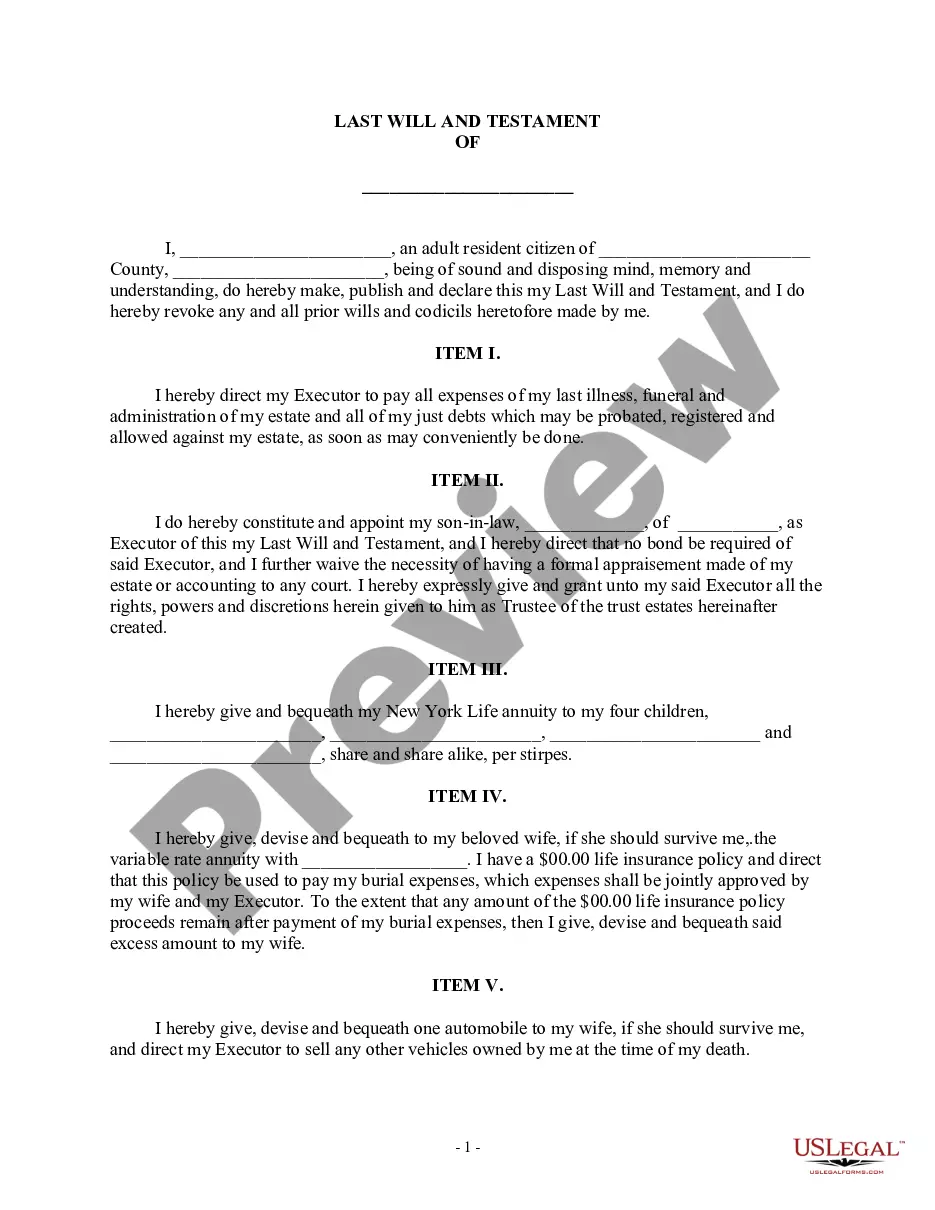
The Mutual Wills package with Last Wills and Testaments for Married Couple with No Children is a legal document that allows spouses to outline how their assets will be distributed upon their deaths. This package includes two individual wills, drafted for each spouse, ensuring that both parties have clear and consistent instructions regarding their estate. It distinguishes itself from standard wills by incorporating mutual considerations and provisions that address both spousesâ intentions, thereby providing peace of mind for couples without children.
Key parts of this document
- Marriage and Children: Affirms the spouse's marital status and lack of children.
- Debts and Expenses: Directs the payment of debts and final expenses from the estate.
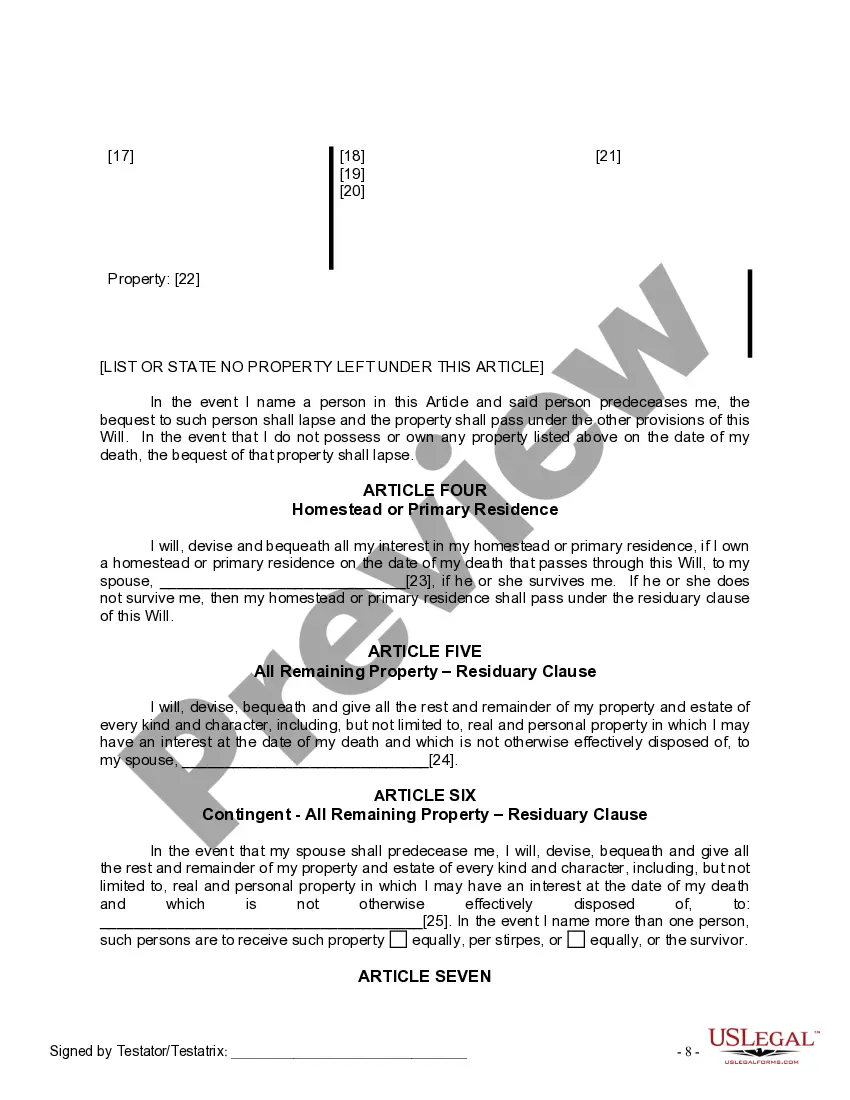
- Specific Bequests: Allows for the designation of specific individuals to receive particular assets.
- Homestead or Primary Residence: Specifies the allocation of the couple's primary residence to the surviving spouse.
- Residuary Clause: Distributes all remaining property to the spouse if no specific bequests are present.
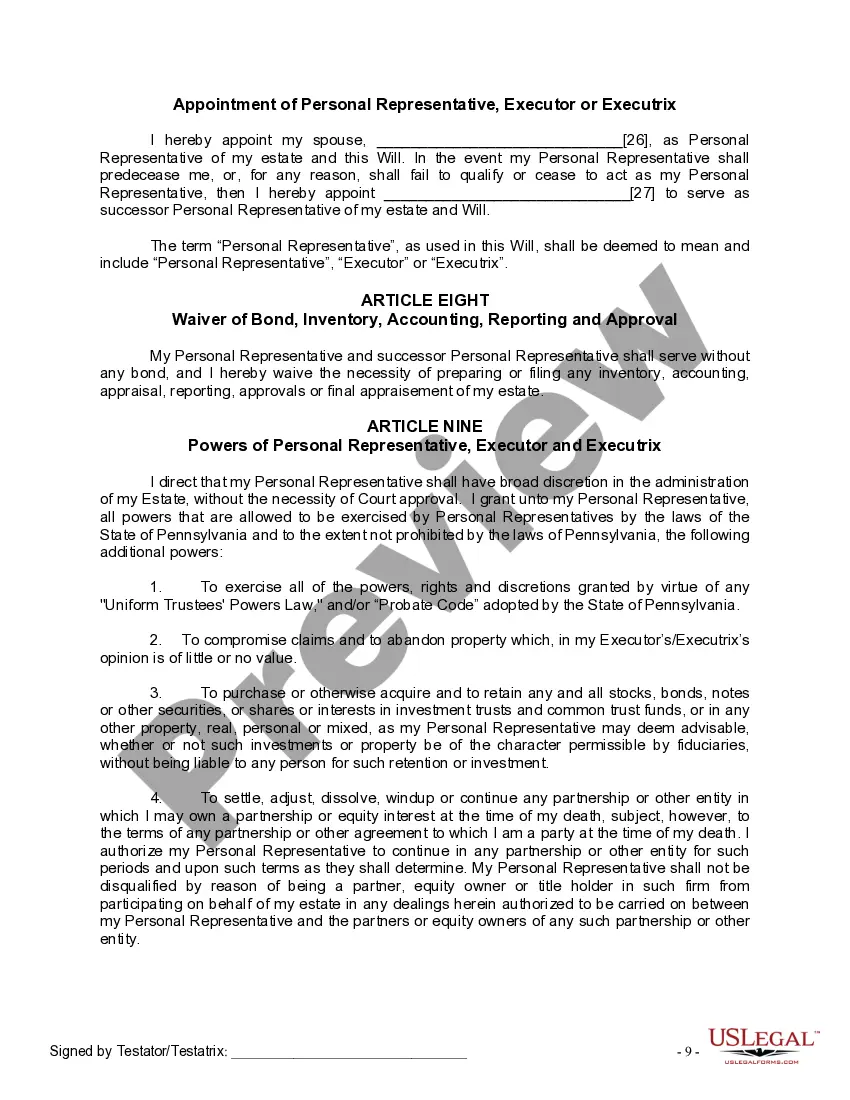
- Powers of Personal Representative: Grant specific powers to the appointed personal representative for estate administration.




Situations where this form applies
This form is ideal for married couples without children who wish to ensure that their assets are distributed according to their mutual wishes after one partner's death. It is especially useful for couples who want to protect each other's interests and streamline the estate settlement process, helping to avoid potential disputes between families or relatives following their passing.
Intended users of this form
- Married couples without children looking to create legal wills.
- Spouses wishing to provide clear instructions for asset distribution upon death.
- Couples wanting to minimize estate disputes and ensure mutual intentions are respected.
How to prepare this document
- Identify the full names and details of both spouses, including marital status.
- Include specifics about any debts and funeral expenses to be paid from the estate.
- Designate specific bequests, naming individuals and describing the property.
- Clearly state the distribution of the primary residence and any remaining assets.
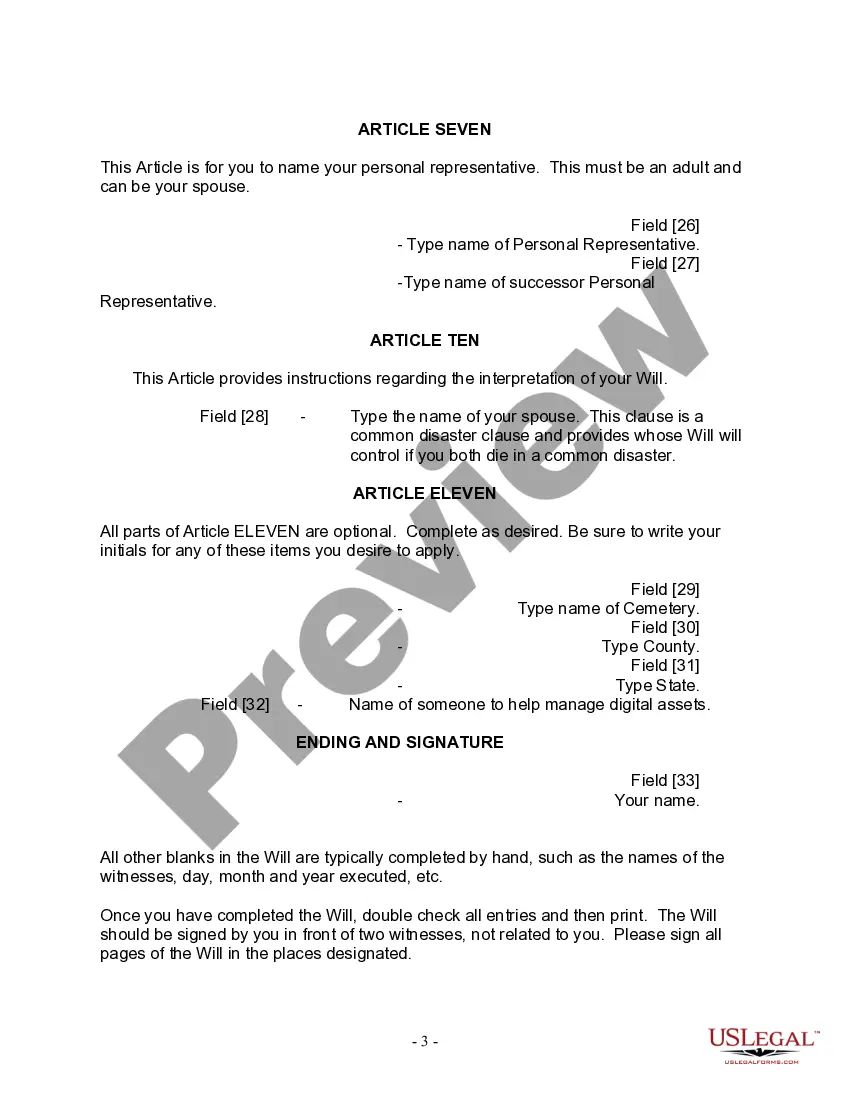
- Appoint a personal representative to manage the estate according to the will.
- Have both spouses sign the wills in the presence of two witnesses who are not named in the document.
Does this document require notarization?
Yes, this form must be notarized to be legally valid in Pennsylvania. US Legal Forms offers integrated online notarization, providing secure video calls and ensuring that your wills meet state legal requirements without the need for in-person appointments.
Get your form ready online
Our built-in tools help you complete, sign, share, and store your documents in one place.
Make edits, fill in missing information, and update formatting in US Legal Forms—just like you would in MS Word.
Download a copy, print it, send it by email, or mail it via USPS—whatever works best for your next step.
Sign and collect signatures with our SignNow integration. Send to multiple recipients, set reminders, and more. Go Premium to unlock E-Sign.
If this form requires notarization, complete it online through a secure video call—no need to meet a notary in person or wait for an appointment.
We protect your documents and personal data by following strict security and privacy standards.

Make edits, fill in missing information, and update formatting in US Legal Forms—just like you would in MS Word.

Download a copy, print it, send it by email, or mail it via USPS—whatever works best for your next step.

Sign and collect signatures with our SignNow integration. Send to multiple recipients, set reminders, and more. Go Premium to unlock E-Sign.

If this form requires notarization, complete it online through a secure video call—no need to meet a notary in person or wait for an appointment.

We protect your documents and personal data by following strict security and privacy standards.
Common mistakes
- Failing to sign the wills in front of the required witnesses.
- Not updating the wills after significant life changes.
- Neglecting to include contingencies for the death of both spouses.
Why complete this form online
- Conveniently draft and download tailored wills in minutes.
- Access forms anywhere, eliminating the need for in-person visits to lawyers.
- Edit the forms as needed to meet changing circumstances or preferences.
Looking for another form?
Form popularity
FAQ
A valid will in Pennsylvania must be in writing, either typed or handwritten. Pennsylvania only accepts oral wills in very narrow circumstances. In all cases, the testator, or person drafting the document, must also sign it.
Estate Administration Without a Will in PA Property that passes through a will or intestacy rules must go through a legal process called probate. This process involves taking the will to court or filing for intestate succession with the local court.
To create a valid will in Pennsylvania, the will creator (testator) must be 18 years of age and must possess a sound mind. Possessing a sound mind means that the testator is mentally competent and fully understands what property they own and who they are conveying their property to.
If you don't, then your spouse inherits all of your intestate property. If you do, they and your spouse will share your intestate property as follows: If you die with parents but no descendants. Your surviving spouse inherits the first $30,000 of your intestate property, plus 1/2 of the balance.