Pennsylvania Marital Domestic Separation and Property Settlement Agreement Minor Children Parties May have Joint Property or Debts where Divorce Action Filed
What this document covers
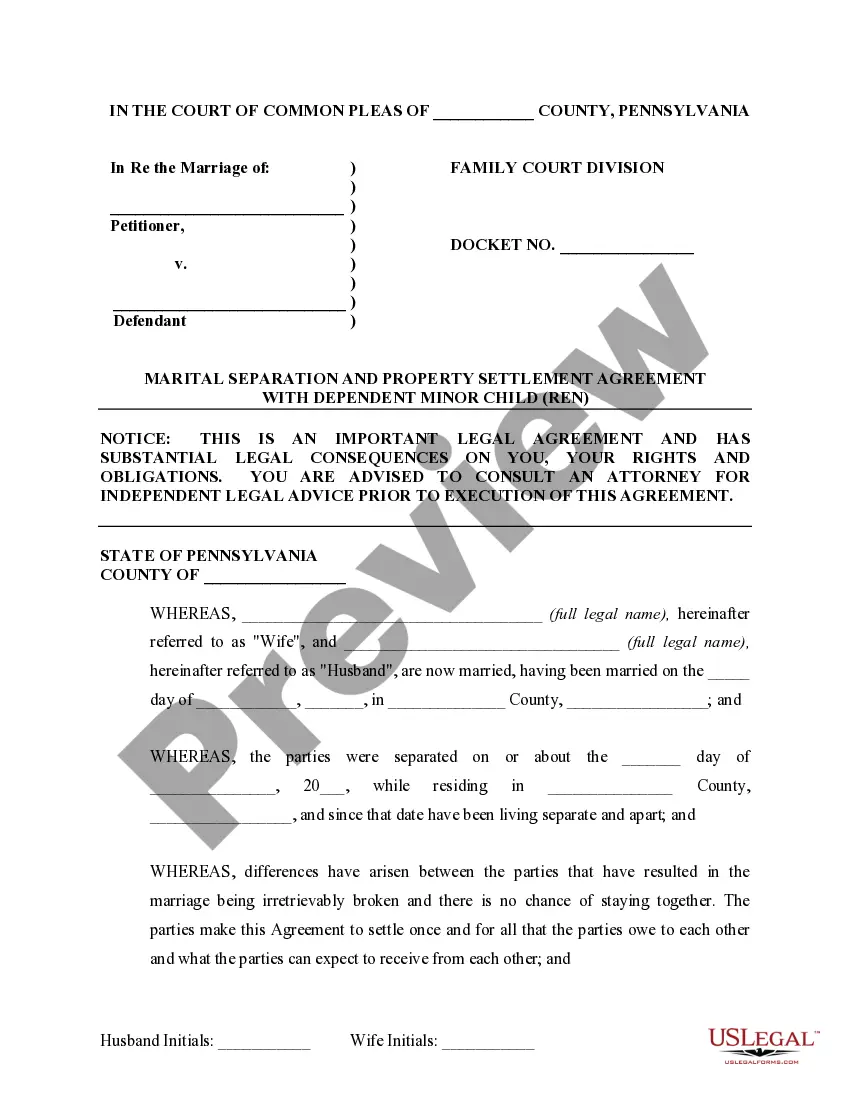
The Marital Domestic Separation and Property Settlement Agreement is a legal document designed for spouses with minor children who are currently undergoing a divorce. This form addresses the division of joint property and debts, as well as important matters related to child custody, visitation, and support. It ensures that both parties reach a comprehensive settlement during divorce proceedings and clarifies their responsibilities toward each other and their children. Unlike simple separation agreements, this form includes detailed provisions tailored for situations involving minor children and shared assets.
Key parts of this document
- Identification of the parties, including full legal names.
- Details regarding the separation and acknowledgment of an irretrievably broken marriage.
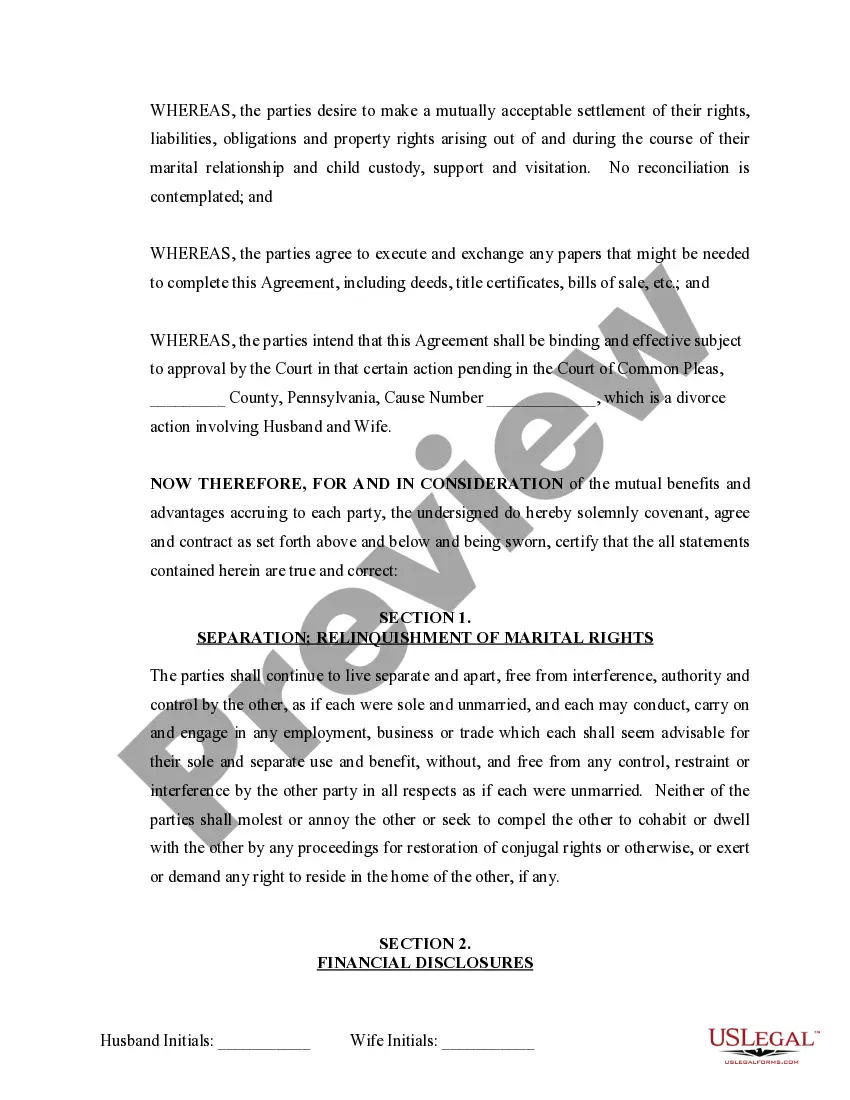
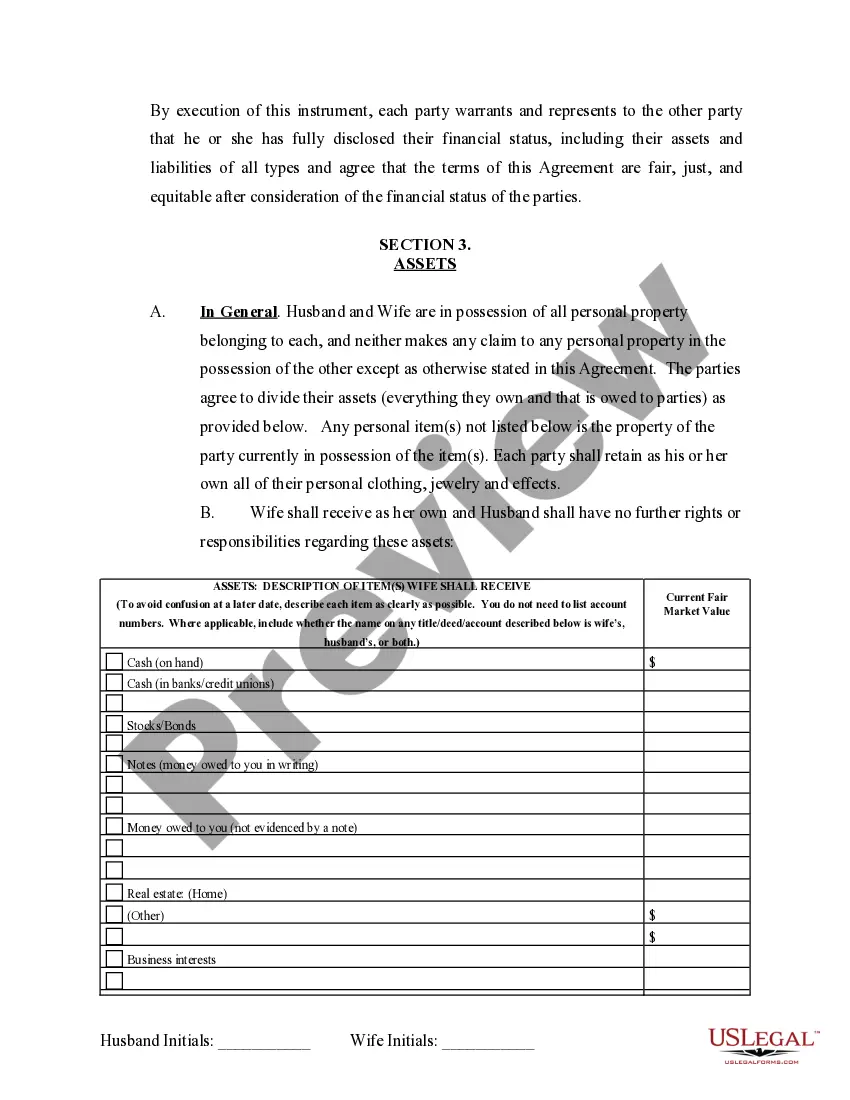
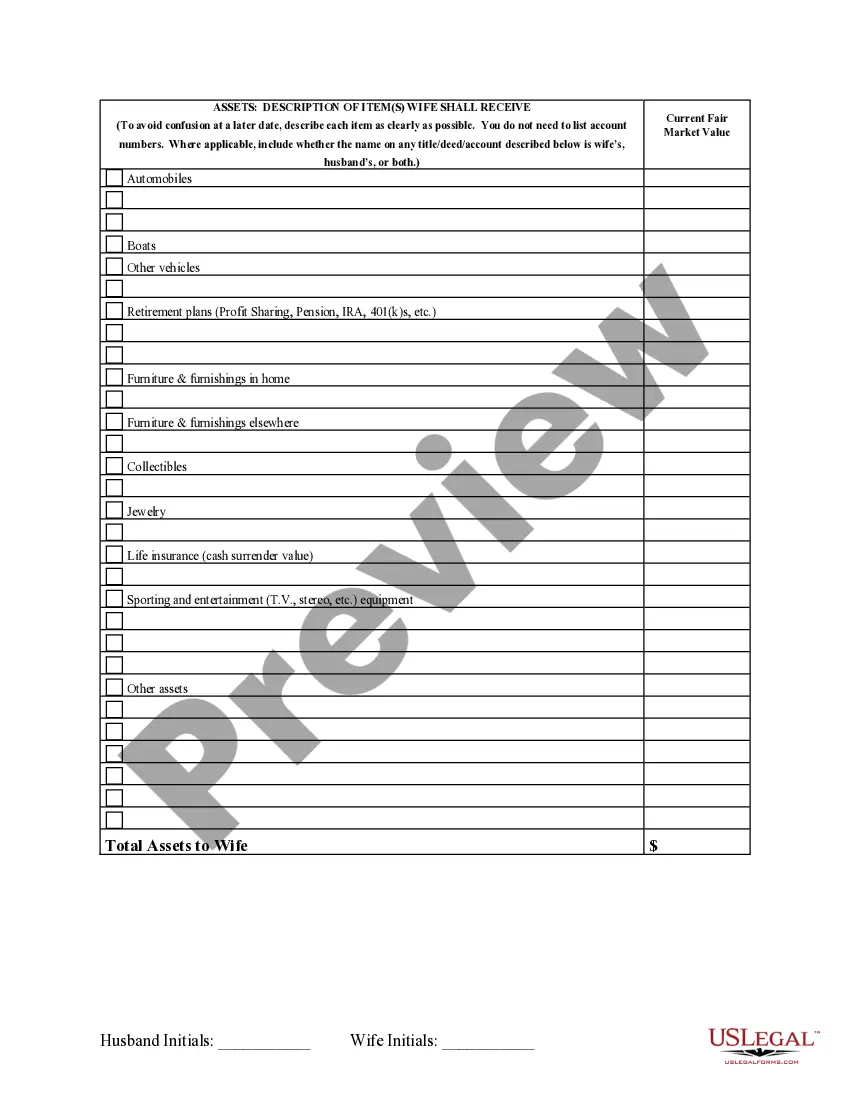
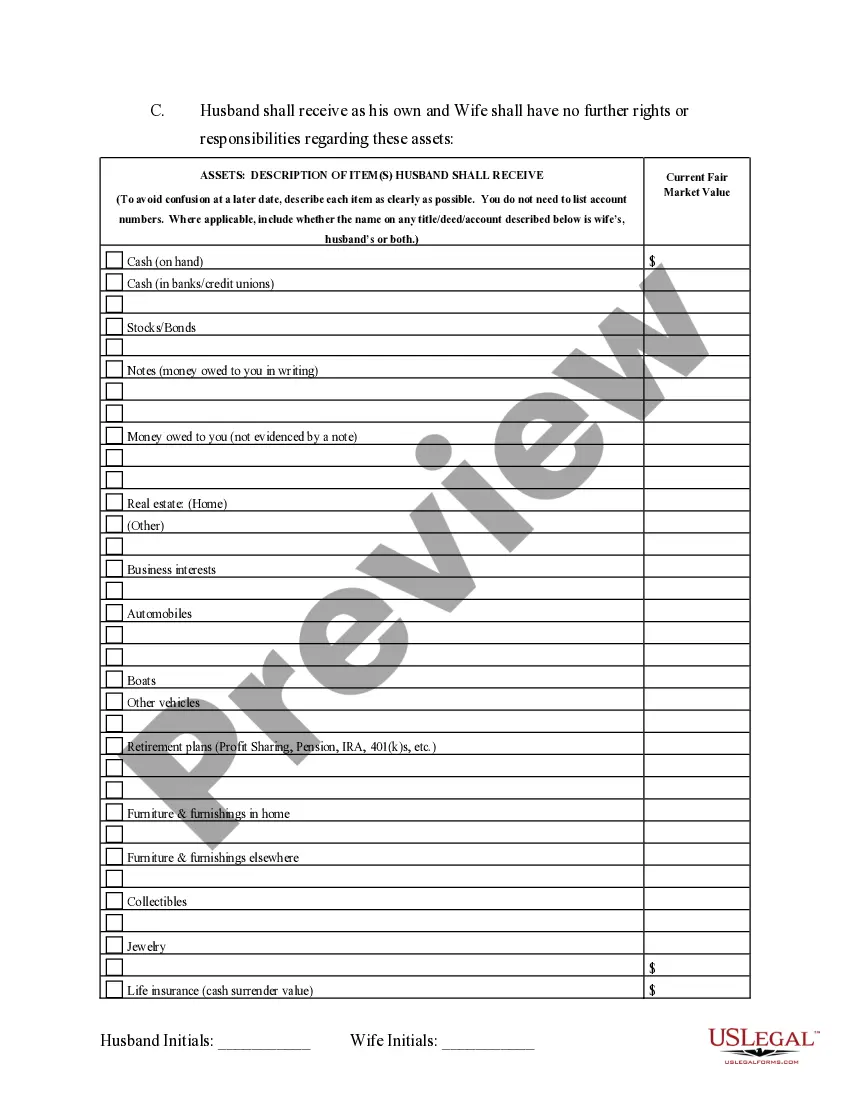
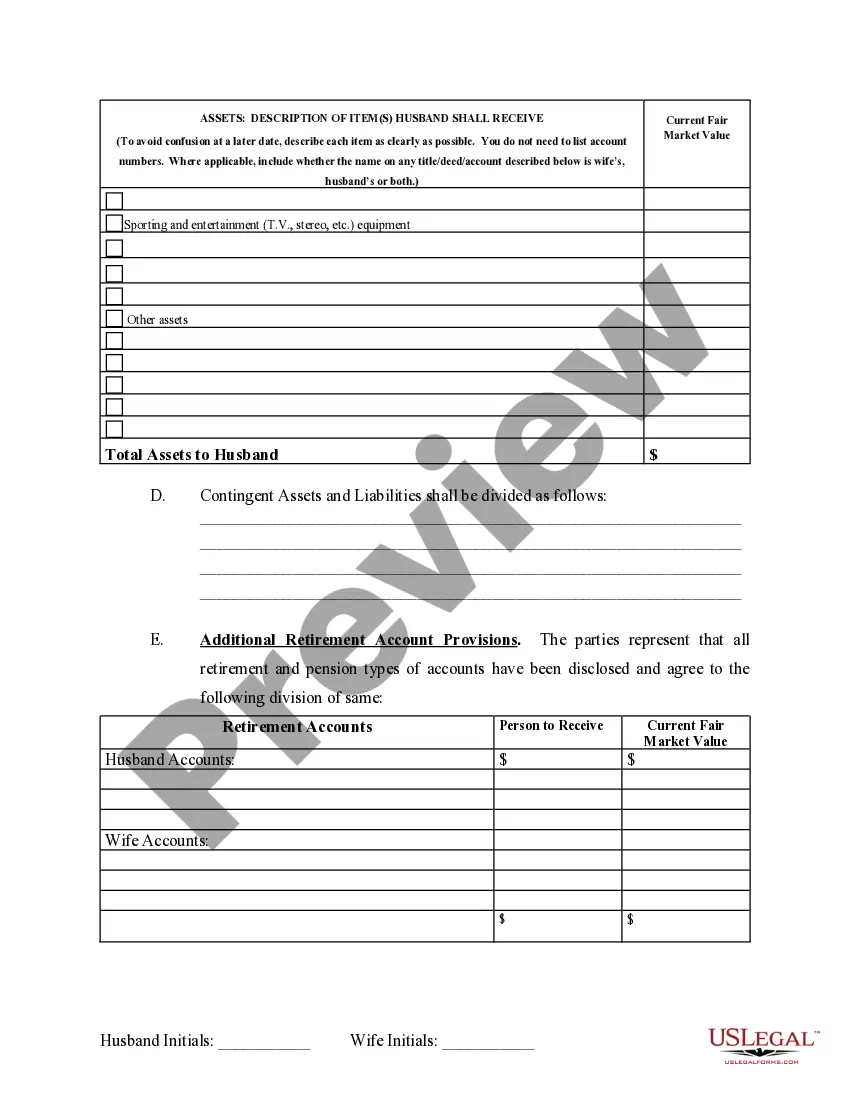
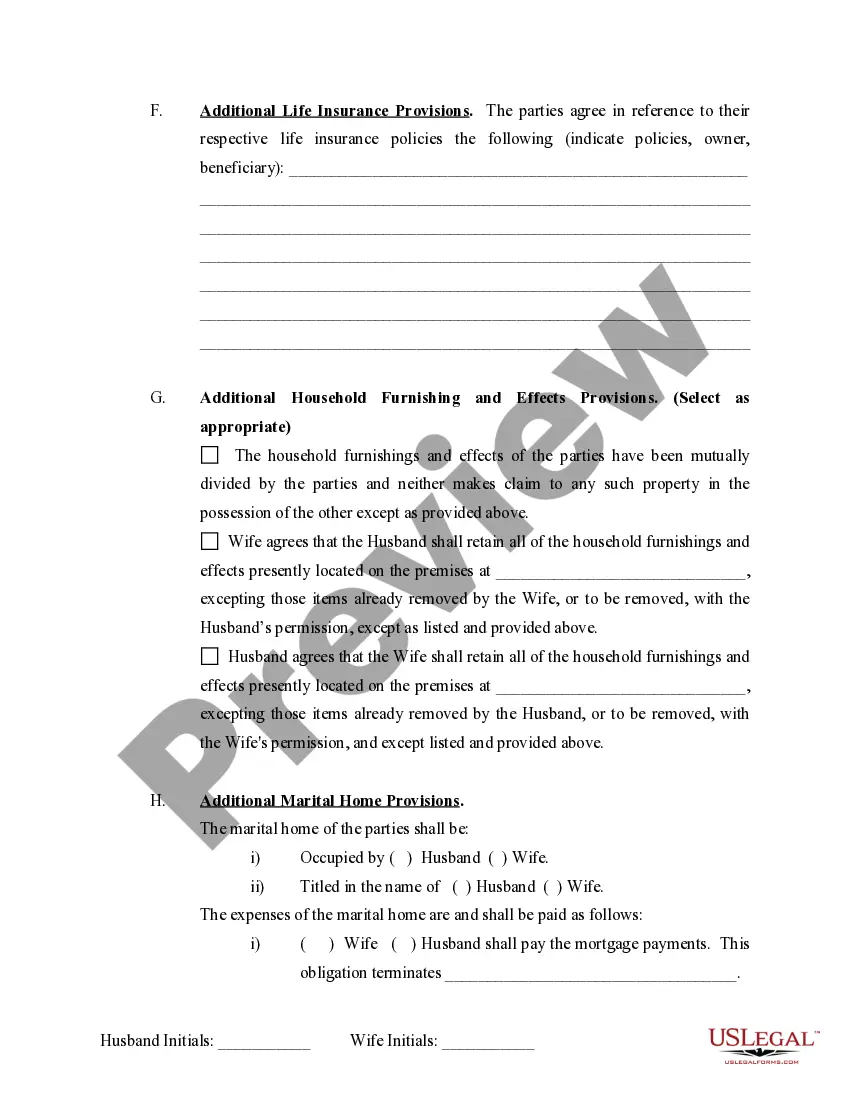
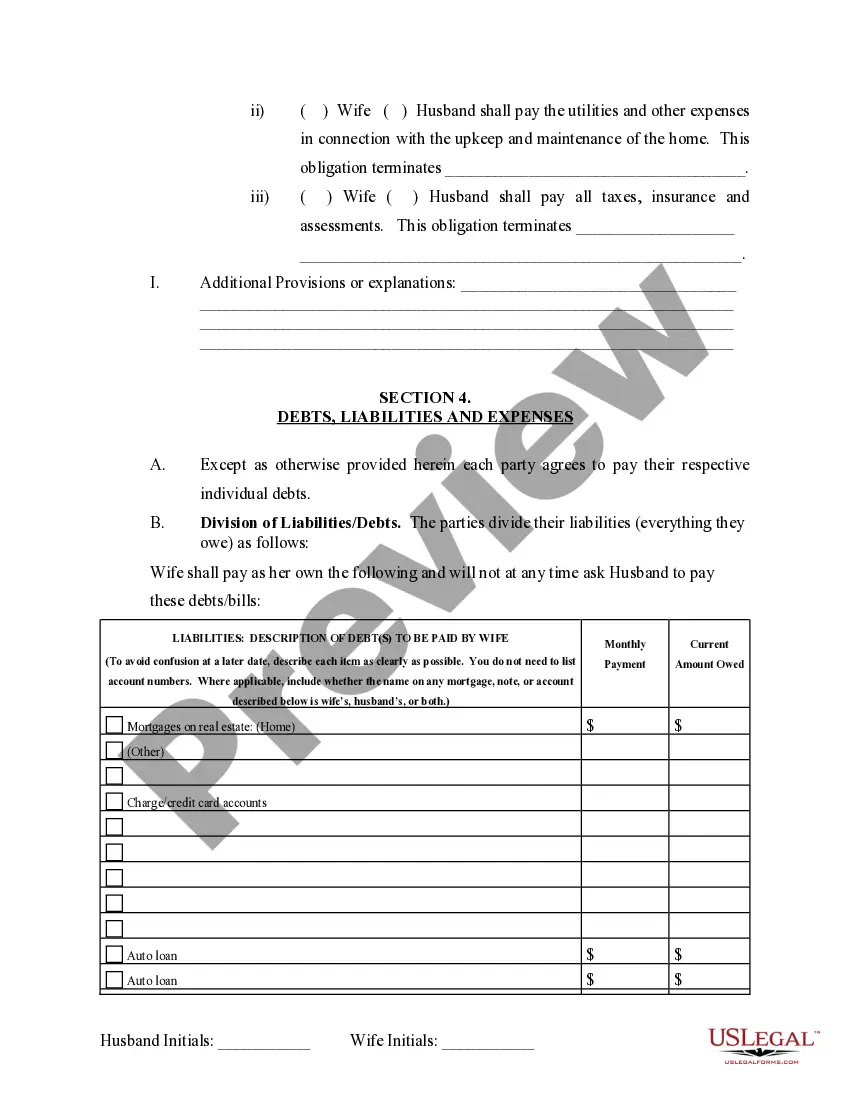
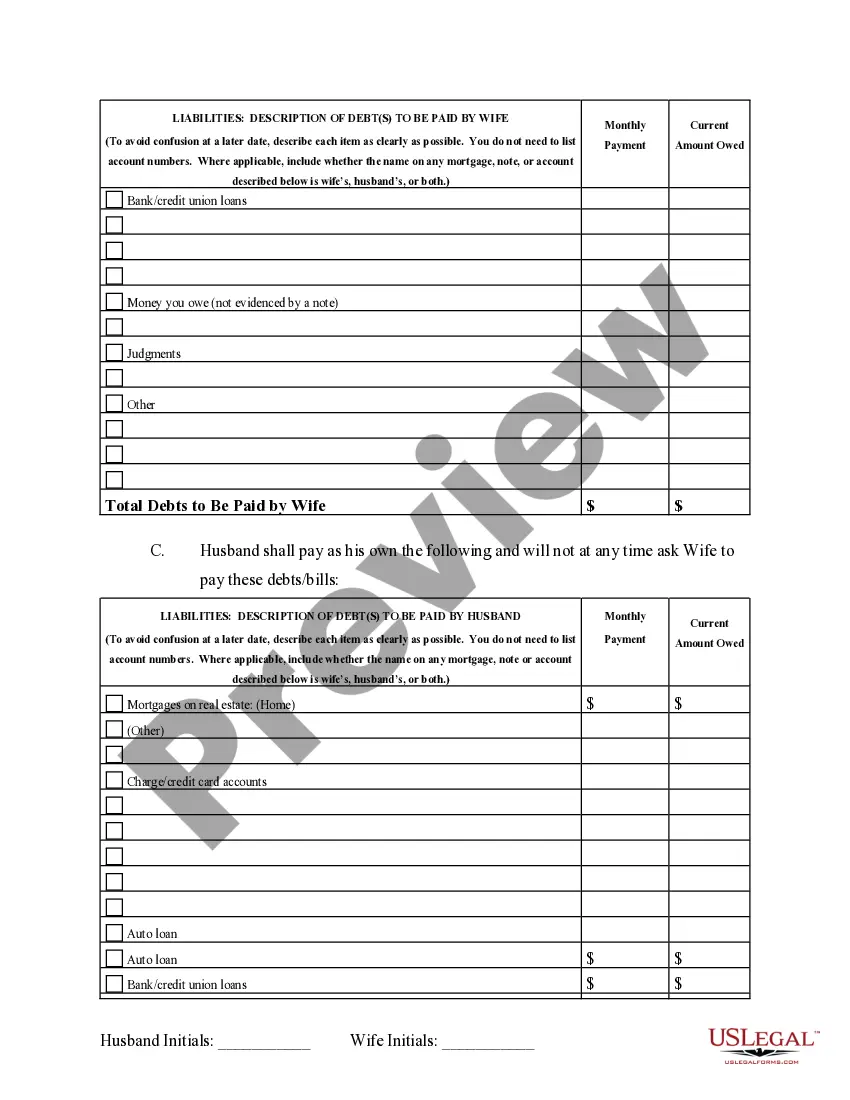
- Division of joint assets and debts, specifying what each party retains.
- Arrangements for child custody, visitation rights, and parental responsibilities.
- Child support obligations and health insurance provisions.
- Provisions for alimony or spousal support, if applicable.

Common use cases
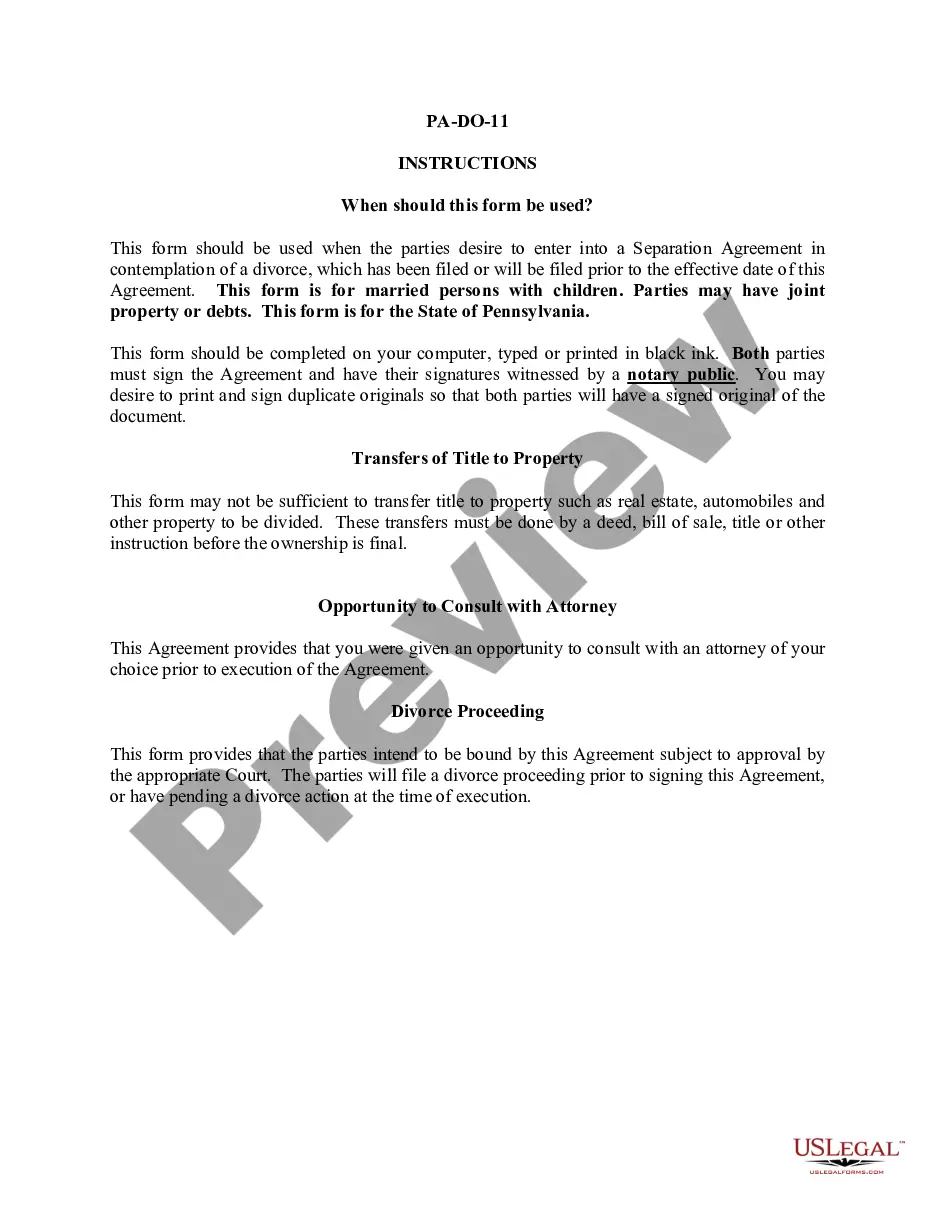
This form should be used when the parties intend to enter a marital separation agreement in anticipation of divorce proceedings. Specifically, it is applicable when both parties have minor children, as well as joint property or debts. It is ideal for those looking to resolve all pertinent issues related to their marriage before the finalization of the divorce.
Who needs this form
- Married couples with minor children seeking a separation agreement.
- Couples who have filed or intend to file for divorce.
- Individuals who want to clearly define custody, support, and property division prior to divorce finalization.
Completing this form step by step
- Identify the full names of both parties and their mutual agreement to the separation.
- Detail the division of assets and liabilities, specifying which party will retain which items.
- Outline the agreed terms for child custody, including visitation rights and responsibilities.
- Specify child support amounts, payment schedules, and health insurance arrangements.
- Both parties must sign the agreement in the presence of a notary public for it to be legally binding.
Notarization guidance
Yes, this form must be notarized to be legally valid. Each party must sign the agreement in the presence of a notary public. US Legal Forms offers integrated online notarization services, available 24/7, allowing for secure video calls to ensure legality without the need to travel.
Get your form ready online
Our built-in tools help you complete, sign, share, and store your documents in one place.
Make edits, fill in missing information, and update formatting in US Legal Forms—just like you would in MS Word.
Download a copy, print it, send it by email, or mail it via USPS—whatever works best for your next step.
Sign and collect signatures with our SignNow integration. Send to multiple recipients, set reminders, and more. Go Premium to unlock E-Sign.
If this form requires notarization, complete it online through a secure video call—no need to meet a notary in person or wait for an appointment.
We protect your documents and personal data by following strict security and privacy standards.

Make edits, fill in missing information, and update formatting in US Legal Forms—just like you would in MS Word.

Download a copy, print it, send it by email, or mail it via USPS—whatever works best for your next step.

Sign and collect signatures with our SignNow integration. Send to multiple recipients, set reminders, and more. Go Premium to unlock E-Sign.

If this form requires notarization, complete it online through a secure video call—no need to meet a notary in person or wait for an appointment.

We protect your documents and personal data by following strict security and privacy standards.
Mistakes to watch out for
- Failing to fully disclose financial information may lead to disputes later.
- Not having the document notarized could affect its enforceability.
- Overlooking state-specific requirements, which could invalidate the agreement.
- Neglecting to detail all assets and debts may lead to future misunderstandings.
Benefits of using this form online
- Accessible and easy to complete from the comfort of your home.
- Edit and save the document digitally for convenience.
- Reliable templates drafted by licensed attorneys tailored to your needs.
What to keep in mind
- The Marital Domestic Separation and Property Settlement Agreement is essential for couples with children undergoing divorce.
- It addresses critical areas such as asset division, child custody, and support obligations.
- Completion requires clarity and detail, ensuring all aspects of the separation are covered legally.
- Consulting a legal professional can provide additional confidence in finalizing the agreements.
Looking for another form?

Form popularity
FAQ
Marital property includes all property that was acquired during the marriage, regardless of how it is titled (in whose name it is). Gifts from one spouse to another are marital property if they were purchased with marital funds.
Marital property includes all property that was acquired during the marriage, regardless of how it is titled (in whose name it is). Gifts from one spouse to another are marital property if they were purchased with marital funds.
Pennsylvania's divorce law gives the court the right to allow one or both of the spouses to reside in the marital home, during the divorce or afterwards.
Related Content. Property that is unlikely to be shared between the parties on the breakdown of the marriage or civil partnership unless it is required to meet needs. Generally non-matrimonial property is: Acquired by one party before the marriage.
Is Pennsylvania a Community Property State? No. Pennsylvania divides marital property under the theory of equitable distribution.
Technically, 50/50 states are called community property states because each spouse is entitled to 50 percent of the marital assets acquired during the marriage in the event of a divorce.Pennsylvania is NOT a community property state. Instead, it is an equitable distribution state.
In a Pennsylvania divorce, the court divides marital property on an equitable basis. However, this does not necessarily mean that the court will evenly split property between the two spouses. Rather, the judge presiding over the case will split up the property in a way that he or she deems fair.
Though the term non-marital property often refers to any personal or real property owned prior to, and brought into the marriage, it can also refer to things such as inheritances and gifts made to only one spouse.
Can separate property become marital property? Separate property can become marital property if it is mixed with marital property. For example, if one of the spouses uses money they had before the marriage to buy a house for the couple, that money might become marital property.