New York Paternity Law and Procedure Handbook
What is this form?
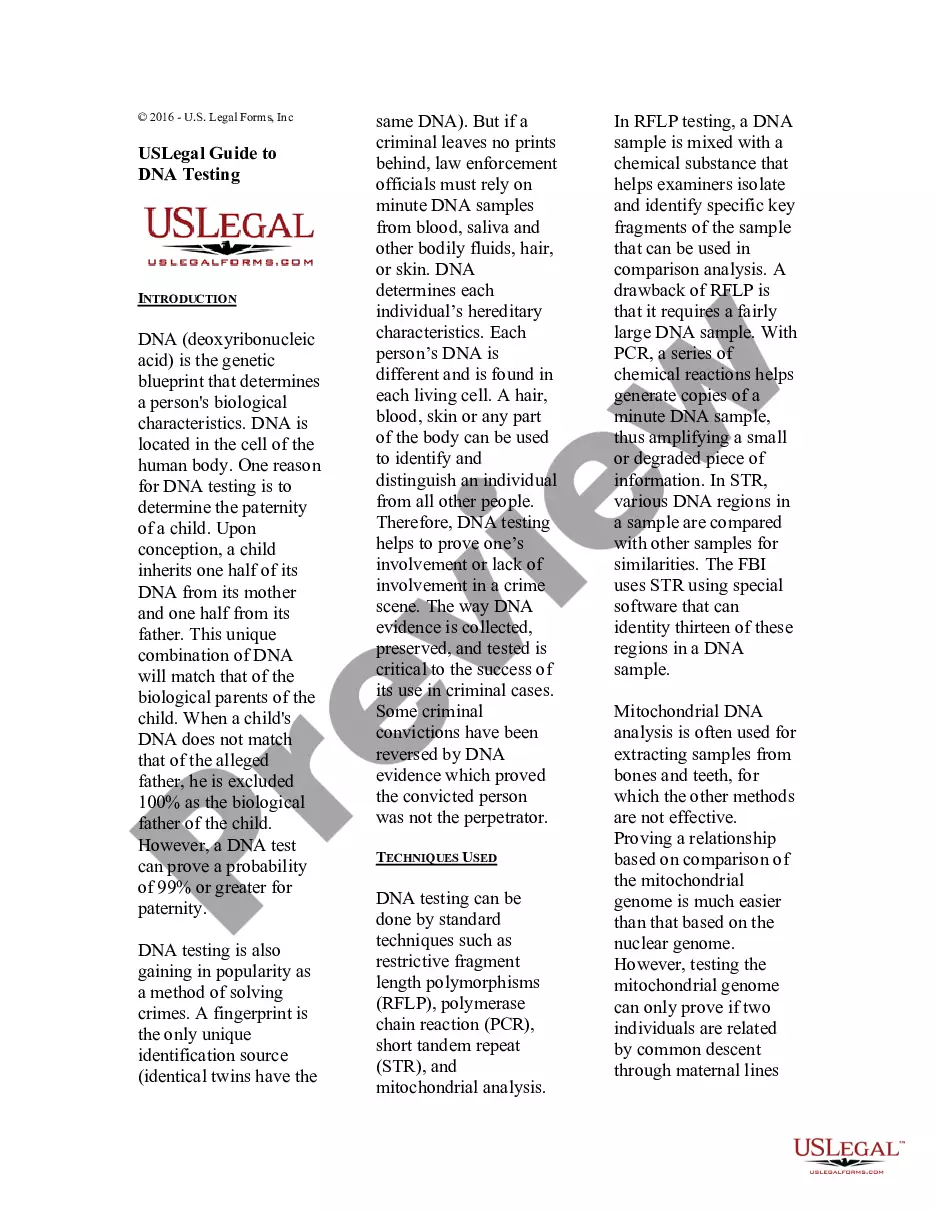
The Paternity Law and Procedure Handbook is a comprehensive guide that explains the legal concept of paternity, including how to establish it and the implications involved for both parents and the child. Unlike generic resources, this handbook provides state-specific information and procedures to help unmarried parents navigate the complexities of acknowledging paternity, whether voluntarily or through court action.
What’s included in this form
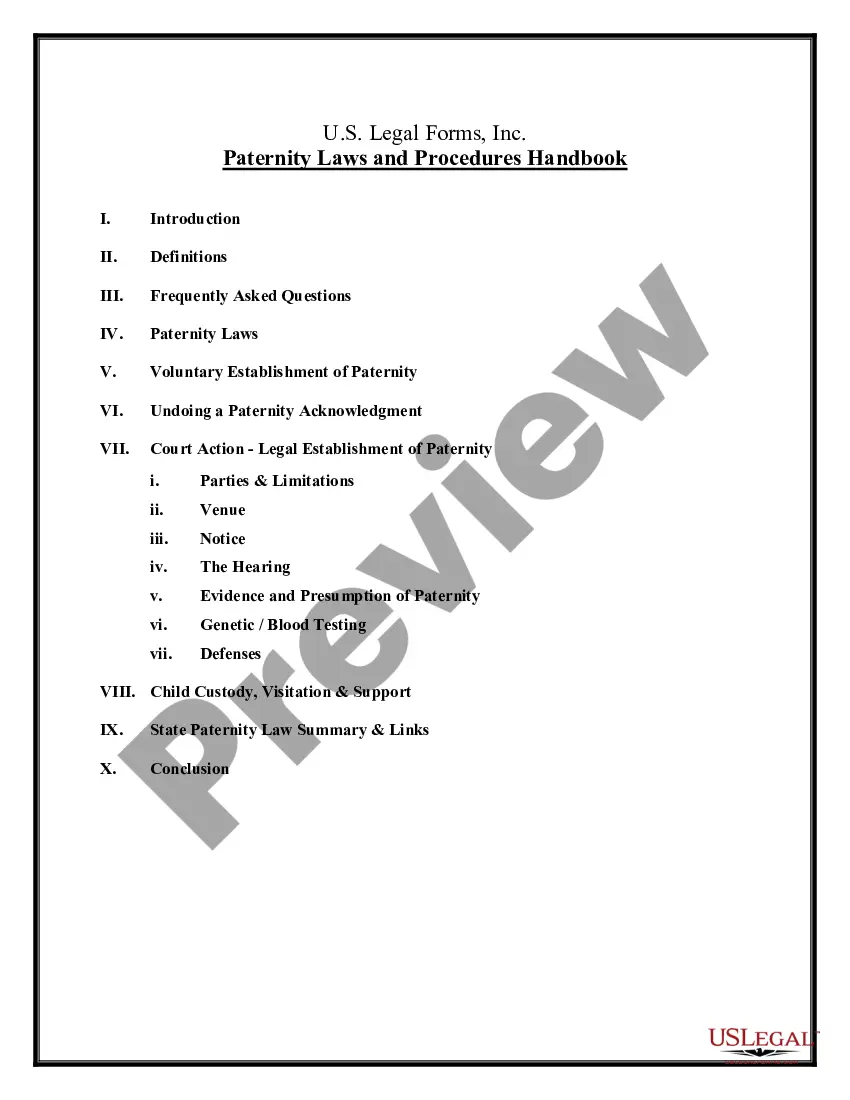
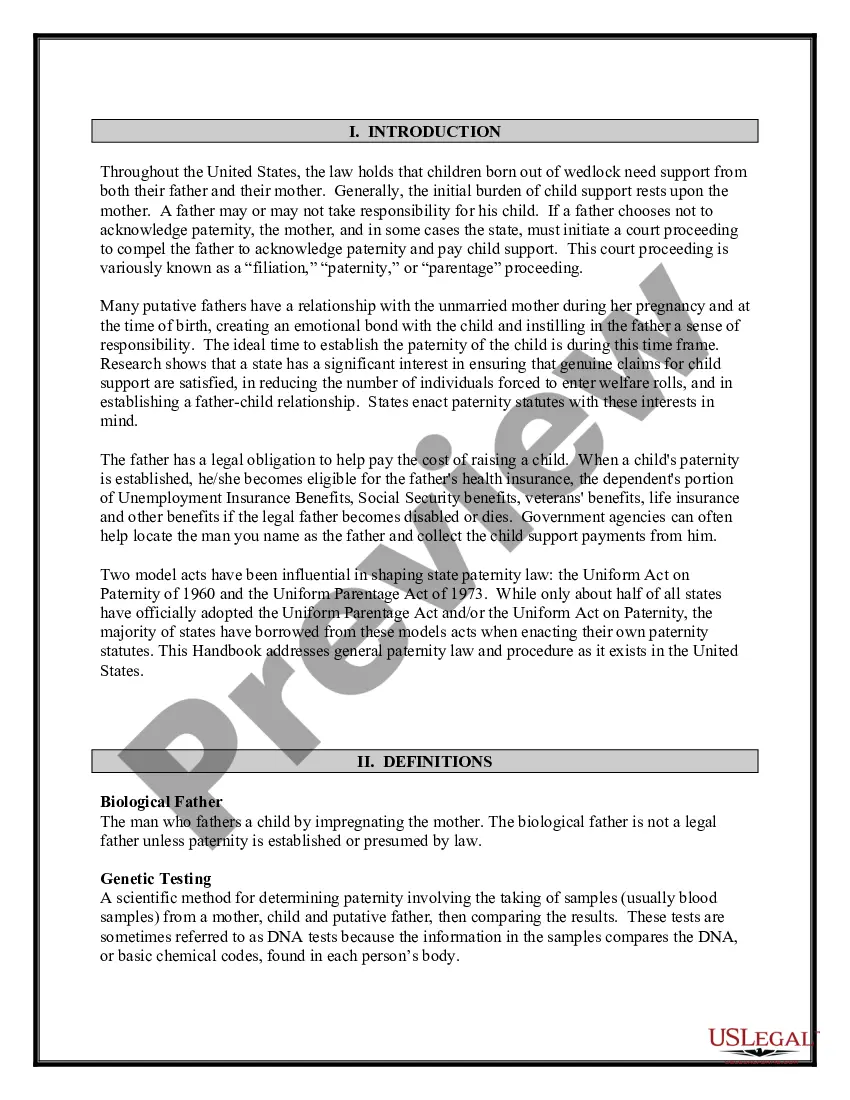
- Introduction to paternity laws and the importance of establishing paternity.
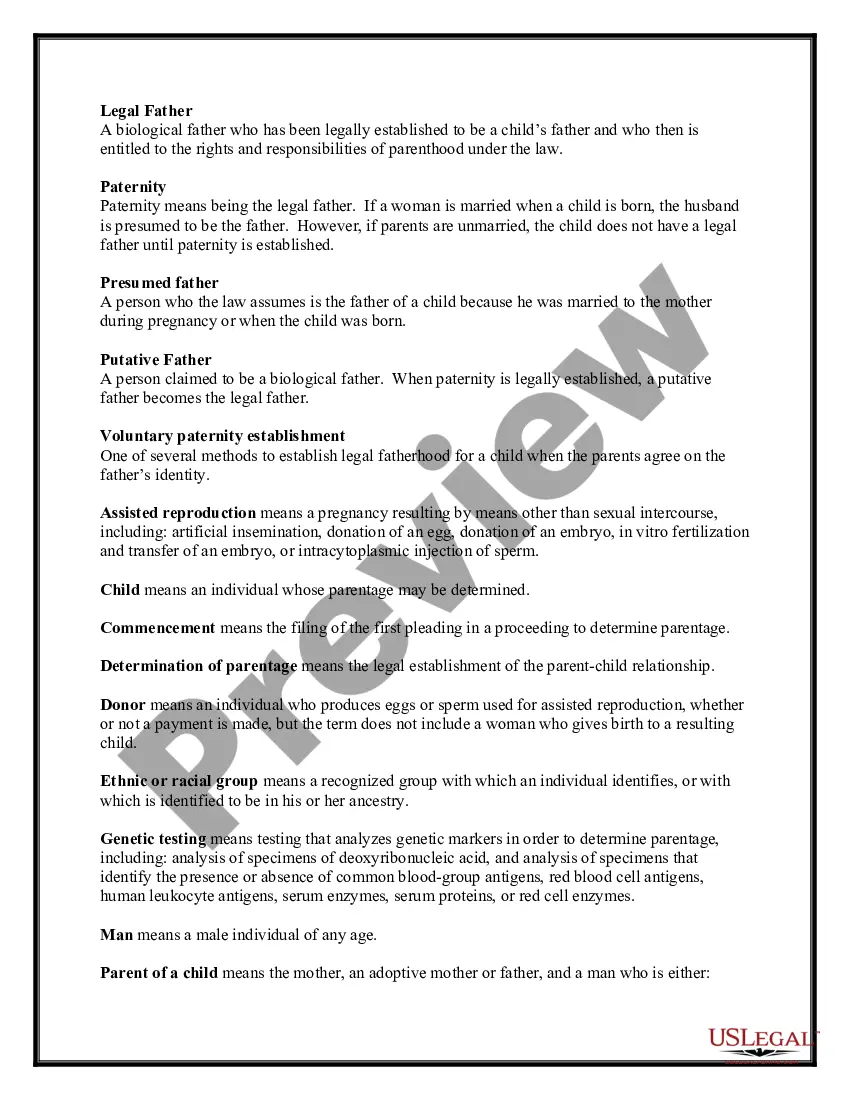
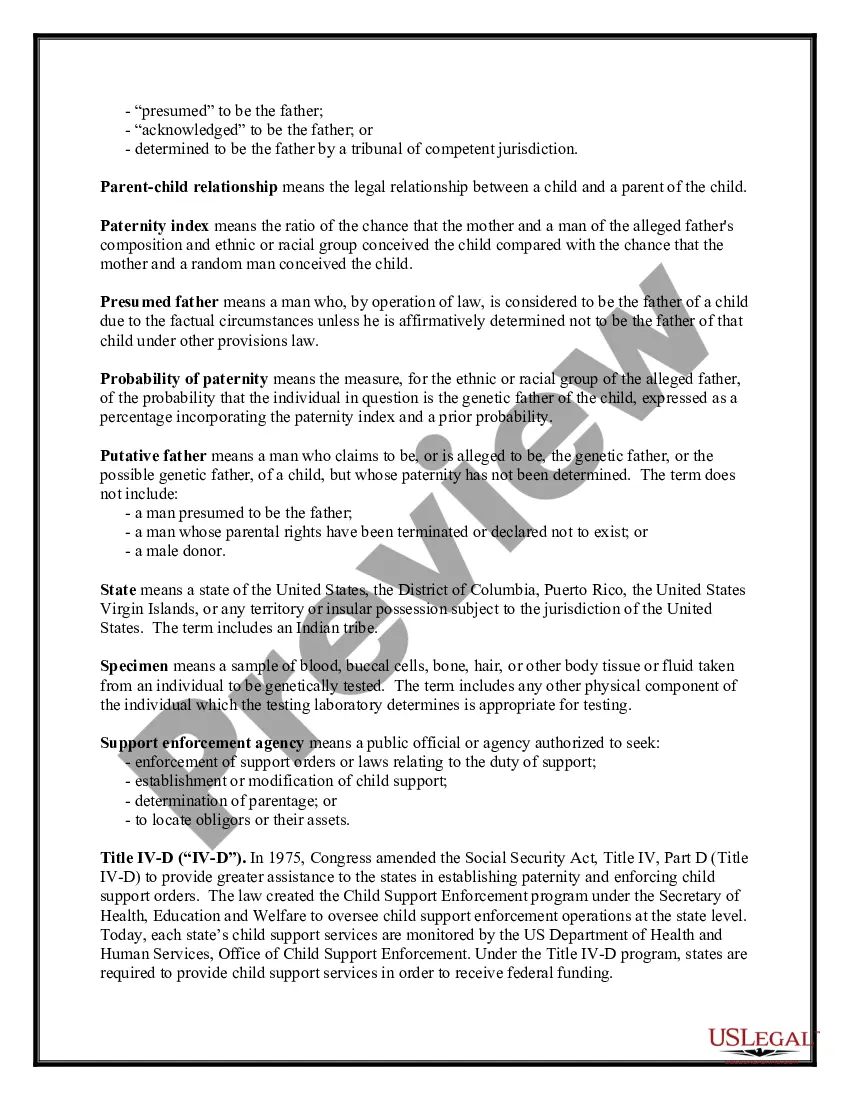
- Definitions of key terms such as biological father, legal father, and voluntary paternity establishment.
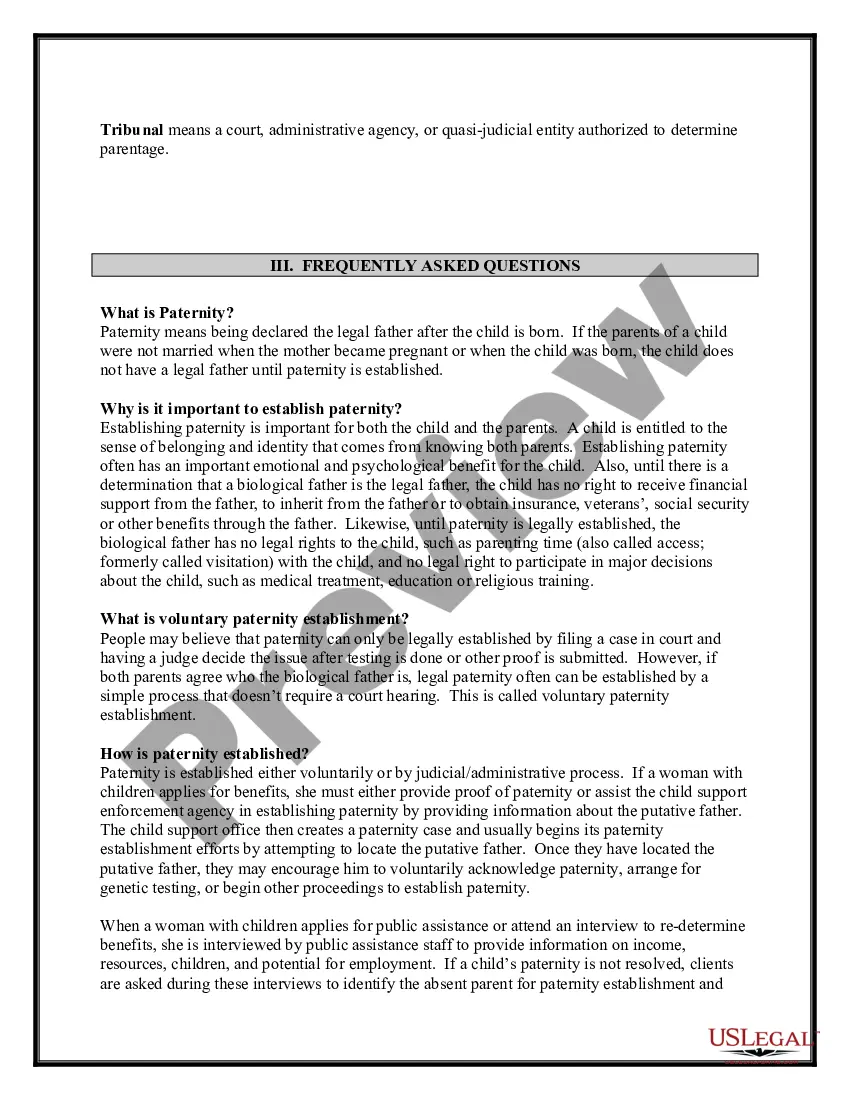
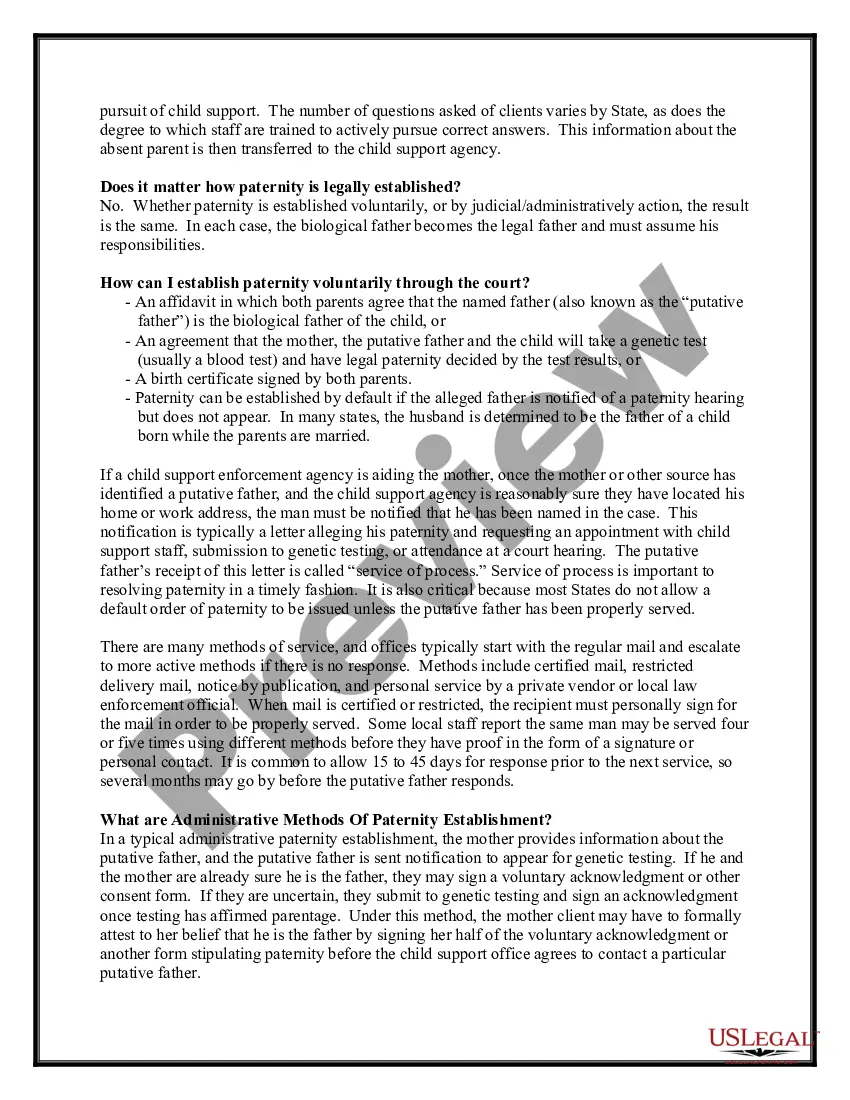
- Detailed explanations of the processes for establishing paternity both voluntarily and through court action.
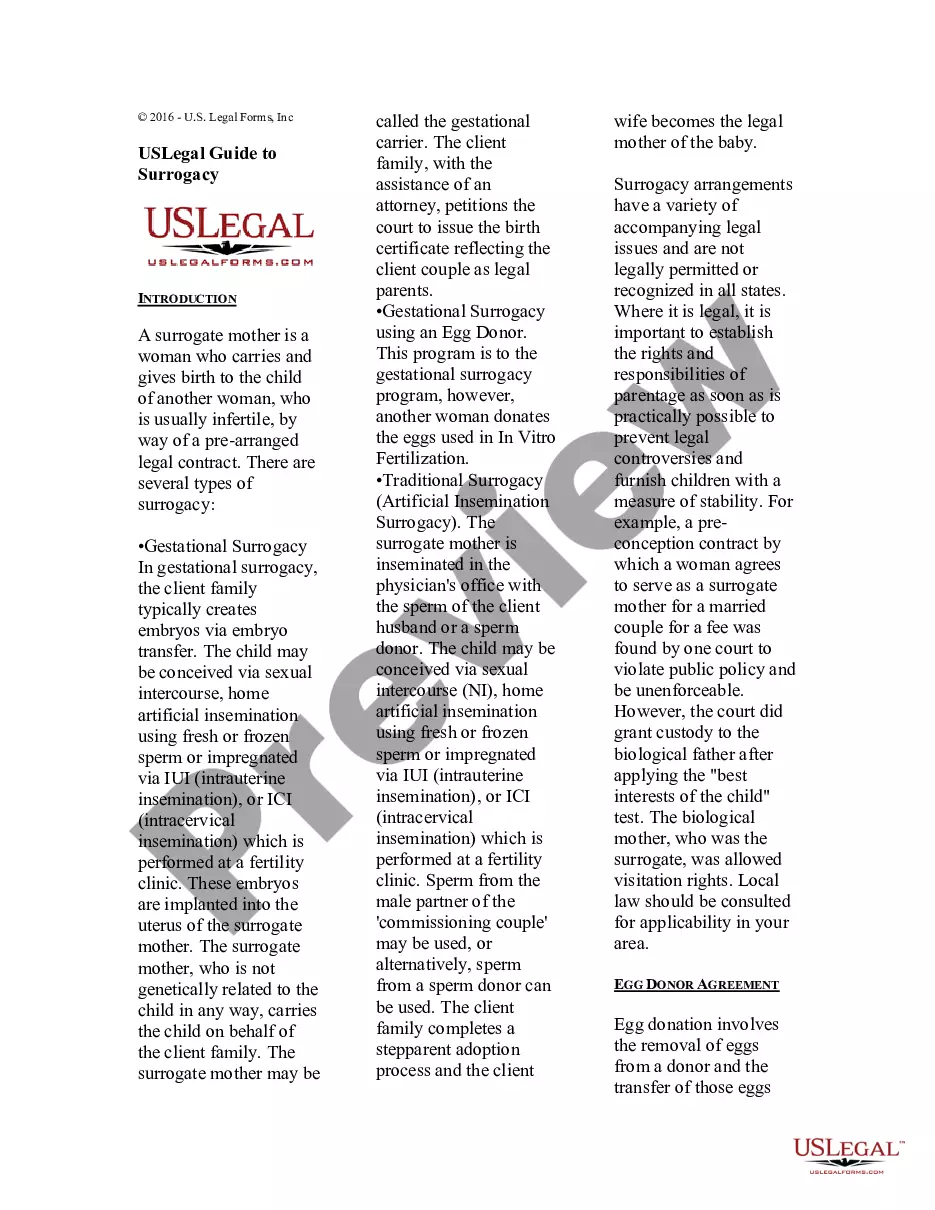
- Information on genetic testing and its role in confirming paternity.
- A summary of child custody, visitation, and support obligations related to paternity.
- State-specific resources and summaries for understanding local paternity laws.


When to use this form
This handbook should be used when you need to understand the legal requirements and processes involved in establishing paternity for a child born to unmarried parents. It is particularly useful when one parent is seeking child support, health benefits for the child, or recognition of the father's legal rights. Additionally, this guide can help when there is uncertainty regarding the fatherâs identity or if genetic testing is necessary.
Who can use this document
- Unmarried parents looking to establish paternity.
- Fathers who wish to acknowledge their legal responsibility towards their child.
- Mothers seeking child support and legal recognition of the father for their child.
- Legal professionals handling paternity cases.
- Child support enforcement agencies needing to clarify paternity issues.
Completing this form step by step
- Review the introduction and definitions sections to understand the paternity laws relevant to your situation.
- Determine whether you will establish paternity voluntarily or through court action.
- If opting for voluntary establishment, ensure both parents agree and complete the necessary acknowledgement forms.
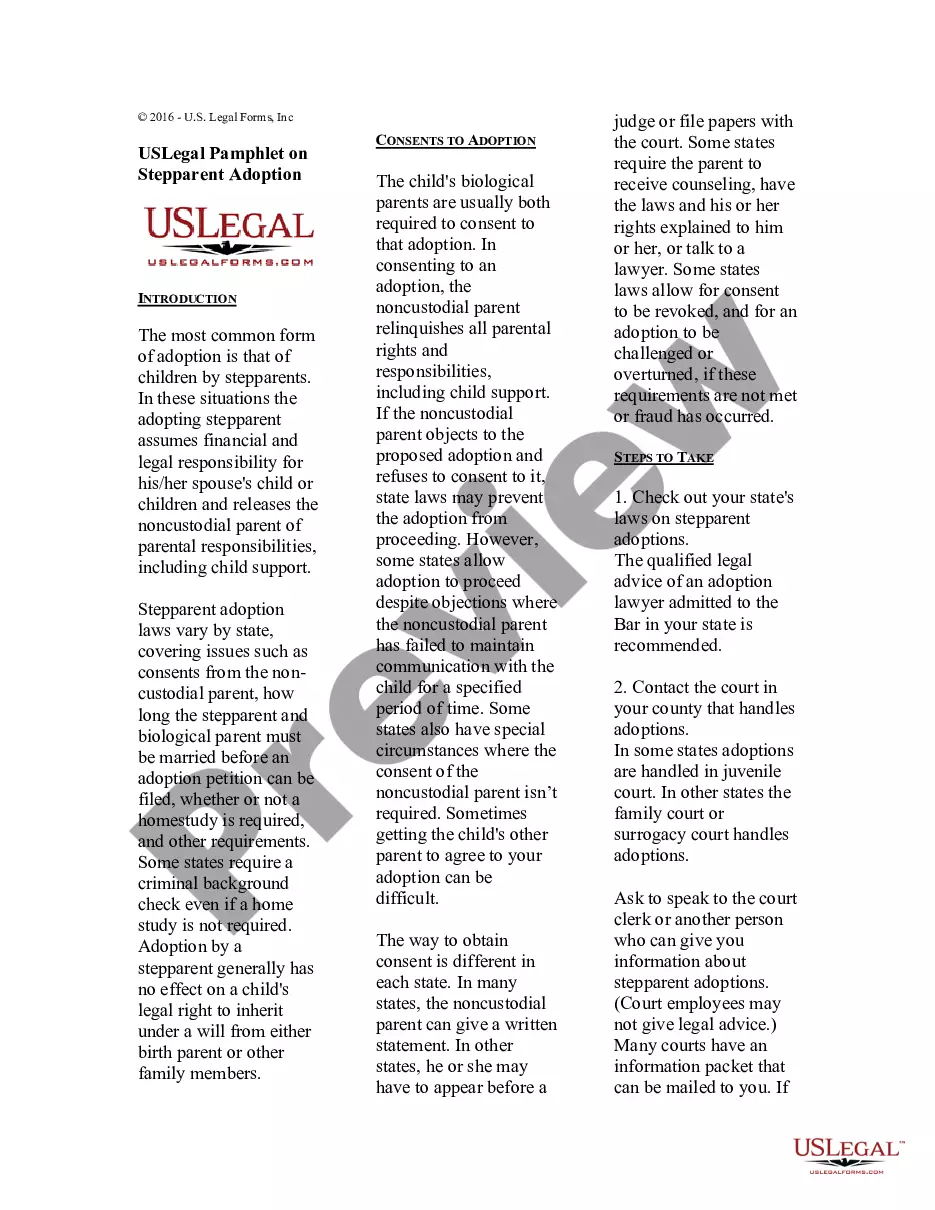
- In case of court action, file a petition with the appropriate administrative or judicial authority.
- Prepare for any required genetic testing and understand the evidence needed if the paternity is contested.
- Consult with legal professionals if needed, especially to address custody and support issues.
Does this form need to be notarized?
This form usually doesn’t need to be notarized. However, local laws or specific transactions may require it. Our online notarization service, powered by Notarize, lets you complete it remotely through a secure video session, available 24/7.
Get your form ready online
Our built-in tools help you complete, sign, share, and store your documents in one place.
Make edits, fill in missing information, and update formatting in US Legal Forms—just like you would in MS Word.
Download a copy, print it, send it by email, or mail it via USPS—whatever works best for your next step.
Sign and collect signatures with our SignNow integration. Send to multiple recipients, set reminders, and more. Go Premium to unlock E-Sign.
If this form requires notarization, complete it online through a secure video call—no need to meet a notary in person or wait for an appointment.
We protect your documents and personal data by following strict security and privacy standards.

Make edits, fill in missing information, and update formatting in US Legal Forms—just like you would in MS Word.

Download a copy, print it, send it by email, or mail it via USPS—whatever works best for your next step.

Sign and collect signatures with our SignNow integration. Send to multiple recipients, set reminders, and more. Go Premium to unlock E-Sign.

If this form requires notarization, complete it online through a secure video call—no need to meet a notary in person or wait for an appointment.

We protect your documents and personal data by following strict security and privacy standards.
Avoid these common issues
- Failing to act promptly to establish paternity can limit legal rights and obligations.
- Assuming paternity is established automatically without completing the necessary forms or processes.
- Not consulting legal counsel when uncertain about the implications of signing paternity acknowledgments.
- Overlooking state-specific laws that may affect paternity proceedings.
Why use this form online
- Convenience of accessing legal information from anywhere at any time.
- Ability to download and edit forms as needed, ensuring they meet your specific requirements.
- Comprehensive guidance developed by licensed attorneys, which enhances reliability.
- Streamlined process for establishing paternity without waiting for court appointments.
Legal use & context
- Paternity laws vary by state, so understanding the specific provisions in your jurisdiction is critical for enforceability.
- The handbook provides a procedural roadmap, which helps mitigate risks of errors in the legal process.
- Establishing paternity creates legal obligations for child support and parental rights, making it a significant legal step.
What to keep in mind
- Establishing paternity is crucial for legal rights and responsibilities regarding child support and custody.
- The process can be completed voluntarily or through court action, depending on the situation.
- Understanding state-specific laws is essential for navigating the paternity establishment process successfully.
- The Paternity Law and Procedure Handbook provides a clear and supportive framework to guide parents through this legal process.
Looking for another form?
Form popularity
FAQ
Collection by a physician under chain of custody; The specimen must be accompanied by a test order from your physician or lawyer; The laboratory must hold a New York State Department of Health certificate.
60 days after signing the AOP, or 2022 60 days after having to answer any court petition about the child.
Birth certificate. If a birth certificate declares the father and he signs it, this is a legally binding qualification of paternity. DNA test. Court order.
Get on the birth certificate. Once your child is born, the easiest way to establish paternity is by getting your name on the birth certificate. Get an order through an administrative agency. Get a court order.
If you would like to formally establish paternity, you should begin by asking the father of your child to voluntarily acknowledge paternity.The birth father can voluntarily acknowledge paternity in two ways: He can be present at the birth of your child and sign a Declaration of Paternity.
Signing a voluntary Acknowledgment of Paternity (AOP) form, available from hospitals, local district child support offices, and local birth registrars; or. Filing a court petition to have the court determine paternity.