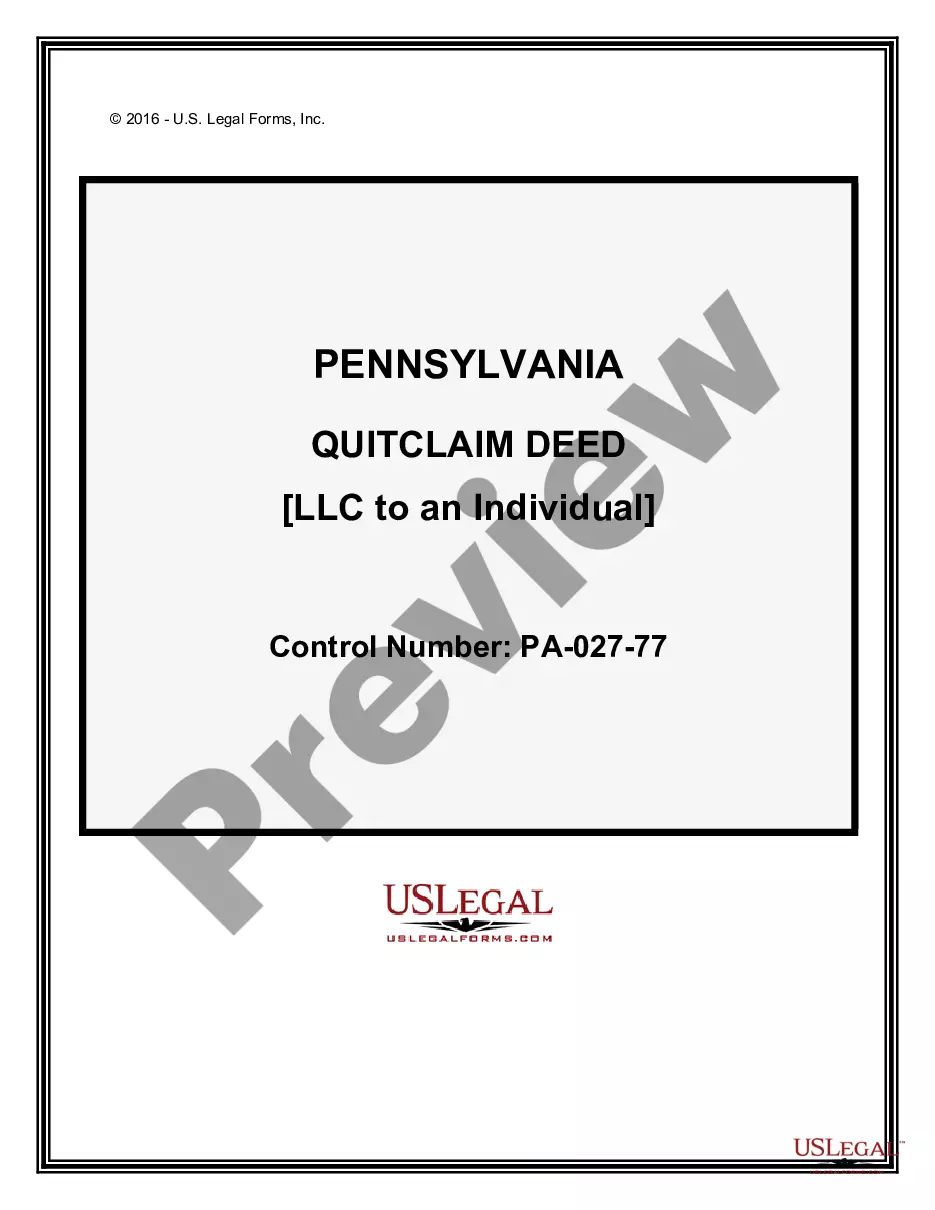
Pennsylvania Quitclaim Deed - Limited Liability Company to an Individual
Understanding this form
The Quitclaim Deed - Limited Liability Company to an Individual is a legal document used to transfer property rights from a limited liability company (LLC) to an individual. Unlike a warranty deed, which guarantees clear title, a quitclaim deed conveys whatever interest the grantor has in the property, if any, without any warranties. This form is essential for situations where an LLC is transferring property to an individual, ensuring proper documentation of the property transfer while complying with state laws.
Main sections of this form
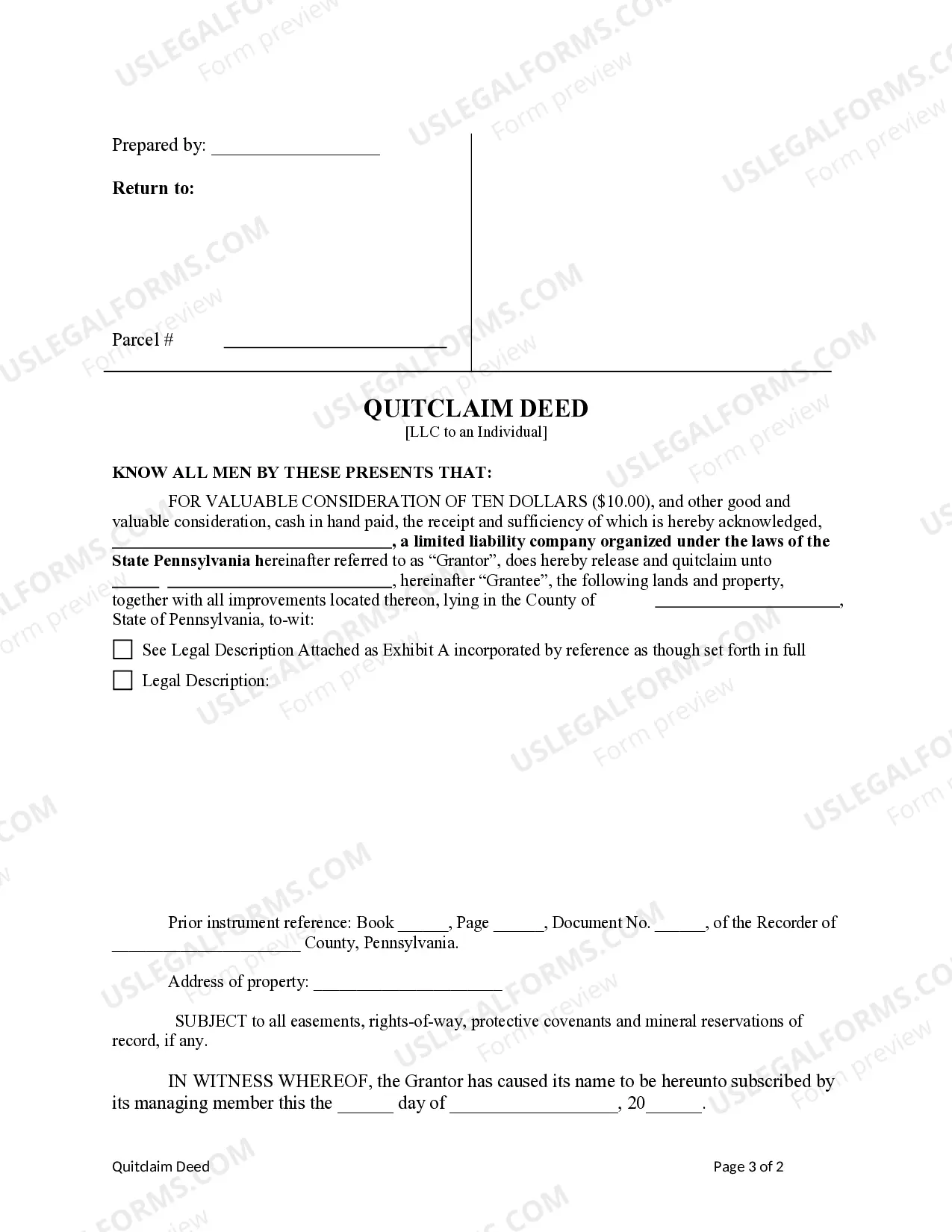
- Grantor Information: Details about the limited liability company offering the property.
- Grantee Information: Information of the individual receiving the property rights.
- Property Description: A clear description of the property being transferred, including address and any parcel numbers.
- Easements and Rights: A clause that addresses any existing easements or rights-of-way associated with the property.
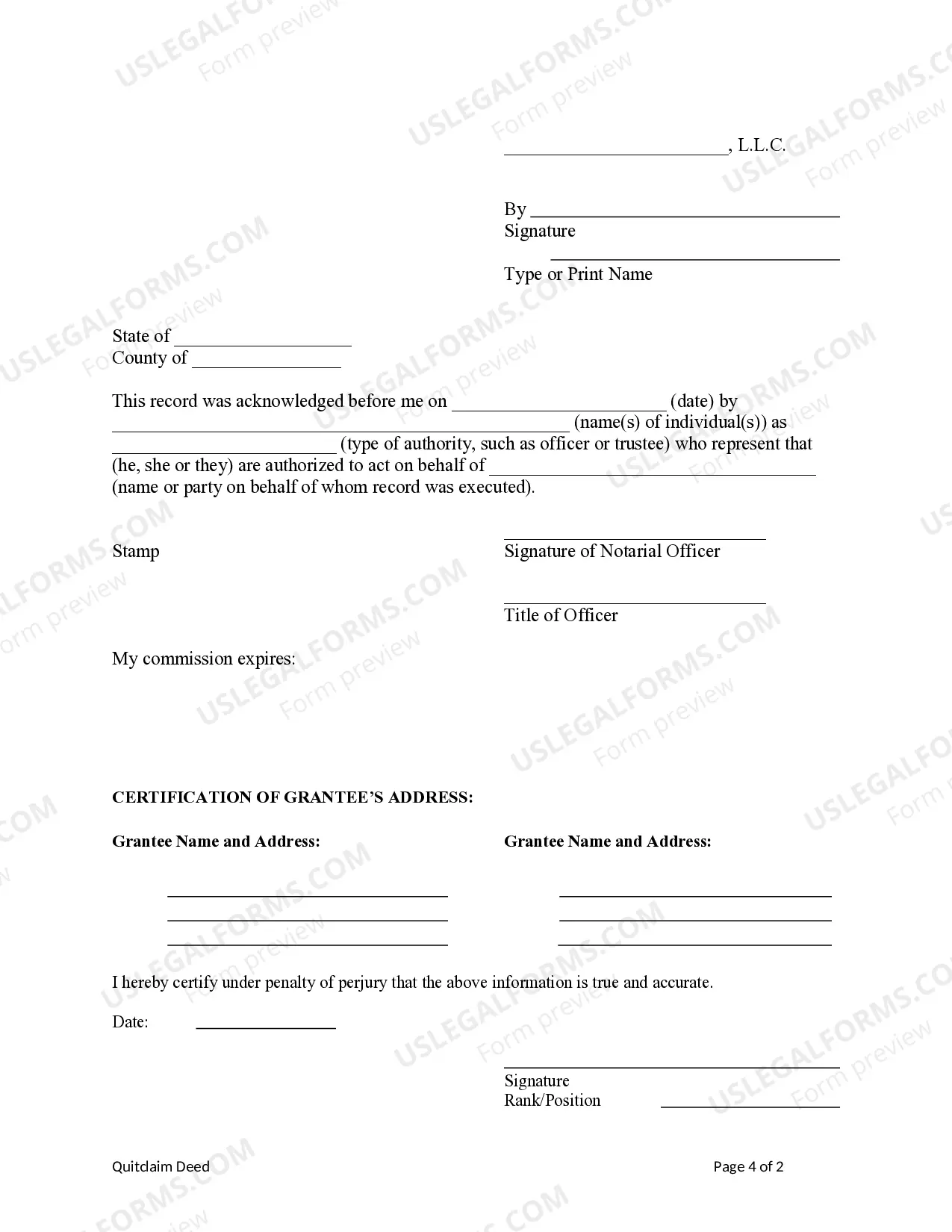
- Signatures: Spaces for signatures of the grantor and any required witnesses or notary.






Common use cases
This quitclaim deed is typically used when a limited liability company wants to transfer property ownership to an individual. Common scenarios include dissolving an LLC and transferring assets to one or more members, gifting property, or simplifying ownership matters. It is also suitable in cases where the grantor does not wish to provide any assurances regarding the propertyâs title.
Who should use this form
This form is designed for:
- Limited liability companies needing to transfer property to individual members or third parties.
- Individuals receiving property from an LLC without title guarantees.
- Property managers or real estate professionals facilitating property transfers for clients.
Instructions for completing this form
Follow these steps to complete the Quitclaim Deed:
- Identify the parties involved by entering the name of the limited liability company as the grantor and the individual's name as the grantee.
- Clearly specify the property being transferred by including its address and legal description.
- Review and acknowledge any easements, rights-of-way, or covenants affecting the property.
- Have the grantor sign the document in the appropriate section, ensuring any necessary witnesses are present.
- If required by local law, involve a notary public to validate the deed.
Is notarization required?
This document requires notarization to meet legal standards. US Legal Forms provides secure online notarization powered by Notarize, allowing you to complete the process through a verified video call, available 24/7.
Get your form ready online
Our built-in tools help you complete, sign, share, and store your documents in one place.
Make edits, fill in missing information, and update formatting in US Legal Forms—just like you would in MS Word.
Download a copy, print it, send it by email, or mail it via USPS—whatever works best for your next step.
Sign and collect signatures with our SignNow integration. Send to multiple recipients, set reminders, and more. Go Premium to unlock E-Sign.
If this form requires notarization, complete it online through a secure video call—no need to meet a notary in person or wait for an appointment.
We protect your documents and personal data by following strict security and privacy standards.
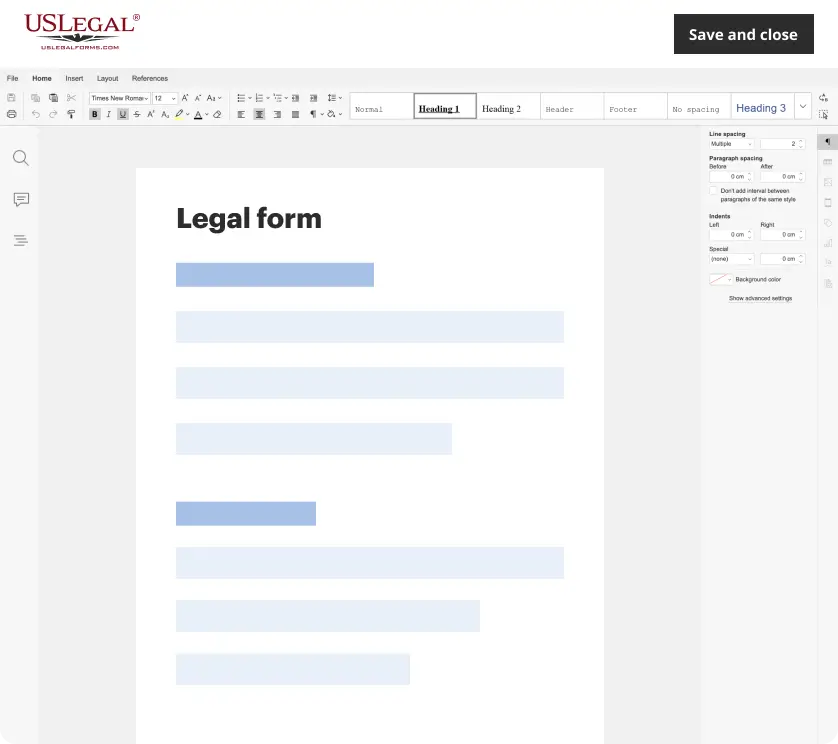
Make edits, fill in missing information, and update formatting in US Legal Forms—just like you would in MS Word.
Download a copy, print it, send it by email, or mail it via USPS—whatever works best for your next step.
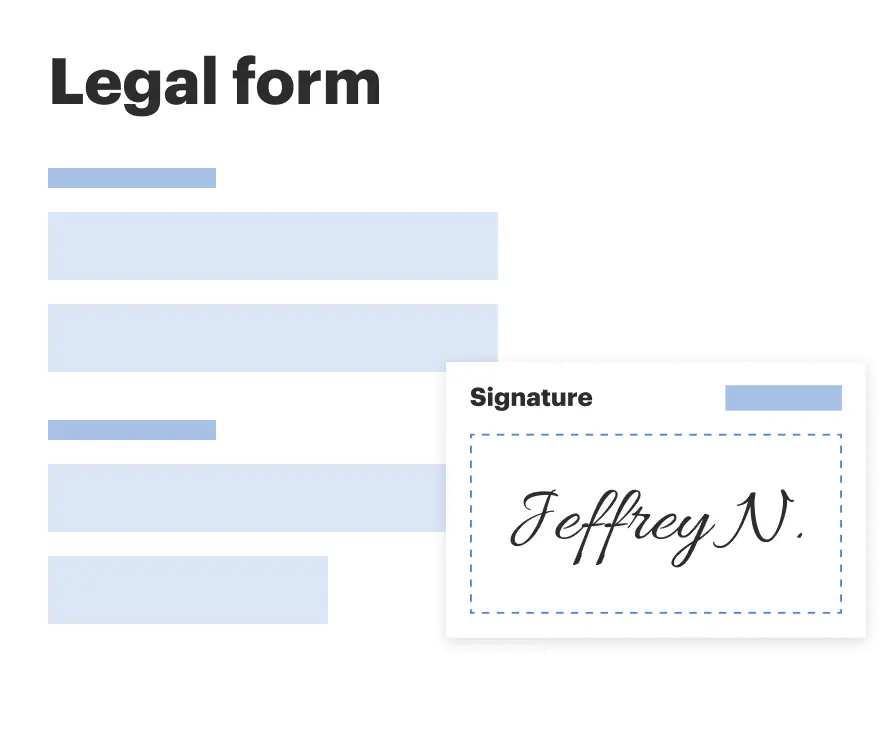
Sign and collect signatures with our SignNow integration. Send to multiple recipients, set reminders, and more. Go Premium to unlock E-Sign.

If this form requires notarization, complete it online through a secure video call—no need to meet a notary in person or wait for an appointment.
We protect your documents and personal data by following strict security and privacy standards.
Mistakes to watch out for
- Failing to provide a clear property description can lead to disputes over ownership.
- Not completing all required fields, including signatures and dates, which can invalidate the deed.
- Overlooking the need for notarization when state law mandates it.
Benefits of using this form online
- Convenience of accessing and completing the form from home without needing to visit an attorney.
- Editability allows users to fill in specific details easily and accurately.
- Reliability of the forms, which are crafted by licensed attorneys to ensure legal compliance.
Looking for another form?
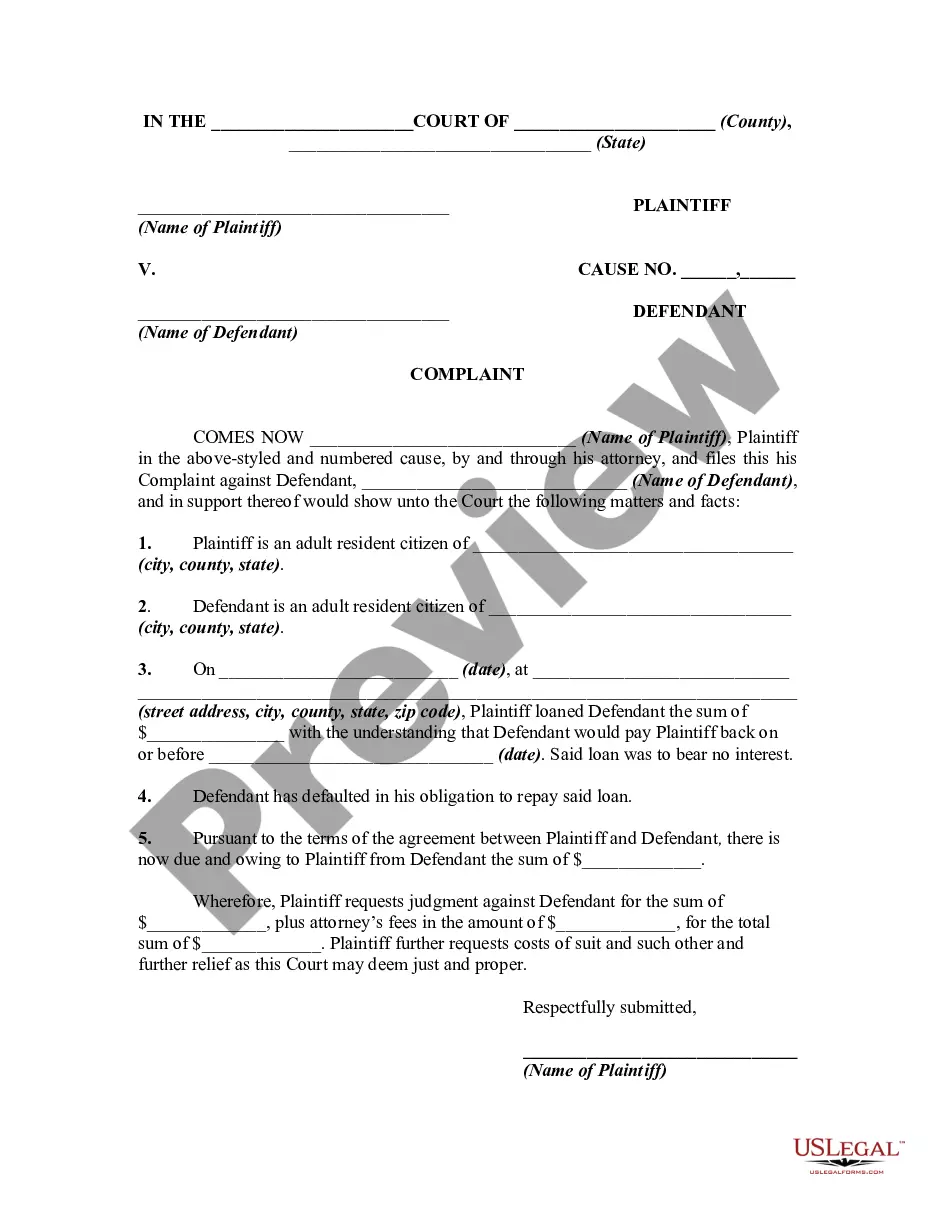

Form popularity
FAQ
It's usually a very straightforward transaction, but it's possible for a quitclaim deed to be challenged. If a quitclaim deed is challenged in court, the issue becomes whether the property was legally transferred and if the grantor had the legal right to transfer the property.
A person who signs a quitclaim deed to transfer property they do not own results in no title at all being transferred since there is no actual ownership interest. The quitclaim deed only transfers the type of title you own.
Quitclaim deeds are most often used to transfer property between family members. Examples include when an owner gets married and wants to add a spouse's name to the title or deed, or when the owners get divorced and one spouse's name is removed from the title or deed.
Fill in the deed form. Print it out. Have the grantor(s) and grantee(s) sign and get the signature(s) notarized. Fill out a Statement of Value form, if necessary. Get the Uniform Parcel Number (UPI) on the deed certified, if required by your county.
To use a Quitclaim Deed to add someone to a property deed or title, you would need to create a Quitclaim Deed and list all of the current owners in the grantor section. In the grantee section, you would list all of the current owners as well as the person you would like to add.
Yes, you can use a Quitclaim Deed to transfer a gift of property to someone. You must still include consideration when filing your Quitclaim Deed with the County Recorder's Office to show that title has been transferred, so you would use $10.00 as the consideration for the property.
How to Quitclaim Deed to LLC. A quitclaim deed to LLC is actually a very simple process. You will need a deed form and a copy of the existing deed to make sure you identify titles properly and get the legal description of the property.
But you might be wondering if an owner can transfer a deed to another person without a real estate lawyer. The answer is yes. Parties to a transaction are always free to prepare their own deeds.A quitclaim deed, for example, is far simpler than a warranty deed.
You'll need to pay a fee, which varies from county to county. For example, in Montgomery County, near Philadelphia, the fee for recording a deed is $86.75 for up to four pages and up to four names, and $1 per additional name and $4 per additional page.