Oregon Full Reconveyance of Deed of Trust - Individual Lender or Holder
What is this form?
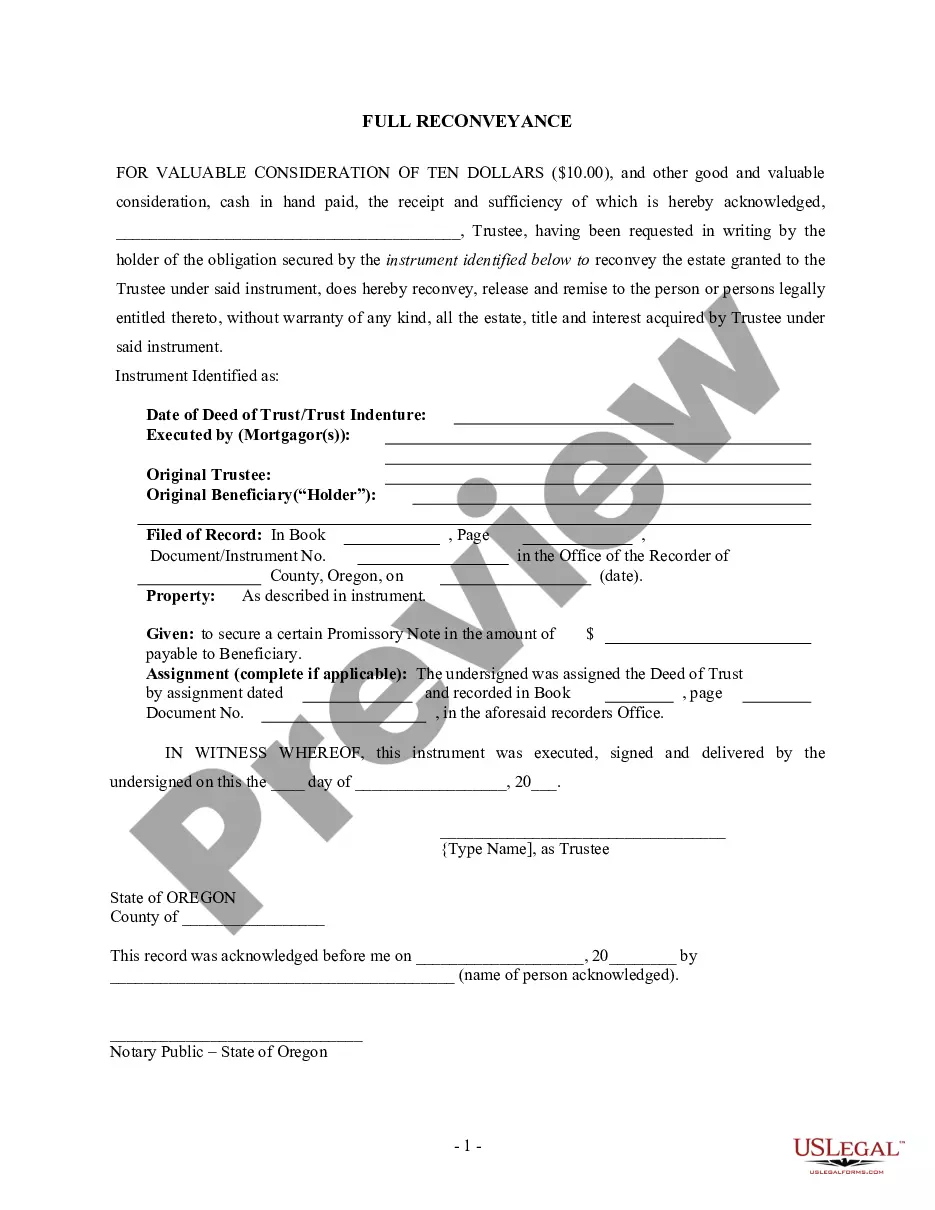
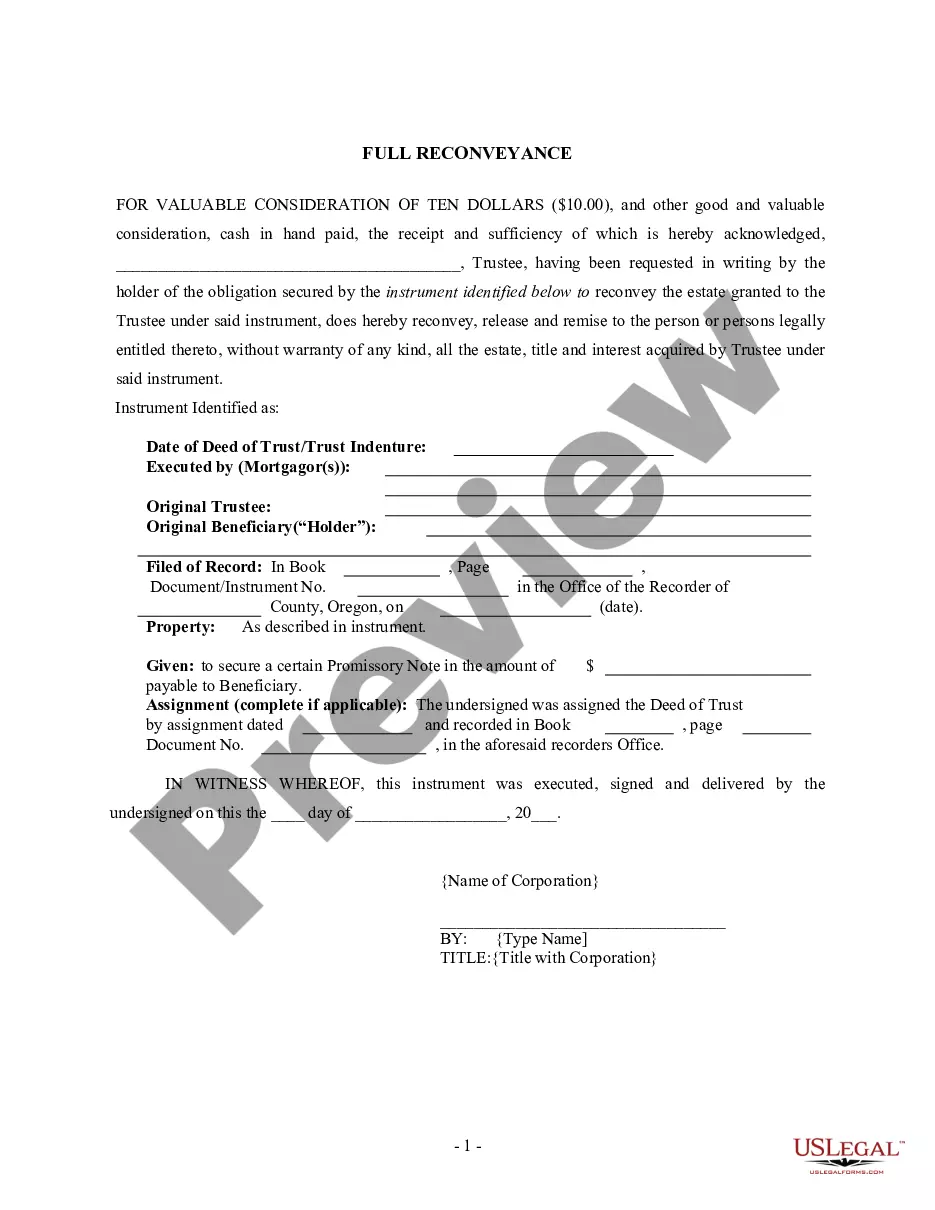
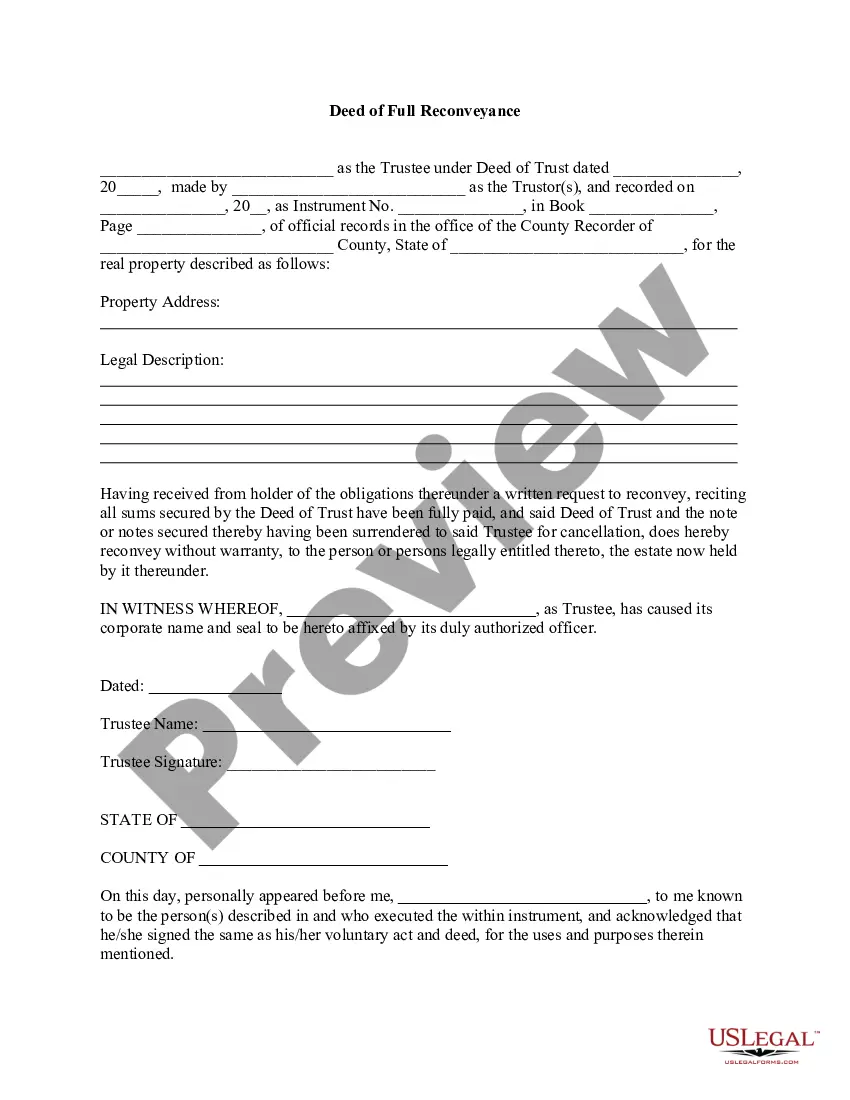
The Full Reconveyance of Deed of Trust is a legal document used in Oregon to release a property from the obligations of a deed of trust. This form is initiated by an individual lender or holder and signifies that the mortgage has been satisfied. Its primary purpose is to provide a clear acknowledgment that the debt secured by the deed of trust has been paid in full, distinguishing it from other forms like a satisfaction of mortgage.
Key components of this form
- Date of the original deed of trust or trust indenture
- Names of the mortgagor(s), trustee, and beneficiary
- Description of the property being reconveyed
- Details of any assignments relevant to the deed of trust
- Signatures of the trustee and acknowledgment by a notary public


When to use this document
This form should be used when an individual lender or holder has fulfilled the obligations of a deed of trust and wishes to officially release the secured property. Situations may include the complete repayment of a mortgage, the conclusion of a loan agreement, or when property ownership is being transferred free of the mortgage encumbrance.
Who needs this form
This form is intended for:
- Individual lenders or holders of a deed of trust in Oregon
- Borrowers who have completed payments on their mortgage
- Attorneys assisting clients with property transactions
Instructions for completing this form
- Identify the parties involved: the trustee, mortgagor(s), and original beneficiary.
- Specify the property being reconveyed, including any relevant legal descriptions.
- Enter the date of the original deed of trust and any necessary assignment details.
- Obtain signatures from the trustee and have the document notarized.
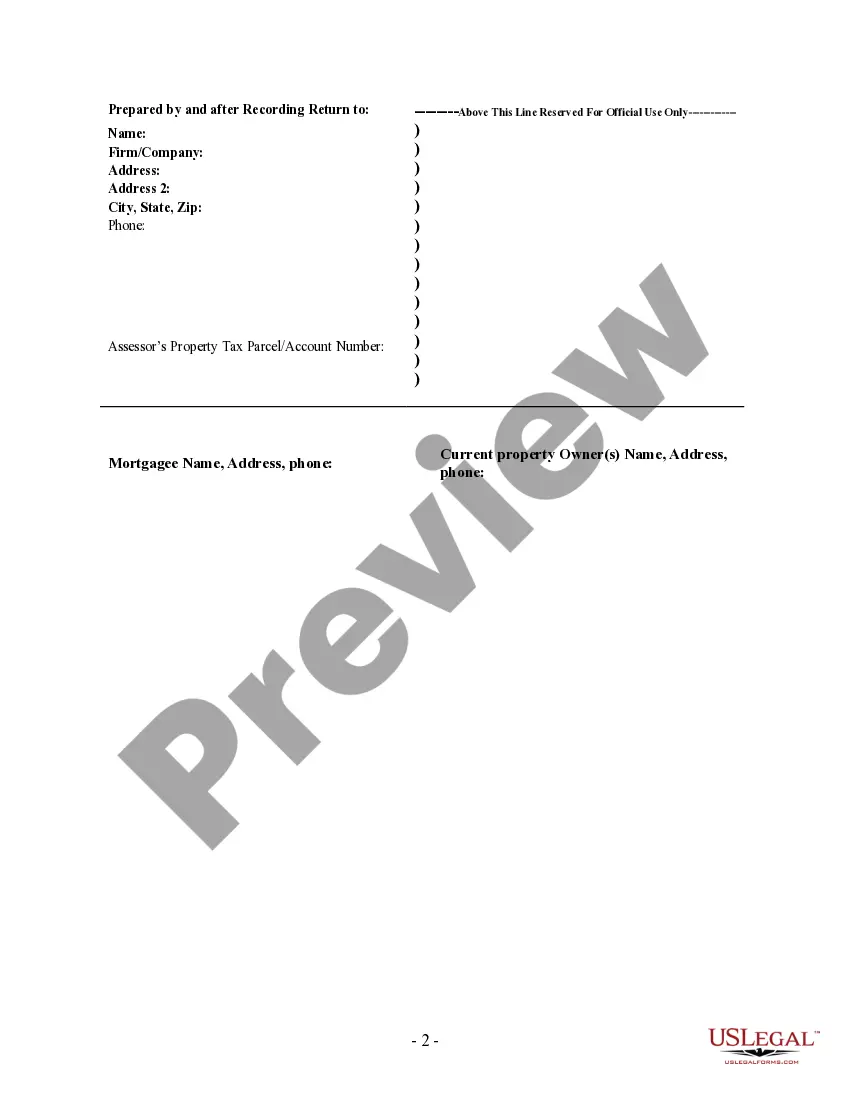
- Record the completed form with the appropriate county recorder's office in Oregon.
Does this form need to be notarized?
This form must be notarized to be legally valid. US Legal Forms provides secure online notarization powered by Notarize, allowing you to complete the process through a verified video call.
Get your form ready online
Our built-in tools help you complete, sign, share, and store your documents in one place.
Make edits, fill in missing information, and update formatting in US Legal Forms—just like you would in MS Word.
Download a copy, print it, send it by email, or mail it via USPS—whatever works best for your next step.
Sign and collect signatures with our SignNow integration. Send to multiple recipients, set reminders, and more. Go Premium to unlock E-Sign.
If this form requires notarization, complete it online through a secure video call—no need to meet a notary in person or wait for an appointment.
We protect your documents and personal data by following strict security and privacy standards.

Make edits, fill in missing information, and update formatting in US Legal Forms—just like you would in MS Word.

Download a copy, print it, send it by email, or mail it via USPS—whatever works best for your next step.

Sign and collect signatures with our SignNow integration. Send to multiple recipients, set reminders, and more. Go Premium to unlock E-Sign.

If this form requires notarization, complete it online through a secure video call—no need to meet a notary in person or wait for an appointment.

We protect your documents and personal data by following strict security and privacy standards.
Mistakes to watch out for
- Failing to have the form notarized, which may lead to invalidity.
- Omitting the property description or providing inaccurate details.
- Not including the correct dates and signatures from all necessary parties.
Benefits of using this form online
- Easy access to a legally compliant form, reducing the risk of errors.
- Edit the template to suit your specific needs quickly and conveniently.
- Downloadable format for local completion and filing.
Summary of main points
- The Full Reconveyance of Deed of Trust is essential for releasing property from mortgage obligations in Oregon.
- Ensure the form is completed accurately and notarized for legal validity.
- This document protects both parties and clarifies property ownership status post-repayment.
Looking for another form?
Form popularity
FAQ
Only until the debt is paid off by the borrower can a deed of reconveyance then be used to clear the deed of trust from the title to the property. The document is signed by the trustee, whose signature must be notarized.
A deed of trust is a method of securing a real estate transaction that includes three parties: a lender, borrower and a third-party trustee.
In order to clear the Deed of Trust from the title to the property, a Deed of Reconveyance must be recorded with the Country Recorder or Recorder of Deeds. If the Trustee/Beneficiary fails to record a satisfaction within the set time limits, the Trustee/Beneficiary may be responsible for damages as set out by statute.
In real estate in the United States, a deed of trust or trust deed is a legal instrument which is used to create a security interest in real property wherein legal title in real property is transferred to a trustee, which holds it as security for a loan (debt) between a borrower and lender.
In the context of a California mortgage transaction, a trust deed also transfer ownership. Only this time, the title is being placed in the hands of a third-party trustee, who holds the property on behalf of the lender and the homeowner-borrower until the mortgage is paid.
The deed must be signed by the party or parties making the conveyance or grant; and 7.
A mortgage holder issues a deed of reconveyance to indicate that the borrower has been released from the mortgage debt. The deed transfers the property title from the lender, also called the beneficiary, to the borrower. This document is most commonly used when a mortgage has been paid in full.
A deed of trust is a written instrument with three parties: The trustor, who is the borrower and homeowner. The beneficiary, who is the lender. The trustee, who is a third party such as an insurance company or escrow management agency that holds actual title to the property in trust for the beneficiary.
Giving the wrong legal address for the property or the wrong amount of the debt can render the deed unenforceable. In some cases, the error is easy to fix, and the court will rule the deed is enforceable.